

All-in-One Beaded Bracelet Supplies: What a Complete Kit Includes
What bracelet making supplies do you actually need?
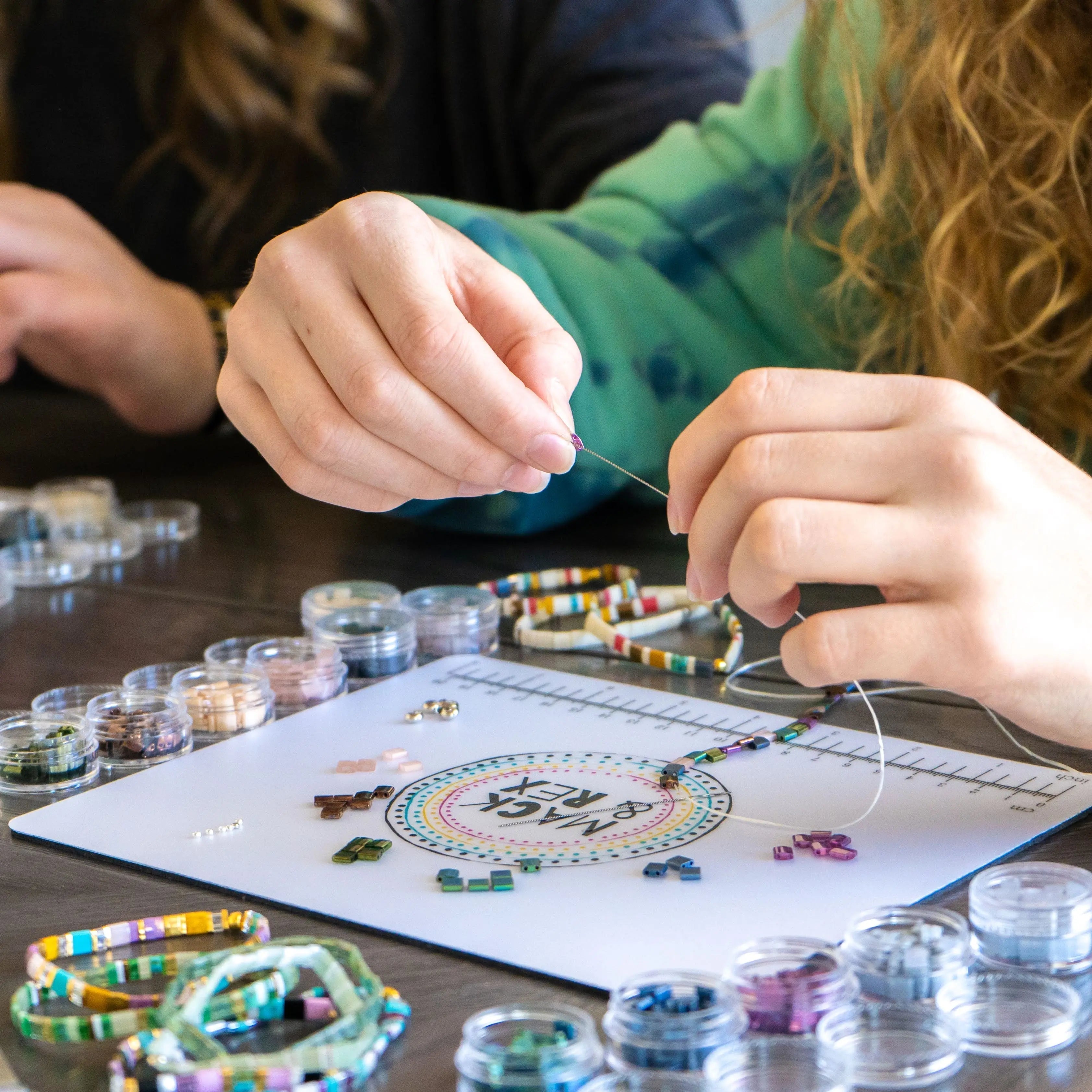
A complete set of bracelet making supplies for beaded stretch bracelets includes four things: beads, elastic cord, a threading needle, and a bead mat. Those four cover the basics. A well-built all-in-one kit adds scissors or a cord cutter, a color-coordinated bead selection, and clear instructions so you're not guessing at gauges or bead counts when you sit down to make something.
That list sounds simple. Where people get stuck is in the details: which cord gauge fits which bead hole, how many beads per bracelet, whether the needle eye is wide enough to pass through twice. A kit that accounts for all of it takes that guesswork away before it starts.
What does each supply actually do?
Worth walking through, because each part matters.
The beads
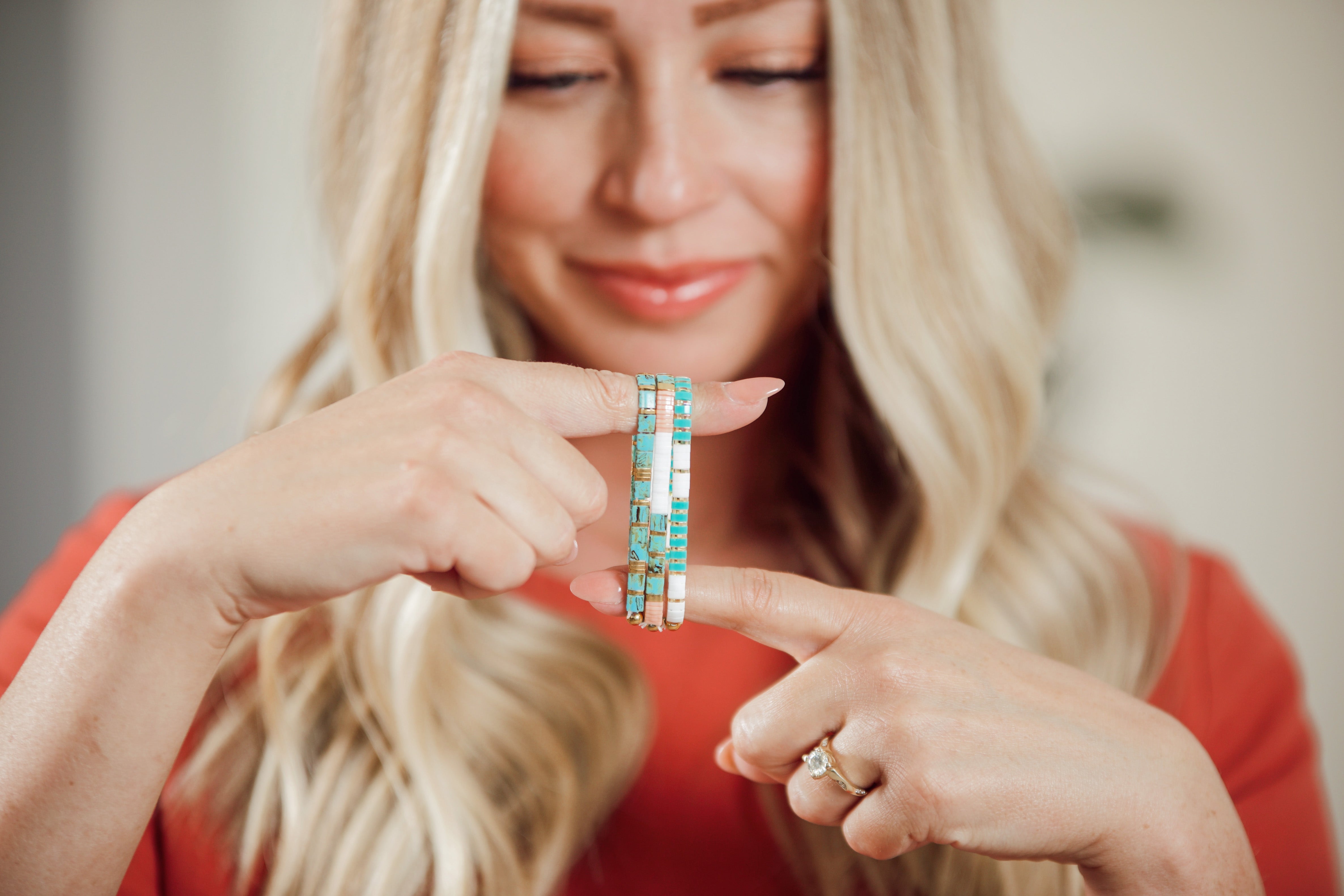
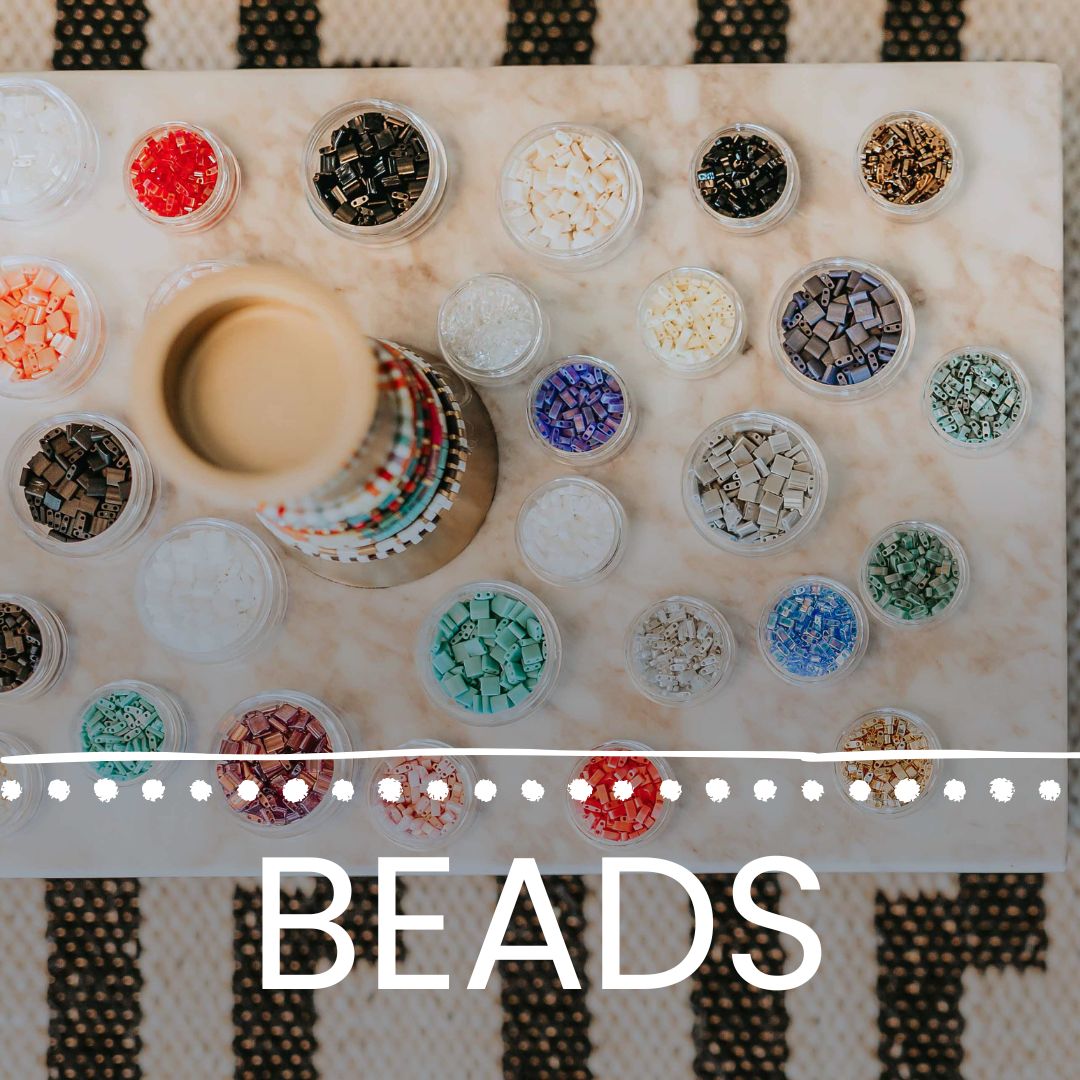
For stretch bracelets, bead shape and hole size are everything. Miyuki Tila beads are a flat, two-hole rectangular bead (5mm x 5mm x 1.9mm) made from Japanese glass. Each bead has two 0.8mm holes, which means cord threads through both holes on every bead, creating a flat, tile-like surface. The result is a structured bracelet that lays flush against the wrist rather than bunching the way round seed beads can.
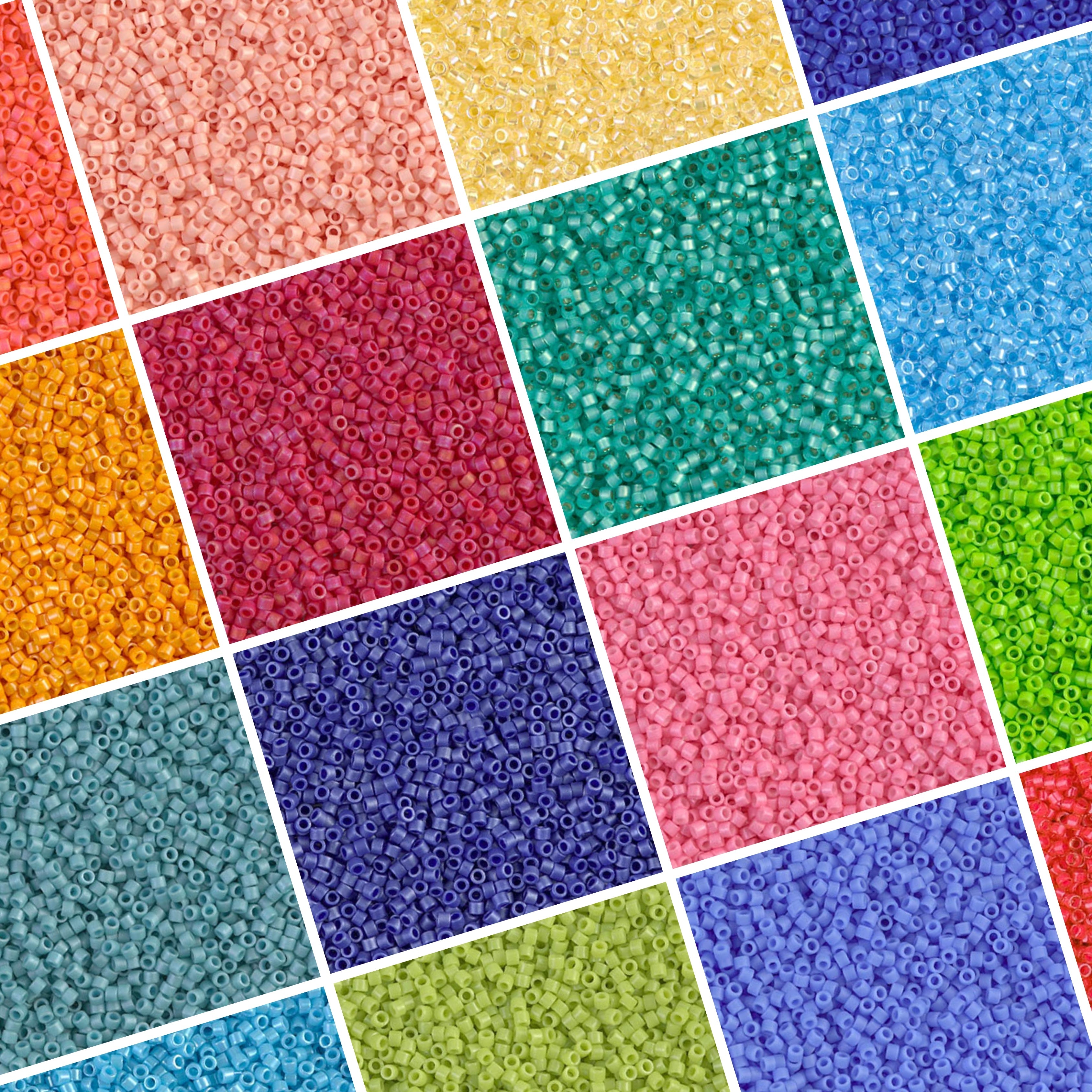
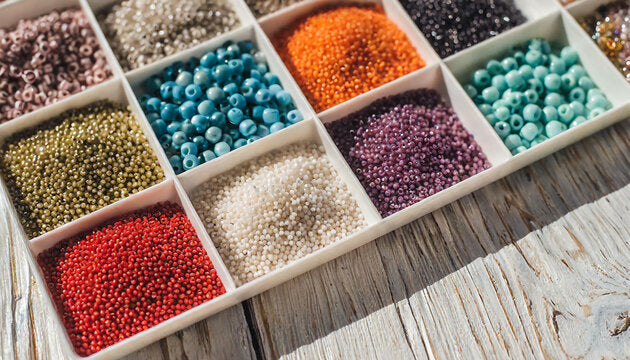
The beads in a Mack & Rex kit are sourced from Miyuki, a Japanese manufacturer with a reputation for consistent sizing and rich colorways. That consistency is worth noting: uniform hole size and bead thickness means no surprises when threading. A bead pack doesn't need to be enormous to yield real results. A curated color mix with the right bead count makes more bracelets than a random oversized bag in colors you won't use.
Elastic cord
Crystal elastic cord in the 0.5-0.7mm range is standard for Tila bead bracelets. Thin enough to pass cleanly through a 0.8mm hole (ideally twice, for the finishing knot) and strong enough to hold tension through daily wear. Stretchy, not floppy. Firm pull-back when worn. Generic craft-store elastic often skips on these qualities, which is the main reason budget bracelets snap.
According to Interweave's beading resources, the quality of the stringing material is as important as the beads themselves for a bracelet meant to last with daily wear. Interweave's beading guides consistently flag elastic grade as a first point of failure in stretch bracelets.
A needle
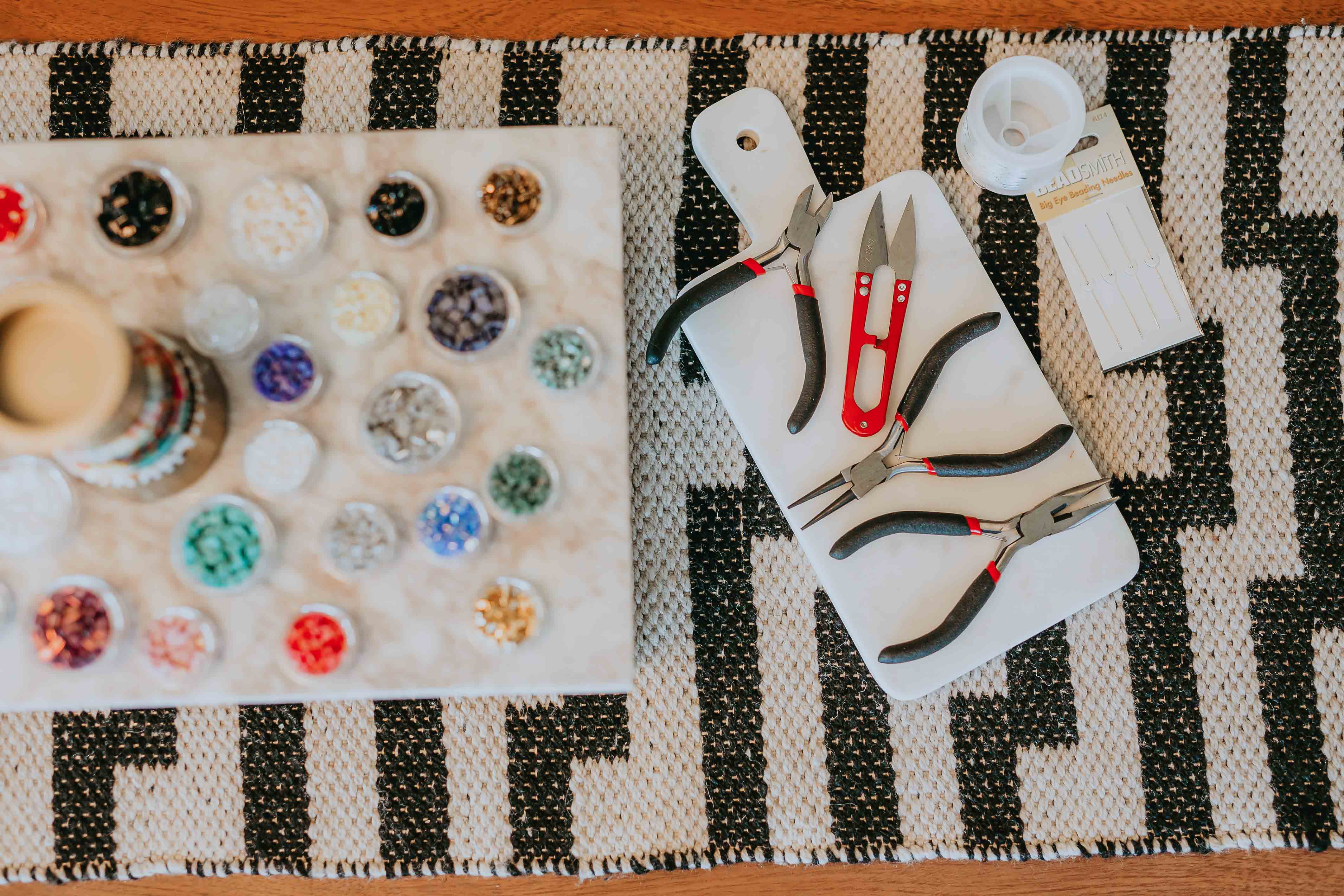
You need a needle with an eye wide enough to hold the elastic cord and narrow enough to pass through each bead hole. Big-eye beading needles (flexible, with a full-length opening) are the easiest option for beginners. A standard sewing needle won't work here. The hole is too small for elastic. A beading needle designed for elastic or cord makes threading a clean, one-pass process.
A bead mat
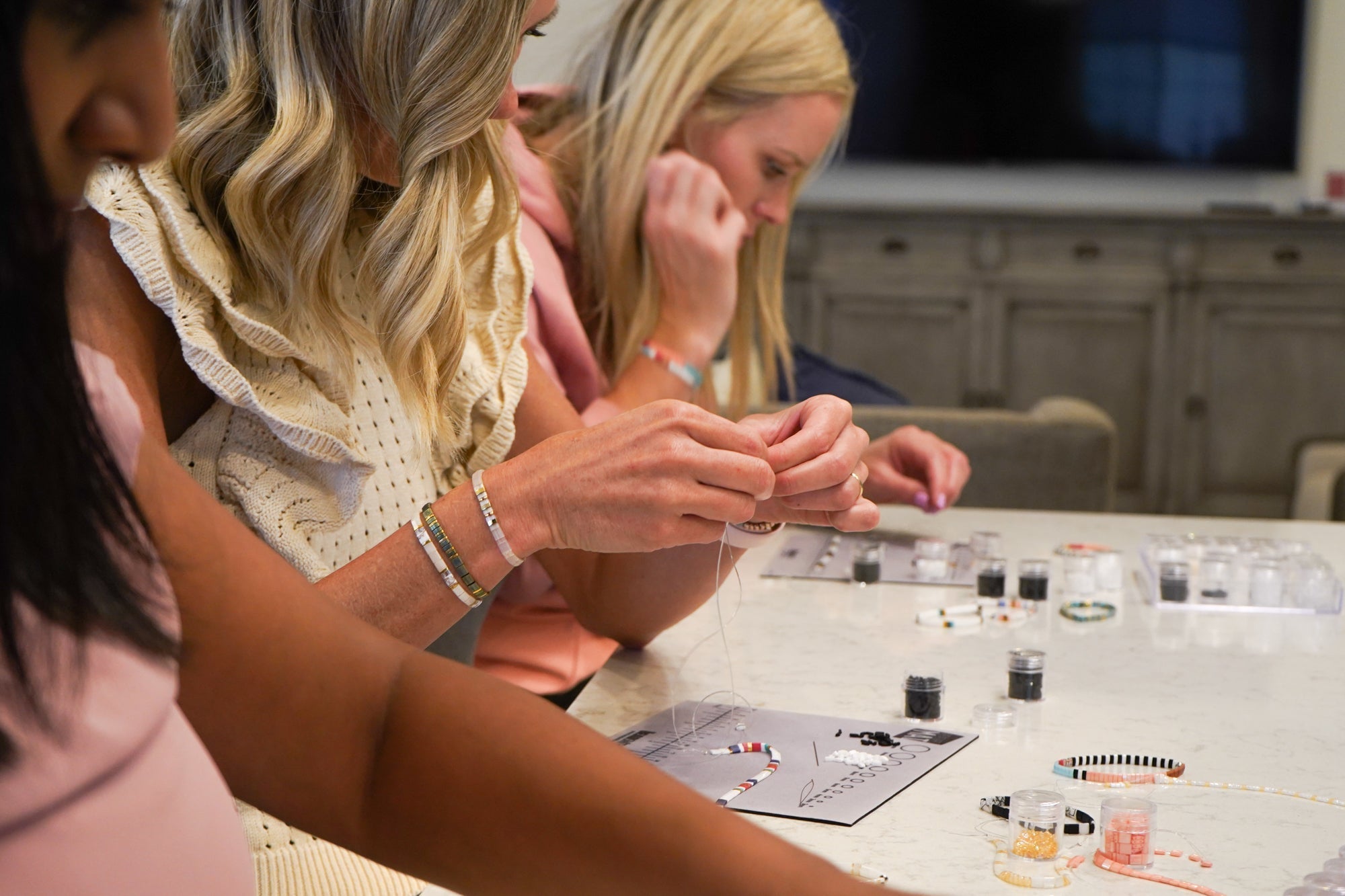
Underrated. A velvet or foam bead mat keeps beads from rolling off the table and gives you a surface to organize colors before threading. Bead mats also make picking up individual beads easier without chasing them across a hard surface. Anyone who has ever watched a full bead mix scatter across a tile floor knows exactly why this is on the list.
Scissors or a cord cutter
Sharp scissors cut elastic cleanly without fraying the end. A frayed end won't thread through a needle eye. It's one of those small-detail frustrations that a good kit solves by just including the right tool.
Why does an all-in-one kit beat buying supplies separately?
Three reasons: compatibility, quantity, and time.
Compatibility first. Elastic cord comes in multiple gauges. Beads come in multiple hole sizes. A needle that fits one combination may not fit another. When you source parts separately from different vendors, a mismatch is a real possibility. The right kit eliminates that problem because everything in the box was matched before it shipped.
Quantity second. Making one bracelet and running out of one material means waiting for a reorder. A kit with enough cord, beads, and elastic to complete multiple bracelets in one sitting is a better experience, especially for a group project or a session with kids. The Beaducation resource on project planning notes that most first-time bracelet makers underestimate how much material a single design uses at full wrist length.
Time third. Sourcing beads from one place, cord from another, and a needle from a craft store is a multi-stop process that often stretches across days. An all-in-one kit means the supplies arrive together and the project can start immediately.
What makes a bracelet kit genuinely complete?
The bare minimum covers beads, cord, needle, and mat. A complete kit goes further.
- Curated bead colors. Pre-selected color mixes that work together, rather than a random assortment. A color-coordinated pack means the bracelets you make look intentional.
- Multiple bracelet-worth of beads. Enough to make more than one bracelet, so a snag or mistake doesn't end the session.
- Quality elastic (not generic craft cord). Crystal cord with real stretch memory, not the flat elastic used for hair ties.
- A bead mat or tray. Keeps the workspace from becoming chaos.
- Clear instructions. Especially for the finishing knot, which trips up a lot of first-timers. A surgeon's knot or a double overhand knot with a dab of jewelry glue is the standard for stretch bracelets, according to The Spruce Crafts' beading guides.
- Sizing guidance. Wrist circumference plus 0.5 inches is a common starting formula for a stretch bracelet, though a kit that includes sizing notes removes the guesswork for people making bracelets as gifts.
A useful point of reference: the Fire Mountain Gems stringing guide breaks down finishing techniques and cord selection in detail for anyone who wants to go deeper on the technical side.
How does a Tila bead bracelet kit differ from a standard seed bead kit?
Substantially different. Standard seed bead kits (Delica beads, round seed beads, rocaille beads) typically use a finer cord or thread, a different needle, and result in a more flexible bracelet with a different texture. Round beads rotate on the cord. Tila beads are flat and two-hole, so they're threaded in a fixed orientation that creates a clean, structured band.
The finished look is noticeably different. A Tila bead bracelet sits flat and tile-like, almost like a woven fabric cuff. A round seed bead bracelet has more of a rope or pebbled texture. Both are legitimate styles. They're not interchangeable, though, and the supplies for one don't automatically work for the other. A kit designed for Tila beads should be specific about that.
What do Mack & Rex bracelet making kits include?
Mack & Rex builds its kits around Miyuki Tila beads and crystal elastic cord, with all the extras accounted for. The trio kits (currently $44.99) include a curated bead mix matched for color, elastic cord, and everything needed to complete multiple bracelets in one sitting. The kits are designed with the same inclusive sizing approach as the ready-to-wear line (XXS-5XL), so sizing guidance is built in rather than guessed at.
For crafters who want to start with materials but aren't ready for a full kit, the Mack & Rex bracelet making kits page covers the full current selection. Kits come with color-coordinated bead mixes rather than random assortments, which is worth factoring in when comparing options. The brand was built by a mom and her two daughters (Mack and Rex, hence the name), and the kits reflect that make-together angle: they're designed to actually be enjoyable to sit down with. A bag of parts, these are not.
One note if you're buying for a family session: beads are small parts and a choking hazard. Adult supervision throughout the project is a must for younger children, and loose beads should always be kept away from children under 3.
Can I buy bracelet making supplies as a gift?
A kit works better than individual supplies as a gift. A recipient who gets a bead mix, cord, and a needle separately still has to figure out how to make it work together. A kit that's been matched and tested removes that friction entirely and makes the gift immediately usable.
The buy-3-get-1-free offer on bracelets at Mack & Rex (no code needed) applies to finished ready-to-wear bracelets rather than kits, but is worth knowing if you're putting together a gift that mixes ready-made pieces with a DIY element. Free shipping applies on orders over $100 (US only).
Frequently asked questions about bracelet making supplies
What bracelet making supplies do I need to make beaded stretch bracelets?
The core supplies are beads (such as Miyuki Tila beads or seed beads), elastic crystal cord (0.5-0.7mm), scissors, a big-eye or beading needle, and a bead mat. A complete kit bundles all of these together so you don't have to source each part separately.
Is an all-in-one bracelet kit better than buying supplies separately?
For most beginners, yes. A curated kit ensures compatible materials (right cord gauge for the bead hole size, right needle, right amount of beads per bracelet length) so you don't end up with a mismatch. Buying piecemeal works once you know exactly what you need, though getting the wrong elastic gauge or bead hole size is a common first-time mistake.
How many bracelets can I make from a beaded bracelet kit?
It depends on the kit. Most starter kits are designed to make 1-3 bracelets. Kits that include larger bead packs can yield significantly more. Always check the listed bead count and bracelet length the kit is sized for before purchasing.
What size elastic cord is best for Tila bead bracelets?
Miyuki Tila beads have two 0.8mm holes per bead. A crystal elastic cord in the 0.5-0.7mm range threads through cleanly and still leaves room to double-knot securely. Thicker cord (1mm or more) may not fit the holes, and thinner cord under 0.4mm tends to snap with regular wear.
Are beaded bracelet kits safe for kids to use?
Bracelet making kits with small beads are best suited for older children (generally 8 and up) with adult supervision. Beads are small parts and a choking hazard for young children. Adult involvement throughout the project is strongly recommended.
Ready to get started? Browse the full selection of bracelet making kits at Mack & Rex. Everything you need is already in the box.