

Are Heishi Bead Bracelets Waterproof? Durability and Care Guide
Are Heishi Bead Bracelets Waterproof?
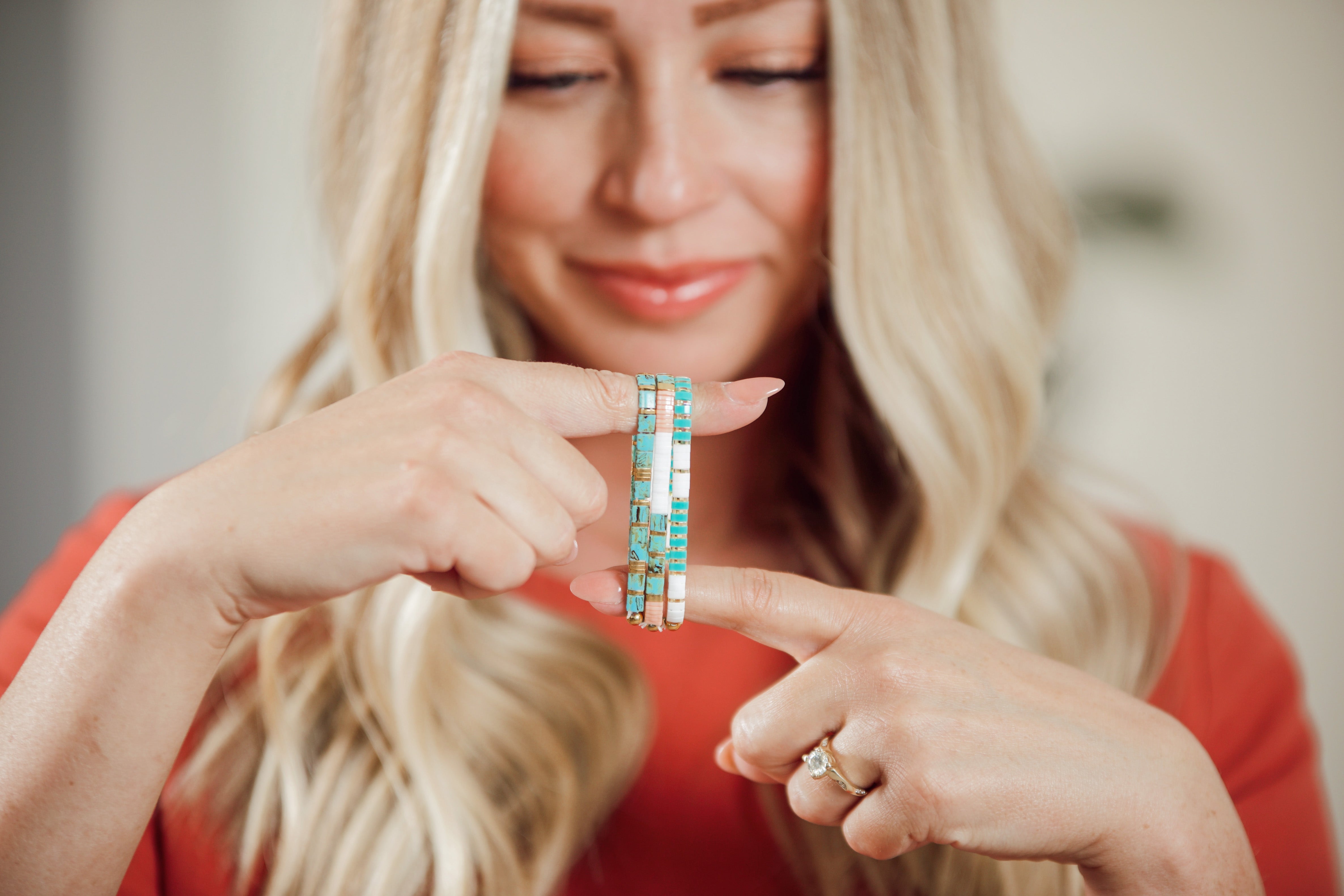
No. Heishi bead bracelets are water-resistant, not waterproof. The beads themselves, whether shell, stone, clay, or glass, generally survive a splash or a quick rinse without an issue, but the elastic cord holding them together is the part that actually wears out from repeated water exposure.
Here's the distinction that matters. "Waterproof" means a product is built to be submerged with no effect at all, like a dive watch. "Water-resistant" means it can handle moisture without immediate damage, but prolonged or repeated soaking still takes a toll over time. Heishi bracelets fall firmly into the second category, and so does almost every piece of beaded stretch jewelry on the market.
What Happens When a Heishi Bracelet Gets Wet?
A quick splash or a few minutes in the shower won't hurt a heishi bracelet. The beads dry off fine, and the cord shrugs off occasional moisture the same way a rubber band does when it gets rinsed off. The problem shows up with frequency, not with one wet moment.
Elastic cord is the weak link. Every time it gets wet and dries out again, it loses a small amount of its stretch, the same cycle that eventually makes a hair tie go slack. One shower won't do anything noticeable. Months of daily showers, dish-washing, and hand-washing with the bracelet still on will. We've heard this from customers directly: bracelets worn 24/7 in the shower tend to need replacing sooner than ones that come off for water-heavy activities.
Can You Swim or Shower With a Heishi Bracelet On?
A quick shower is generally fine. Swimming is the riskier call, because pool chlorine and ocean saltwater both degrade stretch cord faster than plain tap water, and chlorine in particular can dull or discolor certain bead coatings over repeated exposure.
If you're heading to the pool or the beach, the safest move is to take the bracelet off, set it somewhere dry, and put it back on once you're toweled off. It takes ten seconds and it's the single biggest thing you can do to extend how long a stretch bracelet lasts. Sunscreen and chlorinated water together are a rougher combination than either one alone, since sunscreen residue can trap moisture and chemicals against the cord.
What Are Heishi Beads Made Of, and Does the Material Affect Water Tolerance?
Heishi beads were traditionally carved from shell, and the name itself comes from the Kewa (Santo Domingo) Pueblo word for shell, reflecting the bead style's origin in Southwestern Native American jewelry-making. Today, "heishi" describes a shape, flat disc beads strung close together, as much as a specific material, and you'll find heishi-style beads made from shell, stone, clay, vinyl, and glass.
Material changes how a bead handles water, even though none of them are truly waterproof long-term. Shell and stone heishi can handle brief wet exposure well but may show water spotting if soaked and left to dry unevenly. Glass heishi, the kind we work with most, is non-porous and essentially unaffected by water itself, which is why the cord, not the bead, is almost always the first thing to wear out on a glass heishi bracelet. For a deeper look at the material's history, Wikipedia's entry on heishi beads covers the shell-disc origin and how the style spread into wider use.
How Do You Care for a Heishi Bead Bracelet?
Keep it dry when you reasonably can, wipe it down after sweaty wear, and store it flat rather than crammed in a jewelry box with a dozen other bracelets pulling at the cord. These three habits do more for bracelet lifespan than any special product.
A few specifics that actually help:
- Wipe, don't soak. A soft, barely damp cloth clears off lotion, sweat, and everyday grime, which cause more wear on cord and finish than plain water does. Reaching for a damp cloth rather than running the bracelet under a faucet is the single easiest habit to build.
- Take it off for water-heavy activities. Dishes, pools, long showers, and workouts that involve a lot of sweat all shorten elastic cord life. It takes seconds to slip off and back on.
- Avoid stretching it hard over knuckles repeatedly. Overstretching to get it on and off is a bigger cause of snapped cord than water exposure. Ease it on gently instead.
- Store it flat. A tray or flat dish keeps the elastic from sitting under tension, which helps it hold its stretch longer than being balled up in a drawer.
- Deep-clean occasionally, not constantly. Once a month, a damp cloth with a touch of mild soap, followed by full air drying before you wear it again, is plenty.
General jewelry-care guidance backs this up across bead materials. The Spruce Crafts' beading basics guide notes that most beaded jewelry holds up best with gentle, infrequent cleaning rather than regular soaking, and Beadaholique's jewelry care resources recommend flat, dry storage to help stretch and stringing materials keep their shape between wears.
How Long Should a Heishi Bead Bracelet Last?
With normal wear and the care habits above, a well-made stretch bracelet can realistically last a year or more before the cord needs replacing. Daily wear through showers, workouts, and swimming will shorten that window; occasional wear with the bracelet off for water activities stretches it out considerably further.
That's actually a short, specific window compared to how long the beads themselves will outlast the cord. Glass and stone heishi beads don't degrade from normal wear. The elastic is always the first part to go, which is also the cheapest and easiest part to plan around. We built our quality guarantee around exactly this reality: if a bracelet's cord fails from normal wear sooner than it should, we stand behind it.
Where Can You Find Durable Heishi Bead Bracelets and Beads?
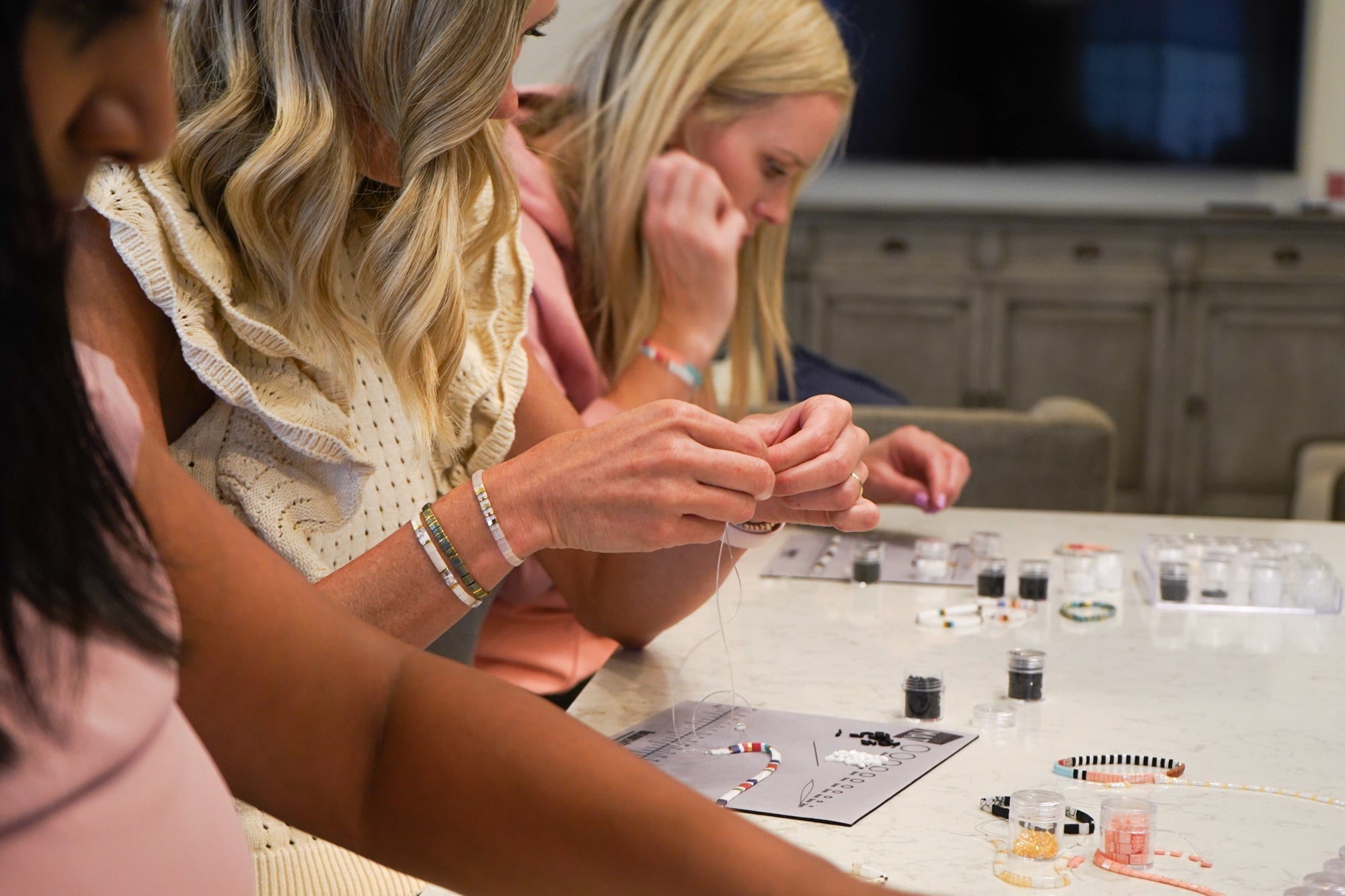
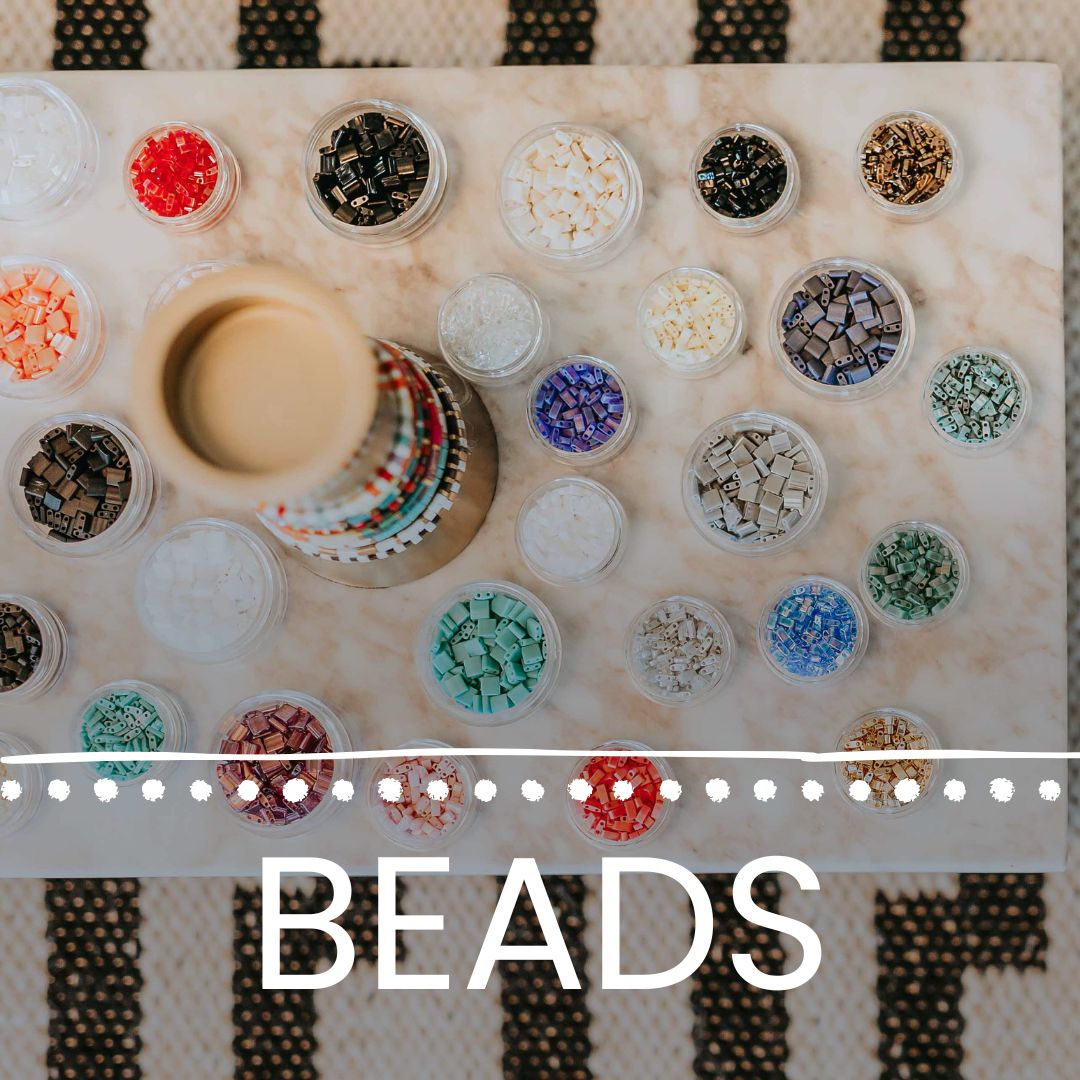
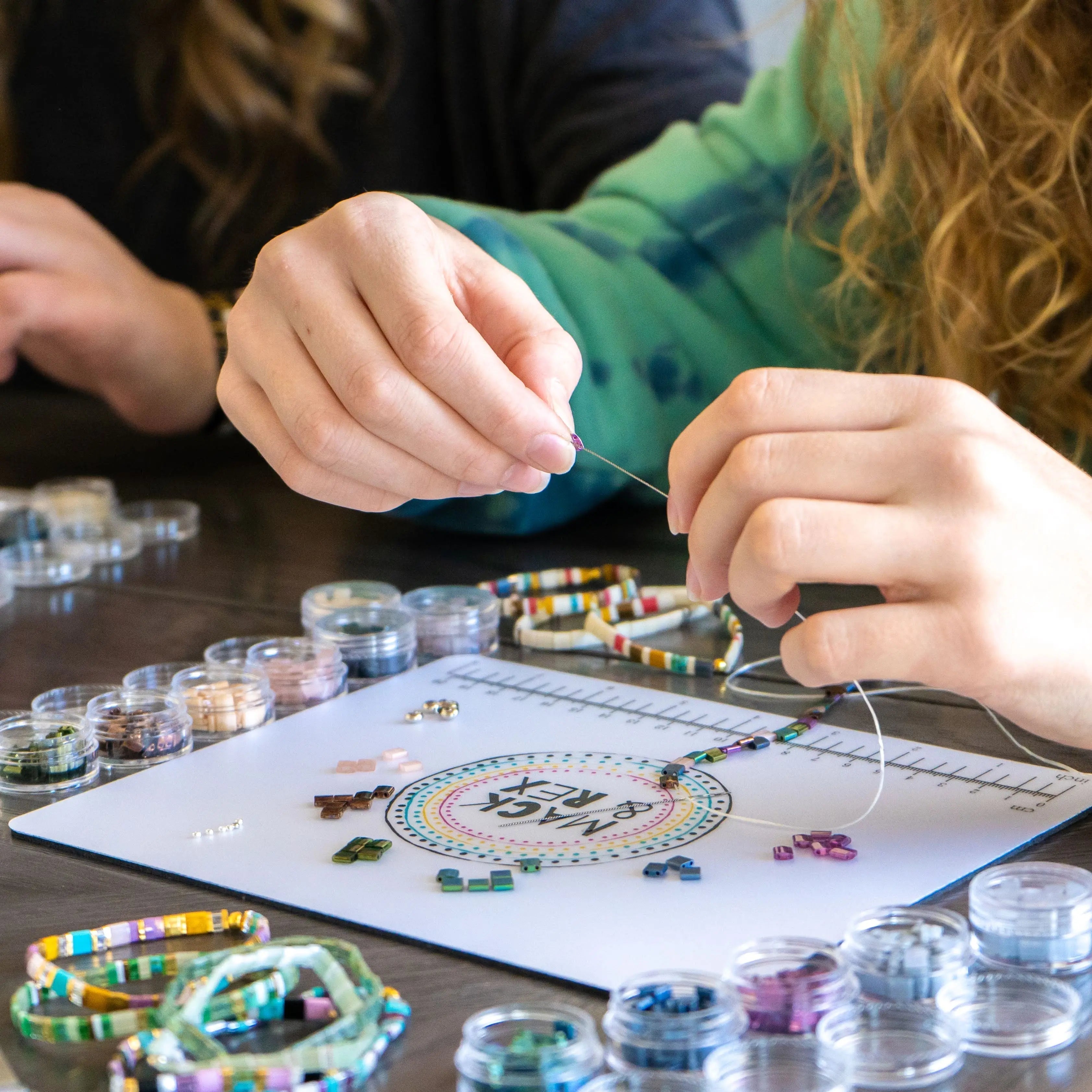
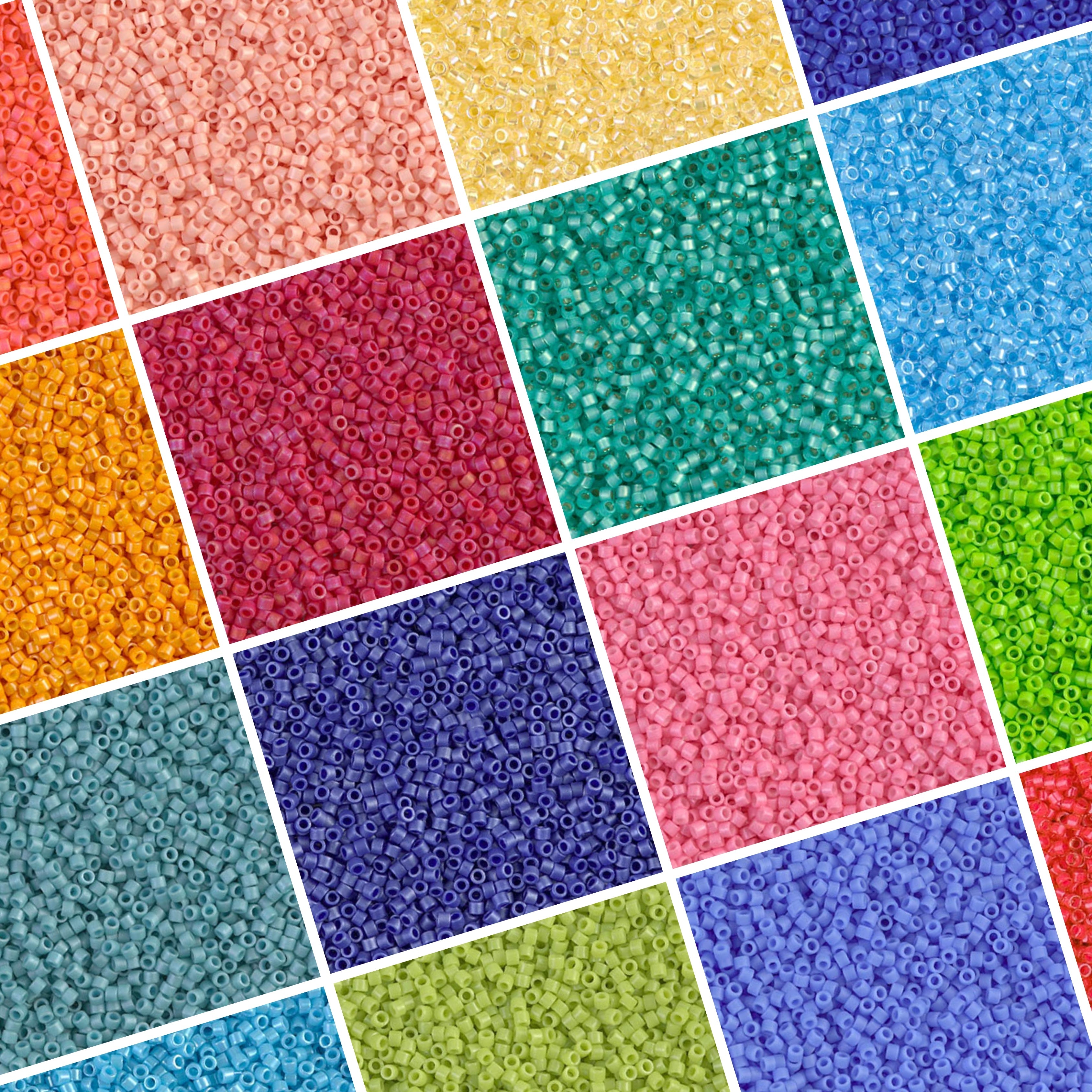
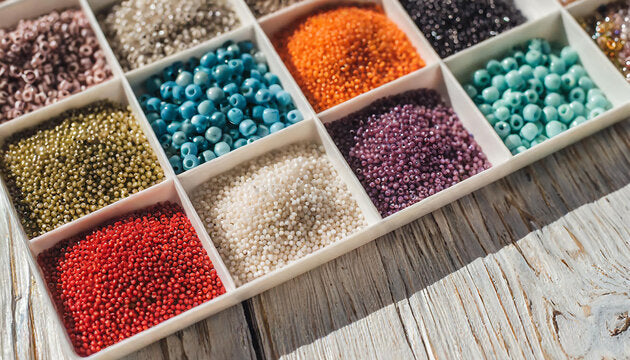
Mack & Rex carries ready-to-wear bracelets and loose beads built for real, everyday wear, not a shelf display. Our seed bead collection covers heishi-style and other small-format beads if you want to build your own stack, with crystal-cord elastic that's designed to handle normal daily wear, showers included, better than cheaper stretch cord.
A small-parts note, since it's worth saying plainly: loose beads are a choking hazard, so any bracelet-making with kids needs an adult supervising, and loose beads or kits shouldn't be treated as safe for very young children on their own.
Buy 3 finished bracelets and get 1 free, no code needed, and shipping is free on US orders over $100 (we ship internationally too, with duties and shipping calculated at checkout). If you're ready to build a bracelet that can actually handle your routine, browse our seed bead collection and start stacking.
Frequently Asked Questions
Are heishi bead bracelets waterproof?
Heishi bead bracelets are water-resistant, not waterproof. The beads can get splashed, rinsed, or worn in the shower occasionally without damage, but the elastic cord and bead finish wear down faster with constant soaking, chlorine, or saltwater exposure over time.
Can you shower or swim with a heishi bracelet on?
A quick shower is fine for most heishi bracelets. Swimming is riskier because pool chlorine and ocean saltwater both break down stretch cord and can dull certain bead coatings faster than plain tap water, so it's safer to take the bracelet off before a swim and put it back on dry.
What material are heishi beads made from?
Heishi beads were traditionally carved from shell, and the name comes from the Kewa (Santo Domingo) Pueblo word for shell. Modern heishi-style beads are also made from stone, clay, vinyl, and glass, each with slightly different water tolerance, though all handle brief moisture better than prolonged soaking.
How do you keep a heishi bracelet from breaking?
Keep it dry when you can, avoid stretching it hard over knuckles, and store it flat rather than balled up in a drawer. Elastic-strung heishi bracelets eventually lose stretch from repeated wear and water exposure, the same way any stretch cord jewelry does, so gentle handling adds months to its life.
How often should you clean a heishi bead bracelet?
Wipe it down with a dry or barely damp soft cloth every few wears to clear off lotion, sweat, and sunscreen residue, which cause more wear than plain water does. A deeper clean, a quick wipe with mild soap on a damp cloth followed by full air drying, once a month is plenty for most bracelets.