

Are Heishi Beads the Same as Clay Beads? A Simple Guide
Are Heishi Beads the Same as Clay Beads?
No. Heishi describes a shape, a small flat disc, not a material, so heishi beads can be cut from polymer clay, shell, or stone. Most heishi sold in bracelet kits today is polymer clay, though traditional shell and stone heishi are still around too.
That mix-up is understandable. Walk into most craft aisles or scroll a bracelet supply shop and nearly every heishi bead you see is polymer clay, so it's easy to assume the two words mean the same thing. They don't. "Clay bead" tells you what it's made of. "Heishi bead" tells you what shape it was cut into. A bead can be both at once, or neither.
Where Does the Word "Heishi" Actually Come From?
Heishi is a Puebloan word that translates roughly to "shell," and it originally described small disc beads hand cut from shell by artisans in the American Southwest.1 Each bead was ground down by hand, drilled through the center, then strung and rolled against a flat stone until the whole strand formed an even, rounded edge.
That's a slow, skilled process, and it's the origin of the term. Over the decades the name migrated from a specific craft tradition to a shape category. Any small, flat, center-drilled disc bead gets called heishi now, whether it came off a lapidary wheel in New Mexico or a clay extruder in a factory. The shape earned the name. The material didn't.
What Are Modern Polymer Clay Heishi Beads?
Polymer clay heishi is the version you'll find in most bracelet kits and craft stores today. Makers roll polymer clay into a long log, sometimes blending colors first for a marbled effect, then slice the log into thin discs and cure them in an oven until they harden.2 The result is lightweight, colorfast, and cheap enough to produce in bulk, which is exactly why it took over the bracelet market.
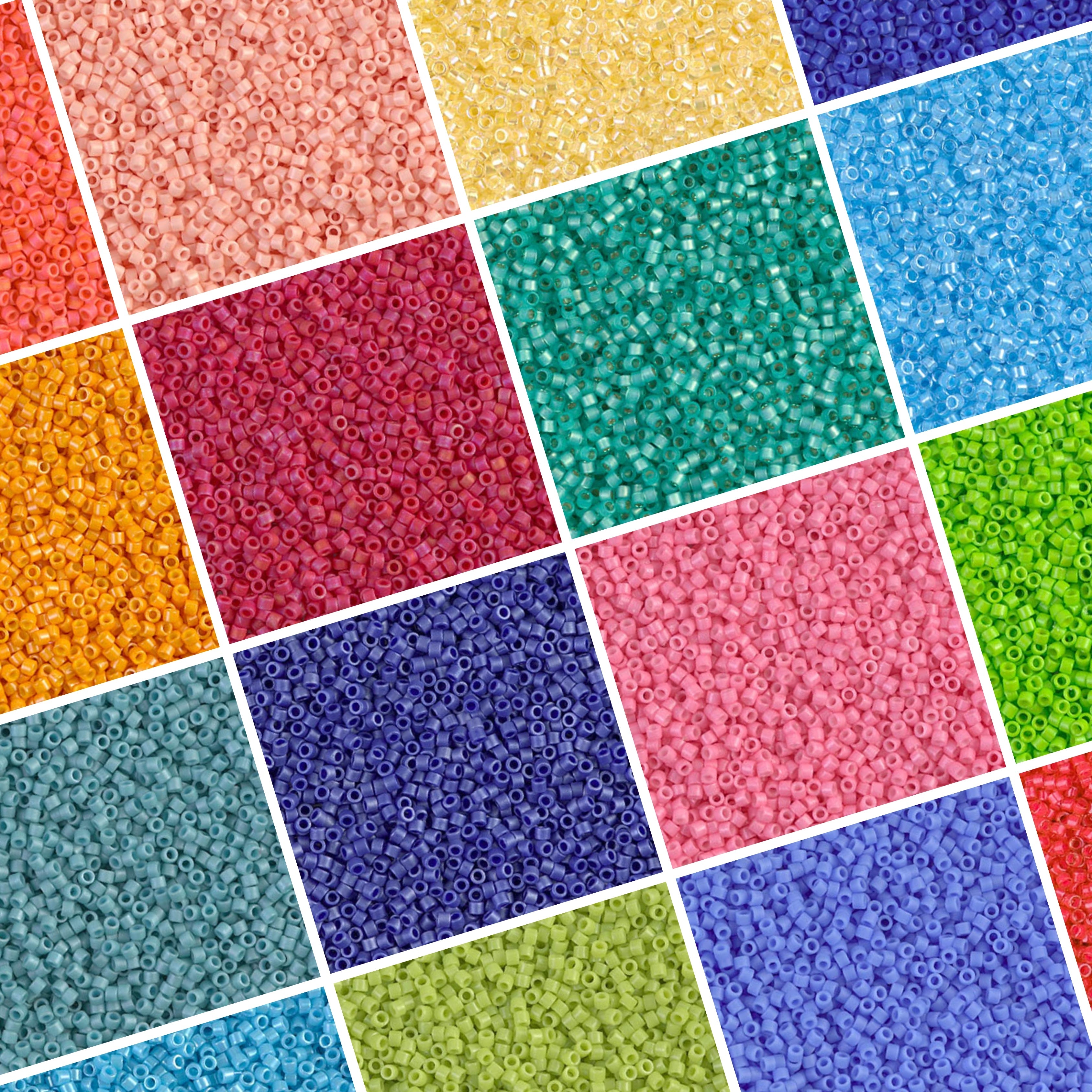
Mack & Rex's own heishi beads are polymer clay, sold by the strand, roughly 320 to 450 beads per 16-inch strand depending on color. A quick, specific detail worth knowing if you're pattern-planning: a 6mm heishi bead runs about a 2mm hole, wide enough for stretch elastic or standard beading cord without a fight. Clay heishi comes in nearly any color a designer can dream up, from soft pastels to solid neons, since dye gets mixed straight into the clay before it's cured.
What Are Traditional Shell and Stone Heishi Beads?
Genuine shell and stone heishi still exist, and they're a different product entirely. Traditional heishi is cut from natural materials like spiny oyster shell, turquoise, lapis lazuli, or pipestone, ground and drilled the old way rather than sliced from a clay log. Specialty bead retailers like The Bead Traders carry natural stone and shell heishi strands for buyers who want the original material rather than the clay stand-in.3
These beads cost more, and they should. Natural material, more labor, and color that comes from the stone itself rather than a dye batch all add up. Shell and stone heishi also carry natural variation bead to bead. No two discs look exactly alike, which is part of the appeal if you want a piece that reads as handmade rather than mass produced.
When Should You Choose Clay Heishi Over Shell or Stone?
Budget and color range usually decide it. If you want a specific shade, say a very particular blush pink or a bright coral, polymer clay heishi gets you there exactly, every time, at a price that lets you buy several strands without a second thought. Clay also weighs less, which matters for stacked bracelets since a wrist loaded with heavy stone discs gets uncomfortable fast.
Shell and stone win on authenticity and texture. If you're after a bracelet with real material variation, a piece with a story, or a look that leans natural and earthy rather than uniform, shell or stone heishi is worth the higher price. Some makers mix both in one design: clay heishi for the bulk of a bracelet, one or two accent shell or stone discs for texture. Neither choice is wrong. It comes down to what the finished piece needs to do.
Think about how the piece gets worn, too. A stack meant for the gym or daily wear does better in lightweight clay, since heavy stone discs pull on stretch cord and wear it out faster. A gift piece or an occasion bracelet can carry the extra weight and cost of genuine shell or stone without much downside, since it's not getting the same daily friction. Color matching matters here as well. A themed gift, say a bracelet built around a specific team's colors or a bride's palette, is far easier to pull off with dyed polymer clay than with natural stone, where you're limited to whatever color the material actually comes in.
Where Can You Buy Heishi Beads for Bracelet Making?
Mack & Rex sells polymer clay heishi beads by the strand, organized by color, sized for bracelet and necklace projects. Each strand runs roughly 15.75 to 16.9 inches and comes ready to string on elastic cord or beading wire, no extra sorting required. Browse the full lineup at the Mack & Rex heishi bead collection.
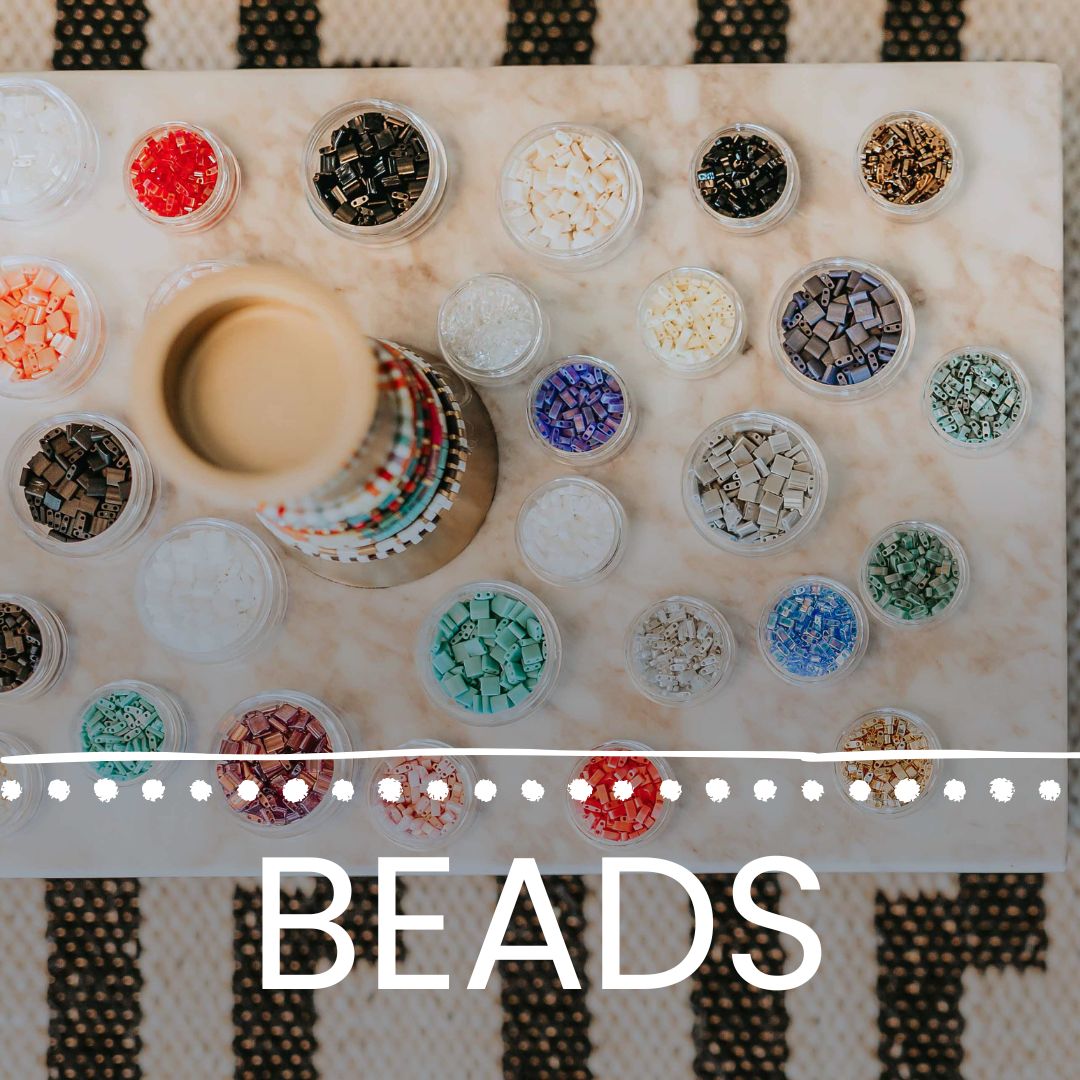
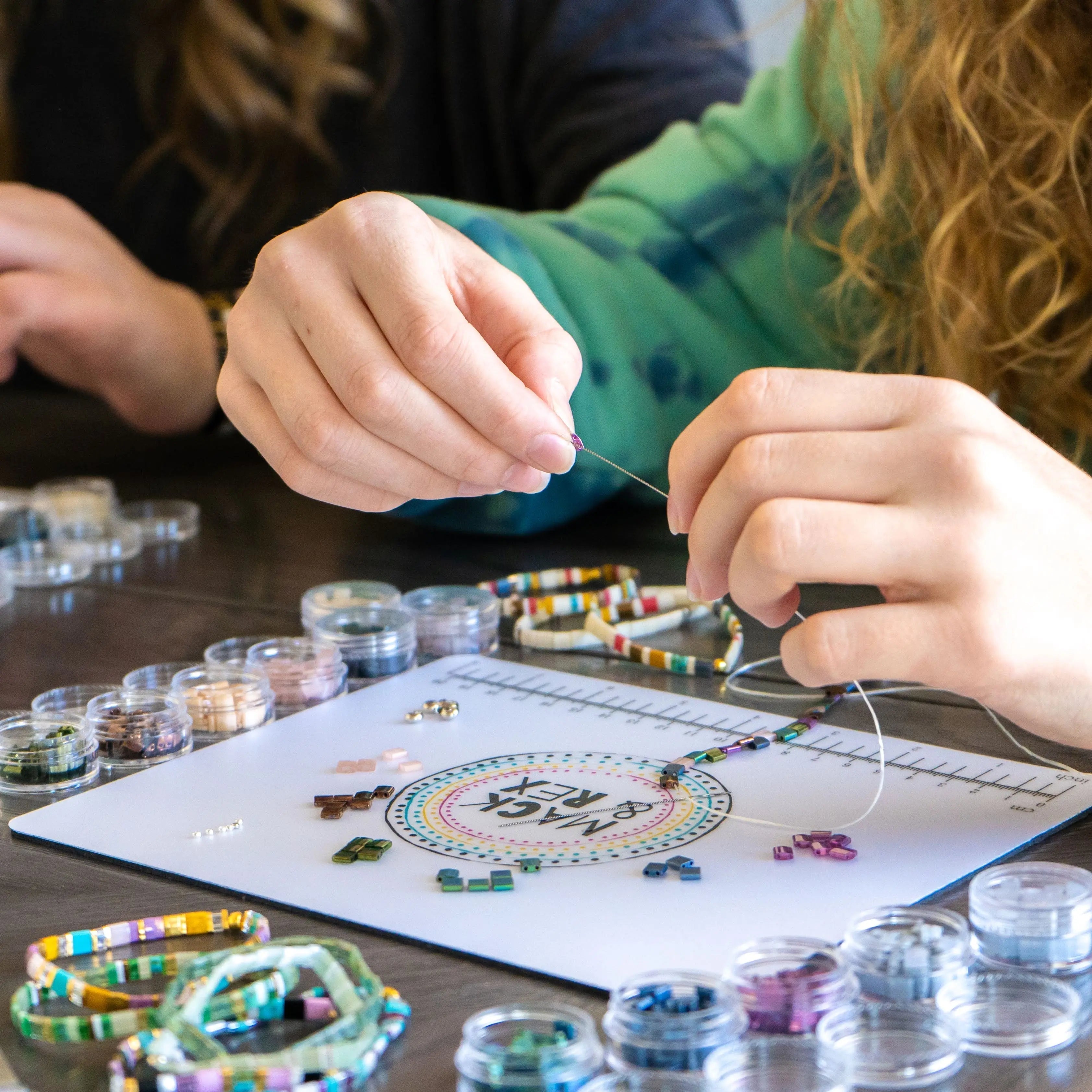
Heishi also plays well with Mack & Rex's Miyuki Tila stock, if you're already shopping there. Flat clay discs and flat two-hole glass tiles read as very different textures on a wrist, matte and organic next to structured and glassy, and a lot of customers stack the two together for that contrast. If you're building a bracelet from scratch, pair a couple of heishi strands with a themed Tila mix for a stack that looks intentional rather than random.
One safety note, since heishi beads are a popular family craft project: loose beads are small parts and a choking hazard. They aren't appropriate for young children, and any beading session involving kids requires an adult at the table for the entire project, start to finish.
Frequently Asked Questions About Heishi Beads
Are heishi beads the same as clay beads?
Not exactly. Heishi describes a flat disc shape, not a material, so heishi beads can be made from polymer clay, shell, or stone. Most heishi sold today is polymer clay, but the word itself only refers to the cut, not what the bead is made of.
What does the word heishi mean?
Heishi comes from a Puebloan word for shell, and it originally described small disc beads hand cut from shell by artisans in the American Southwest. Over time the name stuck to the shape itself, flat and round with a center hole, regardless of what material a bead is cut from.
Are polymer clay heishi beads good quality?
Yes, for everyday jewelry. Cured polymer clay is hard, colorfast, and holds up fine to daily wear, and it lets makers produce heishi in nearly any color at a fraction of the cost of hand-cut shell or stone. It is not the same material as traditional heishi, but it is a durable one.
How do I know if my heishi beads are clay or shell?
Check the listing first; reputable sellers state the material. As a rule of thumb, uniform bright colors and a light weight usually mean polymer clay, while natural color variation, a cool touch, and higher weight point to shell or stone. Clay also feels slightly warmer to the touch than natural material.
Where can I buy heishi beads for bracelet making?
Mack & Rex sells polymer clay heishi beads by the strand in a range of colors, sized for bracelet and necklace making. Browse the collection at mackandrex.com/collections/heishi-beads. Orders ship internationally, with shipping and any customs or duties calculated at checkout, and free shipping on US orders over $100.
Ready to string your own? Shop the Mack & Rex heishi bead collection for polymer clay discs sorted by color, sized for bracelets and necklaces alike. Mack & Rex ships worldwide, with shipping and any customs or duties calculated at checkout, and free shipping on US orders over $100.