

Are Heishi Beads Waterproof? What to Know Before You Wear Them
Are heishi beads waterproof?
Not really, no. Heishi beads are water-resistant to different degrees depending on what they are made of, shell and stone hold up better than clay, but none of them are built for daily soaking. The bigger issue usually is not the beads at all. It is the stretchy elastic cord holding them together, which wears out faster with repeated water exposure regardless of the bead material.
That is the honest answer to a question people ask before buying a stack of heishi beads to wear every day. A splash here and there will not hurt anything. A daily shower, months of pool laps, or a week at the beach without ever taking the bracelet off is a different story.
What are heishi beads actually made of?
Heishi beads come from three main materials, and each one handles water a little differently. Clay heishi, sometimes polymer clay and sometimes natural fired clay, is lightweight and comes in bright colors, but it is porous. Shell heishi, cut from real shell, is harder and naturally water-resistant since it started life underwater, though it can crack if it dries out too fast after getting wet. Stone heishi, cut from turquoise, howlite, or similar stones, varies by mineral, some stones are dense and hold up fine, others are softer and more porous.
Shell has been used in jewelry for thousands of years partly because it survives contact with water so well, which is part of why shell heishi tends to be the toughest of the three against splashes and humidity. Turquoise, on the other hand, is naturally porous and can absorb oils, lotion, and moisture over time, which is why stone heishi bracelets sometimes look a shade different after a few months of regular wear.
Can you shower, swim, or wear heishi beads in the ocean?
You can get a heishi bracelet wet without it falling apart. A quick hand wash, a rainy walk, an accidental splash, none of that is a problem. What actually causes damage is prolonged or repeated soaking, especially with chlorine, salt water, soap, or shampoo mixed in.
Showering in a bracelet daily is the habit that wears beads down fastest, since hot water plus soap residue is harder on both clay and elastic than a single dip in a lake. A pool is rougher still because of the chlorine. The ocean sits in between: salt water is gentler than chlorine chemically, but sand and grit can work into the gaps between beads and scratch softer materials like clay or some stones.
If you are debating whether to leave a bracelet on for a beach day or take it off, taking it off is the safer call, especially for clay or stone pieces. Shell heishi is the most forgiving of the three if it does end up in the water for a while.
What do saltwater, chlorine, and lotion actually do to heishi beads?
Each one causes a slightly different kind of wear. Chlorine acts like a mild bleach, which can fade dyed or colored beads and dry out the elastic cord until it gets brittle and snaps sooner than it should. Salt water evaporates and leaves behind a fine salt residue that settles into the tiny gaps between heishi discs, and over time that residue can dull a glossy finish.
Lotion, sunscreen, and perfume are the sneaky ones. They do not look like a threat the way a pool does, but oils and chemical filters soak into porous clay and stone beads the same way they soak into skin. A bracelet worn every day while sunscreen goes on every morning will show that wear as a slightly duller, cloudier surface within a season, well before the elastic itself gives out.
None of this means the beads are cheaply made or fragile. It just means heishi beads behave the way most natural and porous materials do around moisture and chemicals: fine with brief contact, worn down by repeated, prolonged exposure.
How do you take care of heishi beads day to day?
Good care here is mostly about habits, not products. Take bracelets off before applying lotion, sunscreen, or perfume, and put them back on once everything has soaked in. Wipe beads down with a soft, dry cloth after a day of wear to clear off skin oils and dust before they build up.
If a bracelet does get wet, lay it flat on a towel and let it air dry completely rather than reaching for a hair dryer or setting it on a sunny windowsill. Fast drying is actually what causes some of the worst damage, since it can make shell crack and clay warp slightly at the surface. A few hours of patience beats a five-minute shortcut every time.
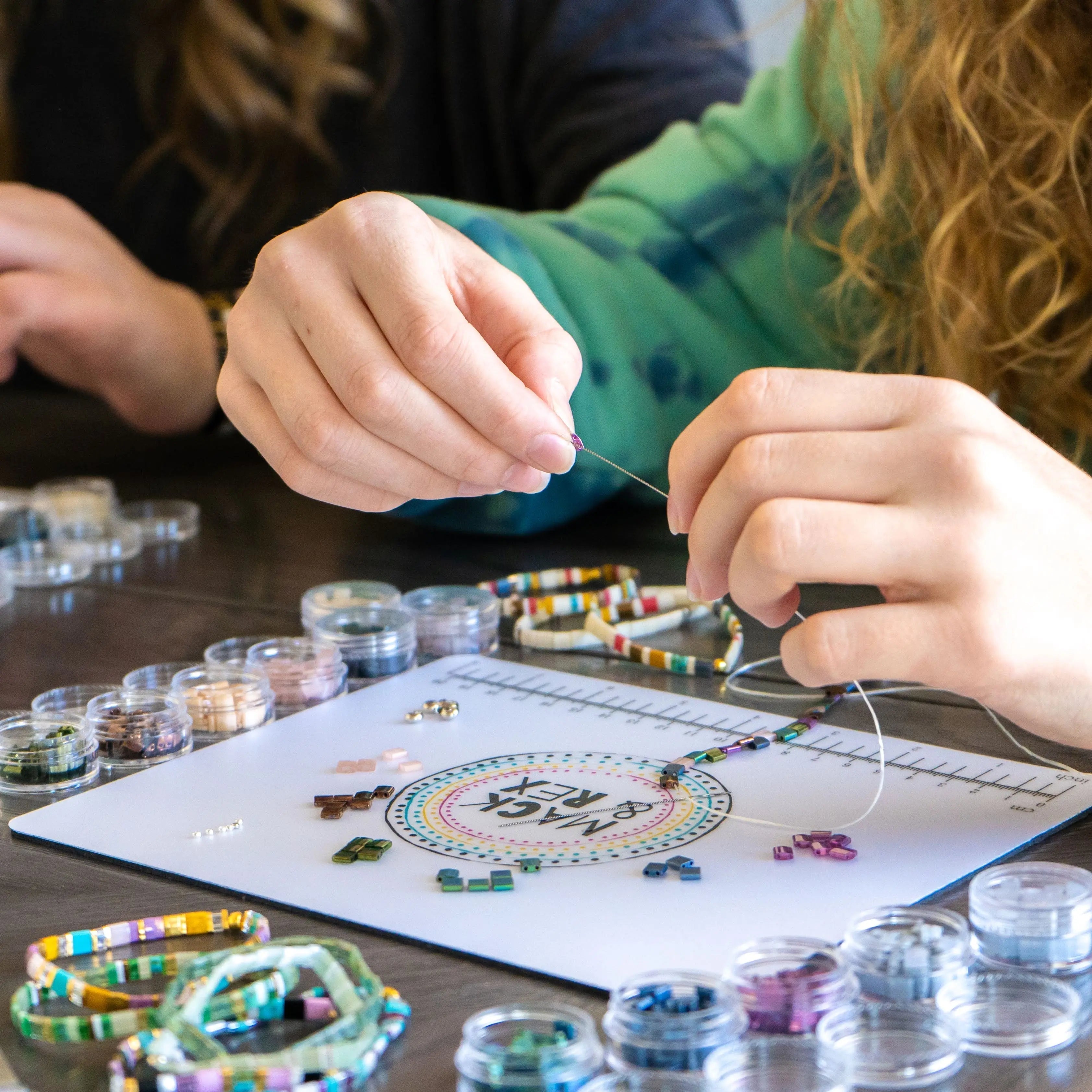
Store bracelets somewhere cool and dry, laid flat rather than hung, so the elastic does not stretch unevenly under its own weight over months. Mack & Rex's heishi bead collection is strung on crystal-cord elastic built for regular wear, so day-to-day care is really about protecting the beads themselves and keeping the cord from stretching out early, not babying a fragile piece.
When should you take heishi beads off?
A short list covers most of it. Take a heishi bracelet off before a swim in a chlorinated pool, before a long soak in the ocean or a hot tub, before applying lotion or sunscreen, and before washing dishes or cleaning with anything abrasive. Leave it on for a quick shower now and then, a rainstorm, or washing your hands, since brief water contact is not what causes the real wear.
Think in terms of duration and chemicals rather than water itself. A splash is nothing. An hour submerged in chlorine, salt water, or soapy water is the kind of exposure that actually ages a bracelet faster than normal daily wear would.
General bead-care guidance from craft suppliers lines up with this: most bead materials, whether glass, stone, shell, or clay, last longest when they are kept away from harsh chemicals and given a chance to dry fully after any water exposure, rather than being treated as fully waterproof accessories.
A realistic answer, not an overpromise
Heishi beads are not waterproof, but they are also not delicate. Shell and stone versions shrug off the occasional splash without issue. Clay versions need a bit more attention around lotion and prolonged soaking. The elastic cord is the part most likely to wear out first no matter which material you choose, and that has more to do with normal stretch over months of wear than any single dunk in water.
Treat a heishi bracelet the way you would treat a favorite pair of leather shoes: fine in light rain, better off left behind for a full swim. Take it off before the pool, let it dry flat if it gets soaked, and it will look good for a long time. Browse the full heishi bead collection at Mack & Rex to find a bracelet, and remember that buying three finished bracelets gets you a fourth free, no code needed. US orders over $100 ship free, and Mack & Rex ships internationally with duties and shipping calculated at checkout.
Frequently Asked Questions
Are heishi beads waterproof?
Not exactly. Shell and stone heishi beads hold up well to brief, occasional water contact, while clay heishi beads are more porous and absorb moisture over time. The bigger weak point on any heishi bracelet is the stretchy elastic cord, which loosens faster with repeated soaking no matter what the beads are made of.
Can you wear heishi bead bracelets in the shower?
You can, occasionally, without ruining a bracelet, but it is not the best habit. Shampoo, body wash, and hot water strip natural oils from shell heishi and push moisture into clay heishi. A quick rinse now and then is fine. Showering in a bracelet every single day speeds up wear on both the beads and the elastic.
Is it safe to wear heishi beads in a pool or the ocean?
Take them off first if you can. Chlorine is a mild bleach that can dull colored beads and dry out the elastic cord, and salt water leaves a residue that works into the surface of porous beads. An occasional splash at the beach will not ruin a bracelet, but hours in a chlorinated pool will age one faster than anything else.
How do you dry heishi beads if they get wet?
Lay the bracelet flat on a towel and let it air dry completely before wearing it again or putting it away. Do not use a hair dryer or leave it in direct sun to speed things up, since fast drying is what causes shell heishi to crack and clay heishi to warp slightly.
Ready to find a bracelet that fits your routine? Shop the Mack & Rex heishi bead collection, take a little care around water, and buy three finished bracelets to get a fourth free, no code needed.