

Best Bead Making Kits in 2026: Ranked and Reviewed
What's the Best Bead Making Kit in 2026?
The best bead making kit gives you real glass beads (not painted plastic), enough cord and findings to actually finish a project, instructions with visuals, and tools you'll use again on your next kit. Judge kits on those four things, not the box art, and the good ones separate from the junk fast.
We rank kits below on that same criteria: bead quality, completeness, instructions, and reusability. No guesswork, no vague "premium" claims. Here's what to look for and where the options that hold up actually land.
What Makes a Bead Making Kit Good vs. a Waste of Money?
Four things separate a kit worth buying from one that ends up in a drawer: the beads are real glass with consistent sizing, the box includes everything needed to finish (not just beads), the instructions actually show you how, and the tools carry over to your next project rather than becoming trash after one use.
Miss any one of those and the kit falls apart somewhere in the process, sometimes literally. A kit with gorgeous beads but no crimp beads sends you to a craft store mid-project. A kit with great tools but a single-paragraph instruction card leaves a first-timer stuck at step two. We'll walk through each criterion, then rank the kits that actually hit all four.
Are the Beads Real Glass or Painted Plastic?
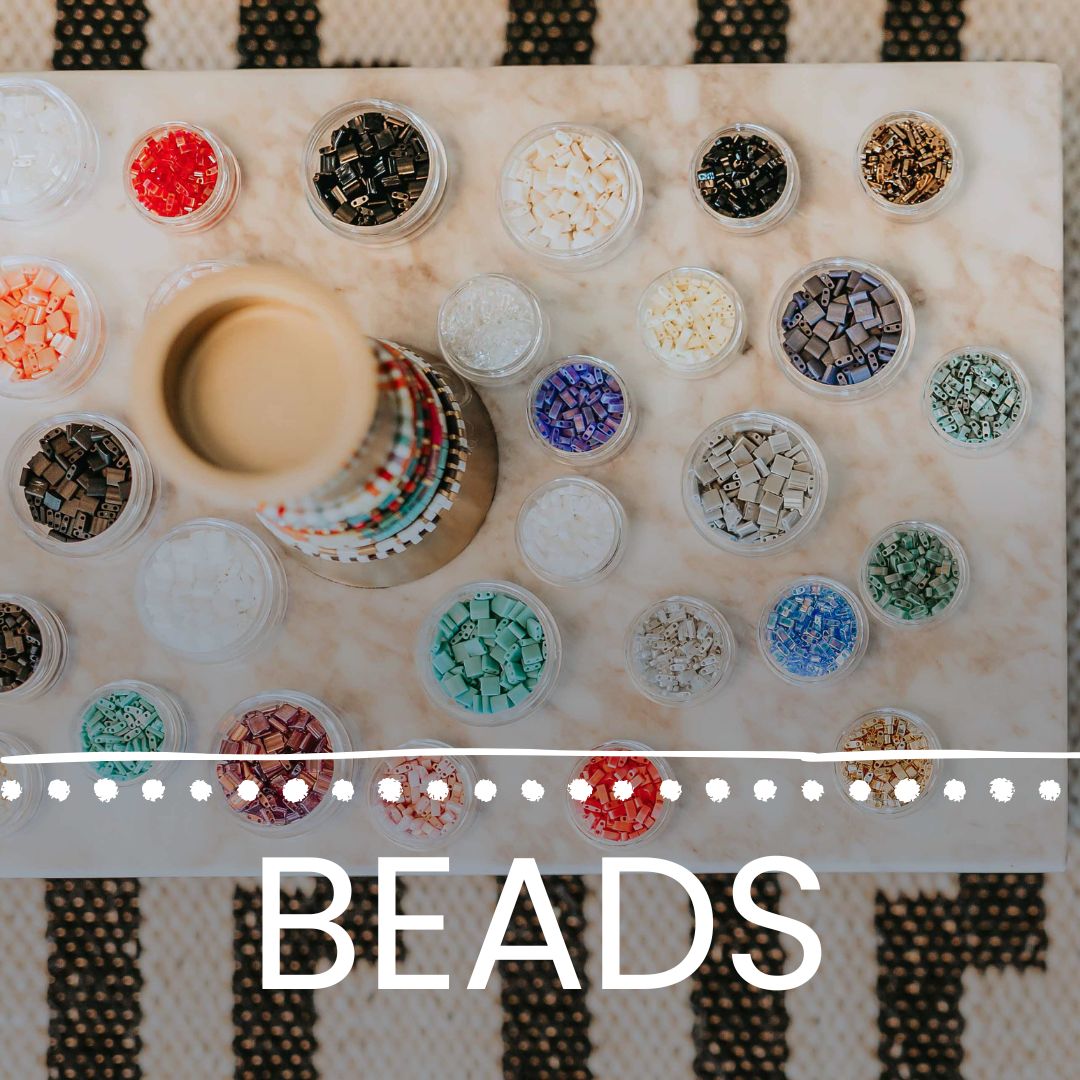
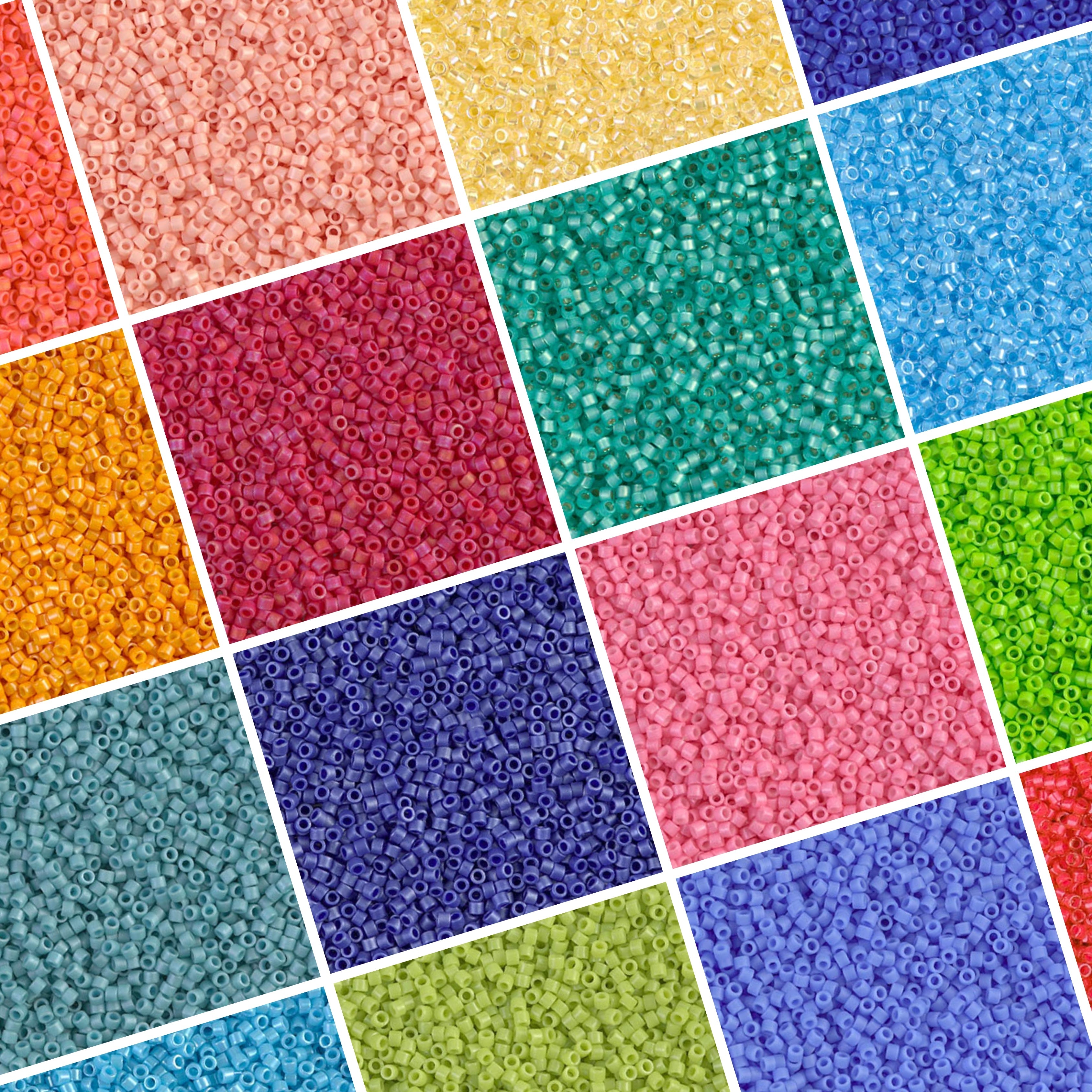
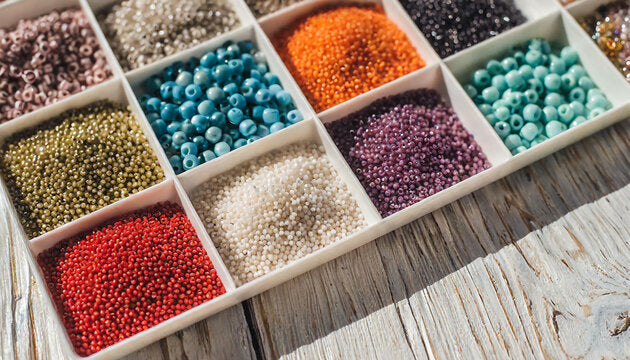
Real Miyuki glass beads, including Tila tile beads, are cut and finished to a tight size tolerance, so every piece lines up the same way and holds its color for years. Painted plastic or acrylic "tile" beads vary from piece to piece, which shows up as gaps, twisting, and fading within a few months of wear.
Miyuki is a Japanese glass bead manufacturer, not something any one retailer makes in-house. Mack & Rex resells authentic Miyuki Tila beads in our kits and bracelets, and we're specific about that because "tile beads" gets used loosely online to describe knockoffs that only look similar in a photo. If a kit's description never names the bead brand, or the photos show rounded edges instead of Tila's flat, square shape, that's worth a second look before buying. Potomac Beads has a solid rundown of what actually sets Miyuki Tila apart from generic tile beads if you want the material comparison in more depth.
Does the Kit Include Everything You Need to Finish a Bracelet?
A complete kit has beads, stretch cord, findings (crimp beads, knot covers, clasps if needed), and enough of each to finish every bracelet the kit promises, not just beads with everything else sold separately. Anything less turns "kit" into "starter pack you'll need to supplement."
Cord quality matters more than most buyers expect going in. A stretch bracelet that stays snug through a workout uses crystal-cord elastic rated for beading, not the thin, generic stretch string that loosens or snaps within weeks. Mack & Rex kits use .5mm crystal elastic cord, the same cord in our finished bracelets, so a bracelet you make from a kit holds up the same way as one we sell ready-to-wear. Halstead Bead's elastic cord guide explains why diameter and material affect how long a stretch bracelet lasts, worth a skim if you're comparing cord specs across brands.
Are the Instructions Actually Usable?
Usable instructions show the stringing pattern step by step with photos or diagrams, name each tool as you need it, and explain how to knot off and finish so the bracelet doesn't unravel after one wear. A folded slip of text with no visuals is not instructions, it's a suggestion.
This is where a lot of kits quietly cut corners, since printed instruction cards are cheap to skip or shrink. Every Mack & Rex kit includes a free online tutorial that walks through the exact stringing method we use on our own finished bracelets, so a beginner and an experienced crafter are following the same process. Lima Beads runs a "Create and Learn" studio with general beading technique walkthroughs if you want a broader primer on stringing and finishing before your kit arrives.
Can You Reuse the Tools and Leftover Beads?
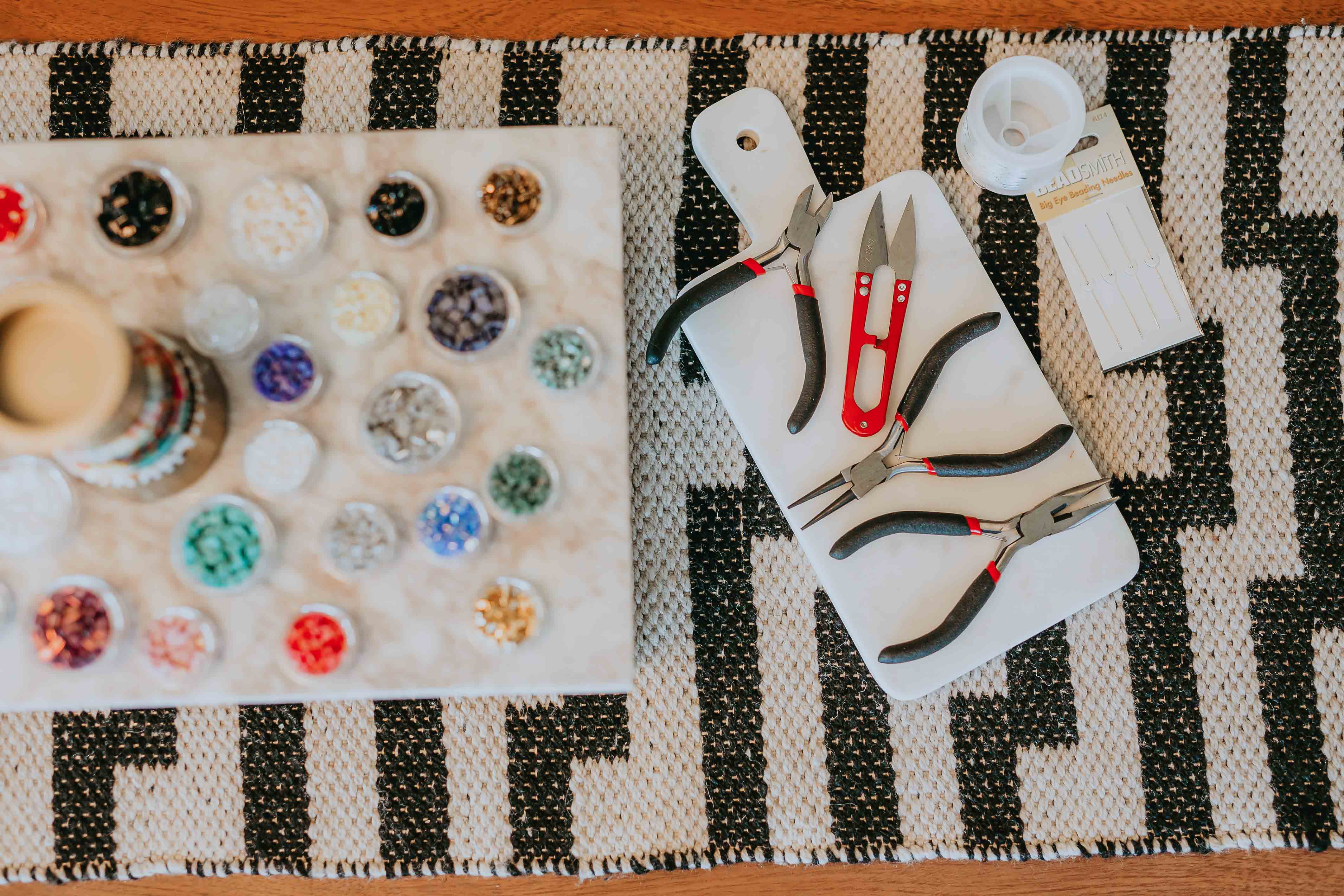
Yes, and this is the criterion most buyers skip when comparing kits. Pliers, side cutters, and locking beading needles are not single-use; a decent set carries over to every future project, so a second kit purchase should mostly pay for beads and cord, not new tools.
Leftover beads matter too. A kit measured out exactly leaves you with nothing extra, while a kit with a little overage lets you mix colors into a custom piece later or patch a broken strand without opening a new pack. Our All-in-One tools and supplies kit ($39.99 to $43.99) is a standalone option for this reason, a full tool set you keep and reuse across every future bead kit.
Which Bead Making Kits Are the Best Picks in 2026?
Ranked by bead quality, completeness, instructions, and reusability, here's how the kit types stack up. We're ranking against those four criteria, not against unnamed competitors, because the honest answer is that plenty of kits on the market skip one or more of them.
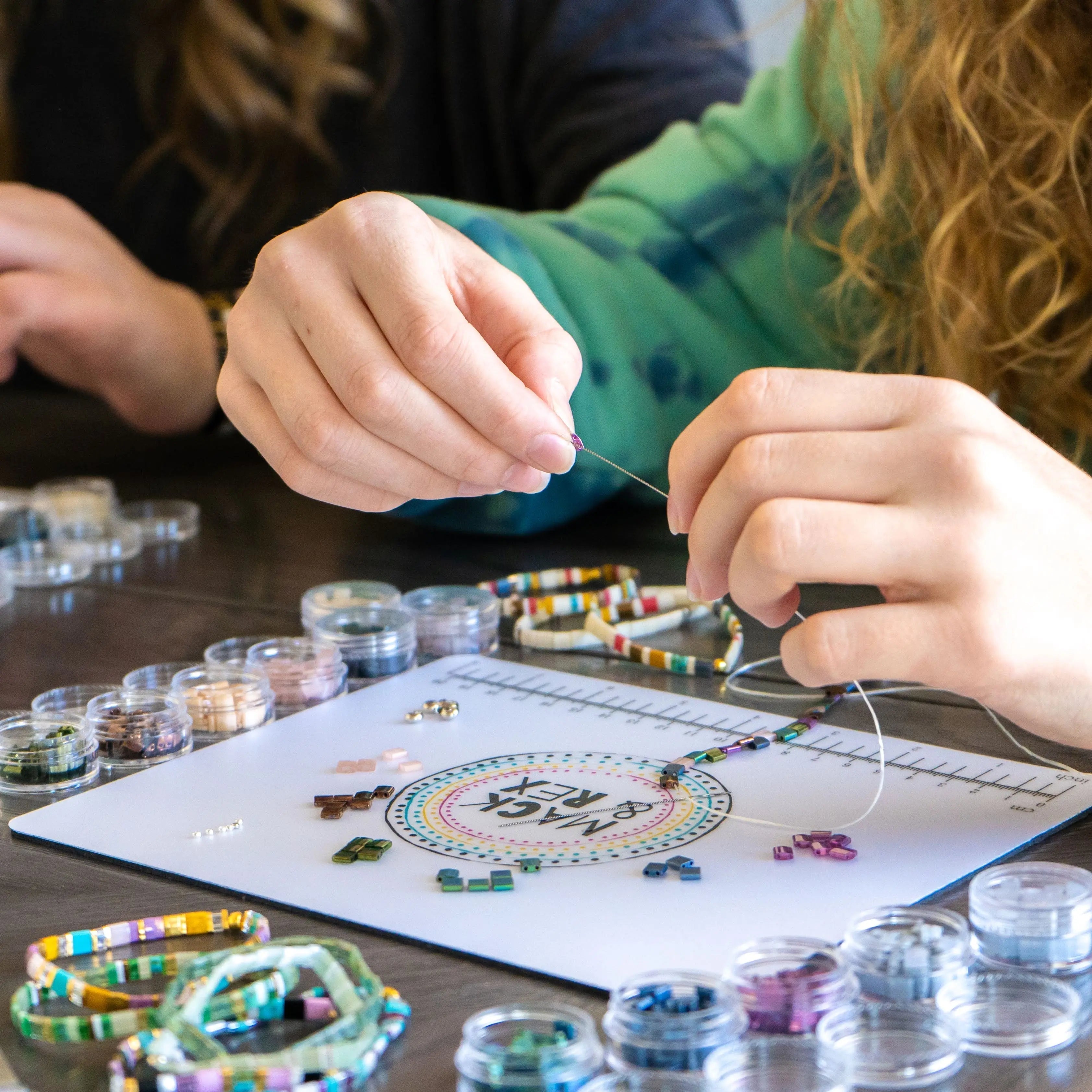
1. Best overall: Tila Bead Starter Kit ($189.99, makes 20 bracelets). Real Miyuki Tila beads in your choice of color pack, a full tool set with pliers and side cutters, two locking beading needles, crimp beads, knot covers, and a bead mat with a built-in ruler for sizing as you go. This is the kit that checks every box: quality beads, complete findings, reusable tools, and a free tutorial.
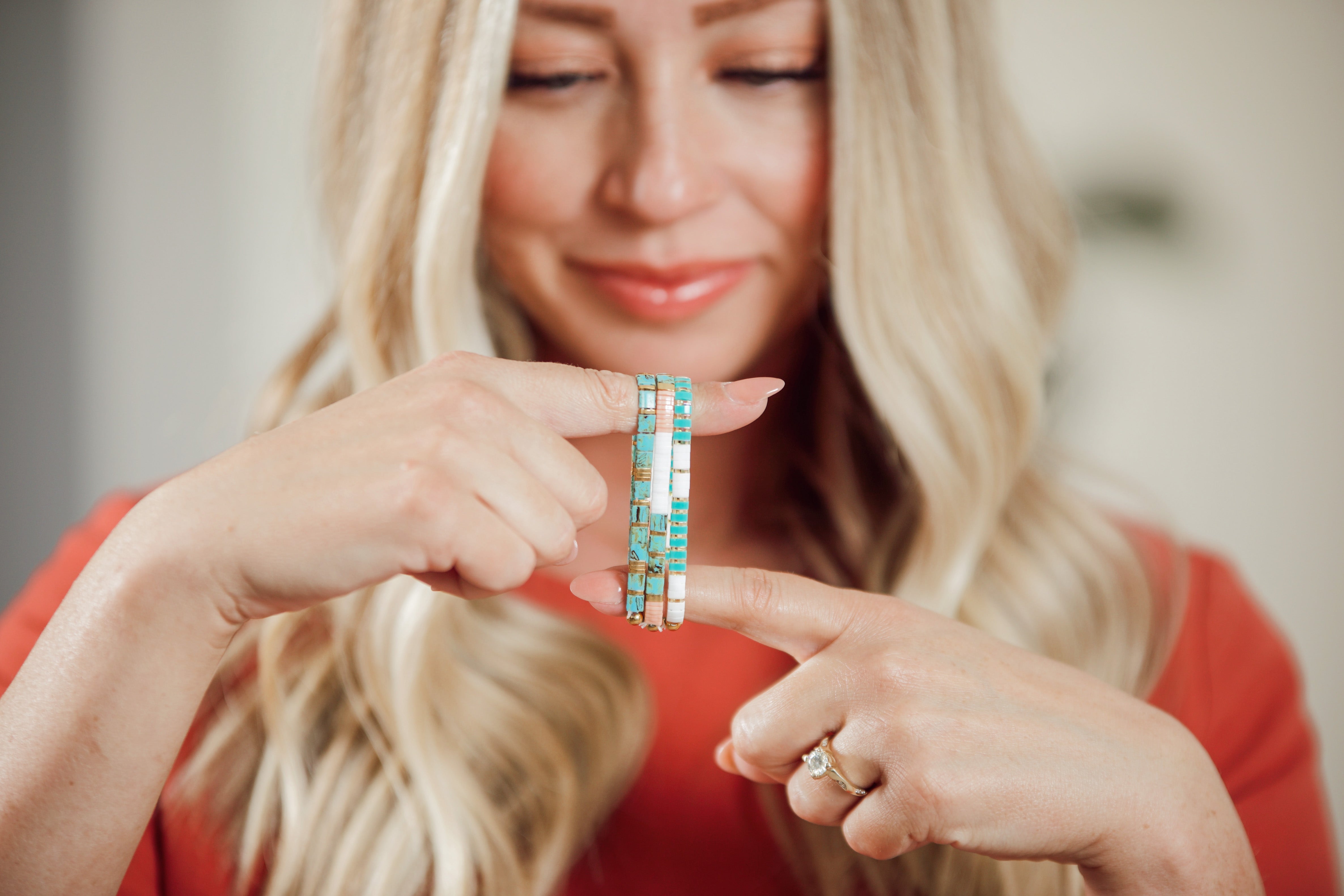
2. Best for a first project or single gift: trio kits ($44.99, makes 3 bracelets). One coordinated color story (STAINED GLASS, HAPPY, LAVENDER SKY, and rotating seasonal drops like NOEL and AMERICANA) with the same crystal-cord elastic and findings as the bigger kits, scaled down. Good for testing whether you like the process before committing to a larger size.
3. Best for bulk crafting or a group: The Ultimate Tila Bracelet Kit ($399.99, makes 80 bracelets). Same bead and cord standard as the starter kit, sized for a class, a bridal party, or a crafting weekend with several people working at once. Per-bracelet cost drops the most at this size.
4. Best for an ongoing supply: DIY Bracelet Kit Club ($36.99/month, 3 bracelets per box). A subscription that ships a new trio kit each month, useful if you want fresh colorways without reordering manually or if crafting together is a standing monthly activity rather than a one-off.
One of our five-star reviews summed up the trio format well: "I like the kit in a can monthly as it is a complete three bracelet project for me. The pieces and colors work so well together I love it." That's the kind of completeness this list is ranking on, not just pretty beads in a bag.
Is a Bead Making Kit Safe for Kids to Use?
Beads, crimp beads, and other small findings are a choking hazard. A good kit is meant for adults and older kids crafting with adult supervision, not for a young child to open and use alone.
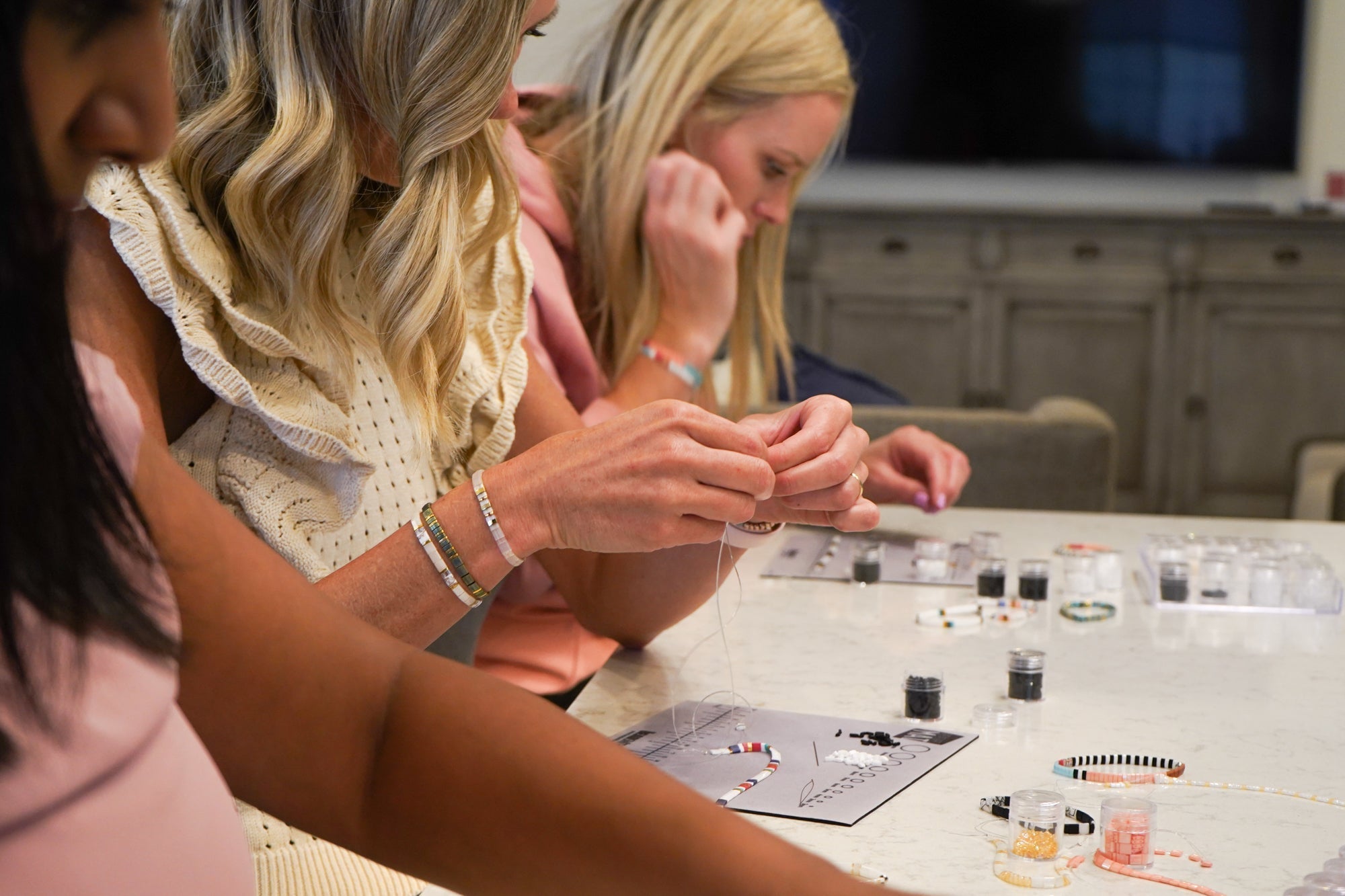
This is worth stating plainly since bead kits get marketed around the "make it together" moment, a parent or grandparent at the table with a kid on a weekend afternoon. That's exactly the setting a kit is built for, with an adult handling the trickier steps like crimping and managing the loose small parts. It's not a claim about developmental benefits, it's a craft project with pieces you need to keep away from toddlers and pets between sessions, and count back into their containers when you're done.
What's the Real Cost Per Bracelet Across Kit Sizes?
Compare kits the way you'd compare unit pricing at the grocery store, total price divided by bracelets made. A $44.99 trio kit runs about $15 a bracelet. The $189.99 starter kit runs about $9.50. The $399.99 kit making 80 bracelets lands around $5, the lowest per-unit cost in the lineup.
None of that includes shipping. Mack & Rex ships internationally, with shipping and any customs or duties calculated at checkout, and free shipping applies to US orders over $100. A single trio kit at $44.99 doesn't clear that threshold alone, so factor shipping in if you're ordering just one. The starter and Ultimate kits clear $100 on their own and qualify for free US shipping.
So Which Kit Should You Actually Buy?
Match the kit to the project. A trio kit for a single gift or a first try. The starter kit for a season of gift-giving or a small group. The Ultimate kit for a class, bridal party, or bulk crafting weekend. Check for the same four things every time: real Miyuki glass beads, complete cord and findings, usable instructions, and tools that carry over to your next kit.
Browse the full lineup on the bracelet making kits page, where every kit lists exactly what's included and how many bracelets it makes. Compare specs, not just photos, and you'll end up with a kit that holds up past the first project.
Frequently Asked Questions
What is the best bead making kit for a beginner?
Start with a smaller kit built around one color story, something like a trio kit that makes 3 bracelets. It's enough to learn stringing, crimping, and knotting off without a big investment, and you'll know within one project whether you want to size up to a bigger kit.
Are real glass bead kits worth the extra cost over plastic ones?
For most crafters, yes. Glass beads like Miyuki hold their color and shine over years of wear, while painted plastic beads scuff and fade within months. If you're making something you'll actually wear or gift, the per-bracelet cost difference is small next to how much longer it lasts.
Can you reuse the tools that come with a bead making kit?
Yes. Pliers, side cutters, and locking beading needles are not single-use. A good kit's tools carry over to your next project, so buying a second kit later should only mean paying for beads, cord, and findings, not tools you already own.
How many bracelets does a bead making kit typically make?
It depends on the kit size. A trio-style kit makes 3 bracelets in one palette, a starter kit makes 20, and a larger kit makes 80. Always check the listing for the exact count since sizes and colorways shift with each drop.
Is a bead making kit safe to use with kids?
Beads, crimp beads, and other findings are small parts and a choking hazard, so kits are built for adults and older kids crafting with adult supervision, not for young children to use unsupervised. Keep loose pieces away from toddlers and pets between sessions.