

Best Beads for Layered Bracelet Stacks That Actually Look Good
Best Beads for Layered Bracelet Stacks That Actually Look Good
The best beads for layered bracelet stacks are the ones that contrast in shape and texture while repeating a color or finish across the stack. Flat tila beads, rounded heishi discs, small seed beads, and the occasional metal accent bead each do a different job on the wrist, and mixing them on purpose is what separates a stack that looks curated from one that looks like a pile of random bracelets.
If you have ever lined up a few bracelets side by side and felt like something was off, it usually comes down to bead choice, not bracelet count. This guide walks through which bead types work best for layered bracelet stacks, how to mix textures and sizes so bead stacks read as intentional, and how a beaded bracelet kit can take a lot of the trial and error out of the process.
What Are the Best Beads for Layered Bracelet Stacks?
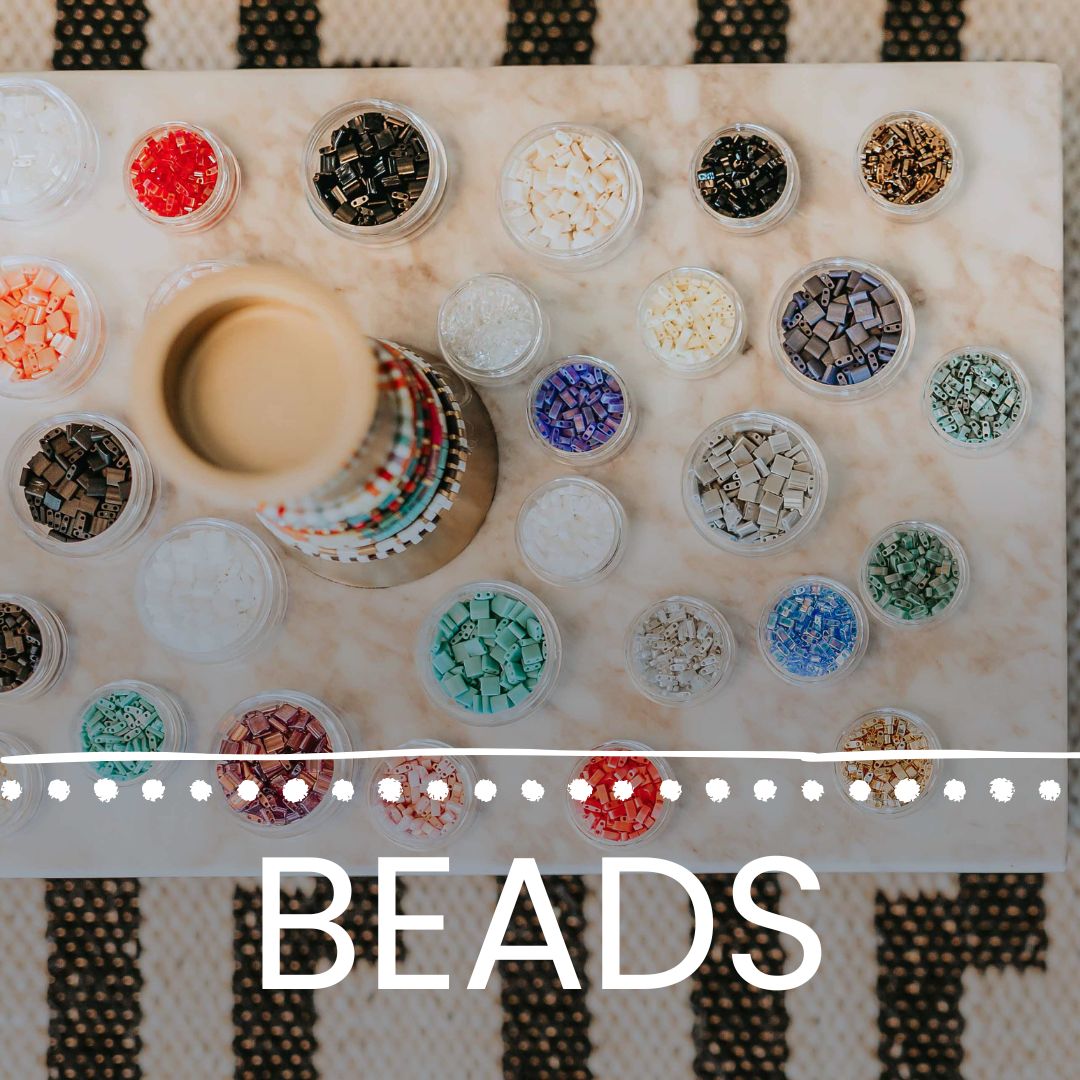
For stacking purposes, four bead categories cover most of what you need: flat beads like tila, disc-shaped heishi beads, small round seed beads, and metal accent beads. A strong stack usually pulls from at least two of these categories rather than relying on one bead shape repeated across every bracelet. The contrast between flat and round, or matte and shiny, is what gives a stack visual depth instead of flatness.
None of these bead types is inherently "better" on its own. What matters is how they sit next to each other once bracelets are layered on the wrist, which is the part most people skip when they are shopping bead by bead instead of thinking about the whole stack.
Why Do Tila Beads Work So Well in a Stack?
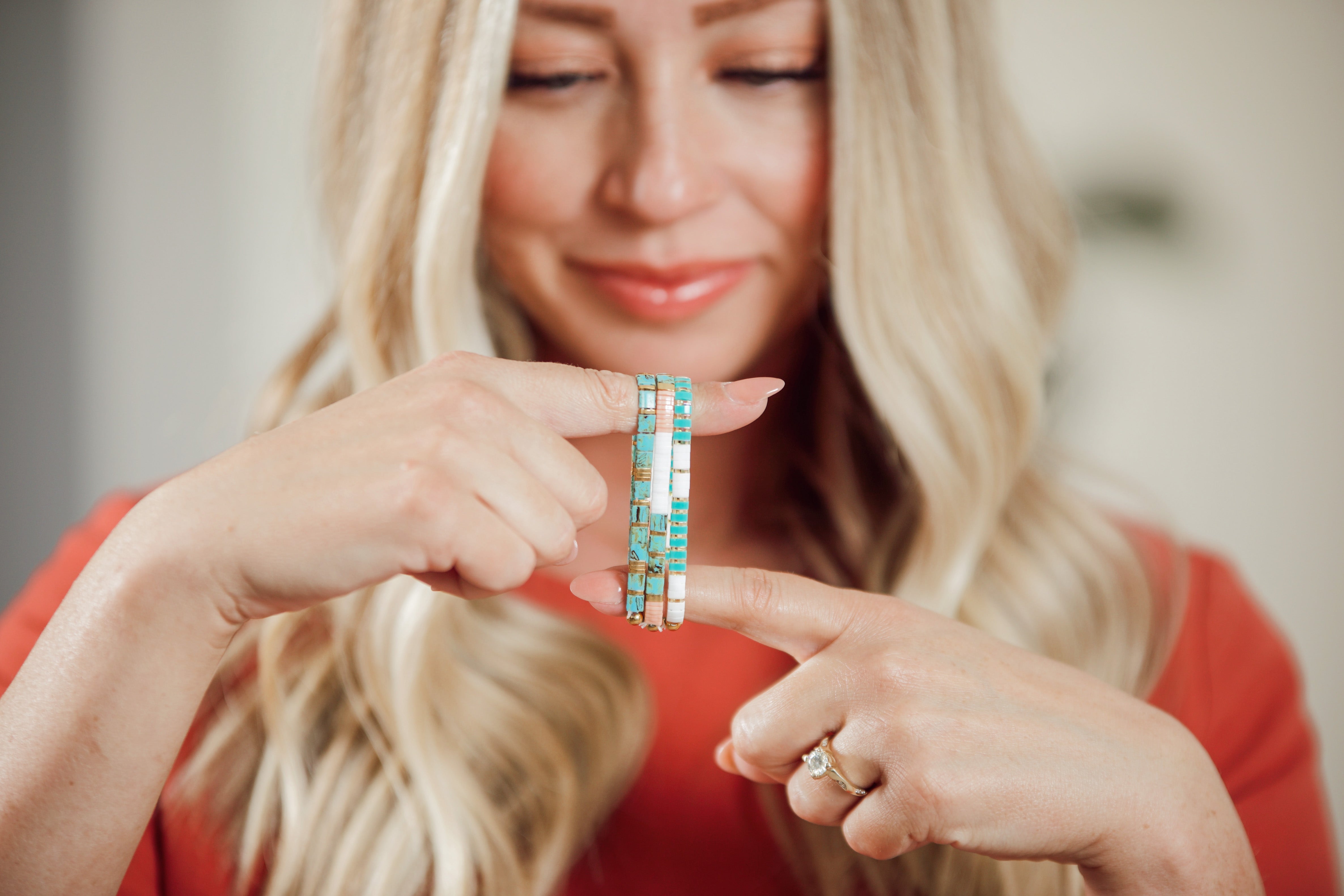
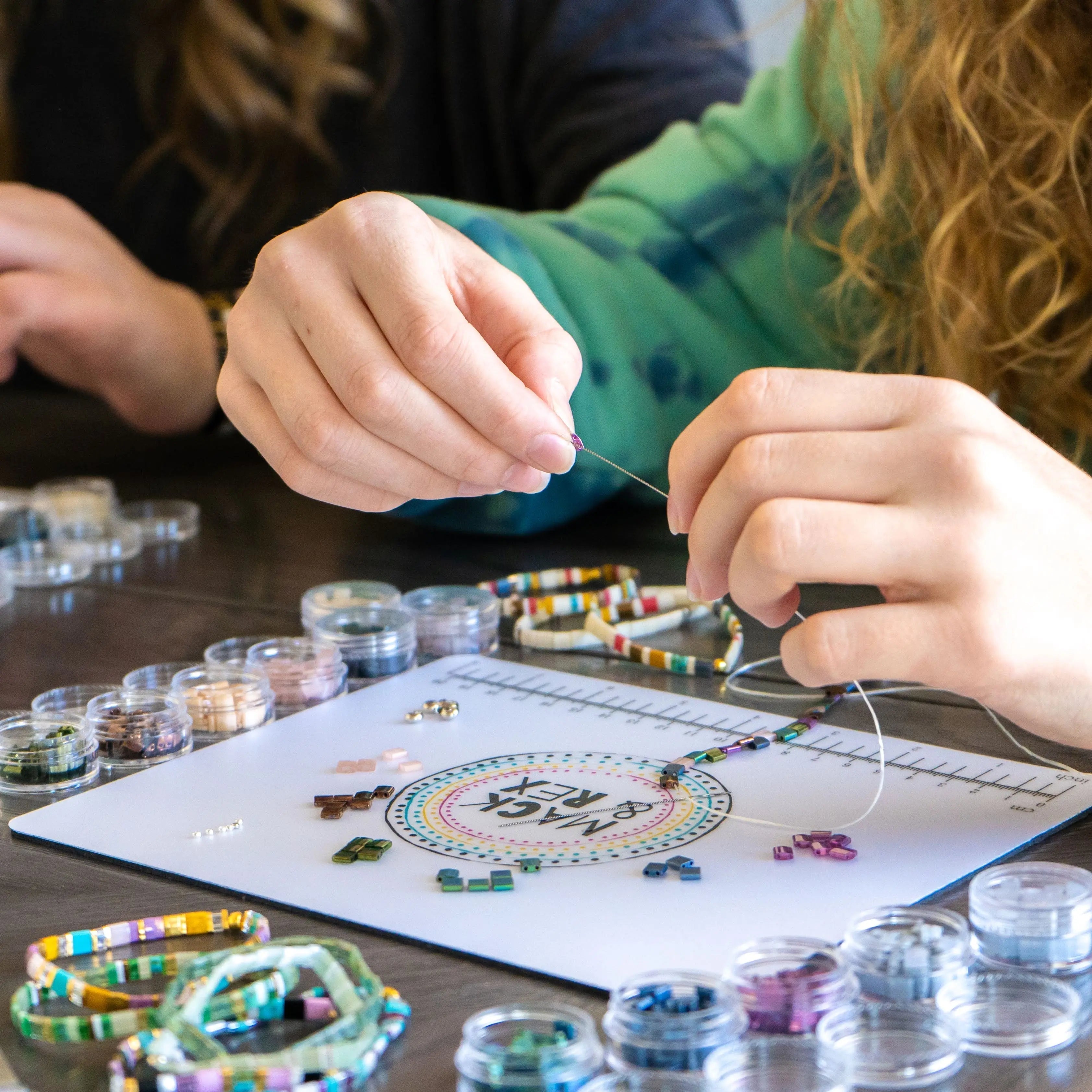
Tila beads are flat, square, two-hole glass beads, and that flat profile makes them stand out next to rounder bead shapes. Because they sit flush against each other and against the skin, a tila bracelet tends to look more structured and graphic than a strand of round beads, which makes it a strong anchor piece in a stack. Tila beads also catch light differently than round glass beads, so a tila bracelet can add a bit of shine or pattern without being the loudest piece in the mix.
In a stack, one tila bracelet is often enough. Layering several tila pieces together can start to look stiff, while one tila bracelet paired with softer, rounder shapes lets the flat beads do their job as a structural element rather than competing with themselves.
What Do Heishi Beads Add to a Bracelet Stack?
Heishi beads are flat, disc-shaped beads, most often made from shell, stone, or clay. They are a bead shape, not a brand, and you will find heishi in a wide range of materials and colors. In a stack, heishi beads tend to read as grounding and earthy, which makes them a useful neutral base that brighter or shinier bracelets can sit against.
Because heishi beads are thin and disc-shaped, a heishi bracelet often sits closer to the wrist than a bracelet made of larger round beads. That lower profile makes heishi a good choice for the bracelet closest to the hand in a stack, with bulkier beads layered above it.
How Do Seed Beads Fill Out a Stack?
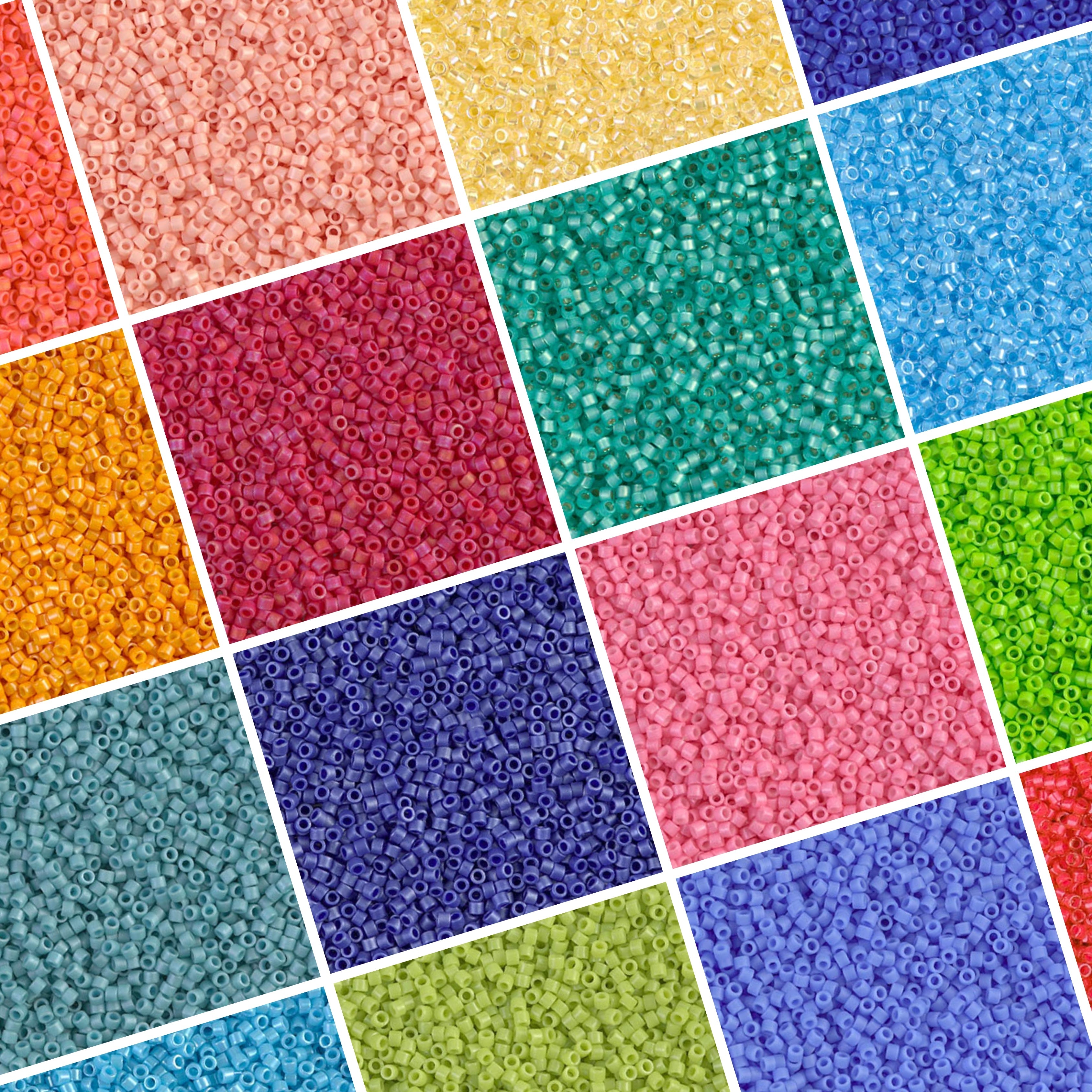
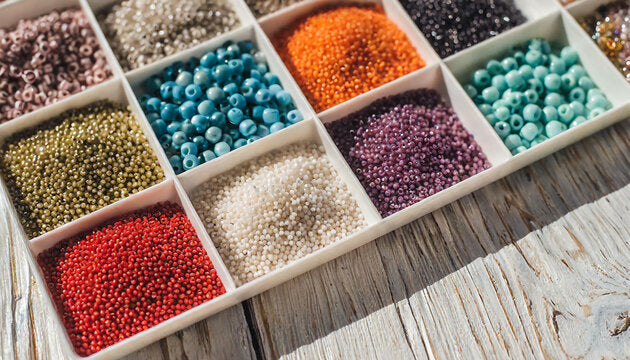
Seed beads are small, mostly round beads, and in a stack they function as the fill piece. A thin seed bead bracelet does not compete for attention the way a chunkier bead does, which makes it useful for repeating a color across the stack without adding bulk. If a stack has one bold color used in a larger bead on one bracelet, a seed bead bracelet in that same color can echo it in a quieter way.
Seed beads also come in a wide range of finishes, matte, glossy, opaque, and metallic among them, which gives you a lot of room to fine-tune color without changing the overall shape of the stack.
Should You Add Metal Accent Beads?
Metal accent beads, including small metal balls and spacer beads, work best in small doses. A few metal beads worked into an otherwise glass or stone stack add shine and a bit of visual break between colors, which can keep a multi-color stack from looking too busy. Used heavily across every bracelet, metal beads can start to overpower softer materials like heishi or seed beads, so treat metal as the accent, not the main event.
How Do You Mix Textures and Sizes Without It Looking Messy?
Stylists generally agree that contrast is what makes layered jewelry look deliberate rather than accidental, and that rule applies just as much to bead stacks as it does to stacked rings or layered necklaces1. A few practical ways to apply that to beaded bracelets:
Repeat one color, vary the bead. Pick a single color and use it in at least two bracelets, but change the bead shape or size each time, for example a seed bead bracelet and a heishi bracelet in the same shade of blue.
Group by size. Place your largest beads closest to your hand or at one end of the stack rather than scattering big and small beads randomly across the wrist. This gives the eye a clear place to land instead of jumping around.
Limit your anchor pieces. One tila bracelet and one metal-accented bracelet is usually plenty. If every bracelet in the stack is trying to be the statement piece, nothing gets to actually stand out.
Leave a little breathing room. A stack made entirely of tightly packed beads with no variation in gap or spacing can look heavy. A thinner seed bead bracelet next to a chunkier one gives the stack some visual rhythm.
How Many Bracelets Should Be in a Stack?
There is no fixed rule, but layering guides commonly point to three to five pieces as the range where a stack reads as intentional without crowding the wrist2. Fewer than three can look like you forgot a bracelet, while piling on more than five tends to bury the bead detail that made each piece worth wearing in the first place.
An easy starting point is one anchor bracelet (tila or a larger bead), one textured piece (heishi), and one or two fill bracelets (seed beads, with or without metal accents). From there, you can add or remove a piece depending on how full you want the stack to look.
How Does a Beaded Bracelet Kit Make Stacking Easier?
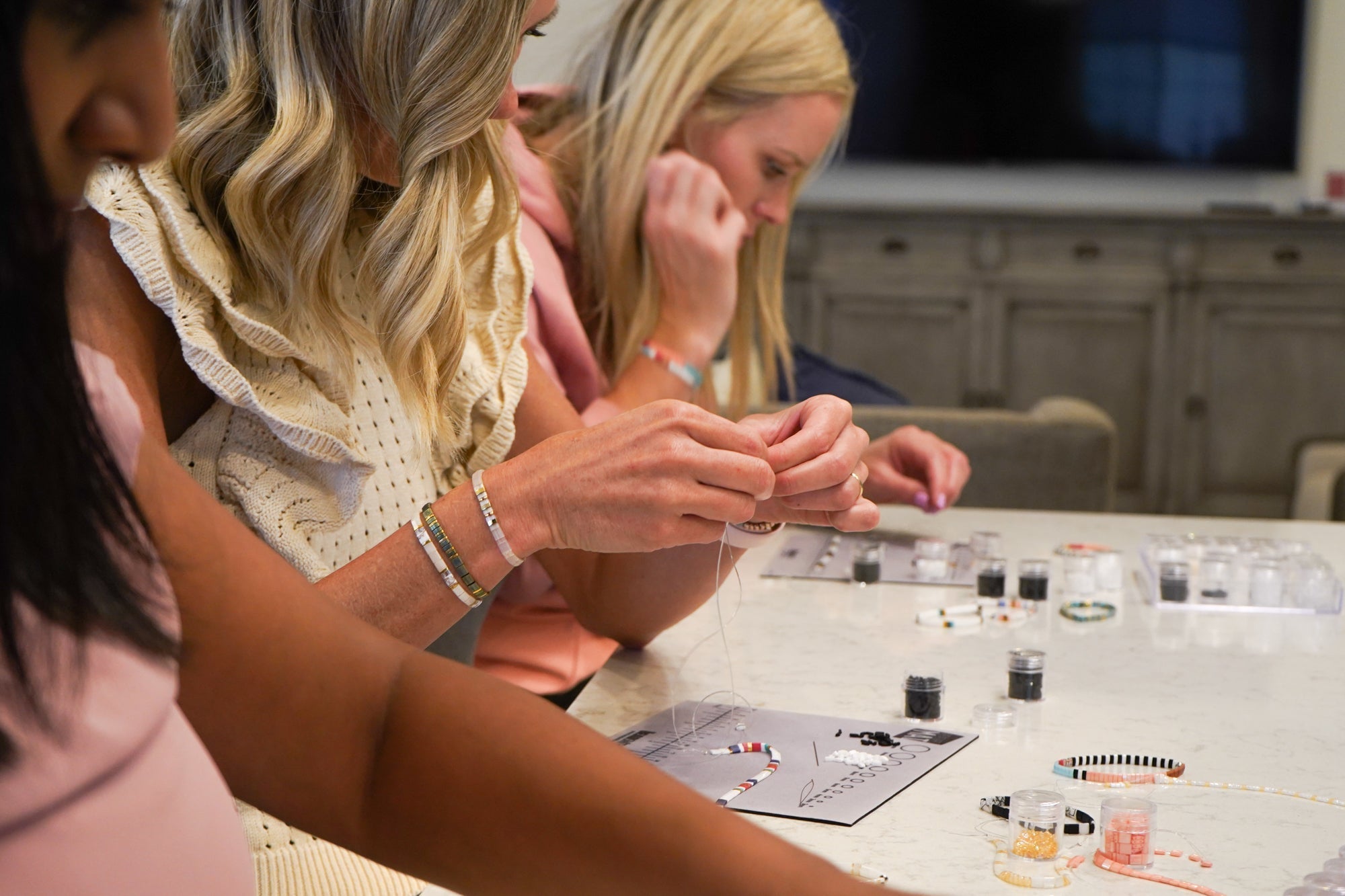
Building a stack bead by bead means making a lot of small color and size decisions before you even know how the bracelets will look together. A beaded bracelet kit shortcuts that process by bundling beads that are already sized and colored to work as a set, so the planning that normally happens through trial and error is mostly done before you start stringing.
This is a good approach if you want to test stacking combinations without committing to a full bead inventory. Lay the beads from a kit out next to a bracelet you already own, try different pairings before stringing anything, and adjust bead order based on what reads well together. Since loose beads are small, keep them away from young children and pets while you are working, as loose beads are a choking hazard if swallowed.
Where to Shop for Bead Stacks and Stacking Supplies
Current jewelry trend coverage consistently points to mixed, layered bracelet stacks as a wearable, low-effort way to build out a jewelry collection over time rather than buying one statement piece3. A beaded bracelet kit is a practical way to start, since it gives you a coordinated set of beads to test before you decide what a finished stack should include.
Mack & Rex carries a bracelet making kits collection with beads sized and colored to layer well together, plus finished bracelets if you would rather build a stack without stringing your own. Trio bracelet kits are commonly priced around $44.99, though pricing can shift with new drops, so check the current listing before you buy.
A few shopping notes worth knowing up front. Mack & Rex ships internationally, and shipping costs, along with any customs or duties on international orders, are calculated at checkout. Free shipping applies only to US orders over $100, so a single kit purchase on its own typically will not clear that threshold. If you are building a stack from finished bracelets, Mack & Rex also runs a standing offer: buy 3 bracelets, get 1 free, no code needed. That offer applies to finished bracelets only, not to loose beads or bracelet making kits.
Frequently Asked Questions
What beads work best for layering bracelets?
A mix of bead shapes works best for layered bracelet stacks: flat tila beads for structure, rounded heishi for texture, small seed beads for fill, and a few metal accent beads for shine. Combining at least two of these shapes keeps a stack from reading as one long, flat bracelet.
How many bracelets should be in a stack?
Most stacks look balanced with three to five bracelets. Fewer than that can look sparse, and more than five on one wrist often crowds out the individual bead details that make a stack interesting.
Can I mix metal and glass beads in one stack?
Yes. Metal accent beads mixed with glass seed beads or tila beads add contrast and a bit of shine without overwhelming the stack, as long as the metal beads are used sparingly as accents rather than as the main bead on every bracelet.
What is the difference between heishi and seed beads?
Heishi beads are flat, disc-shaped beads typically made from shell, stone, or clay, while seed beads are small, mostly round beads usually made from glass. Heishi tends to read as earthy and grounding, while seed beads add fine color detail and fill gaps between larger beads.
Does a beaded bracelet kit include everything needed to build a stack?
A beaded bracelet kit typically includes a coordinated set of beads, sized to work together, which takes the guesswork out of matching colors and shapes for a stack. You still choose how many bracelets to wear together and in what order, but the color and size planning is already done for you.