

Best Elastic Cord for Bracelet Making: Why Cheap Stretch Cord Snaps
What's the Best Elastic Cord for Bracelet Making?
Crystal elastic cord beats bargain stretch string every time. A single strand of quality crystal elastic, about 0.7mm to 1mm thick, stretches over a wrist and snaps back to its original size rather than sagging. The thin, glossy cord bundled into dollar-bin kits does the opposite: it loosens fast and splits at the knot within weeks.
The difference isn't obvious in the package. Both cords look shiny and stretchy on the spool. Pull on cheap cord for a few seconds, though, and you can already feel it give more than it should, a sign the fibers are thinner or lower-grade than what a bracelet you'll wear daily actually needs.
Why Does Cheap Stretch Cord Snap So Fast?
Thin cord and bad finishing, mostly. Cheap elastic beading cord is often undersized for the bead weight it's carrying, and paired with a rushed single knot rather than a reinforced one, it's a setup built to fail. Add daily wear, sweat, lotion, and sun, and that combination shortens a bracelet's life dramatically.
Elastic materials work because of cross-linked polymer chains that snap back into a coiled shape after you stretch them. Wikipedia's entry on elastomers describes those cross-links as the structural feature that lets a material return to its resting shape instead of deforming for good. Low-grade cord has fewer or weaker cross-links, so it degrades faster and stops springing back.
Heat and body chemistry speed that breakdown up. A bracelet worn in the shower, at the gym, or in direct sun all summer puts real stress on cheap elastic, and the fibers dry out, stiffen, then crack right at the point where the knot sits. That's usually where a bargain bracelet lets go first.
What Cord Diameter and Material Should You Look For?
Diameter matters more than most shoppers realize. For seed beads and flat tile beads, 0.7mm to 1mm elastic cord is the range that holds up. Go thinner and the cord looks delicate on the spool but frays fast; go without checking the material at all and you're gambling on how long the bracelet lasts.
Material matters just as much as thickness. A quality crystal-elastic cord (a polyurethane-based stretch cord, sometimes sold under names like Stretch Magic) holds its stretch and its clarity longer than a generic latex-blend cord, which tends to yellow and stiffen with age. For heavier gemstone or glass beads, either size up in diameter or double the strand for extra strength.
Braided or coated cords exist too, and they trade some stretch for extra abrasion resistance. For a bracelet that goes on in the morning and comes off at night, a single strand of well-made crystal elastic in the right diameter is usually the simpler, more durable call.
How Do You Knot and Finish Stretch Cord So It Doesn't Break?
Finishing technique matters as much as the cord itself. Even quality elastic can fail early if it's tied off with one quick knot and no reinforcement, so a little extra effort at the end makes the whole bracelet last longer.
Pre-stretch the cord before you start. Pulling the length gently a few times works some of the initial give out of the fibers, so your finished bracelet doesn't loosen in its first week of wear, a step Beadaholique calls out as the very first step in its stretch-bracelet basics.
To finish it, string your last couple of beads twice, so the cord runs through them in both directions and doubles up right at the connection point. Tie a firm overhand knot, then a second knot over it. Beadaholique's securing technique adds a dab of jewelry glue worked all the way around the knot, then a bead slid over the top to hide it while the glue cures, generally for a full 24 hours before the bracelet gets worn.
Skip the glue and skip the cure time, and you're back to a single knot holding all the tension. That's exactly the failure point on most cheap, mass-produced stretch bracelets.
Does Mack & Rex Use Quality Elastic Cord?
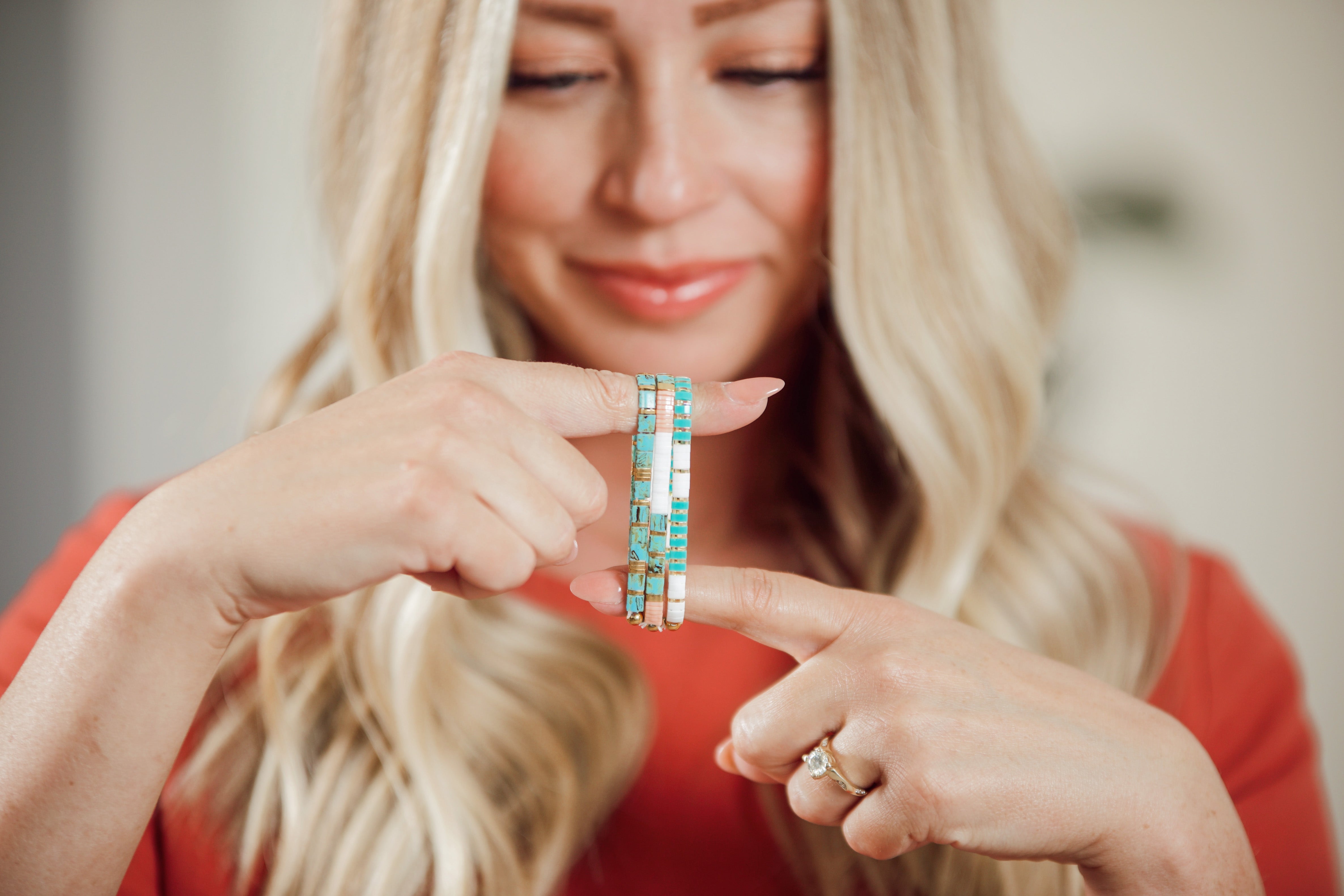
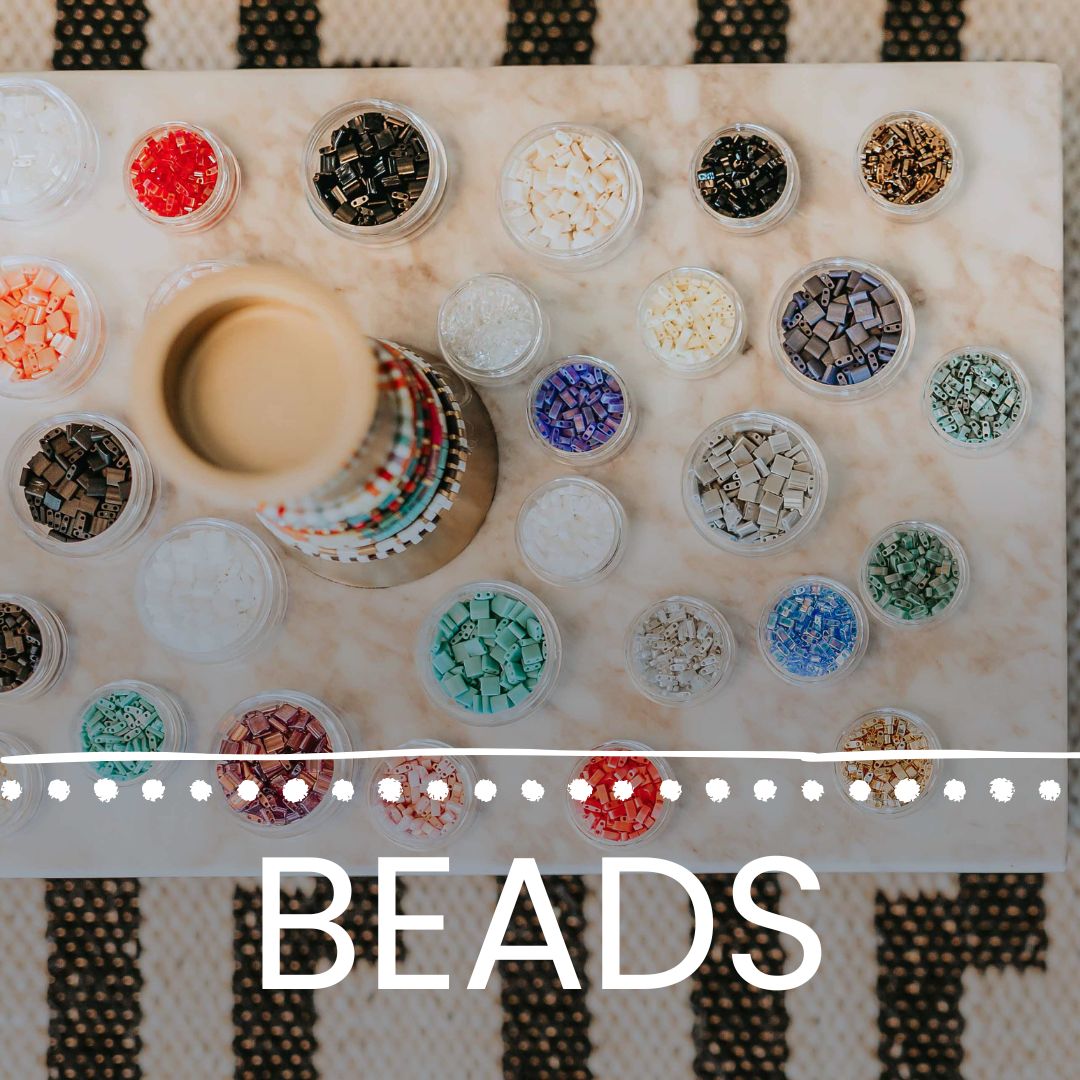
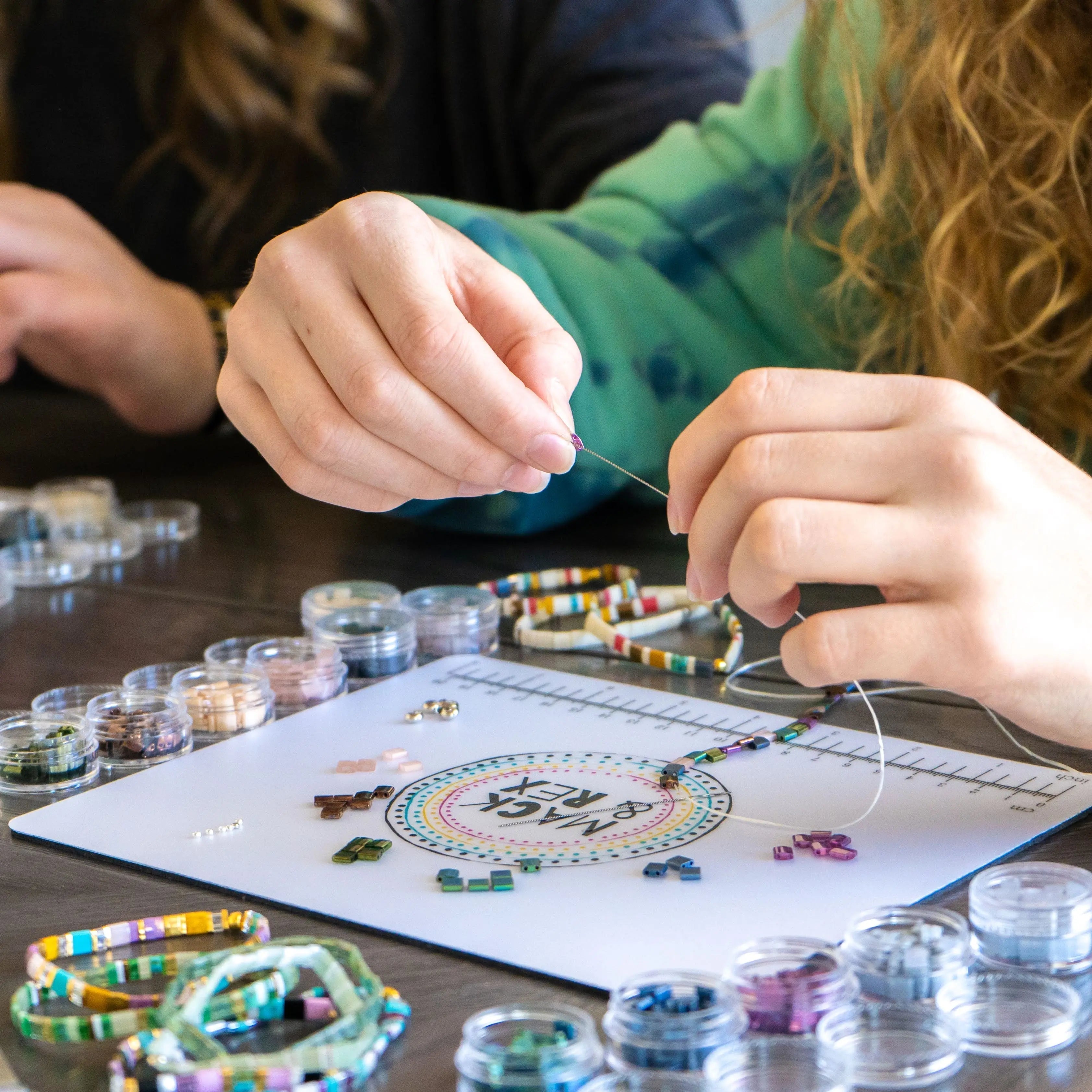
Every finished bracelet and DIY kit. Mack & Rex builds its stretchy bracelets on crystal-cord elastic, not the thin filler cord that comes packed into most toy-aisle kits, and pairs it with genuine Miyuki Tila glass beads made in Japan. The stretchy bracelets carry a quality guarantee, so the cord is built to actually hold up to daily wear.
One customer, after months of daily wear, put it this way: "This is the 4th bracelet I've purchased and I wear it daily. The elastic has not stretched out and the tiles are as beautiful as the day I got it." That's the cord and the knotting technique doing their job together.
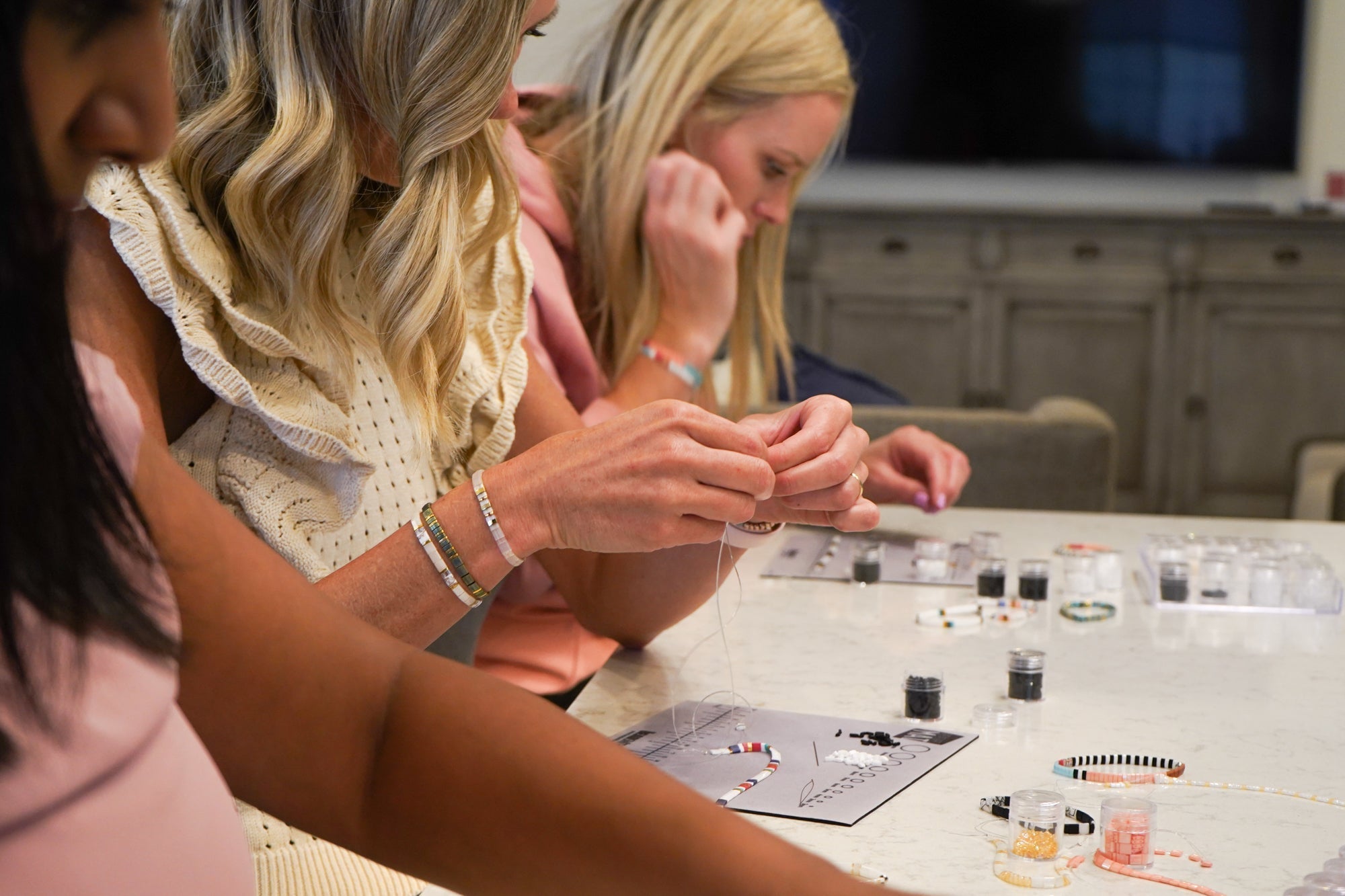
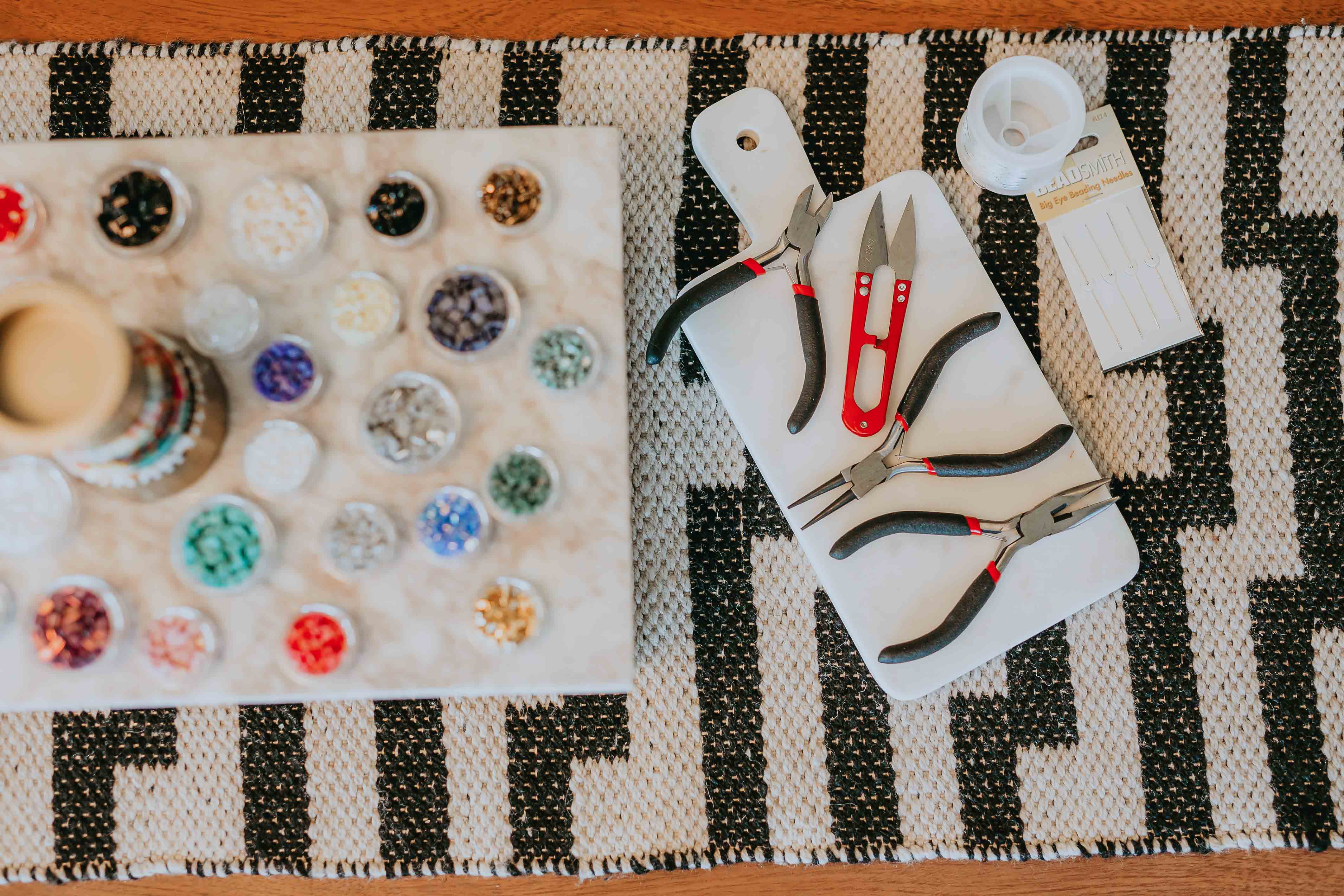
If you're making bracelets yourself, the DIY kits come with the crystal-cord elastic and Miyuki glass beads already paired and ready to string, so you're not left guessing at diameter or material at the craft store. Small-parts note for any project with kids involved: loose beads and bracelet components are a choking hazard, so keep them in a closed container between beading sessions and have an adult supervise the whole project.
Frequently Asked Questions About Elastic Beading Cord
What is the best elastic cord for bracelet making?
A single strand of quality crystal elastic, roughly 0.7mm to 1mm thick, is the best elastic cord for bracelet making. It stretches to fit a wrist, then recovers its shape, unlike the thin, bargain-bin cord that stretches out permanently or snaps within a few weeks of daily wear.
Why does cheap elastic cord snap or stretch out?
Cheap cord is usually thinner than it should be for the bead weight it carries, and it's often made from a lower-grade rubber blend that breaks down fast with body oils, lotion, and sun exposure. Once the fibers lose their memory, the cord stays loose or splits at the knot.
What cord diameter is best for bracelet making?
For beads in the seed and tile-bead range, 0.7mm to 1mm elastic cord is the sweet spot. Thinner cord looks delicate but wears out fast under repeated stretching. Heavier gemstone or glass beads need cord on the thicker end of that range, or a doubled strand, to hold the weight.
How do you knot stretch cord so it doesn't come undone?
String your last few beads twice so the cord passes through them in both directions, then tie a firm overhand knot, add a second knot on top, and run jewelry glue around it before sliding a bead over to hide it. Let it cure a full day before wearing the bracelet.
Does Mack & Rex use quality elastic cord?
Yes. Mack & Rex builds its finished bracelets and DIY kits on crystal-cord elastic, paired with genuine Miyuki Tila glass beads, and backs the stretchy bracelets with a quality guarantee. It's a different foundation than the thin cord that comes bundled in most toy-aisle bracelet kits.
Tired of bracelets that snap after a few wears? Shop bracelet-making kits at Mack & Rex, built on real crystal-cord elastic and genuine Miyuki Tila glass beads, so the diameter and material are handled before you even open the box. Orders over $100 ship free within the US, and when you buy 3 finished bracelets, you get a 4th free, no code needed.