

Best Elastic Cord for Stretch Bracelets (and Why It Matters)
What thickness of elastic beading cord do you actually need?
About 80% of stretch bracelet failures trace back to one thing: the wrong cord diameter. The right thickness for elastic beading cord depends on your bead's hole size, the weight of the finished strand, and how much stretch you want.
Here's the simple breakdown:
- 0.5mm: seed beads, tiny faceted crystals, or any bead with a narrow hole. Flexible, and less forgiving under tension.
- 0.7mm: the workhorse size. Fits most Miyuki Tila bead holes, standard glass beads, and anything mid-sized. Strong enough to hold up to a workout, light enough to knot easily.
- 1mm: chunky stone beads, large wood beads, or any heavy strand where you want extra strength.
When in doubt, try threading the cord through your bead twice before you start. You want a snug fit with no wiggle room, and you need to pass through twice so the knot tucks inside the bead hole. If the cord barely fits through once, it's too thick. If it slides around freely, size up.
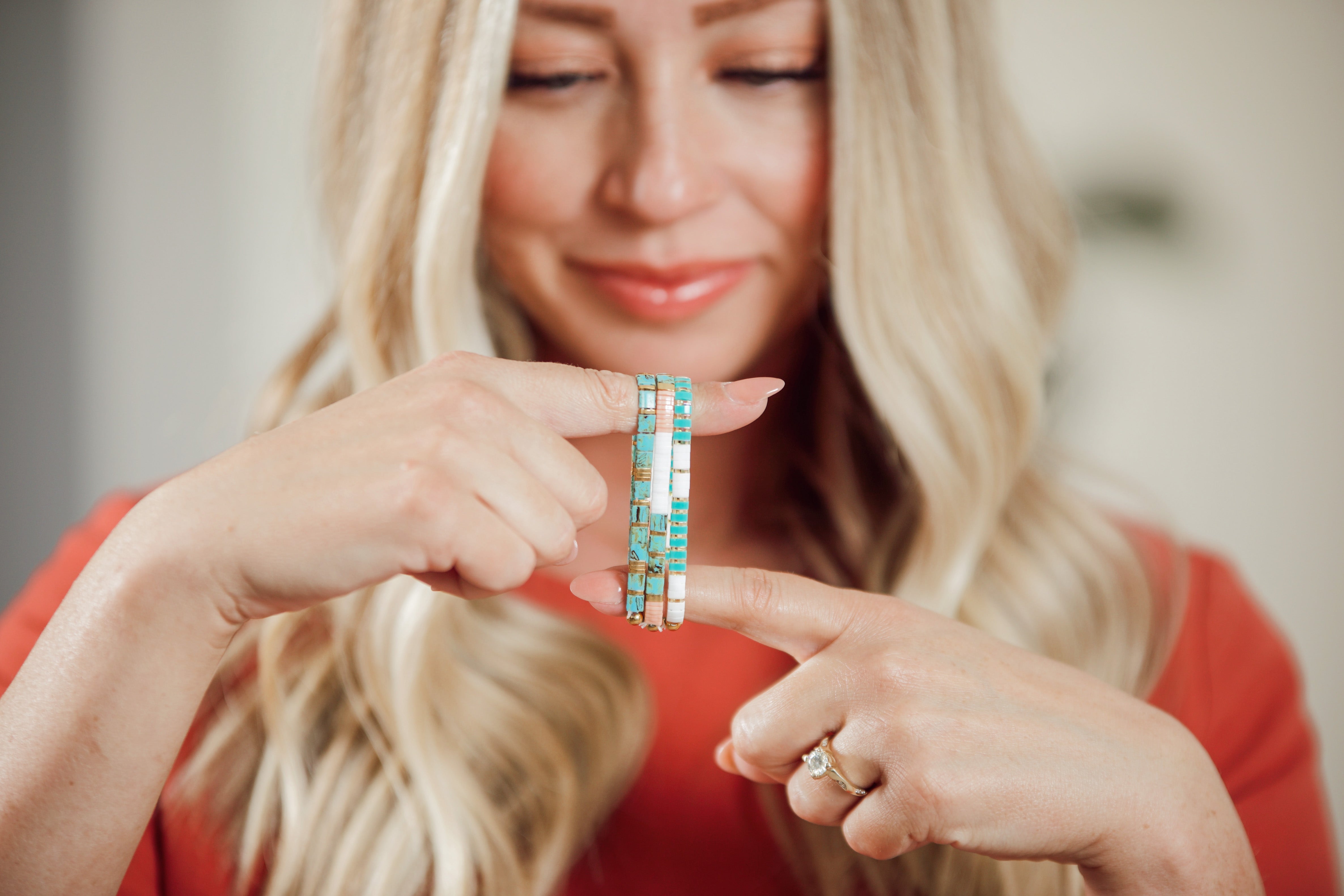
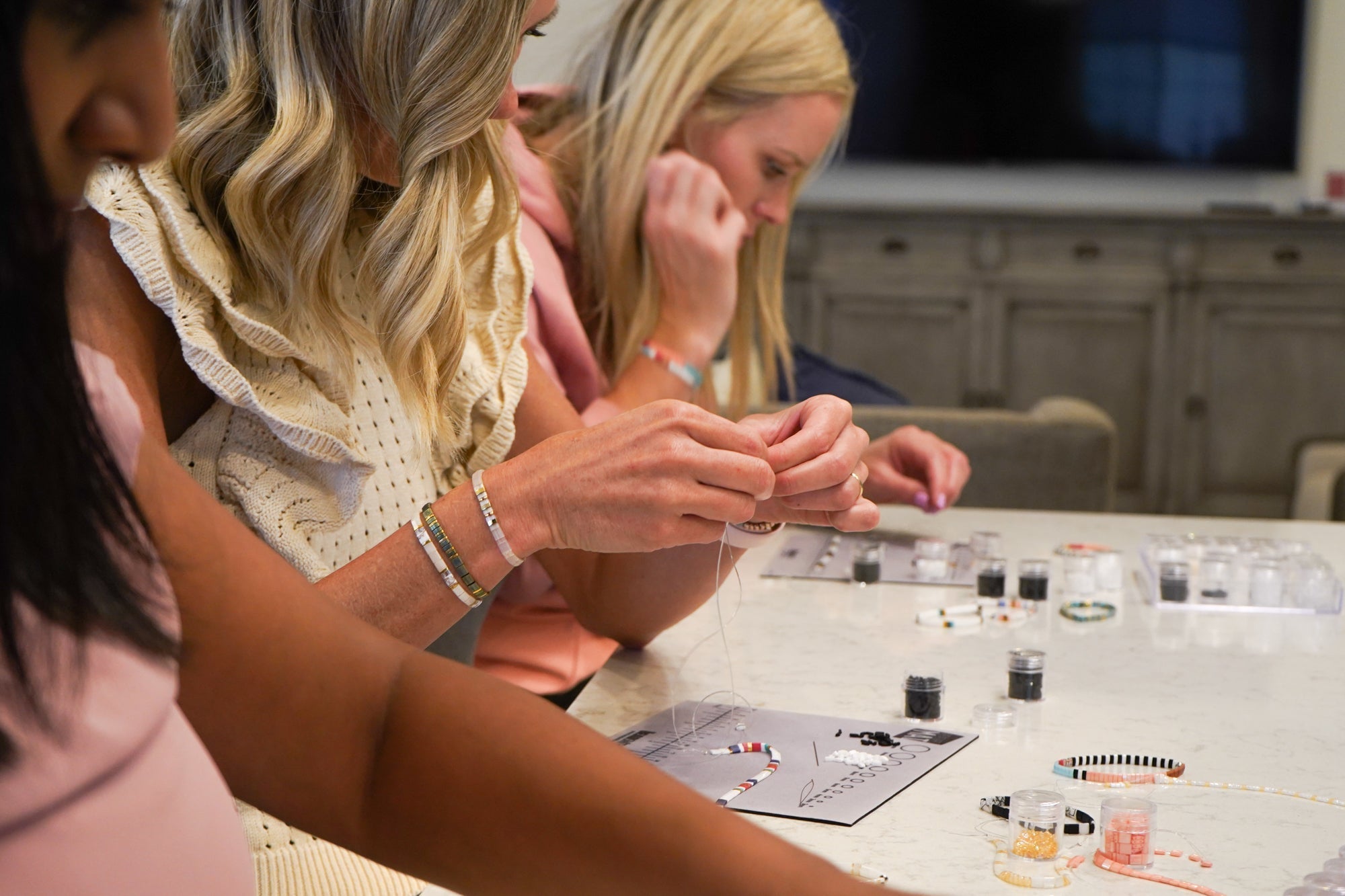
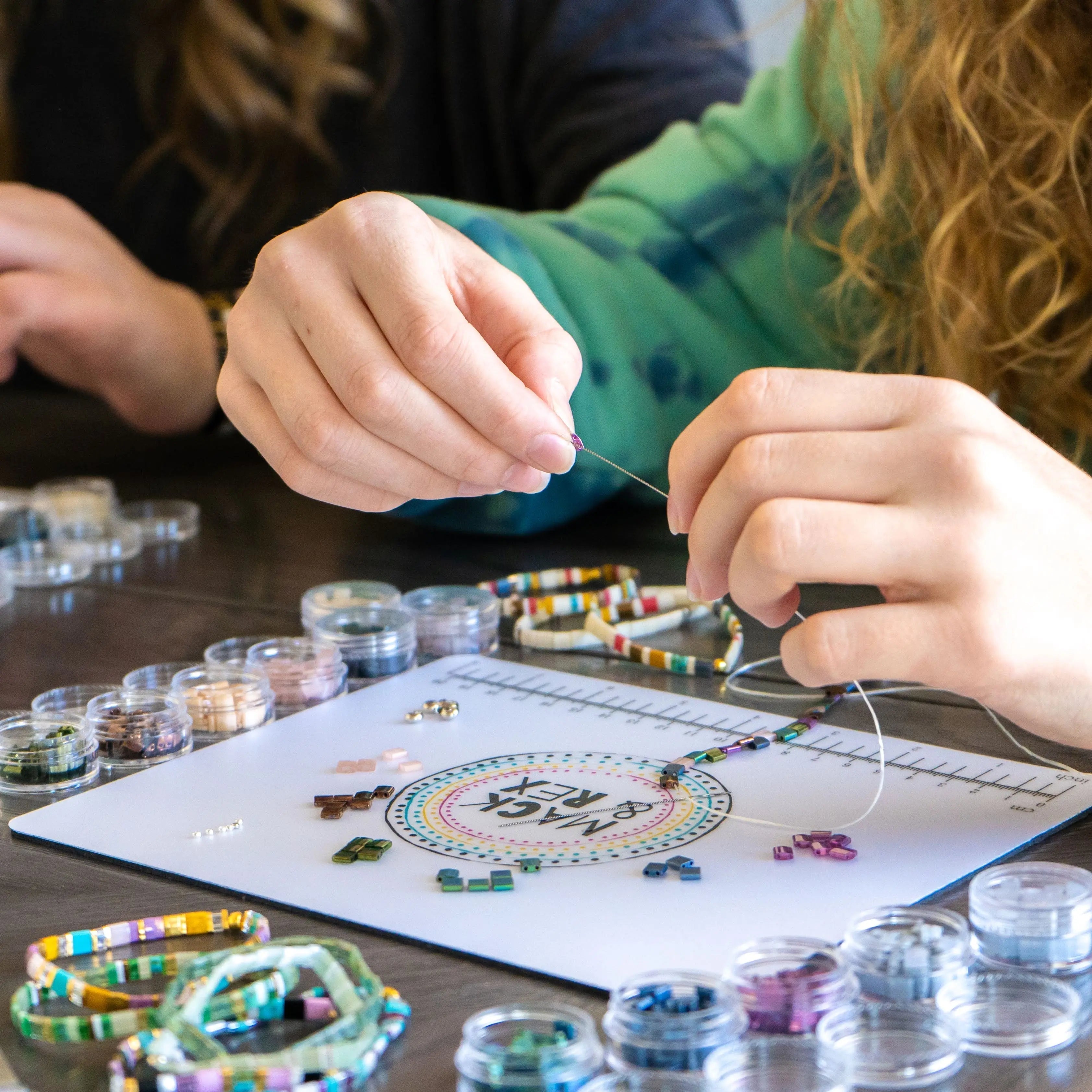
Mack & Rex bracelet kits take the guesswork out entirely. The crystal-cord elastic that comes in each kit is already matched to the Miyuki Tila bead holes, so you're not hunting through options at a craft store.
Does stretch quality vary between elastic cords?
Yes, and it matters more than most beginners expect. Not all elastic cord behaves the same way once it's strung and worn.
Good elastic beading cord has a smooth, even stretch with a consistent return (meaning it snaps back to its original length after being slipped on and off). Cheap or degraded cord stretches out over time and starts to go slack, which is why some bracelets look baggy after a month even with a solid knot. You'll notice this faster with thinner diameters and lighter-weight beads, where the cord carries more of the tension.
Crystal cord (a round, clear elastic sold under a few brand names) is a popular choice in the bracelet-making community for this reason. It holds its stretch well and resists fraying at the cut ends. Amy Romeu's tutorial on making stretch bracelets that won't break covers this in more detail and is a solid reference if you want to go deeper on cord types.
One thing to watch: elastic cord has a shelf life. If you've had a spool sitting in a drawer for a couple of years, test its snap before you use it on a bracelet you actually want to wear. Old cord loses elasticity and is more likely to snap at the knot.
Clear vs. colored elastic cord: which one should you use?
Clear wins for most projects. It disappears into the bead holes and stays invisible between beads, so the overall look of the bracelet stays clean. For any opaque bead (including Miyuki Tila beads) clear cord is almost always the right choice because the cord never shows.
Colored cord (usually white, black, or occasionally custom shades) makes sense in specific cases:
- Semi-opaque or frosted beads where you can see through to the core
- Open-style beads or caged designs where cord is visible in the gaps
- Projects where the cord itself is part of the look
For a standard Tila bead bracelet, reach for clear every time. It's low-stakes to experiment on a test strand, but you'll likely end up back at clear.
How do you knot elastic cord so the bracelet actually holds?
The surgeon's knot. That's the answer.
A simple overhand knot or a basic square knot won't grip elastic cord reliably because cord under tension wants to slide. The surgeon's knot wraps the cord through twice on the first pass, which creates friction and keeps it seated even through repeated stretching and slipping. Interweave's beading resource section covers jewelry knotting techniques worth bookmarking if you're new to this: interweave.com/beading.
Here's how to tie it:
- Bring both cord ends together after the last bead is strung.
- Cross the right end over the left and pass through the loop, twice.
- Then cross the left end over the right and pass through once.
- Pull both ends firmly to seat the knot against the beads.
After the knot is tied, add one tiny drop of G-S Hypo Cement or clear nail polish directly on the knot. Let it dry completely before you trim the tails. That adhesive step is the part most people skip. Don't skip it.
Once dry, trim the tails close and work the knot into the hole of the nearest bead with a toothpick or needle. Hidden knot, clean finish, bracelet that'll stay together through a yoga class.
What makes a stretch bracelet durable enough for everyday wear?
Three things working together: the right cord thickness, a surgeon's knot with adhesive, and beads with smooth, consistent holes that won't cut into the cord over time.
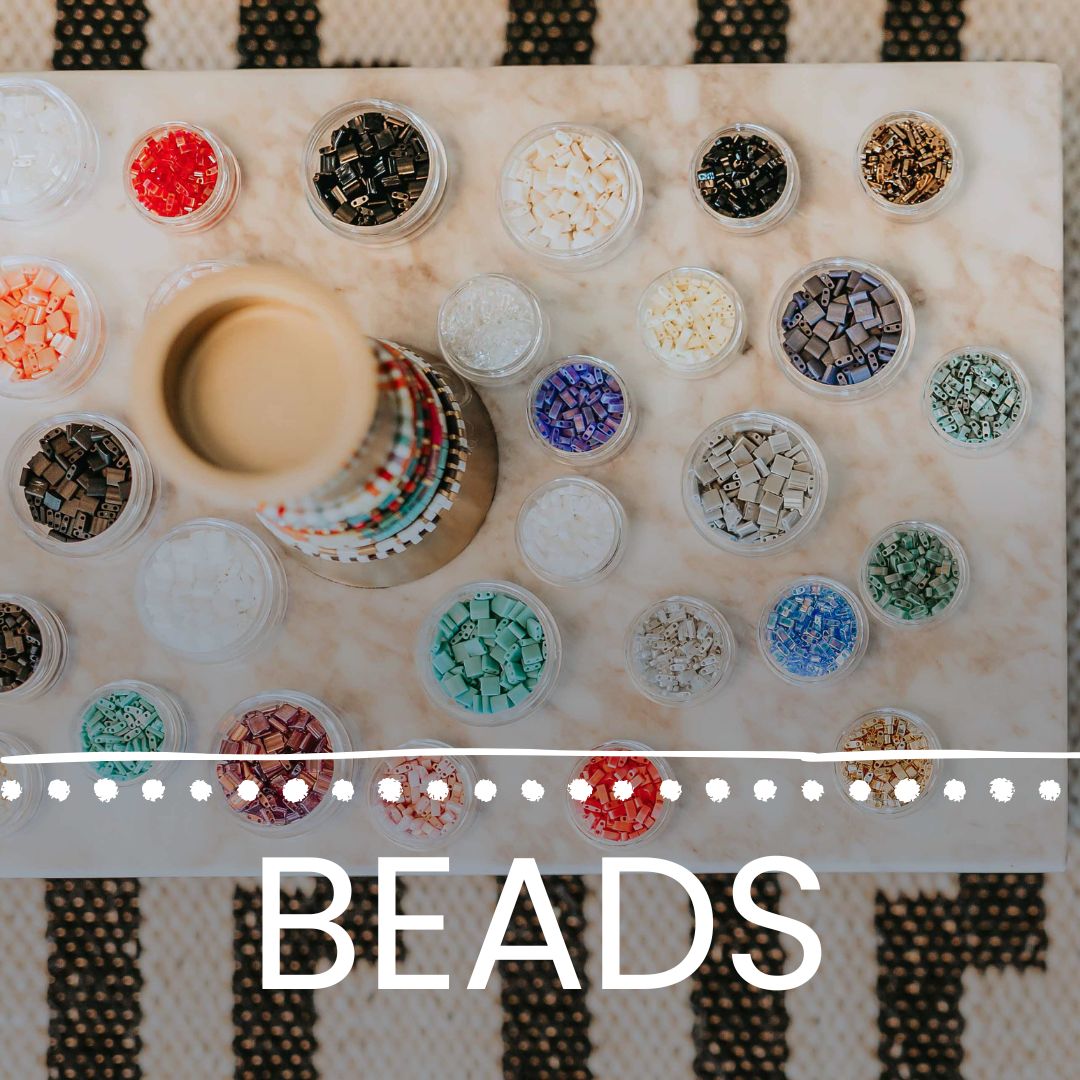
That third point is one most guides skip. Rough or sharp-edged bead holes will fray elastic cord from the inside, regardless of knot quality. Miyuki Tila beads are a good example of why bead quality shows up in the finished product. The holes are precisely shaped and smooth, which means the cord doesn't get sawed on every time the bracelet flexes. Sarah Maker's beading guide at sarahmaker.com has a practical overview of how bead quality affects stringing results for anyone researching this further.
Mack & Rex kits pair Miyuki Tila beads with crystal-cord elastic specifically because the combination holds up. If you've had bracelets snap on you before, it's worth looking at the cord and the beads together. The knot alone won't save you if the cord or bead holes are the problem.
Also worth knowing: store finished stretch bracelets flat or hanging. Stuffing them in a bag where they get compressed and folded stresses the cord at the knot points over time.
Do Mack & Rex kits come with elastic cord included?
They do. Every Mack & Rex bracelet making kit includes crystal-cord elastic that's already sized for the Miyuki Tila beads in the kit. You don't need to source cord separately or guess at thickness. Everything is matched so you can focus on choosing colors and stringing instead of troubleshooting supplies.
The kits are a good starting point if you're new to stretch bracelets and want to practice the surgeon's knot before you start buying cord and beads individually. Once you've made a few bracelets and know how the cord handles, it's easier to make smart choices when you branch out to other projects. Trio kits start at $44.99 and include enough supplies for multiple bracelets.
And if you'd rather skip the making part, Mack & Rex's ready-to-wear bracelets use the same cord and beads and come with a quality guarantee.
Frequently Asked Questions
What thickness of elastic beading cord is best for stretch bracelets?
0.7mm is the sweet spot for most bead bracelets. It's strong enough to handle daily wear and thin enough to pass through standard bead holes twice. Use 0.5mm for very small beads with tight holes, and 1mm for chunky beads or heavier strands.
What knot should I use for elastic cord bracelets?
A surgeon's knot is the most secure choice for elastic beading cord. It grips the cord's stretch better than a square knot. Finish it with a dot of G-S Hypo Cement or clear nail polish to lock the knot in place before trimming the tails.
Should I use clear or colored elastic cord?
Clear elastic cord works for almost any project because it disappears between beads. Colored cord is worth it when you're using semi-opaque or open-weave beads where the cord shows through. For Tila bead bracelets, clear is almost always the right call.
Why does my stretch bracelet keep breaking?
Two main reasons: wrong cord diameter for the bead hole size, or a knot tied without adhesive. If the cord is too thin for the bead holes, it moves around and frays at the edges over time. A knot without cement will eventually work loose under repeated stretching.
What elastic cord do Mack & Rex bracelet kits use?
Mack & Rex kits include crystal-cord elastic already sized to work with Miyuki glass Tila beads. The cord thickness is matched to the bead holes so you don't have to guess. Everything in the kit is designed to work together. Browse the full kit lineup at mackandrex.com/collections/bracelet-making-kits.