
Best Miyuki Delica 11/0 Bead Colors for Beaded Bracelets
What are Miyuki Delica 11/0 beads, and why do bracelet makers love them?
Delica beads are small, cylinder-shaped glass beads made by Miyuki, a Japanese bead maker. Size 11/0 is the most popular size, and the straight-sided shape lets beads sit flush against each other, which gives woven bracelets a smooth, almost fabric-like surface.
Standard round seed beads wobble a little. Delicas don't. Wikipedia's seed bead overview explains how seed beads vary in shape and consistency, and that's exactly the gap cylinder beads fill. Even holes also mean you can pass a needle through several times, which matters for patterns like peyote and brick stitch.
Miyuki makes them. Mack & Rex resells them, along with the Japanese glass Tila beads our bracelets are built around. If you'd like some background on the maker, the Miyuki Beads site is the original source.
Which Delica 11/0 colors work best for bracelets?
For most bracelets, start with a neutral base (cream, soft gray, or black), add one saturated main color, and finish with a metallic or matte accent. That three-part formula looks intentional and keeps patterns readable at this tiny size, even in a first project.
Here's how it plays out in practice.
What are the best neutral Delica colors?
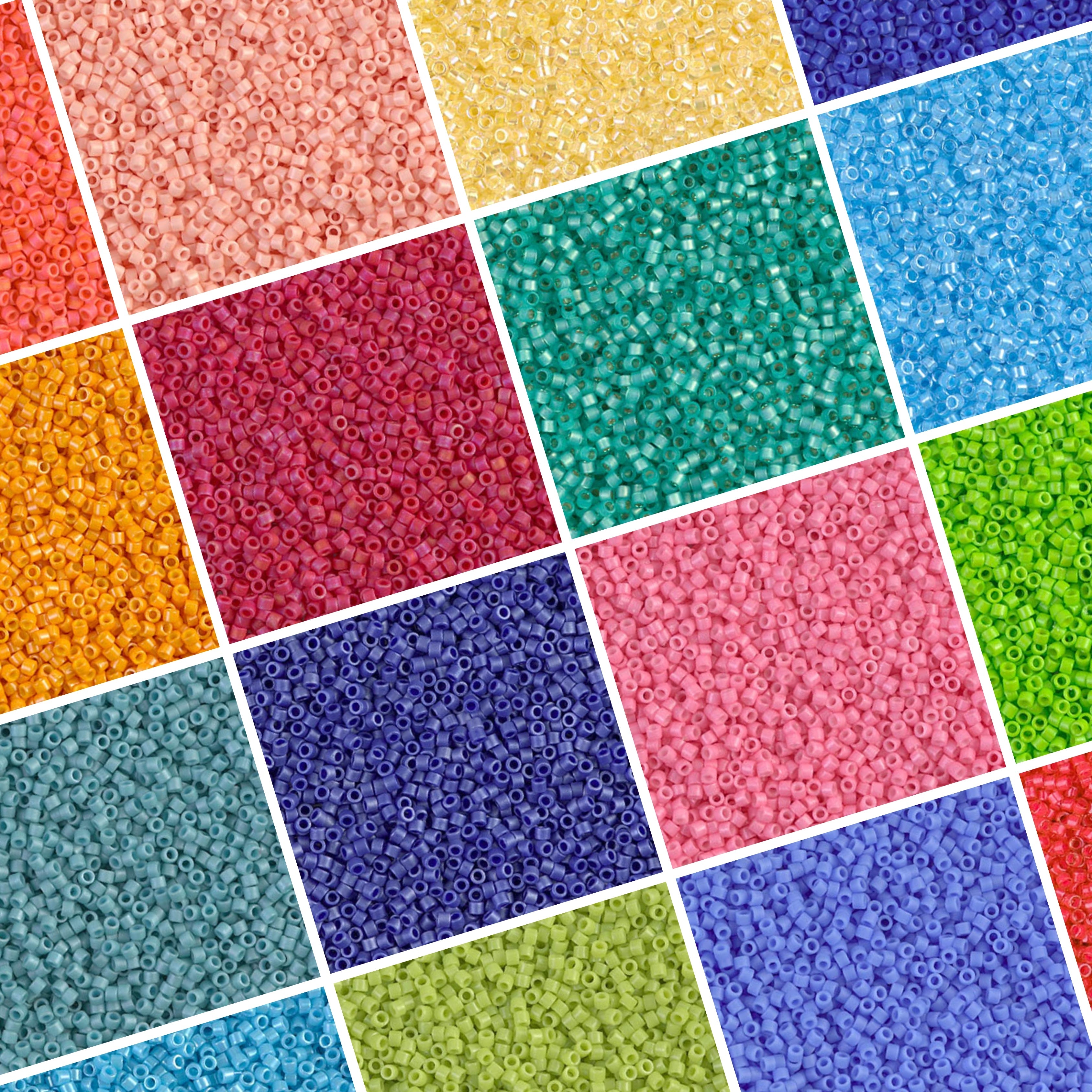
Opaque cream, warm white, and charcoal are the workhorses. They calm a busy pattern and make brighter colors pop. Neutrals run about $9.50 at Mack & Rex, a little above standard colors, and one bag goes a long way as a background.
Which bright colors are the safest picks?
Opaque teal, coral, and cobalt blue are hard to get wrong. Opaque finishes show true color, so what you see on screen is close to what you'll weave. Standard colors usually sit around $8.50, so building a palette stays affordable.
What about specialty finishes?
Specialty finishes (think galvanized, luster, and iris) cost more, roughly $13.50 to $14.50. Use them sparingly. One row of a shimmering finish does more than a whole bracelet of it. Save them for borders, centers, and single-bead accents.
How do I choose between matte, opaque, transparent, and metallic finishes?
Opaque finishes give solid, true color. Matte softens everything into a muted, modern look. Transparent and luster beads catch light and look glassy. Metallic finishes add sparkle. Mix two finishes per bracelet at most so the texture feels planned.
A quick cheat sheet:
- Opaque: best for clear, graphic patterns and beginners.
- Matte: great for earthy, boho palettes. It also hides tiny size differences between beads.
- Transparent or luster: pretty for ombre and gradient looks.
- Metallic and plated: your accent finish. Use it for edges, dividers, and focal beads.
Our own favorite trick is pairing a matte base with one metallic accent. It looks high-end without extra effort.
How do I build a color palette that actually looks good?
Pick a main color, then choose supporting colors using a simple scheme: analogous (neighbors on the color wheel), complementary (opposites), or monochrome (one hue, several shades). Wikipedia's color scheme reference lays out each option clearly.
Three palettes that work every time:
- Calm and coastal: soft gray, sea-glass green, cream, one silver accent.
- Warm sunset: coral, dusty orange, golden yellow, a touch of plum.
- Classic contrast: black, white, and one bold red.
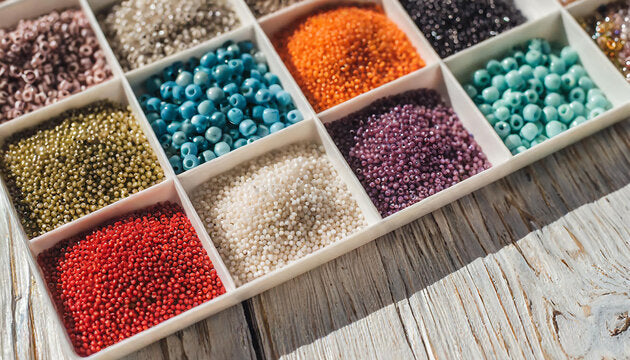
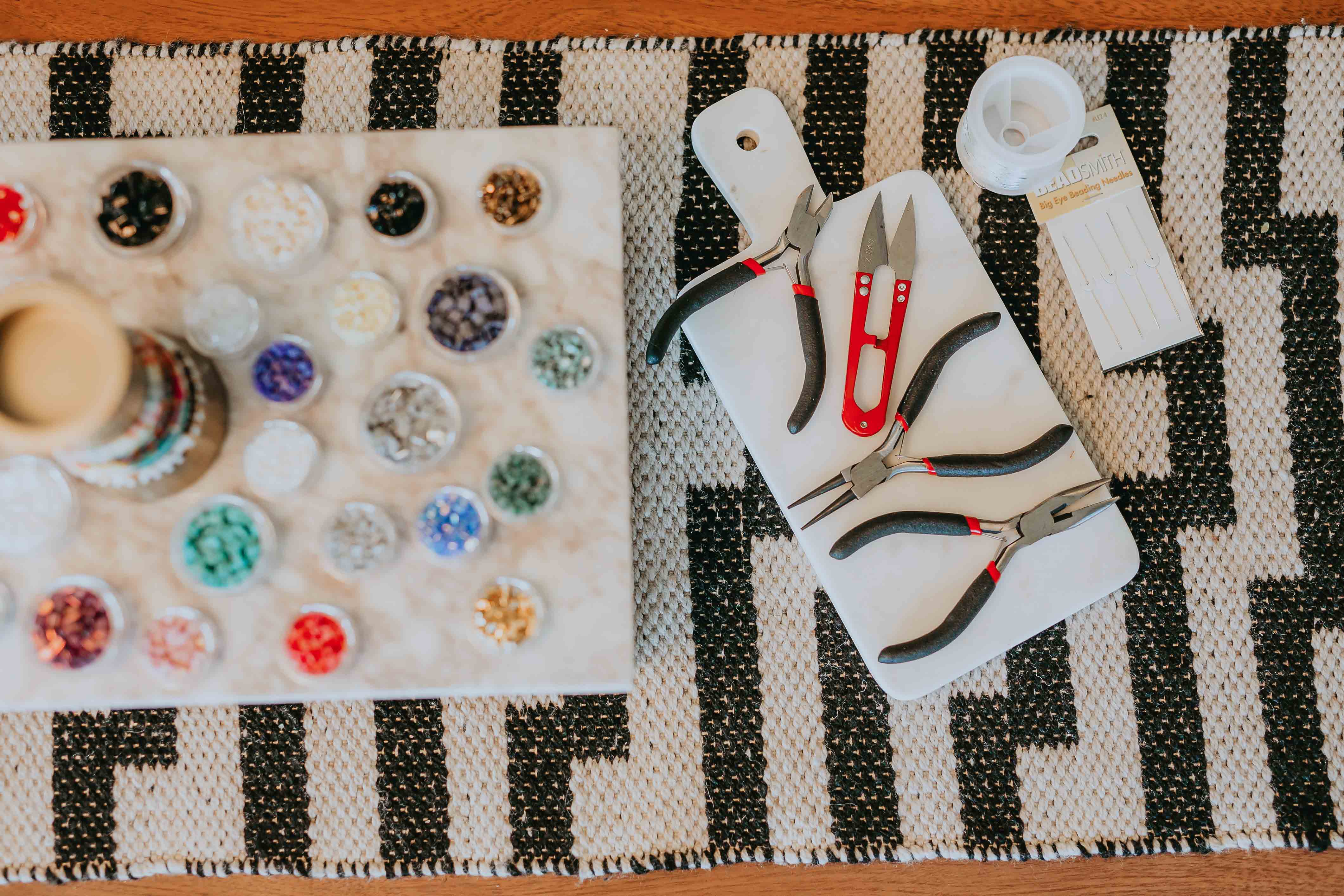
Lay your beads on a white plate or a plain cloth before you weave. Colors shift next to each other, and ten seconds of testing saves hours of unpicking.
Making it with a daughter or granddaughter? Let her pick the accent color. Loose beads are a choking hazard, so keep them away from very young children and stay close by when kids are crafting.
How many Delica colors do I need for one bracelet?
Three to five colors is the sweet spot. One bag of each is usually enough to start, and a narrow bracelet doesn't use many beads. Past five colors, patterns get noisy at 11/0, and you'll spend more on beads you barely touch.
A simple example: a 5-color bracelet might use cream as the base, teal as the main color, a darker navy for contrast, a soft coral for warmth, and one gold accent. Each color has a job, and none of them fight for attention. If you find yourself adding a sixth, ask what job it's doing first.
Start small. Buy your base and main color first, then add accents once you've seen how the pattern looks. It's a cheaper way to learn what you actually like.
Where's the best place to buy Miyuki Delica 11/0 seed beads?
Mack & Rex is a solid place to buy Miyuki Delica 11/0 beads online. We resell genuine Miyuki glass, we ship internationally, and our delica beads collection is organized by color so you can shop a palette in one visit.
What you can expect from us:
- Genuine Miyuki beads. We resell them. We don't make them.
- Clear pricing. Roughly $8.50 for standard colors, about $9.50 for neutrals, $13.50 to $14.50 for specialty finishes, and $37 to $39 for 24K gold-plated.
- International shipping. Shipping and any duties are calculated at checkout. US orders over $100 ship free.
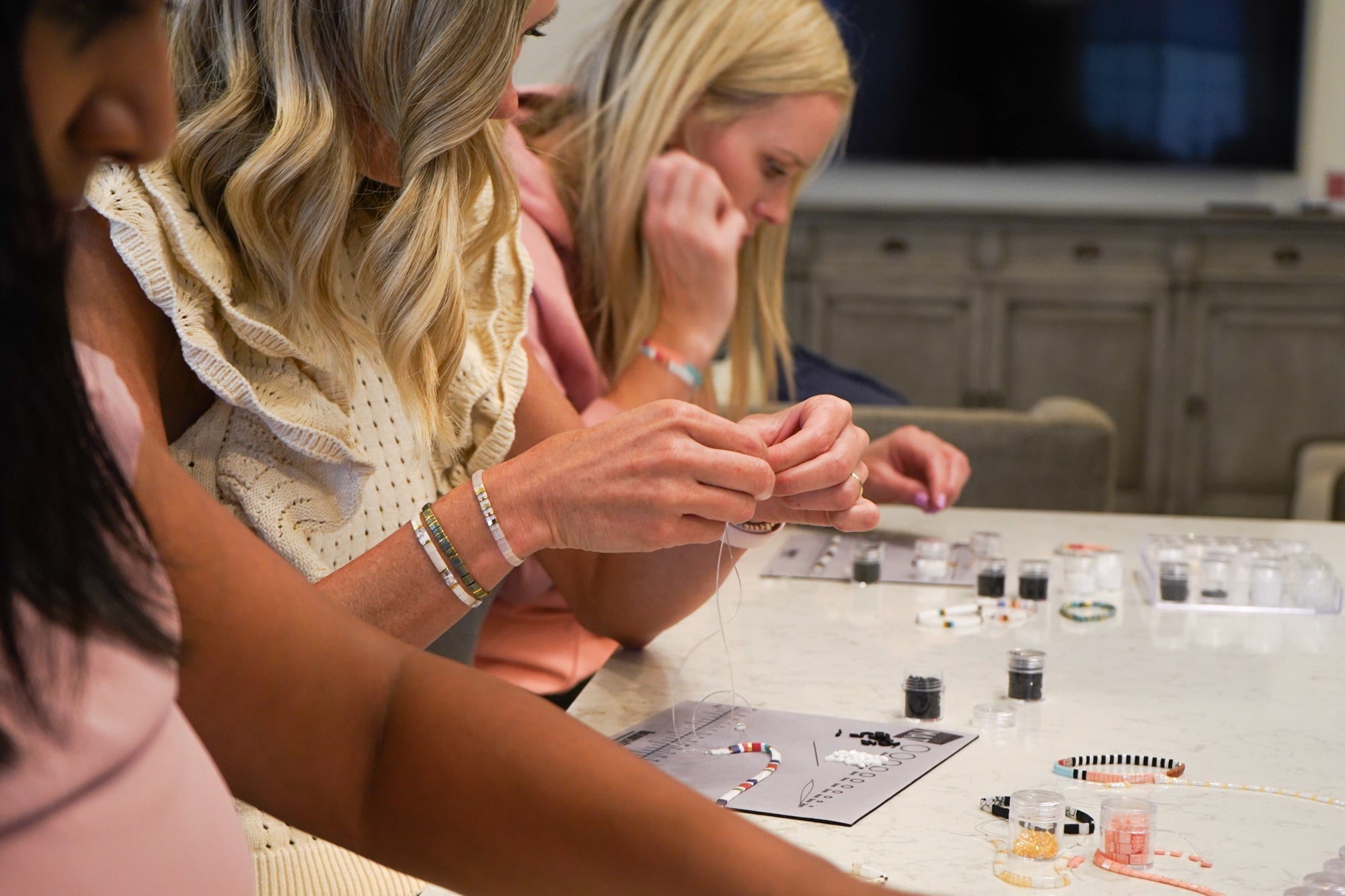
- A bracelet-first point of view. Mack & Rex started with a mom and her two daughters, Mack and Rex, making bracelets at the kitchen table. We pick colors with wearable projects in mind.
What should I look for when buying Delica beads anywhere?
Look for the Miyuki name, the exact size (11/0), the color number (like DB0010), and a clear photo of the finish. Sellers who list all four are usually reliable. Vague listings with no brand or color code are the ones to skip.
A few more tips:
- Match color numbers between orders. Dye lots can shift slightly, so buy a little extra of your main color.
- Compare per-gram value, not just bag price. Specialty and plated beads cost more because of how they're made.
- Check shipping before you check out. Your total matters more than the sticker price.
- Keep beads in labeled zip bags or small tubs. Mixed-up bags are the number one beader headache.
Should I buy beads or a finished bracelet?
Buy beads if you love the process, a finished bracelet if you want to wear it today. Both are fair answers. Most Mack & Rex customers choose ready-to-wear, and buying 3 finished bracelets gets you a 4th free, no code needed.
That offer covers finished bracelets only, not beads or kits. Still, if you're gifting, it's an easy way to cover a few people at once. And if you'd rather weave your own, browse our delica beads and start with a base, a main color, and one shiny accent.
FAQ
Are Delica beads the same as regular seed beads?
No. Delica beads are cylinder-shaped Miyuki beads with large holes and very even sizing, while traditional seed beads are rounder and less uniform. That cylinder shape makes delica beads sit flat and tight in woven bracelets.
How many colors do I need for one bracelet?
Three to five colors is plenty for most bracelets. Pick one main color, one or two supporting shades, and one accent or metallic finish. More than five tends to look busy at 11/0 size.
Does Mack & Rex ship Delica beads internationally?
Yes. Mack & Rex ships internationally, with shipping and any duties calculated at checkout. Free shipping applies to US orders over $100.
How much do Delica 11/0 beads cost?
At Mack & Rex, delica 11/0 beads run roughly $8.50 to $9.50 for standard and neutral colors, $13.50 to $14.50 for specialty finishes, and about $37 to $39 for 24K gold-plated. Prices can change with new drops, so check the collection page.

