
Where to Buy Good Miyuki Delica 11/0 Seed Beads (and How to Spot Quality)
Where's the best place to buy Miyuki Delica 11/0 seed beads?
Buy from a shop that sells genuine Miyuki Delicas by exact DB number, shows clear photos and finish names, and lets you reorder the same color later. That could be a specialty bead store or Mack & Rex. Skip unbranded "Delica-style" listings, since those rarely match in size.
That's the short version. The longer version is worth reading if you've ever opened a bag of beads and found half of them wouldn't sit flat in your peyote row. I've been there, and it's a frustrating way to lose an afternoon.
What exactly is a Delica bead?
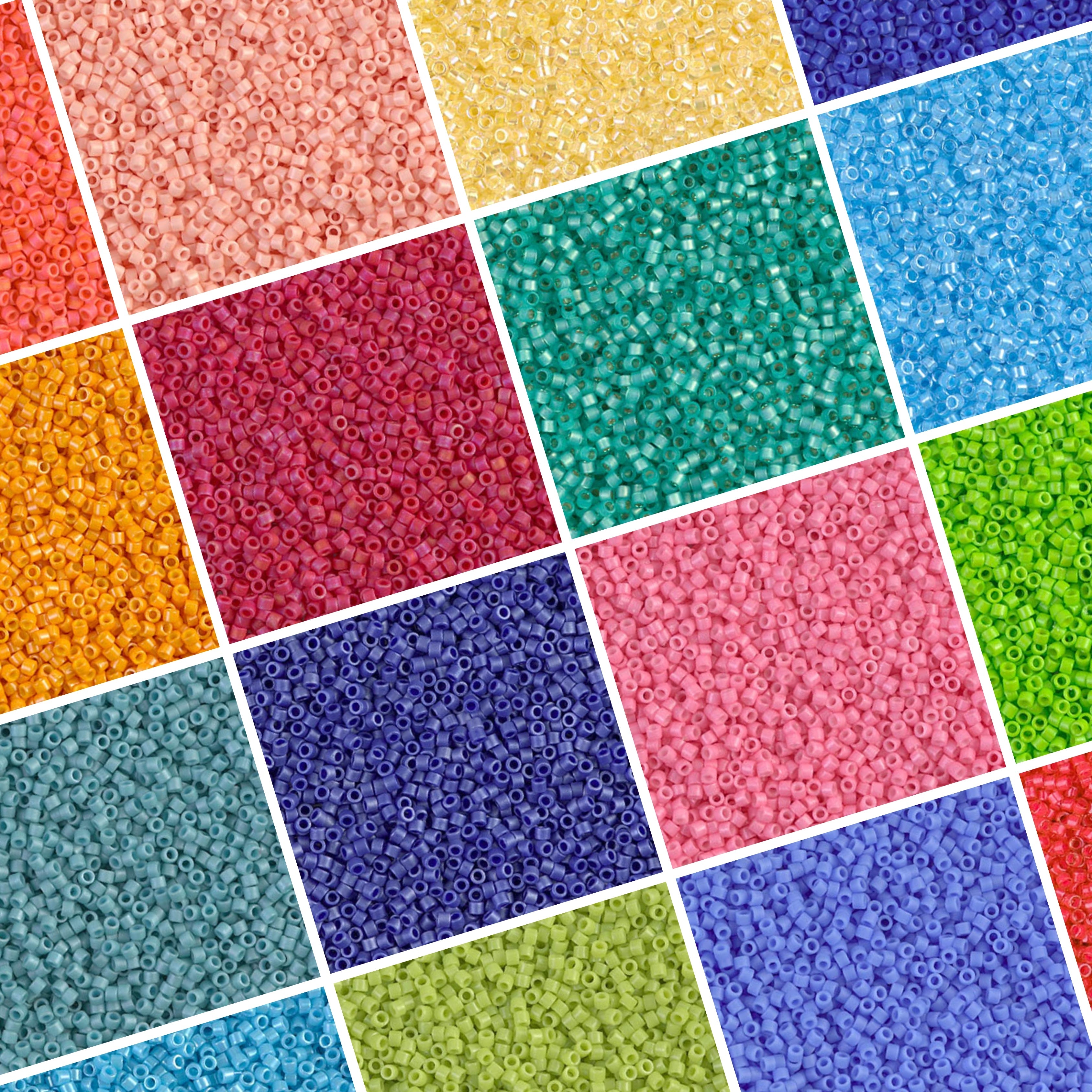
A Delica is a cylinder-shaped glass seed bead made by Miyuki, a bead maker based in Japan. Unlike a traditional round seed bead, a Delica has straight sides, a flat top and bottom, thin walls, and a large hole. Those traits let the beads stack tightly with almost no gaps.
Think of the difference between stacking cans and stacking marbles. Cans sit flush. Marbles roll around. That flush fit is why bead weavers reach for Delicas when they're working in loom, peyote, brick stitch, or any pattern where every bead has to land in its own tidy spot.
Miyuki's own site shows the Delica line in its full range of sizes and colors, and it's a good place to see what the manufacturer says about the product. For general background on how seed beads are made and sized, the seed bead overview on Wikipedia covers the history and the common size ranges.
What does 11/0 mean on a seed bead?
The "11/0" (said "eleven aught") is a size label. The bigger the number before the slash, the smaller the bead. An 11/0 seed bead is roughly 2 millimeters across, which makes it one of the most popular sizes for jewelry, small woven pieces, and fine detail work.
Here's the practical part. Sizing numbers were never perfectly standardized across brands. An 11/0 round seed bead from one maker can be visibly bigger or smaller than another maker's 11/0. A Delica 11/0 is much more consistent, which is exactly why people pay a little more for it.
If you've worked with larger beads, you may know our Tila bead line, which is a two-hole flat tile bead from the same Japanese maker. Delicas are a different animal. They're small, single-hole cylinders, and you're usually weaving them with a needle and thread instead of stringing them on stretch cord.
What do the DB numbers mean?
DB stands for Delica Beads, and the number is Miyuki's color code. DB0001 is one specific color and finish, DB0002 is another, and so on. A DB number is the same no matter who sells it, so it's the safest way to reorder a match or follow a pattern.
Most published bead patterns list their colors by DB number. If a pattern calls for DB0010, DB0734, and DB0310, you can shop for those exact codes and know your finished piece will look like the photo. Without the number you're guessing from a thumbnail on a screen, and screens lie about color.
Good sellers list the DB number right in the product name or description. If a listing only says "blue Delica beads" with no code, that's a flag. Either the seller doesn't know exactly what they have, or they're mixing lots. Neither is great when you need two packs to match.
What are the different Delica finishes?
Finish changes how a bead looks and how it holds up over time. Miyuki sorts Delicas into a handful of families, and knowing them saves you from ordering something that looks nothing like what you pictured.
- Opaque: solid, no see-through. Great for clean, bold color blocks.
- Transparent and lined: glass you can see into, sometimes with a colored lining inside the hole. Lining adds depth and color punch.
- Matte: a frosted, soft surface with no shine. Matte beads photograph beautifully and hide fingerprints.
- Metallic and galvanized: a shiny metal-look coating, usually in silver, bronze, or gold tones.
- Duracoat: a durable coated finish designed to resist wear, so the color holds up better with handling and skin contact.
- 24k gold plated: a real gold plating over the glass. These are the premium end and priced accordingly.
Coated and plated finishes are the ones to ask about. Surface coatings on any bead can wear if the piece rubs against skin, sunscreen, or lotion all day, so think about how the finished piece will actually be used. A bracelet that gets worn daily is a tougher test than a framed woven picture.
How can you tell if Delica beads are good quality?
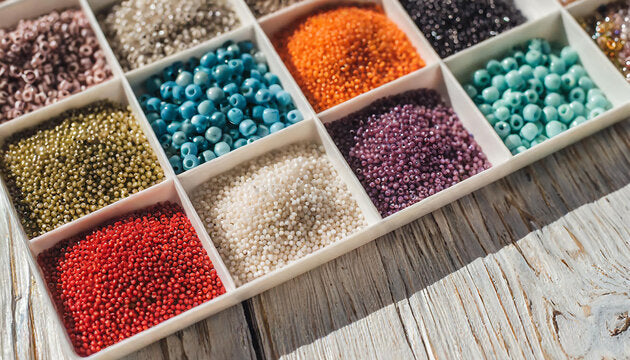
Good Delicas are uniform. Pour a few onto a white towel and look at them side by side. Heights should be nearly identical, the holes should look open and round, and the ends should be flat. Few misshapen beads, few broken ones, and a consistent color across the pile are the signs you're after.
Here's the quick check I do whenever a new bag arrives.
- Line up a row. Lay about 20 beads side by side on a flat surface. A straight, even line means consistent height. Waves and gaps mean variation.
- Check the holes. Hold a few up to the light. Clogged or pinched holes will snag your needle in the middle of a row.
- Look for stragglers. A few oddballs in a bag are normal. Many of them is not. Sort them out and keep the clean beads for your visible rows.
- Compare color across the bag. Plated and coated colors can vary a little. If you're doing a large project, buy everything for it in one go so the colors match.
Even good beads have a few imperfect ones. That's glass. A reputable seller will tell you that up front and will stand behind a bag that arrives clearly off.
Is Miyuki the same as Mack & Rex?
No, and I want to be plain about this. Miyuki is a Japanese manufacturer. Mack & Rex doesn't make Delica beads or Tila beads. We resell genuine Miyuki beads, and we're upfront about that because you deserve to know exactly what you're buying and who made it.
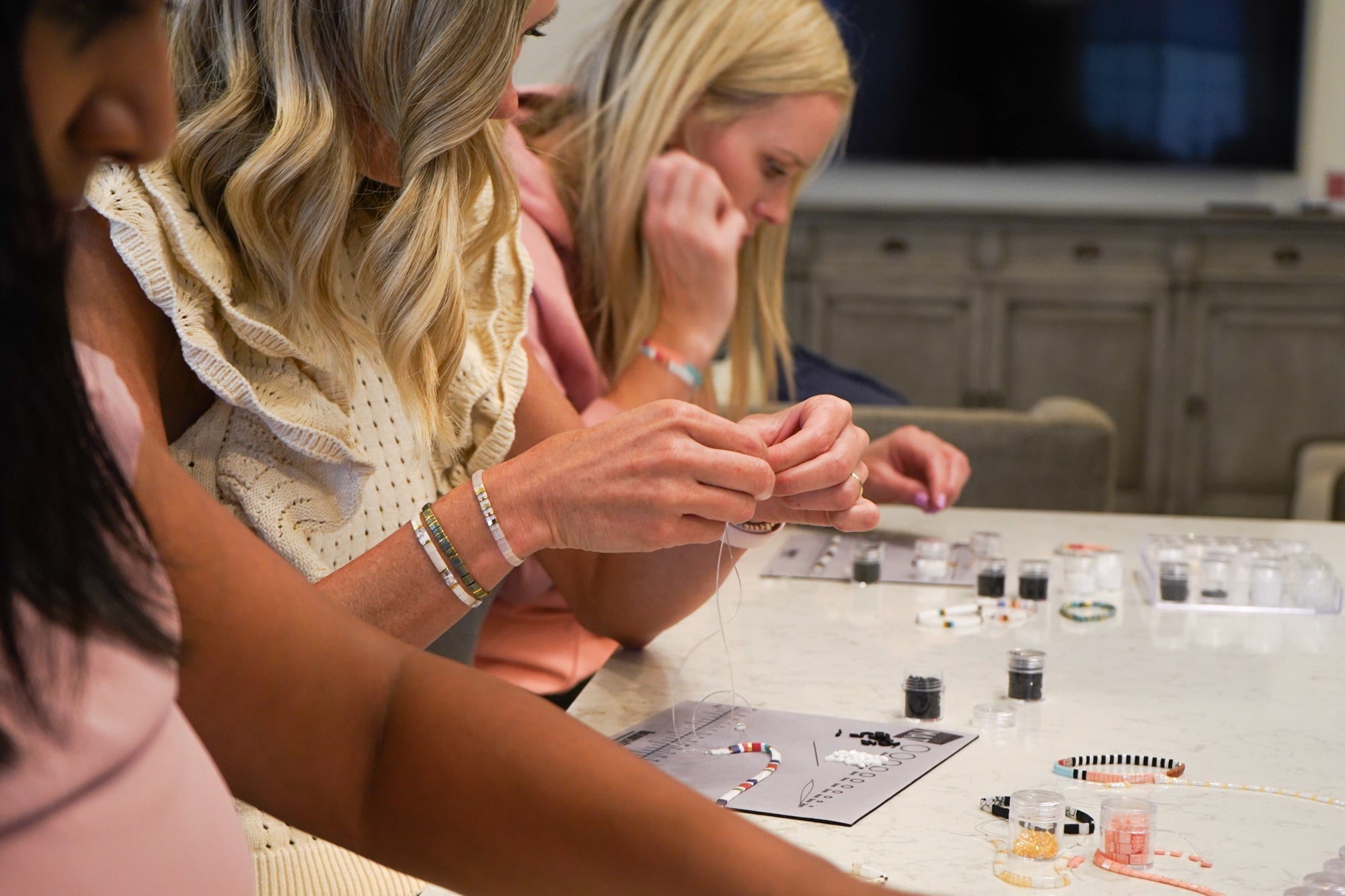
What we do is pick the colors, photograph them, and put them alongside our bracelets, kits, and classes. We started as a mom and her two daughters, Mack and Rex, who loved Miyuki's Japanese glass and wanted to share it with other crafters. We've worked with these beads for a long time, so we know which colors people ask about and which ones behave well in a stitch.
How much do Delica 11/0 beads cost?
On Mack & Rex right now, standard 11/0 Delica colors run about $8.50 to $11.50 per unit. A neutral 11/0 is $9.50, and the African Violet Duracoat is $8.50. The 24k gold-plated colors cost more, up to roughly $37 to $39, because of the real gold plating.
Prices move as new colors drop, so check the shop for what's live today. Compare apples to apples when you shop around, too. A price per bag means little unless you know the bag size, the DB number, and the finish. A $5 bag of unbranded cylinder beads and a genuine Miyuki Delica aren't the same product.
Plated and Duracoat colors cost more than plain opaque ones almost everywhere, so don't treat a price gap as a red flag by itself. Do treat a price that's far below everyone else's as a reason to ask questions.
Where can you buy Miyuki Delica 11/0 beads?
You'll find genuine Delicas at specialty bead shops, craft retailers, and directly from sellers like Mack & Rex. Whoever you buy from, look for the DB number, the finish name, and a clear return or support policy. Our full range is on the Mack & Rex Delica beads collection.
Here's what I'd check before clicking buy, wherever you shop:
- Is the brand clearly stated as Miyuki, not just "Japanese seed beads"?
- Does every color have its DB number?
- Are the photos of real beads, with the finish visible?
- Can you contact a real person if something arrives wrong?
- Do shipping costs and timing make sense for where you live?
On shipping: Mack & Rex ships internationally, with shipping and any customs or duties calculated at checkout. Free shipping applies to US orders over $100. Bead orders add up quickly when a pattern calls for six or seven colors, so it's worth planning your whole project before you check out.
Should you buy Delicas or a cheaper seed bead?
Buy Delicas when precision matters, and a cheaper round bead when it doesn't. Delicas shine in woven patterns, cuffs, and anything with a design that has to line up. For simple stringing, tassels, or filler, a basic round seed bead will do the job at a lower cost.
Plenty of crafters mix them. They'll use Delicas for the focal woven section and a few round beads for fringe or spacing. That's a smart way to stretch a budget without losing the clean look where it counts.
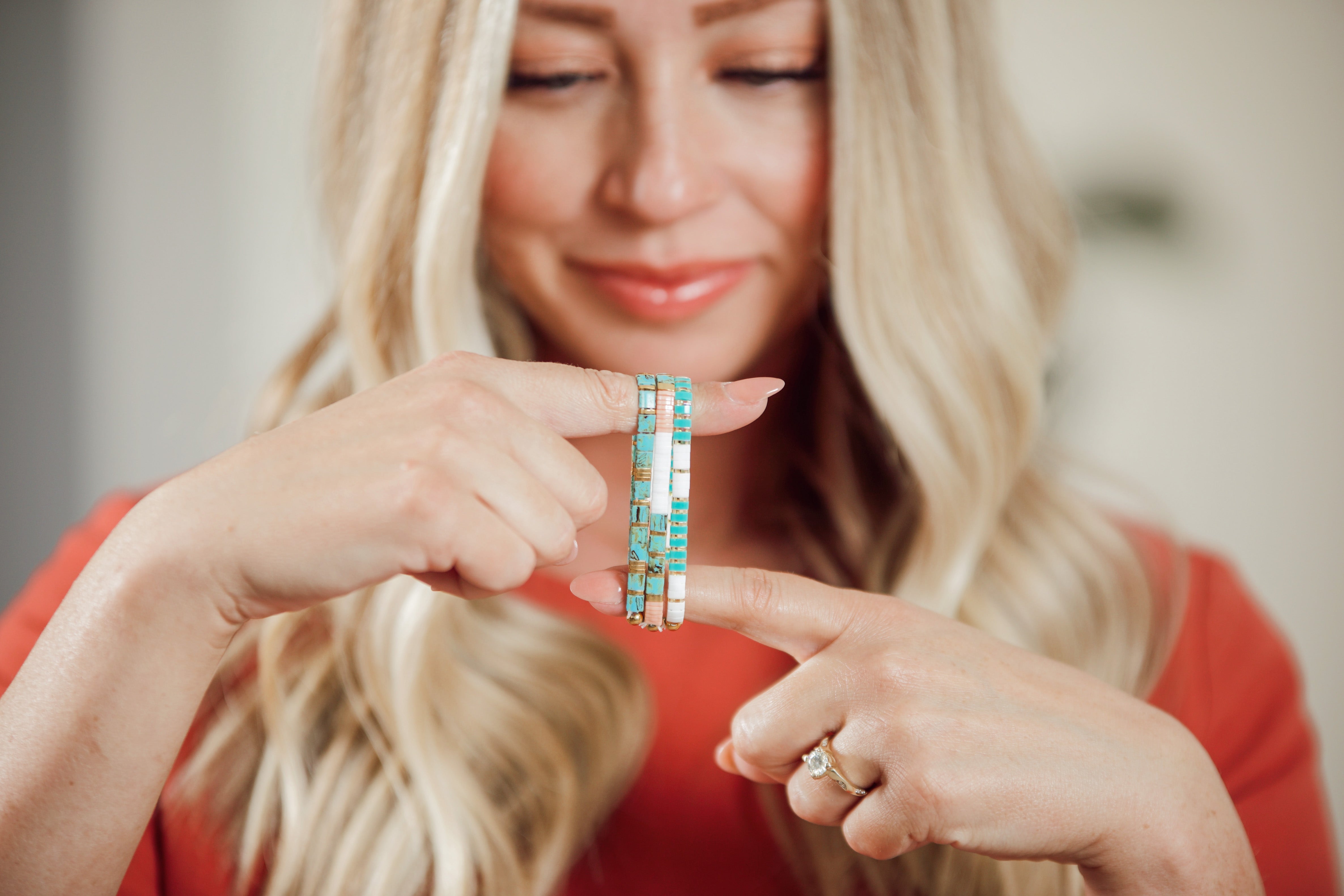
And if what you really want is a finished piece to wear today, you don't have to weave anything. Our ready-to-wear bracelets are made from Miyuki Tila beads, and when you buy three bracelets you get a fourth free (finished bracelets only, no code needed). Beads and kits aren't part of that offer.
Frequently asked questions
Are Miyuki Delica beads worth the price?
For projects where the beads need to line up, like loom work, peyote stitch, and brick stitch, yes. Delicas are cylinder beads with thin walls, large holes, and very even sizing, so rows sit flat and tight. For loose, casual stringing, a cheaper round seed bead is usually fine.
What does the DB number on a Delica bead mean?
DB stands for Delica Beads, and the number after it is Miyuki's color code. DB0001 is a specific color and finish, and it is the same color wherever you buy it. That makes the DB number the easiest way to reorder an exact match.
Does Mack & Rex make Miyuki Delica beads?
No. Miyuki is a Japanese bead manufacturer and Mack & Rex resells its Delica beads as a third-party brand. Mack & Rex does not manufacture them. The shop curates colors and sells them alongside its own bracelets and kits.
Does Mack & Rex ship Delica beads internationally?
Yes. Mack & Rex ships internationally, with shipping and any customs or duties calculated at checkout. Free shipping applies to US orders over $100.
Ready to pick your colors?
Start with the DB numbers in your pattern, then browse the Delica beads collection at Mack & Rex to find your colors and finishes. If you're not sure where to begin, grab a neutral 11/0 and one accent color and try a small practice swatch before you commit to a big project.
Small-parts note: seed beads are a choking hazard. Keep them away from young children and supervise any crafting with kids.

