

Best Tila Bead Color Combinations for Bracelet Stacks
What are the best color combinations for a tila bead bracelet stack?
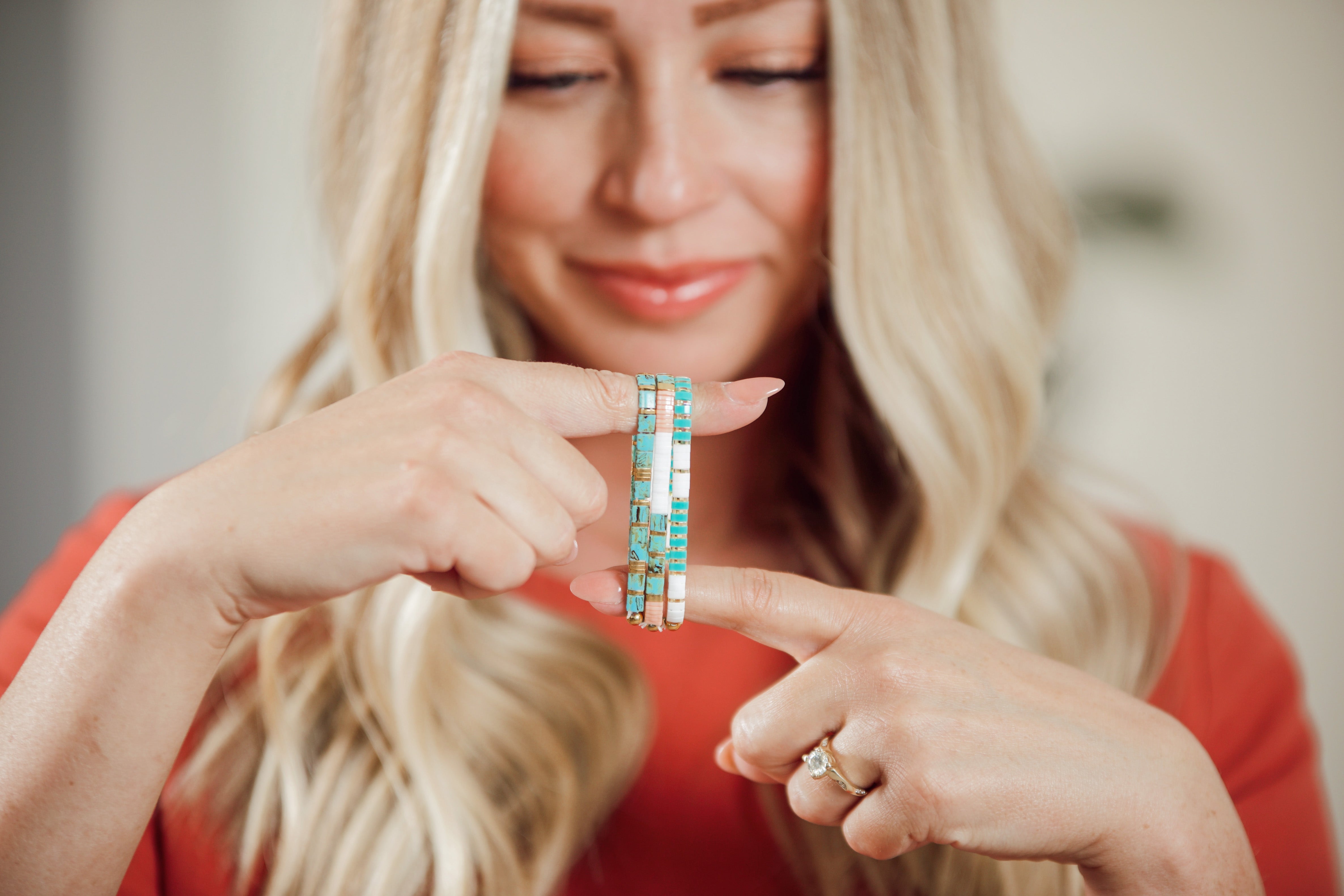
The combinations that work most reliably are neutrals with one pop color, tonal gradients from light to dark, and seasonal palettes built around two or three related shades. Each one gives the stack a shared thread, so separate bracelets read as one deliberate set.
Tila beads are flat, square-ish glass tiles, and they sit snug against each other on stretch cord. That uniform shape is a gift for stacking. When every bracelet has the same bead profile, color does all the talking. This post walks through the pairings we see work best, plus a few finish tricks that make a stack look styled instead of random.
A quick note on the beads themselves: Tila and Miyuki are third-party brands. Mack & Rex resells Miyuki Tila beads and builds its bracelets with them. We don't make the beads. You can see the maker's own range at miyuki-beads.co.jp.
Why do neutral tila bead stacks work with every outfit?
Neutral stacks work because cream, black, grey, white, and soft metallic tones sit quietly beside almost any wardrobe color. Pair two or three neutral bracelets with one bright accent bracelet and you get a stack that goes from the gym to the grocery store to dinner.
Easy to wear. Hard to get wrong.
Here are three neutral recipes worth trying:
- Cream, tan, and one gold-toned bracelet. Warm and soft. This is the stack for people who say they "don't wear color."
- Black, charcoal, and white. Graphic and crisp. Add a single red or teal bracelet if it feels too serious.
- Grey, silver-toned, and one blush. Cool with a little warmth. Good for everyday wear and office days.
Our customers who start with neutrals often come back for a second batch in brighter shades once they see how well the first stack works. Think of a neutral bracelet as the anchor of the set. You can swap the accent around all year.
How do you build a tonal gradient stack?
Pick one color family and choose three to five shades from light to dark. Stack them in order, lightest to darkest, or shuffle them for a looser look. A tonal gradient reads as intentional because every bracelet shares a hue.
The color wheel makes this simple. Shades that sit next to each other on the wheel are called analogous colors, and they tend to look harmonious together. The Wikipedia entry on analogous colors explains the idea well if you want the theory behind it.
A few gradient ideas:
- Ocean blues: pale aqua, turquoise, medium blue, navy.
- Blush to berry: light pink, rose, raspberry, deep plum.
- Sage to forest: pale green, olive, deep pine.
The BEACHY collection leans into this thinking, with sandy neutrals and sea-glass tones that sit comfortably together. If you're new to stacking, a tonal set is the lowest-risk place to start.
What are good seasonal tila bead color palettes?
Good seasonal palettes use two or three shades tied to the time of year: warm oranges and golds for autumn, deep reds and greens for the holidays, pastels for spring, and bright aquas and corals for summer. Keep the count small so the season stays obvious.
A quick cheat sheet:
- Fall: burnt orange, mustard, and a deep brown or burgundy. The RETRO SUNSET collection is a natural fit here, with its warm, sun-baked shades.
- Winter holidays: evergreen, cranberry, and a creamy white. The EVERGREEN EDIT collection covers the green end of that palette beautifully.
- Spring: soft lavender, butter yellow, and mint.
- Summer: coral, turquoise, and sunshine yellow.
Team colors count as a seasonal palette too. Two bracelets in school colors plus one neutral makes a game-day stack that still goes with jeans the rest of the week.
Can you mix matte, metallic, and opaque tila beads in one stack?
Yes, and it's one of the easiest ways to add depth. The rule is to vary finish but repeat color. Matte, glossy, and metallic bracelets in the same color family look layered. Mixing finishes and colors at the same time looks scattered.
Finish changes how light hits the glass. Opaque beads give flat, solid color. Matte beads soften it and look a bit more modern. Metallic beads catch the light and read as jewelry. A stack with one of each finish has visual texture even if every bracelet is the same shade of blue.
Some pairings that work well:
- One matte, one opaque, one metallic in the same color. The simplest way to add depth.
- Mostly opaque with one metallic accent. The metallic bracelet becomes the "dressy" piece of the stack.
- All matte with one glossy bracelet. Gives a quiet, refined look with a single bright spot.
The STAINED collection plays with this idea. Glassy, jewel-toned beads sit next to more solid shades, so the stack feels rich without being loud.
How many colors should one bracelet stack have?
Stick to three main colors across the whole stack, including neutrals. Three colors keeps things cohesive. A fourth works only if it's a neutral or a repeat of a shade you've already used. More than that and the eye has nowhere to land.
This is the rule of thumb we use in our own stacks. It also helps to make sure at least one color appears in more than one bracelet. That repeat is the thread that ties everything together. If you've got a blue, a green, and a coral bracelet, add a bracelet with a blue-and-coral pattern and suddenly the whole set looks planned.
Pattern bracelets help here. A single bracelet that mixes two of your stack colors acts like a bridge between the solid ones.
Which tila bead colors look best on different skin tones?
There's no wrong answer, but a few guidelines help. Warm undertones tend to glow with gold, coral, olive, and rust. Cool undertones often pair well with silver, blue, lavender, and berry. Neutral undertones can wear nearly everything.
Honestly, wear what makes you happy. The "rules" are just starting points. A bracelet you love will look better on you than one that follows a chart. Our bracelets come in inclusive sizing from XXS to 5XL, so the stack you build fits comfortably on your wrist too.
How do you keep a stack comfortable for everyday wear?
Choose bracelets sized to your wrist so they sit snug without pinching, and keep the stack to a number that feels light. Stretch bracelets on crystal-cord elastic move with you, which is why they work for workouts, errands, and long days.
We build the bracelets on stretchy cord and back them with a quality guarantee. If you're stacking five on one wrist, check that each size feels right on its own, since the stack adds up. And if you're shopping for a Mack & Rex bracelet, check the size guide on the product page before you order.
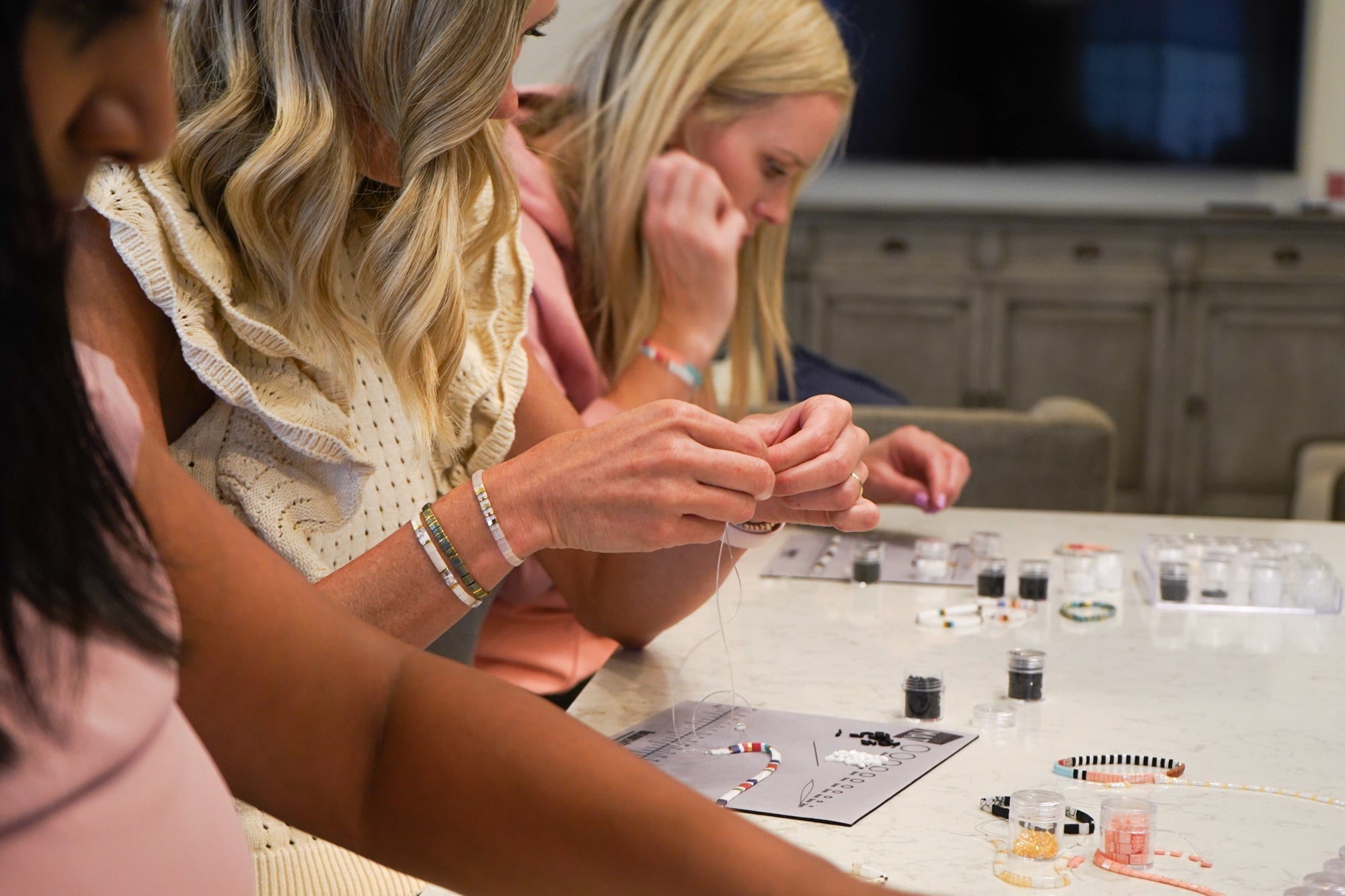
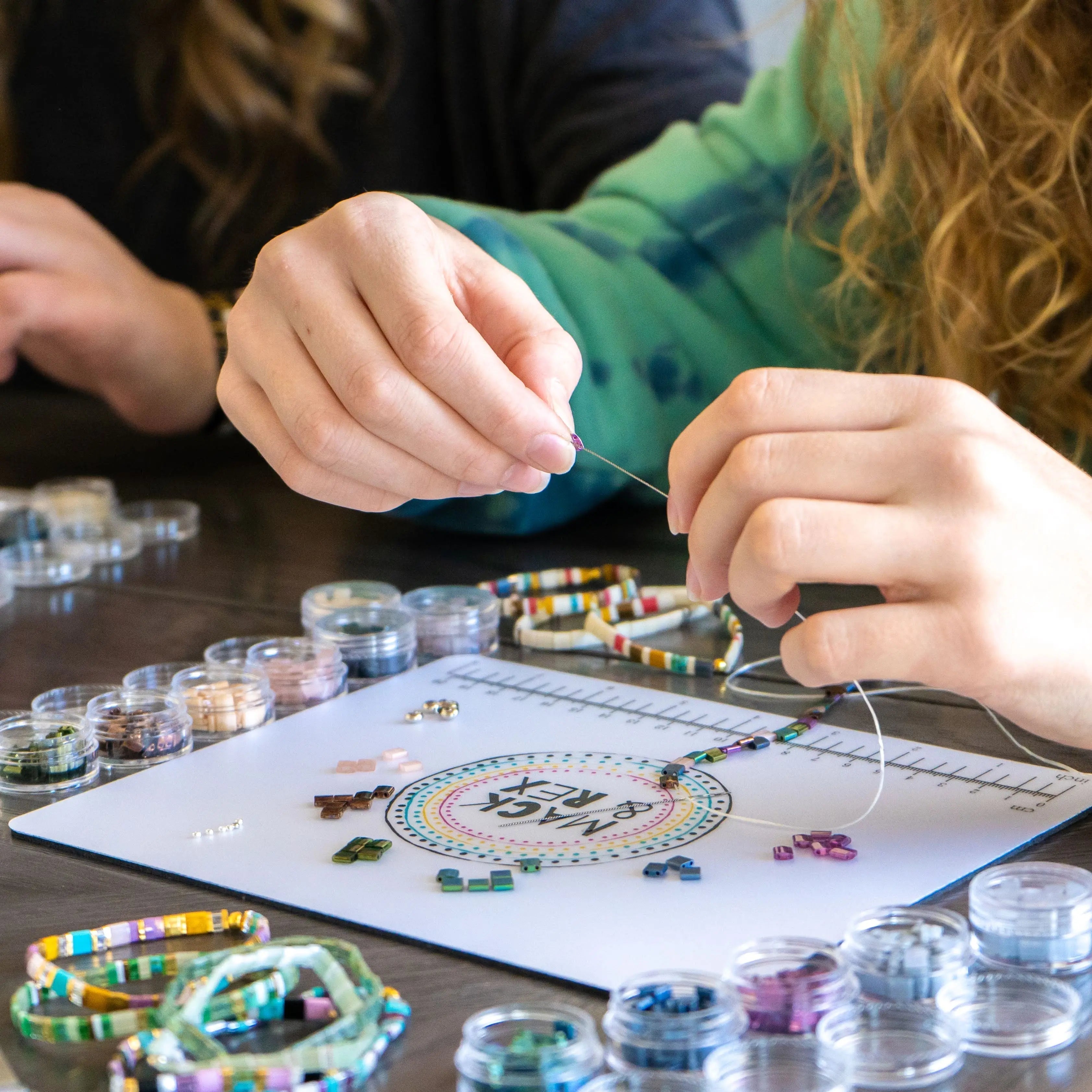
Making your own stack with kids or grandkids? It's a great afternoon, and the color-picking is half the fun. Beads are small parts and a choking hazard, so keep little ones supervised by an adult and skip the activity for very young children.
Where can you shop tila beads to build your own stack?
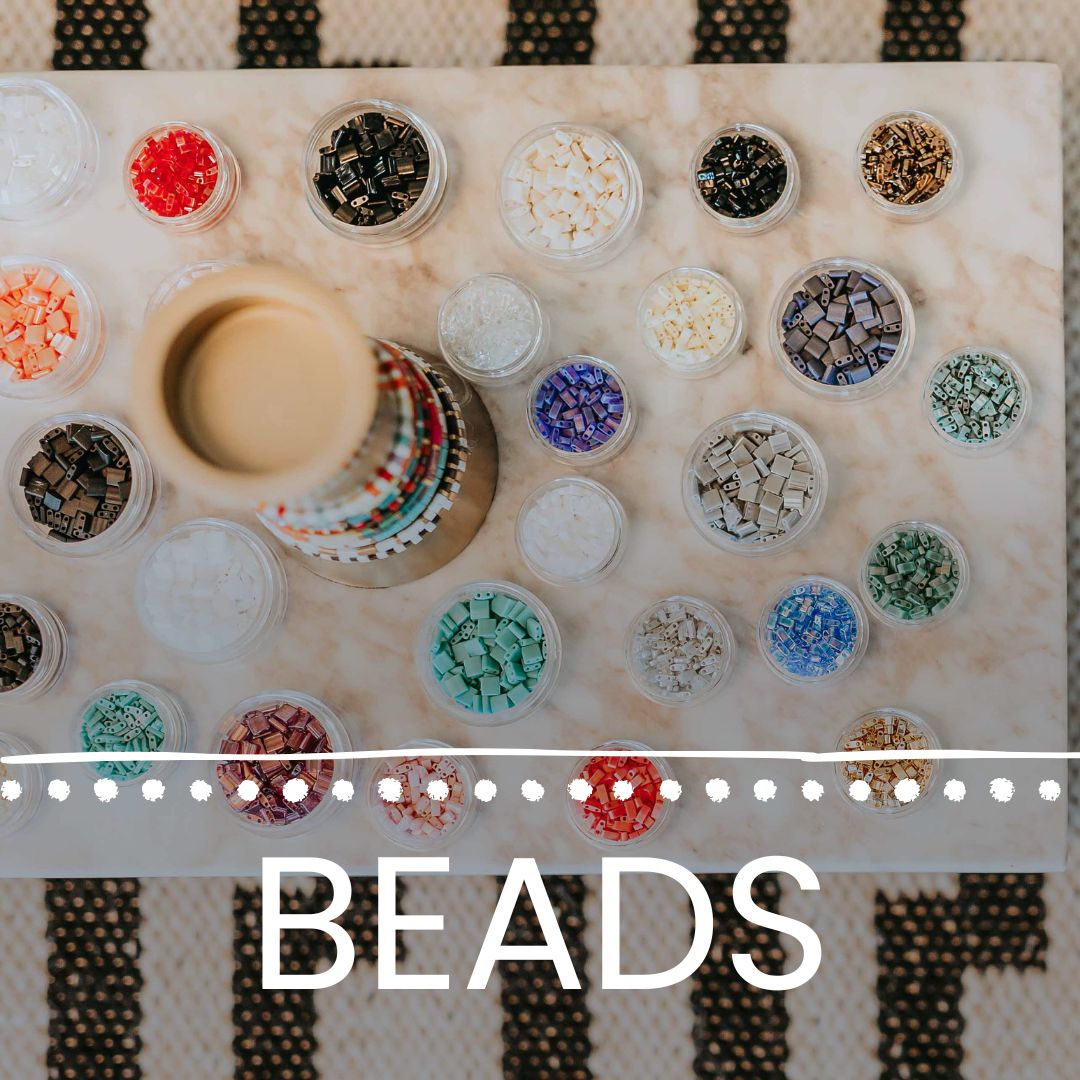
You can browse loose Miyuki Tila beads and color mixes on the Mack & Rex bead collection. Mixes typically run about $5 to $9, so it's an inexpensive way to test a palette before you commit to a full set.
Mack & Rex started with a mom and her two daughters, Mack and Rex, picking colors at the kitchen table. That's still how we choose our palettes. If you'd rather skip the stringing, our finished bracelets are the best-selling way to build a stack, and buy 3 finished bracelets, get 1 free (no code needed). Mack & Rex ships internationally, with shipping and any customs or duties calculated at checkout. US orders over $100 ship free.
For more on color relationships, the color wheel overview on Wikipedia is a handy reference when you're planning a palette.
Shop Tila beads at Mack & Rex and start your palette. Spread happy.
Frequently asked questions
How many bracelets should be in a tila bead stack?
Most people land on three to five. Three gives a clean, balanced look. Five reads as a full stack. Past that, the colors need a strong shared thread (one finish or one color family) or the stack starts to look busy.
Can I mix matte and shiny tila beads in one stack?
Yes. Mixing finishes adds depth. Keep one color family or one repeating accent shade across the stack so the different textures still look like a set.
What colors go with everything?
Neutrals like cream, black, grey, and soft gold-toned beads pair with nearly any palette, which makes them useful anchor bracelets in a stack.
Does Mack & Rex ship internationally?
Yes. Mack & Rex ships internationally, and shipping plus any customs or duties are calculated at checkout. Free shipping applies to US orders over $100.

