

Bracelet Kit vs. Loose Beads: Which Should a Beginner Actually Buy?
Bracelet Kit or Loose Beads: Which One Should You Buy First?
You're standing in front of two options online: a bracelet kit that bundles everything, or a bag of loose beads priced lower per piece. Both make the same finished bracelet. Only one of them tells you exactly what to do next.
For most beginners, a bracelet kit is the better first purchase. It includes the beads, the crystal-cord elastic, and enough of each to actually finish a piece, so you're not guessing at quantities or hunting for a matching clasp. Loose beads cost less per bead, but only pay off once you already know your cord length, bead count, and sizing.
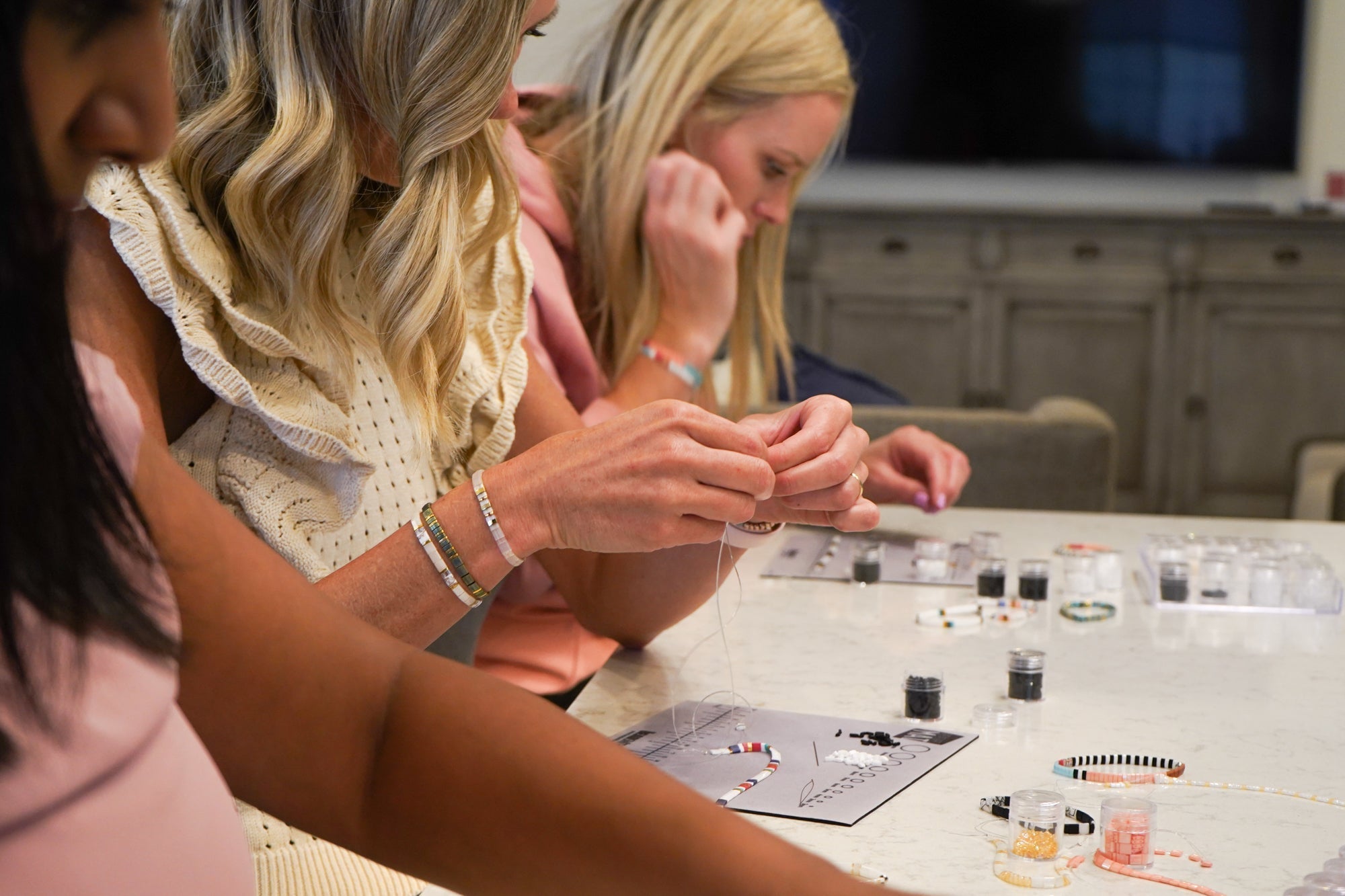
Our founder started Mack & Rex the same way most crafters start, at a kitchen table with her two daughters and a pile of beads that didn't come with instructions. That's part of why the kits exist. A first bracelet should be a fun afternoon, not a supply-list scavenger hunt.
What Do You Actually Get Inside a Bracelet Kit?
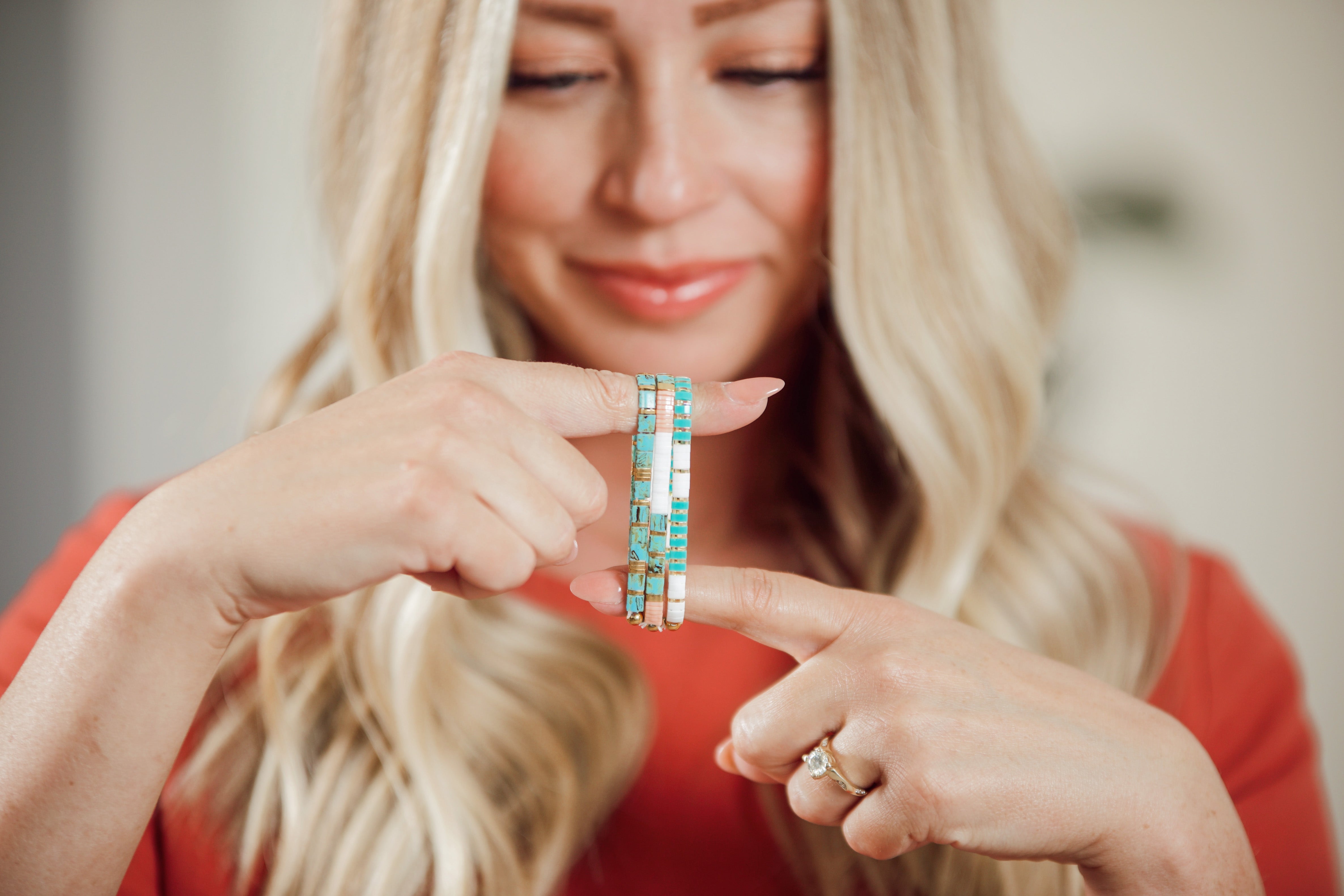
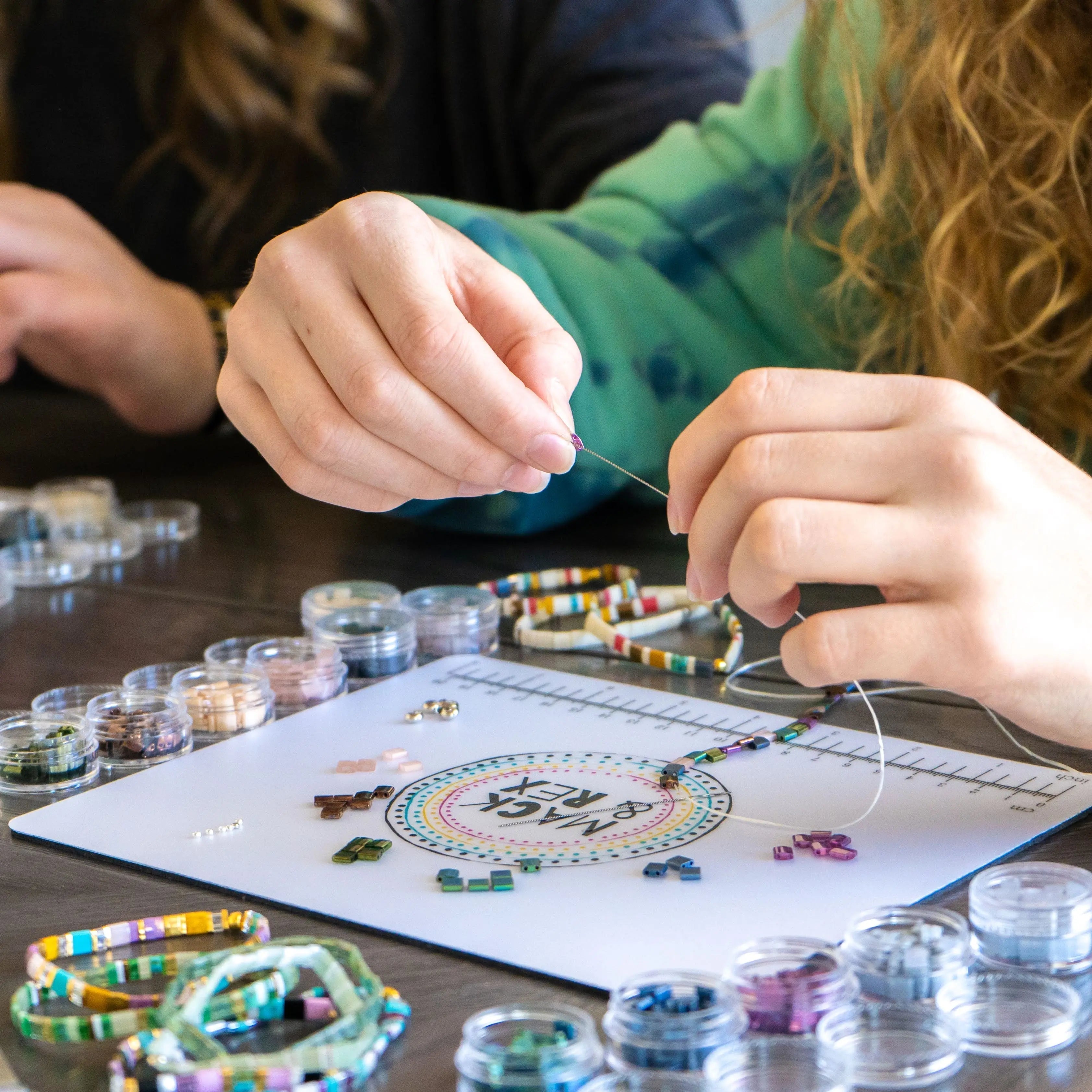
A real bracelet kit is a closed loop: beads, stretch cord, and a plan, all sized to match. Mack & Rex's trio kits ($44.99) are built to make 3 bracelets from one box, so there's no separate trip for elastic or a calculator moment over how many beads fill an average wrist.
That "closed loop" part matters more than it sounds. Stretchy bracelets rely on crystal-cord elastic with the right diameter and stretch recovery. Buy cord that's too thin and it snaps early; too thick and it won't knot cleanly around a Tila bead's hole. A kit has already made that decision for you, tested against the exact beads in the box.
What Do You Actually Save by Buying Loose Beads?
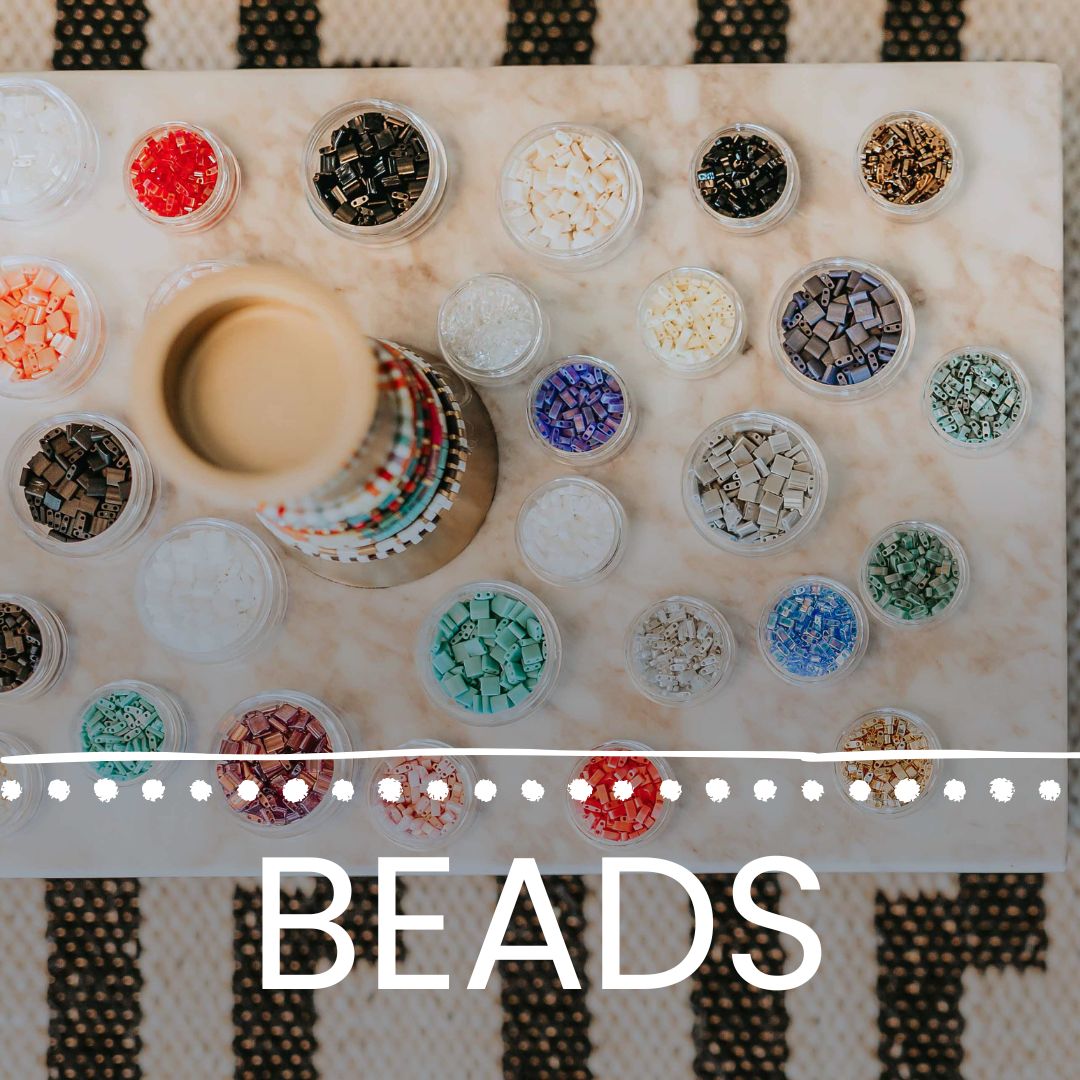
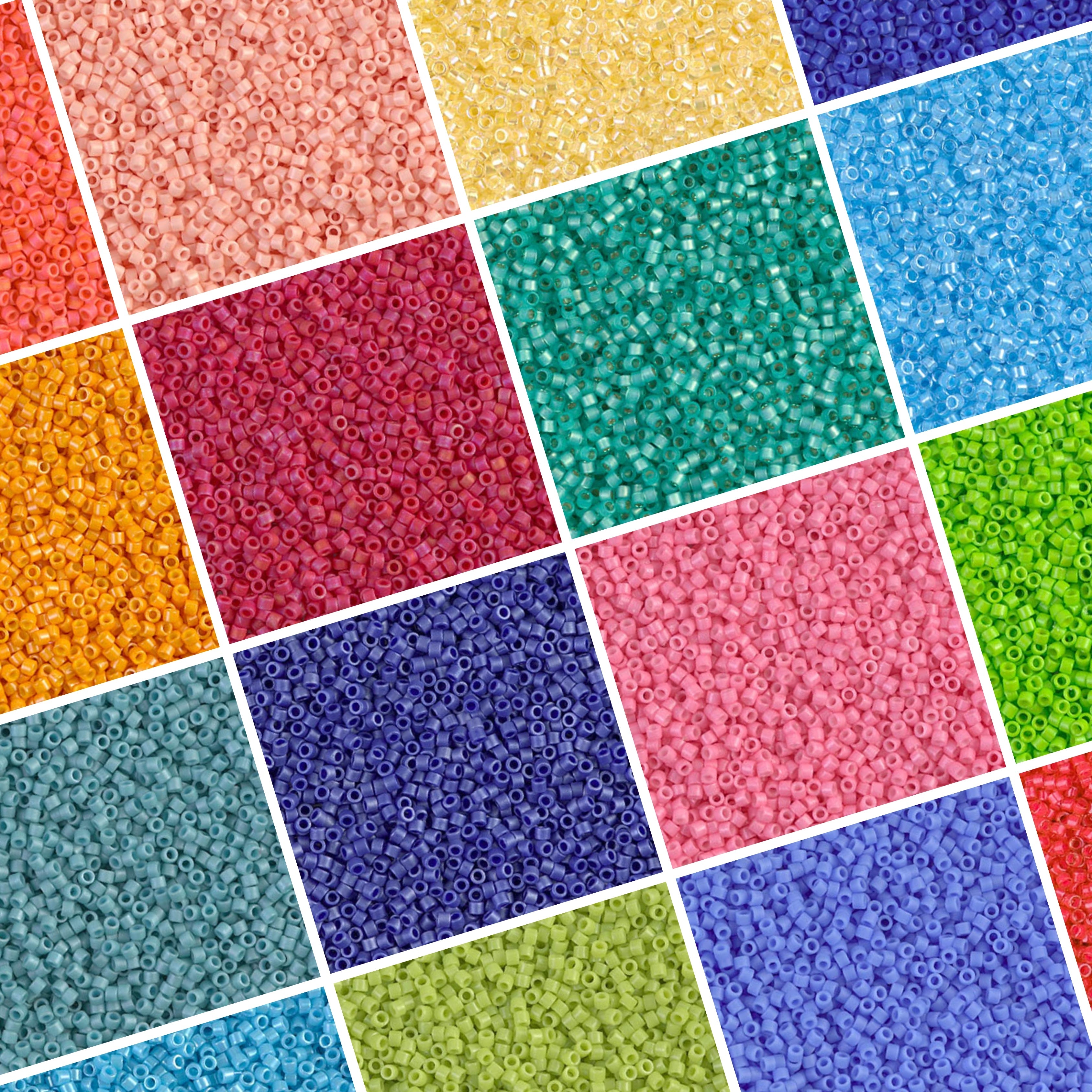
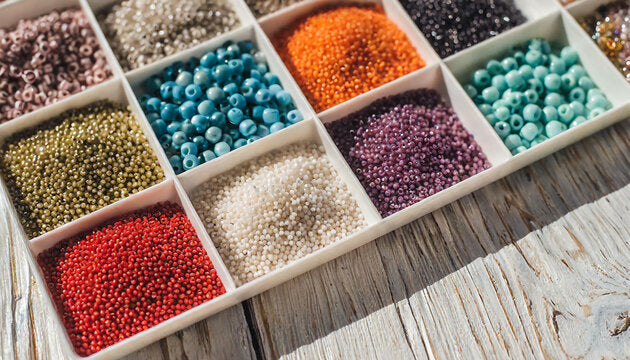
Money, mostly, if you already have everything else. Loose Tila bead mixes run about $5 to $9 depending on the pack, which is cheap next to a finished $20 to $25 bracelet. The catch: that price only covers beads. Cord, a needle if you're using one, a clasp or crimp bead, and the math on how many beads make a 6.5 to 8 inch stretch bracelet are all on you.
Buy loose beads without a plan and you'll likely end up back on the site a second time for cord, or worse, using whatever thread is in a junk drawer that isn't rated for the tension a stretch bracelet puts on it. That second trip erases most of the savings and adds a delay before you can actually wear anything.
How Much Cheaper Is Buying Loose Beads, Really?
Less than it looks on the price tag. A Tila bead mix runs roughly $5 to $9, which sounds like a steal next to a $44.99 kit that makes 3 bracelets. But that mix is beads only. Add crystal-cord elastic and a clasp or crimp set from somewhere else, and the total for one bracelet's worth of loose supplies can land close to what a single finished bracelet costs anyway, before you've even made anything.
A kit's per-bracelet math is more straightforward because it's already been done for you. The trio kit works out to about $15 a bracelet for beads, cord, and (with the trio format) a repeatable pattern for all three. Loose beads only beat that once you're buying in enough volume that the extra cord and findings get spread across many bracelets rather than one or two, which is the scenario a returning crafter is in, not a first-timer.
What Do You Need Besides Beads to Finish a Bracelet?
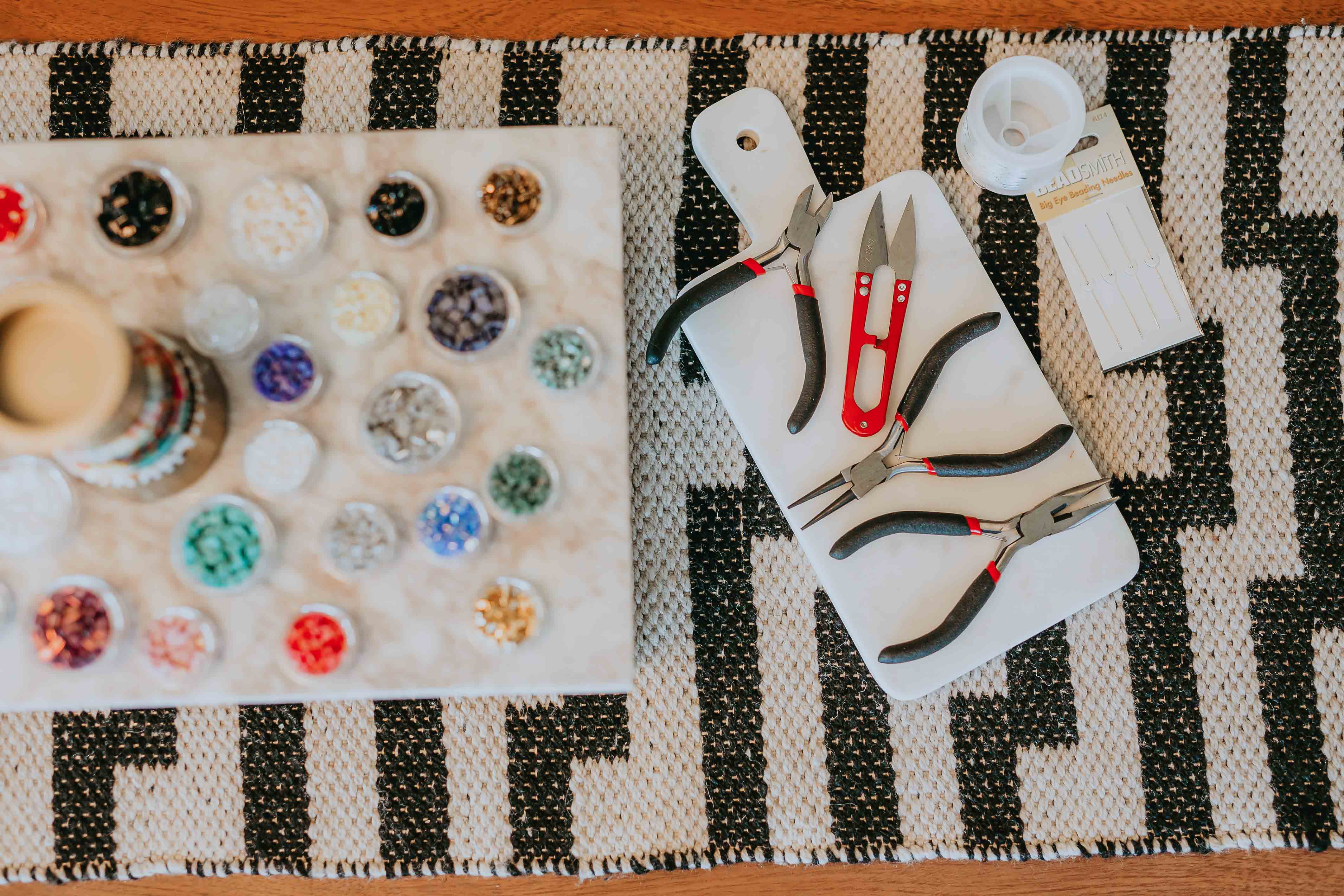
Three things, at minimum: cord, a way to size it to a wrist, and a clean finishing knot. Crystal-cord elastic is the standard for stretch bracelets because it holds shape and recovers after stretching over a hand, unlike standard beading thread. You also need to know roughly how many beads of your size fill the length you're cutting, and a double or surgeon's knot that won't work loose after a few wears.
None of that is hard. It's just three separate decisions a beginner usually hasn't made yet, and a kit answers all three before you open the box. If you're buying loose beads, plan on picking up crystal-cord elastic and a clasp or crimp set in the same order so you're not stalled mid-project.
Sizing trips people up more than the knot does. Wrist measurements vary a lot from a kid's wrist to an adult's, and a bracelet cut short pinches while one cut long slides around during a workout. Kits sidestep the guesswork with a sizing note built into the instructions. Buying loose, you're measuring and estimating on your own, and a first attempt running a little long or short isn't unusual.
Which Option Is Actually Better for a First-Timer?
Start with a kit. That's the honest answer for almost every first bracelet. A kit removes the three unknowns above (cord, sizing, quantity) and replaces them with a box that just works. Mack & Rex's All-in-One tools and supplies kit ($39.99 to $43.99) adds the basic tools to that same bundle, so a true beginner isn't sourcing anything separately.
Loose beads make more sense once you've built one or two bracelets and know your own tension, wrist size, and bead count. At that point you're not guessing anymore. You're restocking colors you already know how to use, and the lower per-bead price shows up as real savings, not a second shipping charge.
When Does Buying Loose Beads Actually Make Sense?
Once the basics are sorted. If you've made a bracelet or two and know you'll go through crystal-cord elastic and Tila beads regularly, buying loose beads in bulk is where the math flips in your favor. A crafter making bracelets for a group, a classroom activity, or a big batch of gifts saves real money buying loose over re-buying individual kits.
Mack & Rex's Tila Bead Starter Kit ($189.99, makes about 20 bracelets) and the Ultimate Tila Bracelet Kit ($399.99, makes about 80) sit in between: still kit-format with cord and quantities figured out, but priced for volume the way loose-bead buying is. If you'd rather source beads separately at that scale, the loose bead collection at mackandrex.com/collections/all-seed-beads has Tila and seed bead mixes sold on their own.
Color mixing is the other reason experienced crafters reach for loose beads over another kit. A kit gives you a curated palette someone else picked. Loose bead mixes let you build your own color story bracelet by bracelet, which matters more once you've moved past your first few pieces and start making bracelets to match specific outfits, teams, or a friend's favorite colors.
What Should a Beginner Actually Buy From Mack & Rex?
A bracelet kit, full stop, for a first project. Every kit uses crystal-cord elastic and Japanese Miyuki Tila beads, and sizing runs inclusive from XXS to 5XL, so the kit works whether you're making one for yourself or for a grandkid with a much smaller wrist. Browse the full range at mackandrex.com/collections/bracelet-making-kits, where the trio kits, the DIY Bracelet Kit Club ($36.99), and the larger starter kits all live.
A small-parts note, since it applies no matter which option you pick: Tila beads, crimps, and clasps are choking hazards. If kids are part of your bracelet-making session, an adult needs to be at the table the whole time, and that's true whether the beads came from a kit or a loose bead bag.
One more thing worth knowing before you check out. The buy 3 bracelets, get 1 free offer applies to finished, ready-to-wear bracelets only. It doesn't apply to kits or loose beads. And a single $44.99 trio kit won't clear the $100 free-shipping threshold on its own (that's a US-only offer; international orders calculate shipping and any duties at checkout), so factor that into what you're ordering if you're trying to hit it.
Does It Matter Which Cord You Use With Loose Beads?
Yes, and this is the detail loose-bead buyers skip most often. Elastic cord is technically an elastomer, a material that stretches under tension and returns to its original shape afterward, which is exactly the property that keeps a stretch bracelet snug instead of loose after a few wears (see Wikipedia's overview of elastomer behavior for the general material science). Not all cord sold as "beading elastic" has the same recovery, and a bracelet strung on the wrong grade will stretch out within weeks.
Fire Mountain Gems' EncycloBEADia glossary is a solid general reference if you want to understand cord gauge and finishing terms before you buy loose. It won't tell you which cord pairs with Tila-sized holes specifically. That's the piece a kit already solves, since the cord inside is matched to the beads in the same box.
Bead holes themselves aren't universal either, which catches a lot of first-time loose-bead buyers off guard. Tila beads have a flatter, two-hole shape rather than the single center hole you'll find on a round seed bead, so cord that threads a seed bead cleanly won't necessarily sit right in a Tila. Wikipedia's overview of beads generally covers how bead shape and hole placement vary by material and cut, if you want the background before you shop loose.
Frequently Asked Questions
Is a bracelet kit worth it if I already own some beads?
If your leftover beads are Tila-sized and you already have crystal-cord elastic and clasps or crimp ends, you may not need a full kit. If you're missing cord, sizing guidance, or enough beads for a finished piece, a kit still saves you a second and third shopping trip.
How many bracelets does one bracelet kit make?
It depends on the kit. Mack & Rex's trio kits make 3 bracelets, the Tila Bead Starter Kit makes about 20, and the Ultimate Tila Bracelet Kit makes about 80. Check the product page for the exact yield before you buy.
Can I mix loose beads with a kit's leftover cord?
Yes. Once you've used a kit and understand roughly how much cord and how many beads a standard wrist takes, buying loose Tila beads or seed bead mixes to restock is a normal next step for a lot of crafters.
Is loose-bead crafting safe for kids to do alone?
No. Beads, findings, and clasps are small parts and a choking hazard. Kids should craft with an adult present regardless of whether the beads came from a kit or a loose bead pack.