

Is Bracelet Making a Good Hobby for Anxiety and Stress Relief?
Is Bracelet Making Actually a Good Hobby for Anxiety and Stress?
For a lot of people, yes, it works as a small, repeatable way to settle a busy mind. The motion is simple and repetitive (string a bead, pull it snug, string the next one), which gives your hands and your attention a narrow task instead of a wide-open one. That narrow focus is the whole mechanism. It's not a treatment for anxiety, it's a low-pressure way to occupy restless hands during a stressful stretch of the day.
This isn't a "relaxing hobby" post that could apply to knitting, gardening, or coloring books with the names swapped out. Bracelet making has a specific texture: it's tactile, it's quiet, it fits on a table or your lap, and it produces something wearable in one sitting. That combination is worth looking at closely, because it explains both why it helps and where its limits are.
Why Does a Repetitive Craft Like This Feel Calming?
Repetitive, predictable hand movements give your brain a small, achievable loop to run instead of an open-ended one. Stress and anxious rumination tend to feed on uncertainty, on your mind circling a problem with no clear next step. Threading beads is the opposite: there's always an obvious next move, string the next bead, and that predictability is part of what makes it feel steadying.
Psychologists describe a related idea called flow, a state where a task is absorbing enough to hold your attention without demanding so much effort that it becomes stressful itself (Wikipedia: flow (psychology)). Bracelet making sits in a good spot for that. It's engaging enough to hold your focus, simple enough that you're not solving a hard problem while you do it. Your hands stay busy, your eyes track a small, visible pattern, and there's rarely a decision more complicated than "which color comes next."
The American Psychological Association notes that mindfulness, paying attention to the present moment without over-analyzing it, is linked to lower stress reactivity in a lot of research on the topic (APA: mindfulness). A repetitive craft nudges you toward that same present-focused attention without requiring you to sit still and meditate, which is the part a lot of stressed adults actually struggle with.
How Does a Beginner Kit Lower the Barrier to Actually Doing This?
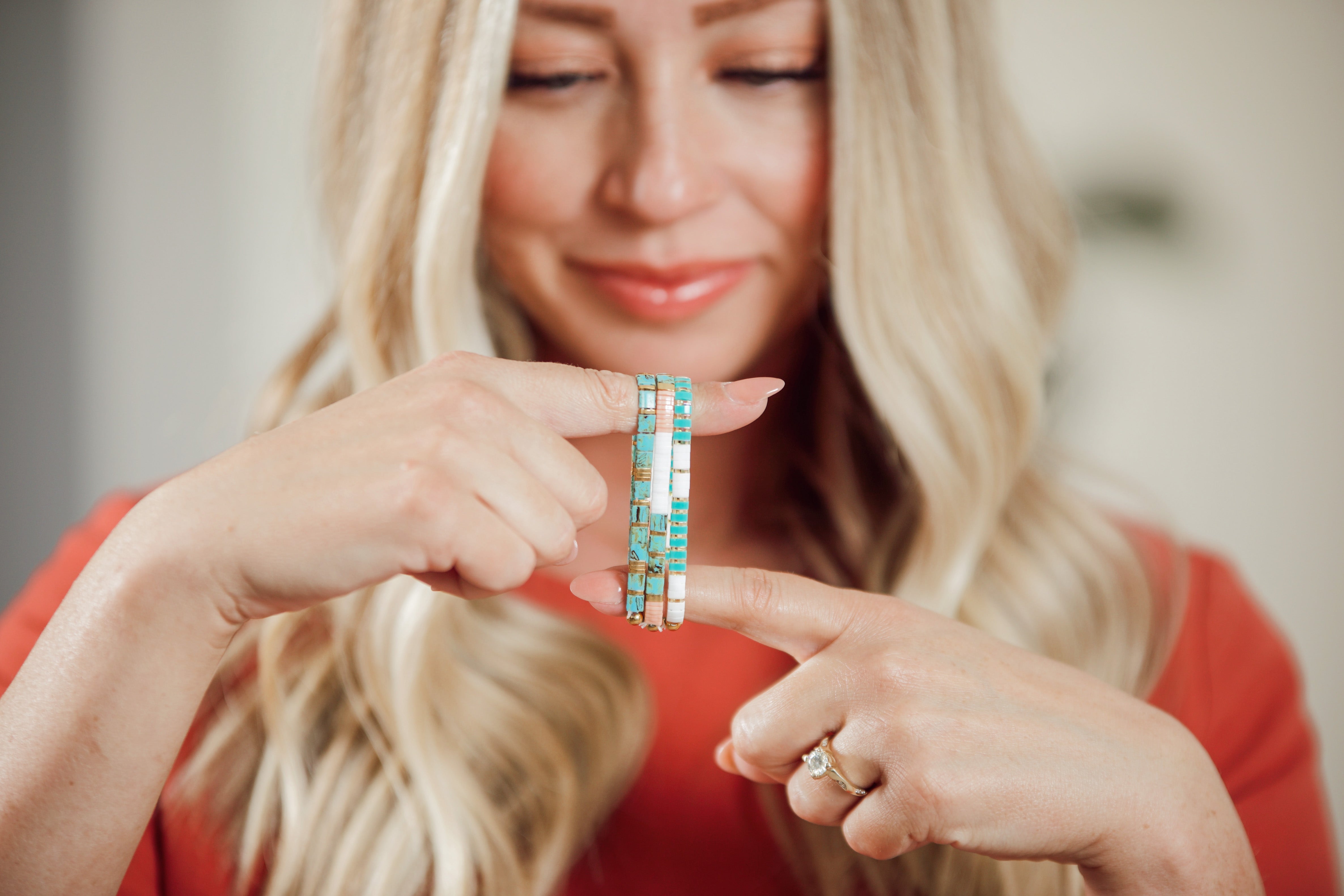
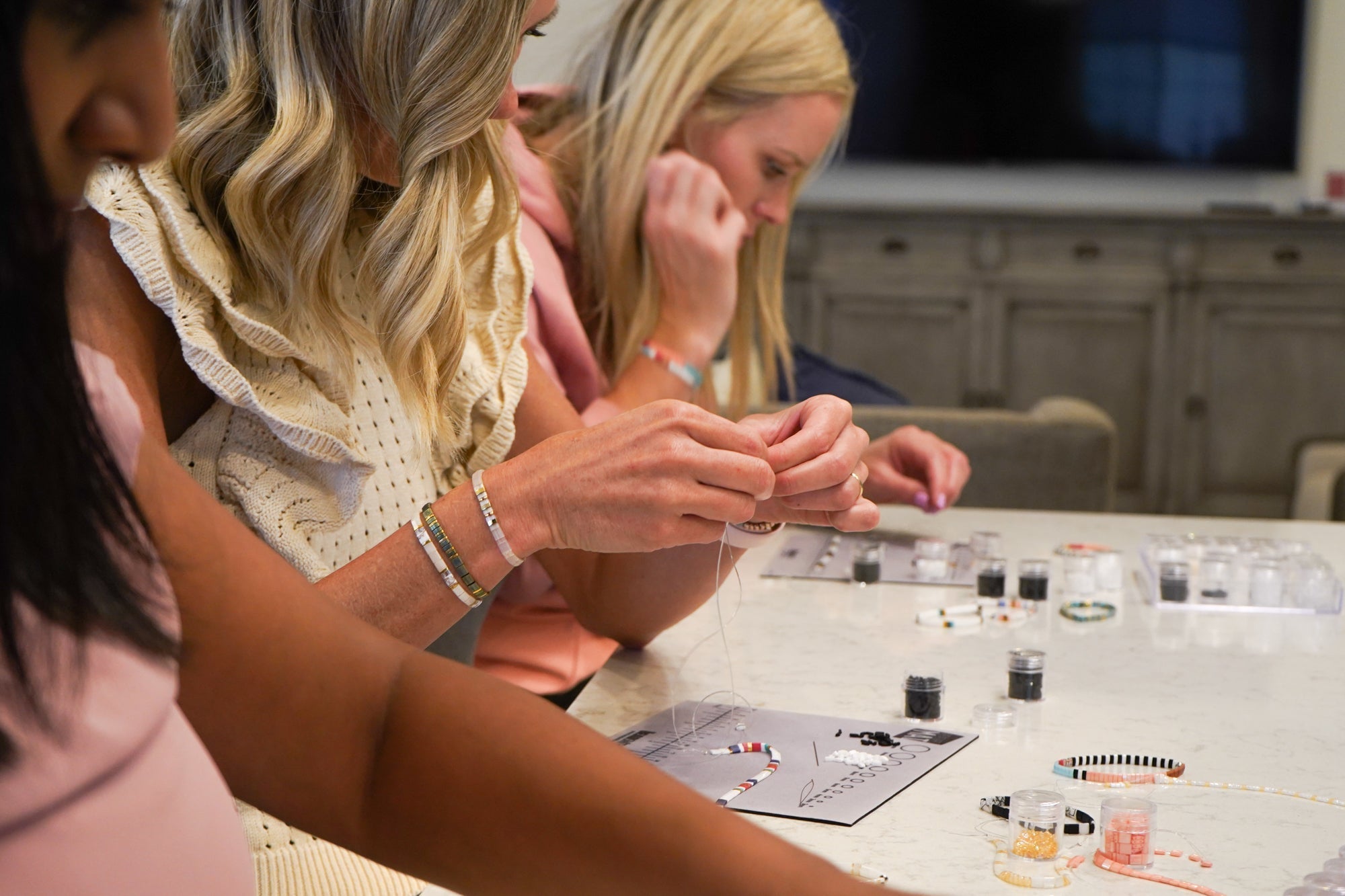
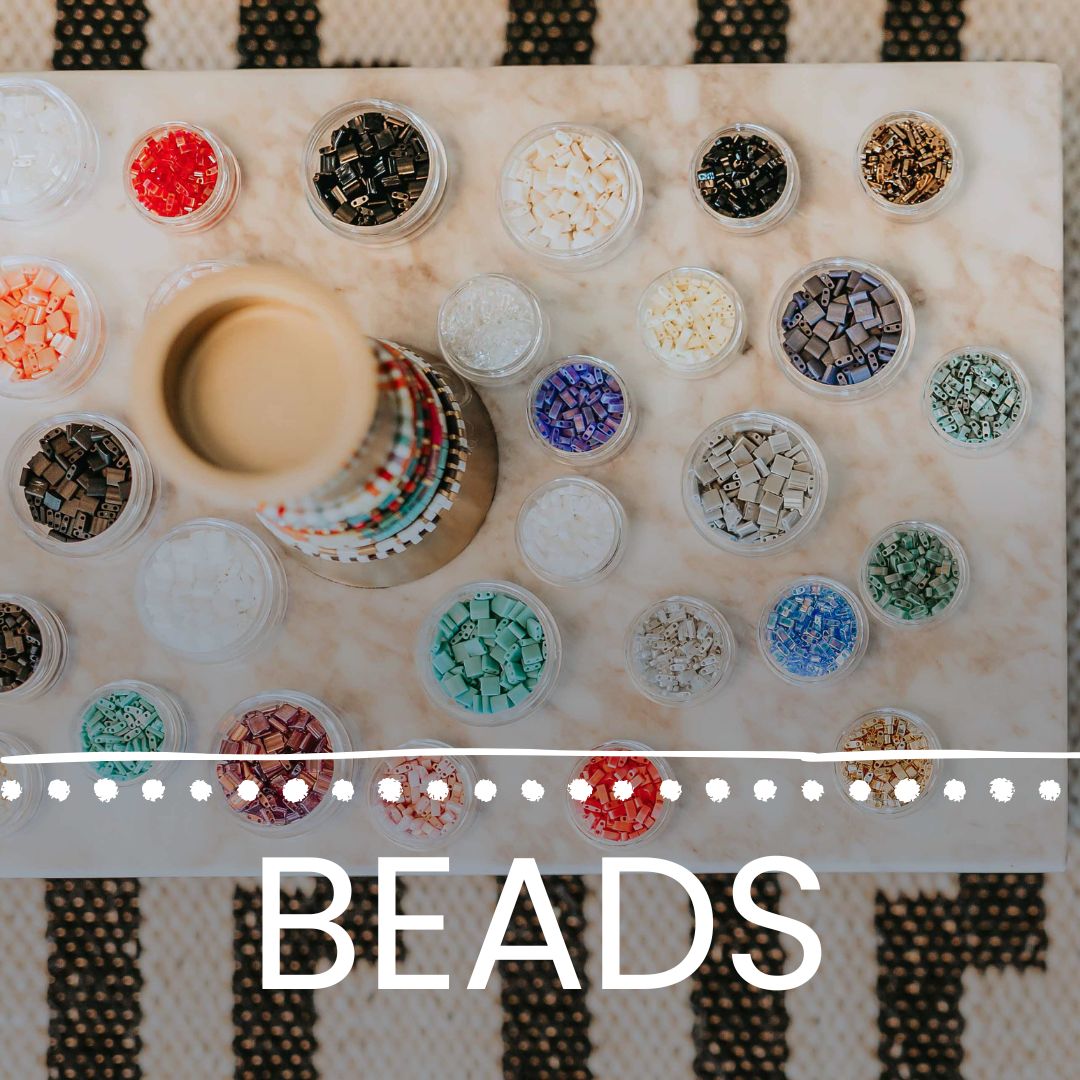
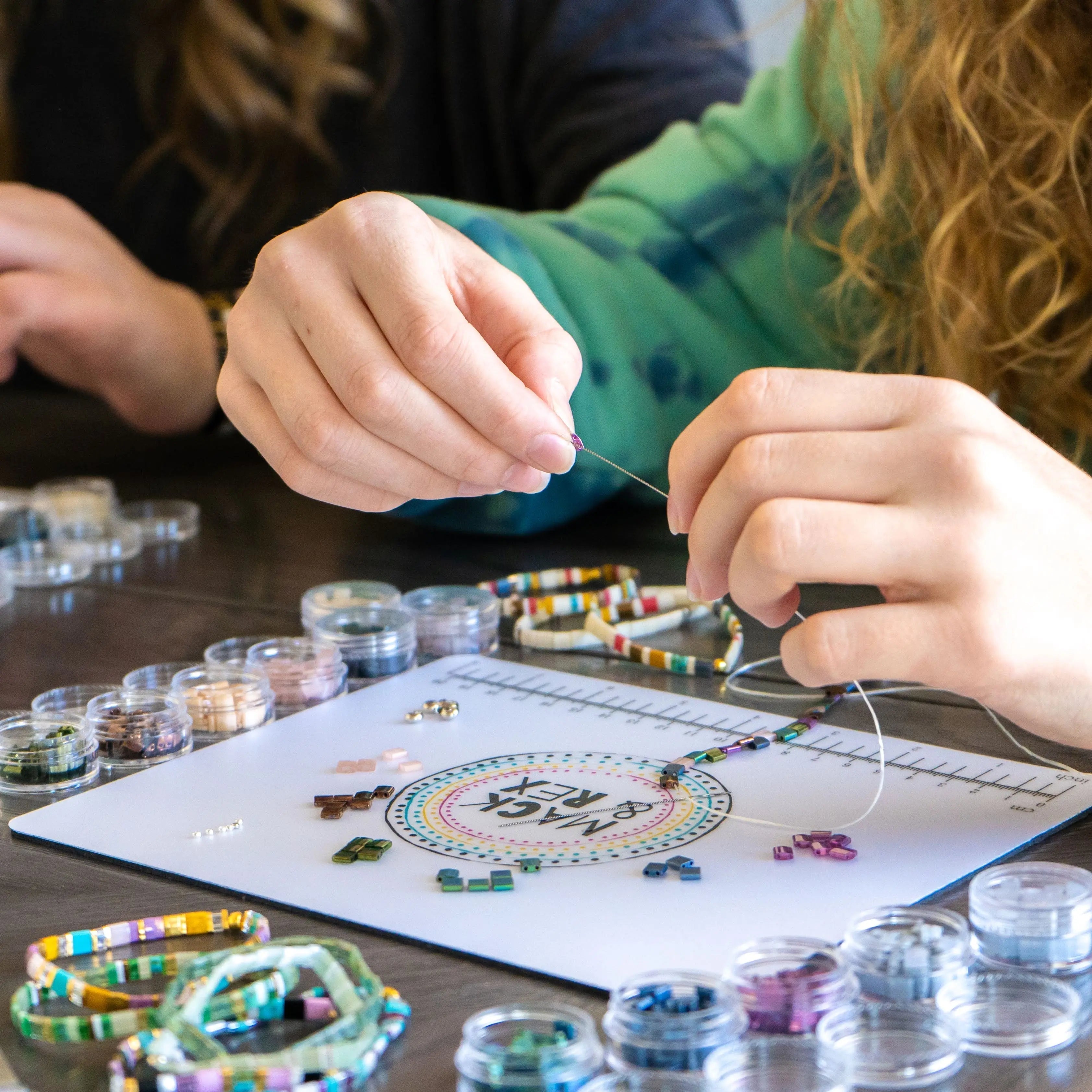
A kit removes the two things that stop most people before they start: decision fatigue and setup time. Instead of researching bead types, cord weight, and pattern math, a Mack & Rex trio kit ($44.99, makes 3 bracelets) or the DIY Bracelet Kit Club ($36.99) hands you pre-sorted Miyuki Tila beads, crystal-cord elastic, and a pattern ready to follow.
That matters more than it sounds. If you're already stressed, adding a research project on top of a hobby defeats the purpose. A beginner kit turns "figure out how to start a new craft" into "open the box and start stringing," which is a much smaller ask on a day when your bandwidth is already thin. If you like the format and want to keep a stack going, the Tila Bead Starter Kit ($189.99, makes about 20 bracelets) or the Ultimate Tila Bracelet Kit ($399.99, makes about 80) scales the same idea up without changing what a single session looks like.
Beading itself is a genuinely old, well-documented craft tradition, not a wellness trend dressed up in new packaging. Beadwork techniques and materials have been refined by makers for generations, which is part of why a simple strung pattern feels so intuitive once you've done it a few times (Beadaholique). A modern kit just organizes that long-established technique into something you can pick up in one evening.
How Long Should a Session Actually Be?
Twenty to forty-five minutes. That's the sweet spot for a session that feels worthwhile without turning into a chore, long enough to settle into the rhythm and cover a full bracelet pattern, short enough that you're not fighting hand fatigue or losing focus halfway through.
Don't aim for a marathon crafting night if the goal is stress relief. A single trio kit is designed around exactly this kind of session, one sitting per bracelet, not an all-day project that turns into its own source of pressure. If you only have fifteen minutes before a meeting, string half a pattern and pick it back up later. There's no rule that says it has to be finished in one go.
When Does This Hobby Not Help?
It's not a fit for every stressed moment, and it helps to be honest about that. If you're already drowning in small decisions (what to make for dinner, which email to answer first, what to wear), starting a craft that involves picking colors and a pattern from scratch can add another decision instead of relieving pressure. On days like that, a pre-planned kit with the colors already chosen removes that friction, but even then, some people would rather just sit still and do nothing, and that's a completely reasonable choice too.
It's also worth saying plainly: this is a hobby, not a treatment. If anxiety is persistent, severe, or interfering with daily life, a craft project is not a substitute for talking to a professional. What bracelet making offers is smaller and more specific, a short, tactile break where your hands have a job and your mind gets a rest from its usual loop. For a lot of people, that's genuinely useful. It's just not the whole answer, and it was never meant to be.
What Should a First Kit Include?
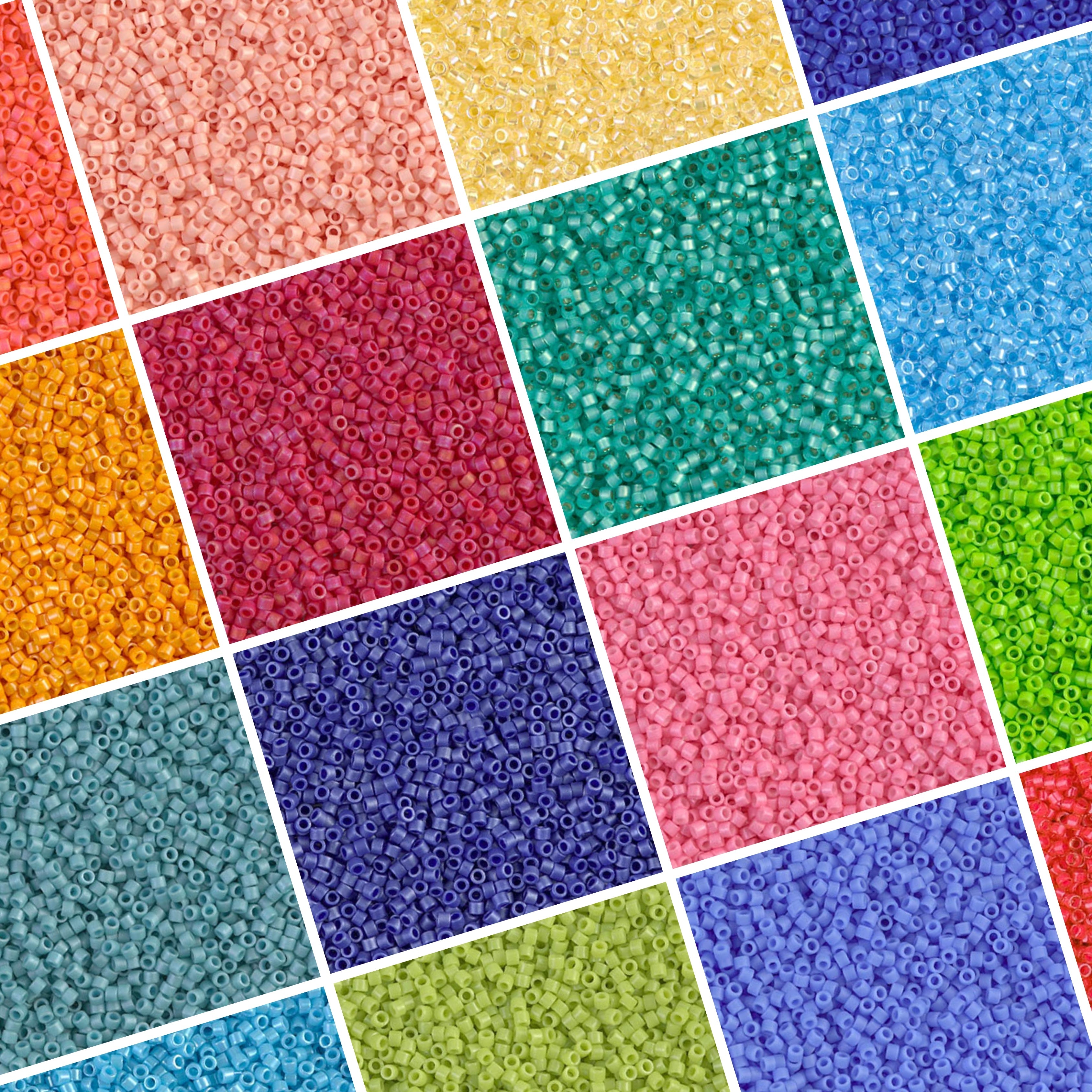
A good starting kit needs pre-sorted beads, a stretch cord that actually holds up, and a pattern simple enough to follow without a second glance at the instructions. Mack & Rex kits use crystal-cord elastic and Miyuki Tila beads, sourced from the same Japanese glass-bead maker that jewelry makers have relied on for precision-cut, consistent sizing for decades, so the beads line up cleanly instead of fighting you row by row.
If a kid wants to sit in on a session, that's a sweet idea for a shared evening, just keep the small beads and findings away from very young children and pets, since loose beads are a choking hazard, and supervise directly if a child is at the table. This is built as an adult-oriented craft, not a kids' toy.
Ready to Try It for Yourself?
The easiest way to test whether this kind of craft actually settles you down is to sit with one pattern for twenty minutes and see how you feel afterward. No research required, no complicated setup, just beads, cord, and a pattern that's already laid out for you.
Mack & Rex's bracelet making kits come with everything sorted and ready to go, from trio kits for a single sitting to bigger sets if you want to keep several sessions in reserve. And if bracelets are already your thing, buy 3 finished bracelets and get 1 free, no code needed. Grab a kit, clear twenty minutes, and see what a quiet, hands-busy hour actually feels like.