



The Unplugged Evening: Why Adults Are Picking Up Bracelet-Making Kits
Why are adults buying bracelet-making kits?
Adults are picking up bracelet-making kits because it's a screen-free way to fill an evening with something your hands are doing instead of your thumbs scrolling. A kit hands you a finished object in one sitting, which is rare for a hobby that actually fits into a normal weeknight.
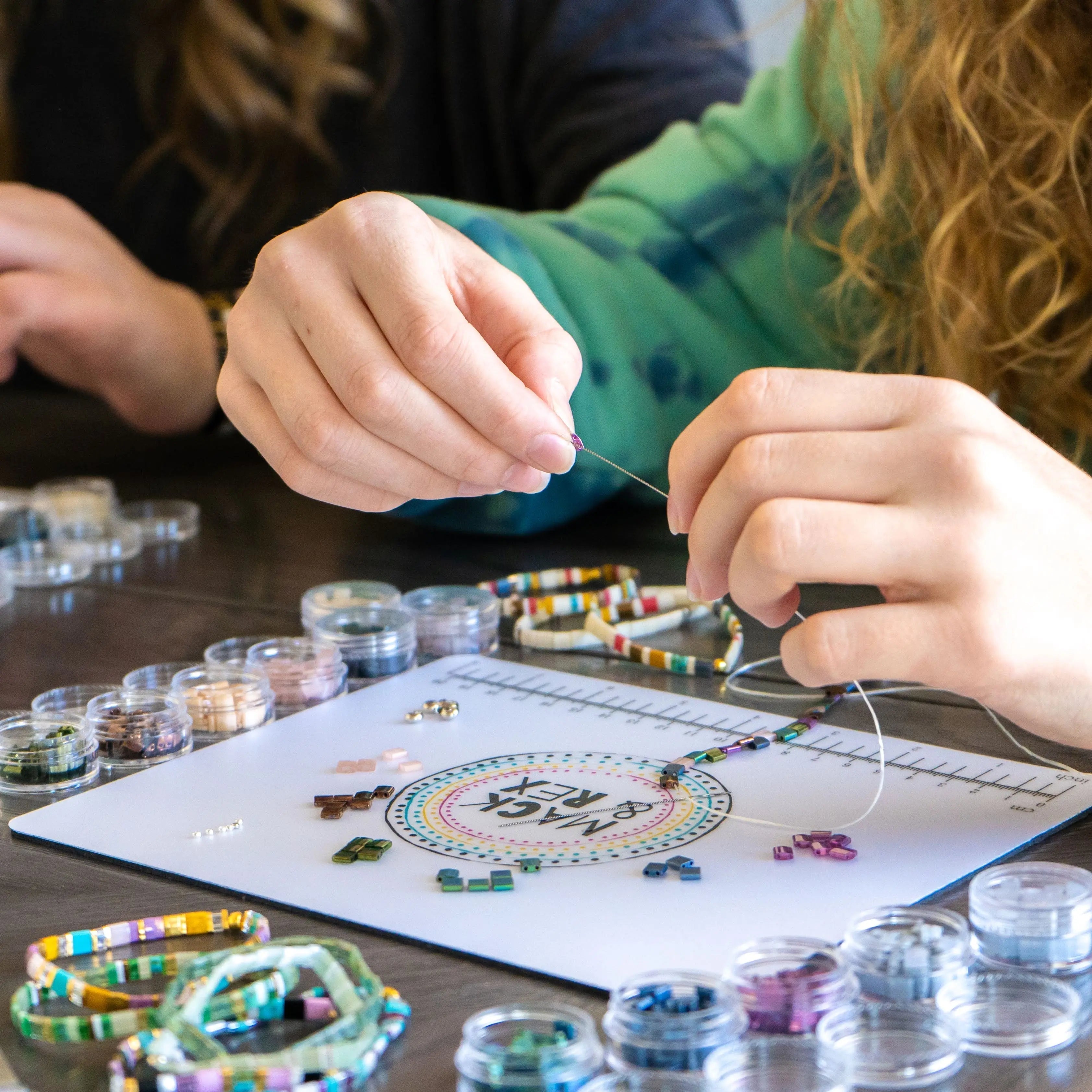
Think about the last hour before bed. Phone in hand, thumb moving, fifteen tabs of nothing in particular. You look up and the hour's gone and you couldn't tell anyone what you actually saw. A bracelet kit fills that window differently. Sit down with a bag of beads, a length of cord, and a pattern card, and thirty minutes later there's a bracelet on the table that wasn't there before. Something to show for the time.
It's not a new impulse. Beading and stringing crafts have been a wind-down activity for a long time, well before anyone had a phone to put down. The materials changed, glass beads got more consistent, patterns got more varied, but the pull of a repetitive hands-on task hasn't (Wikipedia: seed bead).
How long does one bracelet actually take to make?
Most single bracelets take 20 to 40 minutes from open box to finished knot, depending on the pattern and how much you're talking while you work. A three-bracelet trio kit is a realistic hour, start to finish, including the slower first one while you find your rhythm.
That window matters. Most hobbies don't fit into a Tuesday night. Painting needs setup and cleanup. A puzzle sits half-done on the table for a week. A bracelet kit is sized on purpose: open the pouch, follow the color order, tie it off, done. You're committing one show's worth of time, not a whole evening.
The pace depends on what you're stringing. A single-row Tila bead pattern moves fast once you know the sequence. A layered design with two or three cords running at once takes longer because you're tracking more at a time. Got a specific window in mind, a half hour before a show starts? Pick the simpler repeating pattern and save the layered one for a night with no clock running.
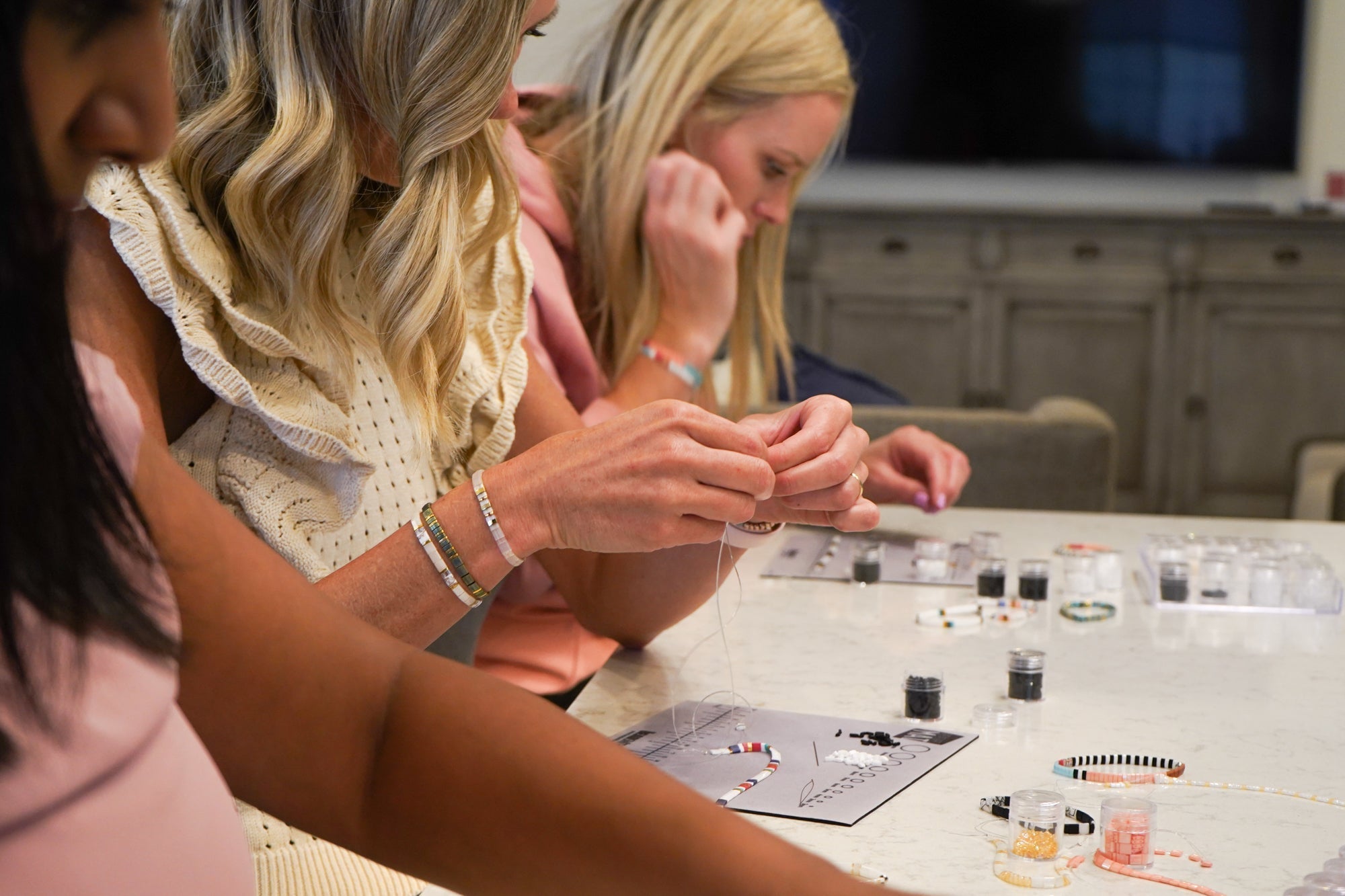
Working solo tends to go faster than working in a group. Pass a kit around a table with a friend and you'll spend some of that time comparing colors and borrowing scissors. Budget closer to 45 minutes if you're crafting with company.
Is bracelet making a good replacement for scrolling before bed?
It's a solid swap for adults who want their hands busy and their phone out of reach for a while. Stringing beads gives you a repetitive, low-stakes task to focus on, which is a calm way to unwind without staring at a screen.
There's nothing complicated about why this works. Scrolling is passive, one thumb, endless feed, no real stopping point built in. Stringing a bracelet is the opposite. Your hands are doing something specific, the beads only go on in one order, and there's a natural finish line: the knot. That structure is what makes it easier to put the phone down in the first place, not willpower.
To be clear about what this is and isn't: it's a pleasant way to spend a screen-free evening, not a treatment for anything. If you're looking for a break from notifications and a reason to sit still at the table for half an hour, it does that well. Craft communities have written plenty about repetitive hands-on work as a way to slow down an evening, and the throughline holds up: simple tasks with a clear end point tend to hold attention better than an open-ended feed (Wikipedia: friendship bracelet).
Some nights it's just nice to finish something small.
Can adults make bracelets with kids or a partner?
Yes, it works well as a shared activity at the kitchen table. Everyone gets their own bracelet out of the same kit, and you're not all fighting over one screen or one remote.
This is where the unplugged evening turns into a family one. Kids like picking colors. Partners like having something to do while they'd otherwise just be sitting there half-watching whatever's on. A trio kit is built for exactly this: three bracelets, one shared palette, everybody walks away with something they made themselves.
One important caution here, and it's not optional. Beads, cord tips, and findings are small parts, and small parts are a choking hazard. Any session that includes young kids needs a supervising adult at the table the whole time, and loose beads should stay off the floor and out of reach when nobody's actively working. Pour the beads yourself and let younger kids handle placement and stringing under direct watch rather than turning them loose on the bag. The U.S. Consumer Product Safety Commission has general guidance on small-parts risk in craft materials and toys that's worth a skim if you're not sure what counts as too small for the kids in your house (CPSC toy safety guidance).
With that rule in place, it's a genuinely good make-together activity. Older kids and teens can usually handle the stringing themselves with a bit of supervision. Younger ones do better as the color picker while an adult manages the beads.
What comes in an adult bracelet-making kit?
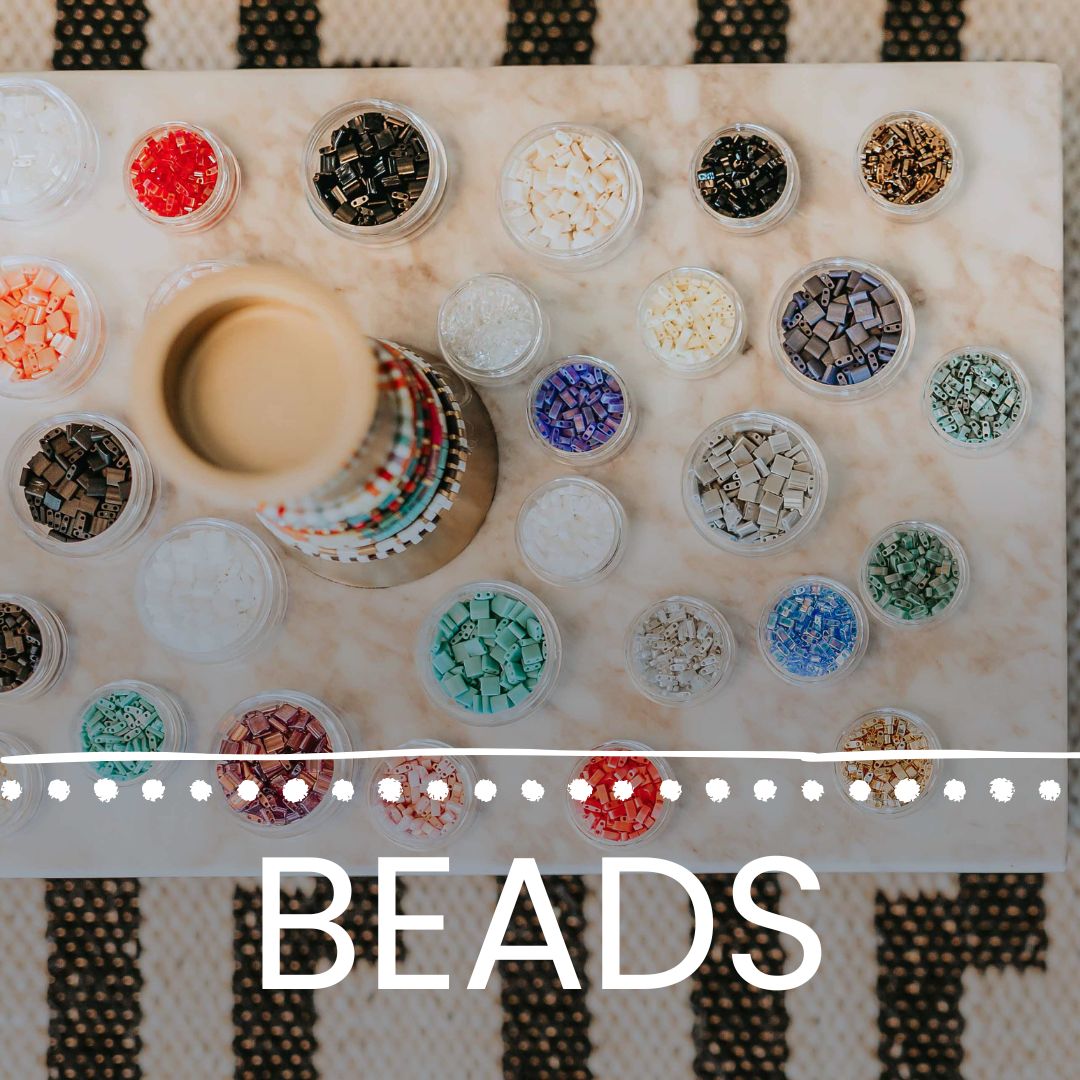
A complete kit has four things: beads, cord, a pattern to follow, and instructions. Mack & Rex kits use Miyuki Tila beads, a Japanese glass bead brand known for consistent sizing, strung on crystal-cord elastic that stretches over your hand without a clasp.
Miyuki makes the beads. Mack & Rex sources and resells them as part of its kits and finished bracelets, it doesn't manufacture the beads itself, which is worth knowing if you're comparing brands or wondering why "Miyuki" shows up on the packaging of more than one shop's kits.
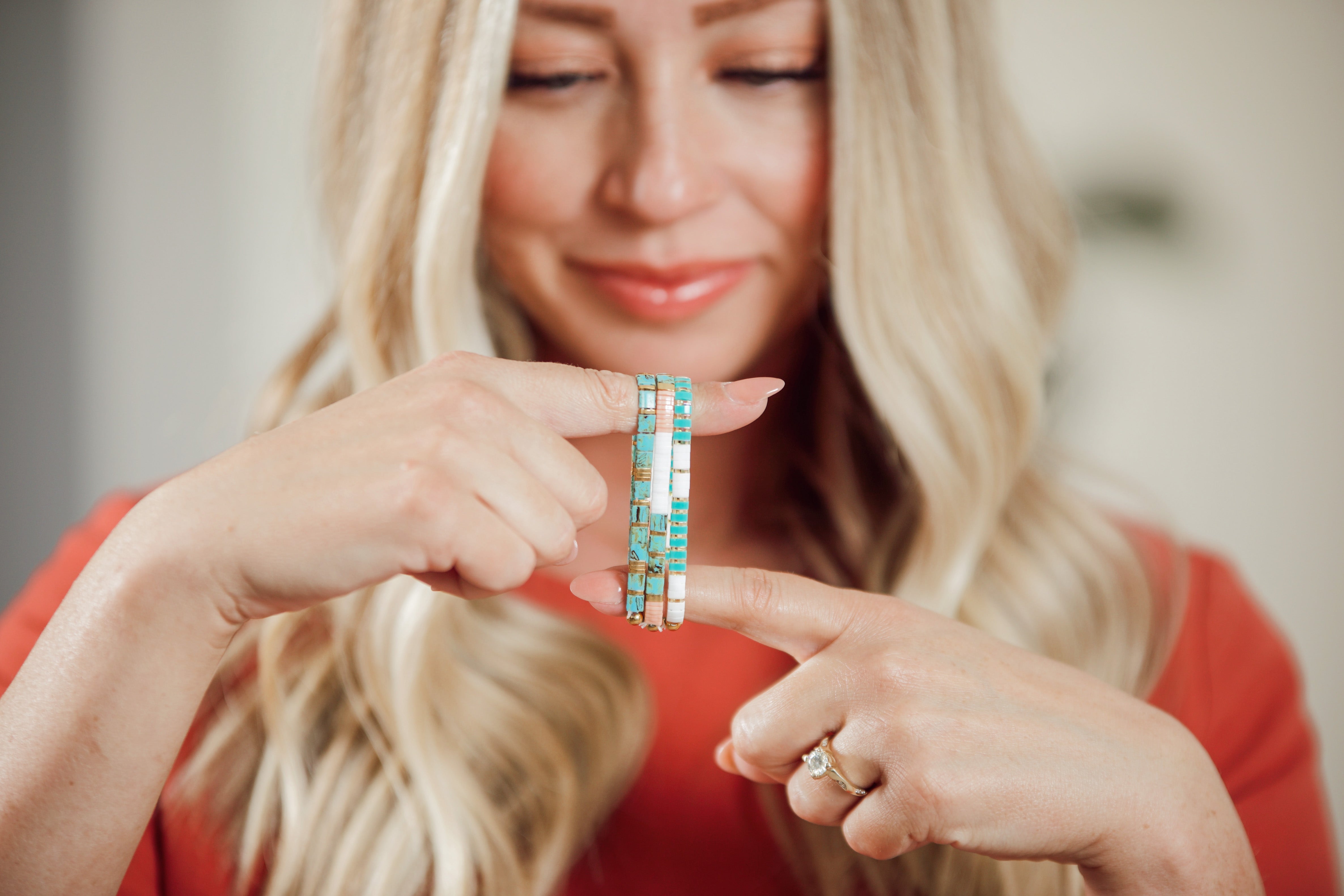
Here's the breakdown for a Mack & Rex trio kit ($44.99, makes 3 bracelets):
- Pre-portioned Tila beads in a coordinated color palette, enough for all three bracelets
- Crystal-cord elastic, already cut to length
- A color-coded pattern layout so you're not guessing at bead order
- Basic written instructions for stringing and tying off
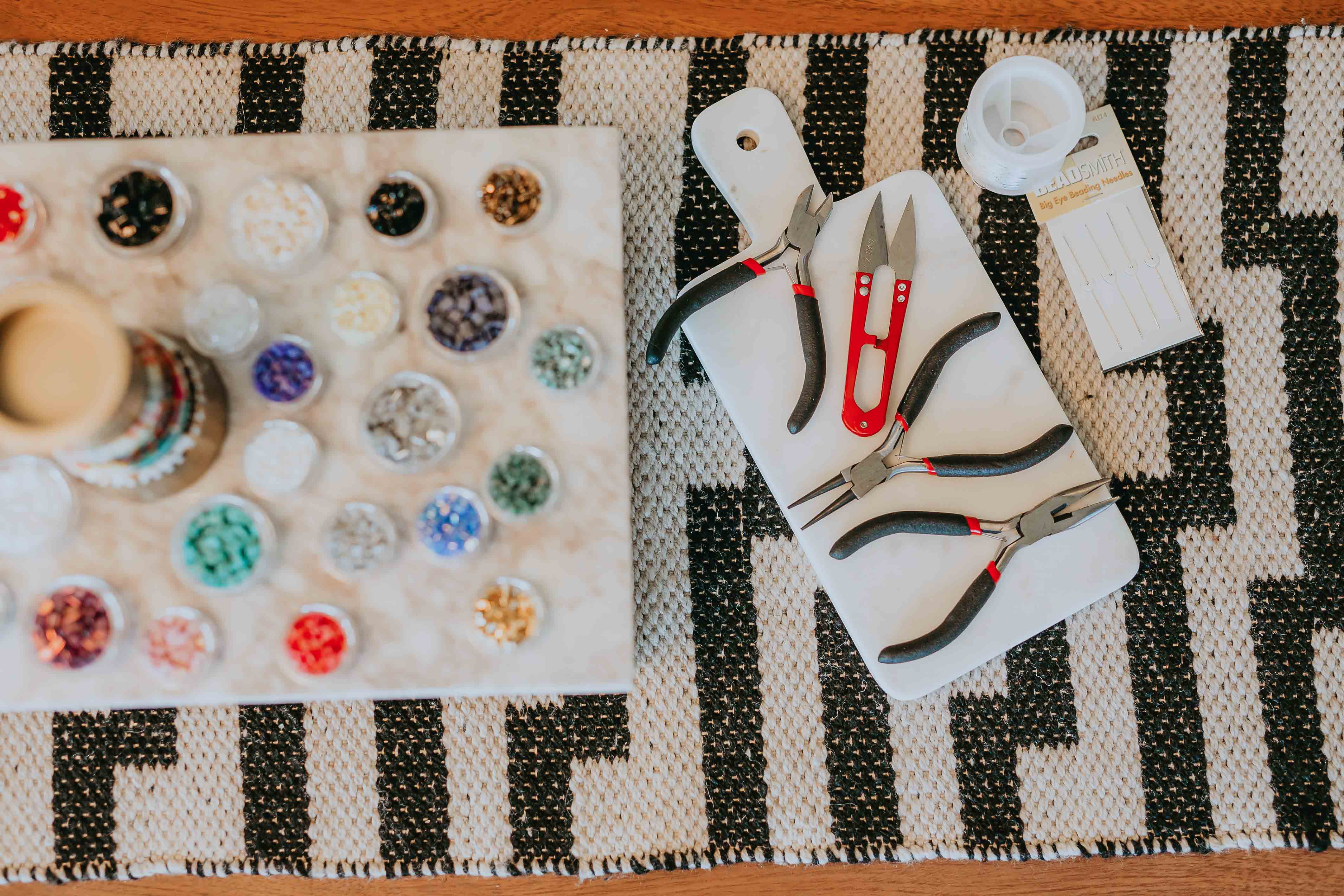
If you want the tools included too, the All-in-One kit ($39.99 to $43.99) adds a bead scoop, cord scissors, and a design board. And if the evening ritual sticks and you want a fresh kit showing up without reordering, the DIY Bracelet Kit Club subscription ($36.99) sends a new three-bracelet kit on a set schedule. One reviewer put it simply: "a complete three bracelet project for me. The pieces and colors work so well together I love it."
A quick note on shipping since it comes up: Mack & Rex ships internationally, with shipping and any duties calculated at checkout. Free shipping applies to US orders over $100, so a single $44.99 trio kit won't clear that threshold on its own, pair it with a second kit or a bead mix if free shipping matters to you. And the "buy 3, get 1 free" offer is for finished, ready-to-wear bracelets, not kits or loose beads.
Sizing is inclusive from XXS to 5XL on the finished bracelets, which matters if the plan is to make one for yourself and wear it right off the table rather than gift it.
Building the habit without overthinking it
You don't need a craft room or a set schedule. Keep a kit in a drawer near the couch and pull it out on nights you'd otherwise default to your phone. That's the whole system.
A few nights a month is plenty. It's not a productivity project, just a nicer way to spend an hour than staring at a feed. Some evenings you'll want the TV on in the background while you string. Others you'll want quiet. Both work.
Start small if you're new to this. A single trio kit is enough to find out whether the habit sticks before you commit to a subscription or a bigger kit.
Ready to build your own unplugged evening kit? Browse the full lineup of bracelet making kits at Mack & Rex, or set up a standing order through the monthly kit club so a new project shows up right when you need one.
FAQ
Why are adults buying bracelet-making kits?
It's a screen-free way to fill an evening with something your hands are doing rather than your thumbs scrolling. A kit gives you a finished object in one sitting, which is rare for a hobby that fits into a normal weeknight.
How long does one bracelet actually take to make?
Most single bracelets take 20 to 40 minutes from open box to finished knot, depending on the pattern and how much you're chatting while you work. A three-bracelet trio kit is a realistic hour, start to finish.
Is bracelet making a good replacement for scrolling before bed?
It's a solid swap for adults who want their hands busy and their phone out of reach for a while. Stringing beads gives you a repetitive, low-stakes task to focus on, which is a calm way to unwind without staring at a screen.
Can adults make bracelets with kids or a partner?
Yes, it works well as a shared activity at the kitchen table. Beads and findings are small enough to be a choking hazard, so keep any session with young kids under direct adult supervision and beads off the floor.
What comes in an adult bracelet-making kit?
A complete kit includes pre-portioned beads, crystal-cord elastic cut to length, a pattern layout, and basic instructions. Mack & Rex trio kits run $44.99 and make 3 bracelets; the DIY Kit Club subscription is $36.99 a month if you want a new one on repeat.