


Bracelet Making Kits for Seniors: Easy-Grip Options for Shaky Hands or Arthritis
What's the best bracelet making kit for someone with arthritis or shaky hands?
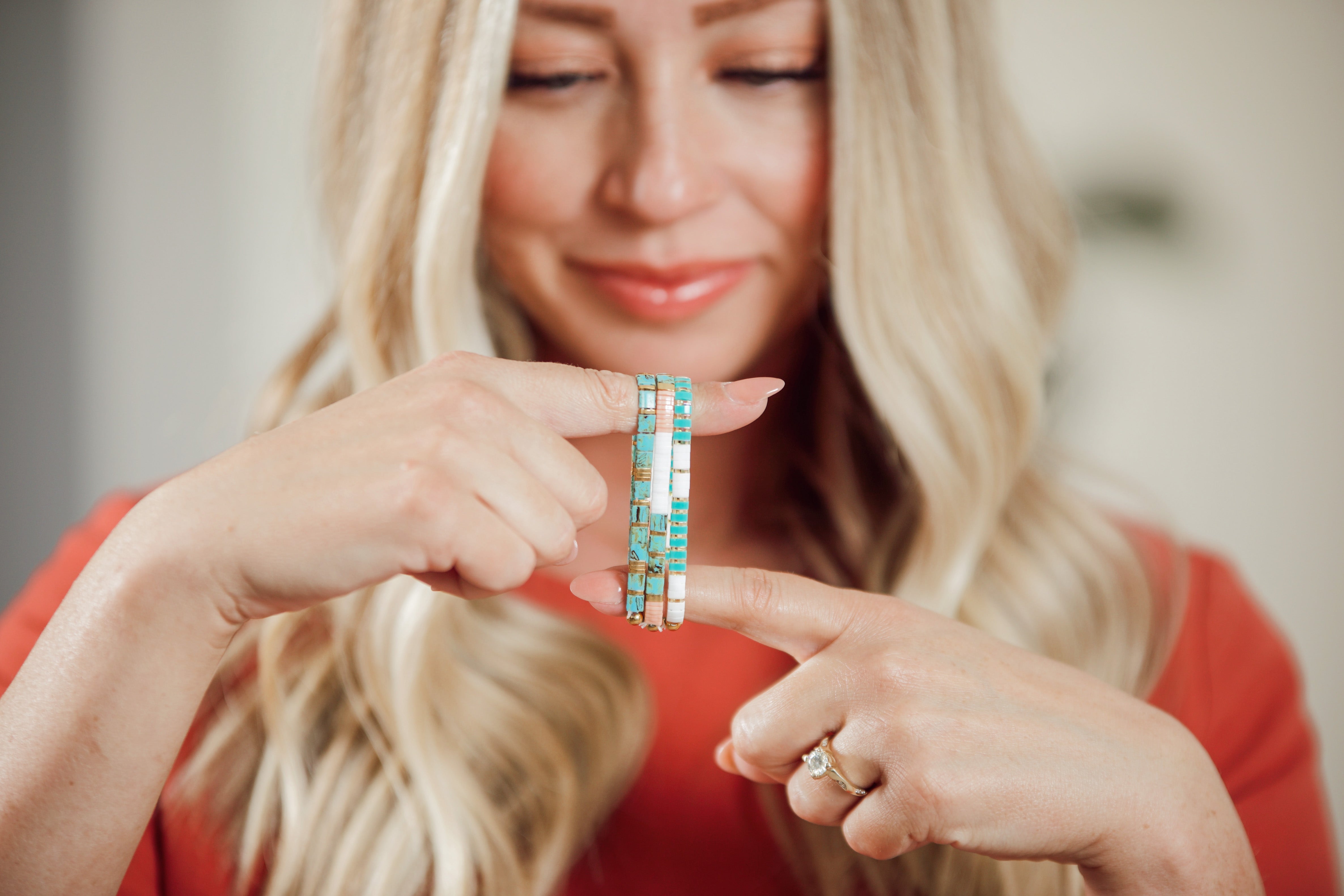
The best fit is a kit built around flat, larger beads and stretch elastic cord, not tiny round seed beads strung on wire with a clasp. That one swap removes the two hardest parts of beading for stiff or unsteady hands: fine wire manipulation and fastening a small clasp. A Tila-style flat bead paired with crystal-cord elastic cuts the whole project down to two motions, string a bead, tie a knot, and skips pliers and crimps entirely.
That's the short answer. Here's what actually makes a kit easier to handle, and what to check before buying one.
Why do larger, flat beads matter for easy grip?
Size and shape decide how much finger dexterity a project demands.
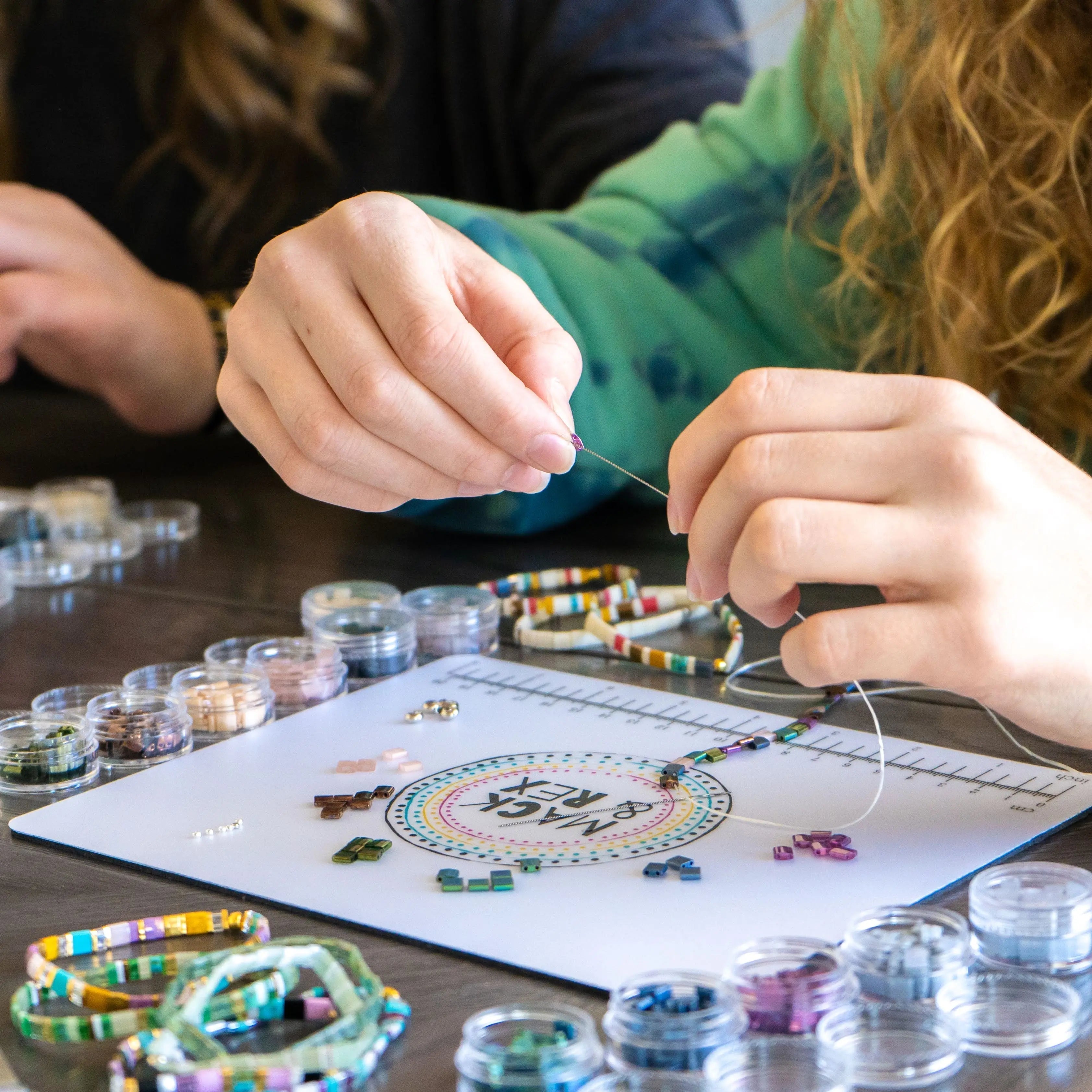
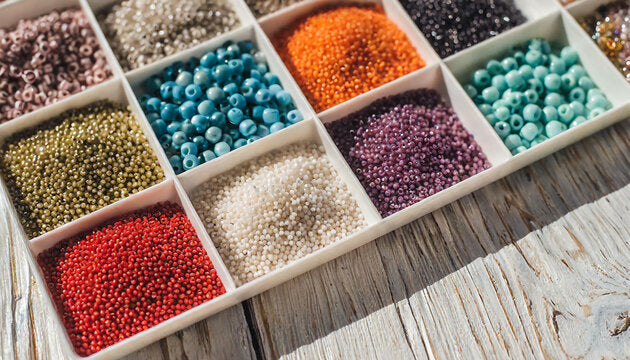
Round seed beads are typically 2mm or smaller, which means picking one up, orienting it, and threading it takes real pinch strength and steady aim. A flat tile bead changes that math. Miyuki Tila beads measure 5mm by 5mm, roughly the size of a small button, with two holes running straight through. There's more surface to grip, no rolling off the table, and no fumbling to find the hole at an awkward angle. If a bead won't sit still on a bead mat while you thread it, that's already a sign it's the wrong bead for anyone dealing with hand tremors or joint stiffness.
The Fire Mountain Gems reference library on beading knots notes that flat, drilled bead shapes are generally easier to control while stringing than small round beads, which matches what shows up in practice with older or less steady hands. See their knot-tying reference for the specifics on finishing a stretch bracelet securely.
Why is stretch elastic easier than clasps and wire?
Clasps are where most bracelet projects get genuinely hard on aging hands.
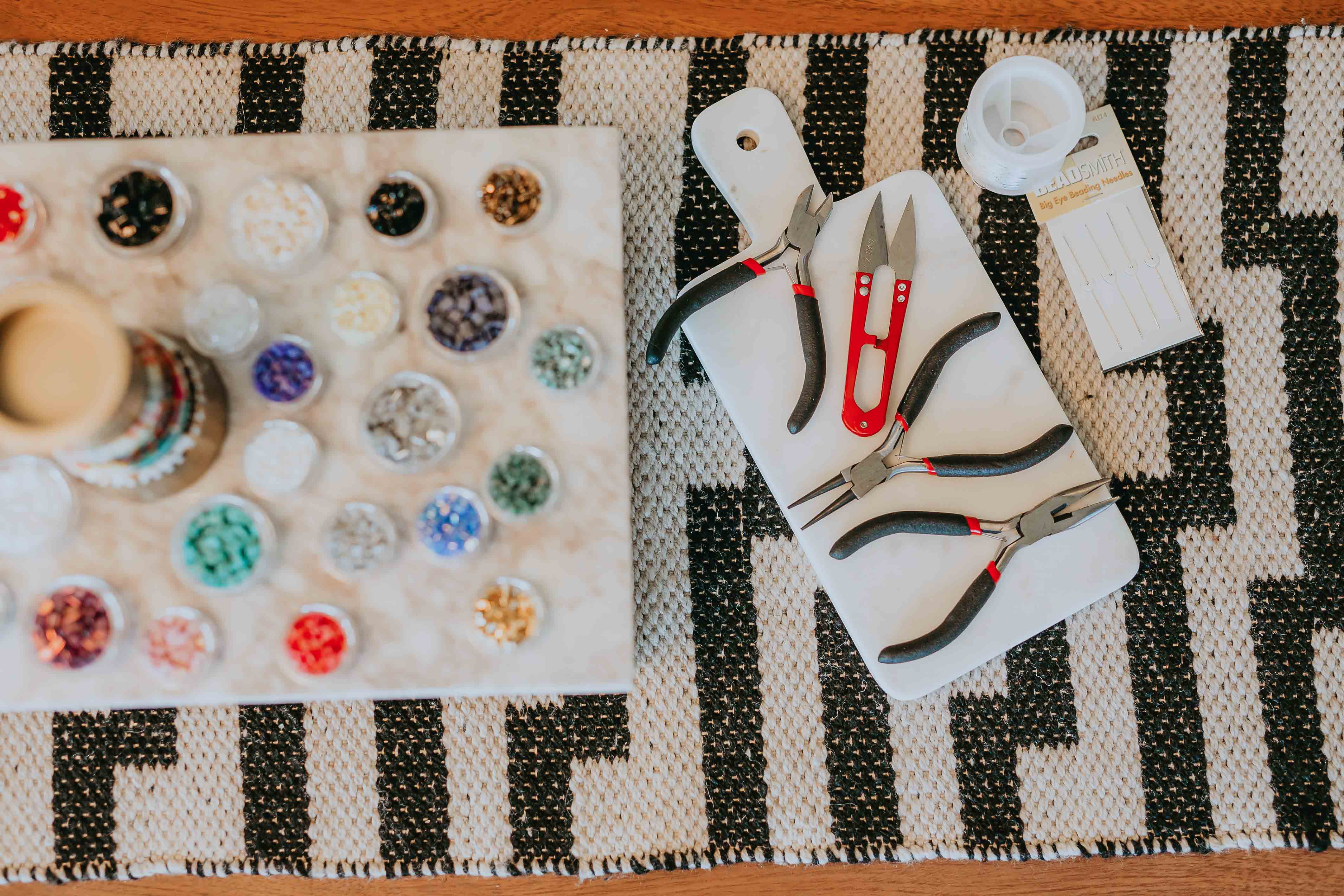
A lobster clasp needs a fingernail to pry open and a second hand to hold steady while you attach a jump ring, usually with needle-nose pliers. Wire needs crimping, which means squeezing a small metal bead shut with a specialized tool. None of that is forgiving if grip strength or fine motor control has changed.
Crystal-cord elastic skips all of it. You string the beads, tie the two ends together, and the bracelet stretches on and off the wrist without a clasp at all. The knot is the one technical step, and a simple surgeon's knot (two overhand knots pulled snug) holds up fine without any tool. Soft Flex Company's guide to stretch cord notes that elastic-strung bracelets are popular specifically because they eliminate the clasp step altogether. Their stretch bracelet guide covers cord weight and knot options if you want to compare methods before choosing a kit.
Do bracelet kits require good eyesight?
Less than most beadwork, mainly because of size again. A 5mm flat bead is a lot easier to see against a bead mat than a 2mm seed bead, and the hole is proportionally larger too, so threading doesn't require magnification the way tiny seed bead work often does. A few practical things still help: a bead mat in a contrasting color so beads don't visually disappear against the surface, good overhead lighting, and working at a table rather than in a lap. None of that requires special equipment, just decent conditions.
Can bracelet making be a good hobby for older adults?
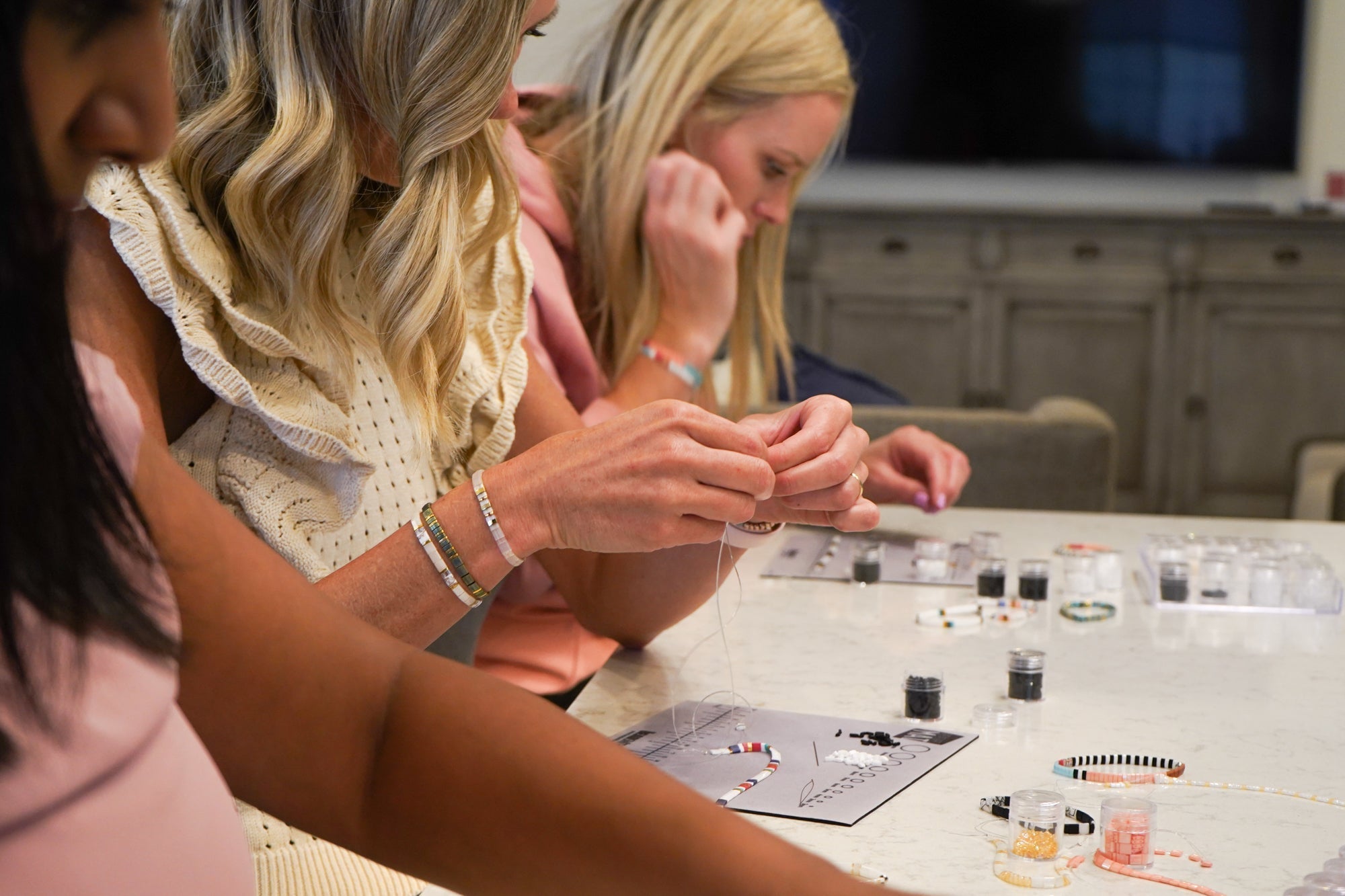
Plenty of people find it a nice way to spend a quiet stretch of time. It's a seated, low-pressure project with a short finish time (most people wrap up a first bracelet in well under an hour) and a wearable result at the end, which is satisfying in a way that open-ended crafts sometimes aren't. It's also naturally social: a kit built for three bracelets is easy to split across a small table with a friend, a spouse, or a grandkid.
To be clear, this is a craft, not a treatment for arthritis, memory changes, or anything else. Many people simply find repetitive, hands-on projects like this a calming way to pass an afternoon, and that's the honest scope of the benefit.
What should you actually check before buying a kit for a senior or a grandparent?
- Bead shape and size: flat tile beads around 5mm beat tiny round seed beads for grip and visibility.
- Cord type: crystal-cord elastic beats wire, memory wire, or thread that needs a clasp.
- Instructions: look for large, clear print with a simple step order, not a cramped diagram.
- Bead hole size: a wider hole (Tila beads run around 0.8mm) is more forgiving to thread than a pinhole opening.
- How many bracelets it makes: a trio-style kit gives room to redo a step if one bracelet doesn't come out right, without buying a second kit.
How do Mack & Rex kits fit this?
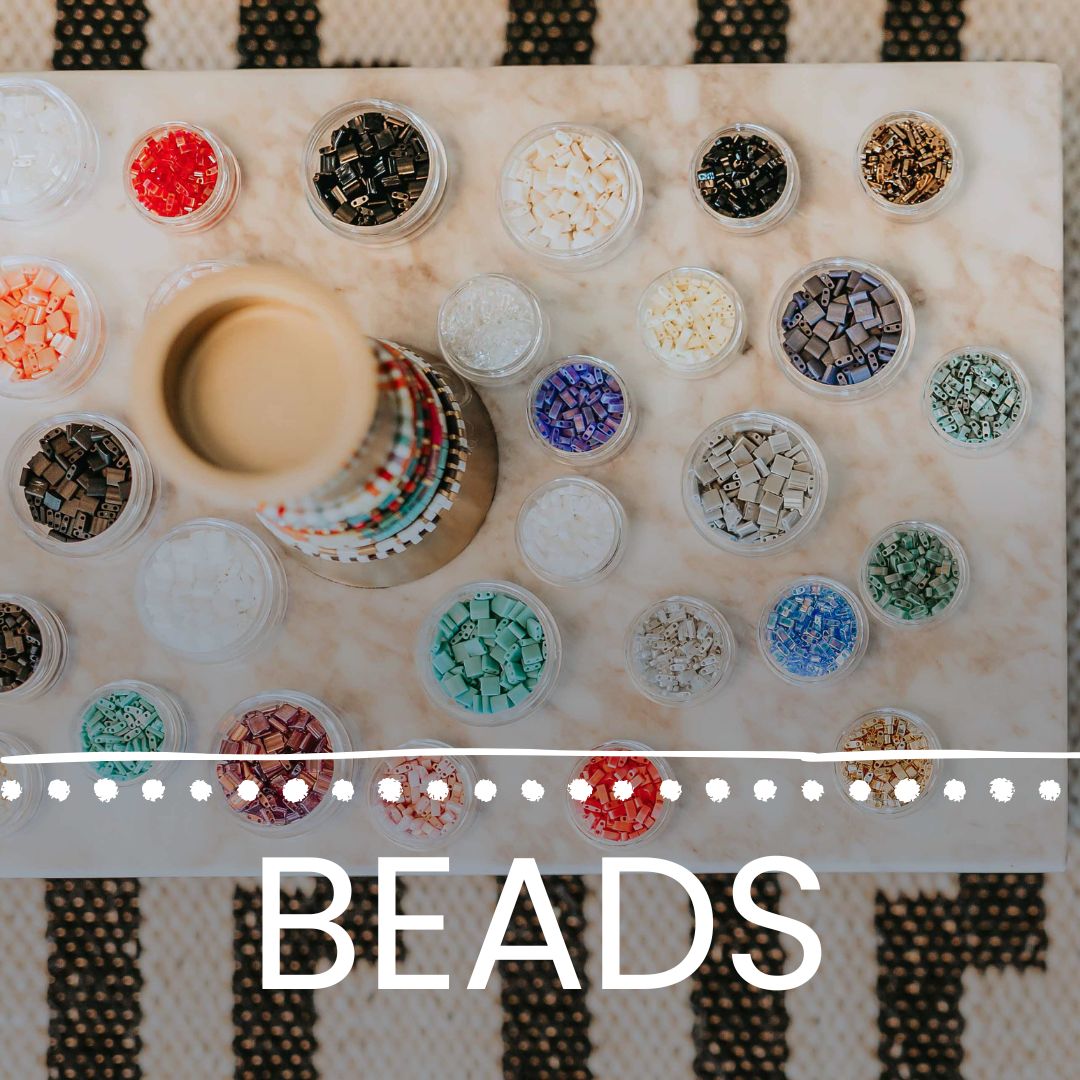
Mack & Rex's bracelet making kits are already built around this exact combination: Miyuki Tila beads (the 5mm flat glass bead, sourced from Miyuki and not manufactured by Mack & Rex) strung on crystal-cord elastic, no clasp involved. The trio kit runs $44.99 and makes three bracelets, which gives enough room to practice the knot step more than once. The All-in-One tools and supplies kit ($39.99 to $43.99) adds a bead mat and basic tools if you're setting someone up from scratch.
Orders over $100 ship free in the US; a single trio kit doesn't clear that on its own, so pair it with a second kit or a finished bracelet if free shipping matters to you. If grandkids will be at the table too, keep an eye on loose beads. They're a small-parts choking hazard and this isn't a project for unsupervised toddlers, even with the larger Tila size.
Browse the full Mack & Rex bracelet making kit collection to see current sizes and colorways before you pick one out.
Frequently asked questions
What's the best bracelet making kit for someone with arthritis?
Look for a kit built around flat, larger beads (like Miyuki Tila beads, which are 5mm square) rather than tiny round seed beads, with stretch elastic cord in place of clasps, jump rings, or wire. That combination removes the fussiest, most finger-strength-dependent steps: no pliers, no crimping, no fastening a small clasp.
Are there easy-grip bracelet kits for seniors?
There's no separate product category labeled for seniors, but kits built with flat tile beads and crystal-cord elastic are naturally easier to grip and manage than seed-bead-and-wire kits. The bead's flat shape sits still on a table or bead mat rather than rolling away, and the larger surface is easier to pick up than a tiny round bead.
Do bracelet making kits require good eyesight?
Less than most crafts. Flat tile beads around 5mm across are noticeably easier to see and thread than tiny seed beads, which can run 2mm or smaller. Good lighting and a bead mat with a contrasting color still help, but the bead size itself does a lot of the work.
Is bracelet making a good hobby for older adults?
Many people find it a relaxing, low-pressure project, especially in a kit format with clear steps and a short finish time. It's not a treatment for any condition, but a simple, repetitive craft with a wearable result at the end is a reasonable way to spend a quiet afternoon or an hour with family.
Can grandkids and grandparents make bracelets together safely?
Yes, with the same precaution as any beading project: beads are small parts and a choking hazard, so young children need direct adult supervision and loose beads shouldn't be left within reach of toddlers. Older kids and teens working alongside a grandparent are a natural fit for this kind of kit.