

Bracelet Making Kits for Adults: Beginner vs Advanced (How to Pick the Right One)
What's the Difference Between a Beginner and an Advanced Bracelet Making Kit for Adults?
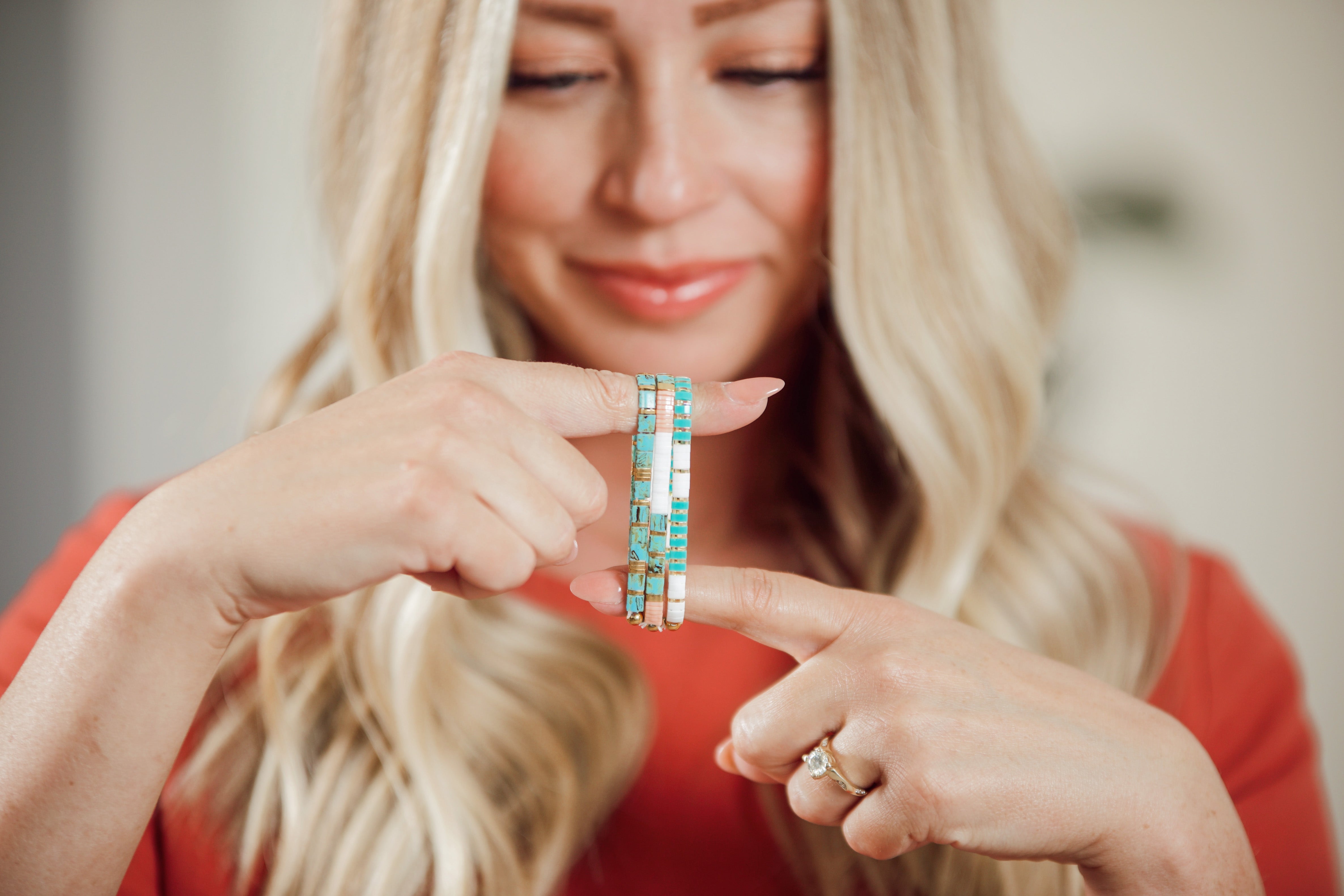
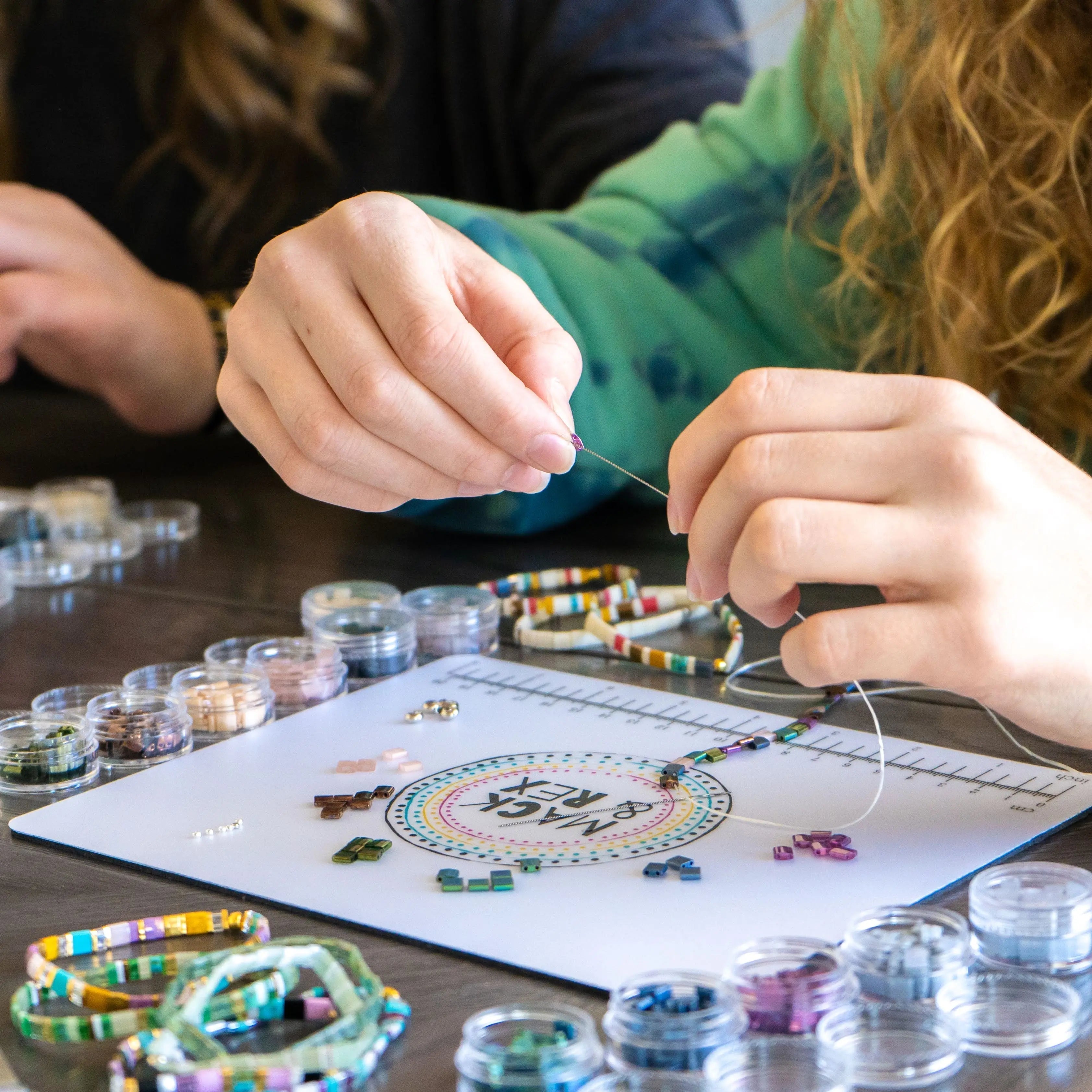
A beginner kit, like the Mack & Rex trio kit, gives you one coordinated Tila bead palette, a laid-out pattern, and pre-cut crystal-cord elastic so you can finish three bracelets in under an hour. An advanced kit, like the Tila Bead Starter Kit, hands you bulk beads across more colors and leaves the pattern planning to you.
That's really the whole split. The stringing motion is identical at every level. What changes is how many decisions the kit makes for you versus how many it leaves on your plate. A beginner kit is closer to painting by numbers. An advanced kit hands you the paint and the brush and says go.
Which Bead Type Should You Start With as a Beginner?
Start with a pre-portioned Tila bead mix in a single coordinated palette. You're learning tension and pattern rhythm, not making twelve color decisions at once, and a mixed-but-matched palette removes that friction entirely.
Mack & Rex trio kits ship with Miyuki Tila beads, flat square glass beads made in Japan, sorted into a color story that's already been worked out for you. One customer new to the craft put it this way: "I am new to bracelet making and purchased this as an easy way to get started. It came with all the supplies I needed and included great instructions for getting started." That's the entire point of a beginner-tier bead selection: it removes the guessing.
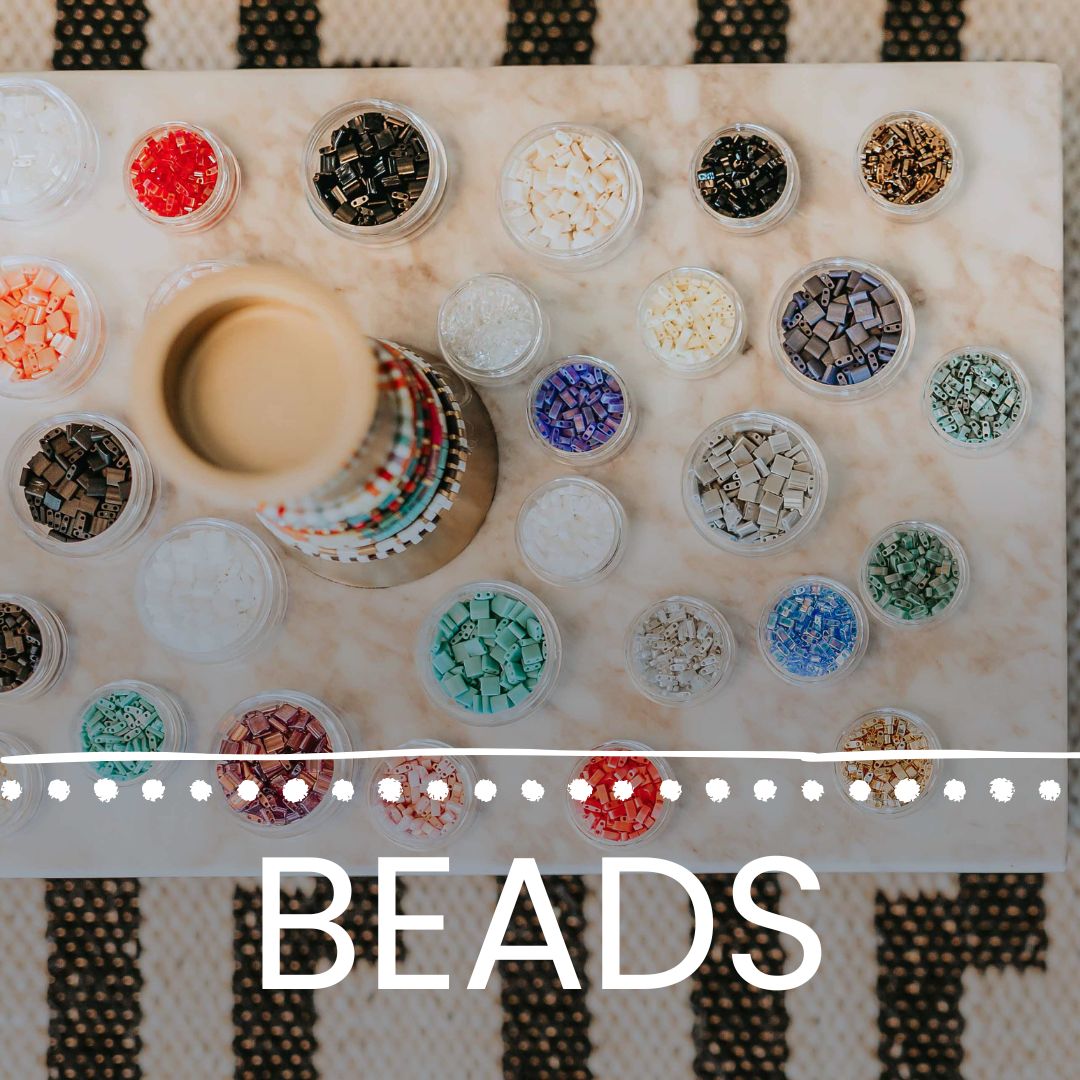
Once you've made a few bracelets and have a feel for how Tila beads lock together, an advanced kit like the Tila Bead Starter Kit ($189.99, makes 20 bracelets) or the Ultimate Tila Bracelet Kit ($399.99, makes 80 bracelets) opens up more colors and mixes at once, instead of one pre-picked palette. Miyuki's own catalog of Tila finishes runs from matte to AB coatings to metallics, worth exploring once you've got a bracelet or two under your belt (PotomacBeads: Miyuki Tila beads guide).
What Findings and Closures Come With Each Kit Level?
Both beginner and advanced kits use the same closure: crystal-cord elastic instead of a clasp. That's the standard construction for a stretch bracelet, and it doesn't change as you move up tiers, so there's no new hardware to learn.
The elastic itself is a stretchy polymer cord, the kind of material broadly known as an elastomer, chosen because it holds shape under repeated stretching without going slack (Wikipedia: elastomer). A trio kit gives you cord pre-cut to a standard wrist length for all three bracelets. An advanced kit gives you a longer spool, since you're making 20 to 80 bracelets and measuring some of that yourself.
What doesn't come standard at either level: clasps, jump rings, or crimps, because a stretch bracelet doesn't use them. If a kit you're eyeing includes clasp hardware for what's marketed as a stretch bracelet, double-check the listing. That's usually a sign the kit was built for a different bracelet style and repackaged.
Tools worth adding at the advanced level
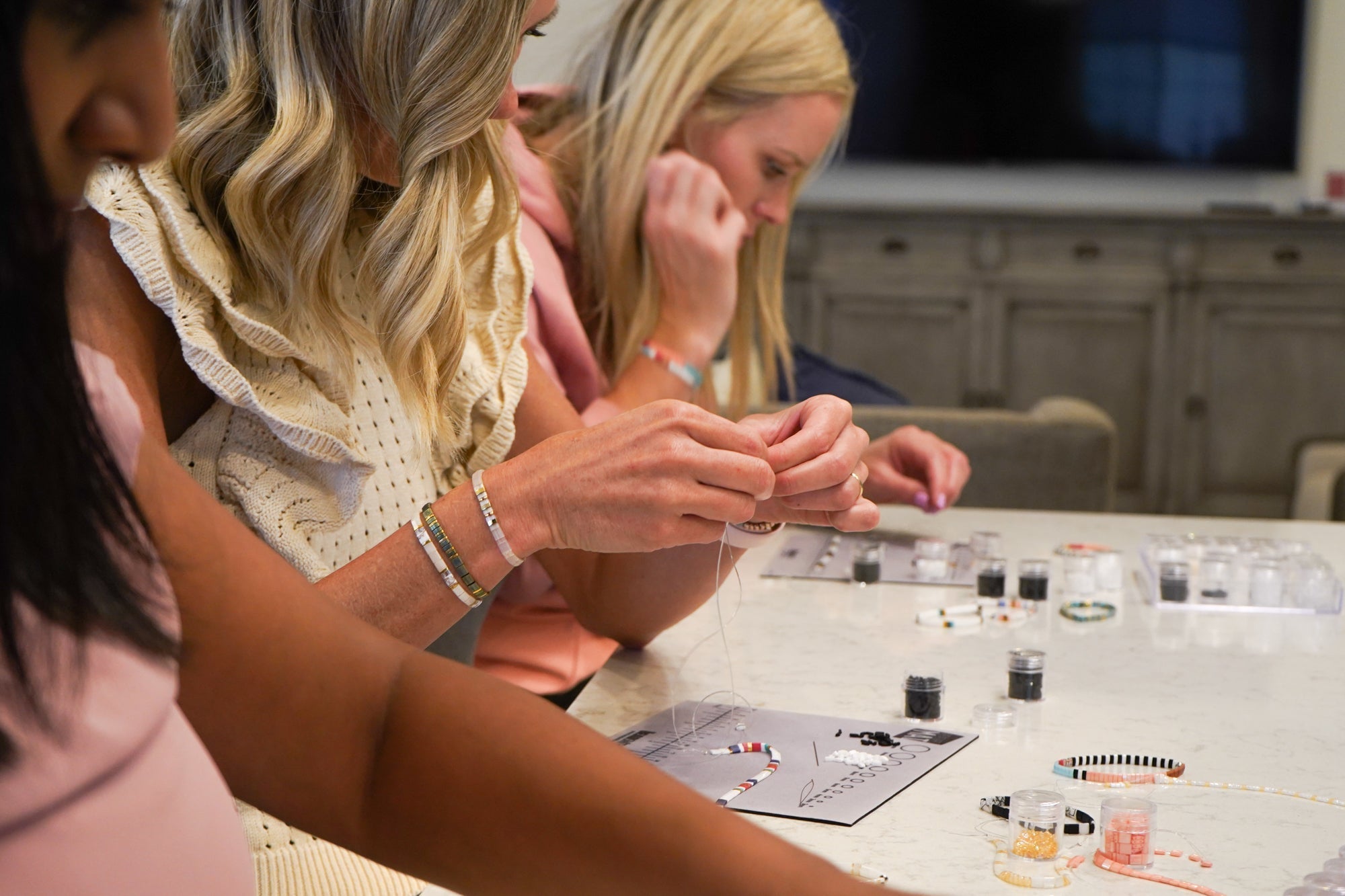
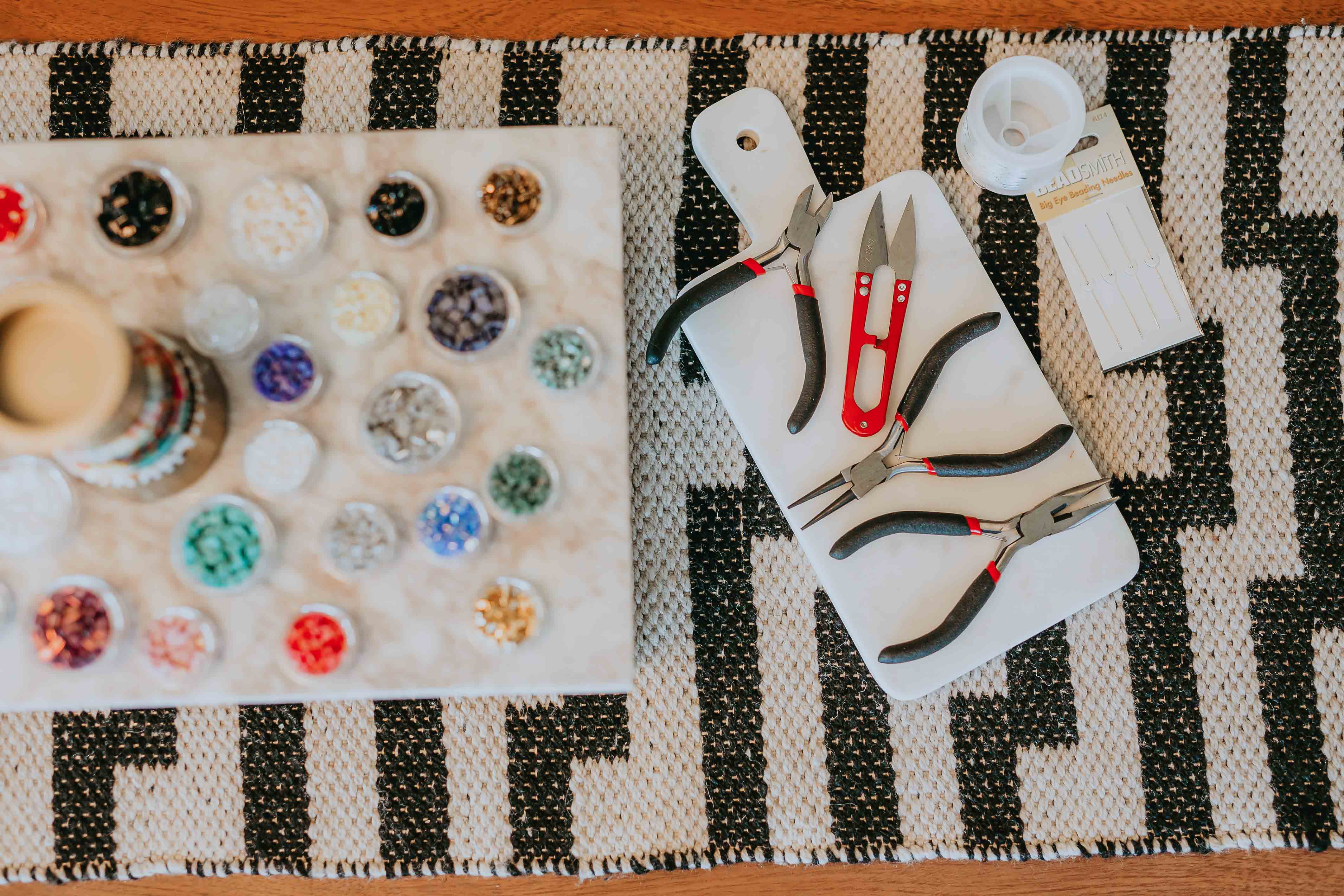
A beginner trio kit needs almost nothing beyond what's in the box. Once you're working through a Starter or Ultimate kit, a bead scoop, small scissors, and a design board start earning their keep, since you're sorting and laying out far more beads per sitting. The Mack & Rex All-in-One tools and supplies kit ($39.99 to $43.99) covers all three if you don't already own basic jewelry tools.
How Much Skill Does an Advanced Bracelet Kit Actually Require?
Less than the word "advanced" implies. The physical skill, stringing beads and tying off elastic, is identical to a beginner kit. What an advanced kit actually asks of you is planning: picking color combinations, deciding pattern repeats, and keeping a larger bead supply organized across dozens of bracelets instead of three.
Think of it as a jump in scope, not difficulty. A trio kit is a Saturday afternoon. A Starter kit making 20 bracelets is a project you work through over a few sittings, especially if you're prepping for a family event or a stack of handmade gifts. The Ultimate kit at 80 bracelets is built for bulk: a bracelet-making party, a fundraiser table, or a full season of gifts.
General beading technique, tension, spacing, finishing knots, hasn't changed much over the decades, and most of what you'd need to know is the same craft knowledge that applies to any seed or tile bead project (Wikipedia: seed bead). You're not learning a new skill moving from beginner to advanced. You're just doing more of the same skill, with fewer training wheels.
How Long Does Each Kit Take to Finish?
A beginner trio kit runs 45 minutes to an hour for all three bracelets, once you know the pattern. An advanced kit spans several sittings since you're making 20 to 80 bracelets instead of 3, so budget it as an ongoing project rather than a single sitting.
Here's the rough math. A single strand from a pre-sorted trio kit takes 15 to 30 minutes once you've got the rhythm down. Multiply that by 20 bracelets in the Starter kit and you're looking at several hours spread across a few sessions, especially once you're planning your own color combinations instead of following a printed layout. The Ultimate kit's 80 bracelets is a multi-week project for most people, or a fast one-day push with a group, like a bachelorette party or a craft table at a family reunion.
One long-time customer described picking the craft back up after retiring: "I just received my bracelet making kit and decided to give it a whirl. I'm a 66 year old retired woman and needed something to do with my spare time... I am pleasantly surprised at how easy it was to pick up this new hobby." Time-to-finish scales with kit size, not with how hard the craft is to learn.
Beginner vs. Advanced Bracelet Kits: A Side-by-Side Comparison
| What to compare | Beginner (Trio Kit) | Advanced (Starter / Ultimate) |
|---|---|---|
| Bead type | One pre-portioned Miyuki Tila palette | Bulk Miyuki Tila beads across multiple colors and finishes |
| Findings | Crystal-cord elastic, pre-cut to length | Crystal-cord elastic, cut and measured across many bracelets |
| Pattern | Laid out for you | You plan color combos and repeats |
| Bracelets made | 3 | 20 (Starter) or 80 (Ultimate) |
| Time to finish | 45 to 60 minutes total | Several sessions, hours to weeks depending on pace |
| Price | $44.99 | $189.99 / $399.99 |
| Best for | First-timers, gifting, testing the craft | Regular crafters, events, bulk gifting |
Why Do Mack & Rex Kits Beat a Generic Craft-Store Kit?
Bead quality and pattern support. A generic craft-store kit often mixes plastic or inconsistent glass beads with loose size tolerances, which shows up as gaps and crooked rows once strung, and it rarely includes a real pattern, just a pile of beads and a string.
Mack & Rex kits use Miyuki Tila beads, a Japanese glass bead brand known for consistent sizing and even color coating from bead to bead. Mack & Rex sources and resells these beads; it doesn't manufacture them. That distinction matters for comparison shopping, since it's Miyuki's manufacturing consistency that makes the flat, square Tila shape sit flush row after row (Miyuki Beads official site).
Every trio kit also ships with a color-coded pattern layout, something most generic kits skip. A reviewer summed up why that pre-planned palette matters: "The pieces and colors work so well together I love it." That's the difference between a kit you finish and one you shelve half-strung because the colors clashed.
Sizing is the other gap. Mack & Rex bracelets and kits are built around inclusive sizing, XXS to 5XL, so the finished bracelet fits the wrist it's made for, where a lot of generic kits assume one standard length and leave you guessing.
Which Kit Should You Buy First?
If you've never strung a bead in your life, start with the trio kit. It's the lowest-commitment way to find out whether you actually enjoy the process before spending $189.99 or more on a bulk kit you might use once.
If you already know you like it, an advanced kit is the better dollar-per-bracelet value. The Tila Bead Starter Kit works out to under $10 per bracelet in materials, and the Ultimate kit brings that down further, which matters for a big event or a season of handmade gifts. Unlike a single $44.99 trio kit, both advanced kits clear the $100 threshold for free shipping on US orders on their own.
Want to keep making bracelets without buying a new kit from scratch every time? The DIY Bracelet Kit Club subscription ($36.99) sends a fresh three-bracelet kit on a set schedule, which is a good middle path between a one-time trio kit and jumping straight to bulk.
Browse the full lineup, beginner trio kits through the Ultimate kit, in the bracelet making kits collection at Mack & Rex. If you're not sure which tier fits, start with a trio kit, or subscribe through the DIY Bracelet Kit Club to build up your skill one box at a time.
Frequently Asked Questions
Should a first-time adult crafter buy a beginner or advanced bracelet kit?
Start with a beginner kit. A trio kit hands you a laid-out pattern and a pre-portioned palette, so your first bracelet gets finished instead of abandoned halfway through. Move up to an advanced kit once you know you like the process and want more bracelets per session.
What's the real difference between Tila beads and beads in a typical craft-store kit?
Miyuki Tila beads are flat, square-cut Japanese glass beads with tight size tolerances, so rows sit flush and the color coating holds up. Generic craft-store kits often use plastic or mixed-glass beads with looser tolerances, which shows up as gaps or crooked rows once strung.
Do advanced bracelet kits come with instructions, or are you on your own?
Advanced kits still include written instructions for stringing and finishing, but they don't lay out a single fixed pattern the way a trio kit does. You're given more beads and more colors to combine, and the pattern decisions shift from the kit to you.
How long does it take to go from beginner to advanced skill level with these kits?
Most people are comfortable moving up after one or two trio kits, roughly two to three finished bracelets. The core skill, stringing beads onto crystal-cord elastic and tying it off, doesn't change between levels. What changes is how many color and pattern decisions you're making without a template.
Are bracelet making kits safe to use with kids around?
These kits are built and sized for adult hands, not marketed as safe for young children. Tila beads and findings are small enough to be a choking hazard, so any crafting session with kids in the room needs direct adult supervision the whole time. Keep loose beads off the floor and out of reach when you step away from the table.