


Bracelet Making Kits for Low Vision: Bigger Beads, Better Contrast
What Should I Look for in a Bracelet Making Kit for Low Vision or Aging Eyes?
Bead size matters more than skill. Look for kits built around larger, flat beads rather than tiny round seed beads, plus stretch cord in place of clasps, a tray to keep pieces from rolling, and enough color contrast to tell one bead from the next at a glance. A kit built around two-hole Miyuki Tila beads checks most of these boxes without any "adaptive" labeling or markup.
None of this requires special equipment or a diagnosis. It is just picking a format that removes friction: fewer tiny parts to chase, fewer holes to squint at, fewer clasps to fumble. Adults with macular degeneration, cataracts, or simply eyes that tire faster than they used to all benefit from the same basic setup.
Why Are Miyuki Tila Beads Easier to Place Than Seed Beads?
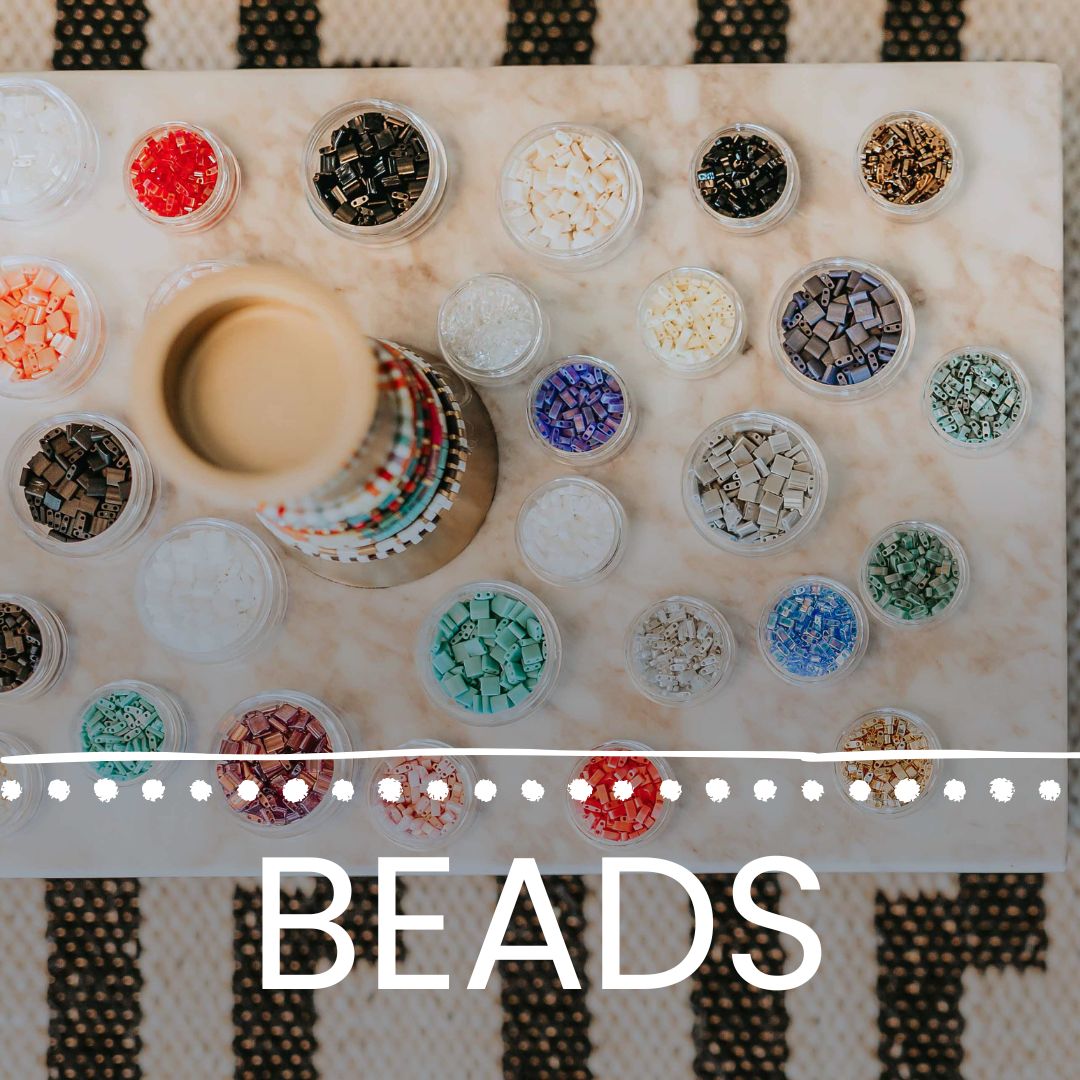
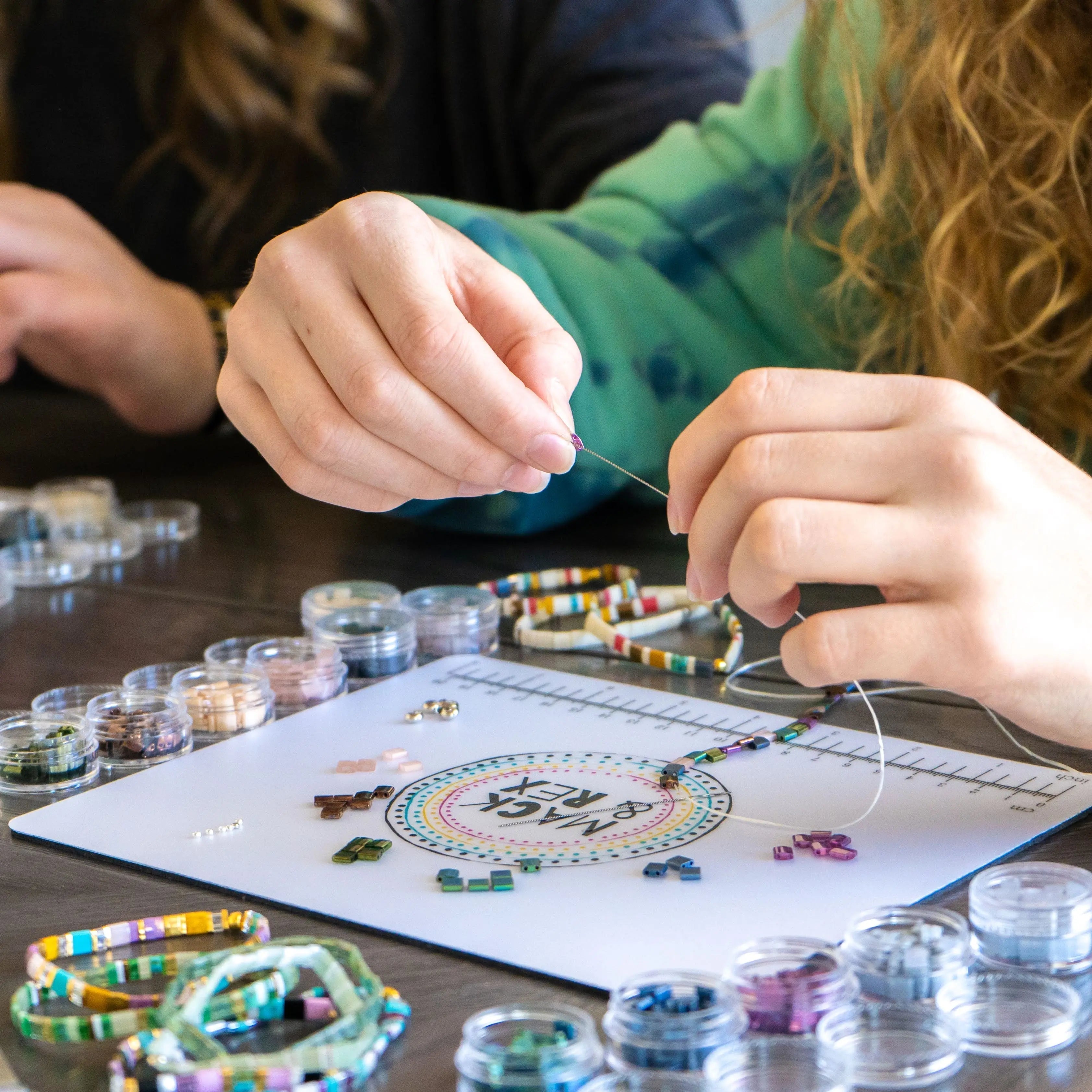
Tila beads are flat, two-hole glass squares about 5mm across, roughly three to four times the surface area of a standard size 11 seed bead. The flat shape means they sit still on a table or tray rather than rolling into the carpet, and two holes give threading needles and stretch cord more room to work with than a single pinhole opening.
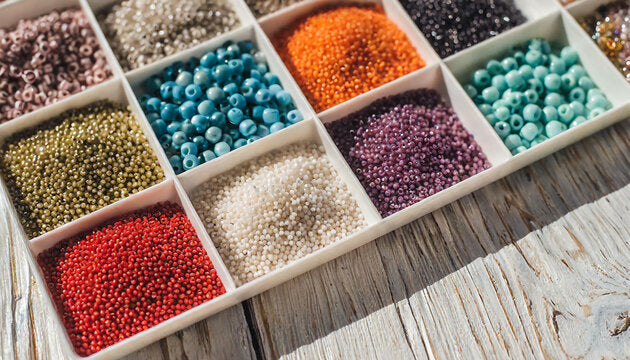
No chasing runaway beads across the table. That alone changes the experience for a lot of people. Seed beads are gorgeous under a jeweler's loupe, but they were never designed with visibility in mind. Tila beads happen to be, even though Miyuki (a Japanese glass bead maker Mack & Rex resells, not a house brand) designed them for pattern and finish, not accessibility.
Does Lighting and Contrast Really Change the Experience?
Lighting changes everything. A bright, adjustable task lamp aimed directly at the work surface, not overhead room light alone, cuts glare and makes bead color and hole placement much clearer. Pairing dark beads with a light tray, or light beads with a dark mat, adds contrast that makes each piece easier to spot and separate from the pile.
A lot of people give up on close work in dim afternoon light and blame their hands or their eyes, when the actual problem is a 60-watt bulb ten feet away. Move the light closer. Angle it so it hits the beads, not your own shadow. It is a five-dollar fix that solves a surprising share of "I can't see the beads" frustration.
Is Stretch Cord Easier to Use Than Clasps and Jump Rings?
For most people managing low vision or reduced fine motor control, yes. Stretch, crystal-cord elastic slides beads on directly and finishes with a simple knot, no clasp to align under bad light and no jump ring to pry open with tiny pliers. Kits built around stretch cord remove several of the fiddliest steps in the whole process.
Clasps and jump rings are small metal parts with small moving pieces, exactly the combination that gives low-vision crafters the most trouble. A stretchy bracelet skips that step entirely. It stretches over the hand, sits on the wrist, and holds its shape wear after wear without a mechanism to line up.
How Should I Set Up a Workspace for Bead Work?
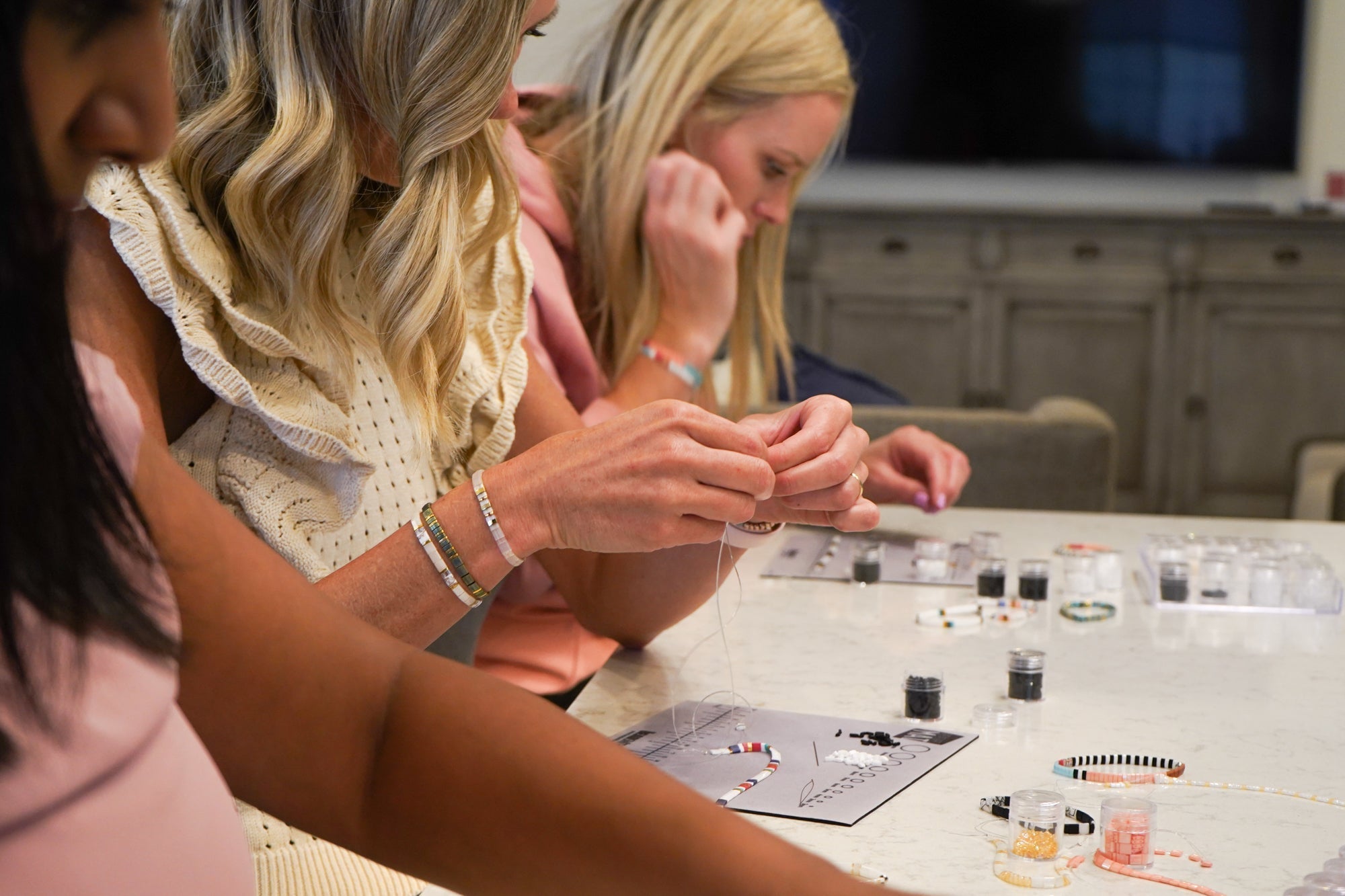
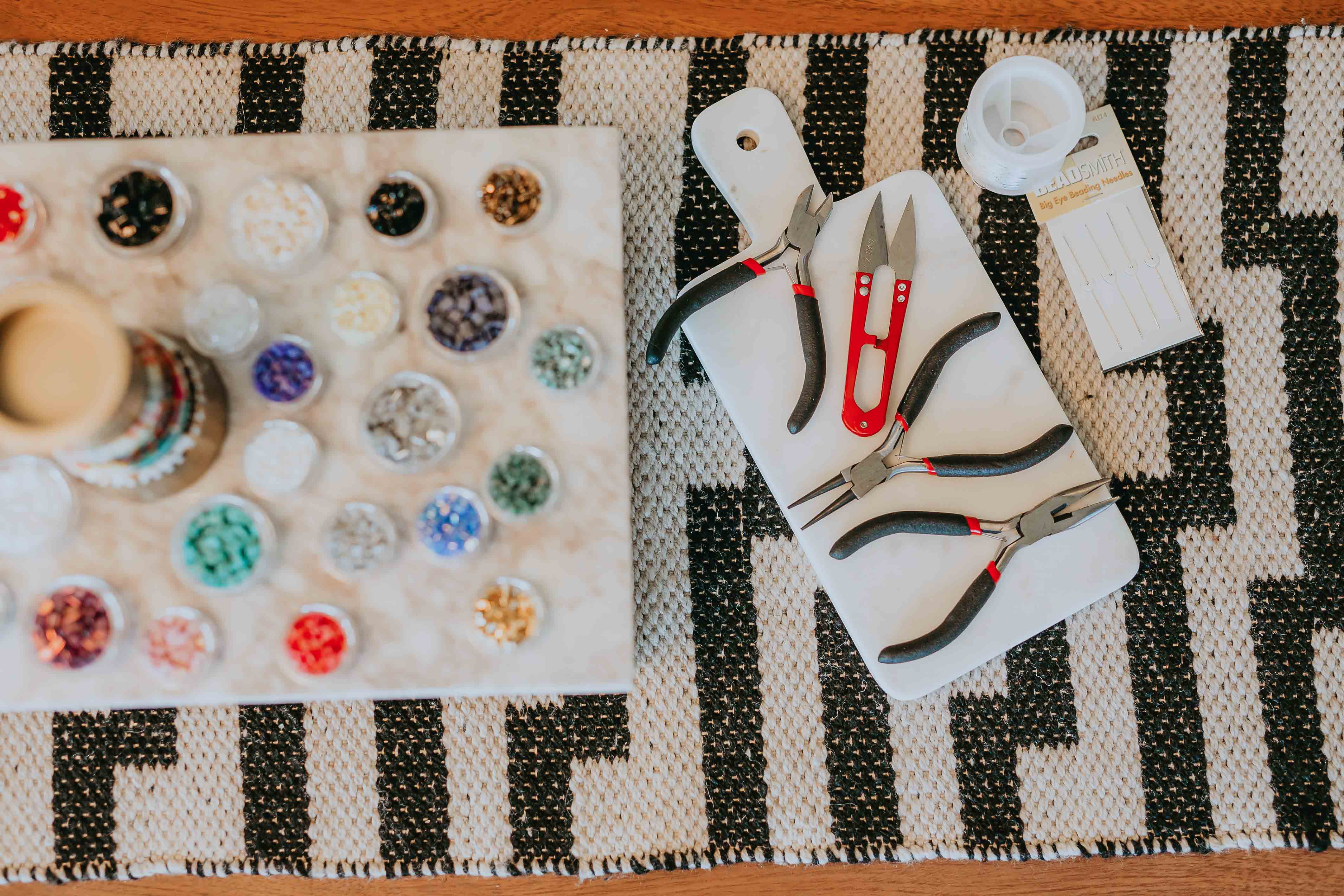
Use a bead tray or shallow dish with a raised edge so beads cannot scatter off the table. Position a task lamp to avoid glare and shadows, add magnification (a lighted magnifier or a clip-on lens) if reading glasses alone are not enough, and work in short sessions. Fatigue makes small parts harder to manage than the beads themselves ever are.
A plain white or light gray plate under dark beads works as well as any specialty tray. Sort colors into small dishes before you start rather than digging through one big bag mid-project. Simple setup, repeated each time, builds a rhythm that makes the actual beading part almost automatic.
Which Kit Actually Works Well for This Kind of Setup?
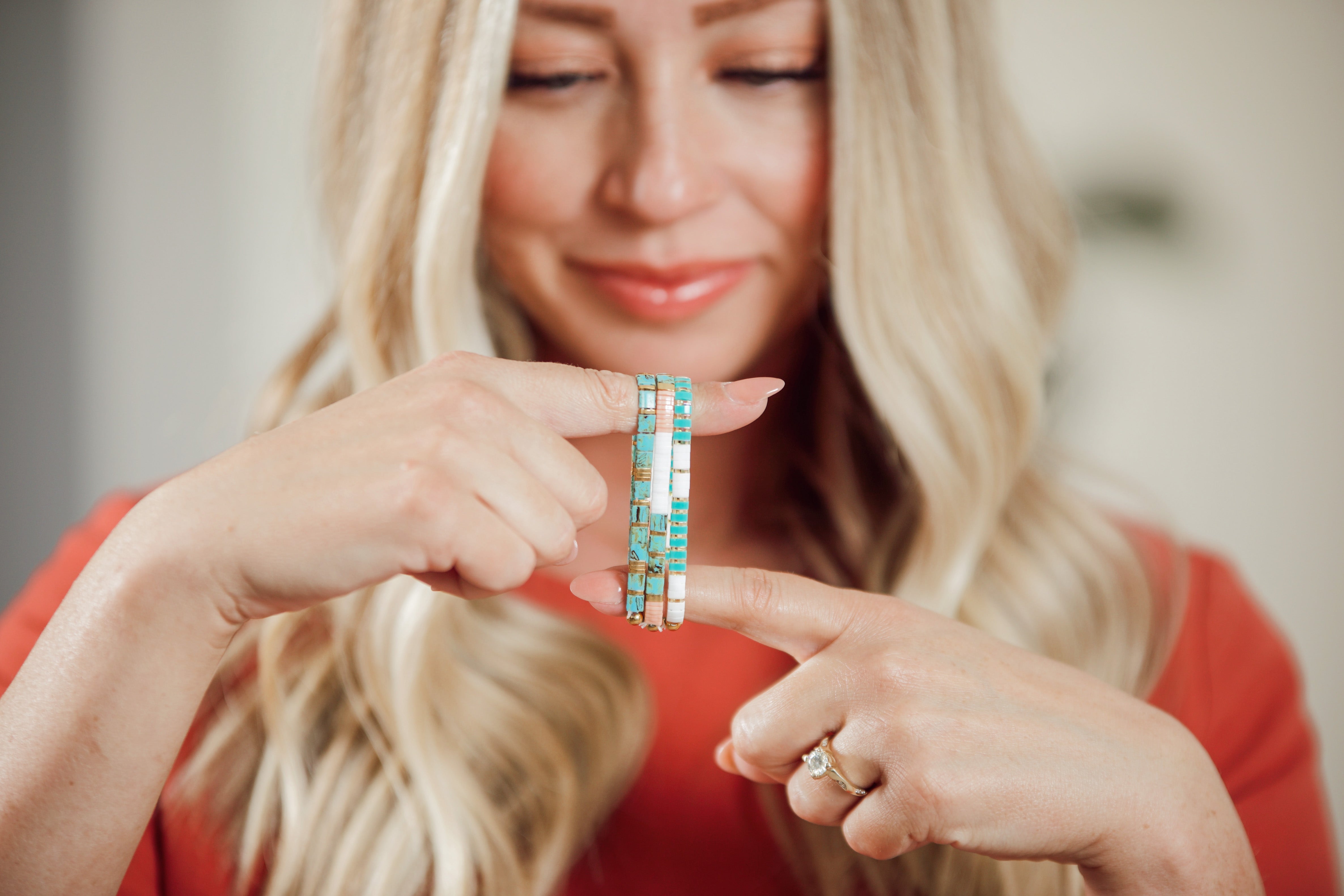
A trio-style Tila kit is the practical starting point. Each one runs $44.99, comes with pre-cut stretch cord and enough beads to make three coordinating bracelets, and skips the clasp-and-findings step that trips up a lot of low-vision crafters. Mack & Rex's bracelet making kits are built around this exact bead format.
One customer, a 66-year-old retired woman, put it this way after her kit arrived: "I am pleasantly surprised at how easy it was to pick up this new hobby. The videos on making these bracelets is a lifesaver if you're stuck on a step like I was." That is the experience worth designing a workspace around, not a specialty tool.
For someone ready to go further, the All-in-One tools and supplies kit ($39.99 to $43.99) adds a tray and basic tools to an existing bead stash, and the Tila Bead Starter Kit ($189.99, makes 20 bracelets) suits a crafter who already knows the format works for them. Note that a single $44.99 kit does not clear the $100 threshold for free US shipping on its own; combine a couple of kits or add a finished piece if free shipping matters to your order. Mack & Rex ships internationally, with shipping and any customs costs calculated at checkout, and offers free US shipping on orders over $100.
Sizing is worth a mention too, even though it is a separate issue from vision. Mack & Rex's finished bracelets run inclusive sizing from XXS to 5XL, which matters if a wrist doesn't fit the "average" range most bracelet brands design around.
Frequently Asked Questions
How big are Tila beads compared to regular seed beads?
Tila beads measure about 5mm square, roughly three to four times the surface area of a size 11 seed bead. That extra size means fewer, bigger pieces to track visually, and each one has two holes instead of one tiny center hole, which gives you more target to aim for when threading.
Can I make bracelets if I have shaky hands or limited grip?
Flat two-hole beads and stretch cord help here too. You are not pinching a clasp shut or threading a hair-thin needle through a bead the size of a poppy seed. Rest your forearms on the table, work slowly, and take breaks. There is no rule that says a bracelet has to happen in one sitting.
Do I need special adaptive tools to start a bracelet making kit?
No. A basic kit, a bright task lamp, and a shallow tray or plate with sides cover most needs. A lighted magnifier or a pair of reading glasses with a stronger diopter helps some people, but it is a personal add-on, not a requirement to get started.
Is it safe to do bracelet making alone with low vision?
Most adults manage fine solo once the workspace is set up well: good light, a tray that contains beads, and cord in place of small metal findings. If eyesight changes suddenly or feels unsafe for close work, that is a conversation for an eye doctor, not a craft kit.
How much does a beginner bracelet making kit cost?
A three-bracelet Tila kit runs $44.99 and is a low-commitment way to test whether the format works for you. All-in-One tools and supplies kits run $39.99 to $43.99. Step-up options include the Tila Bead Starter Kit at $189.99 (makes 20 bracelets) and the Ultimate Tila Bracelet Kit at $399.99 (makes 80).
Sources: the American Foundation for the Blind's VisionAware guide to hobbies and recreation with low vision, the American Academy of Ophthalmology's overview of low vision magnifiers and tools, and Wikipedia's entry on the history and sizing of seed beads informed the general craft and accessibility background in this post.
Ready to try it for yourself? Browse the full lineup of bracelet making kits and pick a color story that matches your space, your light, and your wrist.