


How Long Does a Bracelet-Making Set Last Before You Restock?
How Long Does a Bracelet-Making Set Last?
A bracelet-making set lasts as long as its beads and cord hold out, not its tools. A trio kit makes 3 bracelets, a starter kit makes 20, and a bigger kit makes 80, so the real question isn't the kit itself. It's how often you sit down and how many bracelets you make each time.
Two people can buy the identical kit and restock at completely different rates. One makes a bracelet every few months. The other hosts a birthday party and burns through the whole thing in an afternoon. Neither is wrong. The kit size just needs to match the pace.
Bead stringing itself is a low-tech craft with a long history, which is part of why the tools barely wear out. People have strung beads onto cord for thousands of years using the same basic method modern stretch bracelets use.1 What's changed is the materials, not the mechanics, and that's exactly why beads and cord (the consumable parts) are what determine a kit's lifespan.
Which Supplies Run Out First?
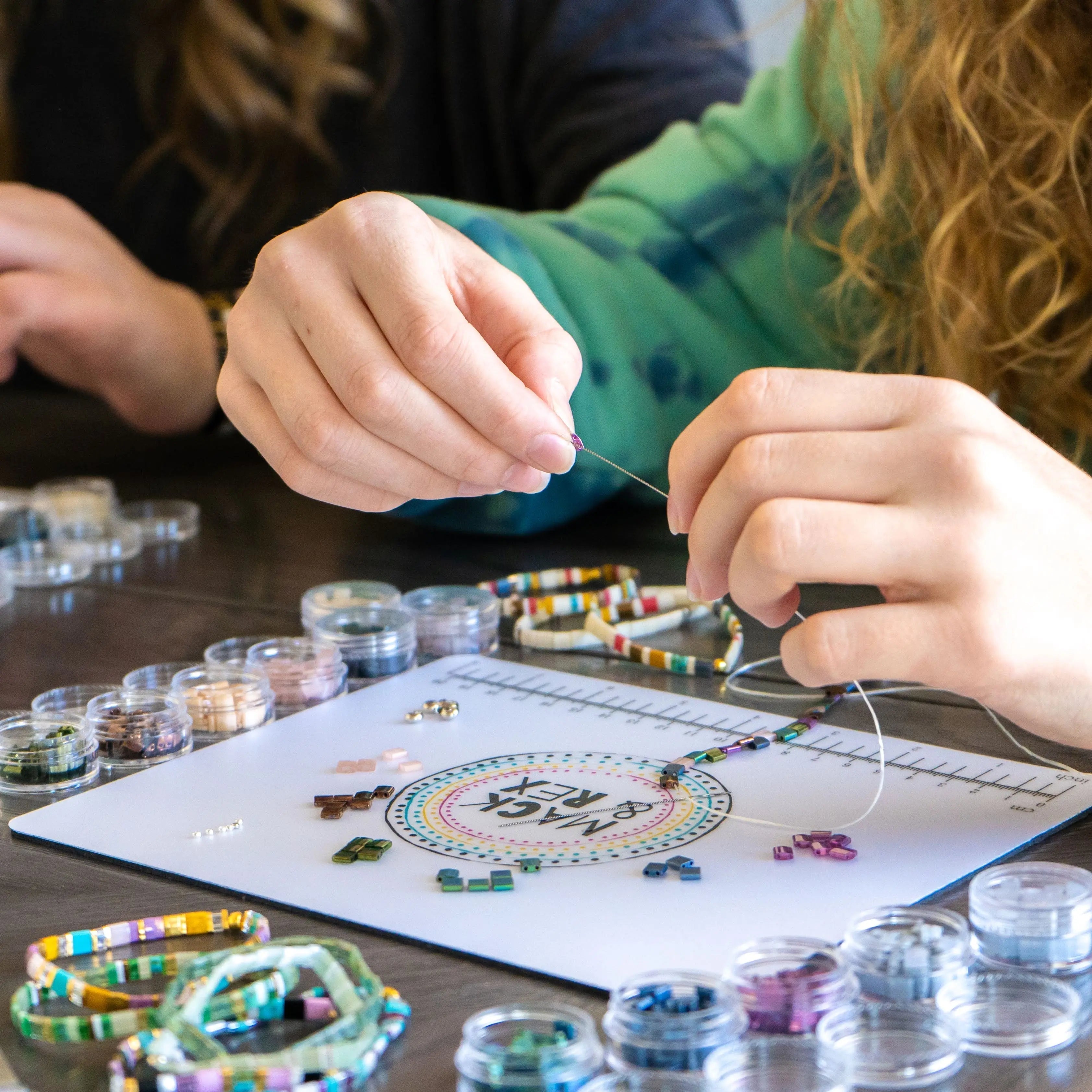
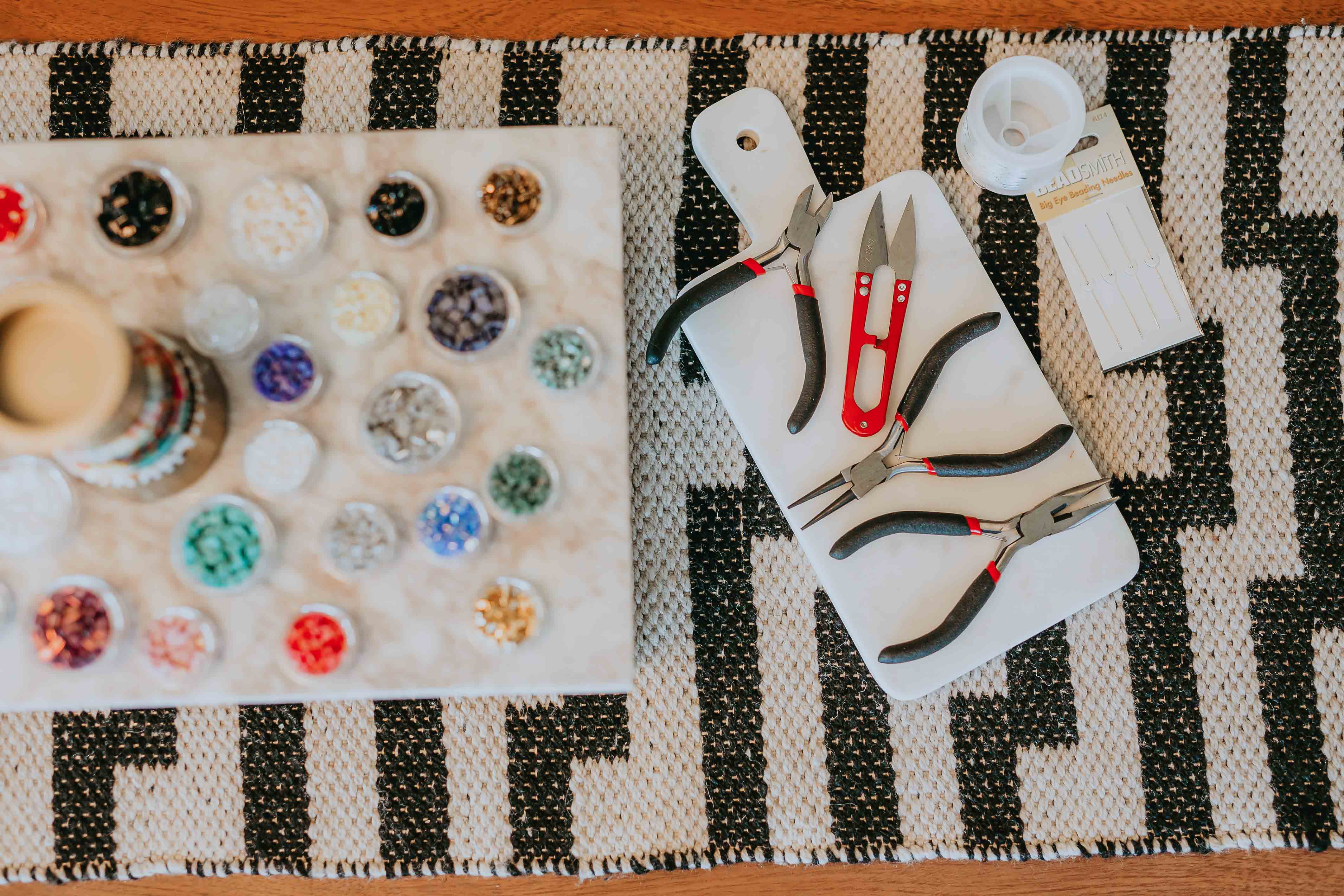
Beads and cord go first. Every other part of a bracelet-making set (needles, a bead spinner, a clasp or two) lasts for dozens of sessions before it needs replacing, but beads and elastic cord get used up with every single bracelet you finish.
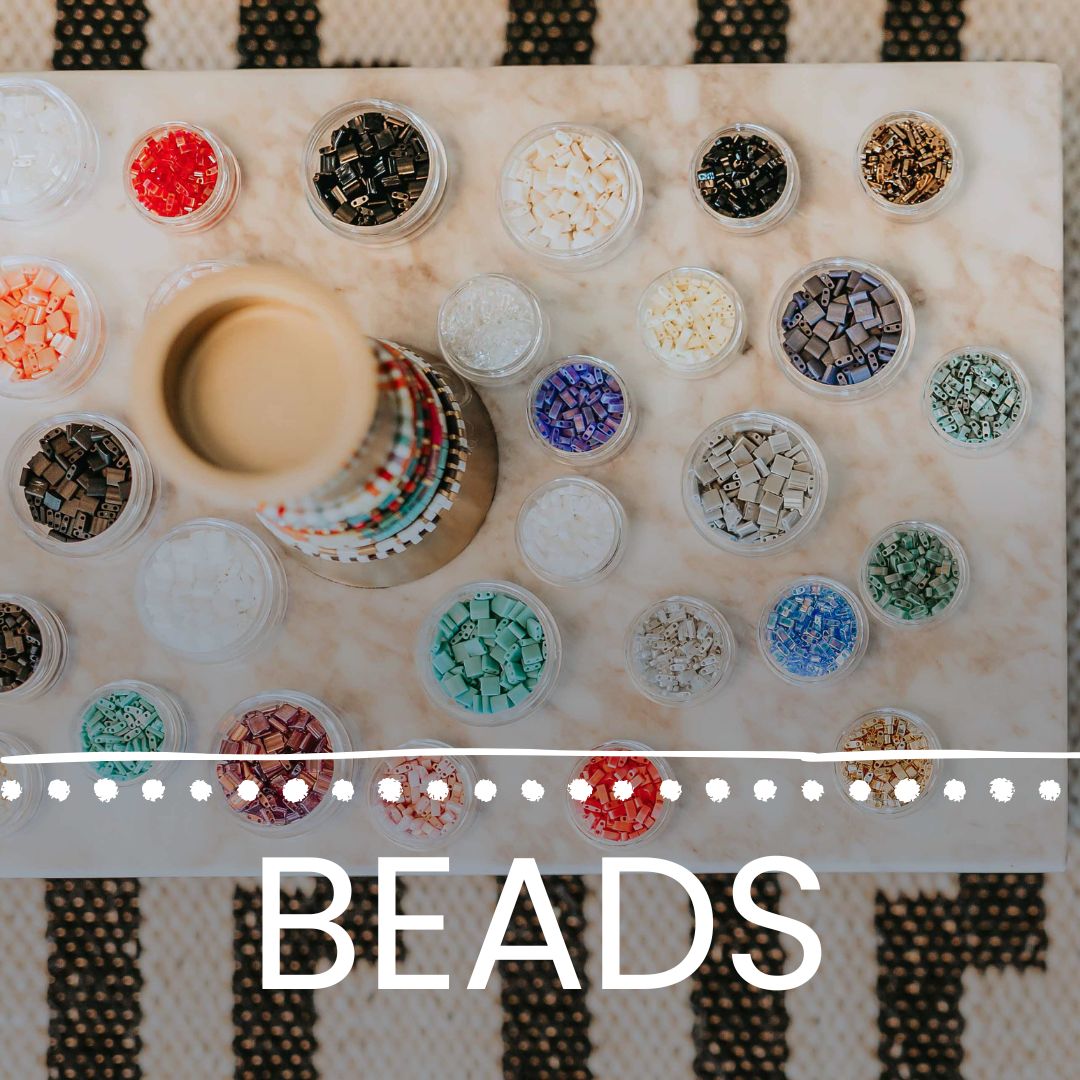
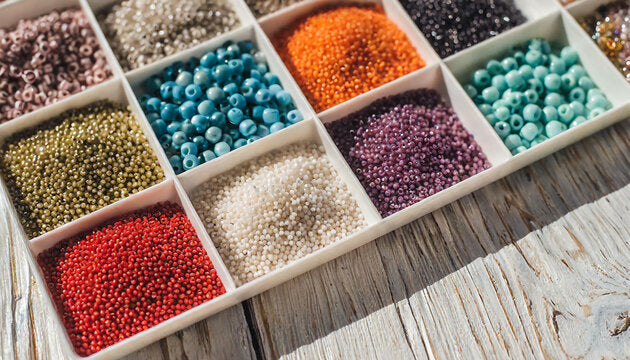
Within the beads themselves, it's rarely even. A mixed palette usually has two or three favorite colors that disappear faster than the rest. If you gravitate toward blues or blush tones, that's the color you'll be short on first, even while other colors in the same mix are barely touched. Elastic cord runs out on a flatter curve since most kits include a set length, and each bracelet uses a predictable few inches. Once you can count the remaining cord lengths on one hand, that's your signal.
Crystal-cord elastic holds its stretch better over time than basic clear elastic, so quality cord tends to outlast cheaper stretch cord in a kit. Either way, cord depletes with use the same as beads do, just at a steadier rate.2
How Often You Sit Down Changes the Math
Pace matters more than kit size. Here's how the three common patterns play out:
- Occasional maker: A bracelet or two a month, maybe tied to a birthday or a slow weekend. A trio kit or a single starter kit can last most of a year at this pace.
- Weekly maker: A regular hobby session, one or two bracelets a week. A starter kit (20 bracelets) covers roughly 3 to 5 months before you're back to restocking beads.
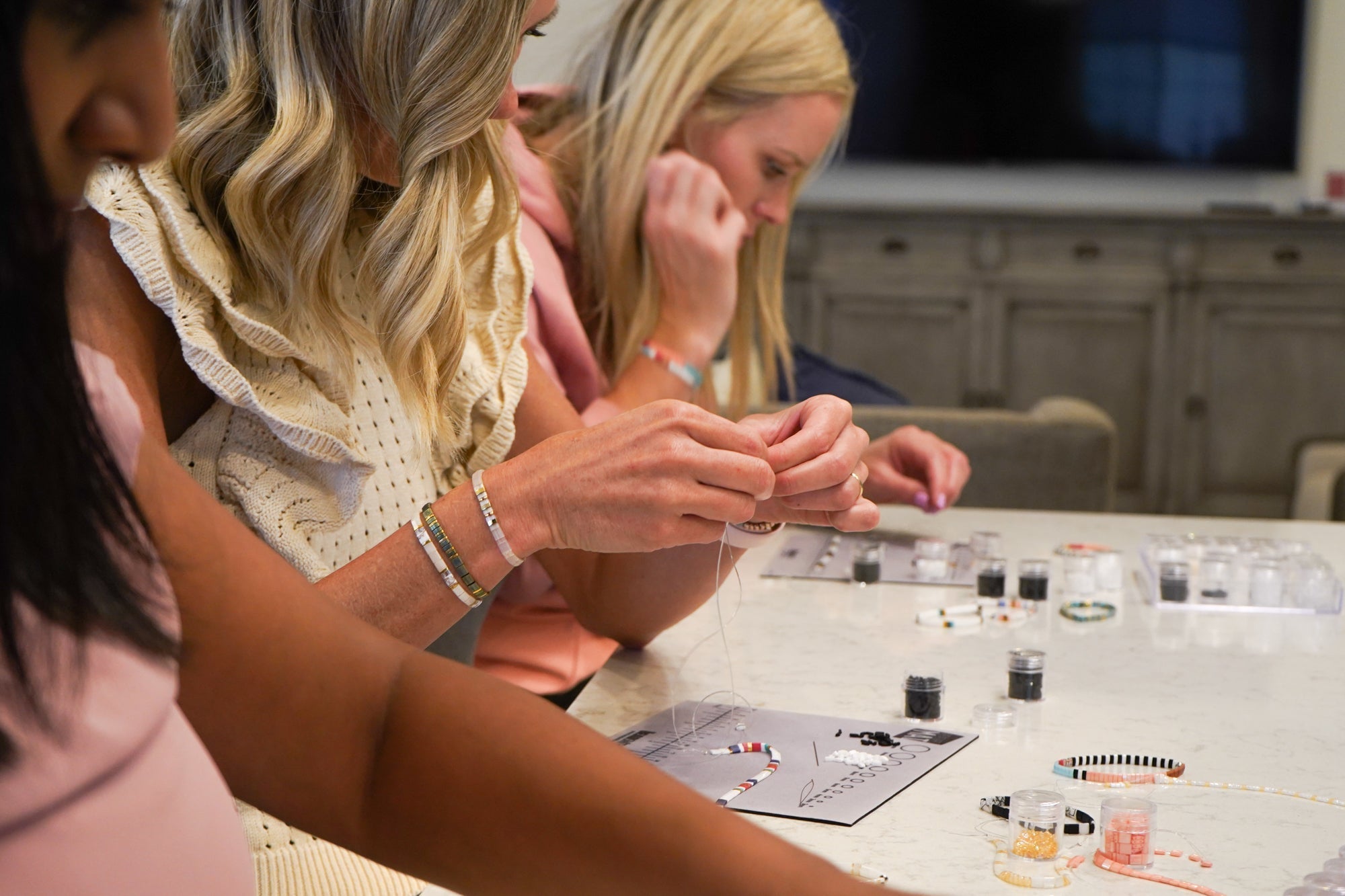
- Party host: A single sitting with a group, whether that's a birthday party, a sleepover, or a family craft night. A starter kit can disappear in one afternoon with four or five kids each making multiple bracelets, and a larger kit is built for exactly that kind of session.
None of these paces is more "correct." The point is matching the kit to how you actually craft, not how you imagine you will. Bracelet-making has always leaned social. Trading and giving handmade bracelets is a tradition that goes back generations, and that group habit is part of why a single kit gets used up faster in a party or gift-giving setting than a solo hobby session.3
Trio Kit vs. Starter Kit: How Restock Frequency Compares
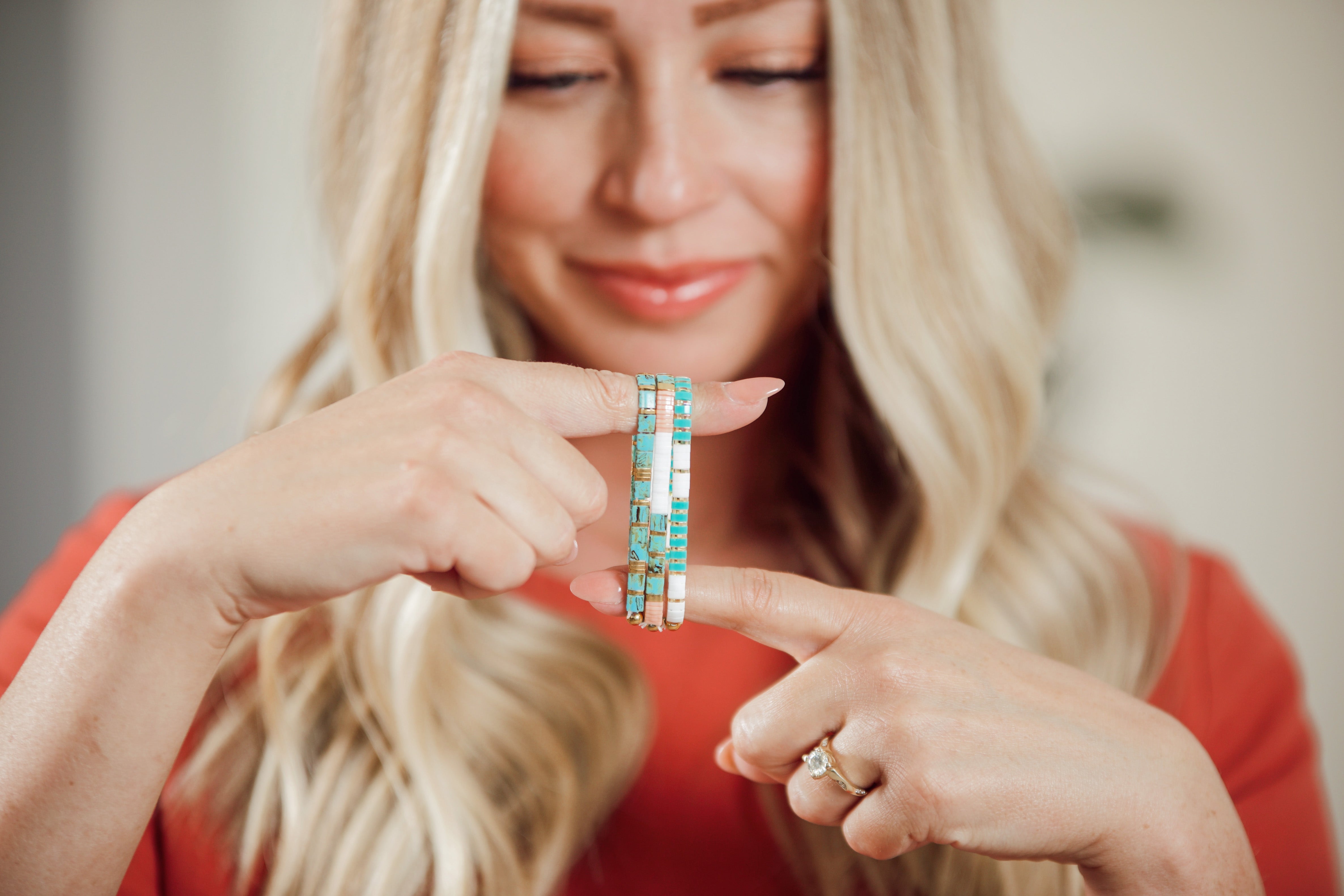
A trio kit ($44.99) makes 3 bracelets. That's a single project, a gift for a friend, or a first try before committing to more. Once those 3 are done, you're restocking, whether that means buying another trio kit or moving up to loose beads.
A starter kit ($189.99) makes 20 bracelets, which is roughly six to seven times the output of a trio kit for about four times the price. For anyone making bracelets on a regular basis, the starter kit restocks far less often relative to what you're spending. A larger kit that makes 80 bracelets pushes that math even further and suits a party host, a classroom activity, or someone selling bracelets at a market.
If neither size fits, there's middle ground. A DIY Kit Club subscription ($36.99) or an all-in-one supply set ($39.99 to $43.99) lands between a trio and a starter kit, which works well if a trio feels too small but a full starter kit feels like more than you'll use before the beads sit unused for months.
The real tradeoff is shelf space and bead variety, not value. A trio kit keeps things simple and low-commitment. A starter or bigger kit means fewer reorders but more beads to store and sort between sessions.
How Can You Tell You're Running Low?
Three signs, in order of how obvious they are.
First, a color gap. You reach for a specific bead color and there's only a handful left, even though the rest of the mix looks full. Second, short cord. Your elastic cord spool is down to lengths that barely cover a wrist. Third, and the clearest sign: you skip a pattern you want to make because you don't have enough of a color to finish it. That third one means it's time to restock, not later, now.
Keeping loose bead mixes or extra spools on hand ahead of that point means a session never gets interrupted mid-project.
Picking a Set Sized to Your Pace
Match the kit to how often you actually make bracelets, not how often you think you might.
- If you make bracelets a few times a year: A trio kit is enough. It's a low-cost way to try a new palette or make a quick gift without a big commitment.
- If you make bracelets weekly or as a steady hobby: A starter kit fits better. Twenty bracelets' worth of beads and cord means months between restocks rather than weeks.
- If you host parties, run a classroom activity, or sell bracelets: A larger kit that yields 80 bracelets covers a full group session or a busy stretch of orders without running out mid-event.
When it's time to restock beads specifically (rather than buy a whole new kit), Mack & Rex's seed bead collection lets you top up a color or two instead of paying for a full kit's worth of tools you already own.
A Quick Note on Kids and Small Parts
If a bracelet-making set is for a birthday party or a craft night with younger kids, keep an adult in the room the whole time. Beads, clasps, and small findings are a choking hazard for young children, and a party setting means more loose beads on the table at once. Older kids and teens can usually work through a kit with light supervision; younger ones need someone next to them.
Frequently Asked Questions
How long does a bracelet-making set actually last?
It depends on the kit size and how often you make. A trio kit yields 3 bracelets, a starter kit yields 20, and a larger kit yields 80. An occasional maker can stretch a starter kit across a year, while a weekly maker or party host burns through the same kit in a few sittings.
Which supplies run out first in a bracelet-making set?
Beads and elastic cord run out first, almost always before any tool does. Certain bead colors get used up faster than others depending on your palette, and cord gets cut down with every bracelet, while needles, spinners, and clasps last for dozens of sessions.
How do I know when I'm running low on bracelet-making supplies?
You're running low when one or two bead colors are noticeably thinner than the rest, your elastic cord spool is down to a few short lengths, or you find yourself skipping a pattern because you don't have enough of a color to finish it.
Should I buy a small trio kit or a larger starter kit?
A trio kit ($44.99, makes 3 bracelets) fits a one-time project or a gift. A starter kit ($189.99, makes 20) fits anyone making bracelets regularly, since it covers months of sessions before you need to restock beads or cord.
Is a bracelet-making set safe for kids to use?
Bracelet-making sets include small beads and findings, which are a choking hazard for young children. Kids should use these sets with adult supervision, and they work well as a shared activity for older kids and teens making bracelets alongside a parent.
Find the Kit Sized to Your Pace
Whether you make bracelets once a season or run a weekly craft table, Mack & Rex's bracelet making kits come in trio, starter, and larger sizes so you're not restocking more often than you need to. Orders ship internationally, with shipping and duties calculated at checkout, and US orders over $100 ship free. A single trio kit won't clear that $100 mark on its own, but pairing a kit with a few loose bead mixes usually will.