

Bracelet Making Supplies: The Essentials vs. the Nice-to-Haves
What Supplies Do You Actually Need to Make a Bracelet?
Five things: beads, a quality stretch cord or beading wire, small sharp scissors, a bead mat or shallow tray, and a needle if your beads have narrow holes. Everything past that list makes the process smoother or neater, but none of it is required to finish a bracelet that fits and holds up.
Most beginners overbuy. A quick search turns up checklists with a dozen-plus items, and a new crafter ends up at the craft store wondering if they need calipers before stringing a single bead. They don't. Strip it to what's load-bearing and the list gets short fast.
Here's the split that matters: essentials determine whether the bracelet gets made at all and whether it survives being worn. Nice-to-haves make the process more pleasant or precise. Confusing the two is how a $15 project turns into a $60 cart.
What Belongs on the Essentials List?
Beads, cord, scissors, a mat, and a needle (when needed) cover every function a bracelet requires: material, structure, a clean cut, a surface that won't lose your beads, and a way to get cord through a tight hole. Skip any one of these and you either can't start or can't finish.
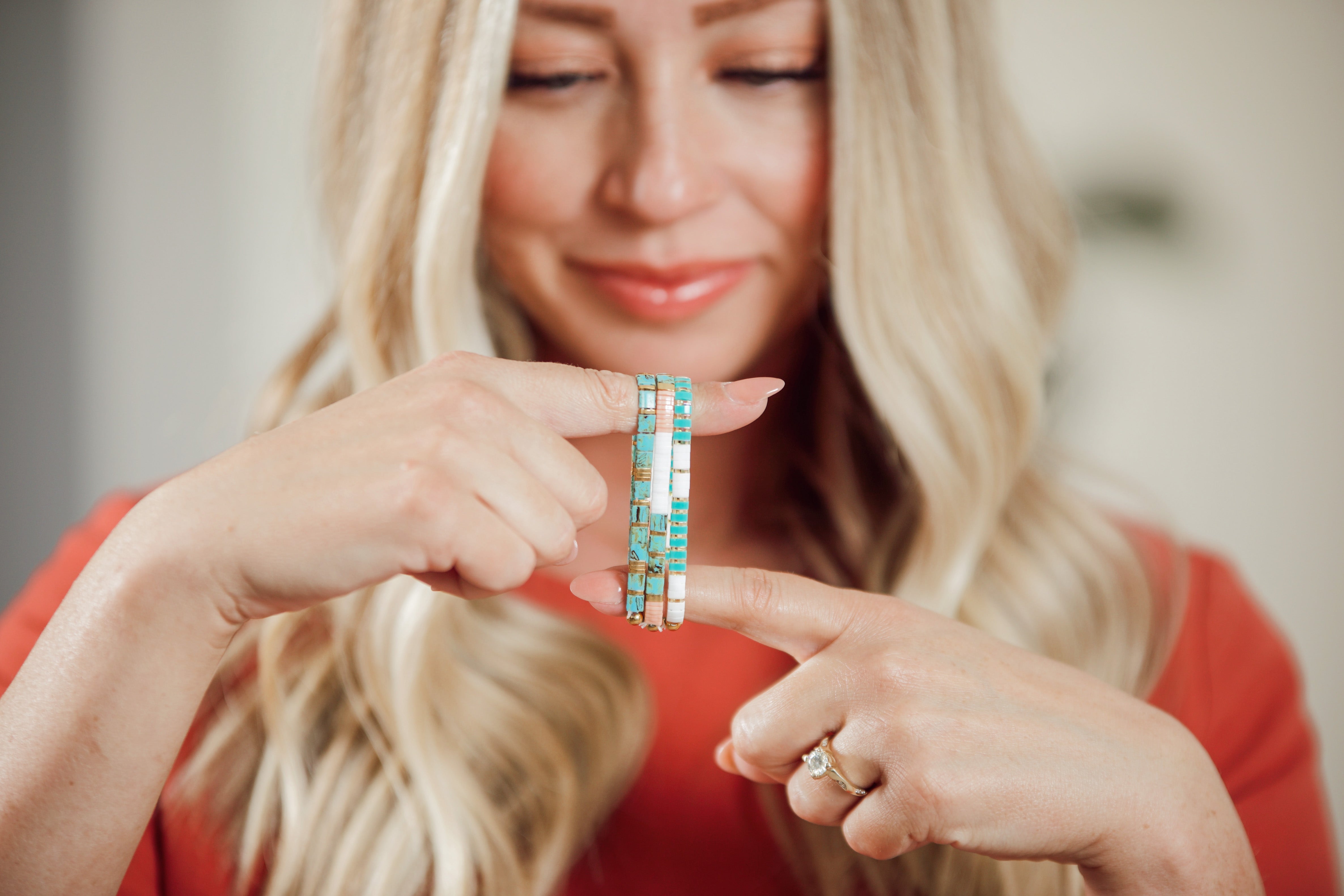
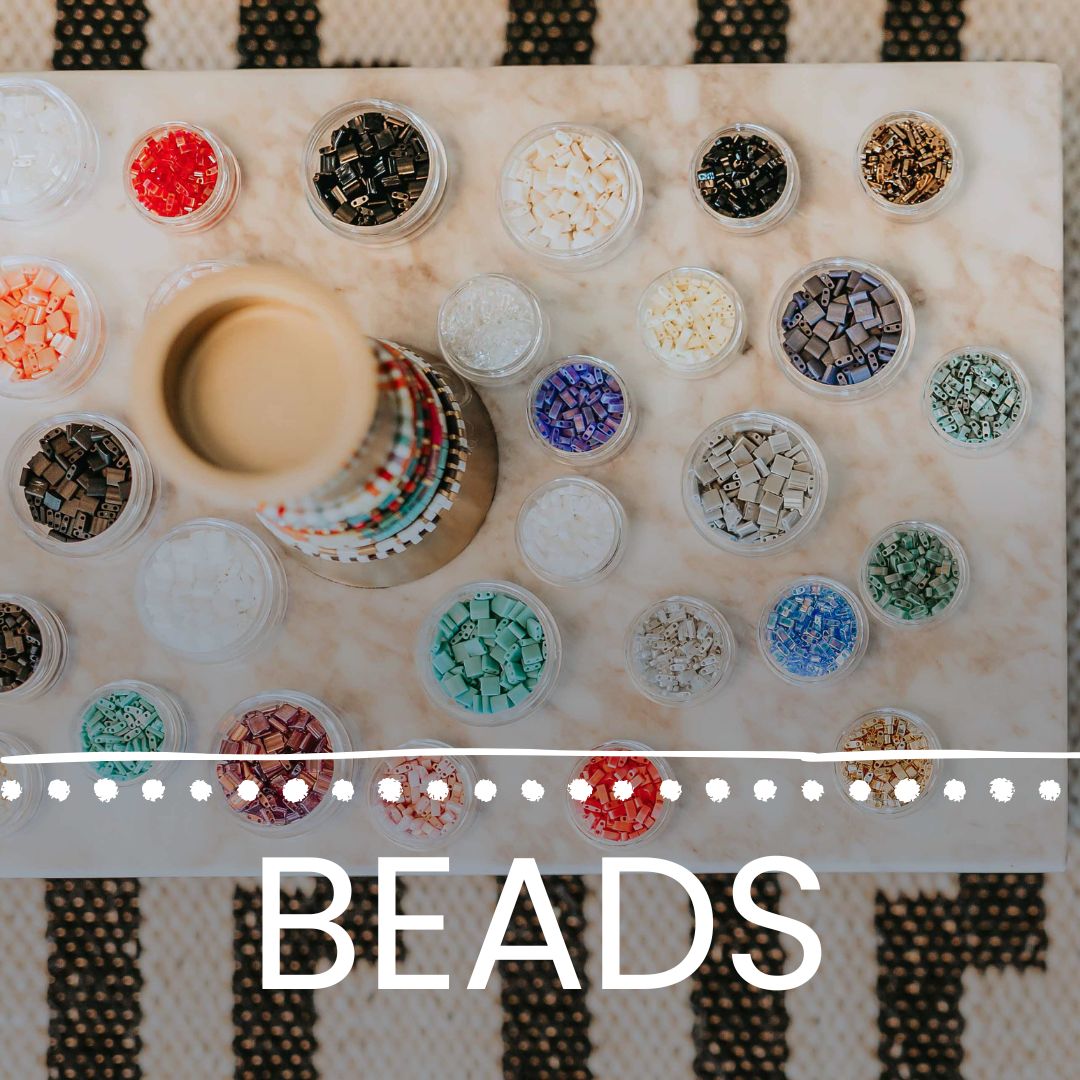
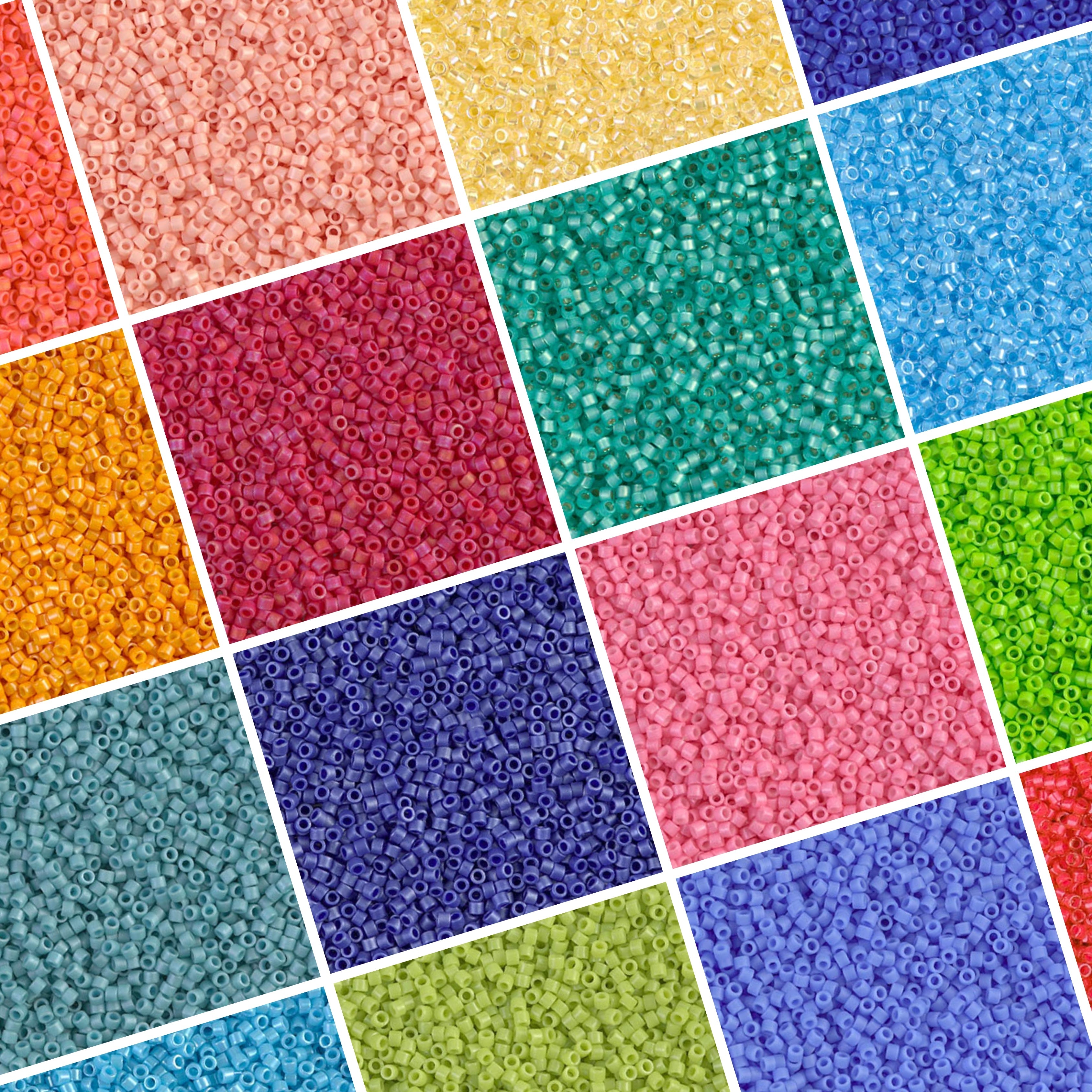
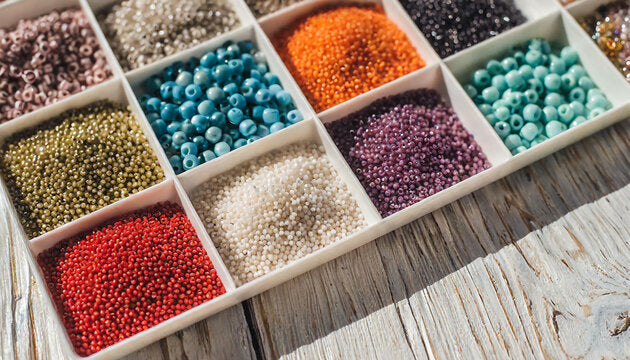
- Beads. The actual material of the piece. Glass, like Miyuki Tila tile beads, holds color and shape better than plastic over time, which matters since a stretch bracelet gets handled daily.
- Stretch cord or beading wire. This is the one place beginners cut corners and regret it. A thin craft elastic from a general supply aisle stretches out within a few wears. A jewelry-grade crystal cord keeps its tension through regular wear, including workouts, so the bracelet doesn't slide around on the wrist.
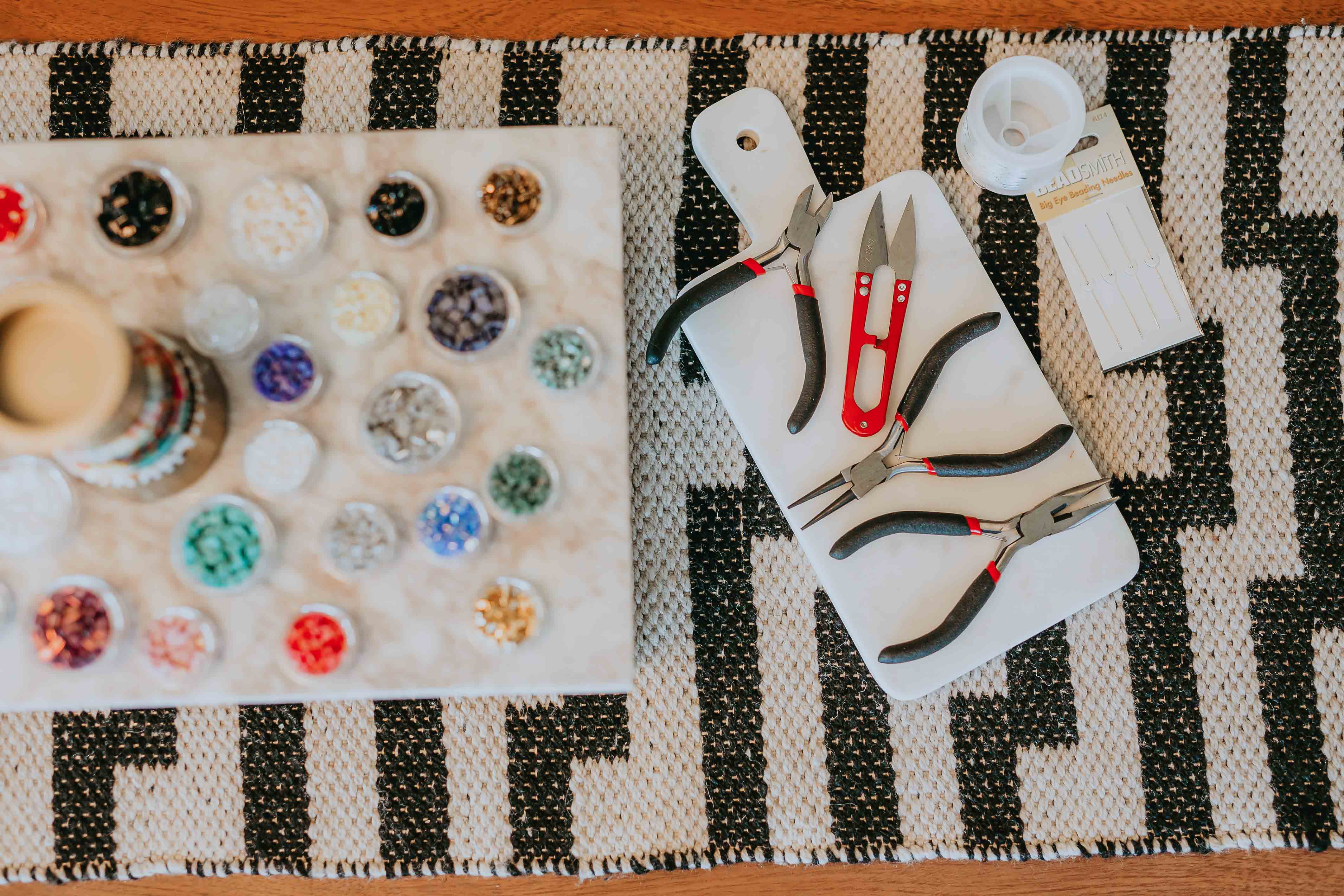
- Small, sharp scissors. Craft scissors or a dedicated cord snip. Dull household scissors fray cord ends instead of cutting them clean, and a frayed end is hard to knot securely.
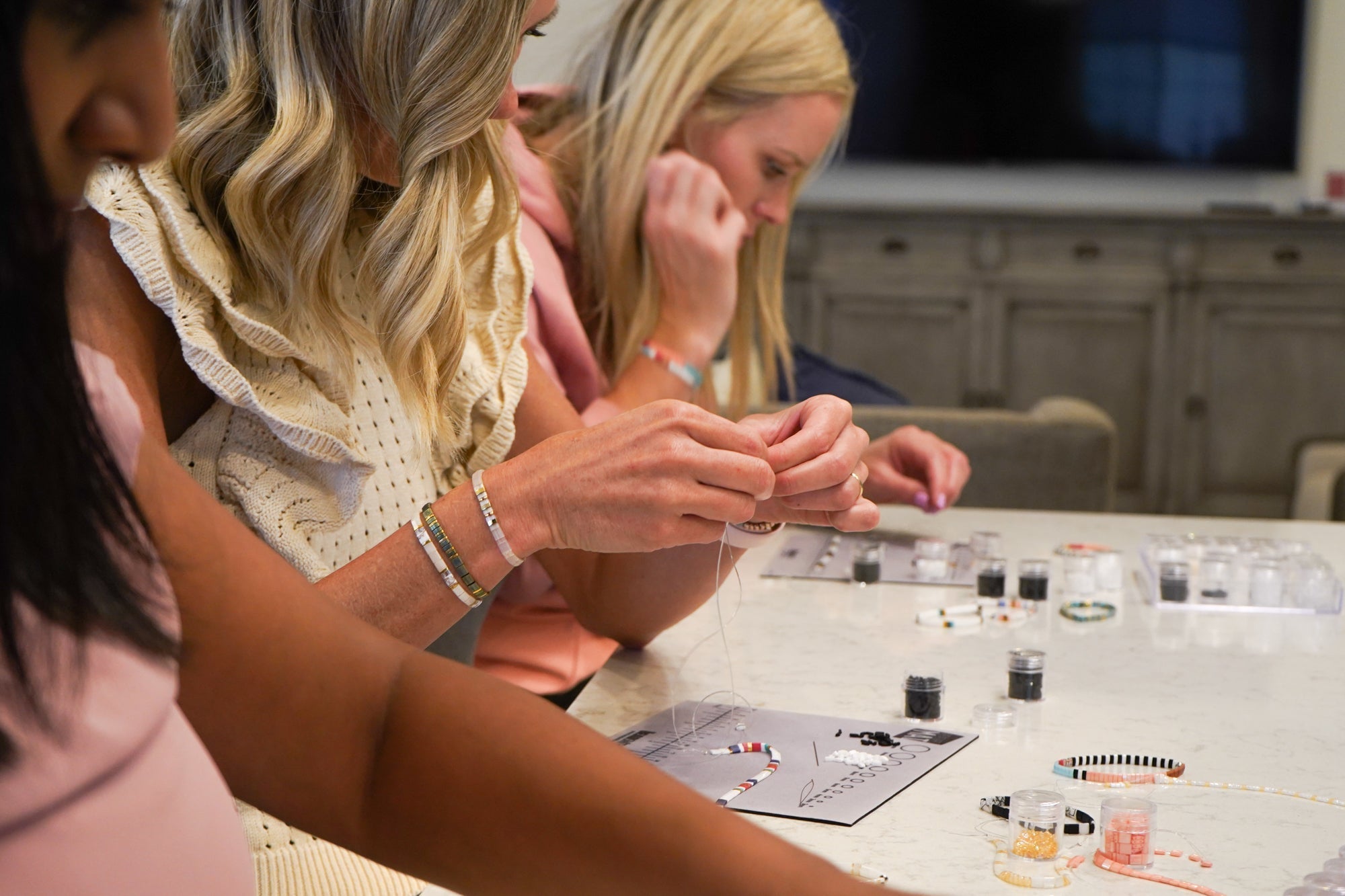
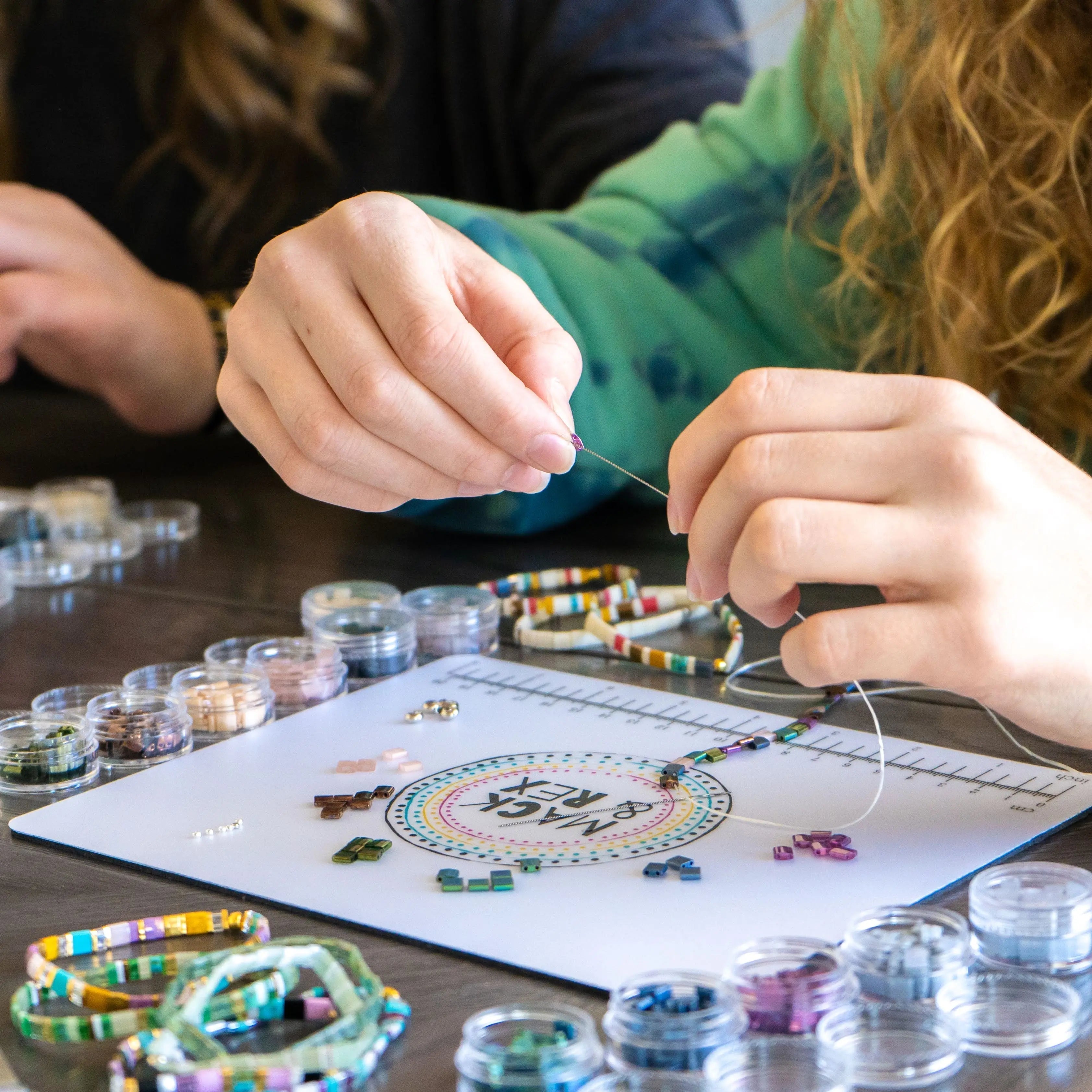
- A bead mat or shallow tray. A $2 piece of felt or a cafeteria-style tray with raised edges. Beads roll. A flat table without a mat means losing a handful of them to the floor, and small glass or plastic beads are a choking hazard around toddlers if they scatter underfoot.
- A needle, if your beads call for one. Two-hole tile beads and smaller seed beads often need a thin beading needle to guide cord through a narrow opening. Larger-hole beads can skip this step entirely.
That's the whole list. Five categories, and most beginners already own a version of at least two of them (scissors, something flat to work on).
What Falls Into the Optional, Nice-to-Have Column?
A bead board, calipers, a storage system, and pliers all improve the experience without being required for a basic stretch bracelet. Add them once you know you'll keep making bracelets, not before your first one.
| Item | What it does | When it's worth adding |
|---|---|---|
| Bead board | Lays out a pattern and measures finished length before you string | Once you're planning repeat color sequences, not for a single quick bracelet |
| Calipers | Measures bead size precisely, useful for matching mixed lots | If you're buying loose beads from multiple sources and need consistent sizing |
| Storage boxes/organizers | Keeps colors separated and beads from mixing together | Once your bead collection outgrows a couple of small bags |
| Pliers (round-nose, flat-nose) | Opens jump rings, attaches clasps, wire-wraps | Only needed for clasp-and-crimp or wire-wrapped styles, not basic stretch bracelets |
Nothing in this column changes whether the bracelet gets finished or holds up on the wrist. A bead board makes pattern planning easier; calipers add precision you don't need for a first project; pliers matter for a different bracelet style entirely. Buy these when a specific project calls for them, not as a starter-kit default.
How Do You Know Which Side a Tool Belongs On?
Ask one question: does the bracelet fail without it? If the answer is yes, it's essential. If the answer is "it's nicer with it" or "it's for a different technique," it's optional. That single filter cuts most checklists in half.
A bead spinner speeds up stringing, it doesn't change whether the bracelet works. A magnifying lamp helps with tiny beads under poor lighting, but plenty of crafters manage fine at a well-lit kitchen table. The Fire Mountain Gems Encyclobeadia reference library lists dozens of specialty tools across stitch types, a good illustration of how big the optional category gets once you move past basic stretch bracelets into off-loom weaving or wire work. For a first bracelet, almost none of that applies.
Why Does Cord Quality Matter More Than Most Beginners Expect?
Cord is the one essential item where quality actually changes the outcome, not just the experience. A bracelet strung on weak elastic loosens and snaps within weeks; the same beads strung on a sturdy, jewelry-rated stretch cord can last years of regular wear. The rubber and synthetic compounds behind an elastic band degrade at different rates depending on thickness and material, which is exactly why a thin generic elastic and a braided jewelry-grade stretch cord perform so differently on the wrist.
This is where a lot of starter kits quietly cut cost. Cheap bundled cord looks fine on day one and stretches out fast, frustrating when the beads were the expensive part. Mack & Rex's bracelets and kits use a crystal-cord elastic built to hold its shape, backed by a quality guarantee, so the part doing the structural work doesn't become the weak link. The Wikipedia overview of beadwork touches on how stringing material has shaped bead craft for centuries; elastic cord is a modern variation on an old problem, how do you hold small materials together so they last.
What's the Fastest Way to Get Started Without Guessing at a List?
Skip the shopping trip and start from a kit that already bundles the essentials. A kit removes the guesswork of matching cord weight to bead hole size, sourcing a decent needle, and figuring out how much elastic a given wrist size needs.
That's the idea behind the Mack & Rex bracelet making kits collection. Each kit pairs genuine Miyuki Tila beads with crystal-cord elastic, a needle, and the basic tools to go from box to finished bracelet in one sitting. Trio kits make three bracelets; the larger Tila Bead Starter Kit makes 20-plus for anyone who knows they'll keep going. No separate trip for scissors or a mat.
If you're crafting with kids, keep an adult in charge of the loose beads and needle. Both are small-parts items and a choking hazard for young children who still mouth objects, so this is a supervised activity for older kids and grown-ups, not something to hand to a toddler unattended.
Frequently Asked Questions
What supplies do I actually need to make a bracelet?
You need beads, a quality stretch cord or beading wire, small sharp scissors, a bead mat or shallow tray to keep beads from rolling away, and a needle if your beads have small holes. That's the full essentials list; everything else is a convenience, not a requirement.
Do I need a bead board to make a bracelet?
No. A bead board helps you lay out a pattern and measure length before you string, which is handy for planning a color sequence, but a bead mat alone works fine for a basic stretch bracelet. Treat a bead board as a nice-to-have once you're making repeat patterns, not a first-purchase item.
What is the best cord for a beginner stretch bracelet?
Look for a crystal-cord style stretch elastic rated for jewelry, not a generic craft elastic from a hardware aisle. Thin, cheap elastic stretches out and snaps within a few wears, while a jewelry-grade stretch cord holds its shape through regular wear and keeps a bracelet from sliding during everyday activity.
Are pliers necessary for making beaded bracelets?
Not for a basic stretch bracelet strung on elastic, no crimping or clasp attachment involved. Pliers become useful once you move into clasp-and-crimp styles or wire-wrapped designs, so they sit in the optional column for anyone starting with simple stretch bracelets.
Does Mack & Rex ship bracelet making supplies internationally?
Yes. Mack & Rex ships internationally, with shipping and any customs or duties calculated at checkout. Free shipping applies to US orders over $100; that offer doesn't extend to international orders, which ship at the checkout-calculated rate rather than being unavailable.
Ready to skip the supply-list guesswork? Browse the Mack & Rex bracelet making kits collection for everything you need to make your first bracelet in one sitting, genuine Miyuki Tila beads, crystal-cord elastic, and the basic tools included. US orders over $100 ship free, and international orders ship with duties calculated at checkout.