

What Bracelet Making Supplies Do You Actually Need to Start?
What bracelet making supplies do you actually need to start?
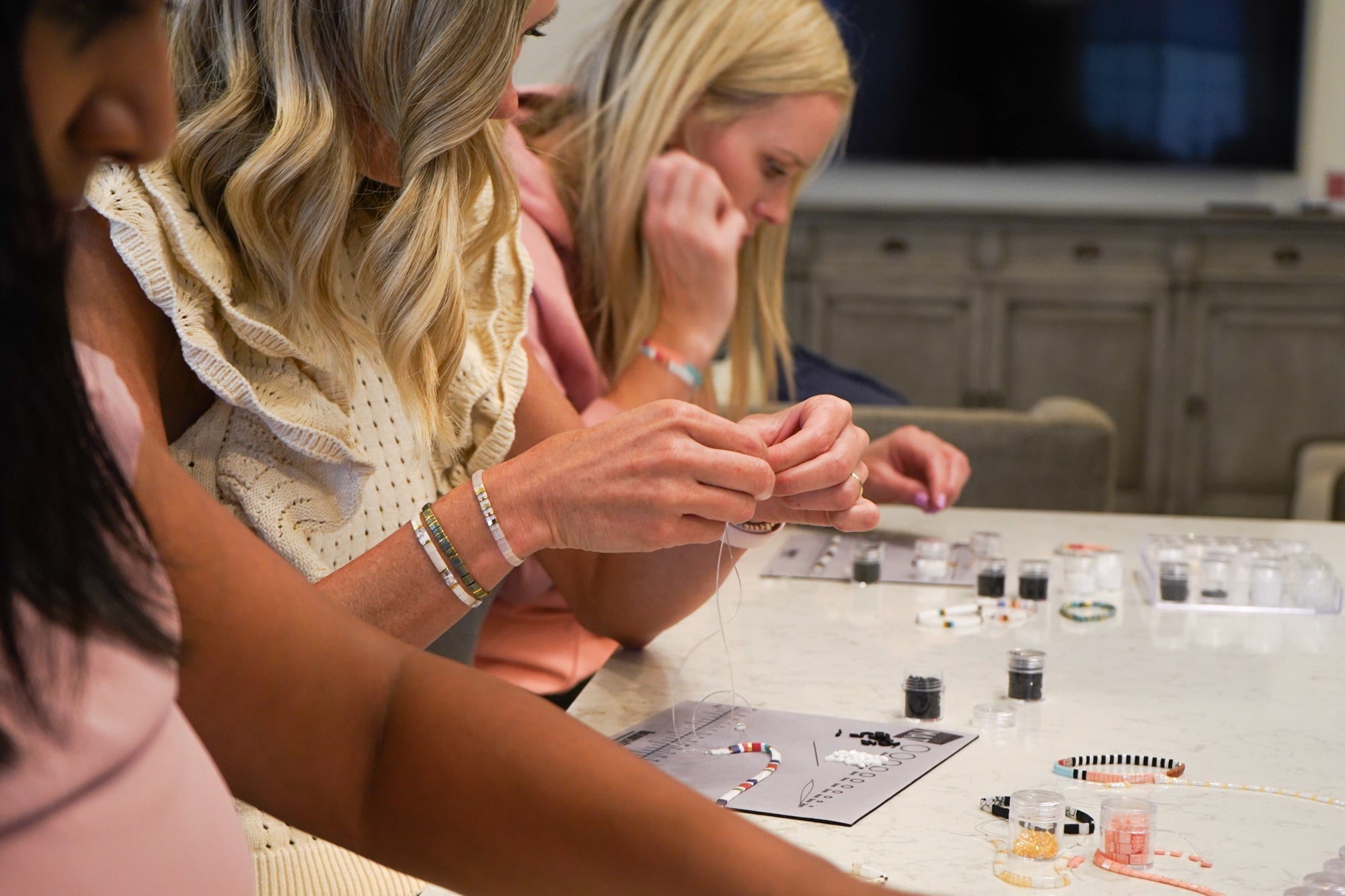
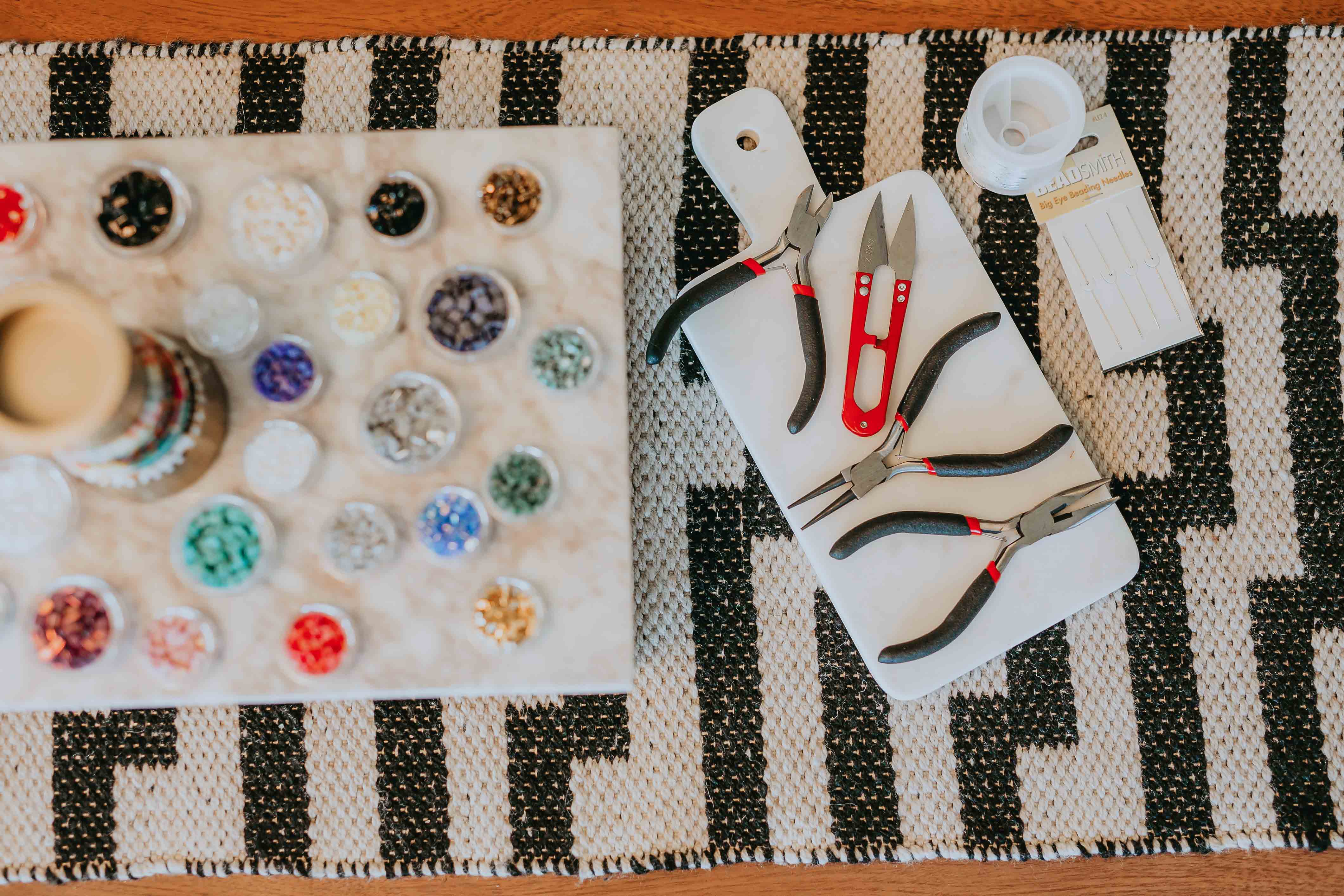
You need three things: beads, stretch elastic cord, and a pair of scissors. That's the whole starter list. Everything else, a bead mat, a needle, charms, makes the job tidier or faster, but you can make a real, wearable bracelet with just those three. Start small, make one, then add the extras once you know you love it.
Most beginners over-buy. They picture a craft-store haul and end up with pliers and findings they never touch. For a stretch bracelet, the kind Mack & Rex is built around, you skip clasps and crimps entirely. The elastic does the work.
Which supplies are the real must-haves?
The must-haves are beads, a strong stretch elastic, and scissors. With those, you can string and tie a finished bracelet in one sitting. Beads set the look, the elastic decides whether it lasts, and scissors cut your cord to length. Nothing on this short list is optional if you want a bracelet you can actually wear.
Here's how each one earns its spot:
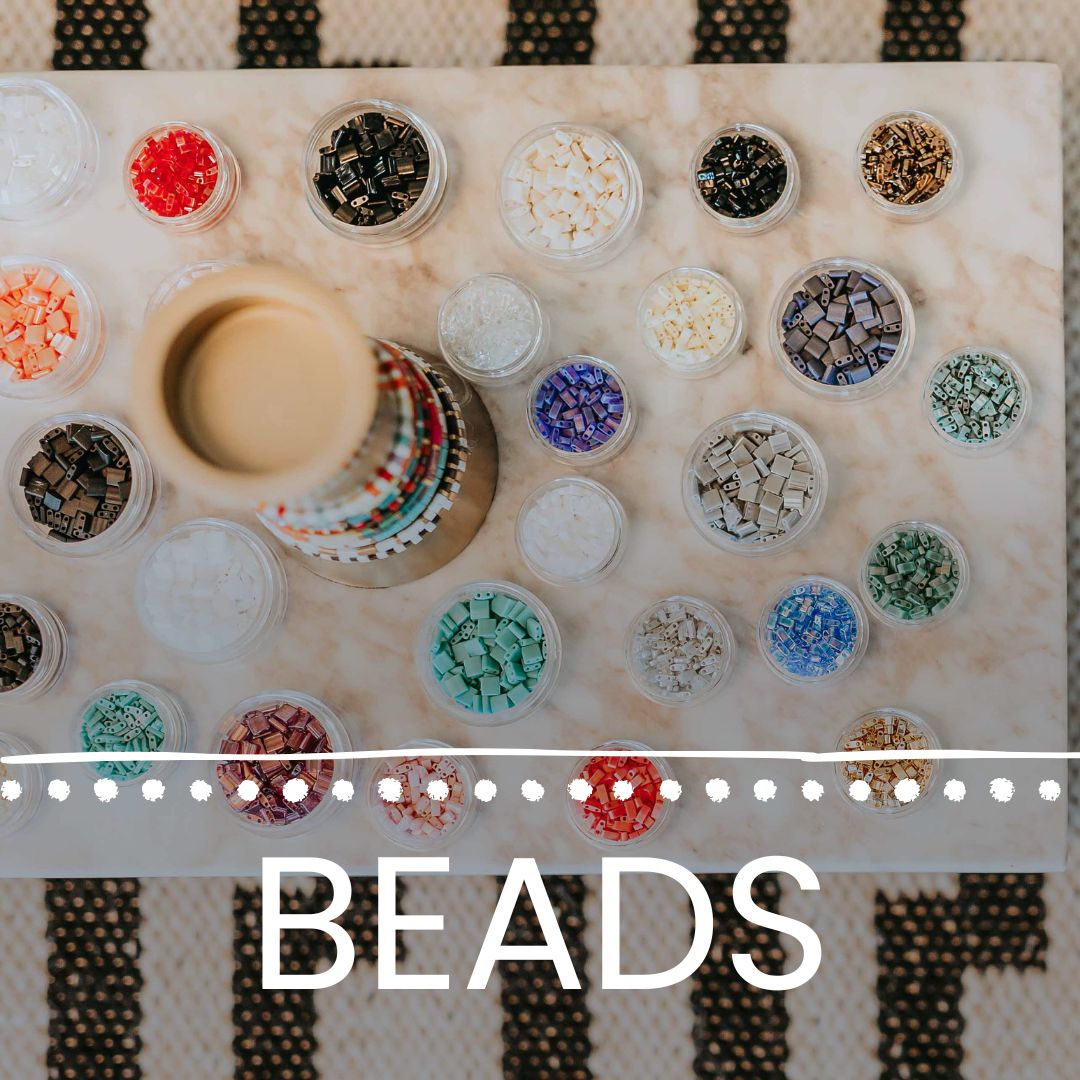
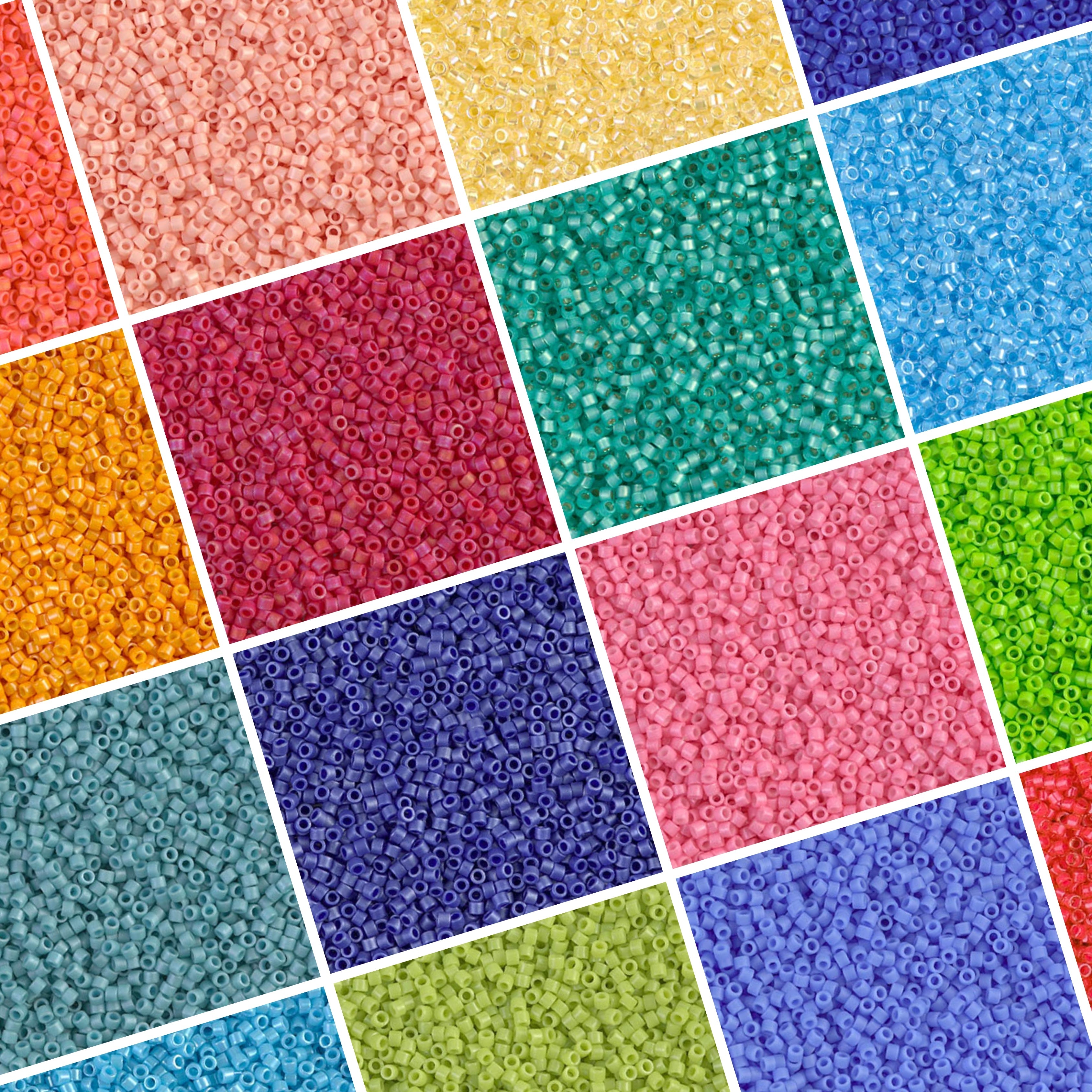
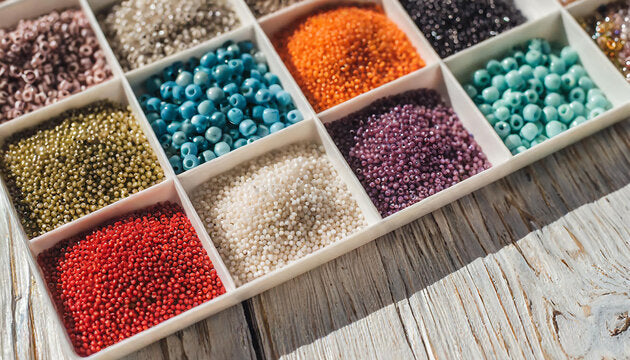
- Beads. Your main ingredient. Tila tile beads give that flat, mosaic look; round seed beads give a classic stacked vibe. Beads are small and a choking hazard, so keep them away from little kids and pets.
- Stretch elastic cord. The part people get wrong most often. A quality crystal-cord elastic is what keeps a bracelet from snapping the first week. More on sizing below.
- Scissors. Any sharp pair works. You're cutting cord and trimming knot tails, that's it.
Beads have been strung on cord for thousands of years, so you're joining a very old craft with a very short supply list. The materials are simple. The bead itself is one of the oldest decorative objects humans have made.
What elastic cord is best for beaded bracelets so they don't snap?
Use the thickest stretch elastic that slides through your bead holes without forcing. A snug-but-not-tight fit is the goal. Cord that has to be jammed through saws against the sharp edges of the hole and breaks. For most tile and seed beads, a fine-but-strong crystal-cord elastic (around 0.5 to 0.8 mm) is the sweet spot, firm enough to hold, thin enough to pass.
Three things make a stretch bracelet snap, and all three are avoidable:
- Cord too thin for the beads. Light cord under heavier beads wears fast. Match the cord to the load.
- Sharp hole edges. Some beads have rough-drilled holes that act like a tiny blade. A smoother, higher-quality bead (like Miyuki Tila) saves your cord.
- No pre-stretch, no knot discipline. Pull the cord firmly before stringing, tie a surgeon's knot under light tension, and glue it. That trio does most of the durability work.
Mack & Rex uses a crystal-cord elastic on its finished bracelets for exactly this reason, and the quality guarantee on the stretchy bracelets backs it up. Elastic is a stretchable material, and like any elastic cord or thread, it holds up best when it isn't forced past its limits.
Which supplies are nice-to-haves you can skip at first?
You can skip the bead mat, beading needle, and charms when you're starting. None of them change whether the bracelet works, they just make the process smoother or the result fancier. Add them once you've made a few and know which part of the craft you want to speed up. Buying them on day one is how beginners waste money.
The useful extras, in the order most people actually want them:
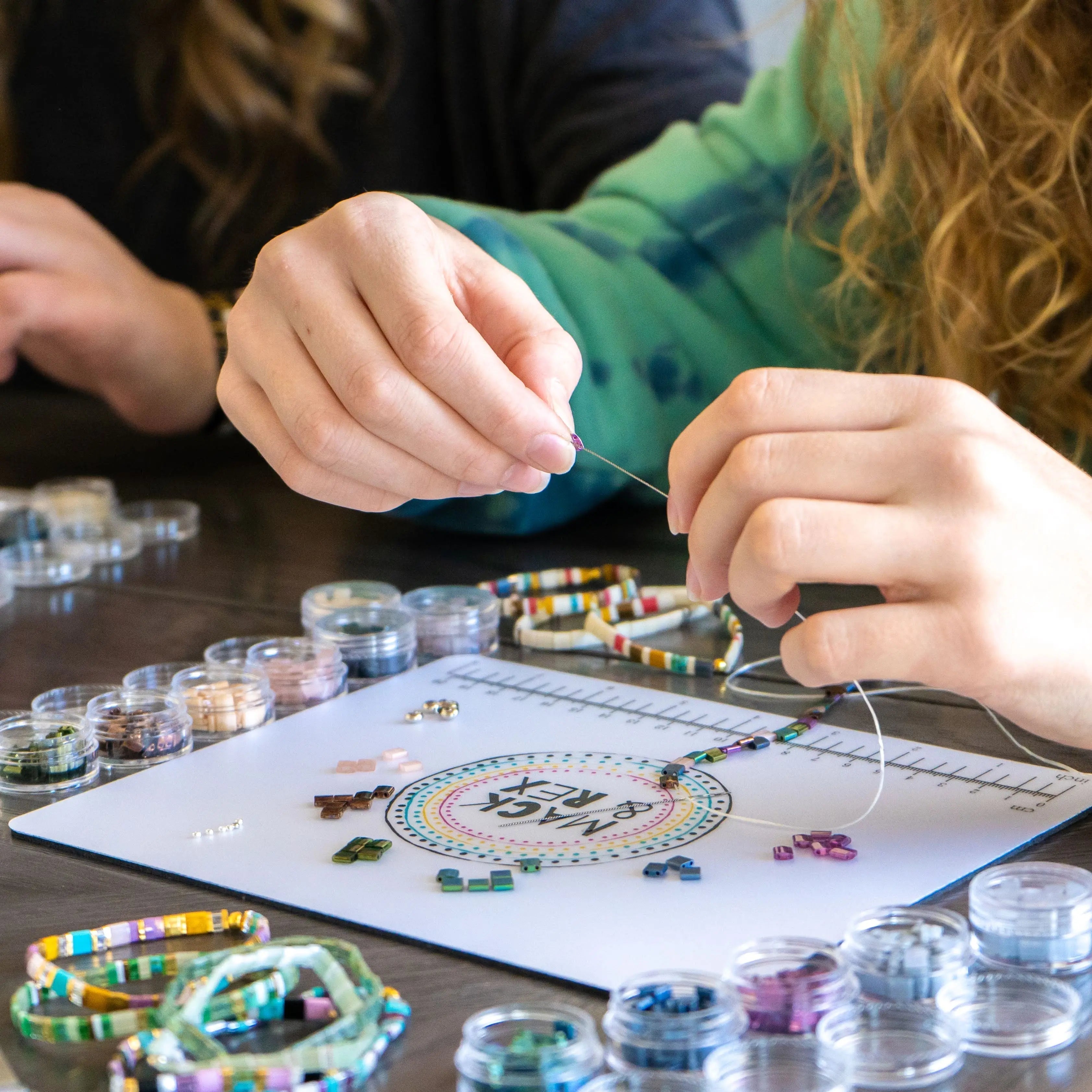
- Bead mat. A soft, grippy surface that stops beads from rolling off the table. Not essential, but a sanity-saver once you're working with lots of small beads.
- Beading needle. Helpful for very small holes or when you double the cord. For most Tila and seed-bead work, you can string by hand.
- Charms and spacers. Pure personality. Add a charm when you want a bracelet to mean something, a birthstone, an initial, a tiny heart.
- Beading glue. A dab on the knot is cheap insurance. Call it a half-essential.
Short version: start with the three must-haves. Grow into the rest.
How does a starter kit bundle the essentials for you?
A kit skips the guesswork. Instead of guessing cord thickness, matching bead counts, and hunting for scissors across three store aisles, you get the beads, the right elastic, and the tools pre-matched in one box. For a beginner, that's the difference between finishing a bracelet tonight and abandoning a half-planned cart. The pieces are chosen to work together.
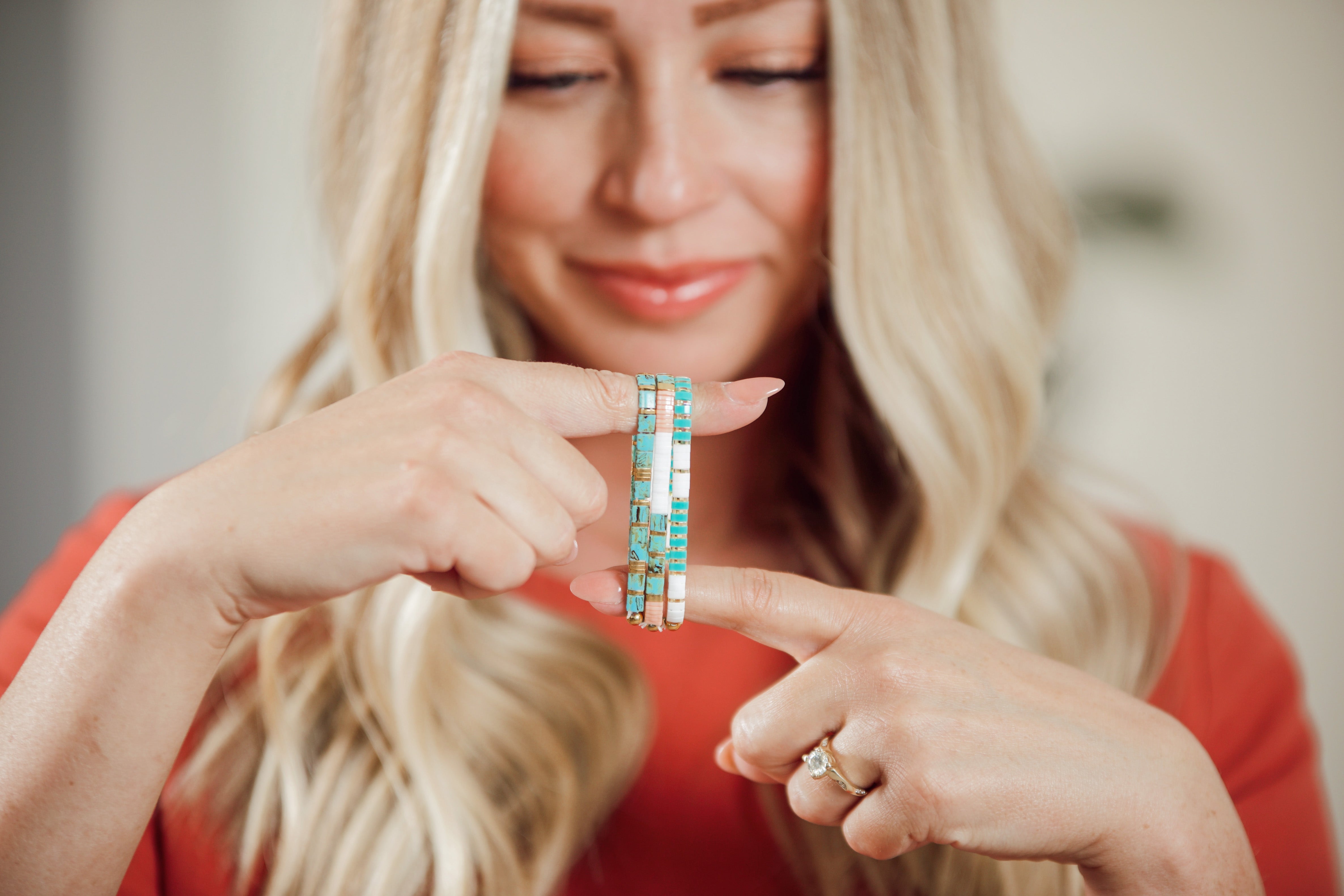
Mack & Rex builds kits for this exact moment. The All-in-One tools and supplies kit runs $39.99 to $43.99 and pairs the core supplies with the beads, so you're not cross-referencing cord charts on your first try. Trio kits (make three bracelets) are $44.99 and come in ready-to-go color stories. If you'd rather just browse the raw materials, the beading supplies collection has the beads, mixes, and cord on their own.
One honest note on shipping: free shipping applies to US orders over $100, so a single $44.99 kit won't clear that threshold. Mack & Rex ships internationally too, with any shipping and customs calculated at checkout.
Can kids use these bracelet making supplies?
Yes, with adult supervision. Bracelet making is a favorite "make it together" activity for moms and grandmothers crafting with kids, and it's genuinely fun across ages. The one firm rule: beads are small parts and a choking hazard, so keep them away from very young children and stay hands-on with older kids until they've got the hang of stringing. Supervision makes it safe and more fun.
Tila mixes (around $5 to $9) are an easy, low-cost way to let a child pick their own colors without a big commitment. Set up a bead mat, pour out a mix, and let them design. You handle the knot-tying and the scissors.
Where should you buy your first set of supplies?
Buy from a shop that sells quality cord and beads together so the pieces are matched for you. The two failure points for beginners are weak elastic and rough-holed beads, and a good supplier removes both. Mack & Rex stocks Miyuki Tila glass tile beads (a third-party brand it resells) and pairs them with crystal-cord elastic, which is why its finished bracelets hold up to everyday wear.
If you want the fastest path to a finished piece, Mack & Rex also sells ready-to-wear bracelets with inclusive sizing from XXS to 5XL, and a buy-three-finished-bracelets-get-one-free offer (no code needed) on finished bracelets. But if you're here to make your own, grab the supplies and start with one. Making your first bracelet by hand follows the same simple steps every beginner guide covers: string, tie, trim.
Frequently asked questions
What is the minimum I need to make one bracelet?
Beads, a length of stretch elastic cord, and scissors. That's it. Cut the cord a few inches longer than your wrist, string your beads, tie a surgeon's knot, glue it, and trim. You can finish a first bracelet with nothing fancier than those three supplies.
What size elastic cord should a beginner use?
Use the thickest cord that passes through your bead holes without forcing. For most Tila and seed beads, a fine crystal-cord elastic around 0.5 to 0.8 mm works well. If the cord has to be jammed through, drop a size. If it slides loosely, go up. Snug-but-smooth is the target.
Do I need a beading needle?
Usually not. For most Tila and seed-bead stringing, you can thread beads by hand. A needle helps only with very small holes or when you double the cord. Skip it at the start and add one later if you run into tight beads.
Is a kit cheaper than buying supplies separately?
A kit's real value is matching, more than the price. It pairs the right cord with the right beads and the tools, so you avoid buying the wrong elastic or a bead pack with rough holes. Mack & Rex's All-in-One kit ($39.99 to $43.99) bundles the essentials so a beginner skips the guesswork.
Are these supplies safe for crafting with kids?
With adult supervision, yes. Beads are small parts and a choking hazard, so keep them away from very young children and supervise older kids while they string. Done together, it's a great activity, just stay hands-on with the knots and scissors.
Ready to start? Grab your beads and cord from the Mack & Rex beading supplies collection, or let an All-in-One kit bundle it all so your first bracelet comes together tonight. Spread happy.

