
Bracelet Making Supplies You Already Have at Home (and What to Actually Buy)
What Bracelet Making Supplies Do You Actually Need?
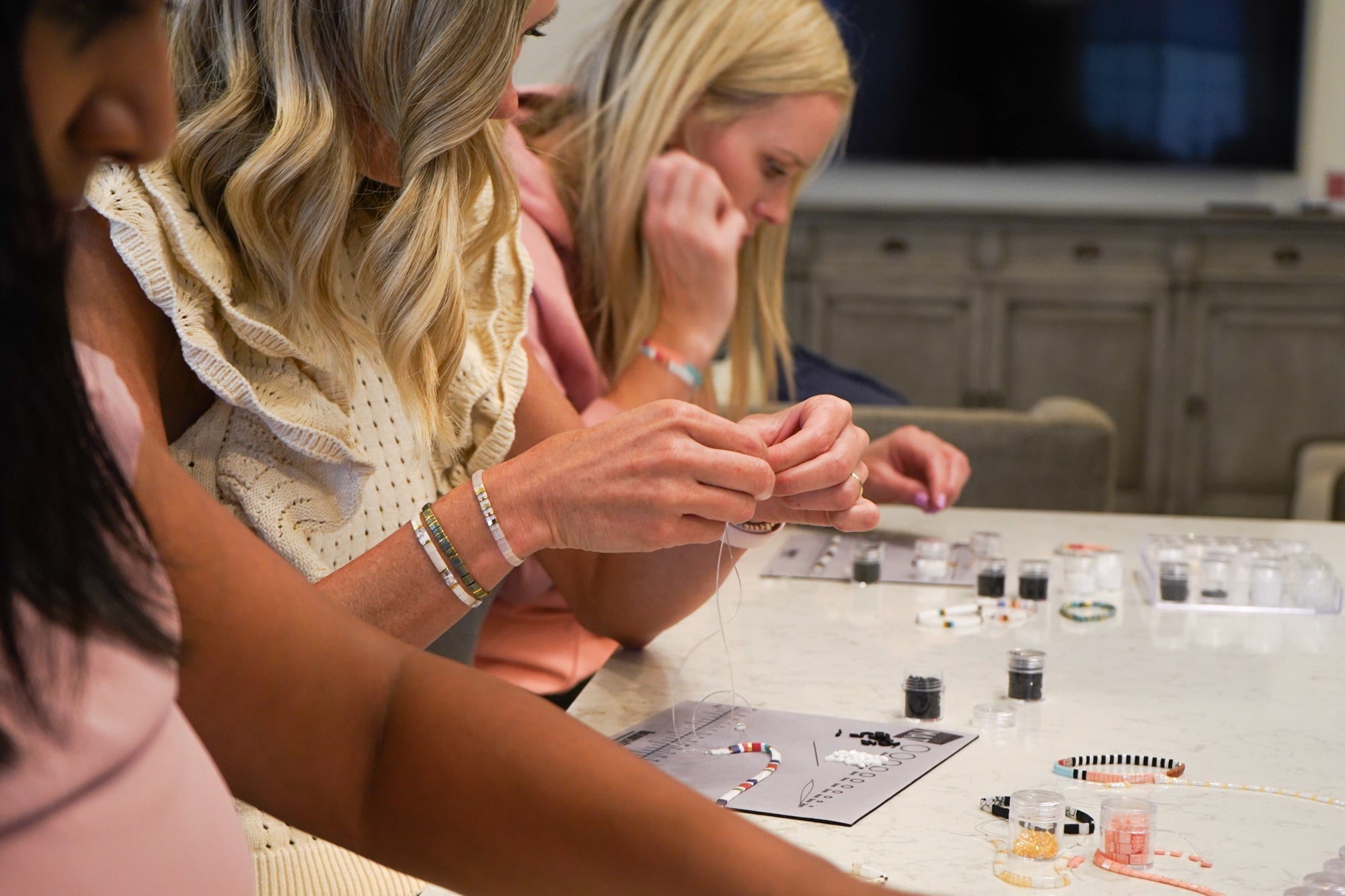
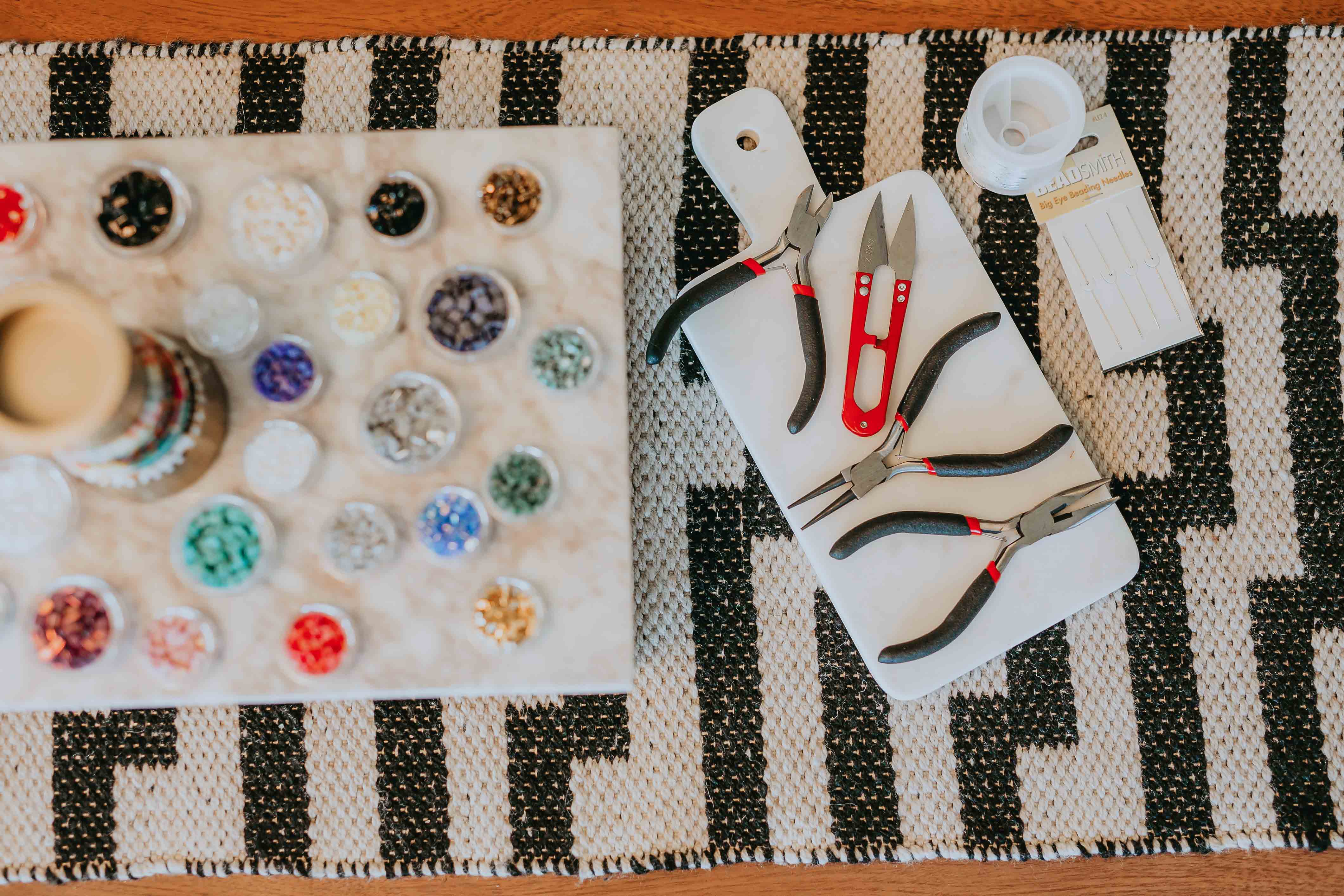
Most bracelet making supplies are already in your house. Scissors, a shallow tray, a towel, and some tape cover setup and cleanup. The two or three things worth buying new are the ones that touch the finished piece: the beads, the stretch cord or crystal elastic, and a beading needle.
That's really the whole split. Household stuff solves logistics. Purchased stuff solves durability. Confuse the two and you end up either buying tools you'll use once, or trying to save money on the cord that's supposed to survive a year of wear. Neither works out well.
Which Bracelet Making Supplies Can You Grab From Around the House?
Check your kitchen drawer before you check a cart. Scissors, a towel, a tray, and tape handle most of the setup work for a bracelet-making session, and you likely own all four already.
- Scissors. Any pair that cuts cleanly works. You're trimming cord ends, not fabric, so kitchen shears or office scissors are fine.
- A shallow tray or a baking sheet. This becomes your work surface and your containment field. Beads that escape a flat tray tend to end up under the couch.
- A towel or dish mat. Lay it under or inside the tray. The texture stops beads from skating around while you're sorting or stringing, which matters more than it sounds like until you've chased a seed bead across a hardwood floor.
- Tape. A short strip across the open end of a cord keeps it from fraying while you thread, and a loop of tape on the table holds a pattern card in place if you're following one.
- An egg carton or a muffin tin. Not glamorous, but each cup sorts one color, and that beats a dozen tiny bowls sliding around your workspace.
None of that costs anything extra. You own it, it works, and buying a dedicated version of any of it is money you don't need to spend.
What Bracelet Making Supplies Are Worth Buying New?
Three things are worth real money: the beads, the cord or elastic, and a needle. Everything else on a typical "bracelet making kit" supply list is either already in your kitchen or a nice-to-have, not a must-have.
These three decide whether the finished bracelet looks good and holds up. A dollar-store string that snaps in three weeks, or beads with holes so rough they chew through elastic, cost more in frustration than the few extra dollars a better version would have taken. The Lima Beads bead-handling supplies category is a decent reference point if you want to see the range of tools sold specifically for this step, from bead reamers to sorting trays, and how little of it is actually required for a basic stretch bracelet.
Why Does the Cord or Elastic Matter So Much?
Cheap cord is where most home bracelets fail first. A thin, low-grade elastic stretches out of shape within weeks, loses its snap, or snaps outright at a knot, and none of the beads strung on it get a say in the matter.
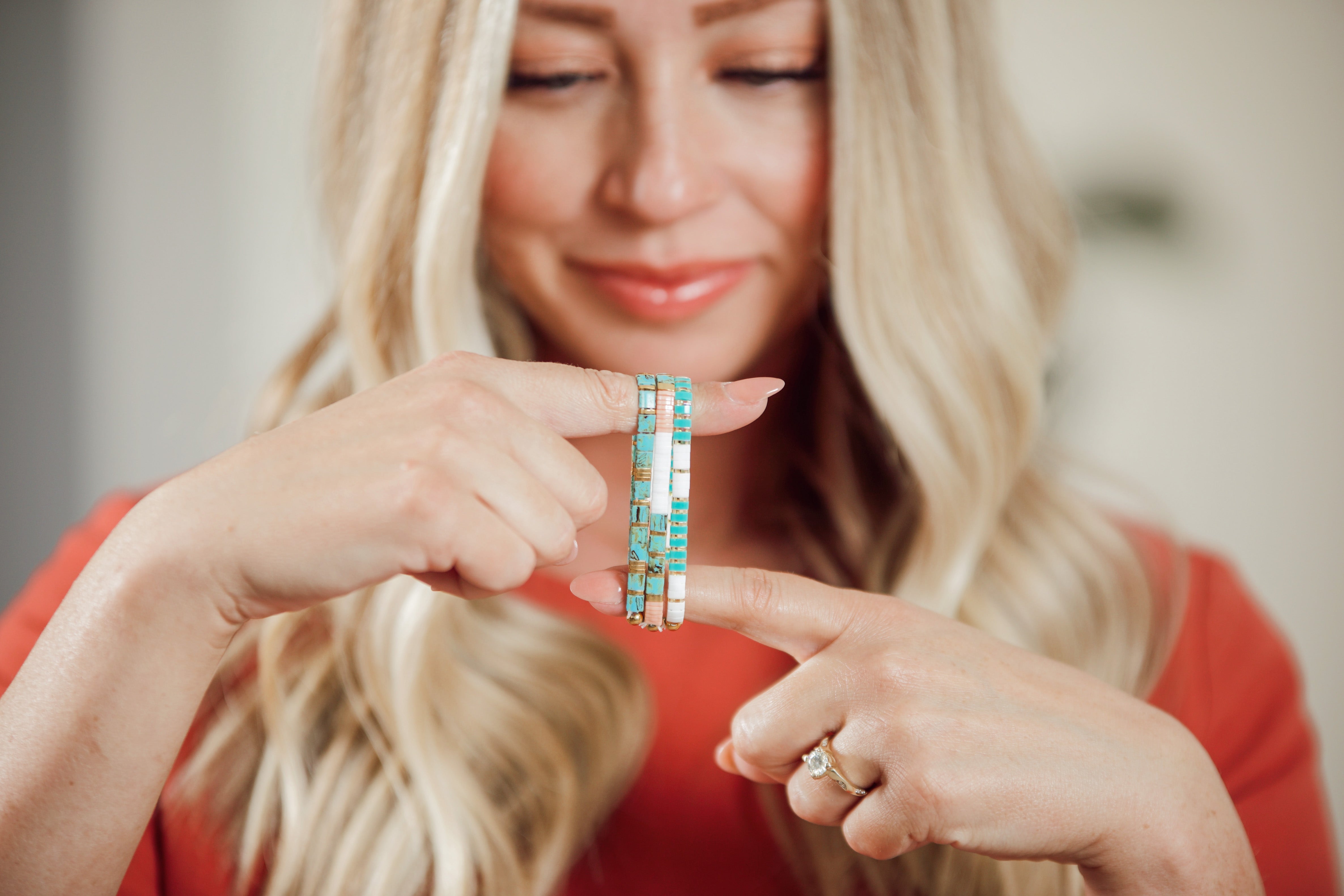
Crystal cord and quality stretch elastic hold tension evenly across a row of beads and resist the fraying that happens where cord rubs against a bead's edge, which is the exact spot a weak cord gives out first. Lima Beads' stringing material guide breaks down the difference between stretch elastic, beading thread, and wire by weight and stretch tolerance, which is useful if you're deciding between materials for the first time. Mack & Rex builds its finished bracelets and kits on crystal cord elastic for this reason, paired with genuine Japanese glass Miyuki beads that the brand sources and resells rather than manufactures itself.
Worth noting if kids are part of your crafting plan: beads are small glass or plastic pieces and a real choking hazard. A supervised craft night works fine for older kids, but loose beads and finished stretch bracelets aren't something to leave within reach of a toddler or a preschooler who still puts things in their mouth. An adult should handle the loose parts.
Do You Really Need a Beading Needle?
Yes, if you want to keep your sanity past bead number twenty. A big-eye needle or a basic beading needle threads stretch cord through small bead holes in one pass instead of pinching and shoving cord through by hand.
Without one, you're forcing a soft cord end through a hole smaller than a grain of rice, over and over, and the cord frays a little more each time you try. A big-eye needle opens along its whole length so you drop the cord in rather than threading a tip, which is the detail that makes it worth the few dollars. Beadaholique's needle collection shows the range, from fine beading needles for seed beads to the wider big-eye style that works well with stretch cord and larger holes.
Can you skip it? Sure, for a handful of large-hole beads. Past that, a needle stops being optional.
How Much Does Starting Actually Cost?
Less than you'd think, once you're not buying stuff you already own. Beads run roughly $5 to $9 for a mix, a spool of crystal cord is a few dollars more, and a needle is close to free once you own one. The real spend is beads you'll actually want to wear, not tools.
If you'd rather skip the sourcing step entirely, a trio kit bundles enough beads and cord to make several bracelets in one go, which is the route a lot of first-timers take instead of buying each piece separately. Either way, the bead quality is what shows on your wrist, so it's the one line item worth not cutting corners on.
Frequently Asked Questions
What bracelet making supplies do I need for my first bracelet?
You need beads, a stretch cord or crystal elastic, scissors, and ideally a beading needle. A tray and a towel help keep beads from rolling away, but those are household items, not purchases.
Can I use regular sewing thread instead of stretch cord?
Sewing thread isn't built for the stretch and recoil a wearable bracelet needs, so it tends to stretch out permanently or snap at the knot within a few wears. Stretch cord or crystal elastic is made specifically to flex back into shape, which is why it's worth buying rather than substituting.
Do I really need a beading needle, or can I just push the cord through by hand?
You can push cord through by hand for a few large-hole beads, but it frays the cord end and slows you down fast on anything with more beads. A big-eye needle costs a few dollars and removes that problem entirely.
Is it safe to let kids help make bracelets?
Older kids can take part in a supervised craft session just fine. Beads are small glass or plastic pieces and a choking hazard, though, so loose beads and finished stretch bracelets should stay away from toddlers or preschoolers who still mouth objects, and an adult should manage the loose parts.
Does Mack & Rex ship bracelet making supplies internationally?
Yes. Mack & Rex ships internationally, with shipping and any customs or duties calculated at checkout. Free shipping applies to US orders over $100; it isn't a blanket offer, and international orders ship at the checkout-calculated rate rather than being unavailable.
Ready to stop improvising on the part that matters? Browse the Mack & Rex seed bead collection for the beads and stretch cord worth buying new, in colors you'll actually want to wear. US orders over $100 ship free, with international orders calculated at checkout.