

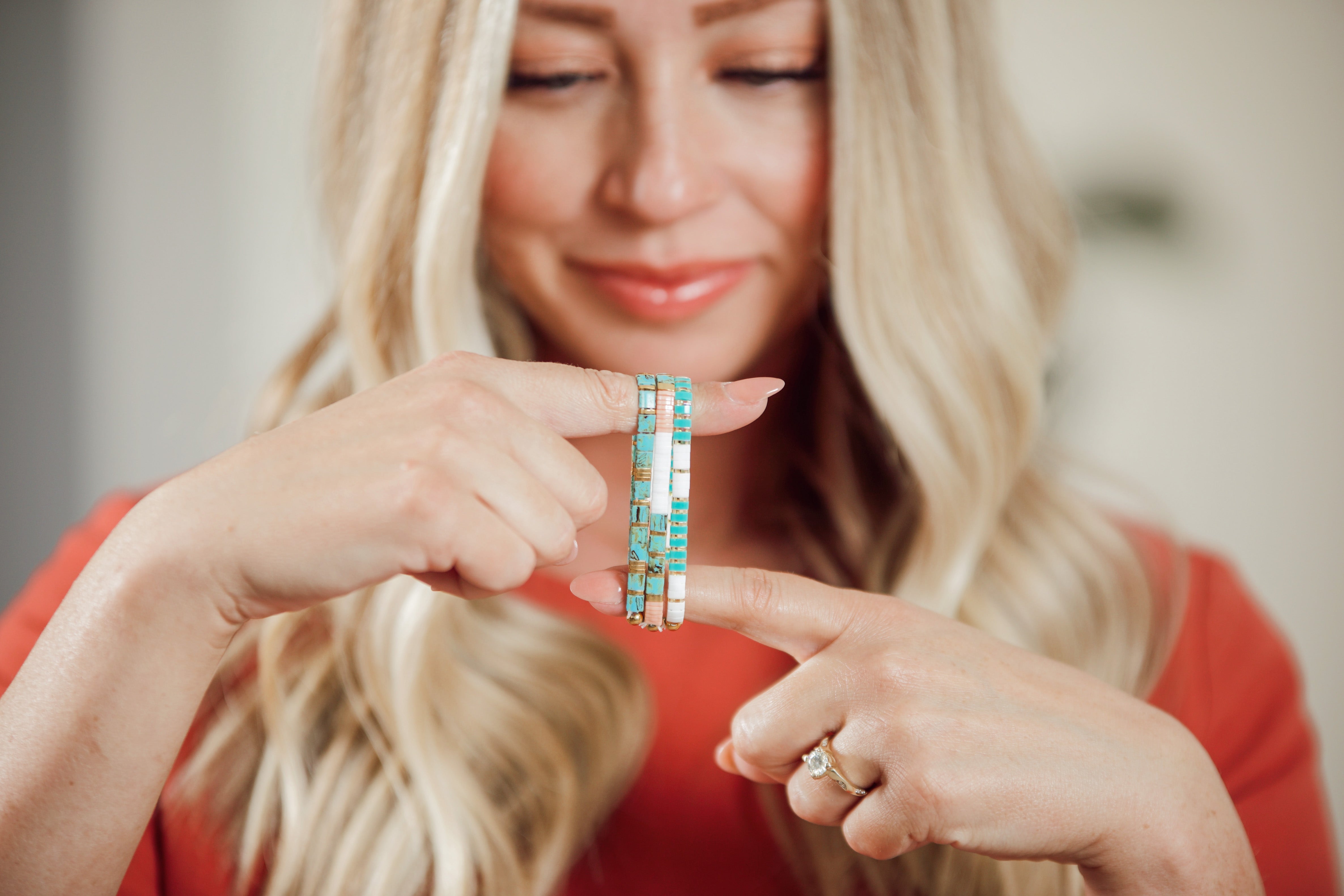
Can You Make Birthstone Bracelets With a Bead Kit?
Can You Make a Birthstone Bracelet With a Bead Kit?
Yes, and you don't need a kit labeled "birthstone" to do it. A beaded bracelet kit already gives you cord, tools, and findings; you just swap in loose beads that match each month's traditional color instead of sticking with whatever mix the kit shipped with.
This is the part people get stuck on: they assume birthstone jewelry means buying actual gemstones, cut and set by a jeweler. For a beaded bracelet, it doesn't. You're matching color and finish, not mineral composition, which means a glass Tila bead in the right shade reads as "that person's birthstone" just as well on a stretch bracelet as a mounted stone does on a ring.
What Bead Colors Match Each Birthstone Month?
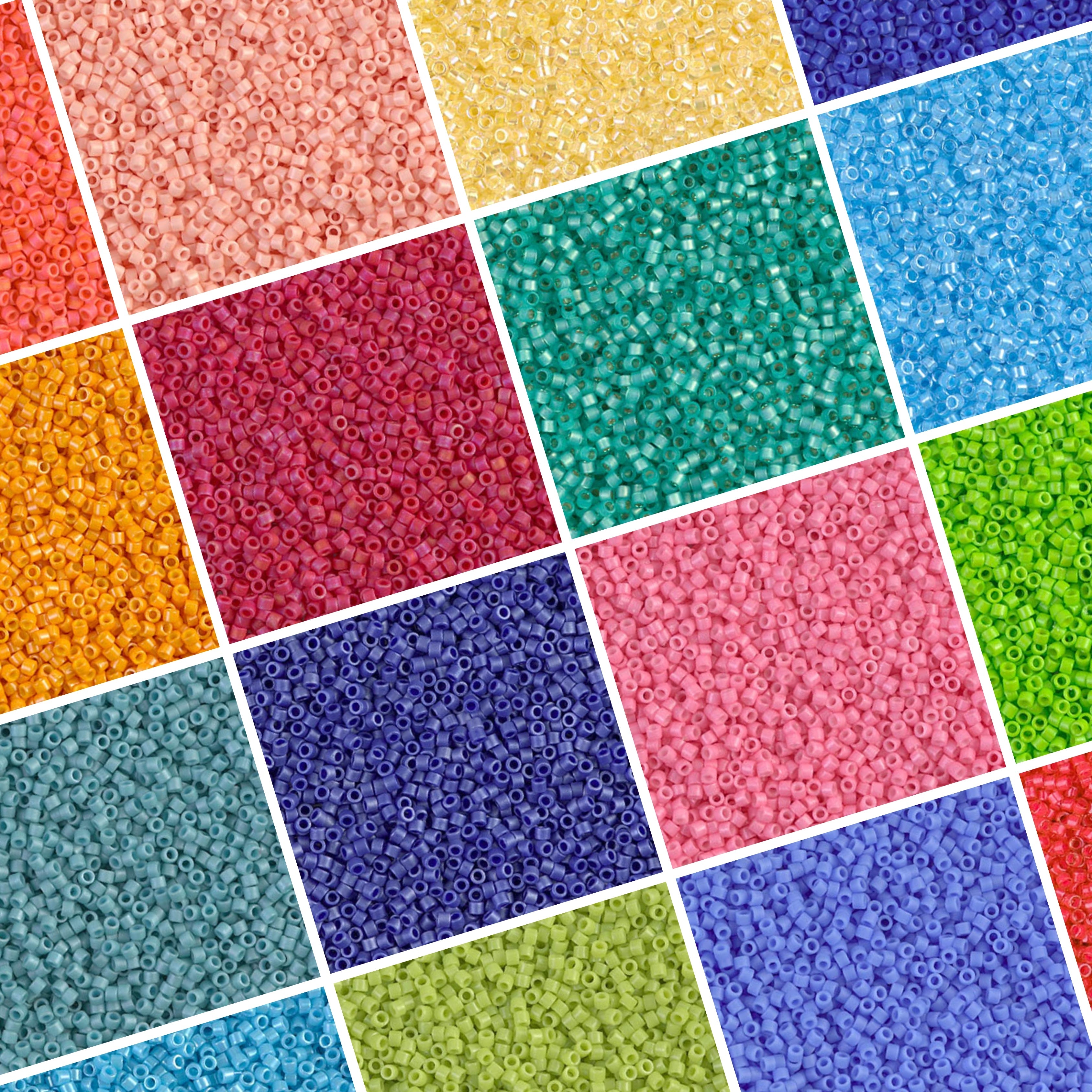
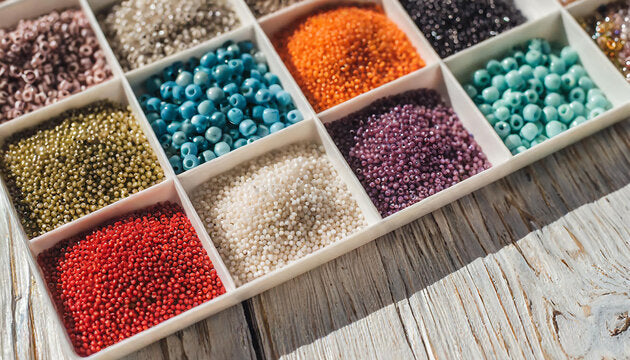
Use this quick reference as a starting point. Birthstone lists vary slightly by source, and some months have more than one accepted stone. These are the colors most buyers expect when they ask for a specific month.
- January: Garnet, deep red
- February: Amethyst, purple
- March: Aquamarine, pale blue-green
- April: Diamond, clear or satin white
- May: Emerald, green
- June: Pearl or Alexandrite, soft white/cream
- July: Ruby, red
- August: Peridot, lime green
- September: Sapphire, blue
- October: Opal or Tourmaline, pink or iridescent white
- November: Topaz or Citrine, gold/yellow
- December: Turquoise, Zircon, or Tanzanite, blue
The Wikipedia entry on birthstones is a good starting point if you want the longer history behind why each month landed on its stone. The American Gem Society's birthstone chart lays out the modern list cleanly if you just need the month-to-stone pairing without the backstory.
Why Start With an All-in-One Kit for This?
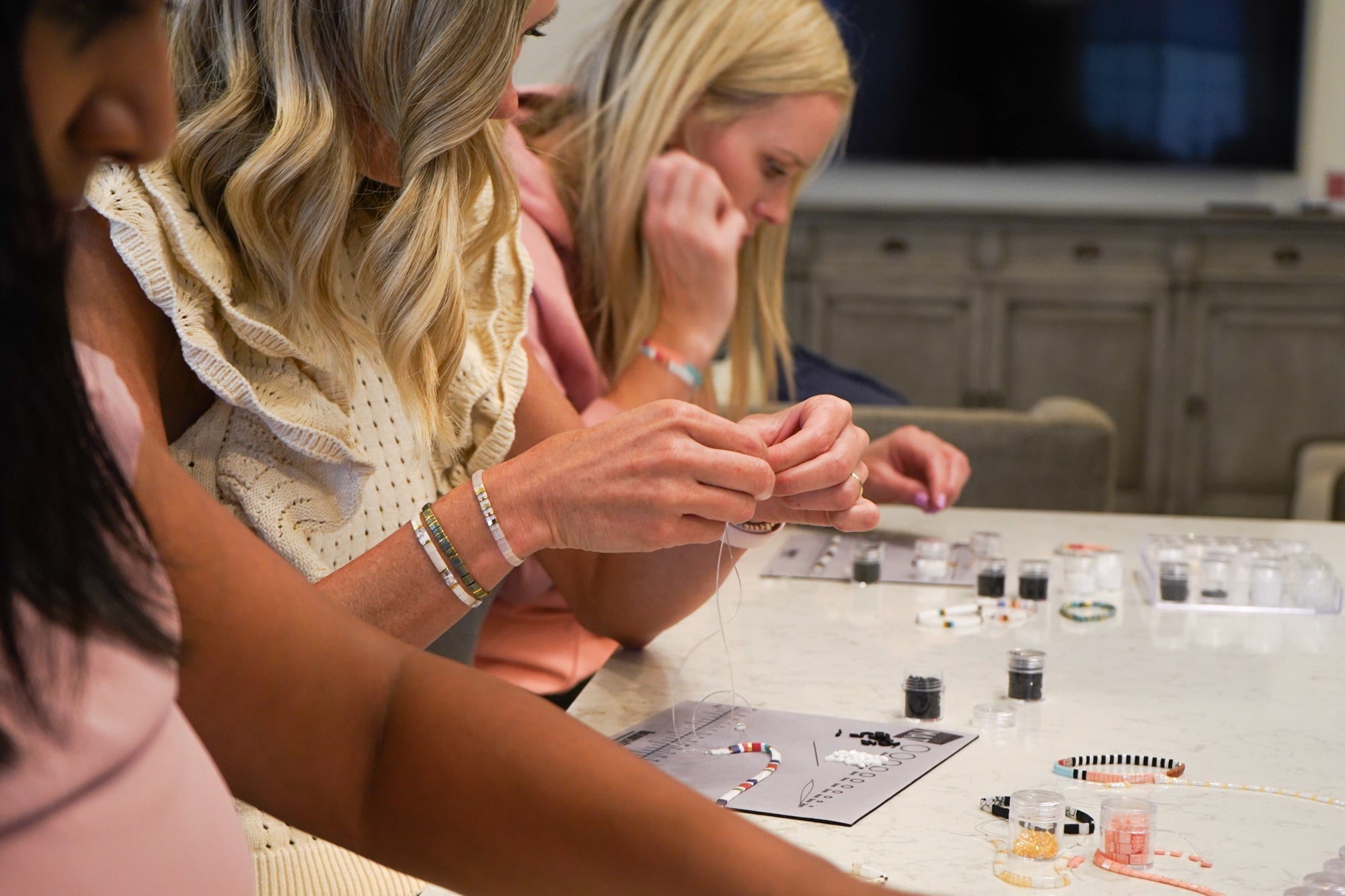
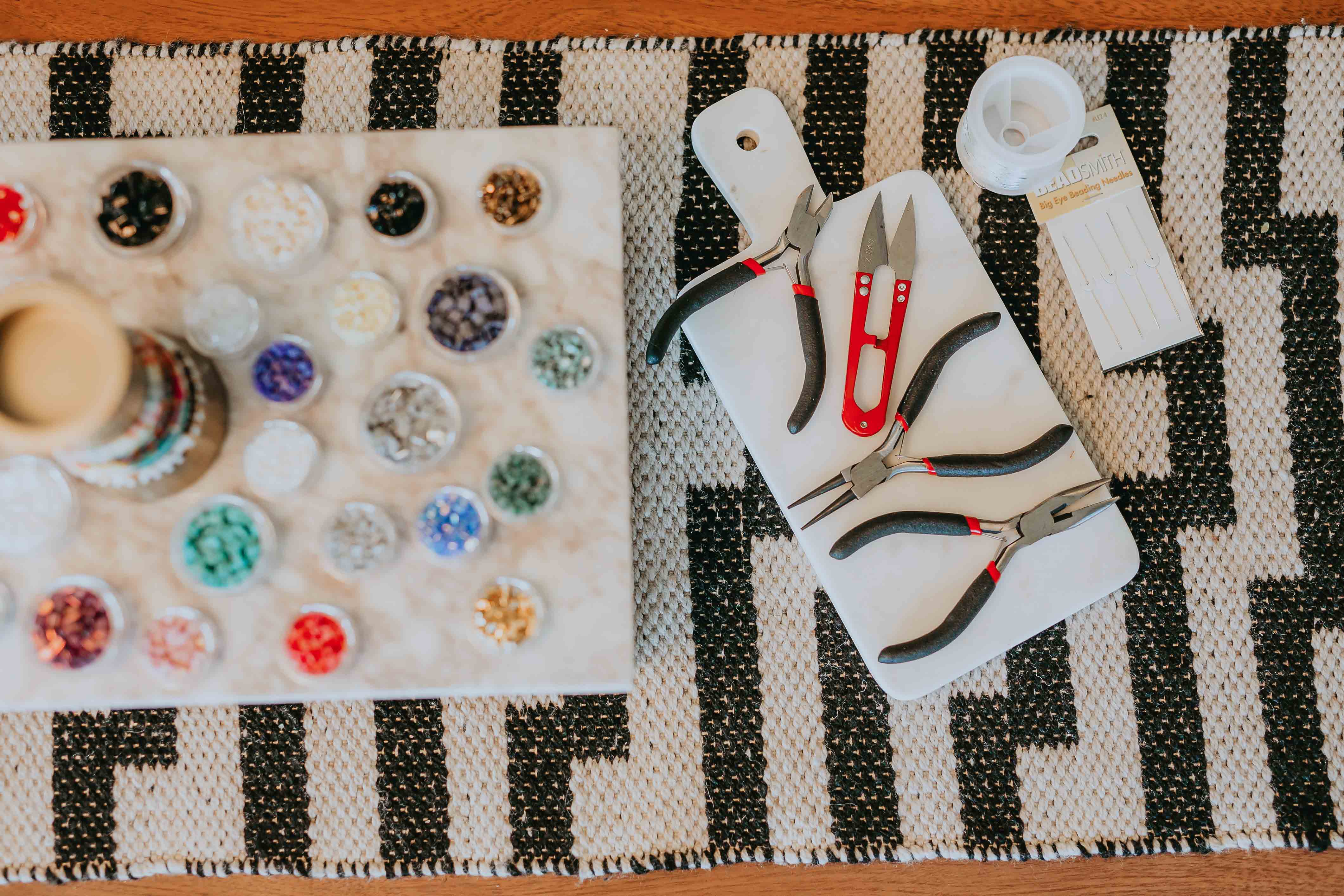
Tools are the boring part nobody wants to shop for twice. An all-in-one beaded bracelet kit already bundles the crystal-cord elastic, a locking needle, crimp beads, and knot covers it takes to actually finish a bracelet, real supplies for a real project, not a pile of loose beads with nothing to hold them together. Buy that once, and every birthstone bracelet after it is a bead swap.
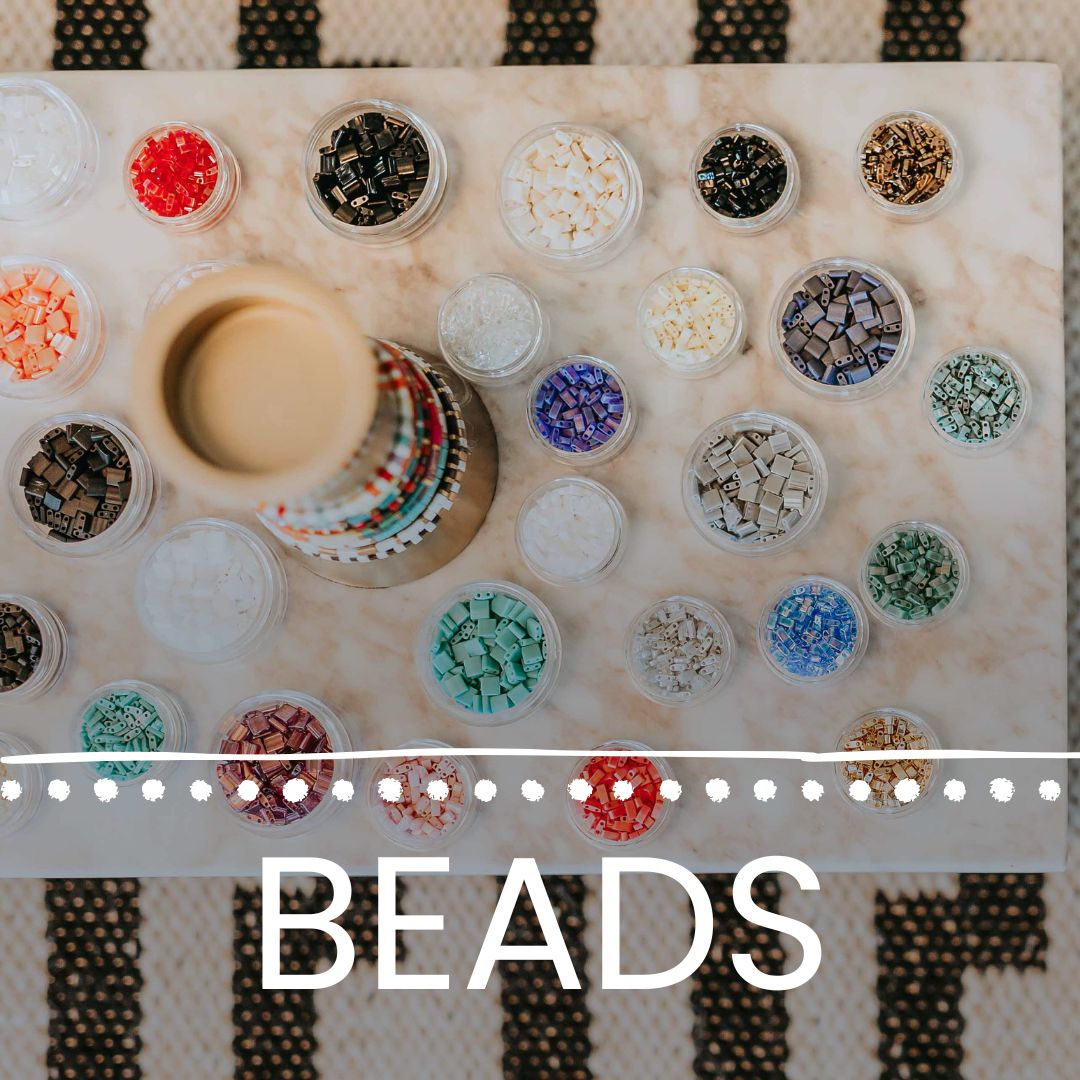
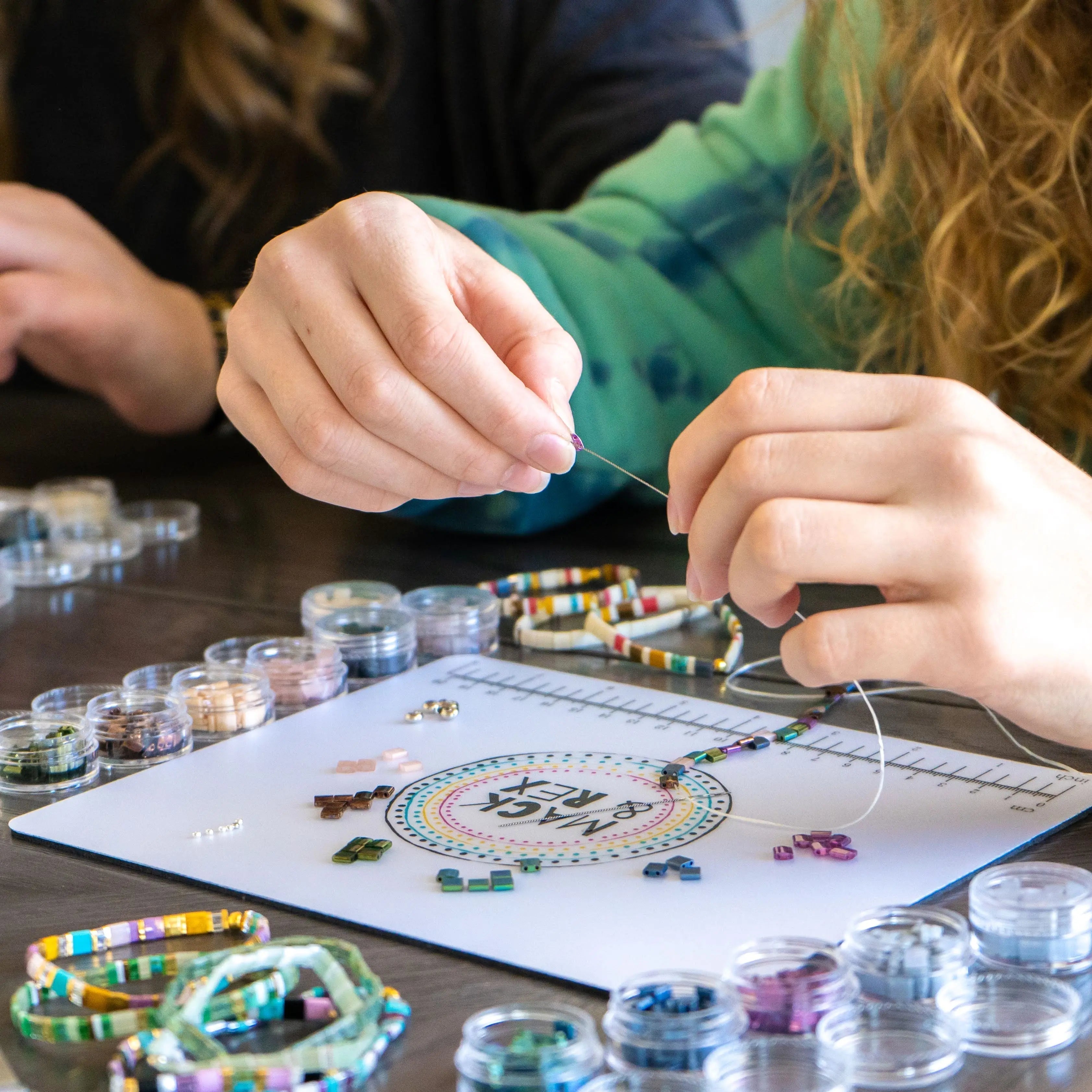
Mack & Rex's kits work this way on purpose. A trio kit ($44.99) gets you tools, cord, and enough beads for 3 bracelets right out of the box, which is a reasonable place to start if you're making birthstone bracelets for the first time and want to test the color-swap approach before committing to a bigger supply. From there, you pull in loose Tila beads in the specific finish each birthstone calls for. The 0037 White Satin Silk Tila bead is one we'd point to directly for this: it's a soft, satin-finish white that reads as a clean stand-in for April's diamond or a neutral pearl look for June, and it's sold loose so you can mix it into whatever kit you're already working from.
Worth saying plainly: Tila beads are a Miyuki product. Miyuki is a Japanese bead maker and Mack & Rex resells genuine Miyuki Tila beads in its kits and loose packs; the company doesn't manufacture the beads itself. What Mack & Rex builds is the kit around them, cord, tools, pattern, and the color curation that makes a birthstone project easy to pull off without hunting down twelve different suppliers.
How Do You Actually Swap Colors Into a Kit Pattern?
Start with the pattern that came with your kit and treat the bead placement as a map, not a fixed rule.
Most kit patterns alternate a main color with an accent, so look at where the accent sits and replace it (or the whole run, if you want a solid-color look) with your birthstone match. If the kit's pattern card calls for a repeating sequence of three colors, you can swap just one slot for the birthstone shade and keep the kit's original two colors as a frame around it. That's an easy way to make a bracelet feel personalized without redesigning the whole thing from scratch.
A few practical notes make this go smoother. Lay your birthstone-color beads out next to the kit's original mix before you string anything, so you can see how the new shade sits against what's already there. Cut your stretch cord a few inches longer than the finished wrist measurement; you need the slack to string comfortably and tie a secure knot. And if you're making several bracelets for a gift list, string one full bracelet first as a test before committing to the whole batch; it's faster to adjust a pattern on bracelet one than to notice a mismatch on bracelet six.
Is This a Good Holiday Gift Project?
It's one of the more personal gifts you can put together without a jeweler. A birthstone bracelet tells someone you knew their birth month, which is a small detail but one people notice, especially from a grandmother, aunt, or friend putting in the extra thought during the holiday rush.
For a group gift, one kit's tools stretch across an entire list of birth months since the cord and findings are reusable; only the bead color changes person to person. If you're gifting bracelets to five people with five different birthdays, a single starter-size kit plus a handful of loose bead colors covers the whole project more cheaply than buying five separate finished bracelets. The International Gem Society's birthstone-by-month guide is a useful cross-check if someone's birthstone month has more than one accepted color option and you want to pick the one that best matches beads you already have on hand.
One note on offers: Mack & Rex's buy-3-bracelets-get-1-free deal applies to finished, ready-to-wear bracelets, not kits or loose beads, so don't expect it to apply when you're buying supplies for a DIY birthstone project. It's a good deal to know about separately if some names on your list would rather receive a finished piece than a project.
What About Crafting This With Kids?
Short answer: yes, with supervision. Loose beads, crimp beads, and findings are small parts and a choking hazard, so this isn't a project to hand to a toddler unsupervised. Older kids who can handle small objects safely can help sort colors by birthstone and even string their own sections under an adult's eye, but an adult should manage the smallest components and keep younger siblings away from the work table while beads are out.
Frequently Asked Questions
Can you make a birthstone bracelet with a bead kit?
Yes. A standard beaded bracelet kit gives you the cord, tools, and findings to finish a bracelet; you just swap in loose beads that match the birthstone color for the month you're working with rather than using the kit's default mix.
Do I need a special birthstone kit, or will a regular bracelet kit work?
A regular kit works fine. The cord, needle, and crimp beads in any beaded bracelet kit are the same no matter what color beads you use, so you don't need a kit labeled as a birthstone-specific product.
What color beads match each birthstone month?
Garnet red for January, amethyst purple for February, aquamarine blue-green for March, clear or satin white for April, emerald green for May, soft white or cream for June, ruby red for July, peridot green for August, sapphire blue for September, pink or opal shimmer for October, gold or topaz yellow for November, and turquoise blue for December.
Can kids help make birthstone bracelets?
Older kids can help under adult supervision since the beads and findings are small parts and a choking hazard for anyone who still puts things in their mouth. An adult should handle sorting and stringing around very young children.
Does Mack & Rex ship birthstone bead orders internationally for the holidays?
Yes. Mack & Rex ships internationally, with shipping and any customs or duties calculated at checkout. Free shipping applies to US orders over $100, so it's worth planning holiday orders early if you're shipping outside the US.
Ready to build the first one? Grab the 0037 White Satin Silk Tila bead for an April or pearl-toned bracelet, or browse the full lineup of kits and loose colors in the Mack & Rex collection to match every birth month on your gift list. US orders over $100 ship free; international orders ship with duties calculated at checkout.

