

Can You Mix Heishi Beads With Tila Beads in One Bracelet?
Can You Mix Heishi Beads With Tila Beads in One Bracelet?
Yes. Heishi and tila beads mix well in the same bracelet because both sit flat against the wrist rather than round like a seed bead, so the pairing reads as deliberate texture, not a grab-bag of leftover beads. The real adjustment is cord: pick a stretch cord thin enough for tila's narrow holes, and it will handle heishi's wider single hole without any issue.
What's Actually Different Between Heishi and Tila Beads?
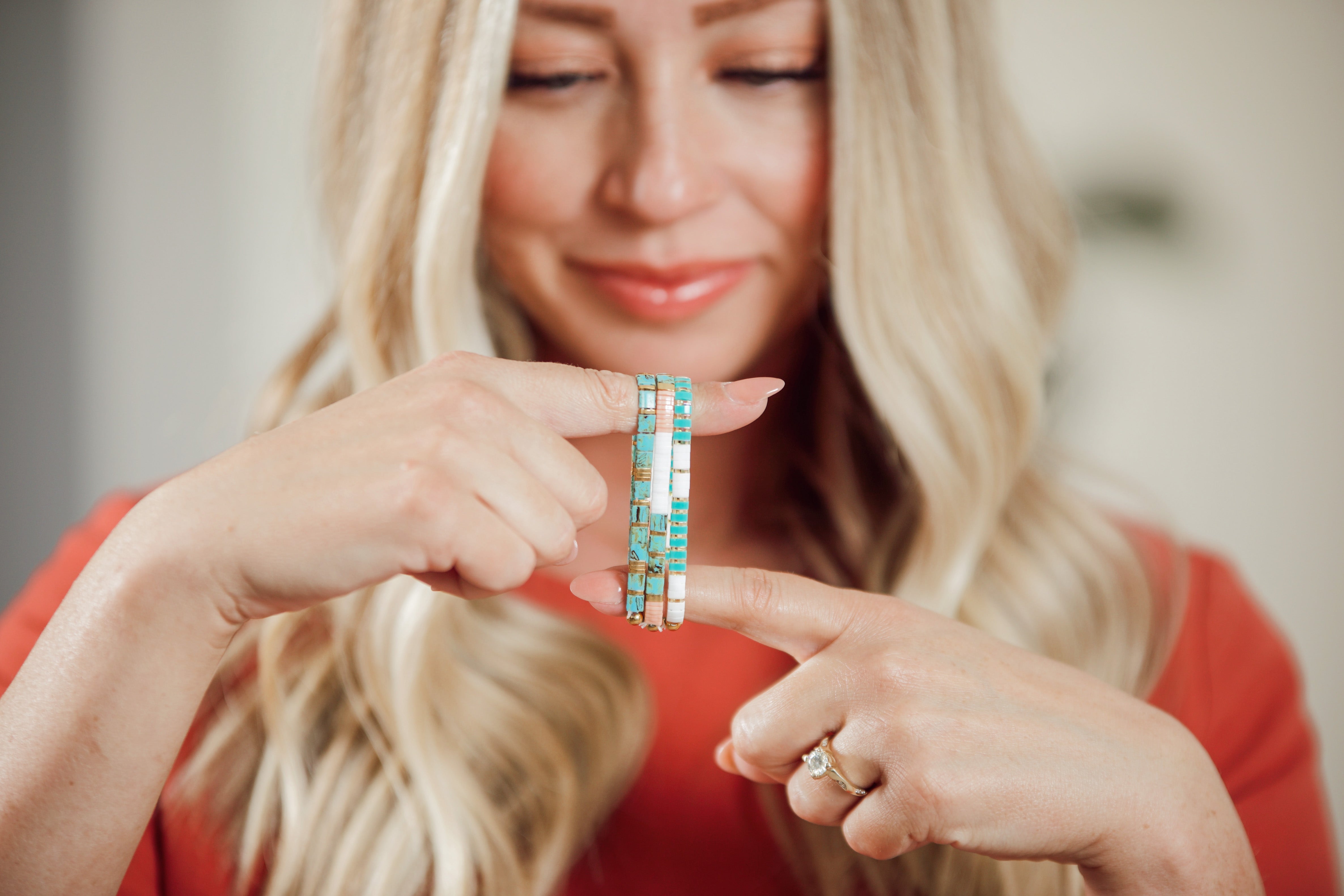
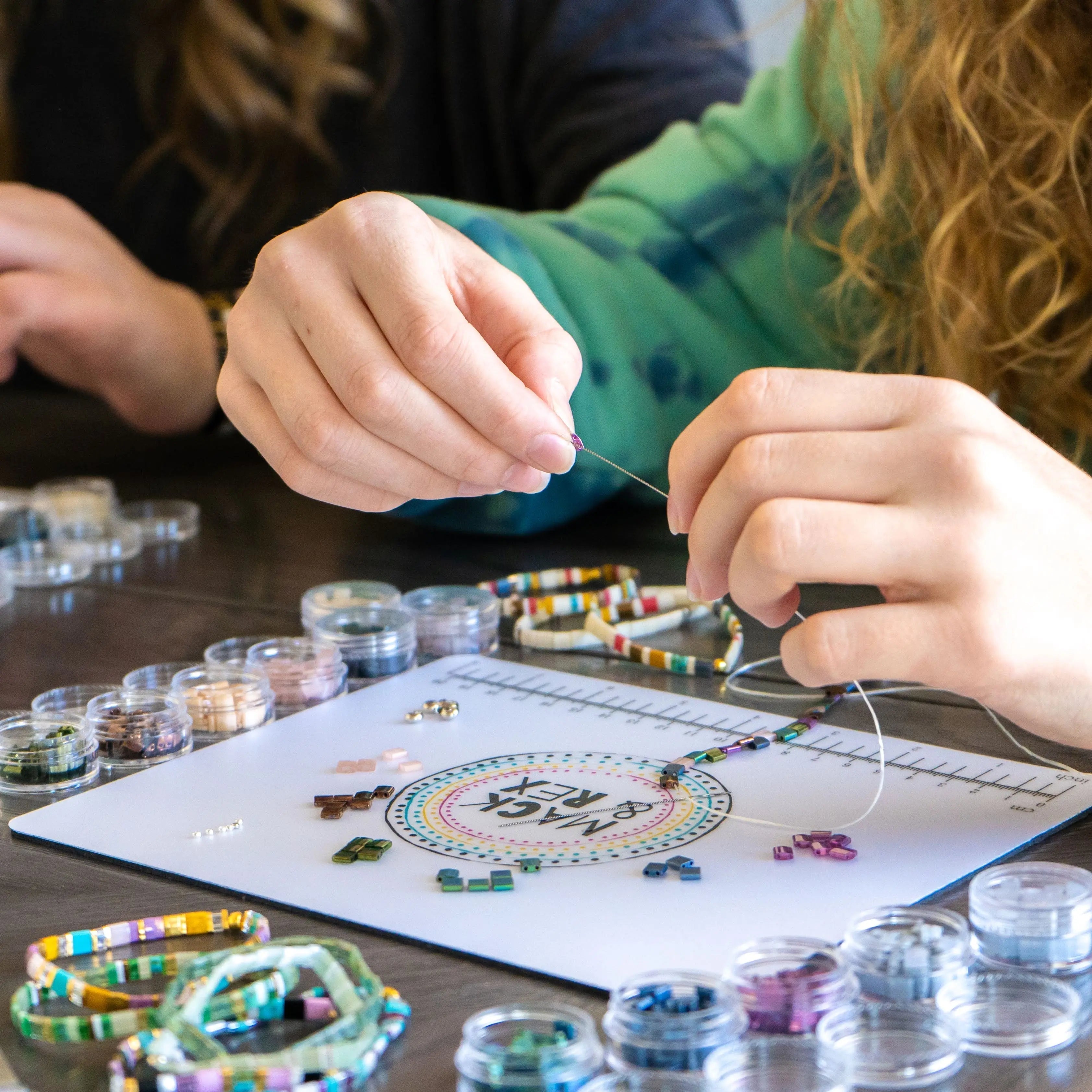
Shape and hole count. Heishi beads are flat discs, around 6mm across in the strands Mack & Rex carries, with a single hole punched through the center. Tila beads are flat squares, roughly 5mm per side, made by Miyuki in Japan with two small parallel holes, not one. That second hole is tila's whole identity. It's what lets the bead sit flush and non-spinning in loom and ladder-stitch patterns, where a single-hole bead would twist.
Worth knowing: the name "heishi" has real history behind it. Traditional heishi beads were cut by hand from shell or stone, a craft with deep roots in Southwestern and Native American jewelry, as background on heishi beads covers in more depth. The polymer clay discs in the Mack & Rex heishi collection are a modern, mass-producible version of that disc shape, not hand-cut shell, and they're priced and marketed as such.
Does Having One Hole vs. Two Holes Cause a Stringing Problem?
Not for a basic stretch bracelet.
Tila's second hole matters for loom work and flat peyote stitch, where two or more parallel threads keep a whole row of tiles from twisting. A simple stretch bracelet doesn't need that. You run one strand of elastic through one of tila's two holes, the same way you'd string any other bead, and save the second hole for later if you ever want to add a loom-stitch accent. Since heishi only has one hole to begin with, stringing it on that same single strand next to a tila bead is no different from stringing it next to a round seed bead.
What Stretch Cord Works for Both Bead Types?
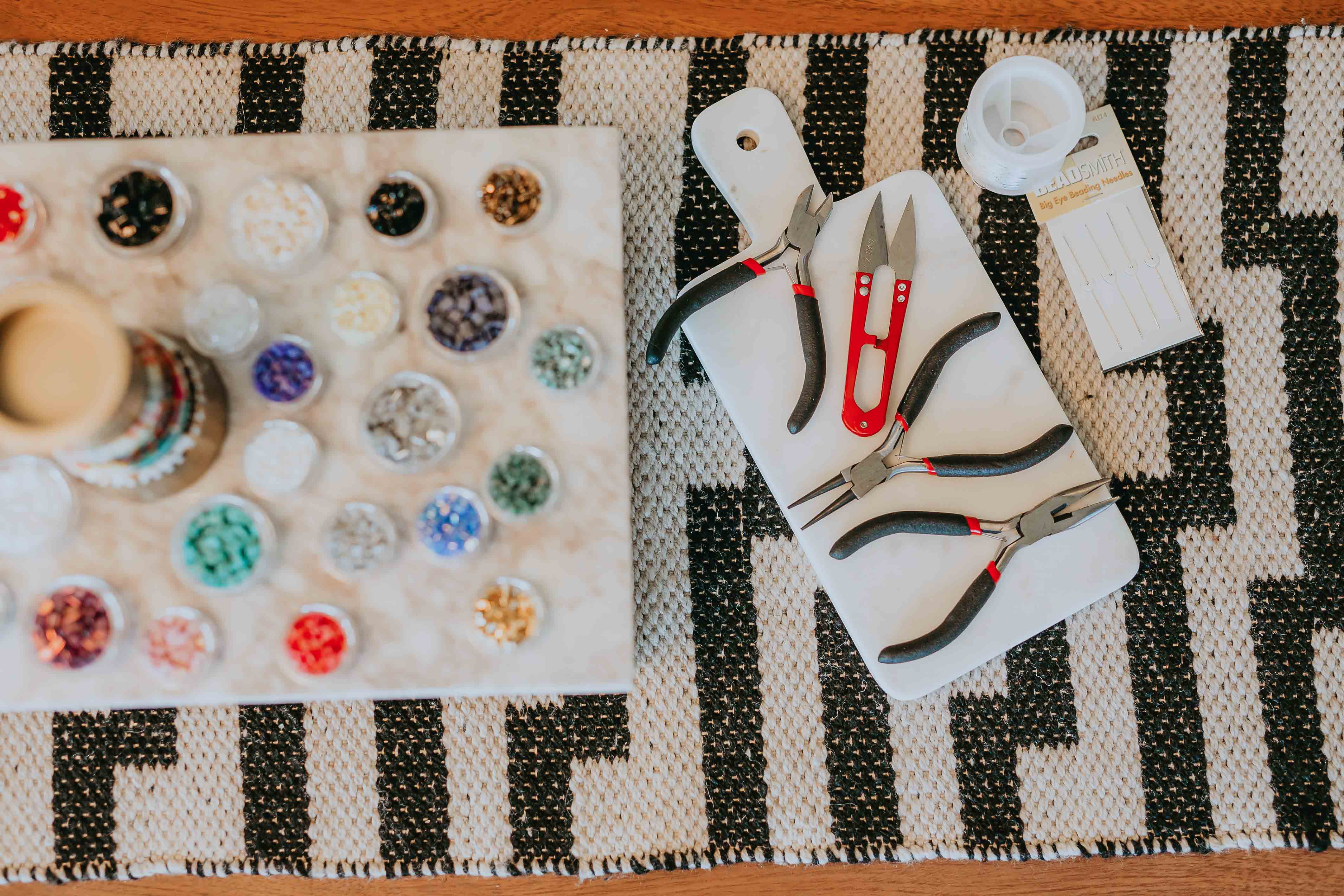
Crystal cord elastic, the same round stretch cord Mack & Rex uses for its finished bracelets. The rule that matters: size your cord to the smallest hole in the mix, which is tila's. If the cord passes through a tila bead cleanly, it will pass through heishi's larger hole with room to spare. Do it backward, pick a thicker cord sized for heishi first, and you'll find it won't thread through tila at all. The same logic applies if you're adding seed beads or spacers into the mix. Build around your tightest hole, not your loosest.
How Do You Keep the Design From Looking Mismatched?
Repetition and restraint. A disc and a square next to each other looks intentional when there's a pattern to it, and random when there isn't. A few approaches that work:
- Alternate singles. Heishi, tila, heishi, tila, straight through the bracelet. This is the easiest pattern to plan and the hardest to get wrong.
- Frame a focal section. String three or four tila beads together as the center of the bracelet, then flank them with heishi discs on either side. The tila cluster becomes the "statement," and the heishi reads as a calm border around it.
- Let one bead carry the color. Use a bright or patterned tila finish as the star and keep the heishi in a neutral like gray or pearl pink, or flip it: colorful heishi with clear or matte tila as the quiet backdrop. Two loud bead types fighting for attention is usually what makes a mixed bracelet look busy rather than styled.
- Mind the size gap. A 6mm disc next to a 5mm square is close enough to sit evenly on a strand without one bead dwarfing the other, which is part of why this particular pairing works better than, say, heishi next to a large focal bead three times its size.
Is This a Good Project to Do With Kids?
With supervision, yes.
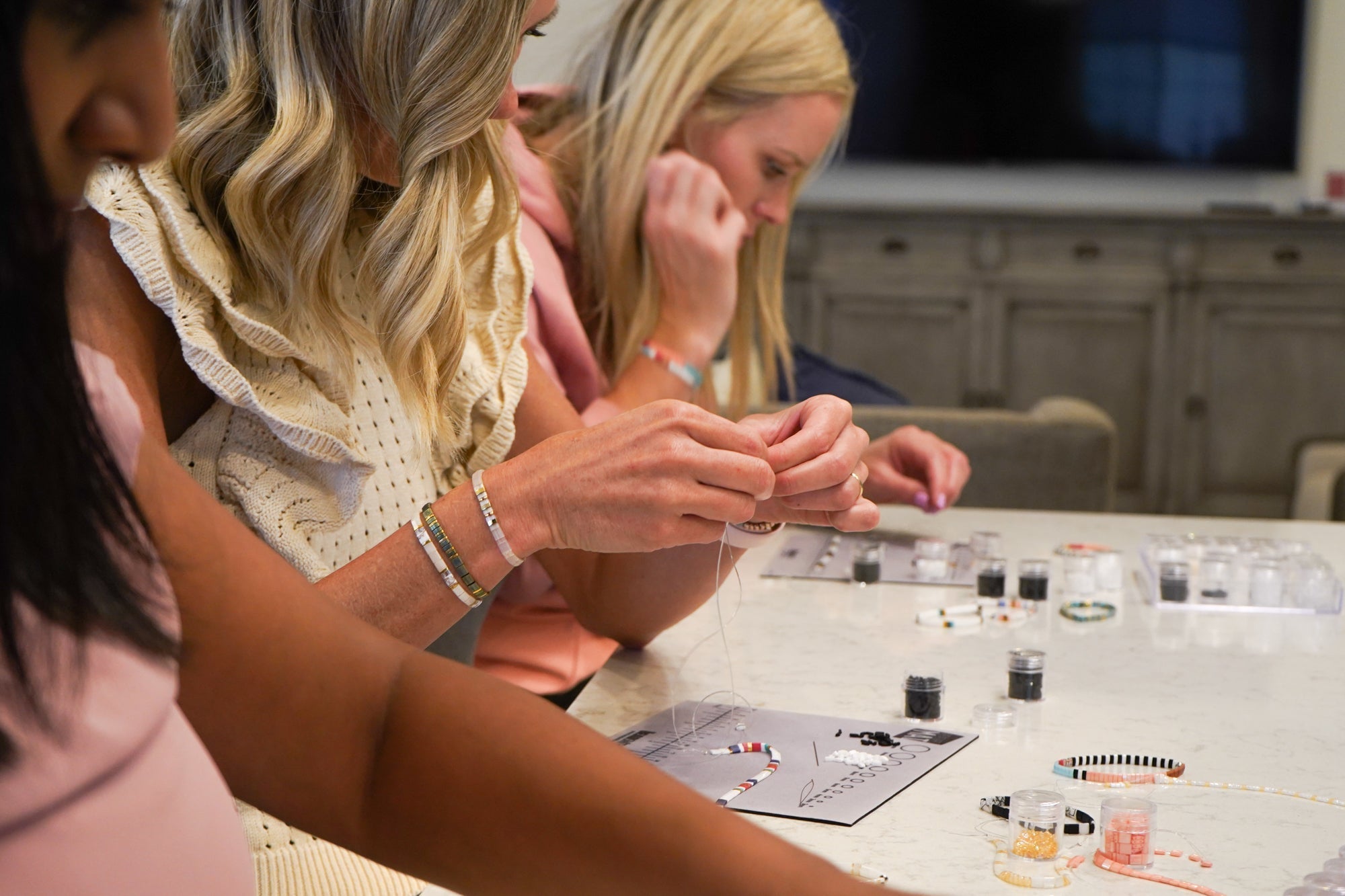
Loose heishi and tila beads are small. That makes them a choking hazard, and loose beads or DIY kits aren't a fit for young children who still mouth small objects. For older kids crafting alongside a parent or grandparent, sorting colors and planning a pattern is genuinely one of the more satisfying parts of the process, but an adult should stay in the room and keep stray beads off the floor and away from anyone too young for small parts.
Where Can You Buy Heishi and Tila Beads to Mix at Home?
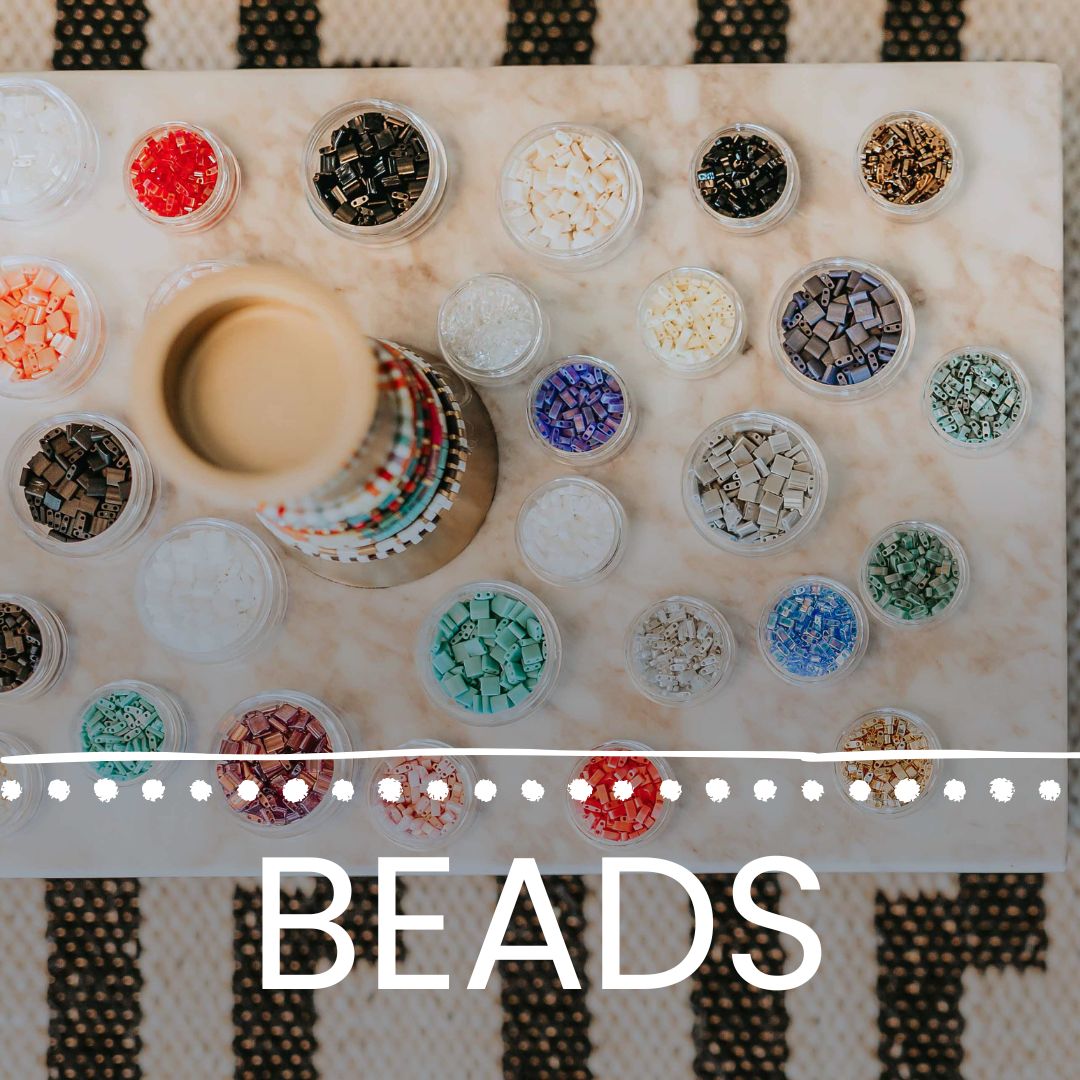
The Mack & Rex heishi beads collection carries 6mm polymer clay discs sold by the strand, generally in the $4 to $14 range depending on color and how many strands you buy. Loose Miyuki tila beads run alongside them in the all-seed-beads collection, sold by the gram, with smaller tubes starting around $5. If you'd rather skip the planning and get a kit with beads and cord already paired, the trio kits ($44.99) and the DIY Bracelet Kit Club ($36.99) both include genuine Miyuki tila beads and crystal-cord elastic, and you can add loose heishi strands from the collection above to mix in yourself. Mack & Rex sells these as a retailer of Miyuki's tila beads; Miyuki is the Japanese company that manufactures them.
For a general reference on bead hole sizes and the stringing materials that work across different bead shapes, Fire Mountain Gems' bead encyclopedia is a solid resource if you're sourcing beyond what's in your own stash, and a general primer on bead construction and stringing is on Wikipedia's bead overview.
Frequently Asked Questions
Can you mix heishi beads and tila beads in one bracelet?
Yes. Heishi and tila beads both sit flat against the wrist rather than round like a seed bead, so pairing a disc shape with a square tile reads as intentional texture, not a mismatch. The main thing to plan around is the hole difference: heishi has one hole, tila has two, and your cord choice needs to work for both.
Do heishi and tila beads use the same stringing cord?
Yes, as long as you size the cord for the narrowest hole in the mix, which is tila's. A stretch cord thin enough to pass through tila's small holes will also glide through heishi's wider single hole with no problem. Going the other direction, sizing for heishi first, is what causes a cord that won't fit through tila.
Is one bead type sturdier than the other for everyday wear?
They're sturdy in different ways. Tila beads are Miyuki glass, so they hold color and shape well but can chip if a bracelet is dropped hard on a tile or concrete floor. Mack & Rex's heishi beads are polymer clay, which flexes more and resists chipping, though any bead bracelet should still come off before heavy cleaning or workouts that involve impact.
Can kids help make a mixed heishi and tila bracelet?
Older kids can, with an adult supervising. Both bead types are small enough to be a choking hazard, so loose beads and kits aren't appropriate for young children who still put things in their mouths, and any crafting session with small parts should stay supervised regardless of age.
Does Mack & Rex ship heishi and tila bead orders outside the US?
Yes. Mack & Rex ships internationally, with shipping and any customs or duties calculated at checkout. Free shipping applies to US orders over $100; international orders still ship, just at the checkout-calculated rate rather than free.
Ready to try the pairing yourself? Shop 6mm polymer clay discs in the Mack & Rex heishi beads collection and pick up loose tila or a trio kit to mix in. US orders over $100 ship free.