

Can You Mix Rocaille Beads With Tila Beads in One Bracelet?
Can You Mix Rocaille Beads With Tila Beads in One Bracelet?
Yes, rocaille beads and tila beads combine on the same bracelet without any special equipment. Rocaille is simply the traditional name for small round seed beads, and they sit comfortably alongside Miyuki's flat, two-hole Tila beads on standard crystal-cord elastic. The only thing to plan for is the hole difference: one hole on a rocaille bead, two side-by-side holes on a tila bead, which changes how each type behaves on the strand.
A lot of crafters ask this because they have loose rocaille beads left over from another project and want to use them up alongside a new tila mix rather than buy a whole new stash. Good instinct. The two bead types aren't competing for the same job on a bracelet.
What Exactly Is a Rocaille Bead?
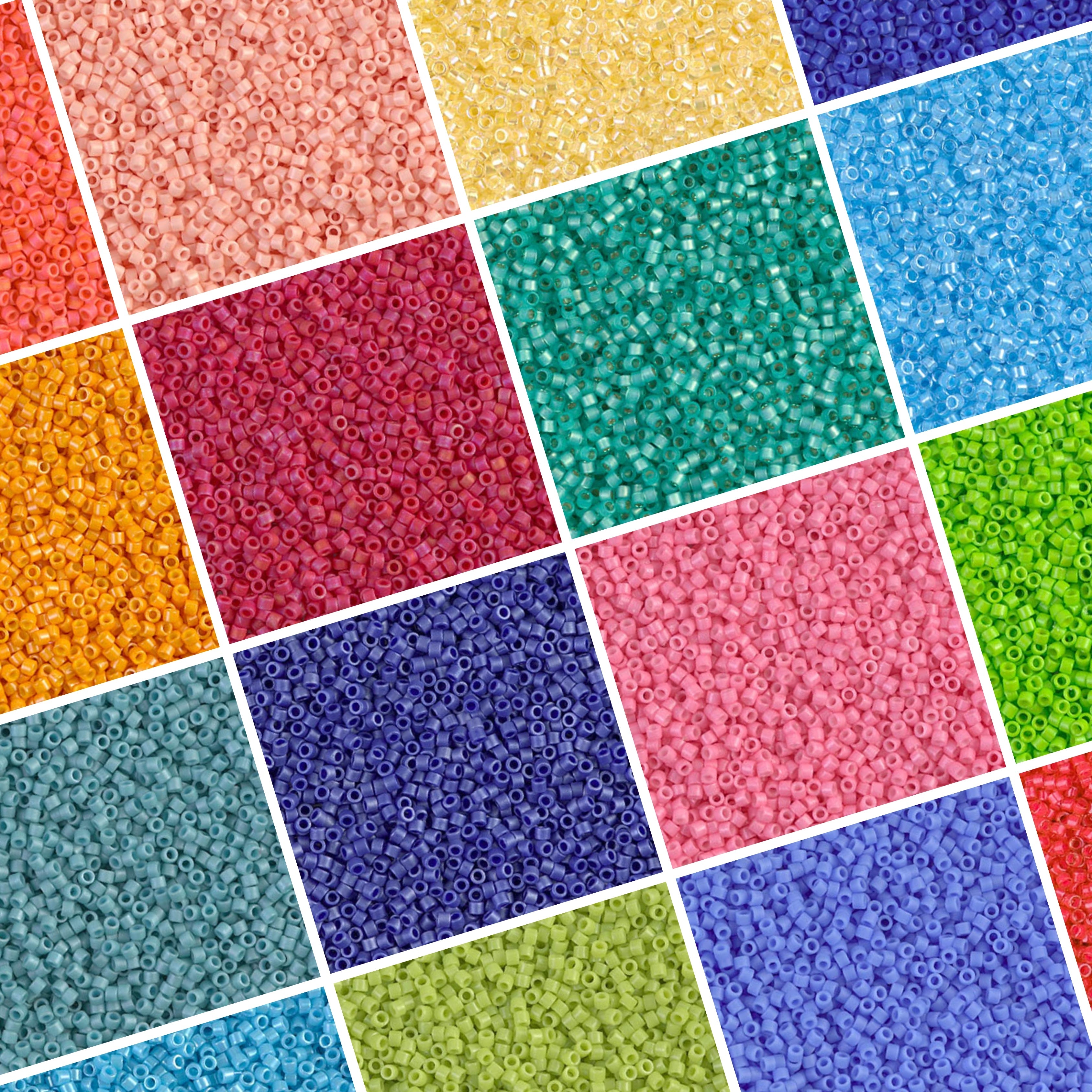
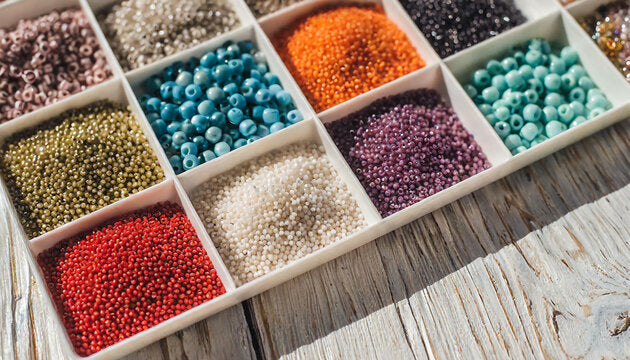
Rocaille is the older, traditional term for a small, round glass seed bead. If you've bought "seed beads" anywhere, you've bought rocaille beads, usually sized 15/0 (tiny), 11/0 (the most common bracelet size), 8/0, or 6/0 (noticeably chunkier). According to the Wikipedia entry on seed beads, these small spheroidal glass beads, also called rocailles, have been produced in Japan, India, and the Czech Republic for generations using a drawn-glass method that keeps hole size consistent bead to bead. That consistency matters once you mix bead types on one strand, since an oddly sized hole can snag your cord mid-project.
Rocaille beads have a single hole through the center and no flat sides, so they roll and rotate freely once strung. That's exactly how they're meant to behave, and exactly why they act differently from a tila bead on the same bracelet.
How Is a Tila Bead Different From a Rocaille Bead?
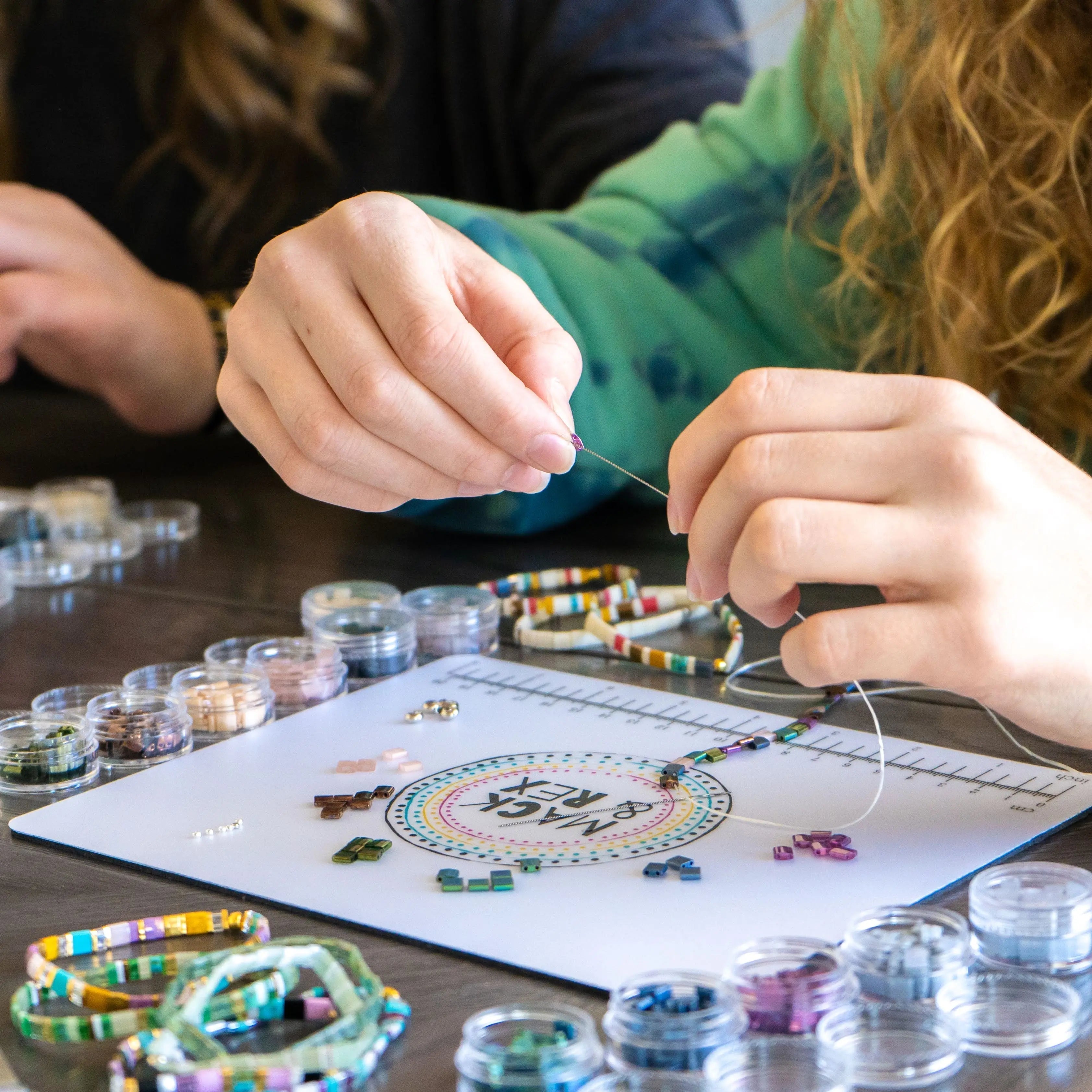
Shape and hole count, mainly. A Miyuki Tila bead is flat and square, 5mm x 5mm, about 1.9mm thick, with two parallel holes through the face rather than one hole through the center. That two-hole structure anchors the bead so it can't spin, which is why a row of tila beads lies flat and even, almost like a mosaic, rather than tumbling around the way a round rocaille bead does.
Neither shape is "better." They just behave differently under tension. A bracelet that mixes both uses rocaille beads as texture and color fill, tila beads as the flat, structured focal point.
Does the Size Match Up Well Enough to Mix?
Close enough to work, if you pick the right rocaille size. An 8/0 rocaille bead measures close to 3mm, a nice small accent next to a 5mm tila square. An 11/0 rocaille (around 2mm) reads as a fine detail bead, good for short connector runs between tila sections. A 6/0 rocaille gets close to tila scale and works as a bold, chunky contrast.
What doesn't work: treating a 15/0 rocaille (barely a millimeter) as a one-for-one substitute for a tila bead in a pattern written for uniform sizing. The scale gap is too big and the bracelet reads as unfinished. Pick your rocaille size by the role it plays, filler, accent, or contrast, not as a stand-in for the tila.
How Do You String Them Together Without the Bracelet Sitting Unevenly?
Plan in sections rather than alternating bead-for-bead. A strand that goes tila, rocaille, tila, rocaille down the whole length tends to look busy and sit a little lumpy, since flat tila beads and round rocaille beads carry such different profiles side by side.
A cleaner approach: string a run of 4 to 6 tila beads as your flat center panel, then flank it with short runs of rocaille beads (8 to 12 per side) leading out to the clasp area. That gives the bracelet one clear focal zone rather than a pattern that fights itself. Another option a lot of our customers land on: single rocaille beads as spacers between tila pairs, one or two at a time, so the tila squares stay the dominant shape and the rocaille adds color texture without crowding the design.
Color-wise, metallic or lined-finish rocaille beads tend to pick up color from an adjacent tila bead nicely, while matte finishes create more contrast. The Fusion Beads bead glossary is a useful reference for finish terminology (matte, opaque, lined, metallic), since those names show up on both rocaille and tila packaging.
What Materials Do You Need?
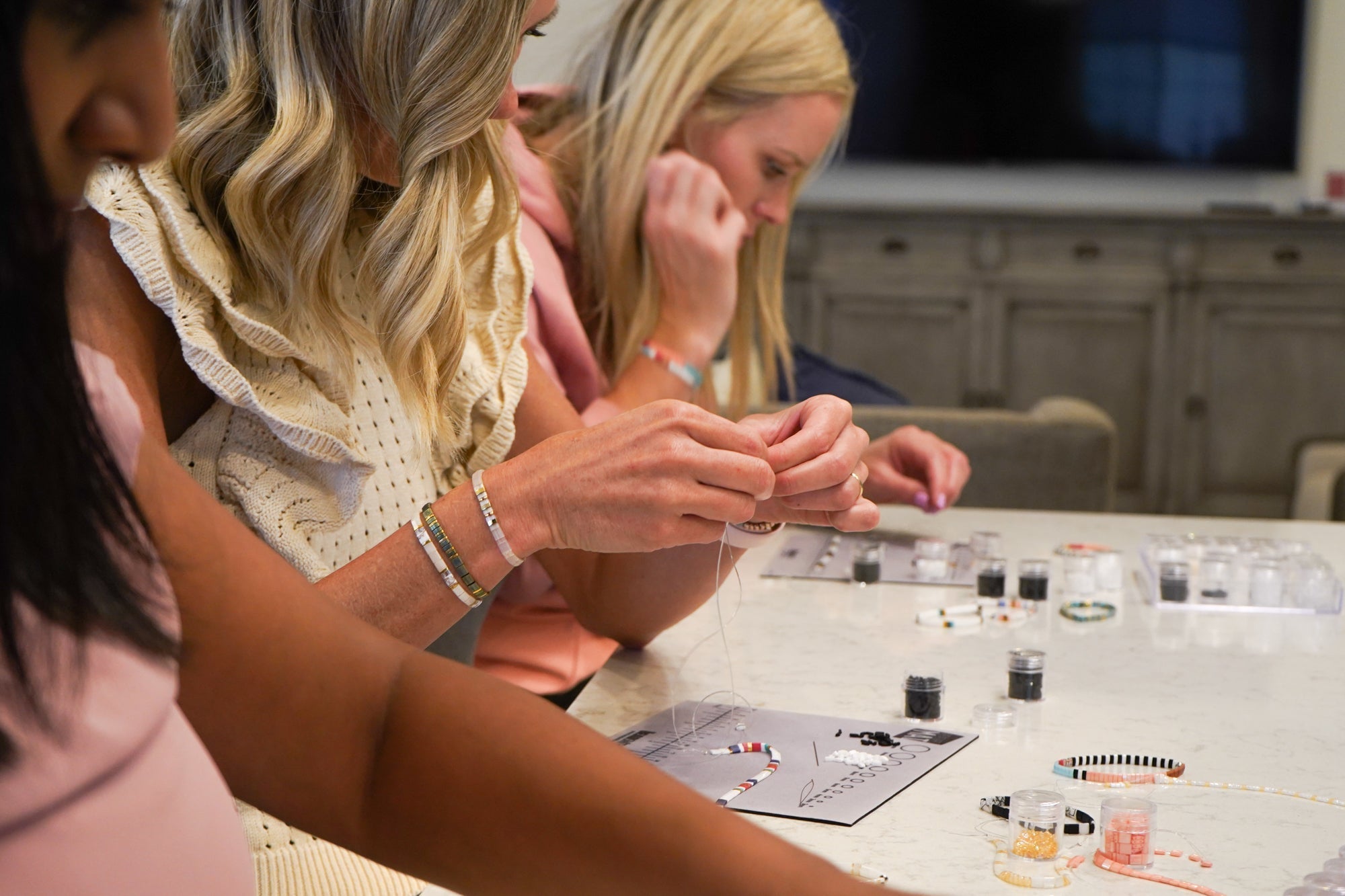
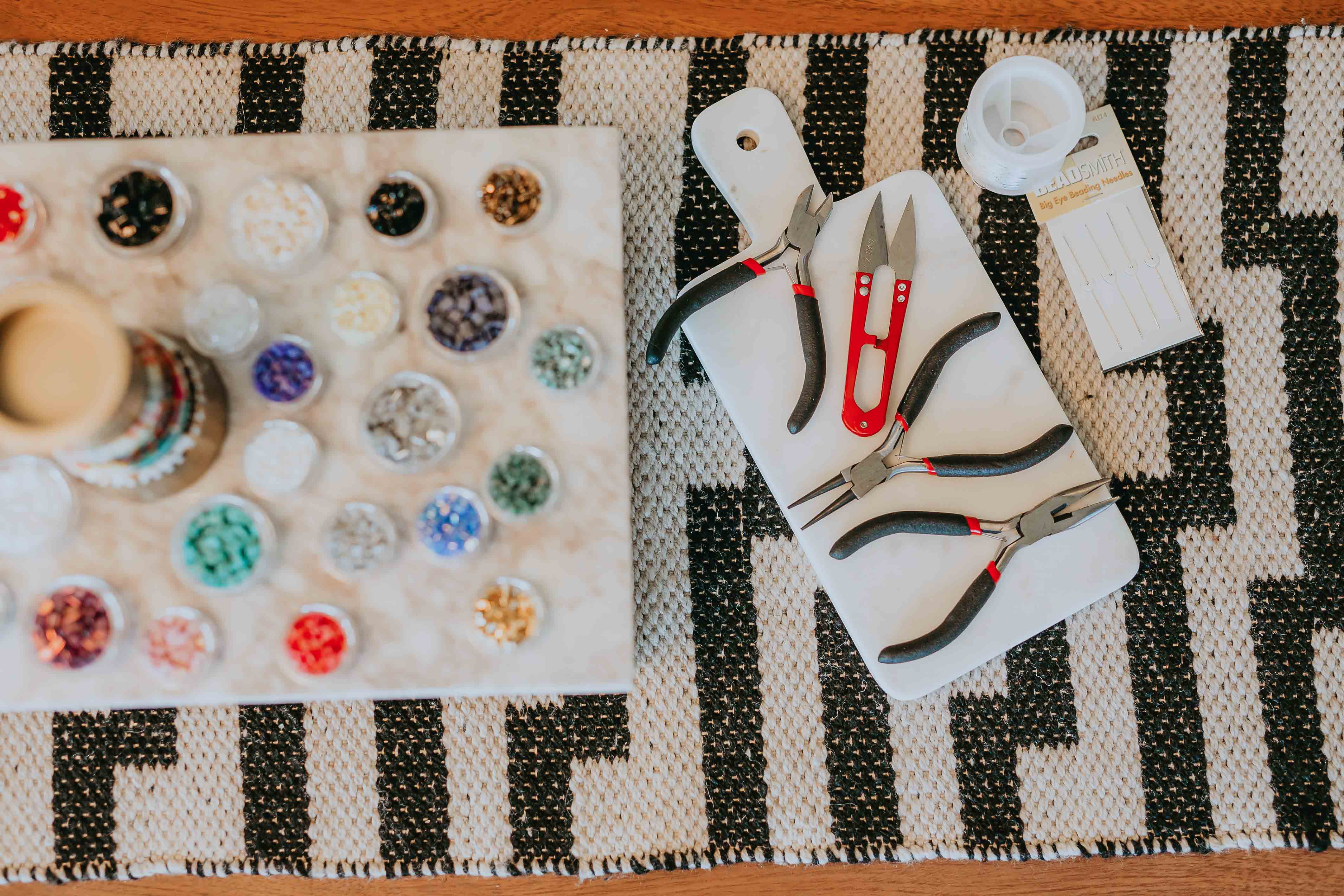
Nothing beyond what a standard elastic bracelet needs. Crystal-cord elastic (clear and strong, not the thin stuff that snaps after a month), your rocaille and tila beads in the sizes and colors you've picked, scissors, and tape or a beading needle to stiffen the cord end. No special tool is required just because you're combining two bead types. The only adjustment is in your bead order, not your supply list.
One note if kids are involved: both rocaille and tila beads are small parts and a choking hazard for young children. Keep loose beads supervised and away from toddlers, and treat this as a project for older kids and adults, not something handed to a very young child unsupervised.
Where to Get Both Bead Types From the Same Place
Sourcing matters more here, since you're matching glass quality and hole precision across two shapes. Mixing a well-made tila bead with a rough, inconsistent rocaille bead (common in ultra-cheap bulk bags) can mean uneven hole sizes that wear through elastic cord faster. The Wikipedia overview of beads notes that manufacturing precision varies widely across glass bead origins, exactly the inconsistency to avoid when two shapes share a strand.
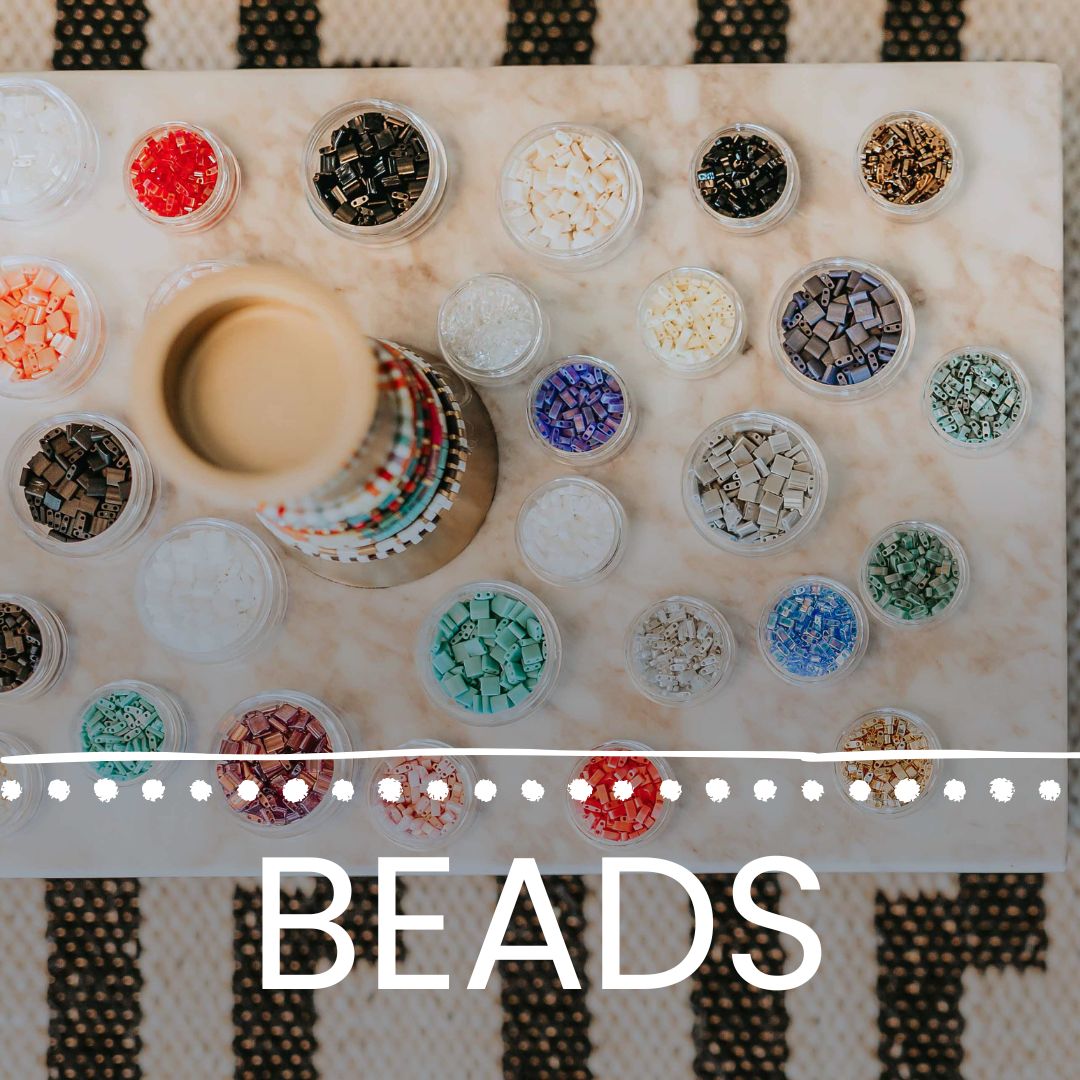
Mack & Rex carries a rotating selection of Miyuki rocaille beads across the common sizes (6/0, 8/0, 11/0, 15/0) in a wide range of finishes, alongside Miyuki Tila beads and curated bead mixes organized by color palette. Browse the full selection at mackandrex.com/collections/all-seed-beads. US orders over $100 ship free, and Mack & Rex ships internationally too, with shipping and any customs or duties calculated at checkout. New colorways drop monthly.
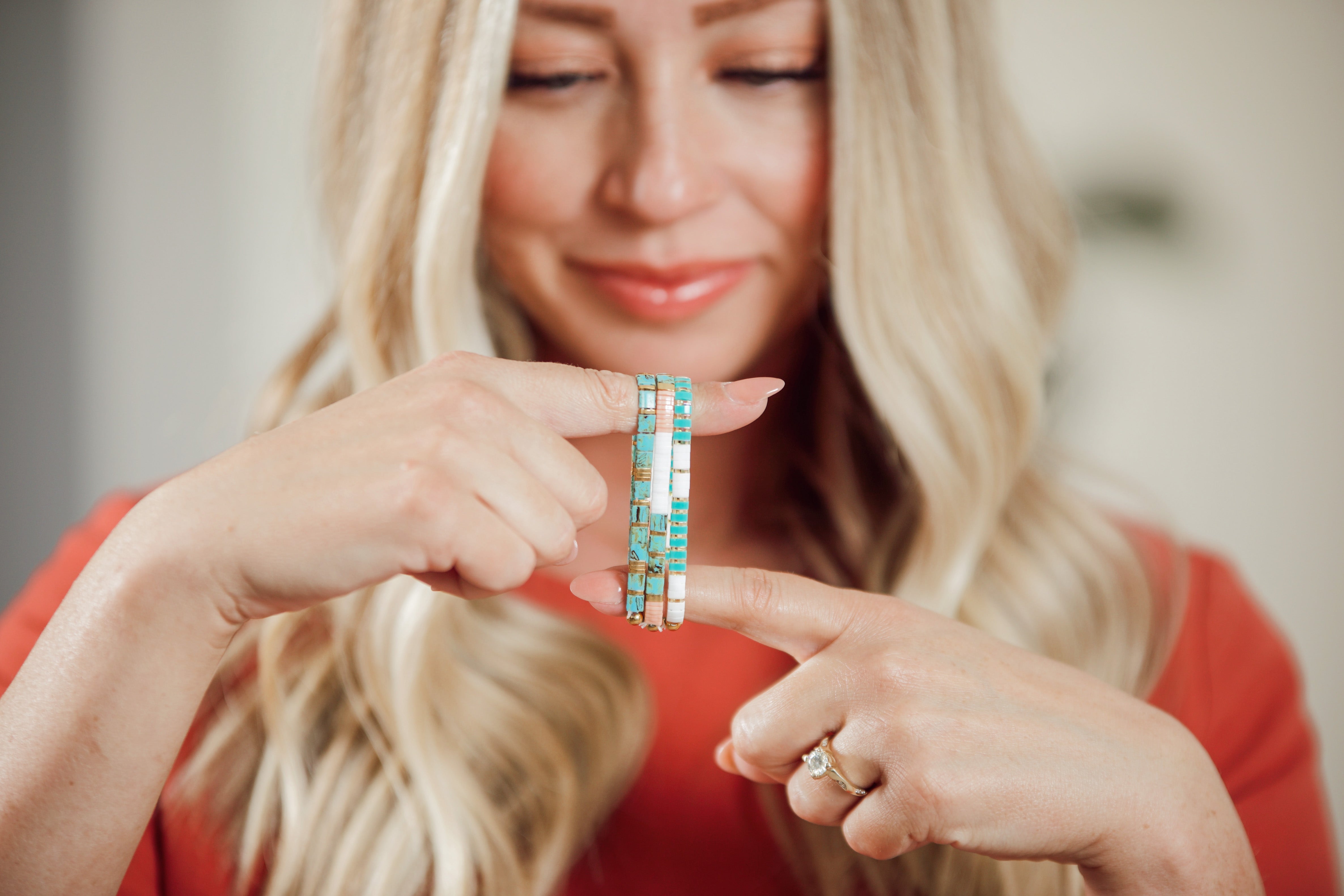
Prefer a finished piece? The ready-to-wear bracelets use the same crystal-cord elastic and come in inclusive sizing from XXS to 5XL. Buy 3 bracelets and get 1 free, no code needed.
Frequently Asked Questions
Can rocaille beads and tila beads go on the same elastic strand?
Yes. Both are small glass beads that fit on standard crystal-cord elastic. The only real planning point is the hole: a rocaille bead has one hole running through its center, while a tila bead has two holes side by side, so you string them differently within the same piece.
Do rocaille and tila beads come in matching sizes?
Not identical sizes, but compatible ones. Rocaille beads are commonly sold in 6/0, 8/0, 11/0, and 15/0, while Miyuki Tila beads are a fixed 5mm x 5mm. An 11/0 rocaille (roughly 2mm) pairs well as a small accent next to a 5mm tila; an 8/0 rocaille sits closer in scale and reads as a deliberate pairing rather than a mismatch.
Will mixing bead shapes make the bracelet sit unevenly?
It can, if you don't plan the order. Tila beads lie flat because both holes anchor them; round rocaille beads roll freely on a single hole. Group rocaille beads in short runs between tila sections (rather than alternating one-for-one down the whole strand) and the bracelet keeps an even profile on the wrist.
Is this a good beginner project?
It's a step up from a single-bead-type bracelet but still manageable for a beginner with basic elastic-stringing experience. The main skill is sequencing (deciding how many rocaille beads separate each tila section) rather than any special technique. Plan the pattern on paper first so you're not improvising mid-strand.
Where can I buy rocaille beads and tila beads to mix together?
Mack & Rex carries a rotating selection of Miyuki rocaille beads in multiple sizes and finishes alongside Tila beads and curated mixes, organized by color palette at mackandrex.com/collections/all-seed-beads. US orders over $100 ship free, and new colorways arrive monthly.