

Can You Swim or Shower With Tila Bead Bracelets?
Can You Swim in Tila Bead Bracelets?
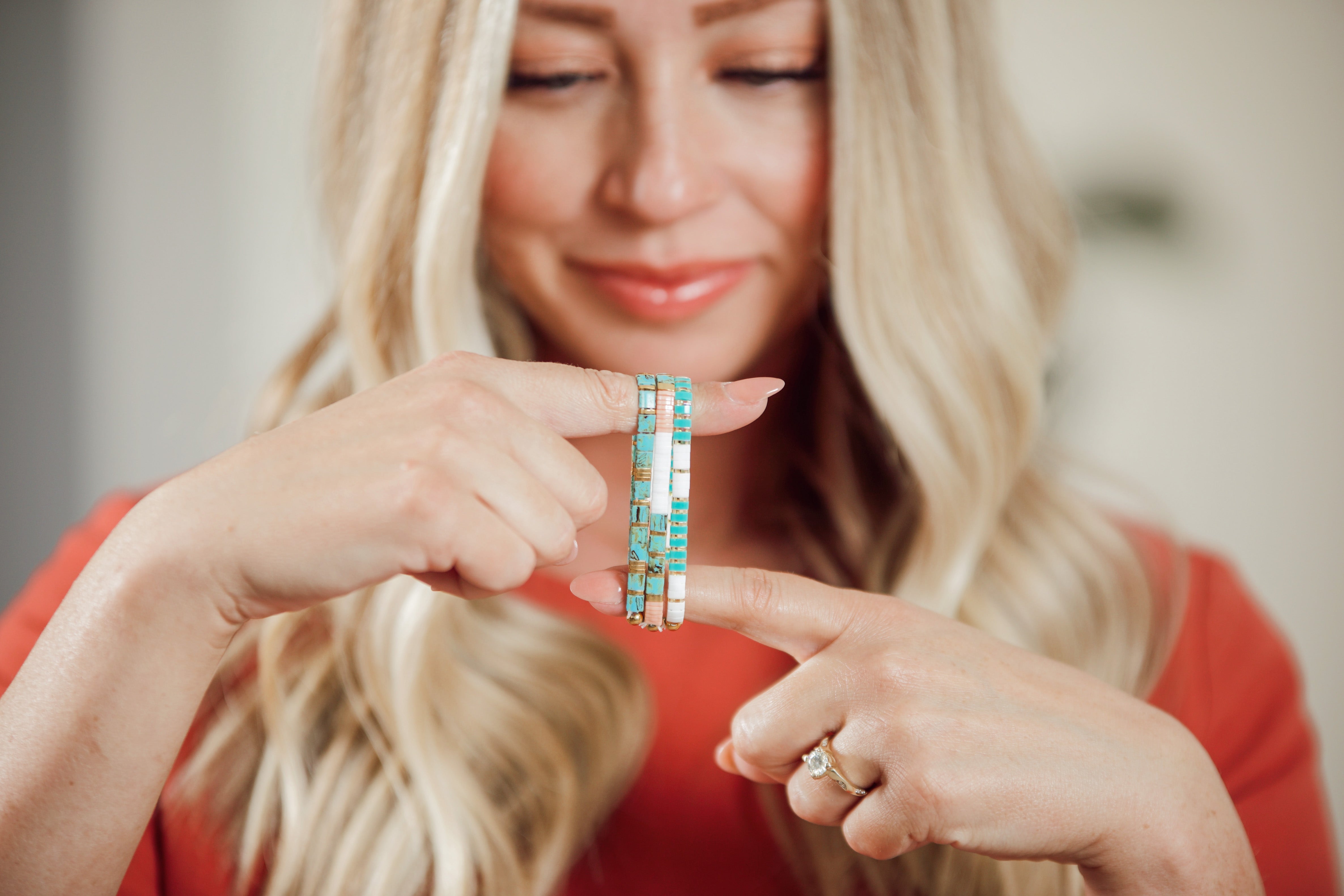
Short answer: mostly, yes, with a catch. The Japanese glass tile beads on a tila bracelet handle a swim just fine since glass doesn't absorb water or degrade from a quick dip. The part that actually takes the hit is the crystal-cord elastic and the metal crimp covers holding everything together, and those wear faster the more often they sit in chlorine, salt water, or a hot tub.
That is the honest framing worth starting with. A tila bracelet is water-resistant in the sense that an occasional splash or swim won't ruin it. It's not waterproof, and it's not built to live in a pool. Think of it the way you would think of a nice pair of leather shoes near a sprinkler: fine once in a while, not a great daily habit.
Does Chlorine Hurt the Beads, or Just the Cord?
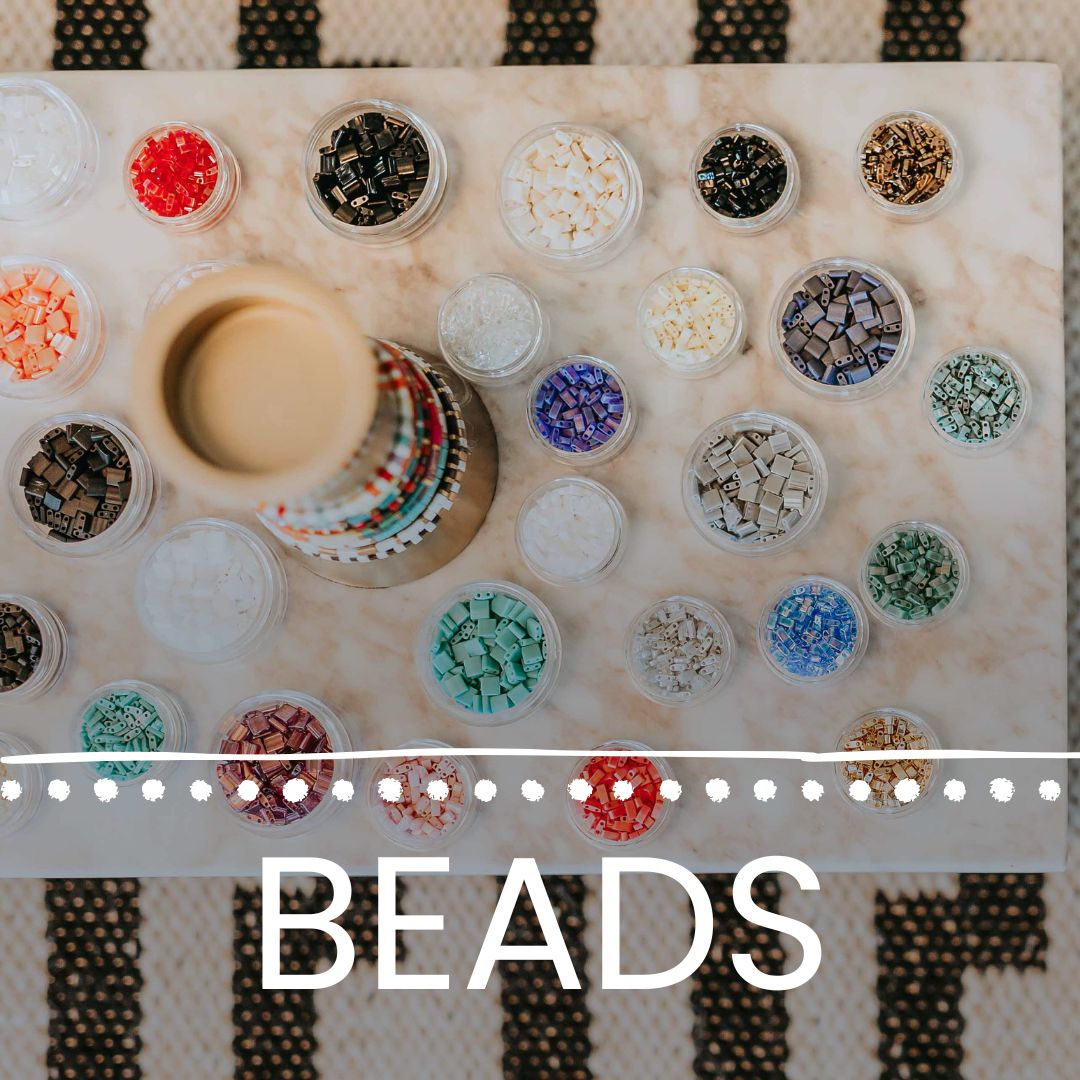
Mostly just the cord. Soda-lime glass, the type used in Miyuki Tila beads, is chemically stable and resists everyday water contact well; Wikipedia's entry on soda-lime glass notes that manufacturers add lime specifically to counter the small amount of water solubility in raw glass, which is why glass beads hold their color and surface through normal wear. Chlorine isn't going to etch or cloud a tila bead after one pool afternoon.
The crystal-cord elastic is a different story. Chlorinated water, combined with the stretching and flexing a bracelet does on a wrist, speeds up the breakdown of the cord's fibers over repeated exposure. One pool day won't snap a bracelet. A whole summer of daily pool days, with no rinsing afterward, will shorten its life by a real margin.
Is Ocean Water Worse for a Stack Than a Pool?
Salt water plays rougher. Ocean swims leave fine salt crystals that dry into the stretch cord and settle between beads, and that residue works more abrasively over time than chlorinated pool water tends to. Sand makes it worse, since a few stray grains caught against the elastic act like tiny bits of sandpaper every time the bracelet flexes.
None of that means skip the beach. It means rinse with plain water as soon as you reasonably can, rather than letting salt and sand dry in place for the rest of the day. A beach bag with a water bottle in it does more for your bracelets than any product ever will.
Can You Shower or Wash Dishes With Them On?
Yes, without much worry. A shower is brief, and it's nothing close to the sustained soak that actually wears down elastic cord. Washing dishes is the same deal: a few minutes of warm, soapy water now and then isn't what breaks a tila bracelet down.
What adds up is the repetition plus the products involved. Body wash, shampoo, and conditioner all contain oils and surfactants that can leave a slight film on glass beads and work into the cord over months of daily showers. It's not dramatic, and it's not instant. It's the kind of slow fade that makes a two-year-old bracelet look a little duller than a new one, even though nothing ever "ruined" it in a single moment.
What About Sweat During a Workout?
Sweat is water too, plus salt. A workout bracelet that stays on your wrist through a run or a gym session is taking in roughly the same kind of exposure as a quick swim, just slower and more concentrated against the skin. Mack & Rex builds its stretchy bracelets to fit snugly and stay put during a workout, which is exactly the use case the elastic cord is designed around.
One Mack & Rex reviewer who wears her bracelets daily put it this way: "The elastic has not stretched out and the tiles are as beautiful as the day I got it." That is normal wear and sweat over real time, not a lab test, and it lines up with what holds true for most stacks that get rinsed and dried promptly rather than left sweaty in a gym bag overnight.
What Actually Wears Out a Tila Bracelet Stack?
Lotion, perfume, and hairspray do more damage than water ever will. These products carry alcohols and oils formulated to break down on skin, and that same chemistry works against crystal-cord elastic faster than a swim does. Spraying perfume with bracelets already on your wrist is a bigger risk to the cord than an afternoon at the pool.
Prolonged soaking is the other real risk, not a quick splash. A hot tub for an hour, a bracelet left on in a bathtub, or jewelry forgotten in a wet gym bag for days all push water exposure past what the cord was built for. Direct sun matters too. UV and heat make stretch cord go stiff over time, which is why a bracelet left on a sunny windowsill ages faster than one stored in a drawer.
How Do You Keep a Stack Looking Good Day to Day?
Rinse first. Dry second. That two-step habit, done after pool days, beach days, and sweaty workouts, covers most of what actually protects a tila bracelet over its lifespan. A soft cloth and a few minutes of air-drying time before you stack bracelets back together is all it takes.
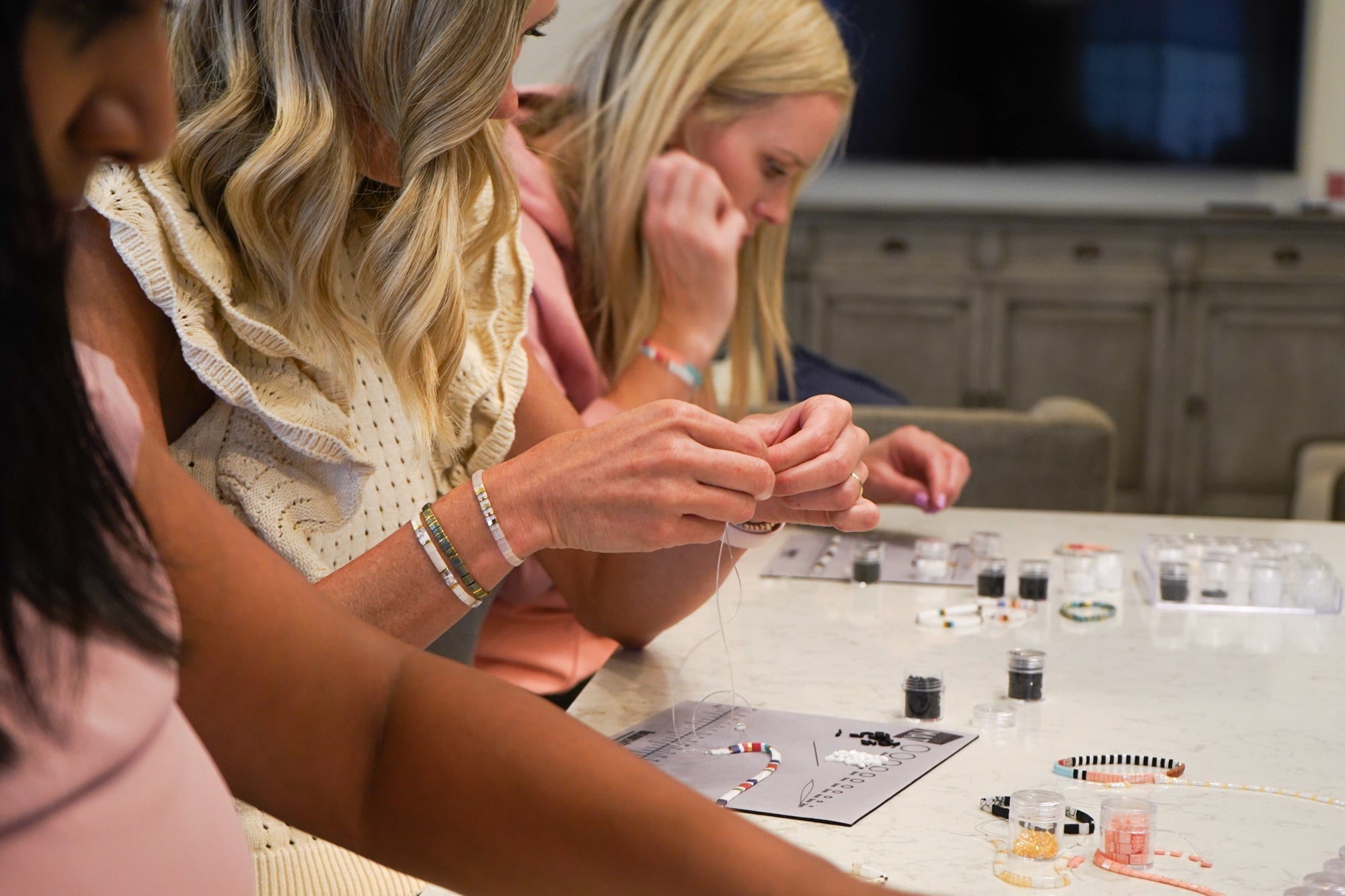
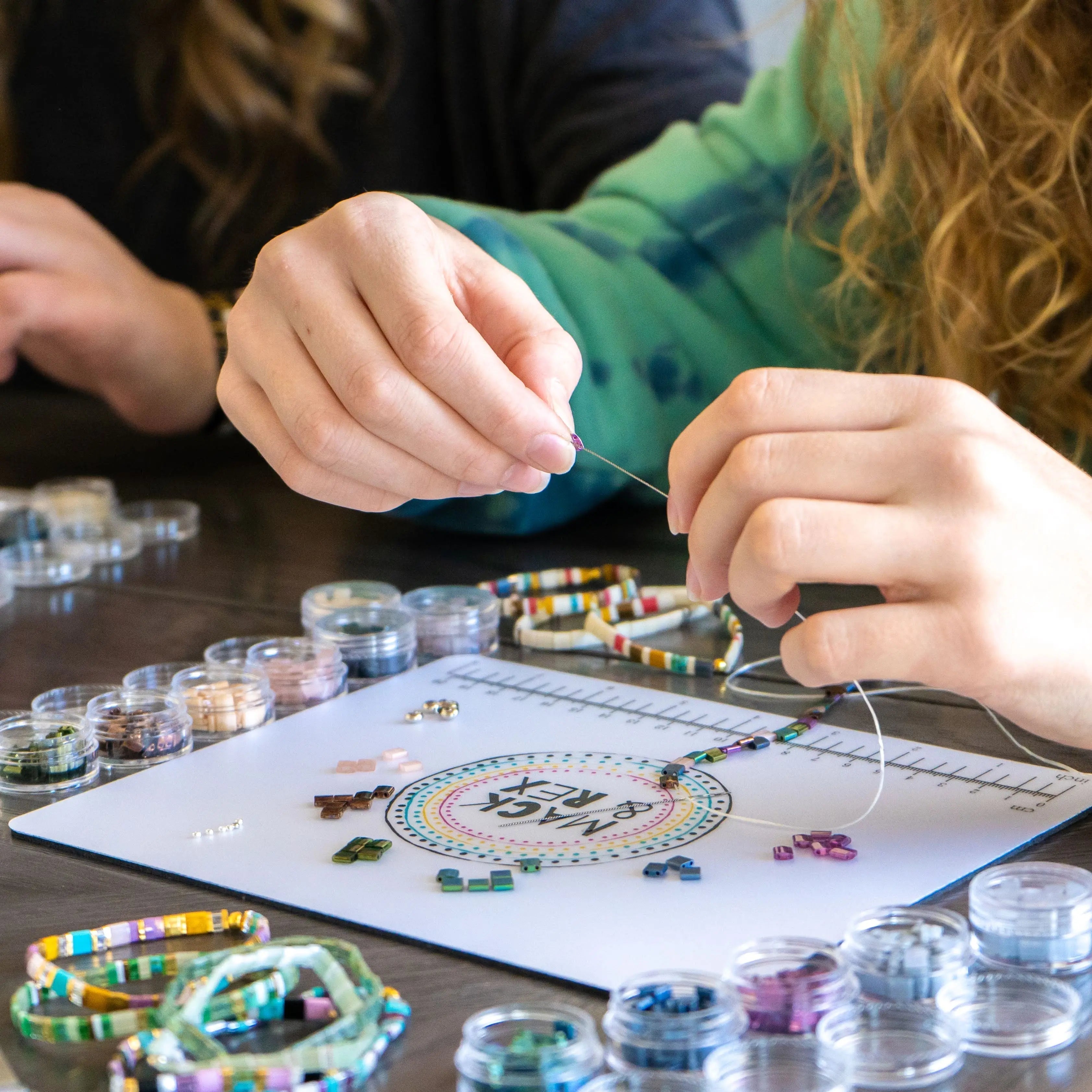
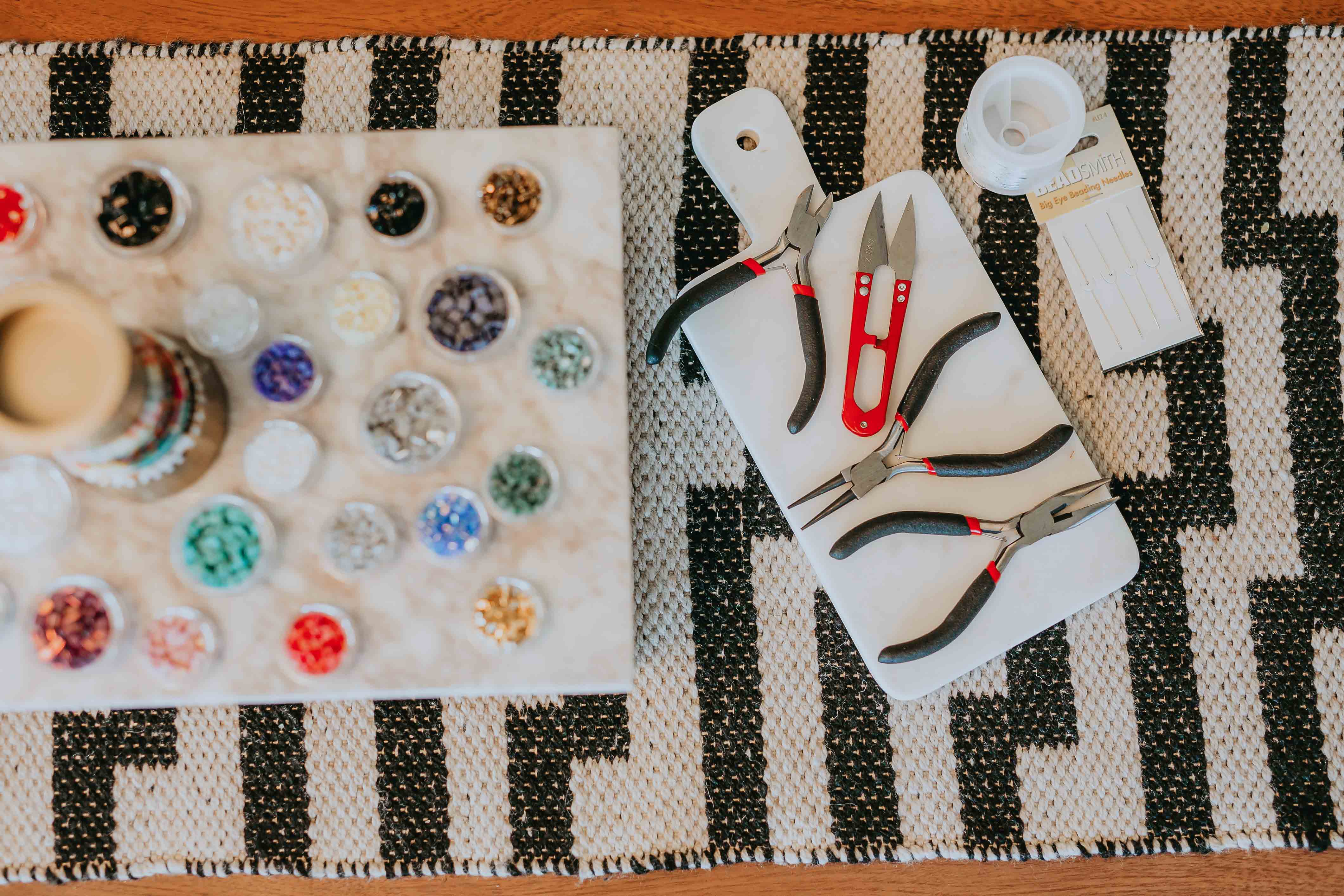
Beyond that: take bracelets off before lotion or sunscreen, store the stack flat and out of direct sun, and check the elastic every month or two for fraying or stiffness. If a cord looks worn before it snaps, that is the moment to restring rather than wait. The Ultimate Tila Bracelet Kit comes with 100 meters of 5mm crystal cord elastic along with the tools and crimp covers, so a worn bracelet or two doesn't mean replacing a whole stack. One note if kids are helping restring: loose beads and crimps are a choking hazard, so keep an adult at the table and don't leave small beads within reach of a toddler.
If a finished bracelet wears out faster than normal wear should explain, that's what the quality guarantee on the product page is for. Check the current terms before assuming a stack is done for good.
Ready to Build a Stack That Handles Real Life?
A tila bracelet stack can go through a pool day, a beach trip, and a workout without falling apart, as long as you rinse it off and give it a break from lotion and long soaks. Browse the Tila Bead Bracelet Kit that makes 80 bracelets if you want to build or restring a stack yourself, with enough beads and crystal cord to cover a whole summer's worth of wear. Want a separate set just for pool days instead of worrying about your everyday stack? The buy-3-get-1-free offer on finished, ready-to-wear bracelets (no code needed) makes that an easy add. That offer applies to finished bracelets only, not to kits or bead mixes.
Mack & Rex ships internationally, with shipping and any customs or duties calculated at checkout, and free shipping applies only to US orders over $100.
Frequently Asked Questions
Can tila bead bracelets get wet?
Yes, briefly. The Japanese glass beads are chemically stable and don't dissolve or break down from a quick splash, shower, or swim. The real limit is the crystal-cord elastic and crimp ends, which weaken faster with repeated or prolonged water contact, so rinsing and drying afterward matters more than avoiding water altogether.
Is it safe to swim in a pool while wearing tila bead bracelets?
You can, but it's not the best habit long term. Chlorine won't dissolve the glass beads, but it's hard on the stretch cord and metal crimp covers, so bracelets that go in the pool often tend to wear out sooner than ones saved for everyday wear.
Can you shower with tila bead bracelets on?
A quick shower won't ruin a tila bracelet. Occasional exposure to soap and water is fine on an already-finished bracelet, but daily showering with bracelets on adds up over time, and body wash or lotion left on the beads can dull their shine faster than water by itself.
Does salt water damage tila beads or the elastic cord?
Salt water is tougher on a stack than pool water. Salt can dry into a fine crust on the beads and work into the stretch cord's fibers, so ocean swims call for a more thorough rinse with plain water than a quick pool dip does.
How long do tila bead bracelets last with regular wear?
With normal, careful wear, many customers get years out of a stack. Keep bracelets out of extended soaks, lotions, and direct sun, rinse off chlorine or salt promptly, and the beads and elastic both hold up well. Skip that care and the stretch cord is usually the first thing to go.
For more on why glass beads hold up the way they do, see Wikipedia's entry on soda-lime glass, and for practical cord-care habits, see Jewelry Made By Me's tips for elastic bracelet stringing success.