

How to Make Matching Bracelets for Couples with One DIY Kit
How Do You Make Matching Bracelets for a Couple from One Kit?
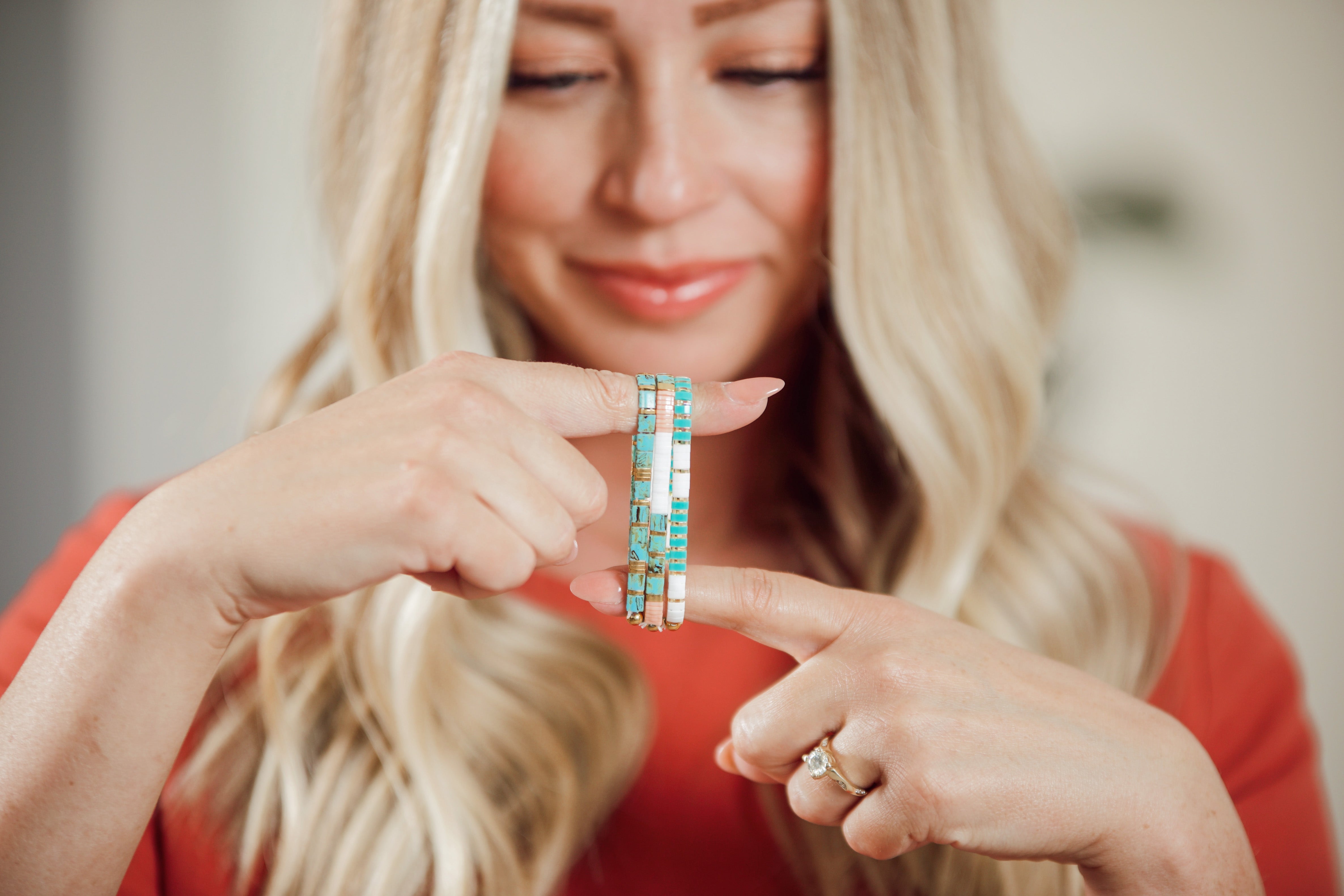
Pick one tila bead color you both agree on, then let each person add a second accent color from the same kit. Measure both wrists separately, cut cord to each size, and string the shared color in the same spots on both bracelets. The result coordinates instead of matching exactly, which almost always looks better and still fits each wrist correctly.
That's the short version. Here's how to actually sit down and do it, including why a kit beats ordering a pre-matched pair online.
Why Coordinated Beats Identical
Identical bracelets can look a little flat in person.
Two bracelets in the exact same colors, same pattern, same everything, tend to read as a novelty item rather than something either person would wear daily. A shared base color with one personal accent color does the opposite: it signals "these two belong together" without erasing either person's taste. One partner might lean toward cooler tones, the other warmer, and that's fine. The shared color is the thread that ties them, not the only color in the piece.
This is also just how a lot of stacked jewelry works. A quick look at general bead-pattern guidance from Fire Mountain Gems backs this up: contrast and repetition (not full duplication) is what makes a beaded piece feel intentional rather than mass-produced. Couples bracelets are a two-person version of the same idea.
What Colors Pair Well for Two People?
Three combinations work for almost any couple. Pick a neutral shared color (black, white, or grey tila beads) with each person adding their own accent, pick two colors that sit next to each other on the color wheel so neither bracelet clashes with the other, or go bolder with complementary colors like navy and rust for more contrast.
- Neutral base, personal accent: both bracelets use black or grey as the shared color, then one person adds a pop of red and the other adds teal. Easy to wear with anything, and it photographs well.
- Adjacent on the wheel: both use navy as the shared color, one adds a soft periwinkle, the other adds a deep teal. Close enough in tone that the pair reads as cohesive even at a glance.
- Complementary contrast: both use a warm terracotta as the shared color, one adds forest green, the other adds gold. More visually bold, better for couples who like a statement piece rather than something subtle.
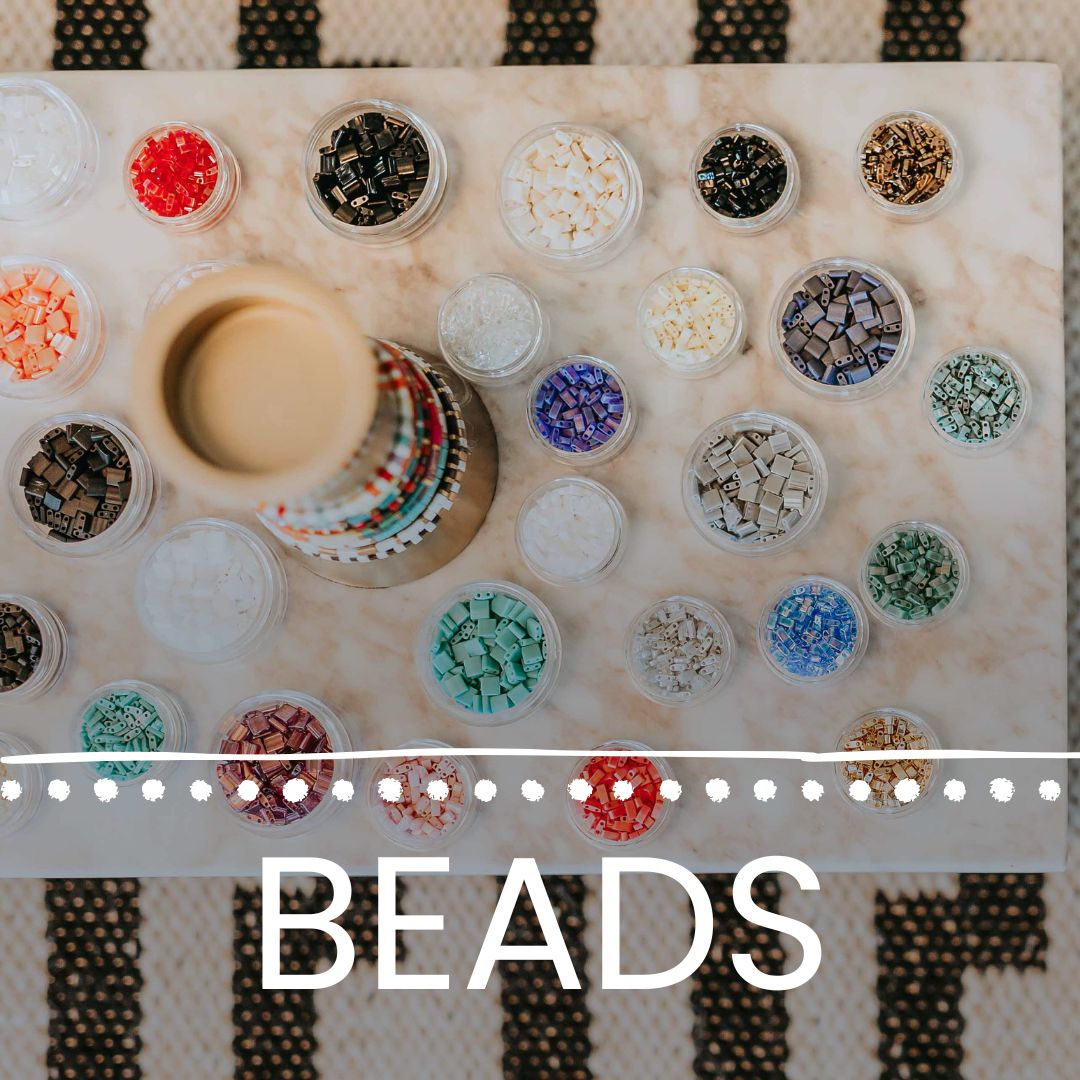
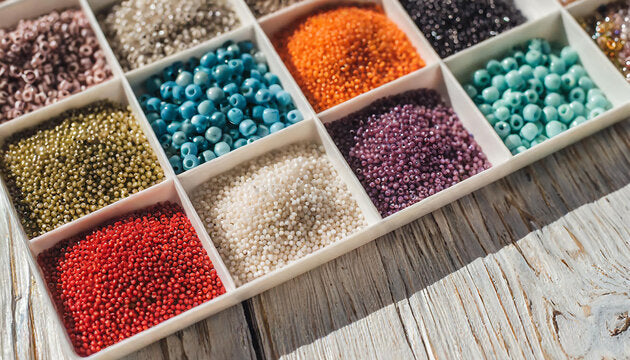
Whichever direction you pick, lay all your color options out before you start stringing. It is much easier to settle on two accent colors side by side on a table than to decide bead by bead as you go.
How Do You Size Two Different Wrists from One Kit?
Measure first, string second.
Wrap a soft tape measure (or a strip of paper you then measure with a ruler) around each wrist just below the wrist bone, where the bracelet will actually sit. Write both numbers down before you touch a single bead. Adult wrists commonly land somewhere between 6 and 7.5 inches, but don't assume a couple splits evenly, plenty of pairs have a two-inch gap or more between wrists.
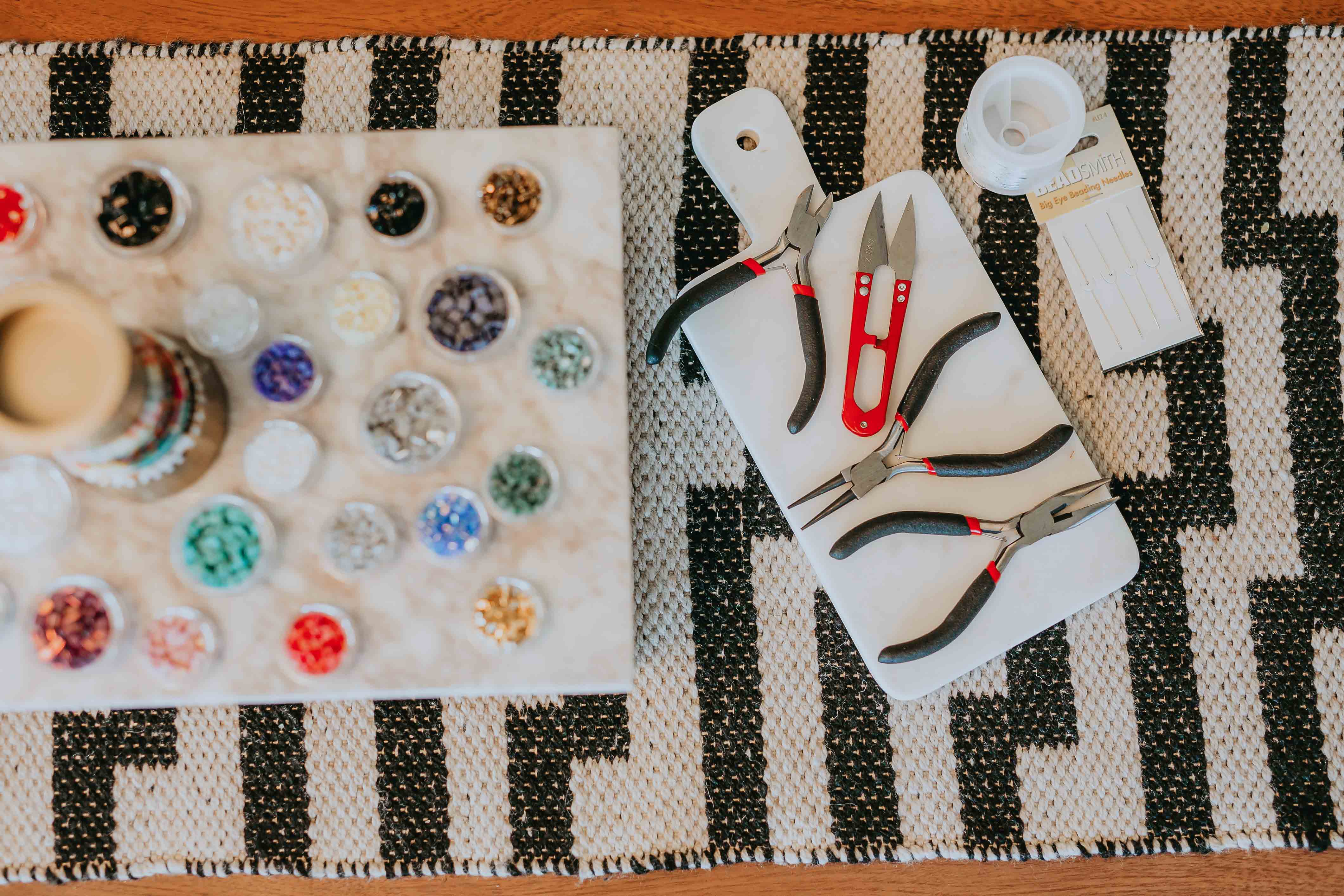
Cut each length of crystal-cord elastic about 2 inches longer than that wrist's measurement, which gives you enough slack to knot securely once the beads are strung. This is the real advantage of making the bracelets yourselves rather than buying a matched set: a kit lets you size each piece to the actual wrist wearing it, something a pre-sized pair off a shelf can't do. General sizing guidance from a craft resource like Craftsy echoes the same point for stretch bracelets generally: measure the wrist, not the gift recipient's guessed size.
Why Is a DIY Kit Better Than Buying an Already-Matched Set?
A kit solves the two problems a pre-matched set can't. It fits two different wrist sizes rather than one average size, and it lets each person choose an accent color rather than wearing an identical copy of their partner's bracelet. A matched set bought online is sized once and shipped twice; a kit gets sized and built twice, by the people wearing it.
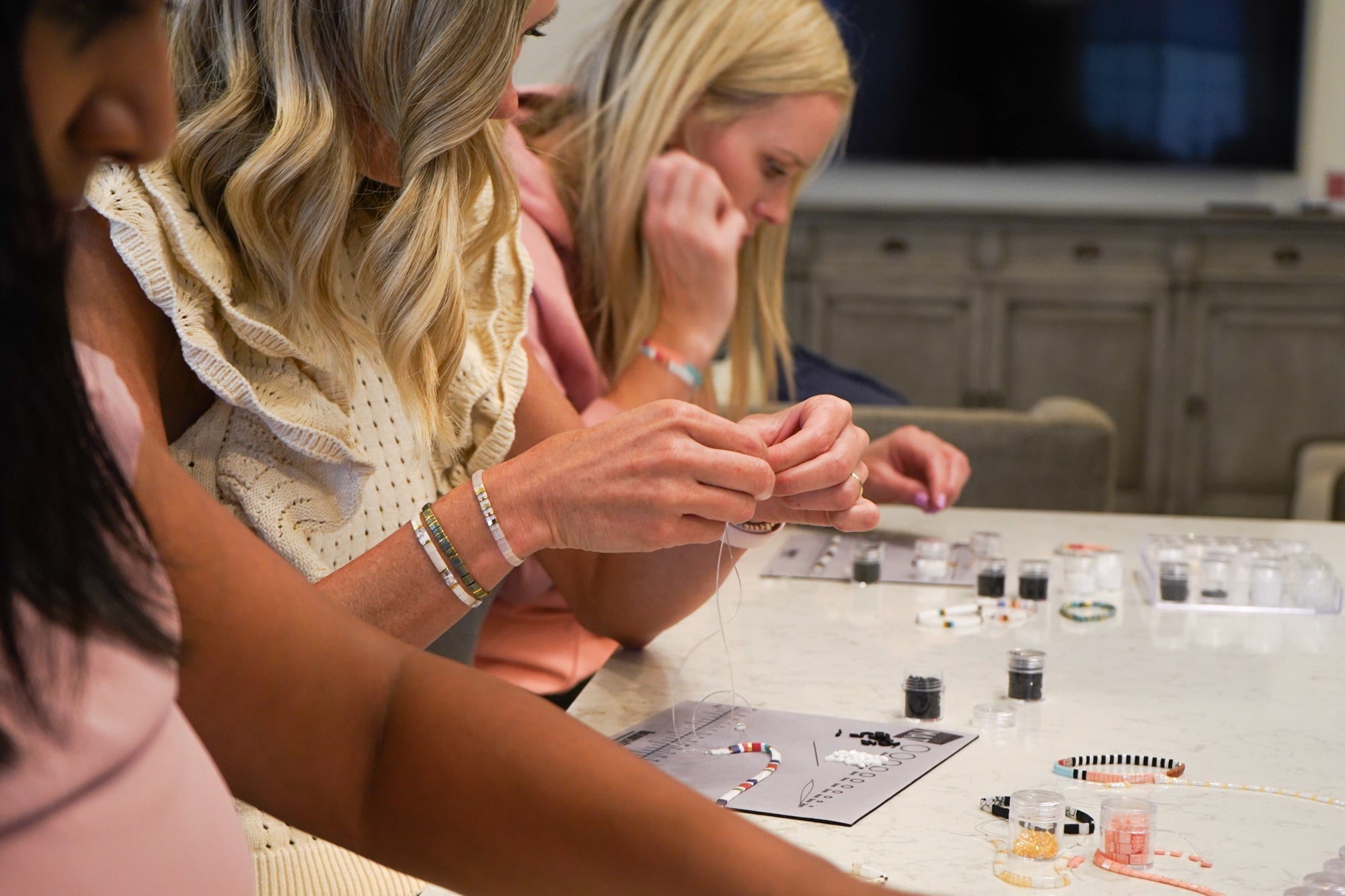
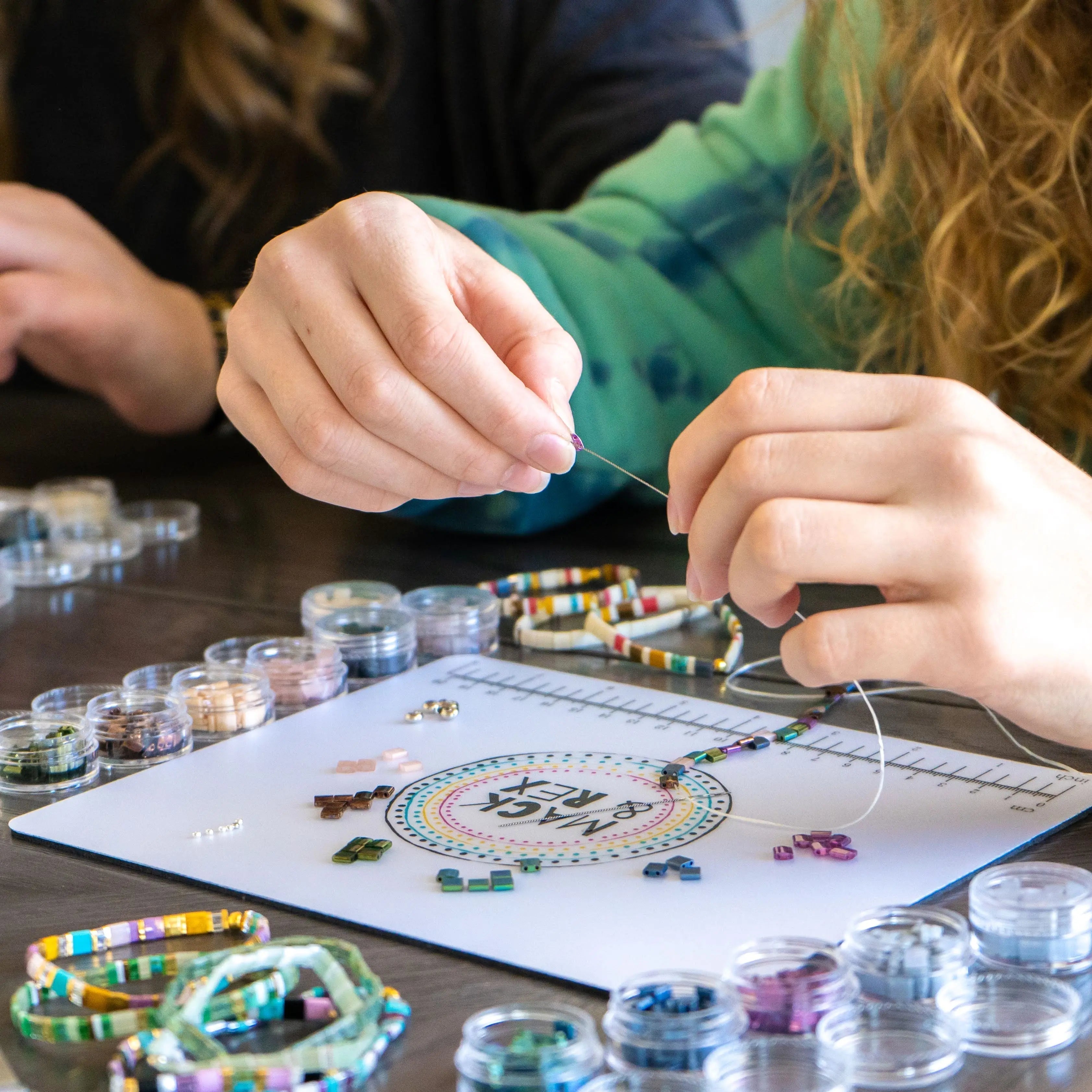
There's also the simple fact that making them together is part of the appeal. Sitting down with a kit, picking colors, stringing side by side, that's a built-in date night or anniversary activity on its own. The Ultimate Tila Bracelet Kit makes up to 80 bracelets from one kit, which is overkill for a single pair but means you have plenty of beads left to remake a bracelet that didn't fit right the first time, or to make a set for another couple you know. It uses genuine Miyuki Tila beads and crystal-cord elastic. Miyuki is the Japanese bead maker behind the tile-shaped glass; Mack & Rex sells the kits, loose beads, and finished bracelets built from it, but doesn't manufacture the beads itself.
A Few Practical Notes Before You Start
- Lay out your beads by color before stringing so you're not hunting through a mixed pile mid-bracelet.
- Tie a surgeon's knot (overhand twice, pulled tight) rather than a single knot. It holds up far better under daily wear and stretch.
- If kids are around while you're crafting, keep loose beads away from anyone still mouthing small objects and have an adult supervise the whole session. Beads are a choking hazard for young children.
- Write down each person's final wrist measurement somewhere you'll remember it (a notes app works fine), so restringing later doesn't mean re-measuring from scratch.
Frequently Asked Questions
Should couples bracelets be identical or just coordinated?
Coordinated almost always looks better than identical. A shared color plus one different accent color per person reads as a set while still fitting each person's style and wrist size, rather than looking like a matched pair bought off a rack.
Can one bracelet kit really make bracelets for two people?
Yes, if the kit has enough beads for more than one bracelet's worth of length. Mack & Rex's largest kit makes up to 80 bracelets from one purchase, which covers a couple's matching set with plenty of beads left for family members or restrings.
What if we have very different wrist sizes?
Measure each wrist separately and cut cord to that measurement rather than guessing. A kit lets you size each bracelet to the actual wrist wearing it, which a pre-matched set bought off a shelf can't do.
Are tila bead kits safe to make with kids around?
Loose beads are a choking hazard, so keep them away from young children who still put things in their mouths, and have an adult supervise any bracelet-making session where kids are present. These kits are built for adults and older crafters working together.
Does Mack & Rex ship this kit outside the US?
Yes. Mack & Rex ships internationally, with shipping and any customs or duties calculated at checkout. Free shipping applies to US orders over $100; international orders are not unavailable, they just ship at the checkout-calculated rate.
Ready to make a matching set that actually fits both of you? The Ultimate Tila Bracelet Kit gives you enough genuine Miyuki Tila beads and crystal-cord elastic to build your pair, with plenty left over to make more. US orders over $100 ship free, and international orders ship with shipping and duties calculated at checkout.

