

Delica Bead Finishes Explained: Matte, Metallic, AB, and Opaque
What Finishes Do Delica Beads Actually Come In?
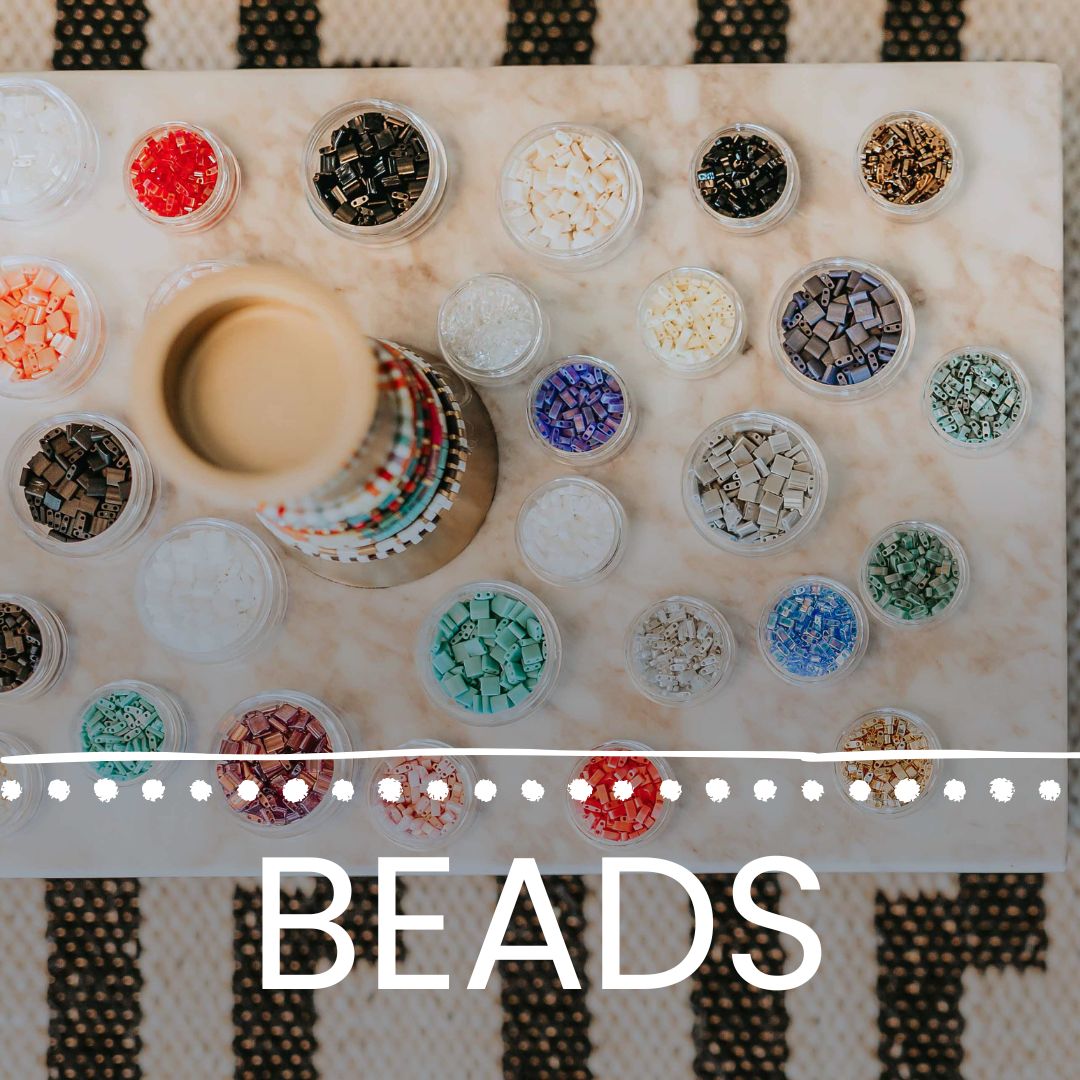
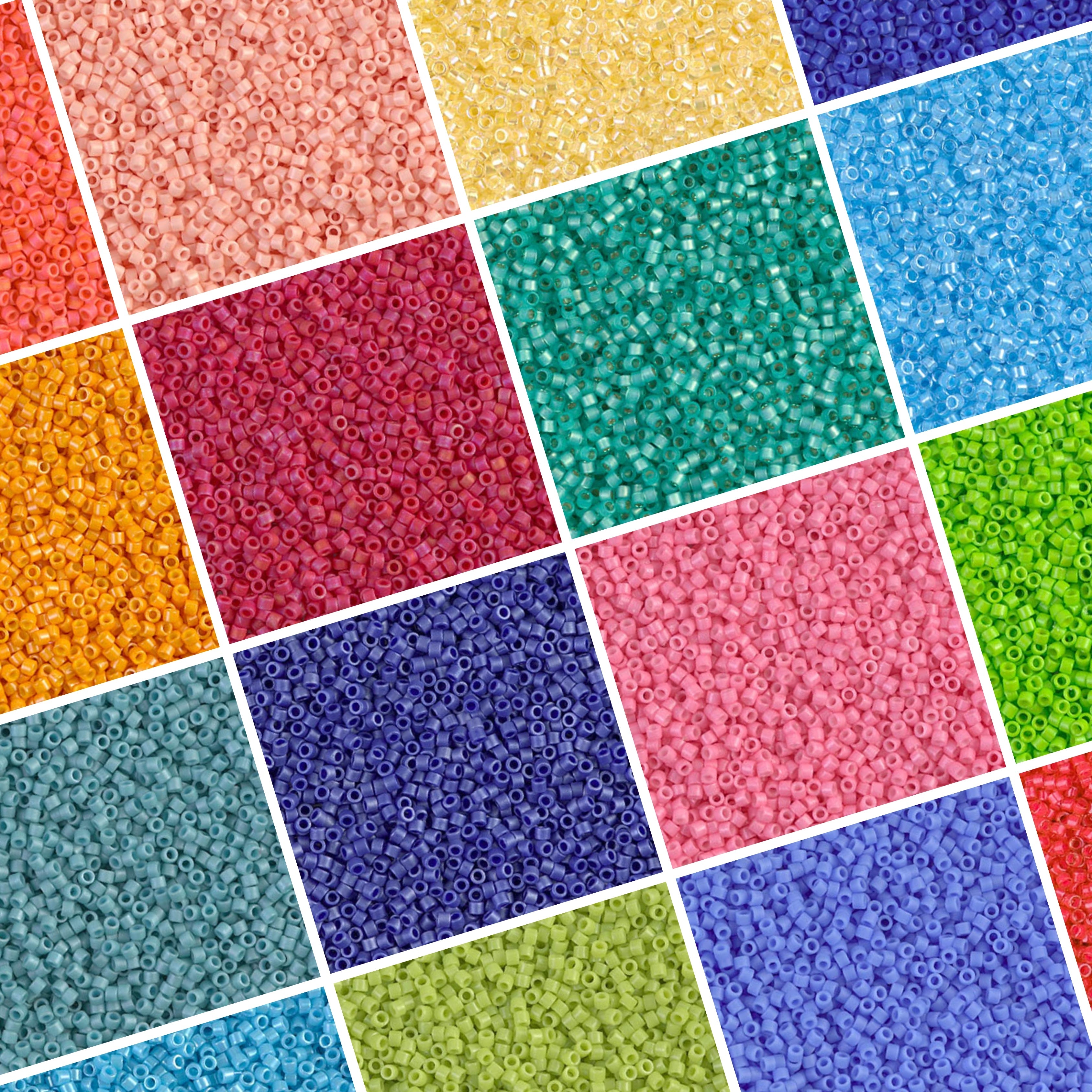
Miyuki sorts its Delica beads into a handful of finish families: opaque, transparent, luster, matte, AB (aurora borealis), metallic, galvanized, and ceylon. The finish is a separate decision from the color. A single cobalt blue Delica might be sold as opaque, matte, AB, or galvanized, and each version behaves differently once it's woven into a piece. Here's what each one looks like and where it actually earns its place in a pattern.
What Is an Opaque Delica Bead?
Opaque means light stops at the surface and doesn't pass through the glass. No glow from within, no glass showing through the color. What you get is a flat, solid block of color, which is exactly why opaque Delicas are the default choice for pixel-style patterns and text in peyote or loom work. Nothing about the bead shifts under different light, so a pattern charted in opaque colors reads the same in a photo, under a lamp, or outdoors.
Because opaque finishes don't compete for attention, most designers build a pattern's background or main color blocks from opaque beads, then bring in other finishes for accents.
What Does Matte Delica Finish Look Like?
Matte is a frosted, non-reflective surface, usually created with an acid-etch or sandblasting step after the color is set. It kills glare almost completely. In a woven piece, that matters more than it sounds like it would: glossy beads bounce light unevenly across a curved cuff or a strand, which can make a pattern look busier than it is. Matte flattens all of that out, so fine detail and shading actually stay legible.
Matte Delicas also photograph well, which is worth knowing if you sell finished pieces or post work online. No hotspots, no washed-out glare spots from a phone flash. Just true color.
What's the Difference Between Metallic and Galvanized Delica Beads?
Metallic Delica beads carry a shiny coating over the glass that mimics polished metal, brass, gunmetal, or gold. Galvanized is a specific type of metallic finish, applied as a thin plated layer that gives an especially bright, chrome-like shine.
The tradeoff with galvanized finishes is durability. That plated layer sits on the outside of the bead, and on pieces that see regular handling, like a bracelet cuff or a bag strap, the coating can thin out at contact points over months of wear, showing the base glass color underneath. It's a known quirk in the bead community, not a defect specific to any one batch. Matte galvanized versions tend to hold up better than glossy ones because the frosted texture hides minor wear more effectively.1
None of that makes galvanized finishes a bad choice. It just means saving them for pieces you're not going to grip and rub against fabric every single day, or accepting a little natural patina over time as part of the look.
What Does AB Mean on Delica Beads?
AB stands for aurora borealis, an iridescent coating that sits over a base color and throws off a shifting rainbow sheen as the bead catches light from different angles. On Delica cylinders specifically, the flat ends and thin walls mean the AB coating shows up as small, crisp flashes rather than one big shimmer, since each bead face reflects light on its own.
AB Delicas are strong as accent beads: scattered through a mostly opaque or matte pattern, they add sparkle without taking over the design the way a full AB piece would. Woven solid, they can visually overwhelm fine pattern detail because the shimmer competes with the color contrast that makes a pattern readable in the first place.
What Is Ceylon Finish, and How Is It Different from Opaque?
Ceylon is technically a subtype of opaque, but it earns its own name because of what it does to the surface. Rather than a flat, matte-solid color, ceylon beads have a soft, pearl-like glow baked into the finish, named after the luster of Ceylon pearls. Hold one next to a plain opaque bead in the same color and the difference is obvious: the opaque bead looks like solid paint, the ceylon bead looks like it's lit gently from inside.
Ceylon finishes work well anywhere you want softness instead of punch, pastel palettes, florals, anything meant to read as gentle rather than graphic. They're one of the more forgiving finishes to mix with others, since the quiet shine doesn't clash with matte or opaque neighbors in a pattern.
What Is Luster Finish on Delica Beads?
Luster is a thin, glossy coating over a transparent or translucent base bead, giving it a gentle overall shine without the rainbow shift of AB or the mirror brightness of metallic. It's a quieter effect: think satin rather than sparkle. Luster Delicas read as slightly deeper and richer in color than a plain transparent bead of the same shade, because the coating adds a bit of depth under the surface.2
Luster is a good middle-ground finish when a pattern needs a touch of shine without introducing the light-dependent variability of AB. It stays consistent whether you're working under a lamp at the kitchen table or checking the piece in daylight.
Which Delica Finish Should You Start With?
Opaque and matte first, if you're new to weaving with Delicas. Both hold color evenly and don't add any visual noise while you're learning to read a pattern chart or keep tension consistent across rows. Once the basics feel steady, layer in AB or ceylon as accent colors, then reach for metallic or galvanized when you want a piece with real shine, keeping in mind the wear tradeoff on high-contact areas.
Mack & Rex carries Miyuki Delica and seed beads across several of these finishes in the seed bead collection, sold as single colors and curated mixes. It's a straightforward way to build a finish-varied stash without guessing from a swatch photo alone. According to bead-industry reference material, finish naming conventions like these are fairly consistent across major Japanese seed bead manufacturers, which makes it easier to shop finishes by name rather than relearning terms brand by brand.3
One safety note if kids are part of your beading sessions: Delica beads are small glass components and a choking hazard for young children. Keep loose beads out of reach of little ones and supervise any hands-on crafting.
Frequently Asked Questions About Delica Bead Finishes
What finishes do Delica beads come in?
The main categories are opaque, transparent, luster, matte, AB (aurora borealis), metallic, galvanized, and ceylon. Each one changes how the bead handles light, from flat and solid to shimmering and iridescent.
What is the difference between matte and metallic Delica beads?
Matte has a frosted surface that absorbs light and stays glare-free, which keeps detailed patterns easy to read. Metallic has a reflective coating that adds shine and draws the eye, making it better suited to accents or borders than full backgrounds.
Do galvanized Delica beads wear well?
Galvanized beads can show wear at friction points over months of regular handling, since the metallic coating sits on the bead's outer surface. Matte galvanized finishes tend to hide that wear better than glossy ones.
What is ceylon finish on Delica beads?
Ceylon is a soft, pearl-like opaque finish named after Ceylon pearls. It's solid in color like a standard opaque bead but has a gentle inner glow rather than a flat surface.
Where can I buy Miyuki Delica beads in different finishes?
Mack & Rex stocks Miyuki Delica and seed beads in several finishes at mackandrex.com/collections/all-seed-beads. US orders over $100 ship free.
Ready to Build a Finish-Varied Bead Stash?
Knowing the finish names is half the battle. The other half is seeing how opaque, matte, AB, and ceylon actually sit next to each other once they're strung or woven, and that only really clicks once you've got a few finishes in hand.
Browse Miyuki Delica and seed beads by finish at Mack & Rex's bead collection. US orders over $100 ship free, no code needed.