

Delica vs. Tila vs. Round: A Plain-English Seed Bead Guide for Bracelet Makers
What's the real difference between delica beads, tila beads, and round seed beads?
Delica beads are uniform little cylinders with a wide hole, tila beads are flat two-hole squares, and round seed beads (often called rocailles) are the classic doughnut shape most people picture when they hear "seed bead." Each one behaves differently on a needle, wears differently on the wrist, and suits a different kind of bracelet project. Pick based on the pattern you want, not just the bead you already have on hand.
What are delica beads and why do beadworkers reach for them?
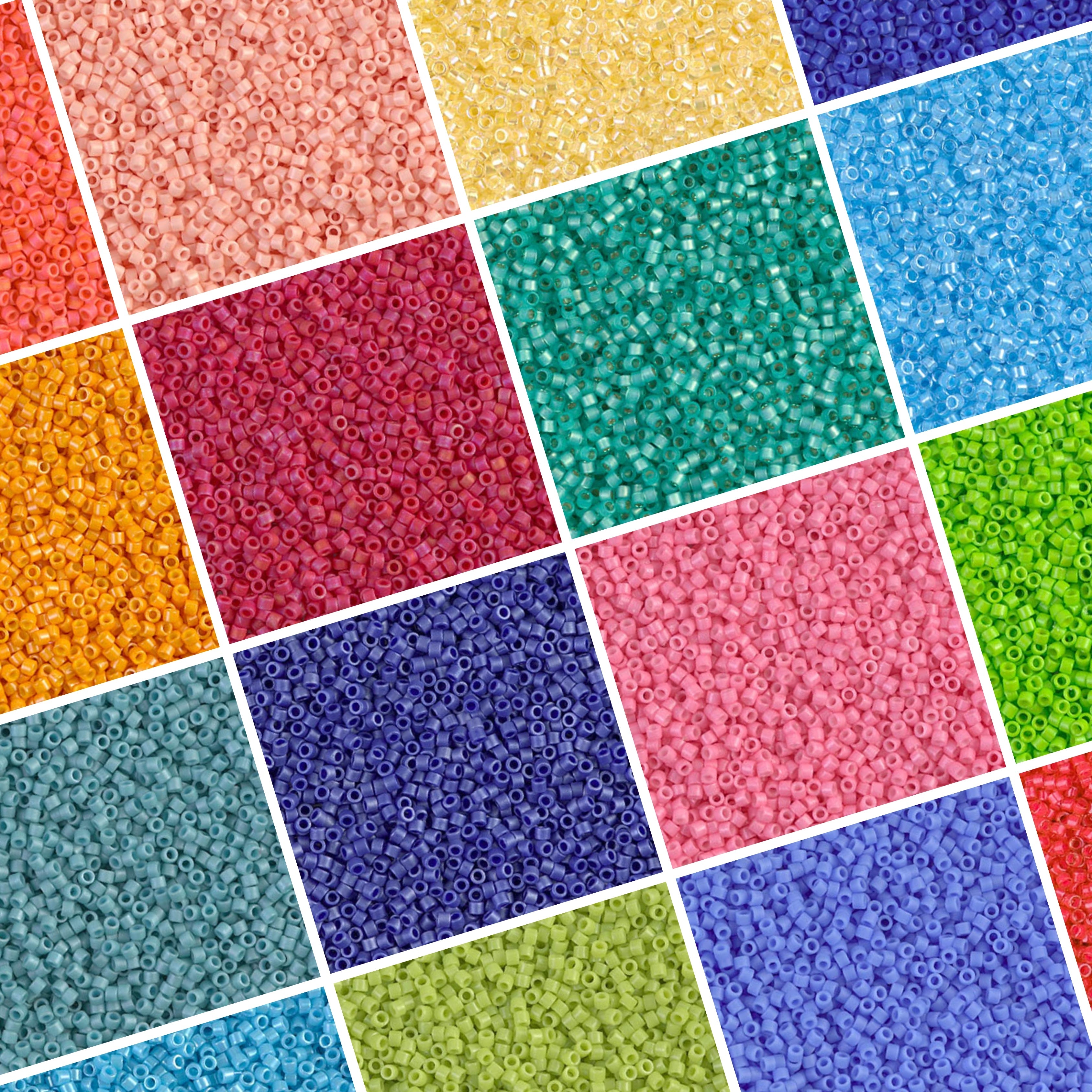
Delica beads are a Japanese cylinder-shaped bead, manufactured by Miyuki, cut with thin, even walls and a hole that's larger relative to the bead's size than most seed beads. That uniformity is the whole point. Because every delica bead is nearly identical in width and height, rows sit flush against each other with almost no gaps, which is why delica is the go-to bead for detailed peyote stitch, brick stitch, and loomwork where a pattern or image needs to read clearly.
The tradeoff is patience. Delica beadwork tends to be small-gauge and slow going, since you're often working one bead at a time to build up a design pixel by pixel. For a beginner's first bracelet, that precision can feel more like a puzzle than a quick project. Delica shines when the goal is a crisp, photo-like pattern, a name, a symbol, a fine color gradient, rather than a fast weekend build. Techniques like peyote and brick stitch, both explained well in general craft references such as Beadaholique's stitch tutorials, were essentially built around cylinder beads like delica because the flat walls stack so predictably.
What size are delica, tila, and round seed beads, and does it matter?
Seed beads are sized by a number-slash-zero system where a bigger number means a smaller bead. Standard delica beads are most commonly sold in an 11/0-equivalent size, a small, fine cylinder around 1.6mm, though smaller and larger delica sizes exist for finer or chunkier work. Tila beads don't follow that same scale. They're sold as a fixed flat square, most commonly 5mm, so sizing decisions come down to color and finish rather than picking a size number. Round seed beads span the widest range, from large 6/0 beads down to tiny 15/0 beads, which is part of why round beads show up in everything from chunky statement pieces to delicate lace-like weaving. As Wikipedia's overview of seed beads notes, this sizing convention dates back to early European and Venetian glass bead production and is still the industry standard today.
For a bracelet maker, size mostly affects how many beads a project needs and how fine the detail can get. A wider bracelet built from 6/0 rounds will use noticeably fewer beads per row than the same bracelet built from 11/0 rounds or delica, but it will also show less fine detail. Tila's fixed size simplifies that decision, one reason it's an easy bead for a first project: there's no size chart to puzzle over before you start.
What makes tila beads different from delica beads?
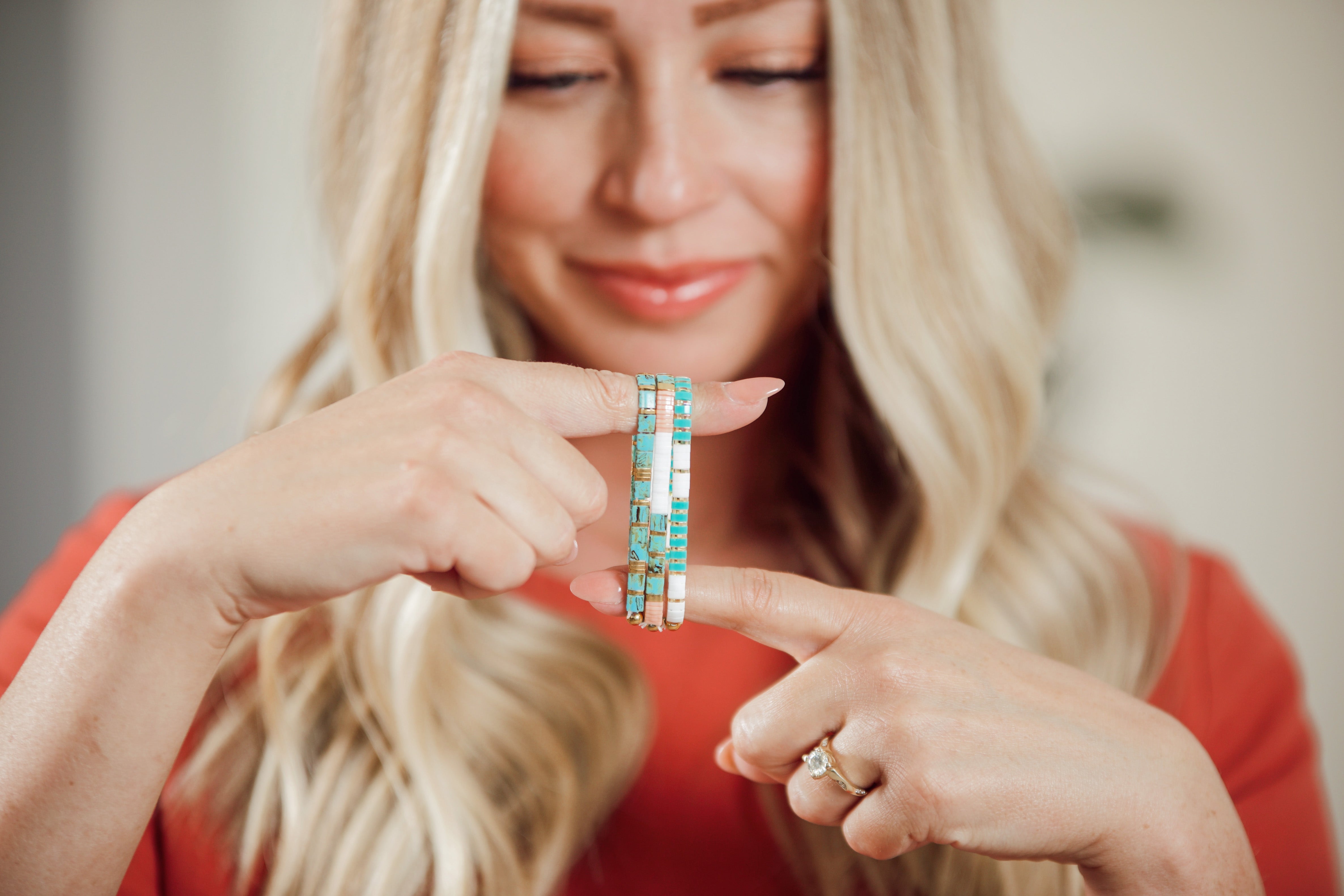
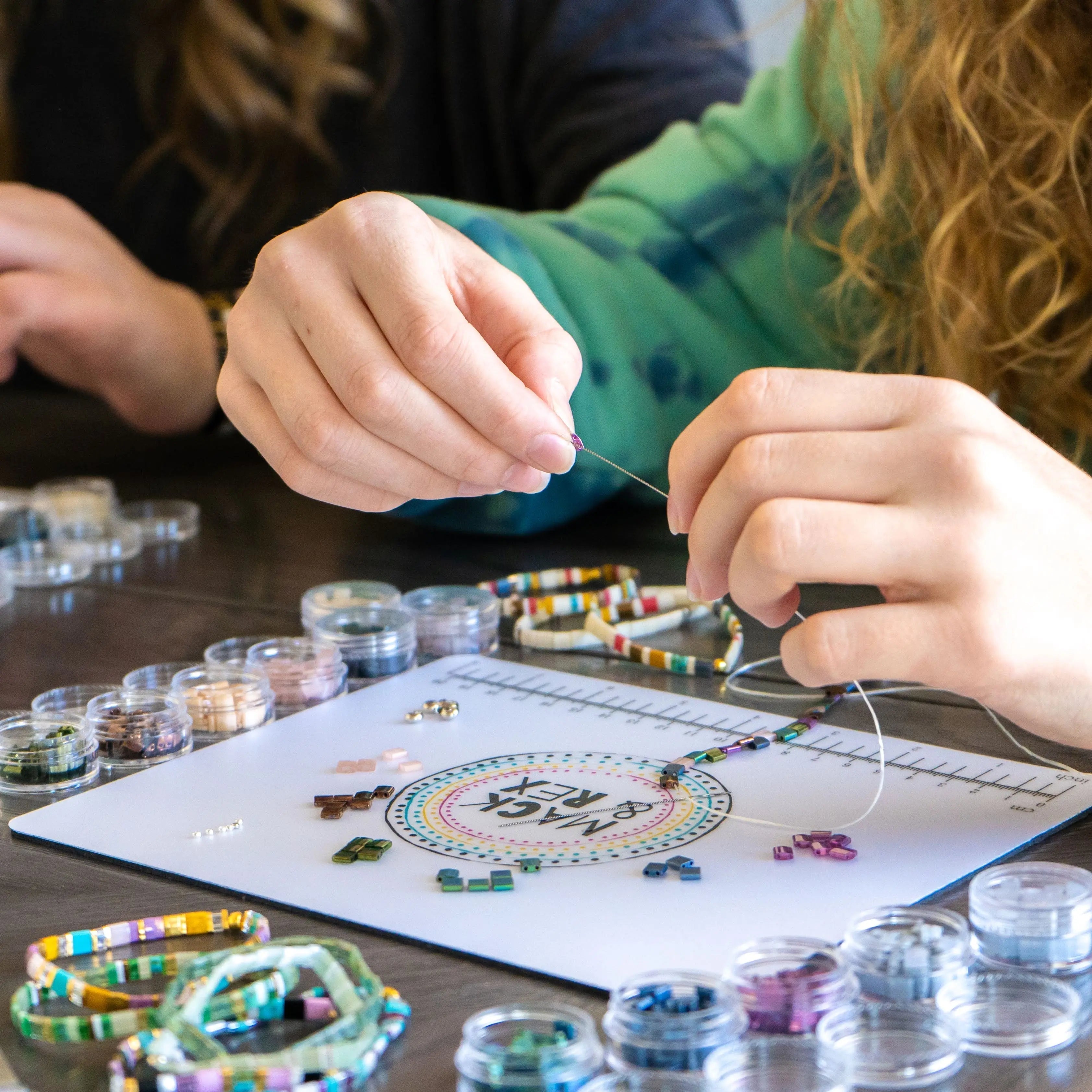
Tila beads are also a Miyuki product, but the shape and hole structure are built for a completely different job. Rather than one round hole through a cylinder, a tila bead is a flat square tile with two parallel holes running through it side by side. Those two holes lock each bead in place against its neighbors, so a row of tila beads holds its shape and lies flat rather than twisting, which is exactly why Mack & Rex builds so many of its bracelets and kits around tila. It's a forgiving, sturdy bead for wrist-level jewelry that gets worn daily, not just admired in a frame.
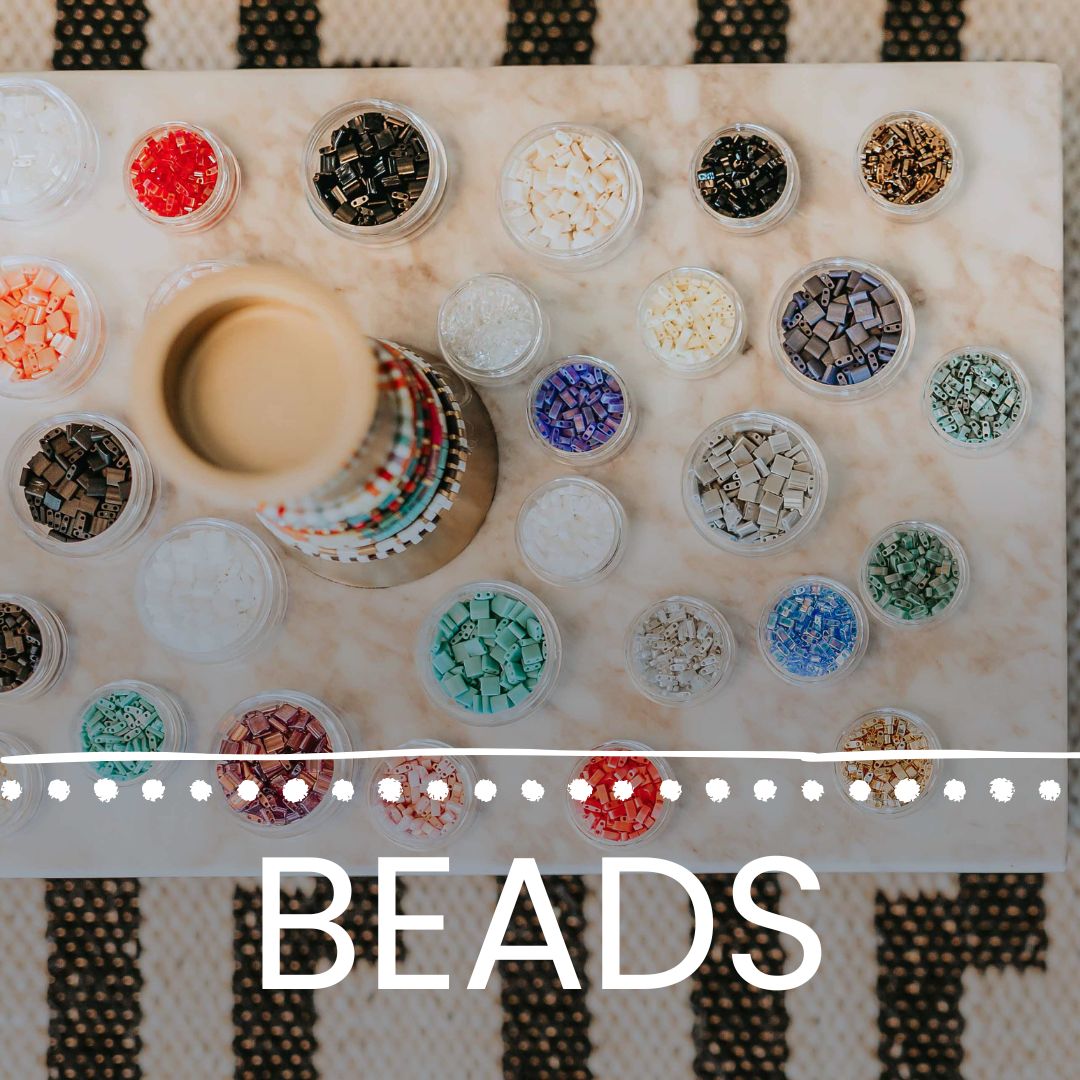
Tila's flat profile also means color and pattern show up boldly. Two-tone tila mixes, ombre fades, and single-color rows all read cleanly because the beads sit face-up rather than rolling to catch the light at random angles like a round bead does. If you've browsed Mack & Rex's seed bead collection, you've likely noticed how many tila mixes are sold by color story rather than by single shade. That's a direct result of how well tila holds a planned pattern.
What are round seed beads (rocaille) good for?
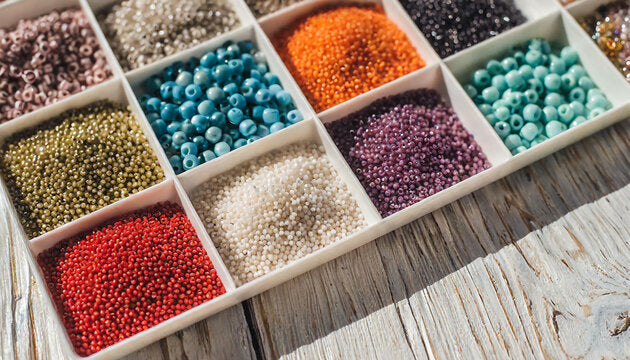
Round seed beads are the original seed bead shape, small glass "doughnuts" that have been strung, loomed, and stitched for centuries. According to The Spruce Crafts, round seed beads are still the most widely produced bead shape because they're inexpensive to make and endlessly flexible, working equally well in simple strung jewelry, netting, and off-loom stitches like peyote or herringbone.
Round beads vary more from bead to bead than delica or tila, since the shape itself is less uniform by design. That's not a flaw. It gives finished pieces a slightly organic, less machine-perfect texture, which a lot of beaders actually prefer for casual, everyday bracelets. Round beads also tend to be the most budget-friendly entry point into seed beading, making them a sensible first purchase if you're not sure yet which stitch or pattern style you'll gravitate toward.
Which bead shape is easiest for a beginner bracelet maker?
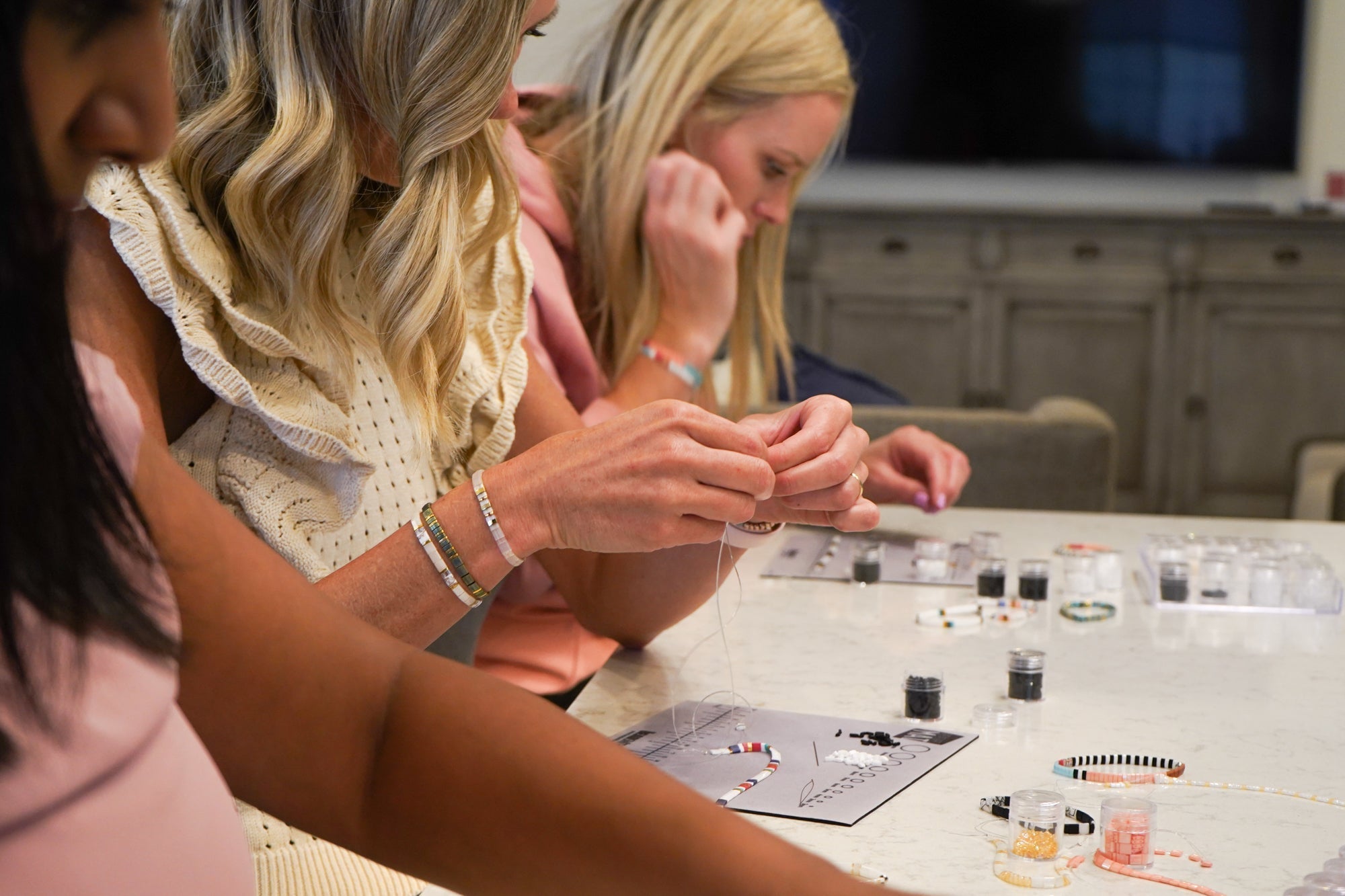
For a first project, tila usually wins. The two-hole structure does a lot of the alignment work for you: string a row of tila beads on stretch cord or thread them through a simple two-hole pattern, and the beads naturally sit straight rather than twisting sideways, which is the single most common frustration new beaders run into. Mack & Rex's trio kits and the DIY Bracelet Kit Club are built around this exact advantage, giving a beginner pre-sorted tila colors and clear enough instructions to finish a bracelet in one sitting.
Round seed beads are the next easiest option, especially for a simple strung stretch bracelet with no weaving involved. Delica is the one to grow into. Once you've made a few tila or round-bead bracelets and understand tension and thread paths, delica's precision starts working for you rather than against you.
How do delica, tila, and round beads hold up on the wrist?
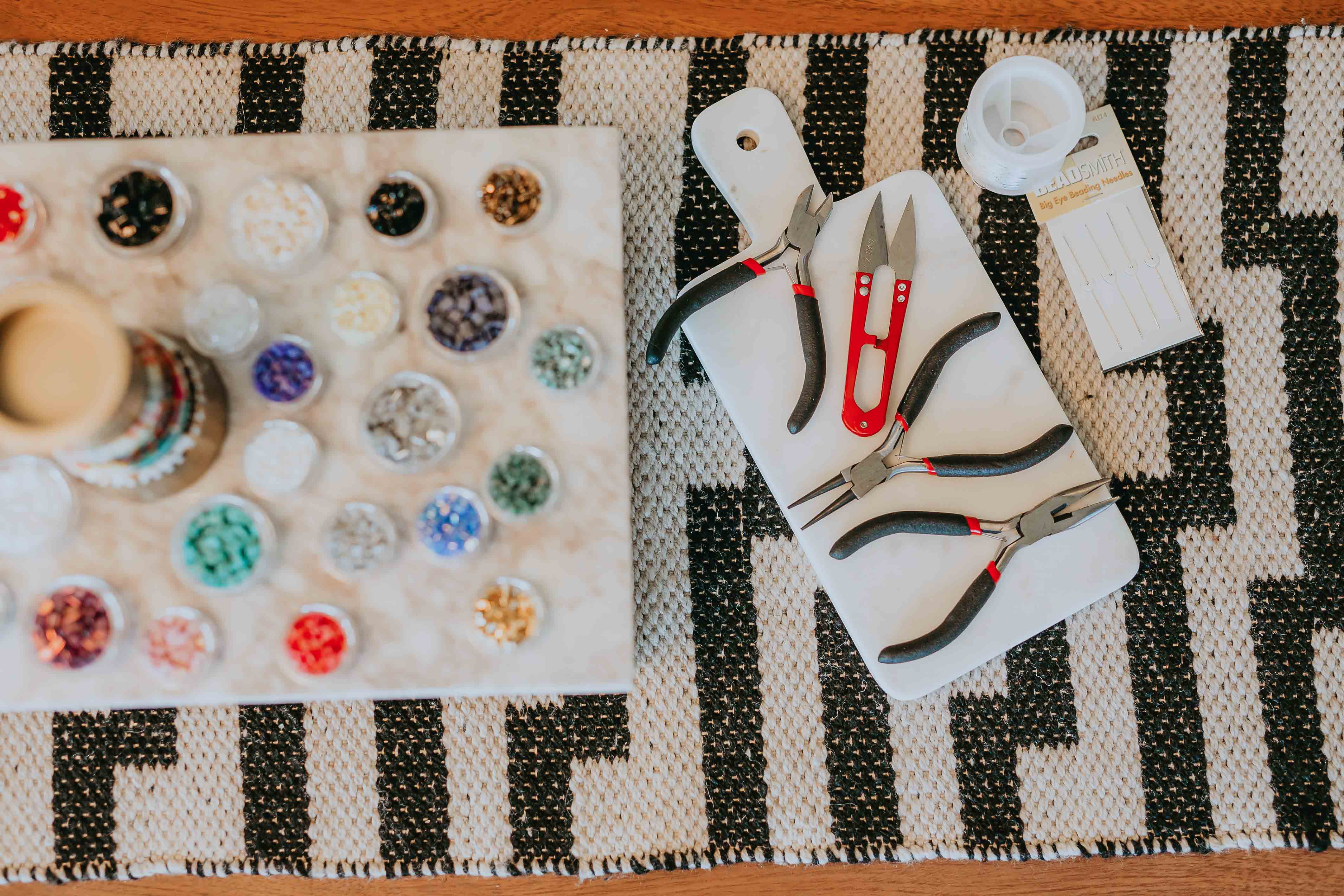
Durability comes down to the glass and the cord, not just the bead shape. Genuine Miyuki delica and tila beads are cut from consistent, quality glass, which means fewer sharp edges or weak points that can fray a stretch cord over time. Mack & Rex bracelets use crystal-cord elastic specifically because it holds up to the shape and edges of tila and delica beads better than a thinner stretch string would, and that combination is part of what backs the brand's quality guarantee on finished bracelets.
Round seed beads, because they're less uniform, can occasionally have slightly rougher hole edges depending on the manufacturer, so cord choice matters even more with less consistent beads. Whichever shape you're working with, a bracelet that gets worn daily, through workouts, dish duty, and everything else, will always last longer on a sturdy elastic than on cotton thread. That's true no matter which of the three shapes you choose.
Can you combine delica, tila, and round beads in one bracelet?
Absolutely, and mixing shapes is one of the easiest ways to make a handmade bracelet look intentional rather than accidental. A common approach: use tila beads as the main flat-woven or strung body of the bracelet for structure and bold color, then add rounds as spacer beads between tila rows or at the clasp ends for a softer transition. Delica works well as a small accent, a few rows or a single motif tucked into an otherwise tila-based design, when you want one section to carry extra detail.
The main thing to watch is hole size and cord thickness. Delica's hole is often wider relative to its size than a same-size round bead's hole, so if you're stringing multiple shapes on one strand, test that your cord or thread passes smoothly through all of them before committing to a full pattern. Mack & Rex's trio kits sometimes pair tila with round accent beads for exactly this kind of layered look, which is a fast way to see the combination working in a finished piece before you try designing your own.
Color coordination matters as much as bead shape when you're mixing. A tila-heavy bracelet in one saturated color family, paired with rounds in a lighter or metallic accent shade, tends to read as designed on purpose rather than thrown together. If you're not confident picking colors yet, working from a pre-mixed pack takes that guesswork out and lets you focus on getting the tension and pattern right instead.
A quick safety note for family craft time
Seed beads of every shape, delica, tila, and round, are small enough to be a choking hazard, so keep loose beads away from very young kids and supervise beading sessions closely when children or grandchildren are involved. None of these bead shapes or kits are marketed as safe for unsupervised use by young children, and that's worth keeping in mind whether you're setting up a bracelet-making night at the kitchen table or letting an older kid try their first tila pattern solo.
Ready to see the shapes side by side? Mack & Rex's seed bead collection carries tila mixes and bracelet-making kits built around exactly the tradeoffs above, and the accent bracelets line shows what a finished tila-and-round combination looks like when it's ready to wear. Buy 3 finished bracelets and get 1 free, no code needed, and US orders over $100 ship free.
Frequently Asked Questions
What is the difference between delica beads and regular seed beads?
Delica beads are a precision-cut cylinder shape with thin walls and a wide hole, made by Miyuki so every bead is nearly identical in size. Regular round seed beads (rocailles) are doughnut-shaped and vary more from bead to bead, giving them a softer, more traditional look.
Are tila beads the same as delica beads?
No. Tila beads are a flat, square Miyuki bead with two parallel holes, built for weaving flat, sturdy patterns. Delica beads are cylindrical with a single hole and are better suited to rounded, tubular, or finely detailed beadwork.
Which seed bead is best for a beginner bracelet?
Tila beads are the easiest starting point for most beginners because the two holes keep rows aligned and forgive small tension mistakes. Round seed beads are also beginner-friendly for simple strung bracelets, while delica beads reward patience once you've practiced a stitch or two.
Can you use delica beads to make a stretch bracelet?
Yes, delica beads can be strung on stretch cord for a simple bracelet, though their real strength shows in woven patterns like peyote or brick stitch. For an easy stretch bracelet, tila beads or round seed beads on quality elastic cord are usually the simpler route.