
What's the Difference Between Tila Beads and Heishi Beads?
What's the Difference Between Tila Beads and Heishi Beads?
Tila beads are flat, square, two-hole Japanese glass beads made by Miyuki; heishi beads are thin, round discs, traditionally cut from shell or stone, with a single hole through the center. Tila beads lock flat against each other for a mosaic, tile-like surface. Heishi beads stack into a smooth, pebbled line that moves more freely on the wrist.
Both beads show up constantly in stacked-bracelet trends, and both are easy to confuse if you've only seen finished photos online. The shapes look similar at a glance, flat, small, geometric. Once you look closer, the differences in hole structure, material, and origin explain why each bead behaves so differently once it's strung.
What Exactly Are Heishi Beads?
Heishi beads are thin, flat discs with a single hole punched through the center, cut and polished down from a raw material like shell, stone, or clay. The word "heishi" comes from a Native American beadmaking tradition in the Southwest, where artisans shaped shell and turquoise into small discs that were strung and worn as status and trade pieces long before "heishi" became a catch-all term in craft stores. The Wikipedia entry on heishi traces the technique's roots to Pueblo artisans, who ground and drilled shell beads by hand using methods that predate modern tools. Modern heishi beads sold for bracelet making are often made from polymer clay, resin, or dyed stone rather than natural shell, which keeps pricing accessible for everyday crafting. The single hole runs straight through the flat face, so the disc can rotate freely on cord or elastic. That looseness is part of the appeal. A heishi strand drapes rather than locks into a fixed pattern.
What Exactly Are Tila Beads?
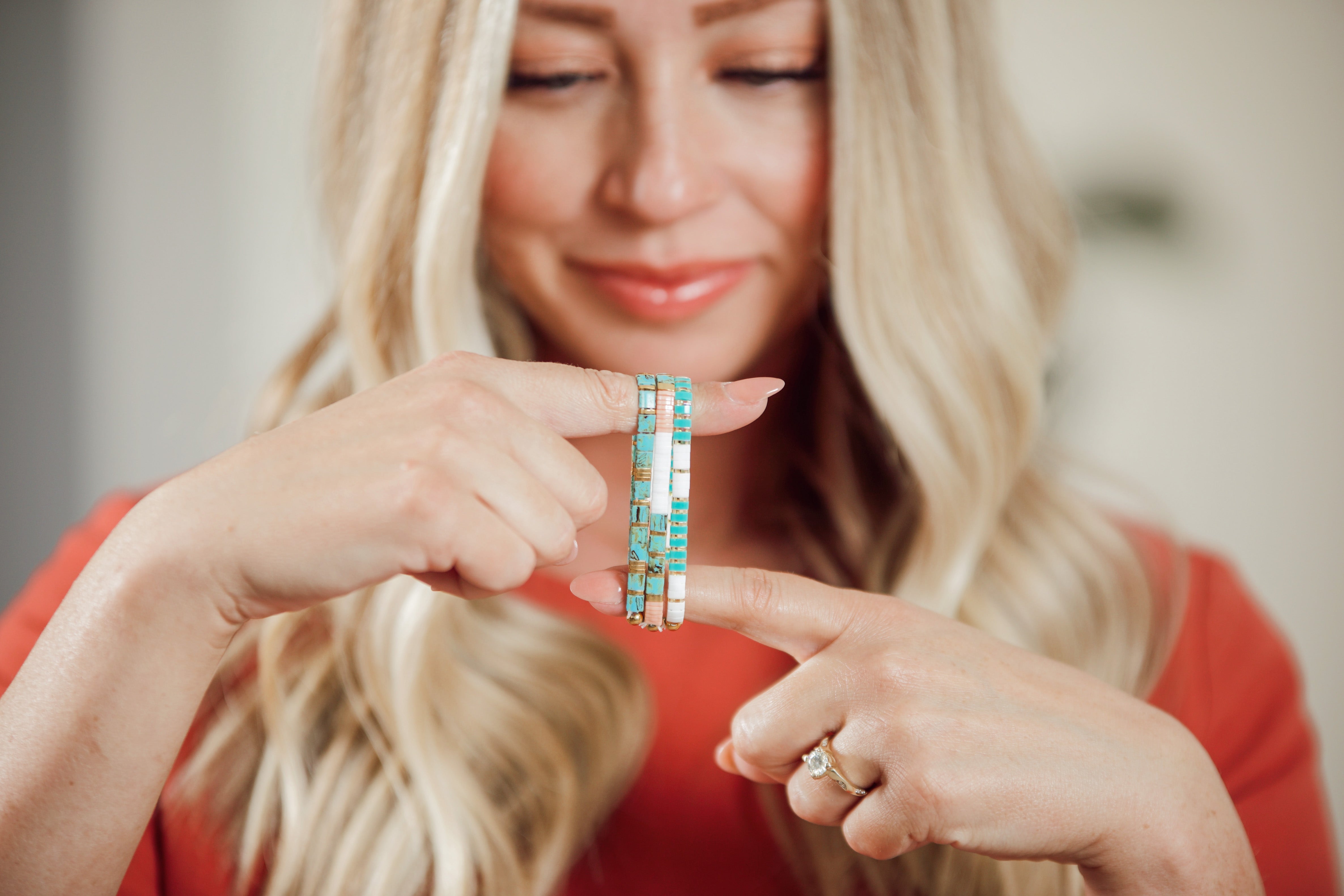
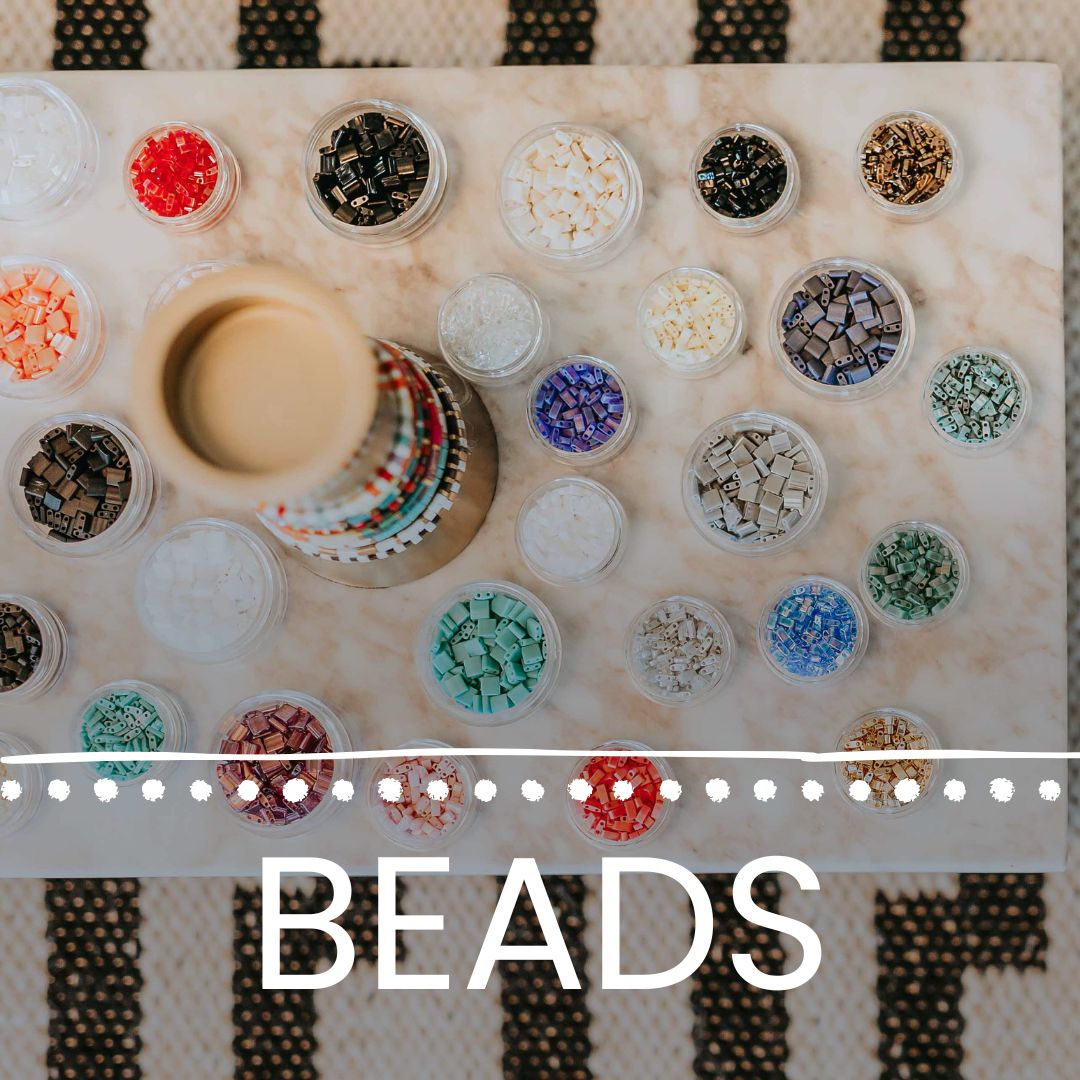
Tila beads are small, flat, square beads measuring about 5mm x 5mm and roughly 1.9mm thick, made by the Japanese glass manufacturer Miyuki. Each one has two parallel holes running through its face instead of one. "Tila" is a Miyuki trademark, not a generic shape name, so a bead legitimately called tila glass comes from Miyuki Co., Ltd. Mack & Rex resells genuine Miyuki Tila beads; we don't manufacture them ourselves.
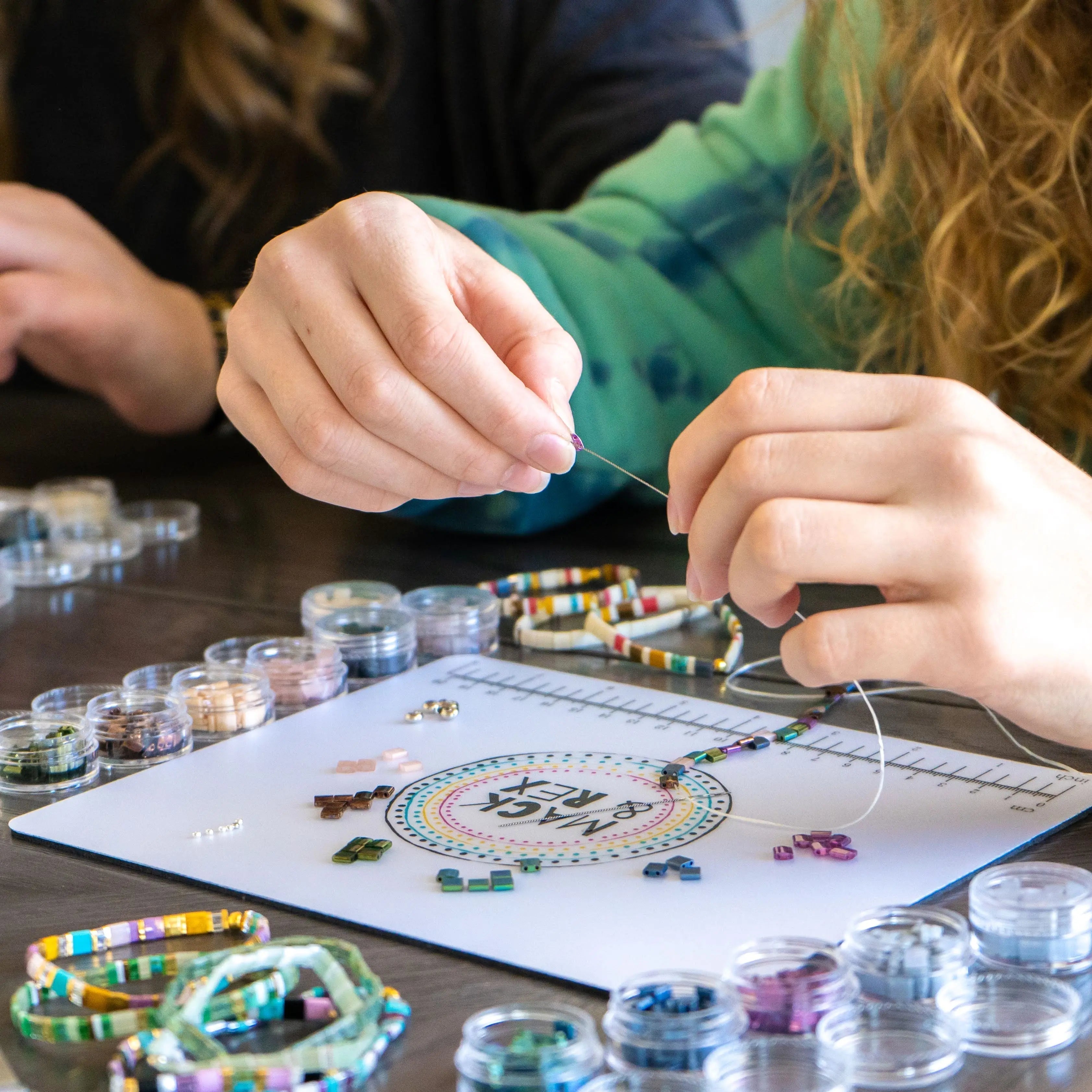
That second hole is the whole story. When elastic cord passes through both holes, each tile is anchored on two points instead of one, so it can't spin or shift out of place. Line up a row of tila beads on a strand and every tile sits face-up, edge to edge, with no gaps. That's the clean, mosaic look people are picturing when they search for tila bead bracelet patterns. The Wikipedia entry on seed beads notes that precision-cut Japanese glass beads are prized specifically for consistent hole sizing, which matters more for a two-hole bead than a single-hole one since both holes have to line up across an entire row.
Are Tila Beads or Heishi Beads Better for Beginners?
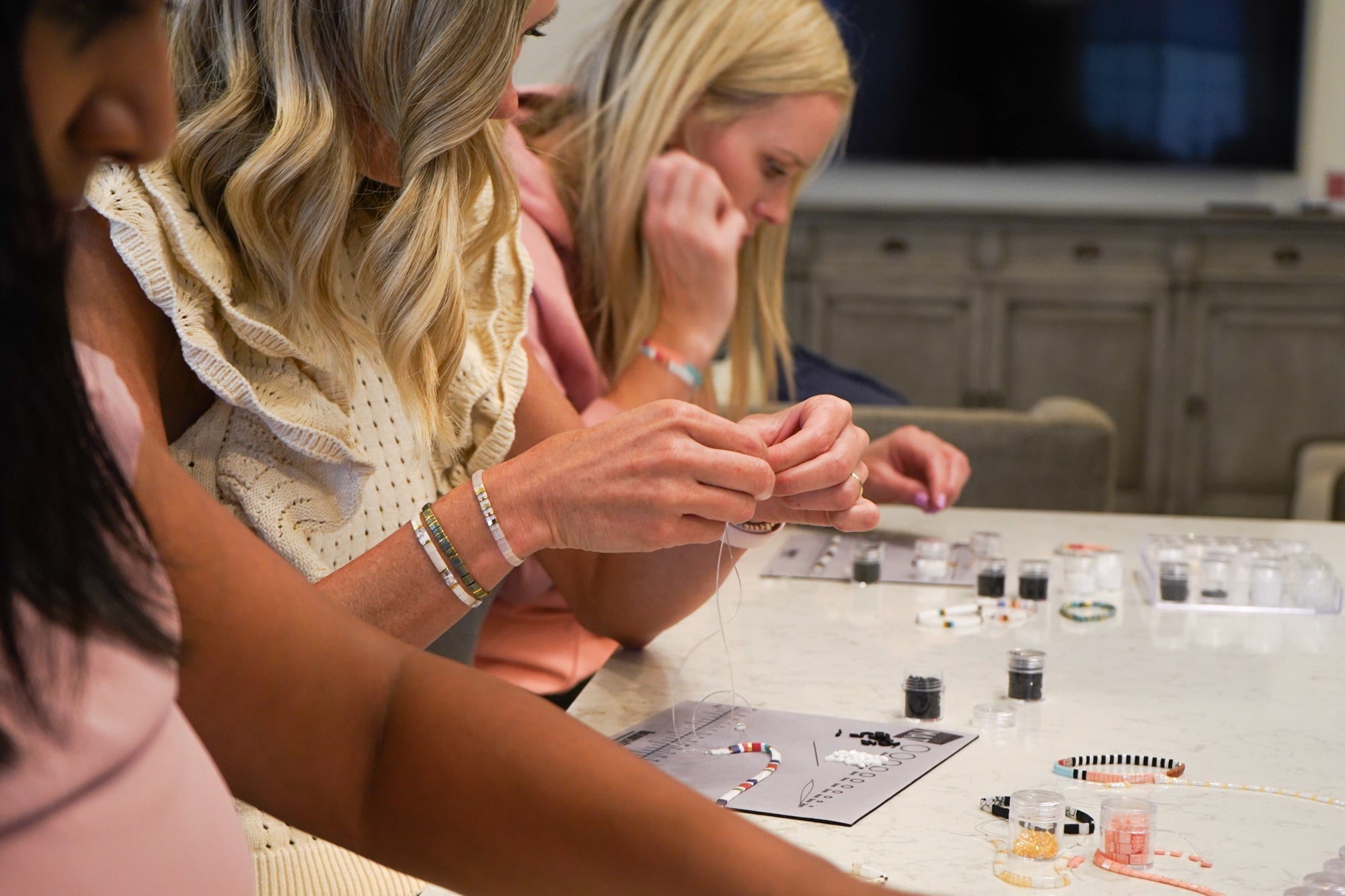
Heishi beads are the easier starting point. They string on one strand through a single hole, the same way you'd thread any round seed bead, so there's nothing to line up and no risk of a bead sitting crooked. You can finish a heishi bracelet quickly, even on a first try.
Tila beads ask a little more of you. Both holes need to catch the cord in the same pass, and it helps to work slowly for the first few beads until you get a feel for it. According to the Fusion Beads bead glossary, two-hole beads are defined by that exact structural trait, multiple holes that create stability a single-hole bead can't match, and that stability is also what makes them slightly fussier to string the first time. The upside is a sturdier, flatter finished bracelet that holds its pattern instead of twisting on the wrist. Most beginners pick it up within a bracelet or two.
Can You Mix Tila Beads and Heishi Beads in the Same Bracelet Stack?
Absolutely, and a lot of the best-looking stacks do exactly that. A flat tila panel next to a run of smooth heishi discs reads as a deliberate design choice rather than a mismatch, because the two textures contrast instead of competing. One sits flat and geometric; the other rolls and catches light differently along its curved edge.
If you're building a stack from scratch, try one tila bracelet as the anchor piece and one or two heishi bracelets in a complementary color on either side. Mack & Rex's named collections (STAINED, BEACHY, RETRO SUNSET, EVERGREEN EDIT) are built around that kind of color-coordinated stacking, so you're not guessing which shades actually work together.
A Quick Note on Beads and Kids
Loose beads, whether tila or heishi, are small parts and a choking hazard. If you're making bracelets with young kids or grandkids, keep an adult at the table the whole time and don't leave loose beads within reach of anyone who still puts things in their mouth. It doesn't take the fun out of a craft afternoon, it just keeps it safe.
Where to Buy Genuine Miyuki Tila Beads
Mack & Rex carries a rotating lineup of authentic Miyuki Tila beads and color-coordinated mixes, organized so you're not stuck sorting a bag of random leftovers. Tila bead mixes typically run about $5 to $9, and the full selection is at mackandrex.com/collections/tila-beads. New colorways drop monthly.
If you'd rather skip the sourcing and jump straight to making, Mack & Rex also sells complete bracelet kits with curated tila beads, crystal-cord elastic, and instructions included, plus finished, ready-to-wear tila bead bracelets in inclusive sizing from XXS to 5XL for anyone who wants the look without the DIY step. US orders over $100 ship free (Mack & Rex ships internationally too, with duties and shipping calculated at checkout), and buying 3 finished bracelets gets you a 4th free, no code needed.
Frequently Asked Questions
What's the difference between tila beads and heishi beads?
Tila beads are flat, square, two-hole Japanese glass beads made by Miyuki. Heishi beads are thin, round discs traditionally cut from shell or stone, usually with a single center hole. The two produce different looks: tila beads lock flat for a mosaic surface, heishi beads stack into a smooth, pebbled line.
Are tila beads or heishi beads better for beginners?
Heishi beads are generally easier for a first project because they string on a single strand with no hole alignment to manage. Tila beads take a little more patience since both holes need to line up, but the payoff is a pattern bracelet with a cleaner, more structured look once you get the rhythm down.
Can you mix tila beads and heishi beads on the same bracelet?
Yes. Many stacked-bracelet looks pair a flat tila panel with a run of heishi discs on the same strand or as neighboring bracelets in a stack. The contrast between the flat glass squares and the smooth round discs is part of what makes a mixed stack look intentional rather than random.
Are heishi beads made of stone, shell, or glass?
Traditionally, heishi beads were cut from shell or stone, a technique with roots in Native American and West African beadwork going back centuries. Today you'll also find heishi-style beads made from polymer clay, resin, or glass. Tila beads, by contrast, are always glass, specifically Japanese glass made by Miyuki.
Where can I buy genuine Miyuki tila beads?
Mack & Rex carries a curated selection of genuine Miyuki tila beads organized by color palette, plus kits that include everything needed to start a bracelet. Browse at mackandrex.com/collections/tila-beads. US orders over $100 ship free, and buying 3 finished bracelets gets you a 4th free, no code needed.

