



Do Tila Beads Have a Front and a Back? A Quick Orientation Guide
Do Tila Beads Have a Front and a Back?
Tila beads don't have a true front and back. Both flat faces are cut and finished the same way, from the same glass, so there's no "right side" stamped on either one. What actually varies bead to bead is the direction of the two parallel holes, and that's the detail that decides whether a strung row looks even or slightly off.
No front. No back. Just two holes that have to agree with each other.
I get this question a lot from people who just opened their first tube of loose Tila mix. They flip a bead over looking for some kind of mark, a logo, a texture change, anything that tells them which way it "should" go. There isn't one. Miyuki makes Tila beads as flat glass squares with two faces that are optically and physically identical. The orientation question people are really asking is about the holes, not the glass.
What Actually Makes One Side of a Tila Bead Different From the Other?
Nothing about the glass itself is different side to side. A Tila bead measures roughly 5mm by 5mm by 1.9mm, a flat square tile, and both of its broad faces are the same color, same finish, same coating. The Miyuki Tila product page describes the shape as a flat square with two parallel through-holes, and that's the whole geometry. There's no embossed pattern or AB-coated-on-one-side trick happening here the way there sometimes is with dagger or drop beads.
So if there's no visual front and back, what's left to track? The holes. Each Tila bead has two holes running parallel through the flat square, spaced far enough apart that a cord through one hole sits clearly to one side of a cord through the other. Rotate the bead 180 degrees and the glass looks identical, but the hole on the left is now the hole on the right. That rotation is the only thing "orientation" means with a Tila bead. It's not about which face points out; it's about which hole carries which strand.
How Do You Keep Tila Beads Facing the Same Way When You String Them?
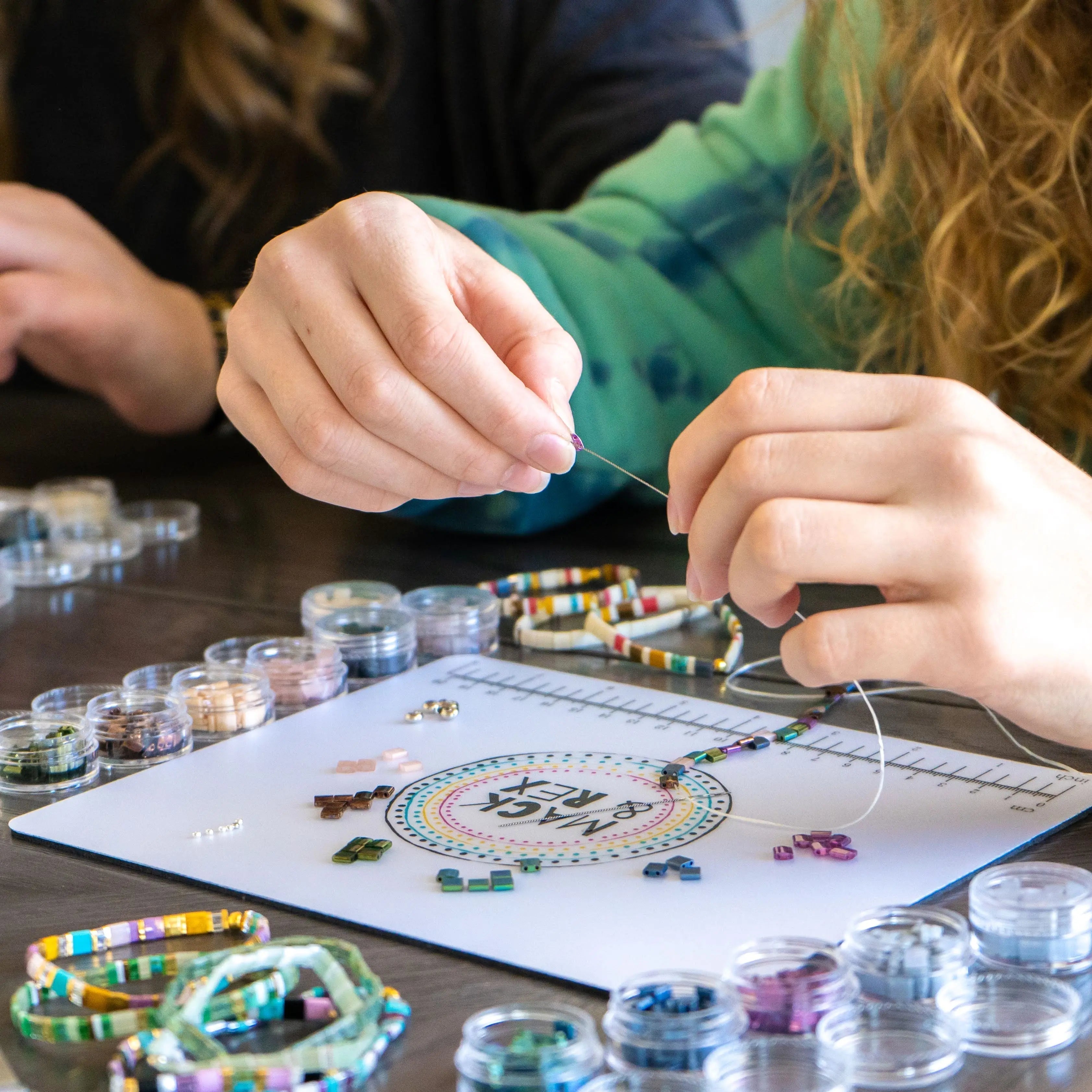
Pick a hole, any hole, on your first bead and use that same relative hole on every bead after it. The practical trick is to lay your beads out flat on a tray before you thread a single one, holes running the same direction across the whole row, so you have a visual template to match as you string.
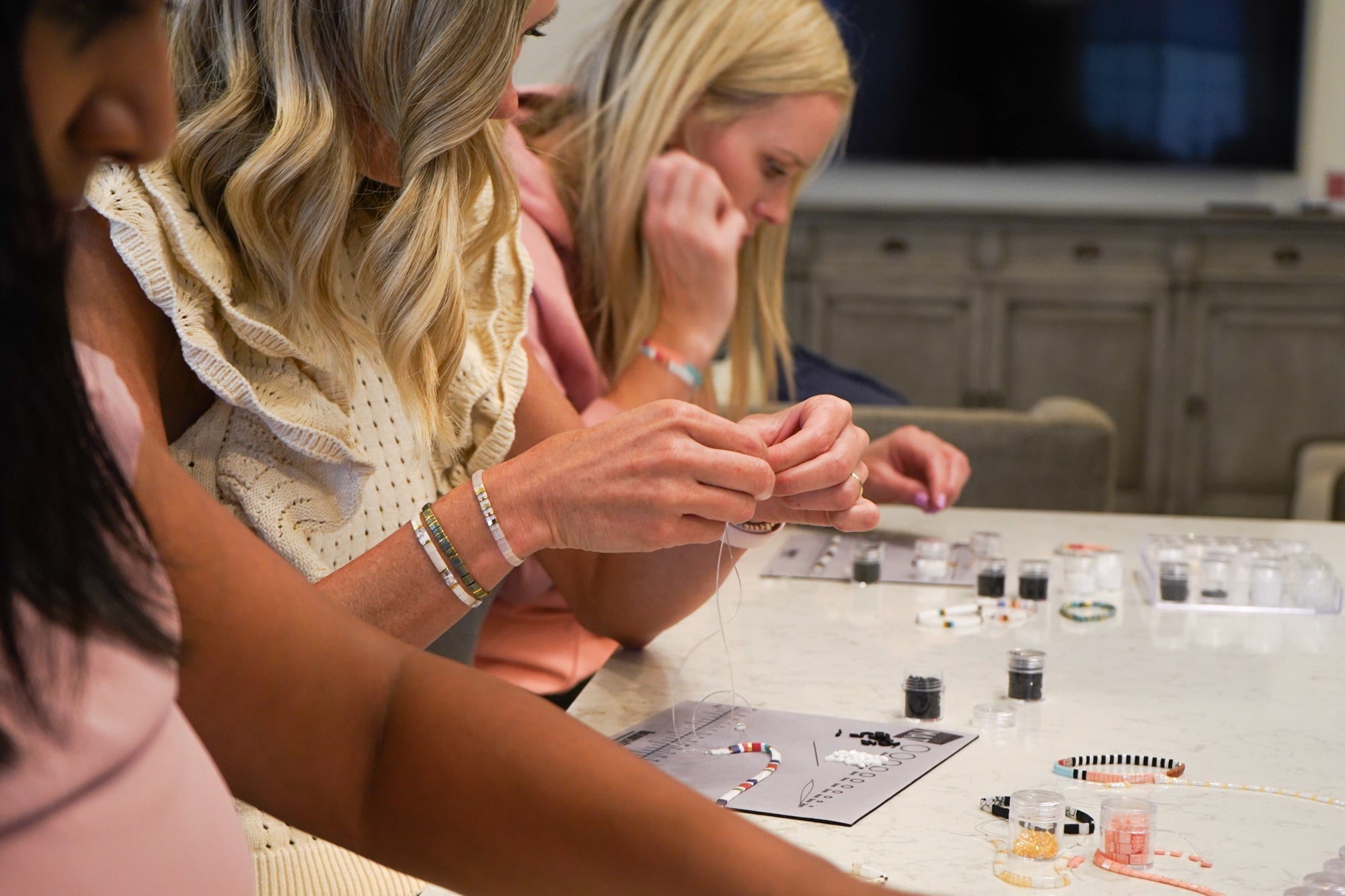
Here's the sequence I actually use when I'm setting up a new color run:
- Spread the beads flat on a bead mat, all facing the same way, holes lined up left to right.
- Thread your first bead through both holes and note which hole your working strand passed through first; that's your "top hole" for the rest of the piece.
- Pick up each following bead with the same hand motion, top hole first, every time, instead of grabbing beads at random from the pile.
- Check the row every 5 to 6 beads. A bead that's rotated a quarter turn from its neighbors will sit visibly higher or lower; back up and fix it before you keep going.
- Pull the cord snug from both ends once the row is done, so the flat faces settle flush against each other before you knot off.
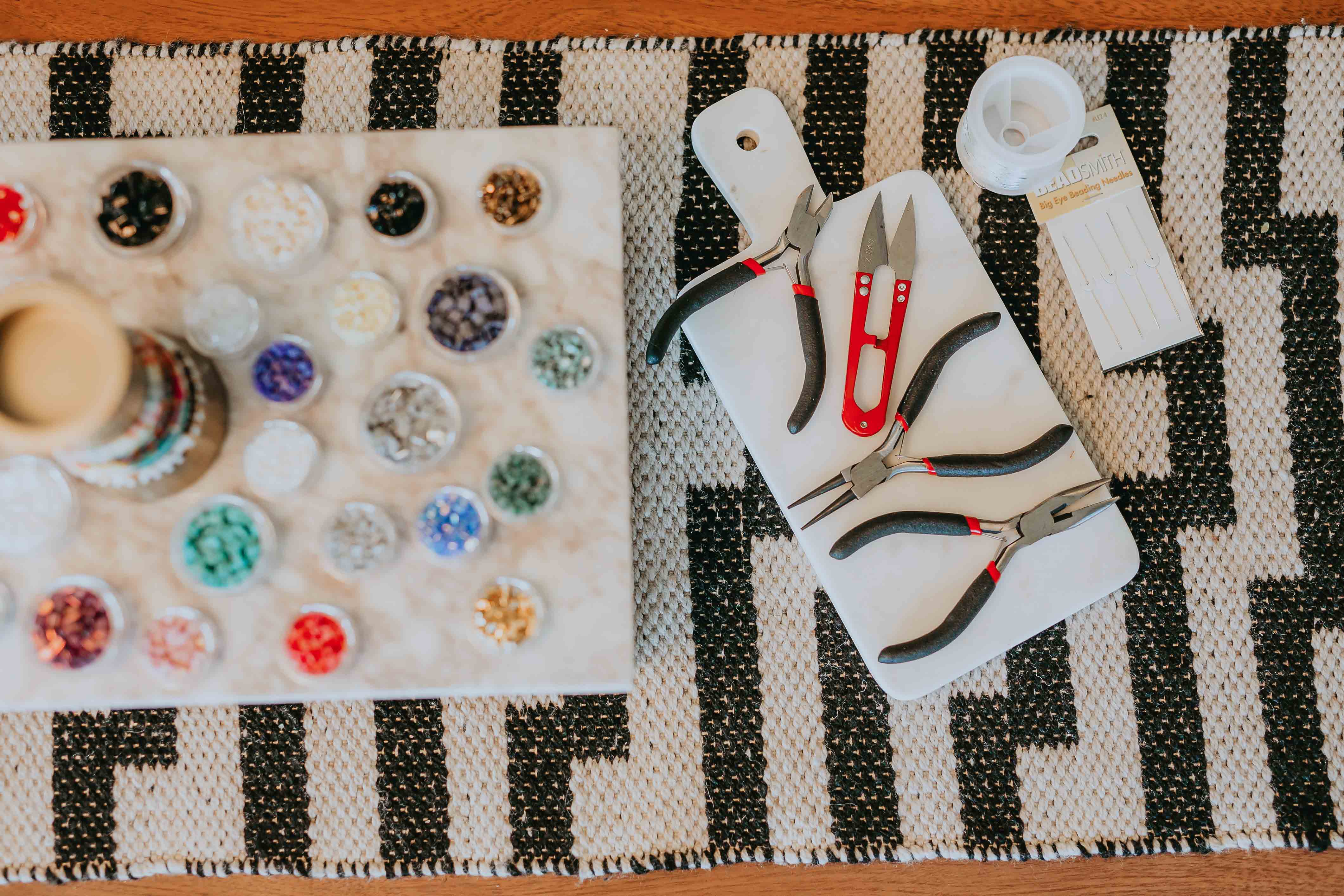
Two needles, one on each end of a doubled strand of elastic, make this faster because you're not re-threading the same hole twice per bead. The Beadaholique guide to two-hole beads covers this same hole-tracking habit for other multi-hole shapes, and the logic carries straight over to Tila.
Why Does Consistent Orientation Matter With Two-Hole Beads?
A single-hole round bead can spin freely around its cord, so orientation never comes up. A two-hole bead like Tila is pinned at two points instead of one, which is exactly why it lays flat and doesn't roll, but it also means a bead threaded backward won't match its neighbors' angle. One flipped bead in a row of thirty is enough to throw off the whole line.
This is where the payoff shows up. Get the orientation right across a full row and the flat faces meet edge to edge, so the finished piece reads as one continuous tile surface rather than a string of separate beads. That's the look people are actually going for when they choose Tila over round seed beads in the first place; a crooked bead breaks that illusion fast, even if nobody looking at the bracelet could say exactly why it looks off. Fire Mountain Gems' Tila bead collection page notes the same standard sizing and two-hole structure, which is the mechanical reason orientation matters so much more here than with a round seed bead.
If you're working with a child on a stacked bracelet project, keep the loose beads with an adult until they're strung. They're small glass pieces and a choking hazard, so they're not something to leave within reach of a toddler or anyone who still mouths small objects.
Where Do Mack & Rex's Tila Beads Come From?
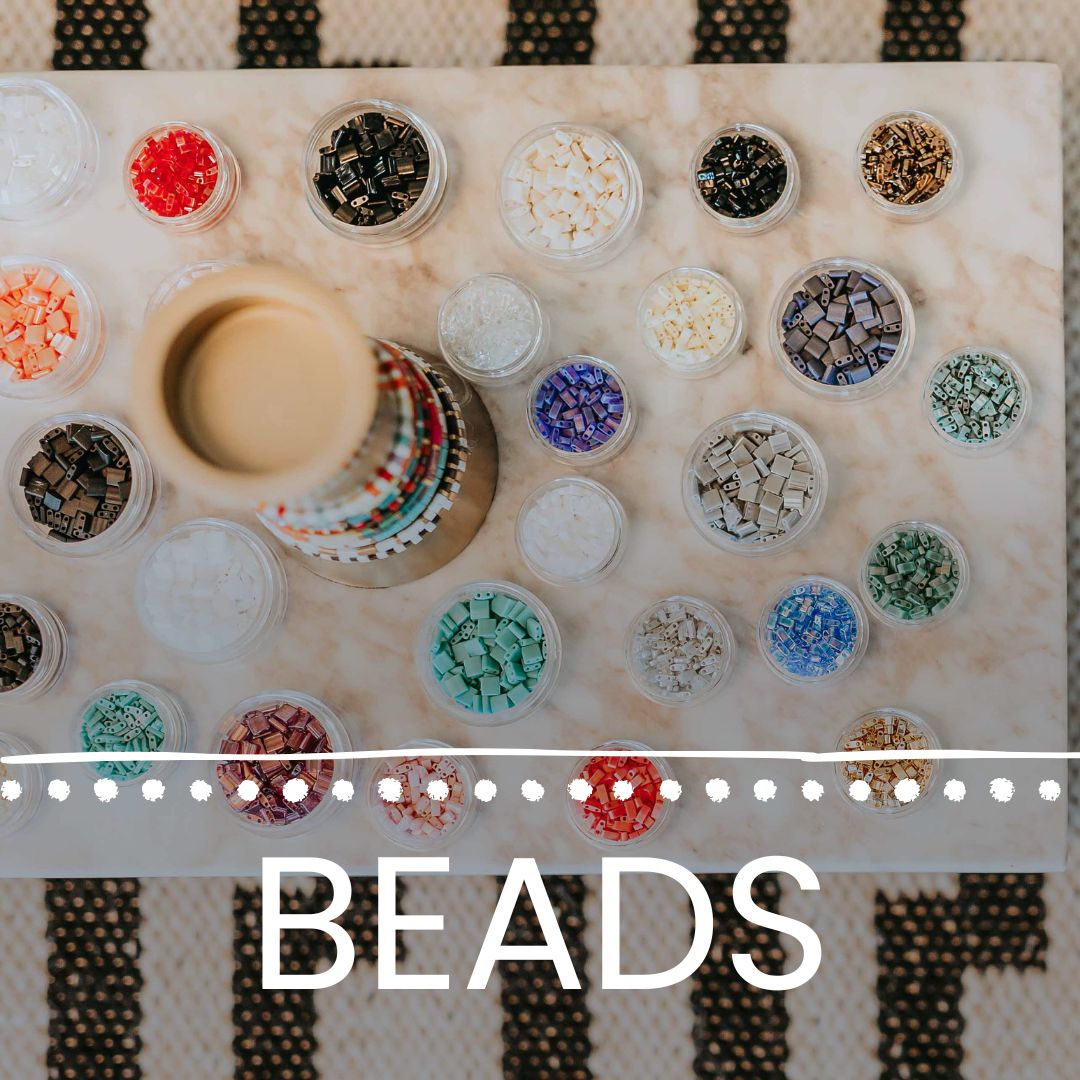
Miyuki is the Japanese glass bead maker that developed the Tila shape, and "Tila" is Miyuki's own trademark for this flat, two-hole tile bead. Mack & Rex sources genuine Miyuki Tila beads rather than producing the glass itself, the same way most specialty bead shops work with Miyuki as the manufacturer. The Mack & Rex seed bead collection carries loose Tila mixes in rotating colorways, so you can see the flat shape and holes up close before you commit to a project.
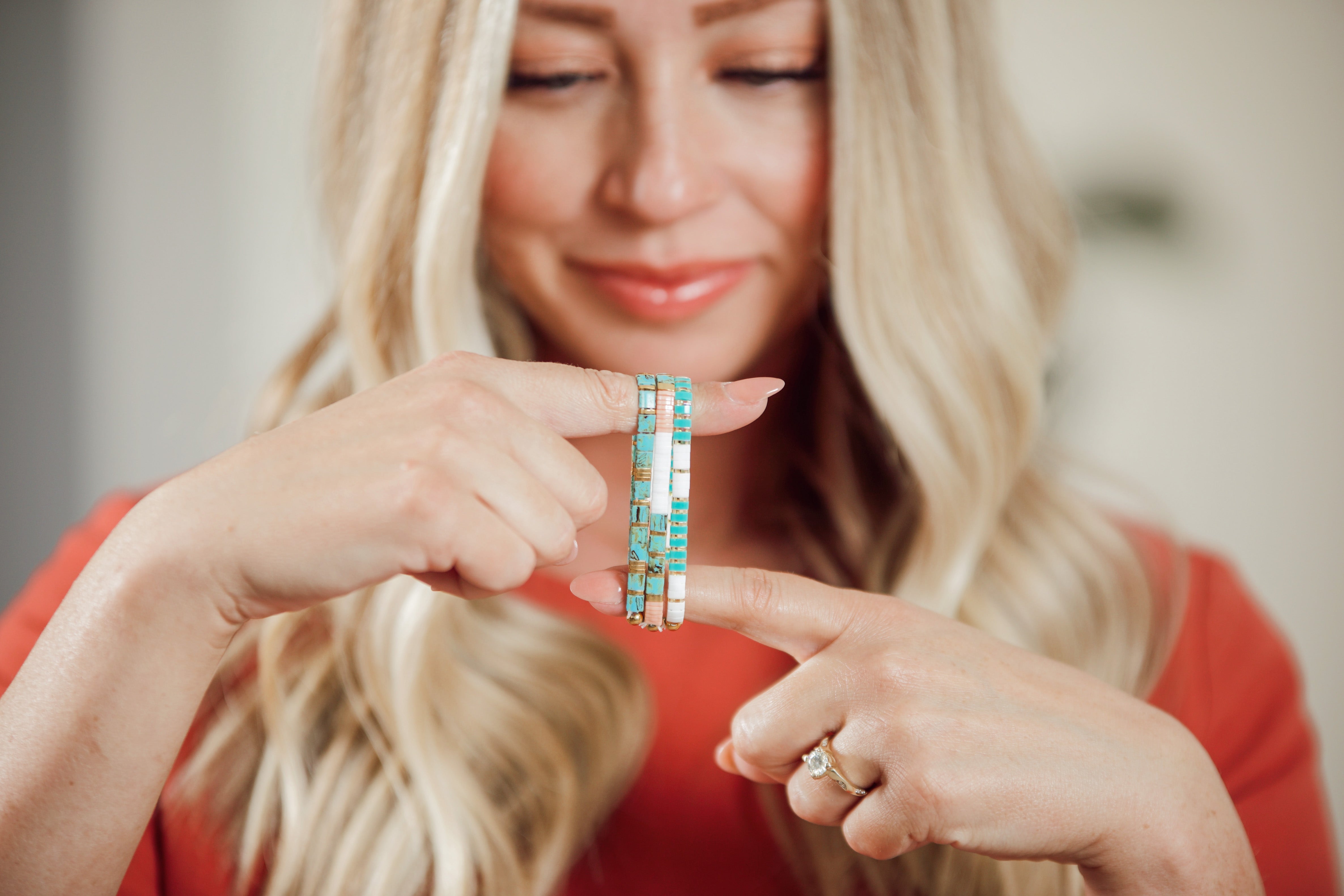
If you'd rather skip the orientation question entirely, the finished bracelets are already strung and checked for you. Collections like STAINED and EVERGREEN EDIT rotate through new Miyuki finishes most months, and every finished piece carries Mack & Rex's quality guarantee with sizing from XXS to 5XL.
Frequently Asked Questions
Do tila beads have a front and a back?
No. Both flat faces of a Tila bead are cut and finished the same way, so there's no printed or textured side that marks a front. The thing that actually varies from bead to bead is which direction the two parallel holes run, and that's what you line up for a clean, uniform row.
How can I tell which way a tila bead is facing?
Look at the two holes, not the glass face. Lay the bead flat and check whether the holes sit side by side the same way as the beads next to it. If the holes line up in the same orientation across the whole row, the piece will sit flush; if one bead is rotated, it will sit slightly higher or crooked.
Does it matter which hole I string first?
It matters less which hole you start with and more that you're consistent. Pick a hole on your first bead, call it the top hole, and run every bead's corresponding hole on that same strand for the rest of the piece. Switching back and forth is what causes a finished row to twist.
Why do my tila bead bracelets look uneven even though I used the same beads?
Uneven rows almost always trace back to inconsistent hole orientation, not bad beads. A bead that's rotated 90 degrees from its neighbors sits slightly off the flat plane of the row, which reads as uneven even though every bead is the correct size and shape.
Does Mack & Rex ship tila beads internationally?
Yes. Mack & Rex ships internationally, with shipping and any customs or duties calculated at checkout. Free shipping applies to US orders over $100; it's not a blanket offer, and international orders ship at the checkout-calculated rate rather than being unavailable.
Ready to see the flat two-hole shape for yourself? Browse the Mack & Rex seed bead collection for loose Tila mixes in rotating colorways, or skip the stringing and shop the finished, ready-to-wear bracelets. US orders over $100 ship free, and international orders ship with duties calculated at checkout.