


Do You Need Spacer Beads for a Tila Bead Bracelet?
Do you need spacer beads for a tila bead bracelet?
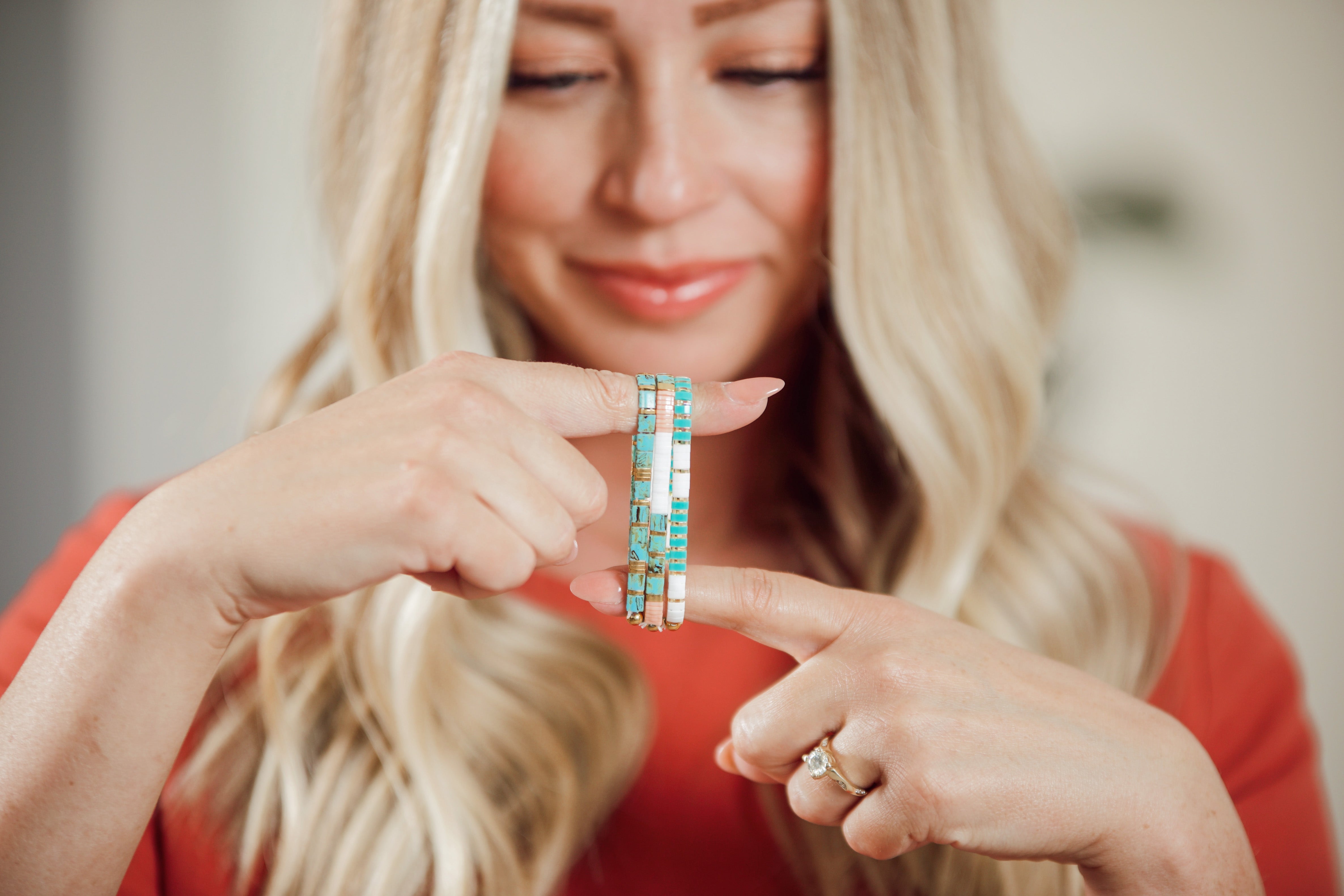
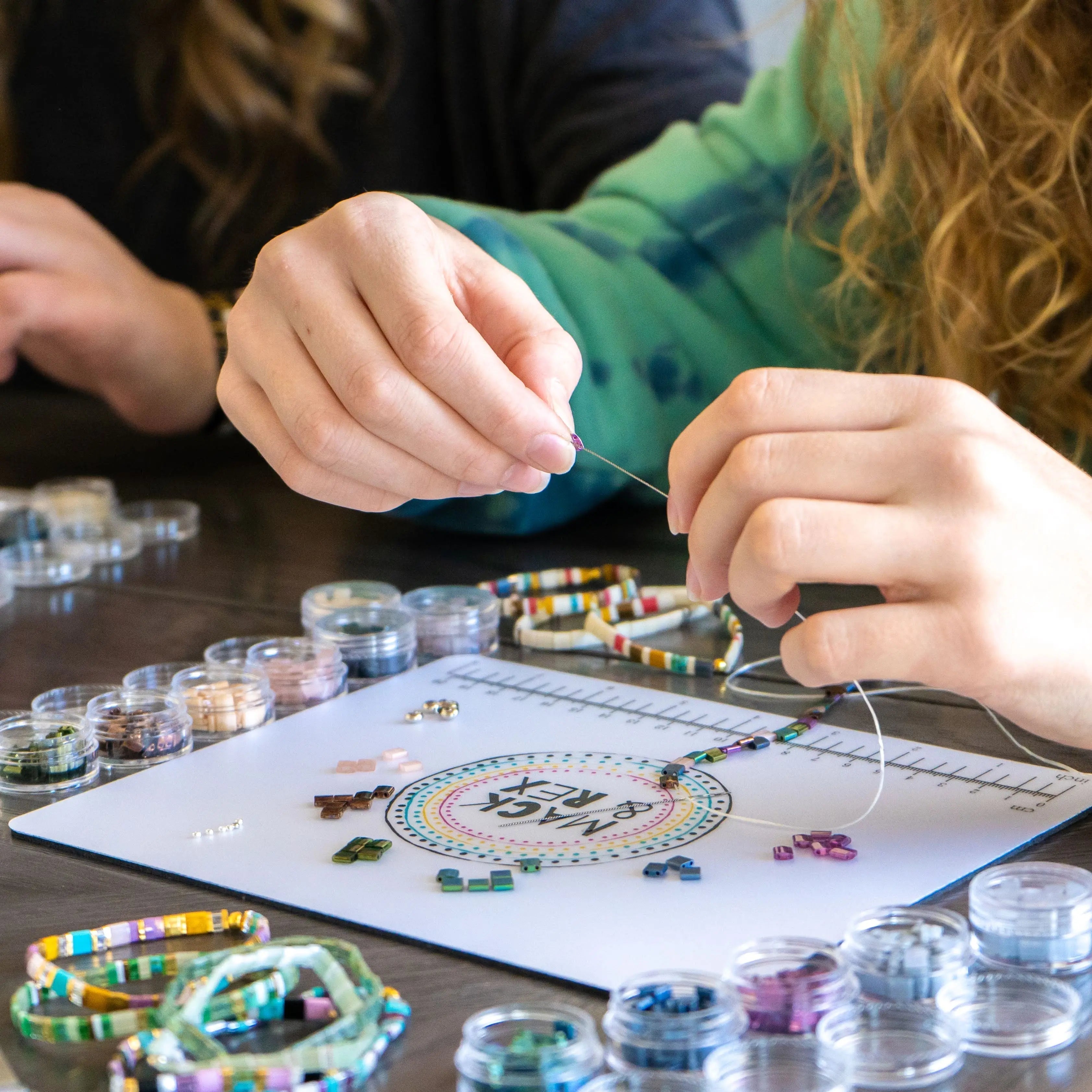
No, you don't. Tila beads are flat, square glass tiles that sit snug against each other, so a bracelet looks finished with tila beads alone. Spacers are a style choice. They add color breaks, texture, or a bit of extra length, but nothing about the build requires them.
We hear this question a lot from new crafters. Many assume a bracelet needs little "filler" beads between the main ones, the way a strand of pearls might. With tila beads, the opposite is usually true. The two-hole design and flat sides mean the beads line up edge to edge, and that tidy, tiled look is the whole point.
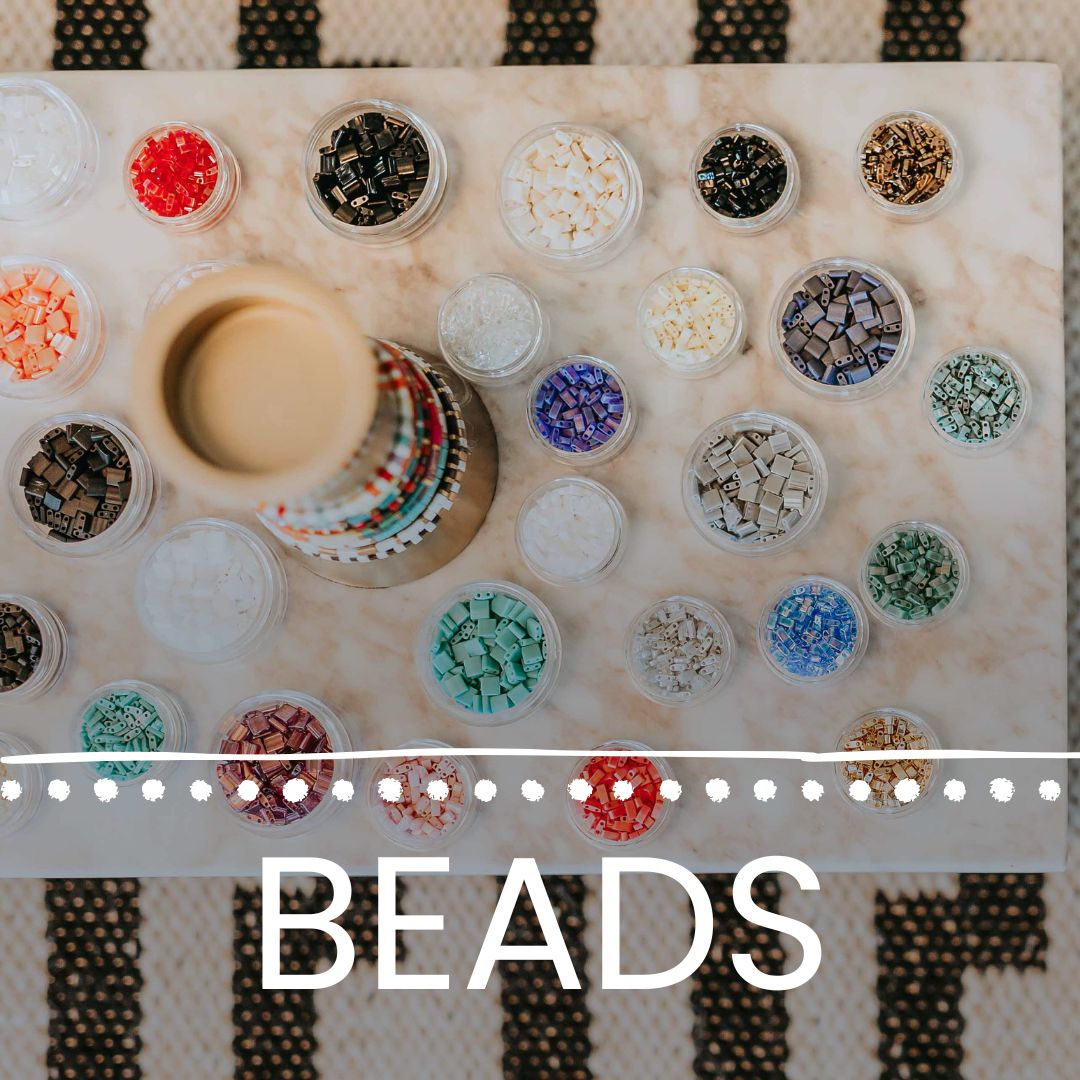
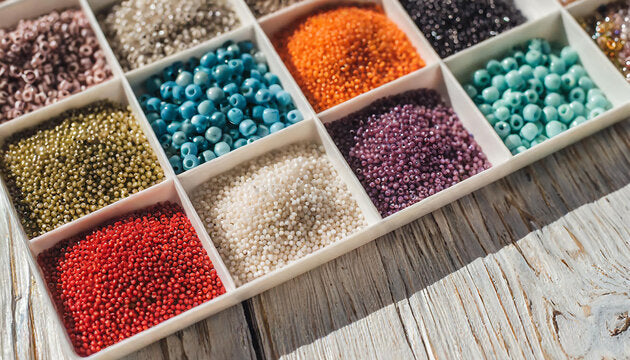
Tila beads are made by Miyuki, a Japanese glass bead maker, and Mack & Rex resells them. They're a type of seed bead, and seed beads in general are small, uniformly shaped glass beads used in everything from loom work to jewelry, as the Wikipedia overview of seed beads explains. What makes tila beads different from round seed beads is the flat tile shape and the second hole.
What does a spacer bead actually do in a bracelet?
A spacer bead creates a small gap or visual pause between larger or busier beads. In a tila bracelet, that means a little breathing room between colors, a texture contrast, or a bit of added length. It changes the look more than the structure.
Think about what a spacer does to the line of the bracelet. A solid row of tila beads reads as one smooth band. Drop a tiny round bead in the middle and the band breaks into sections. Some people love that. Others feel it makes the bracelet look busier than it needs to be.
Here's what spacers change in practice:
- Spacing. Each spacer adds a few millimeters. Several of them add up to a noticeably longer bracelet.
- Curve. Flat tiles bend a little at the joints. A round spacer between two tiles gives the cord more room to curve, so the bracelet hugs the wrist slightly differently.
- Look. Metallic or contrasting spacers add sparkle or definition. Matching spacers fade into the pattern.
When do spacer beads help in a tila layout?
Spacers help when your colors blend together, when you want a focal point, or when you're pairing tila beads with larger accent beads or charms. They give each element room to stand out. If your pattern already has clear contrast, you probably don't need them.
We've found they earn their place in a few situations:
Color-blocked patterns. Say you're stringing a sunset gradient from deep orange to soft pink. A single gold seed bead between color changes keeps the gradient from turning muddy. Without it, similar shades can run together.
Charms and larger beads. A round accent bead or small charm sitting directly against a flat tile can look cramped. One spacer on each side gives it room.
Fine-tuning fit. Suppose your wrist falls between sizes. Adding one or two small spacers can nudge the length without changing the tile count. It's an old trick among bracelet makers, and it works.
Stacking. When you're wearing several bracelets together, one with metallic spacers can act as the "bridge" between the plain ones. It ties the stack together.
When should you skip spacer beads?
Skip them when your pattern is already detailed, when you want the cleanest tiled look, or when you're making a bracelet for a kid's smaller wrist. Extra beads add bulk and more knots-worth of cord to manage. Fewer pieces also mean a simpler build.
Short rule. If the pattern already looks good, leave it alone.
Busy patterns are the big one. Stripes, checkerboards, and multi-color repeats already have rhythm. Adding spacers on top fights that rhythm. The same goes for bracelets where you want a seamless, almost fabric-like look.
Kids' bracelets are another case. Smaller wrists mean fewer beads, and every spacer takes up room you could use for color. If children are crafting alongside you, keep in mind that beads are a choking hazard. Small parts need adult supervision, and loose beads aren't suitable for very young children.
Will spacer beads change how stretchy the bracelet feels?
Not directly. Stretch comes from the elastic cord and the total number of beads. Spacers add length and gaps, which can make a bracelet fit looser than the tile count alone suggests. Re-measure your wrist after adding any, and string one test bracelet first.
Here's the practical side. A stretch bracelet works because the cord is under a little tension when you wear it. If you add four spacers to a design that already fit perfectly, you've added maybe a centimeter. That can tip a snug bracelet into a slipping one. The fix is simple: take out a tile or use fewer spacers.
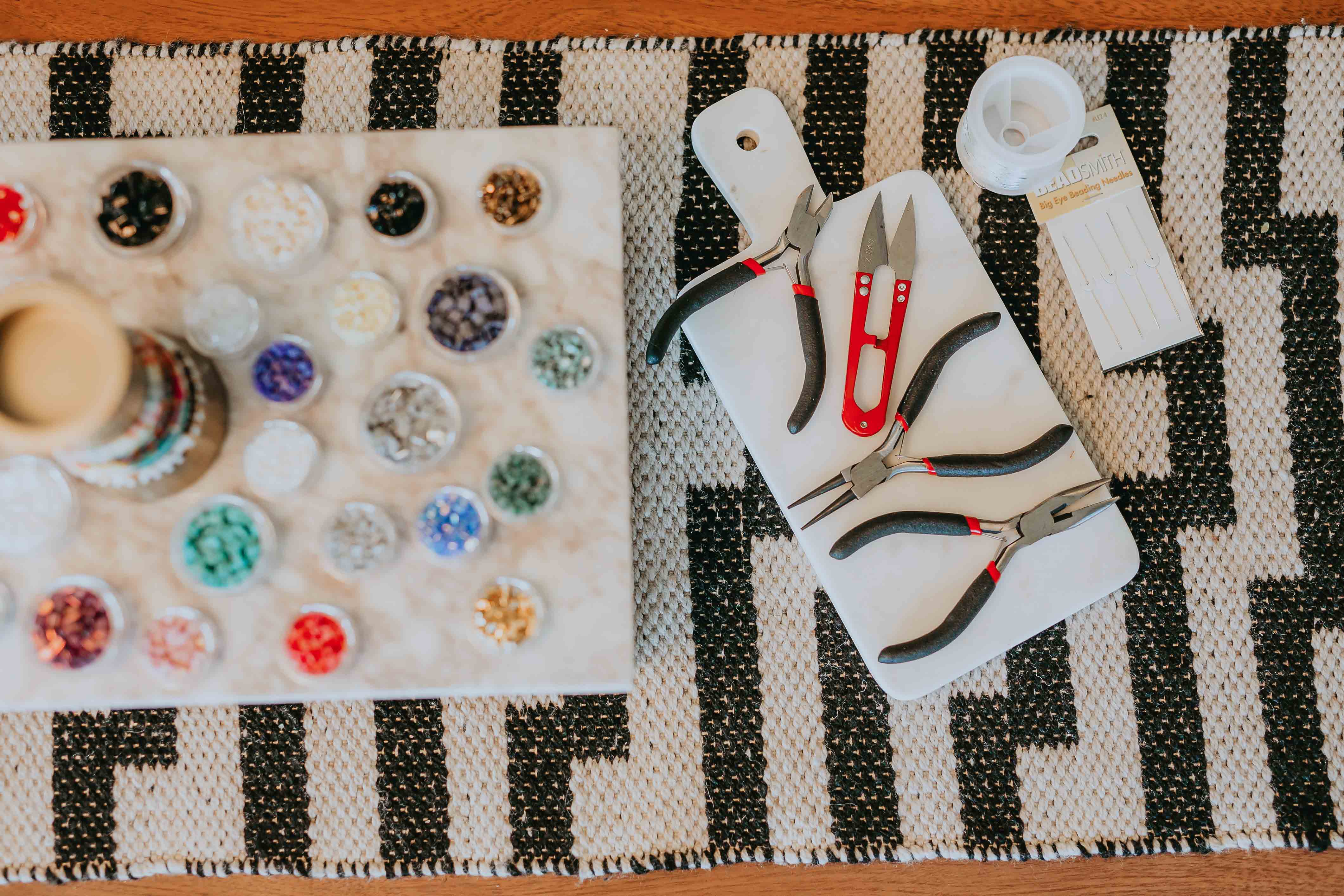
Cord choice matters just as much. Clear, thicker stretch cord holds up better when you're passing it through more beads. Bead and jewelry retailers like Lima Beads carry a range of stretch cords and findings if you want to compare options. And always check the hole size on any spacer you buy, since tila beads have two holes and you may want to double the cord through them.
What can you use as a spacer with tila beads?
Small round seed beads (size 11/0 is a common choice), metal rondelles, and tiny charms all work well. Pick spacers with a hole wide enough for your cord to pass through comfortably, and match the finish to the color story of the bracelet.
A few practical notes from the bench:
- Metallic seed beads in gold, silver, or rose gold are the classic choice. They read as a tiny highlight rather than a full bead.
- Matte or opaque seed beads in a neutral shade give contrast without competing with the tiles.
- Metal rondelles add a more polished, jewelry-store feel but are heavier, so use them sparingly.
According to the Wikipedia reference on beads, spacers are one of the oldest functional bead types, used simply to separate other beads. That's all they've ever done. Nothing says you have to use them.
What comes in a tila bracelet kit, and do the kits include spacers?
Mack & Rex kits focus on tila beads in coordinated colors plus what you need to string them. Contents vary by kit, so check each product page for the exact list. Trio kits make 3 bracelets, the Starter Kit makes 20, and The Ultimate Tila Bracelet Kit makes 80.
Pricing gives you a feel for the range. Our Trio kits (3 bracelets) are $44.99, and the DIY Bracelet Kit Club (also 3 bracelets) is $36.99. For bigger projects, the Tila Bead Starter Kit makes 20 bracelets at $189.99, and The Ultimate Tila Bracelet Kit makes 80 at $399.99. An All-in-One tools and supplies kit runs $39.99 to $43.99 if you already have beads. Prices change with drops, so look at the live product page before you buy.
Not sure where to start? Tila mixes are around $5 to $9 and give you a handful of colors to play with. Grab a mix, string one bracelet without spacers, then string a second with a couple of gold seed beads. Put them side by side on your wrist. You'll know in about ten minutes which look you prefer.
Not feeling the DIY side? Finished bracelets run roughly $20 to $25 each, and there's a buy 3 bracelets, get 1 free offer on finished bracelets only (no code needed). That offer doesn't apply to kits or loose beads. Free shipping covers US orders over $100, and we ship internationally, with any duties calculated at checkout.
How do you add spacers step by step?
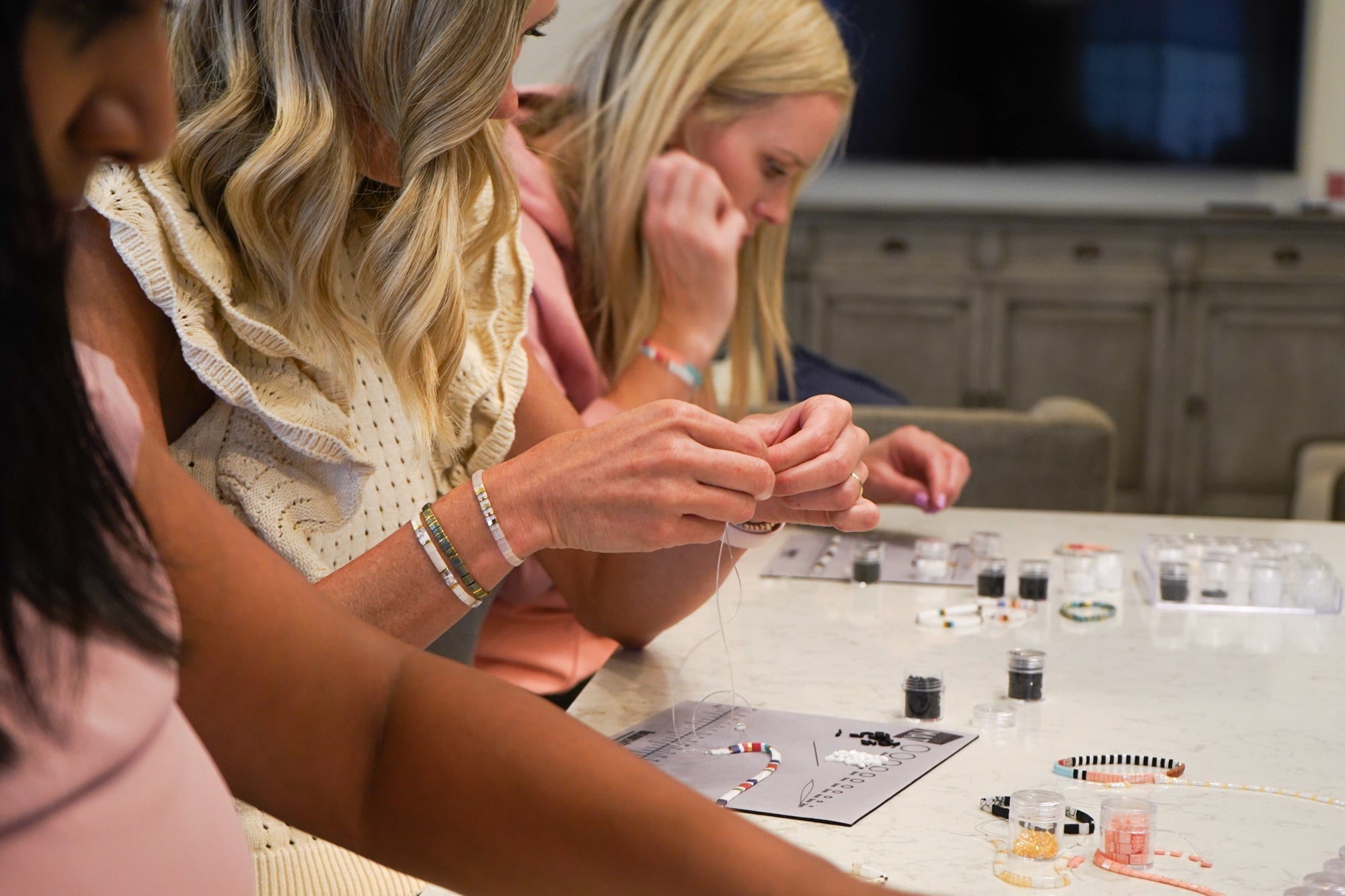
Lay out your tila beads, mark where a gap would help, test one spacer, then measure and string. Always test on your wrist before tying the final knot, because spacers add length. The whole process takes about 15 minutes for a first bracelet.
- Lay it out. Arrange your tile beads on a bead mat or towel so they don't roll. Build the full pattern before touching the cord.
- Find the gaps. Look for spots where colors blur or where a charm needs room. Mark those spots with a spacer placed on the mat.
- Test one. Thread a few beads and one spacer onto a spare length of cord. See how it sits. Does it curve the way you want?
- Measure. Wrap a measuring tape around your wrist and add about half an inch for comfort. Compare that to your laid-out length, spacers included.
- String and tie. Thread everything on, tie a secure knot, and trim the tails. Give the bracelet a gentle stretch to check the fit.
A tip we share in our bracelet-making classes: if you're unsure, leave spacers out of the first bracelet. You can always make a second one. Mistakes in this hobby are cheap and fun.
Frequently asked questions
Do tila bead bracelets need spacers?
No. Tila beads are flat, square tiles that sit snug against each other, so most bracelets look complete without spacers. They're a style choice for adding color breaks, texture, or a little extra length.
Do spacer beads make a bracelet more stretchy?
Not by themselves. Stretch comes from the elastic cord and how many beads you string. Spacers add small gaps and length, which can loosen the fit slightly, so measure again after adding them.
What can I use as a spacer with tila beads?
Small round seed beads, metal rondelles, and tiny charms all work. Choose spacers with holes large enough for your cord to pass through, especially if you plan to double the cord through the tila holes.
What comes in a tila bead bracelet kit?
Mack & Rex trio kits include tila beads in coordinated colors to make 3 bracelets. The Tila Bead Starter Kit makes 20 bracelets and The Ultimate Tila Bracelet Kit makes 80. Check each product page for the exact contents.
Ready to try it yourself?
Whether you go with spacers or without, the fun is in the layout. Browse our full range of tila beads and mixes, pick a palette you love, and spread happy one bracelet at a time. Miyuki and Tila are trademarks of Miyuki Co., Ltd.; Mack & Rex resells these beads and does not manufacture them.

