

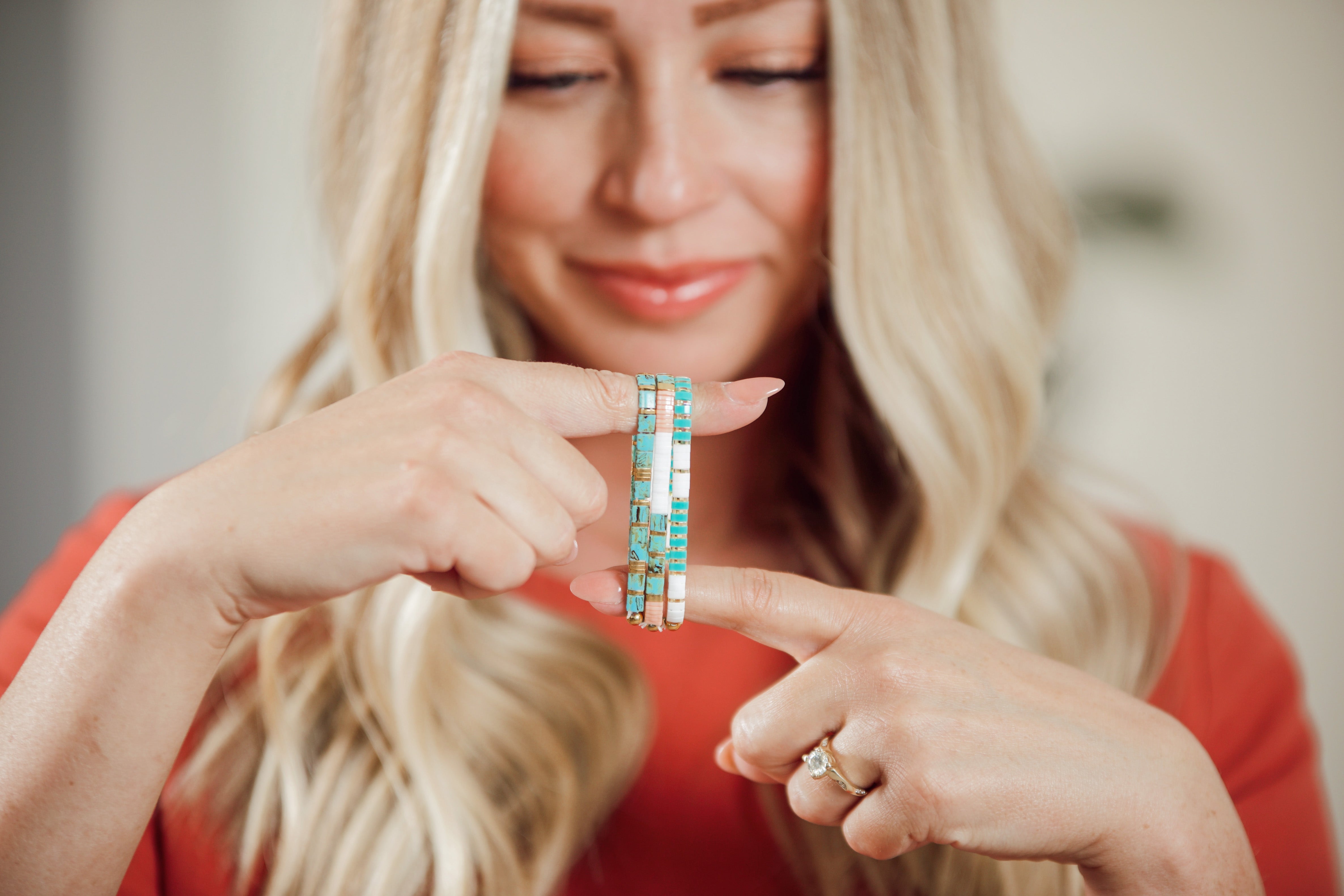
Easy Tila Bead Bracelet Patterns to Make from One Kit
What Can You Actually Make from One Tila Bead Starter Kit?
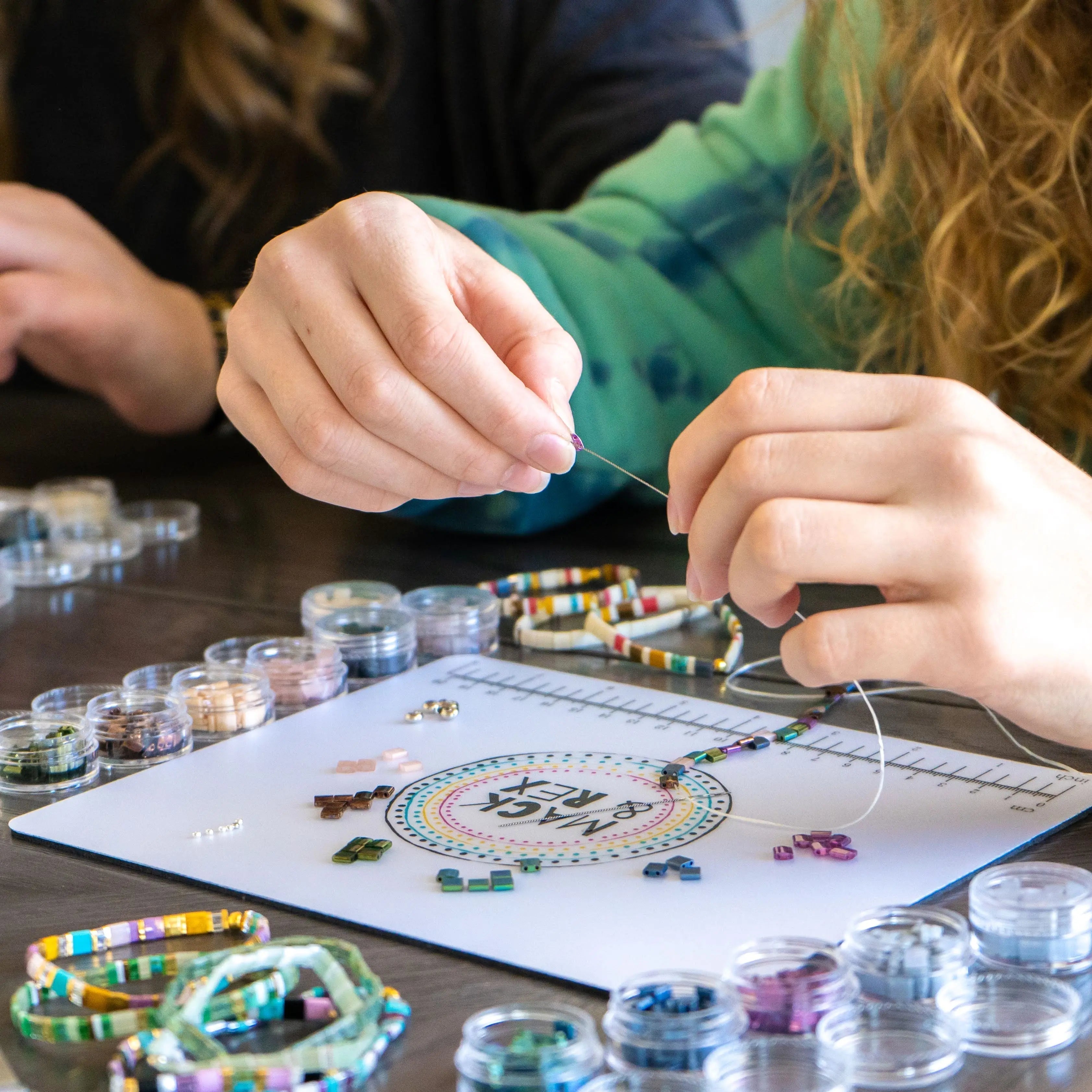
A single Tila Bead Starter Kit gives you enough beads for 20+ bracelets in one color pack, plus the pliers, locking needles, crimp beads, knot covers, and a measuring bead mat to finish every one. That's enough material to try several different layouts from the same box rather than planning one bracelet and stopping there.
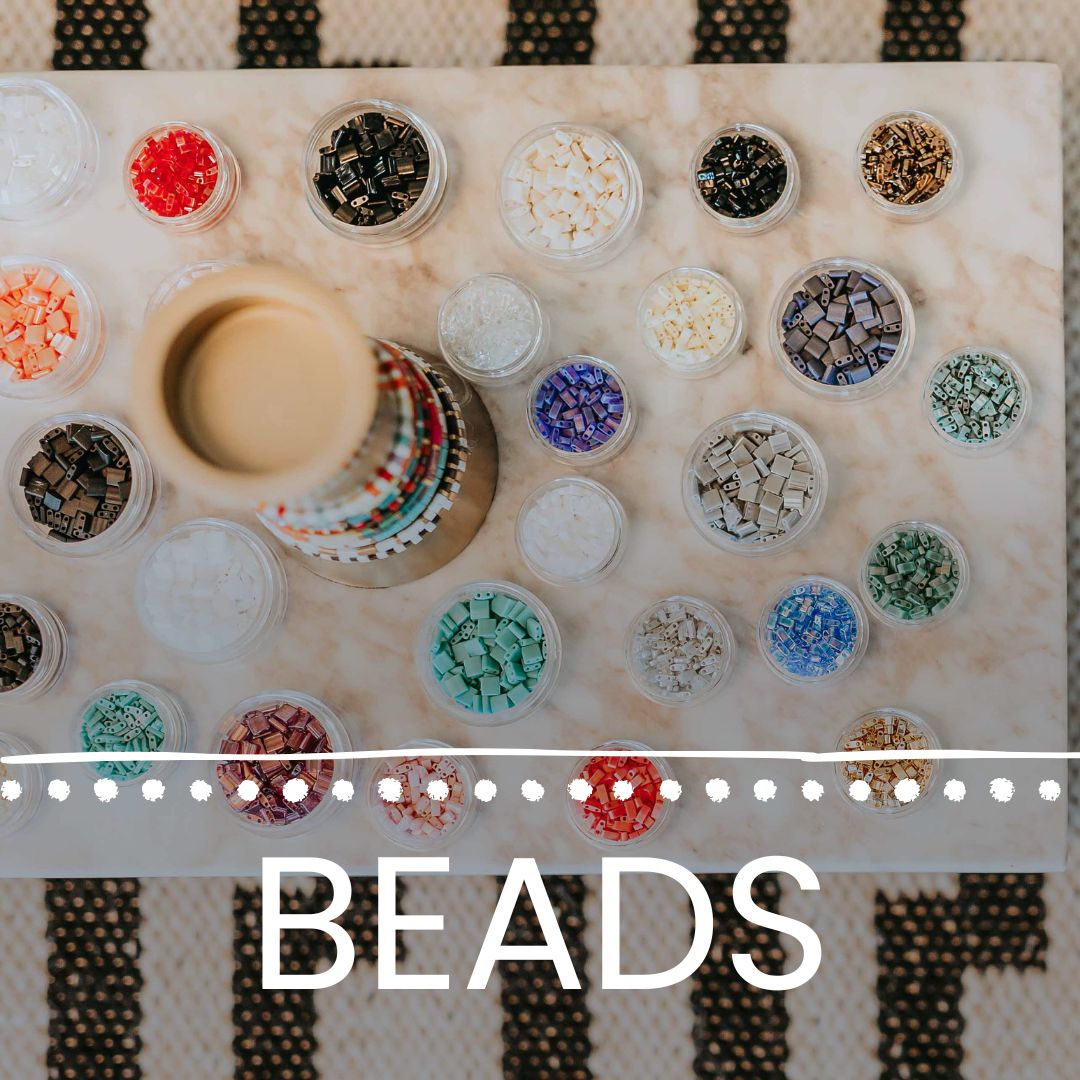
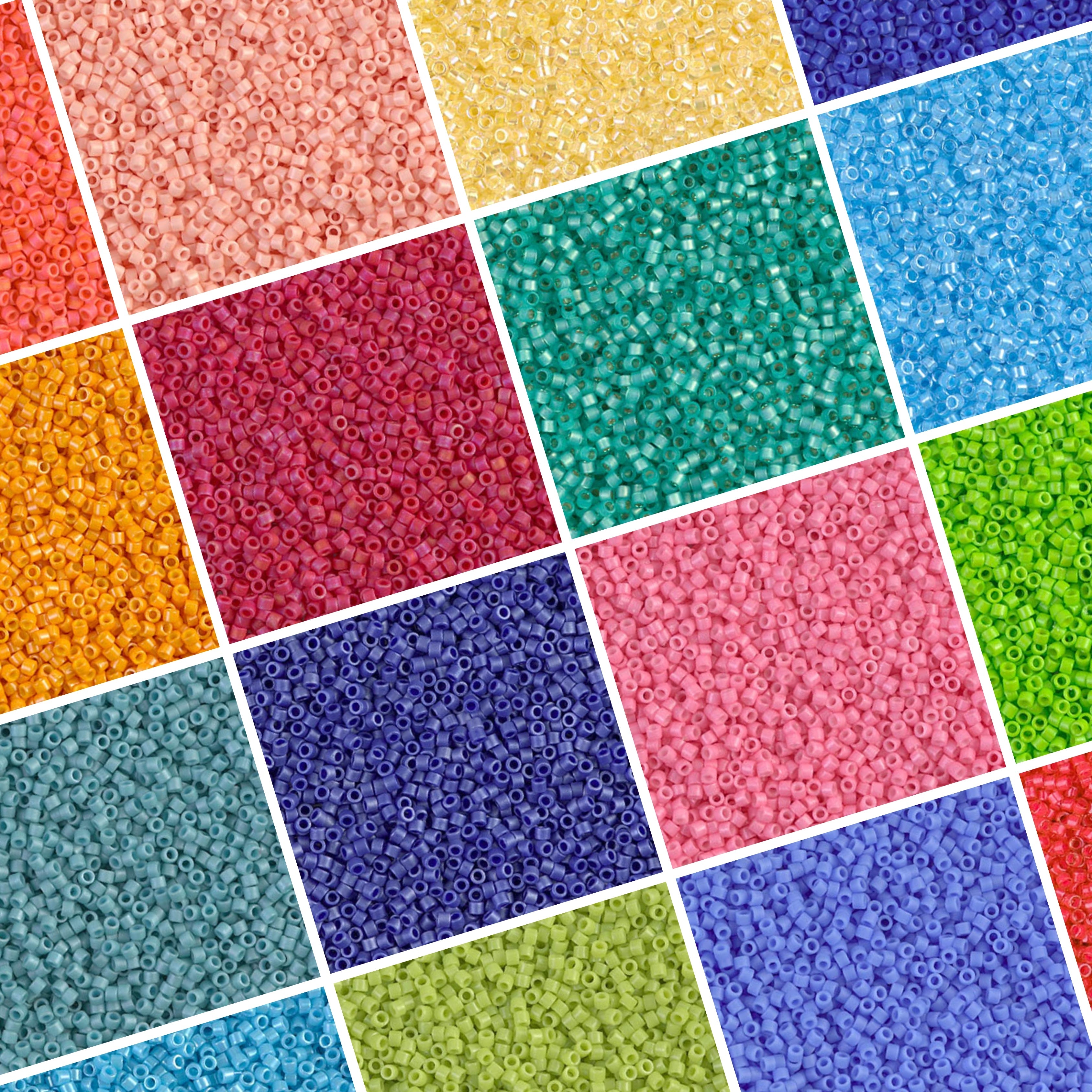
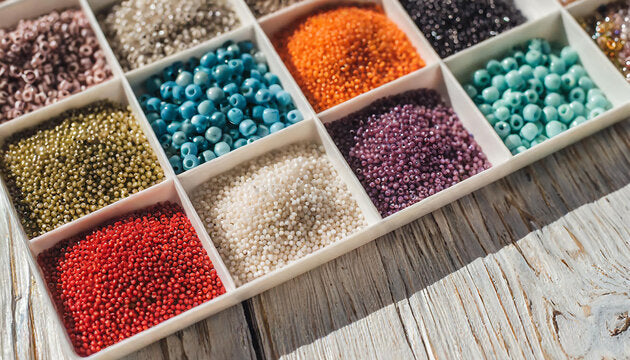
Twelve bead colors come sorted into clear containers inside the kit, which matters more than it sounds like it should. You're not digging through a jumbled bag trying to tell a dusty rose from a dusty mauve. Sorting loose beads by color before stringing anything is a basic habit most bead retailers recommend for multi-color work, since it's much faster to grab from a labeled container than to pick through a mixed pile mid-pattern.2 You already have a sorted palette here, so the only real decision left is how to arrange it. Below are six patterns that use that same palette in different ways, ranked roughly from simplest to most advanced.
How Do You Lay Out a Color-Block Tila Bracelet Pattern?
Color-block means stringing solid sections of one color before switching to the next, usually three to five sections per bracelet. It's the easiest pattern in this list because you're tracking one color at a time, not a repeating sequence.
Pick three or four shades from your color pack and decide how many beads go in each section, something like 8 beads of color one, 8 of color two, 8 of color three, repeated until the cord reaches your wrist measurement. Lay the full sequence out on the bead mat first. If a transition looks off, you can swap a section before you thread a single bead. A lot of first-time crafters find that laying it out in advance is the single biggest difference between a bracelet that looks planned and one that looks accidental.
How Do You Build a Gradient or Ombre Tila Bracelet?
Gradient patterns walk one color family from light to dark (or dark to light) across the bracelet, using three to five shades from the same palette. The effect reads as a smooth fade rather than a hard color change, and it's one of the most requested looks in the Mack & Rex reviews.
Start by picking your lightest and darkest shade, then choose one or two shades in between to bridge them. Order them light to dark, string two or three beads of each shade before moving to the next, and keep the transition points even on both sides of the clasp if you want the fade to look balanced when worn. One reviewer put it simply: "Wonderful color. I matched it with a pearl white and gold," which is basically a gradient in two words. A gold-to-cream-to-white run captures that exact idea.
What's an Easy Alternating Tila and Accent Bead Pattern?
Alternating means pairing one tila bead color with a single accent color in a repeating one-to-one sequence, tila, accent, tila, accent, all the way around. The repetition does the visual work for you, so even a busy color combination reads as intentional rather than random.
Pick a dominant color (this will make up half your bracelet) and an accent color with real contrast, a dark neutral against a bright color, or a metallic against a matte shade. Seed beads, the broader bead family tila beads belong to, have been used this way in jewelry and decorative work for centuries precisely because small, uniform pieces make contrast patterns easy to repeat accurately.3 String one bead of each color in strict alternation. This is a good pattern for practicing even tension on the elastic, since any gap or crowding shows up immediately once the sequence repeats.
How Do You Make a Striped Tila Bracelet Pattern?
Stripes use short, even bands of two or three colors repeated in the same order around the whole bracelet, which is different from color-block because the bands are shorter and the sequence repeats multiple times rather than running once.
A simple three-color stripe might go 3 beads color A, 3 beads color B, 3 beads color C, then repeat that nine-bead block until the cord is full. Shorter bands (2 to 3 beads) read as a tighter, more graphic stripe; longer bands (5 to 6 beads) read as a looser, more casual pattern. Lay one full repeat out on the mat, count the beads you'll need for the whole bracelet based on your wrist measurement, and pull that count from your sorted containers before you start stringing.
How Do You Create a Mirror or Symmetrical Pattern?
Mirror patterns build out from a center point, with the color sequence on one half of the bracelet repeating in reverse on the other half. The center bead (often a standout color or a different bead shape) anchors the design, and the rest of the bracelet fans out symmetrically from it.
Lay your sequence out from the middle first: pick a center bead, then add colors moving outward, color 1, color 2, color 3. Once you reach the halfway point, mirror the exact sequence back toward the other end, color 3, color 2, color 1. This pattern takes a little more planning on the bead mat than the others, but the payoff is a bracelet that looks deliberately designed rather than simply colorful.
What's a Good Confetti or Scatter Pattern for Leftover Beads?
Confetti scatters small accents of several colors across a neutral base with no repeating order, which makes it the best pattern for using up the odd few beads left in each container after you've made your other bracelets.
Choose one neutral as your base (cream, soft gray, or matte black works well) and scatter two or three beads of each remaining color at irregular intervals, never placing two accent colors directly next to each other. This isn't a pattern you plan bead-by-bead so much as one you build by eye on the mat, stepping back every few beads to check that the colors feel spread out rather than clumped on one side.
What Tools Do You Need Before You Start Stringing?
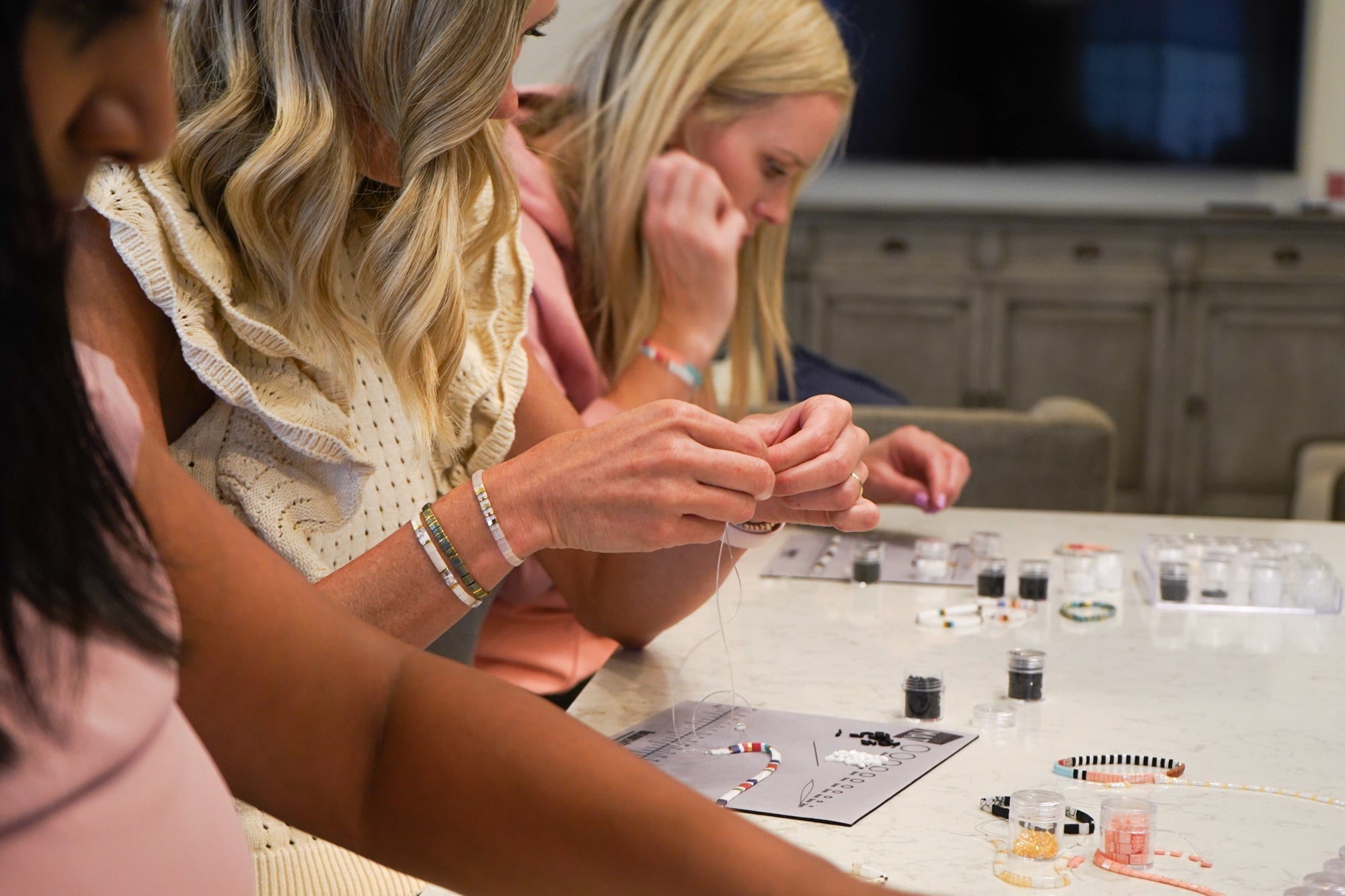
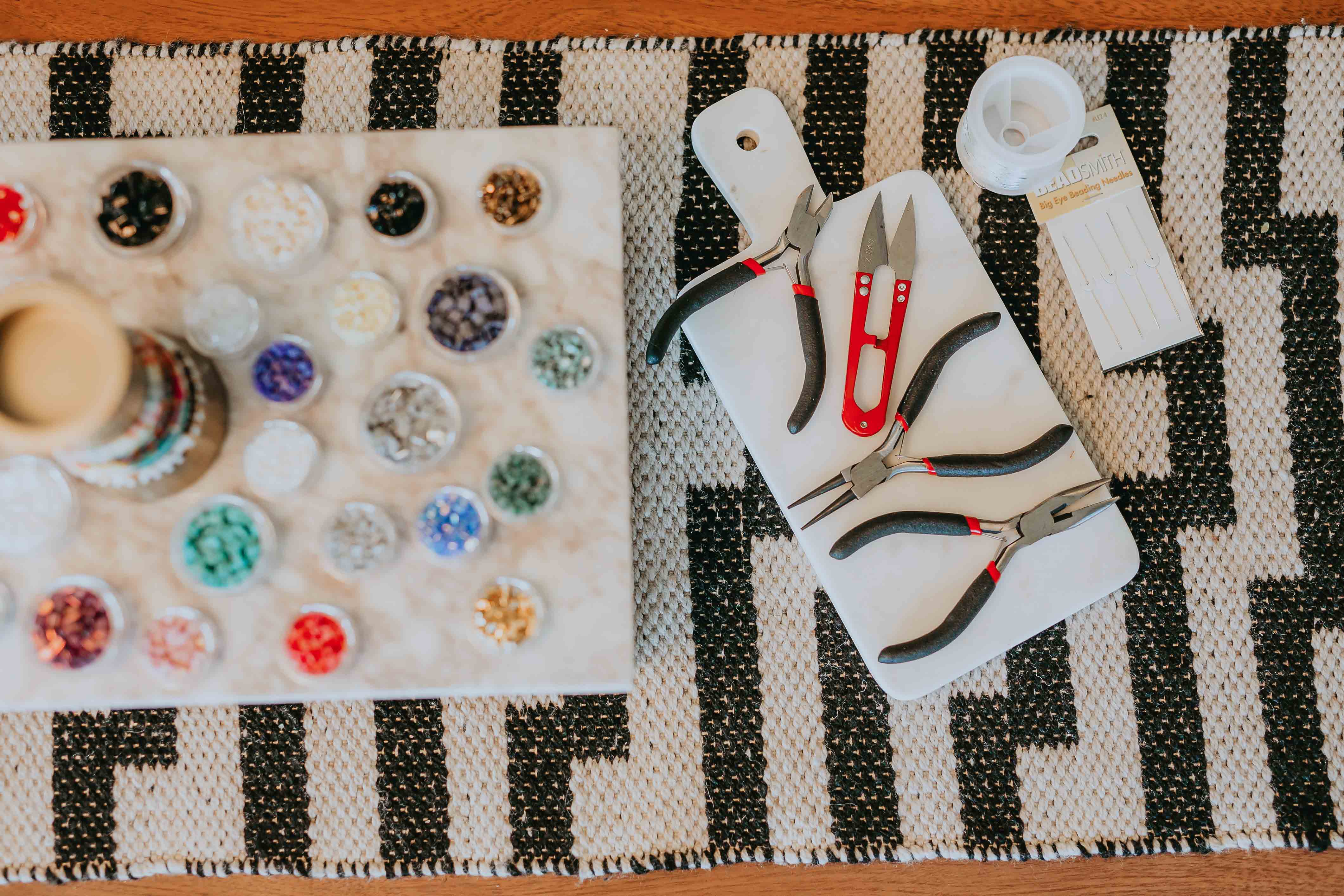
Just the basics already in the box. Everything in this guide uses only what ships in the Tila Bead Starter Kit: a set of pliers and side cutters, 0.5mm crystal-cord elastic, two locking beading needles, crimp beads, knot covers, and a bead mat with a built-in ruler for sizing, all included alongside your 12 sorted bead colors.
The locking needle is worth calling out specifically. It keeps the elastic from slipping back out while you're threading, which matters a lot on a pattern like mirror or gradient where losing your place means recounting beads. Miyuki, the Japanese manufacturer behind the tila bead itself, makes these as flat, two-hole glass tiles, a shape built specifically so two strands of cord can run through the same bead and keep it lying flat against the wrist rather than twisting.1 That two-hole design is part of why these particular patterns hold their shape better than a single-strand seed bead bracelet would.
A Quick Safety Note Before You Start Sorting Beads
Beads are small. That's worth stating plainly before anyone starts laying out a pattern.
Loose tila beads and the crimp beads included in the kit are a choking hazard, so they're not appropriate for young children to handle unsupervised. If kids are helping with a pattern, an adult needs to stay at the table the whole time, actively watching rather than checking in now and then. Keep the clear containers closed when you're not actively using them, and sweep up anything that rolls off the mat right away. Finished, properly tied bracelets are a different story and are fine for a child to wear once they're done.
Where Can You Find a Tila Bead Starter Kit to Try These Patterns?
One kit. Six patterns. There are still beads left over for a seventh if you want it. The Tila Bead Starter Kit comes in four color packs, so you can pick a palette that already leans toward the pattern you want to try first, a tonal pack for gradients, a higher-contrast pack for stripes and alternating designs.
At $189.99, the kit makes 20+ bracelets and includes every tool used in this guide. One reviewer summed up the appeal well: "I like the kit in a can monthly as it is a complete three bracelet project for me. The pieces and colors work so well together I love it." Mack & Rex ships internationally, with duties and shipping calculated at checkout, and a single starter kit at $189.99 clears the $100 threshold for free US shipping on its own. Tila and Miyuki are trademarks of Miyuki, the beads' manufacturer; Mack & Rex sells them as a retailer and builds the kits, tools, and instructions around them.
Frequently Asked Questions
How many bracelets can I make from one tila bead starter kit?
The Mack & Rex Tila Bead Starter Kit comes with enough beads to make 20+ bracelets from a single color pack, plus the tools, elastic, and knot covers needed to finish every one of them. That's enough material to try several different patterns without reordering supplies.
Do I need different colors for each pattern, or can I use one kit?
One kit works for every pattern in this guide. Each color pack ships with 12 bead colors sorted into clear containers, which is enough range to build a color-block design, a gradient, a stripe, or a mirrored layout without buying anything extra.
What's the easiest tila bead pattern for a first-time beader?
Color-block is the simplest starting point. You're grouping solid sections of one shade at a time instead of tracking a repeating sequence, so there's less to keep straight while you're still learning how the two-hole tila beads sit on the cord.
Are loose tila beads safe for kids to help sort and string?
Loose beads are a choking hazard, so they aren't appropriate for young children, and any crafting session with kids at the table needs an adult present the entire time. Older kids who can safely handle small pieces often enjoy picking the color order while an adult supervises the stringing.
Does buying a tila bead starter kit qualify for free shipping or the buy-3 offer?
Mack & Rex ships internationally, with shipping and any customs or duties calculated at checkout, and free shipping applies to US orders over $100, which a single $189.99 starter kit clears on its own. The buy-3-bracelets-get-1-free offer applies only to finished, ready-to-wear bracelets, not to kits.