
Heishi Bead Bracelet Colors for Winter Stacks
What Heishi Bead Colors Actually Work for a Winter Stack?
Deep jewel tones (garnet, sapphire, amethyst), frosted neutrals (ash grey, bone white, oatmeal), and warm metallics (gold, bronze, antique brass) are the three color families that read as winter on a heishi bracelet. Polymer clay heishi holds these shades evenly disc to disc, so a stack looks deliberate, not muddy. Below are five specific palettes, how to build each one, and where tila beads fit in.
Why Does Heishi Take Winter Colors Differently Than Other Beads?
It's the shape and the material working together.
Heishi is a flat disc with a hole through the center, a profile that traces back to shell discs cut by hand long before polymer clay existed as a material.1 That flat surface catches light differently than a faceted bead. A deep garnet heishi disc looks like a solid wash of color because the whole surface faces the same direction in a strand, while a faceted tila bead in the same shade throws small flashes of light off each cut edge. Neither effect is better, they just do different jobs in a stack, which is exactly why heishi and tila pair so well when you want both a flat color block and a bit of sparkle in the same winter palette.
Polymer clay also matters here. Because it's molded and cured rather than dyed or cut from a natural surface, color stays consistent across an entire strand.2 That consistency is what lets a winter palette built on something like deep sapphire actually look like one unified shade on the wrist, rather than six slightly different blues.
Palette 1: Garnet and Gold
Deep garnet red heishi paired with warm antique gold and a thin strand of cream. This is the richest, most holiday-leaning palette on the list, close in spirit to a deep cranberry but warmer and less sweet. It works equally well against a cream sweater or a black coat.
How to stack it: two strands of garnet as your base color, one gold strand as the metallic anchor, and cream in the smallest amount just to give your eye a resting point. If you want to add a tila piece, a gold-toned finished tila bracelet slots in right next to the gold heishi strand without fighting it.
Palette 2: Sapphire and Ash
Sapphire blue heishi, ash grey, and a hint of silver. This is the coldest, most "long winter night" palette here, built for anyone who wants the season's darkest mood rather than its cozier side. Sapphire heishi reads almost navy in low light and genuinely blue in daylight, which gives the stack some range depending on where you're wearing it.
How to stack it: sapphire in the center as the dominant color, ash grey on either side, with a single silver strand as the accent. Keep this one to three bracelets total. Any more and the cold tones start to feel flat instead of crisp.
Palette 3: Bone and Bronze
Bone white (closer to ivory than true white), warm bronze, and a touch of camel. If Garnet and Gold is the "holiday party" palette, Bone and Bronze is the "everyday through January" version, warm and neutral enough to wear with anything and not read as seasonal decor once the tree comes down.
How to stack it: bone as your base in two strands, bronze as the accent, camel to bridge the two. This trio sits close together on the color wheel, so it looks cohesive even if you only own two of the three colors.3
Palette 4: Amethyst and Smoke
Amethyst purple heishi, smoky charcoal, and a pale lilac. This is the palette we'd point to for anyone who wants a jewel tone but finds sapphire or garnet too bold. Amethyst has enough depth to feel wintery without the stack reading as costume jewelry, and charcoal keeps it grounded.
How to stack it: amethyst as the lead color, charcoal as the neutral anchor, lilac in the smallest amount as a soft highlight. Pair with silver jewelry rather than gold for this one specifically. Gold tends to fight the cool undertone in amethyst.
Palette 5: Deep Olive and Copper
Deep olive heishi, warm copper, and oatmeal. This is the outlier on the list, less jewel-toned and more earthy, for anyone whose winter wardrobe skews toward forest green and rust rather than true cold tones. It also happens to transition straight into early spring without needing a palette change.
How to stack it: olive as the base, copper as the metallic accent (copper reads warmer than gold or silver and suits this combination better), oatmeal as the neutral. Three strands is plenty here since olive and copper already carry a lot of visual weight on their own.
How Do You Mix Heishi With Tila in One of These Stacks?
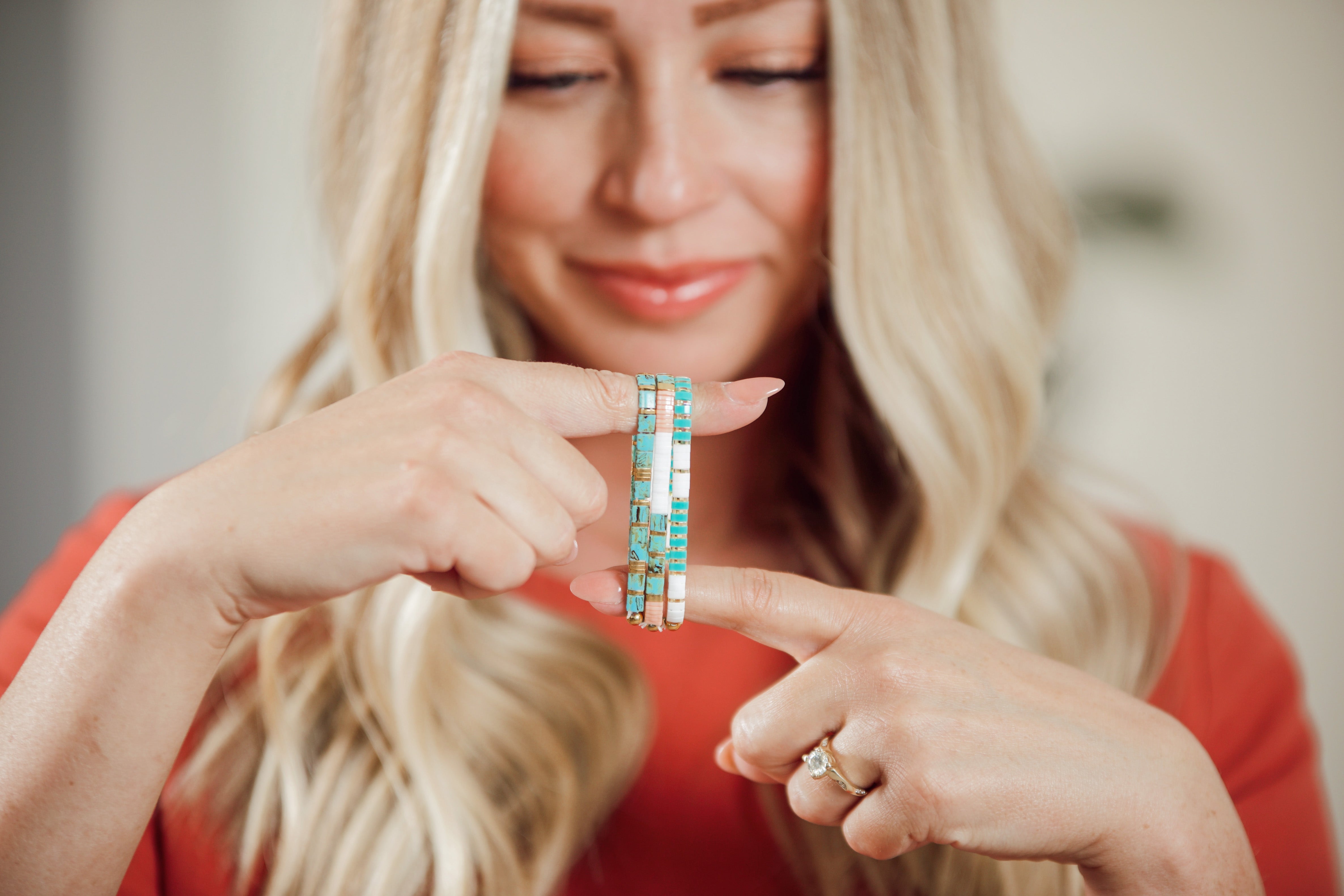
Lead with heishi for color, let tila carry the shine. A simple formula that works across all five palettes above: three or four strands of clay heishi in your chosen colors, then one finished Miyuki Tila bracelet from Mack & Rex in the palette's metallic or dominant shade. The flat heishi discs and the faceted tila tiles sit at different heights and catch light differently, so the stack gets texture instead of looking like one long row of the same bead shape. Tila is a third-party Japanese glass bead that Mack & Rex sells as loose mixes, kits, and finished bracelets; it isn't made in-house, it's sourced and assembled into the pieces sold on site.
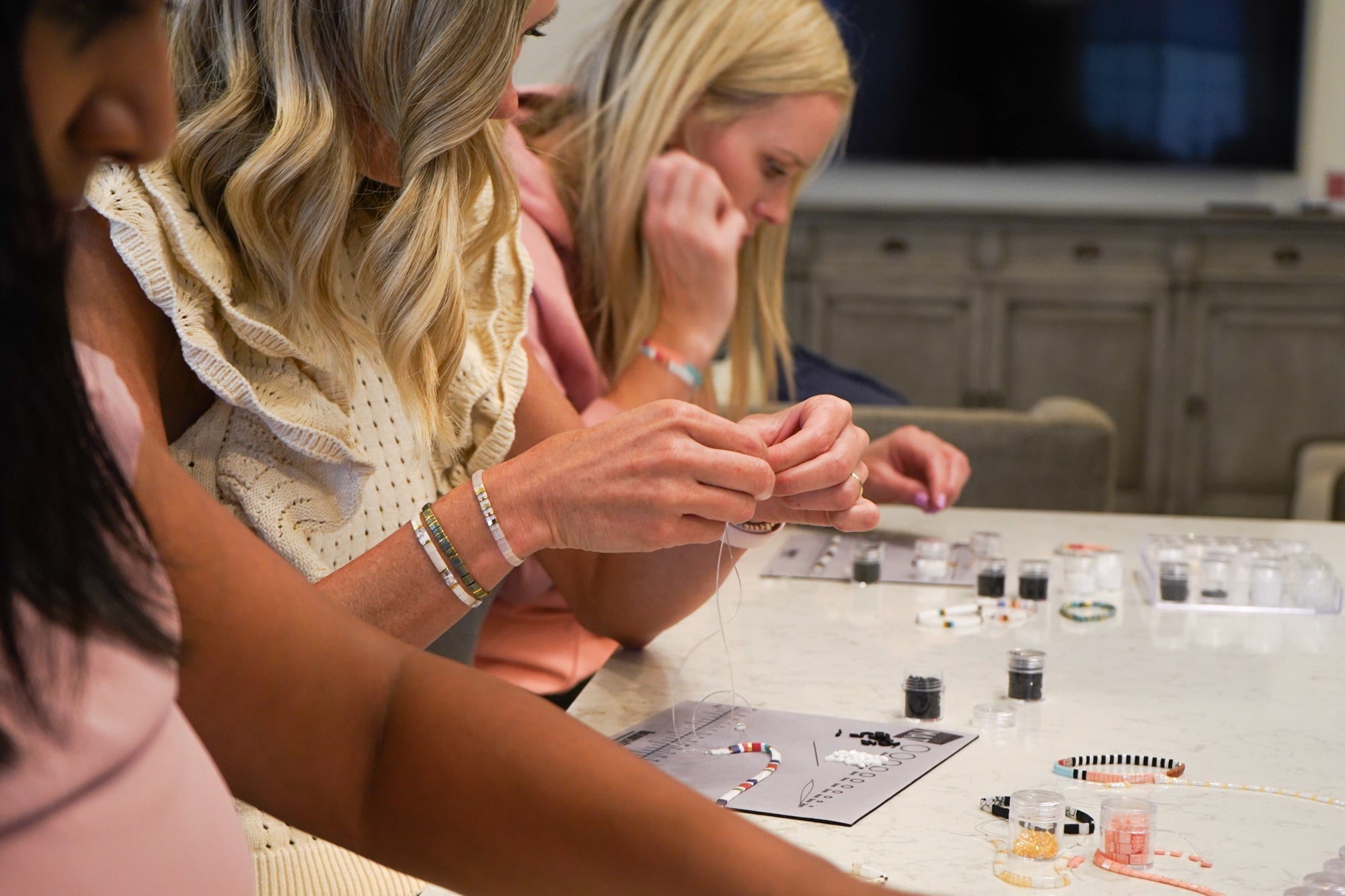
If you're building heishi strands into your own bracelet rather than buying finished pieces, a 16-inch strand of 6mm clay heishi typically runs 320 to 450 beads depending on the color, which is enough for several bracelets from one strand with room to experiment before committing a whole stack to one palette.
How Many Bracelets Should a Winter Heishi Stack Have?
Three works. Five is the upper limit before a narrower wrist starts to feel crowded.
A few things worth knowing before you build one of these palettes, from watching customers put together winter stacks over the past couple of seasons:
- Put your most saturated color (garnet, sapphire, amethyst) toward the center of the stack rather than the outer edge. It reads as the anchor instead of an afterthought.
- Keep one true neutral in every palette, even the boldest one. It's what keeps a winter stack wearable in March, not just in December.
- If kids or grandkids are stringing heishi with you, loose beads are small parts and a choking hazard for young children, so keep an adult at the table the whole time and keep unstrung beads away from anyone still mouthing objects.
- Cured polymer clay is sturdy for daily wear but holds up better if it stays away from acetone-based nail products and doesn't get soaked for long stretches, worth knowing if a stack is getting heavy winter use with gloves on and off all day.
Where Can You Shop These Winter Heishi Colors?
The Mack & Rex heishi beads collection carries polymer clay discs sorted by color, so building any palette above starts with picking the strands rather than hunting for a specific shade across a dozen listings. Strand pricing runs roughly $6 to $10 depending on color and count, cheap enough to pick up two or three colors from a palette and test the combination before committing to a full stack.
Orders ship internationally, with shipping and any customs or duties calculated at checkout, and free shipping applies to US orders over $100. If you're pairing heishi with a finished tila bracelet to round out one of these palettes, that purchase also counts toward the buy 3 bracelets, get 1 free offer on finished bracelets specifically, no code needed.
Frequently Asked Questions
What heishi bead colors work best for a winter bracelet stack?
Deep jewel tones like garnet and sapphire, frosted neutrals like ash grey and bone white, and warm metallics like gold and bronze are the strongest winter heishi colors. Polymer clay heishi holds these saturated shades evenly disc to disc, which is what makes a winter palette look clean instead of muddy on the wrist.
Can you mix heishi beads with tila beads in a winter stack?
Yes. A common approach pairs a few strands of clay heishi in a winter color with one or two finished Miyuki Tila bracelets from Mack & Rex in a matching or metallic tone, so the stack gets the flat disc texture of heishi next to the faceted shine of tila.
How many heishi bracelets should go in a winter stack?
Three to five bracelets is the sweet spot. Winter palettes usually include one metallic or neutral strand, so three heishi bracelets, one dominant color, one neutral, one accent, is often enough to show the full look without crowding a smaller wrist.
Is polymer clay heishi durable enough for everyday winter wear?
Yes, with normal care. Cured polymer clay holds up through daily wear, gloves, and sweater sleeves without cracking, though it's worth keeping it away from acetone-based products and long soaks. It's lighter on the wrist than shell or stone heishi, which matters if you're stacking several bracelets through coat and sweater season.
Does Mack & Rex ship heishi bead orders outside the US for the holidays?
Yes. Mack & Rex ships internationally, with shipping and any customs or duties calculated at checkout. Free shipping applies to US orders over $100; international orders are not unavailable, they just ship at the rate calculated at checkout.
Ready to build one of these winter palettes? Shop the Mack & Rex heishi beads collection for polymer clay discs sorted by color, and pair with a finished tila bracelet for shine. Buy 3 finished bracelets and get 1 free, no code needed, and US orders over $100 ship free.

