

What's in a Heishi Bead Bracelet Kit — and How to Build Your First Clay Bead Stack
What Actually Comes Inside a Heishi Bead Bracelet Kit?
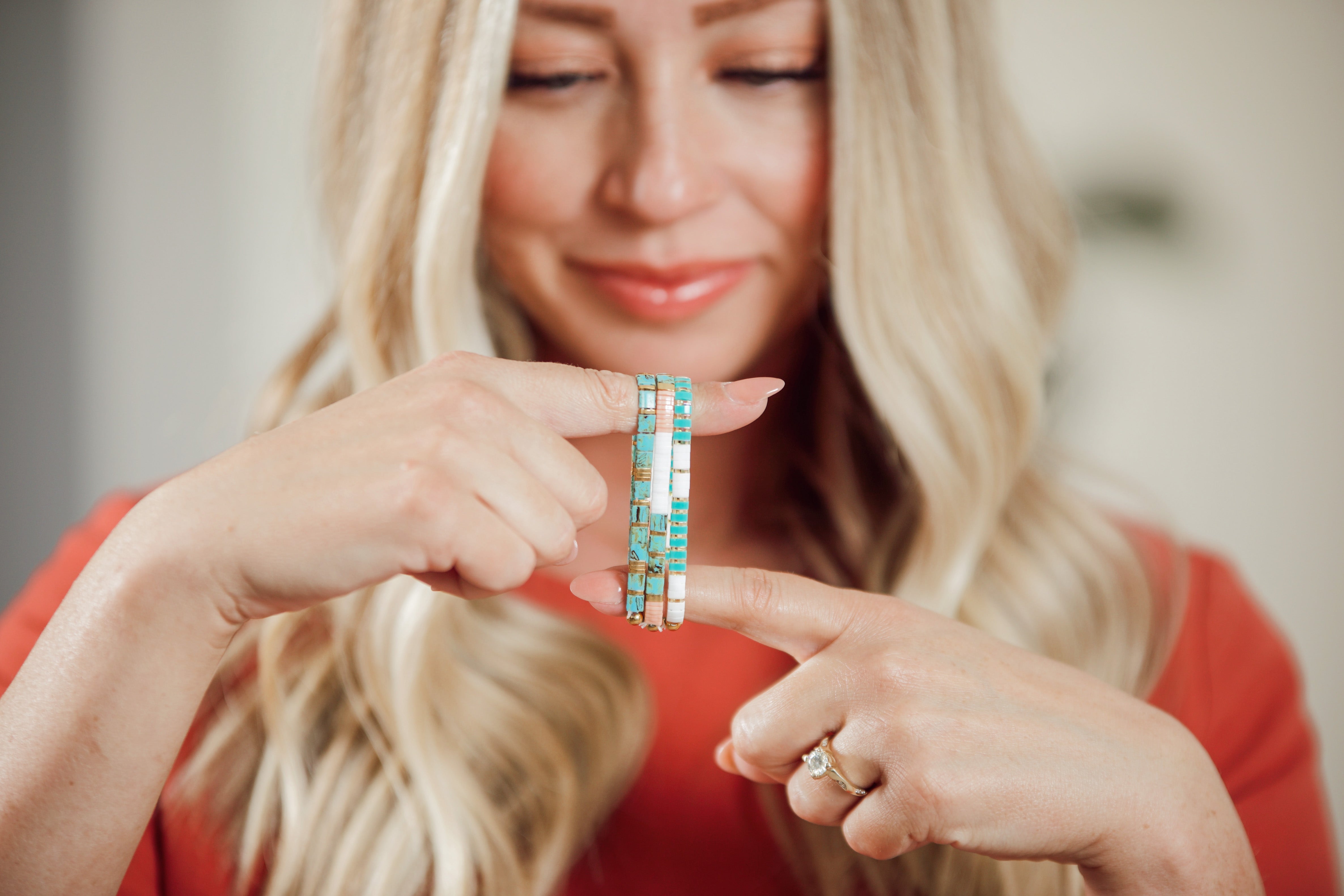
A heishi bead bracelet kit typically bundles one or more strands of flat disc beads, a length of stretch elastic cord, and basic instructions, sometimes with plain spacer beads or a needle for threading thrown in. What you get depends heavily on price and brand, so it's worth checking the listing for exact bead count and cord type before you buy.
The core of any kit is the beads themselves. Heishi discs are flat, round, and strung edge to edge rather than end to end, which is what gives a finished bracelet that smooth, ribbon-like look rather than a bumpy row of separate beads. Stretch cord is the near-universal choice for stringing them, since it needs no clasp and forgives a slightly loose or tight fit better than a fixed-length design would. Fixed-length kits swap the knot for a small crimp or bead tip that hides the cord end and holds the clasp in place.3 Instructions in cheaper kits can be a single printed card; pricier ones sometimes include a small project card with a suggested color layout.
One thing worth knowing up front: a "kit" in the loosest sense just means beads plus cord plus a knot, no special hardware required. That's part of why heishi is such a forgiving first project for someone who has never strung a bead in their life.
How Do Polymer Clay Heishi Discs Handle Differently Than Shell or Stone?
Clay strings up faster. Polymer clay heishi discs are cut and drilled by machine, so the hole and disc thickness stay uniform bead to bead, which means the cord glides through with almost no snagging. Hand-cut shell or stone heishi, by contrast, often has small variations in hole size from piece to piece, so you'll occasionally hit a bead that needs a little extra push or a slightly stiffer needle tip to get through.
Polymer clay is a PVC-based modeling material that stays soft and workable until it's cured in a low oven, which is exactly what lets manufacturers slice it into thin, even discs at scale.1 That consistency is the whole reason clay heishi has taken over the craft-kit space. It's also noticeably lighter on the wrist than stone heishi, and it won't chip the way a dropped shell bead sometimes will. The tradeoff runs the other way too: clay doesn't carry the natural grain or slight color variation that gives stone and shell heishi their organic look, so if you want that irregular, one-of-a-kind texture, clay isn't going to give it to you.
What Do You Need to Build Your Own Heishi Stack at Home?
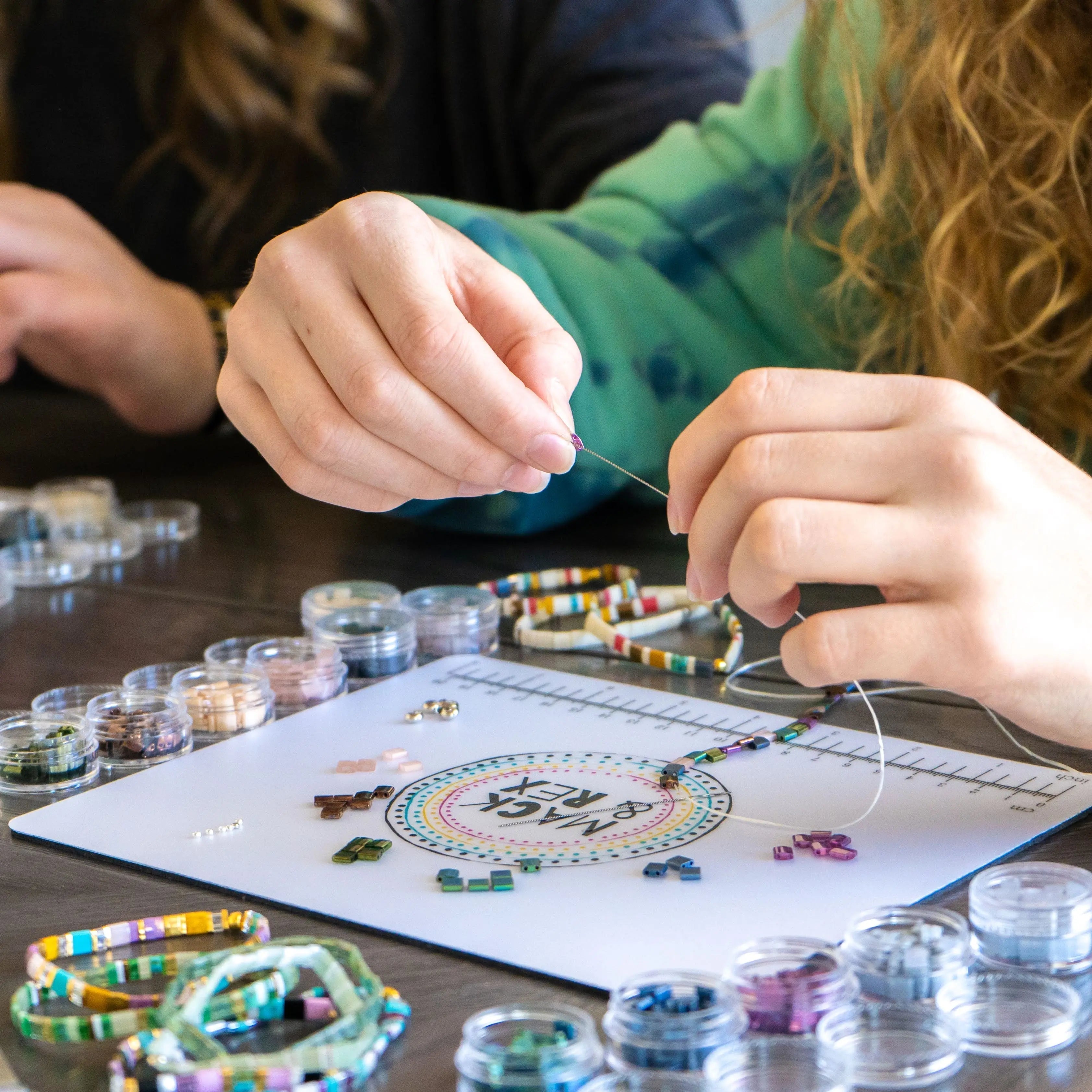
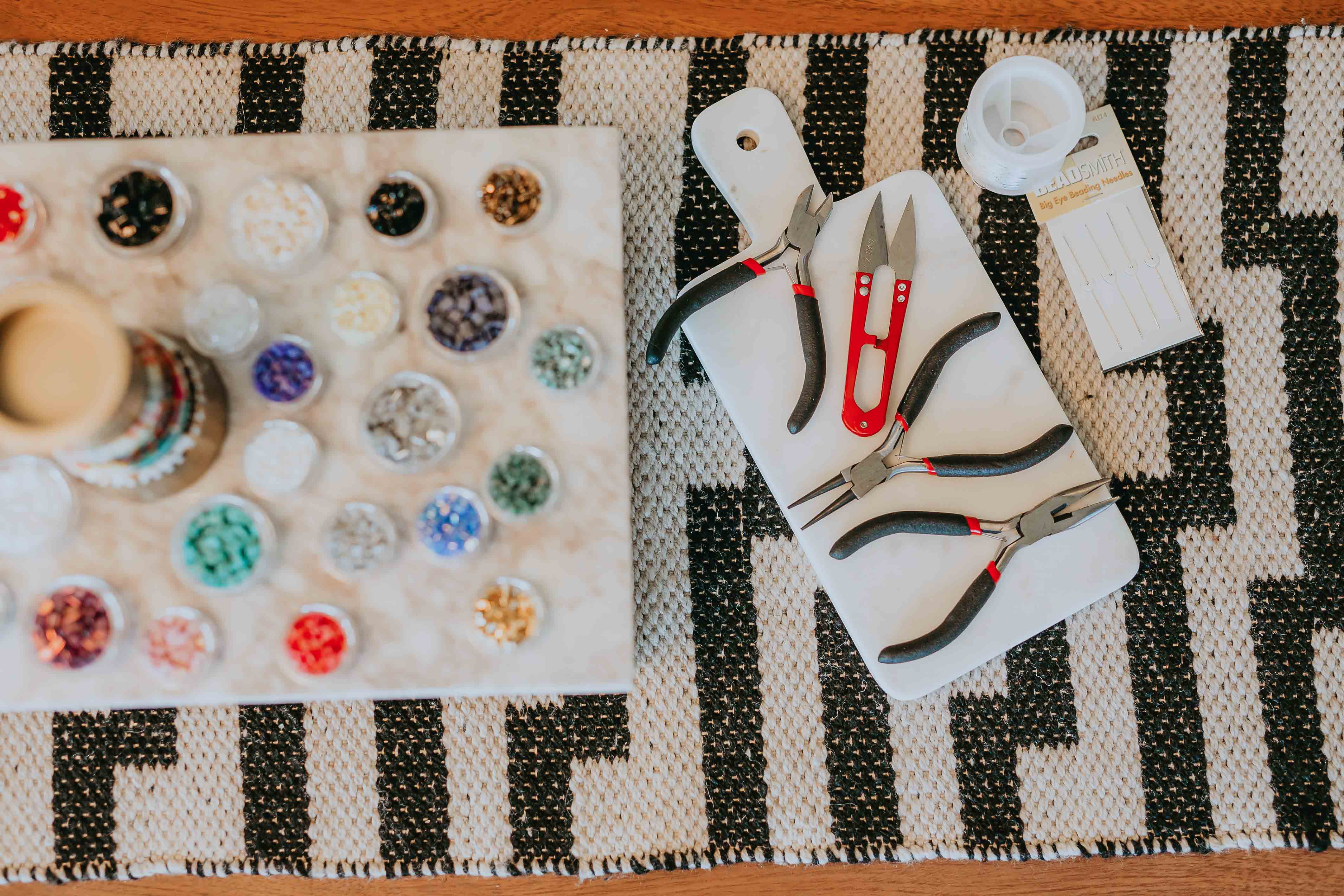
Beyond the beads and cord, you'll want a pair of scissors, a soft tape measure or a strip of paper for sizing, and a flat surface or bead mat so nothing rolls off the table mid-project. A dab of clear jewelry glue on the finished knot is optional but adds a little extra hold for a piece that gets worn daily.2
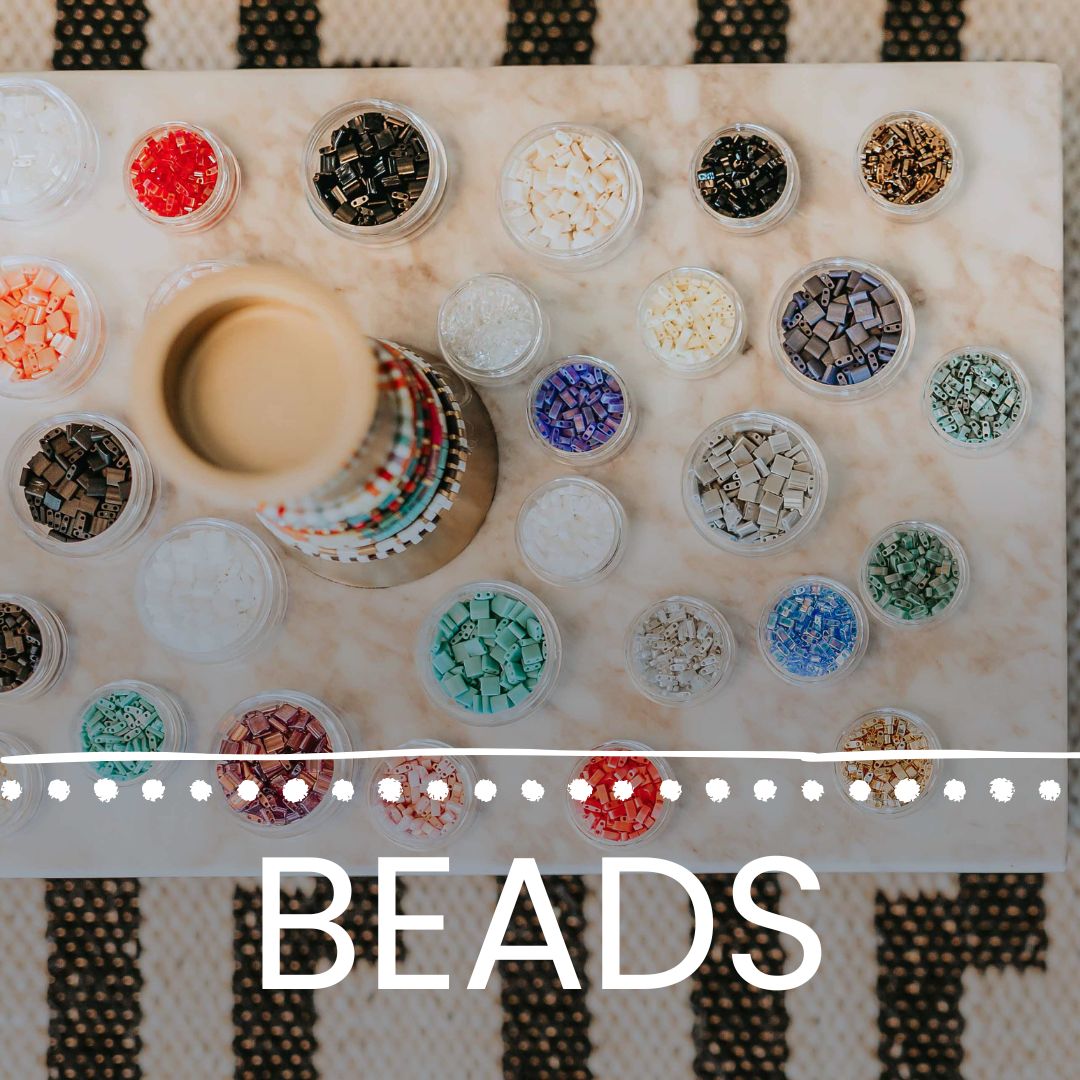
Mack & Rex sells 6mm polymer clay heishi beads by the strand across a run of neutral and accent colors, so you can pick your own palette rather than being locked into whatever mix a pre-boxed kit happens to include. Browse the full heishi bead collection for the current colorways. If you'd rather have crystal-cord elastic and basic tools bundled together rather than sourced separately, the bracelet making kits collection covers that side of the project, with an all-in-one tools kit running $39.99 to $43.99 depending on what's included.
How Do You String Your First Heishi Bead Stack, Step by Step?
Measure first. Wrap a soft tape around your wrist, add about half an inch of ease, and cut a piece of stretch cord roughly four inches longer than that number so you've got enough slack to knot at the end.
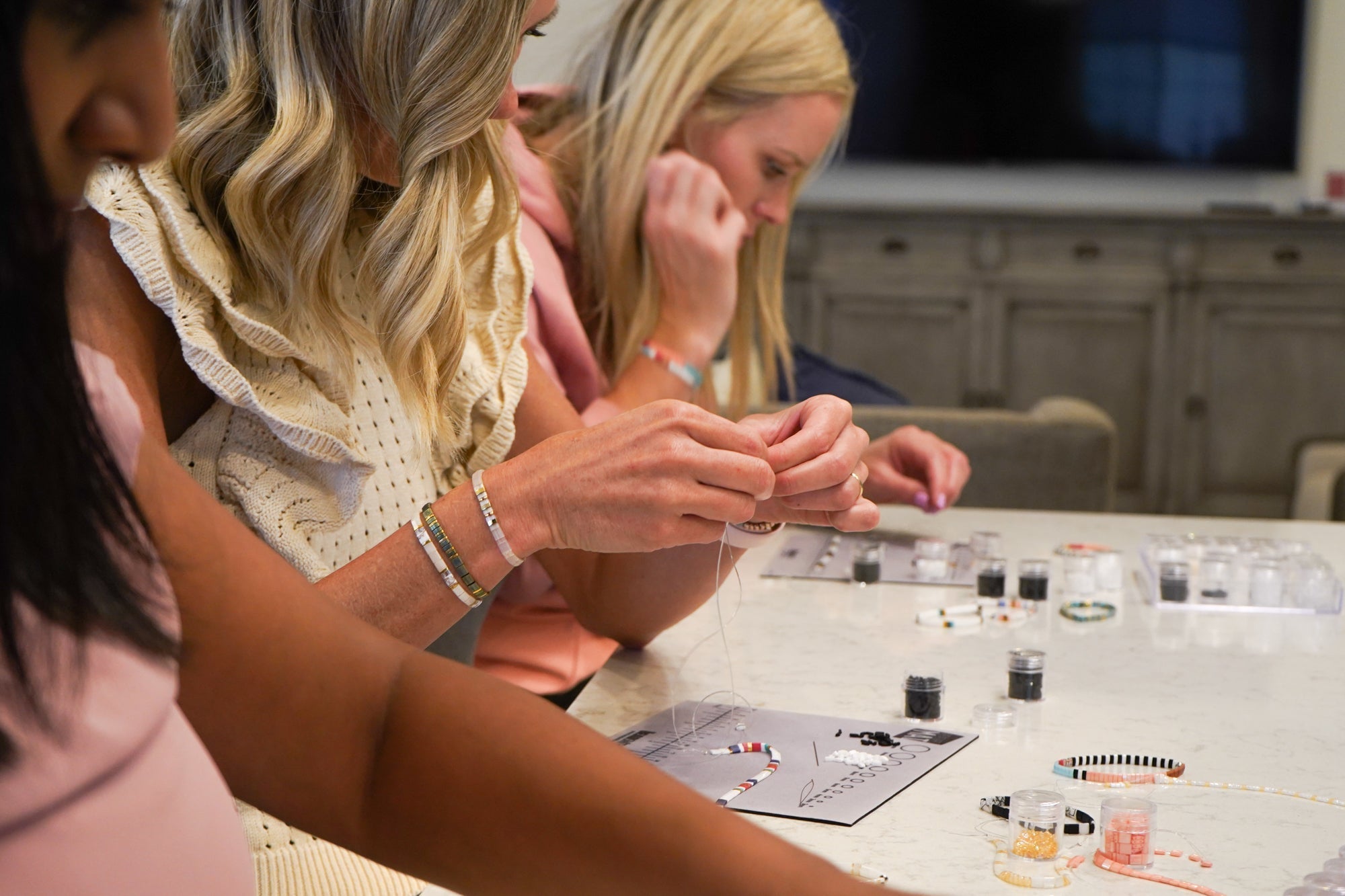
From there it's five steps. Sort your heishi discs by color into small dishes so you can see your pattern before committing a single bead to the cord. I always tape one end of my cord to the edge of the table first, since a stray elbow has sent more than one sorted pattern sliding onto the floor at my house. String the discs face to face, pushing each one snug against the last so the finished strand sits without visible gaps. Tie a surgeon's knot, cross the two ends, loop through twice, and pull tight, then stretch the bracelet gently a few times to make sure the knot holds before it ever touches a wrist. Trim the leftover cord close to the knot and tuck the ends into the nearest bead hole if you can. Add a small dot of clear glue on the knot if the bracelet is going into regular rotation.
That's genuinely the whole process. No clasp to fumble with, no crimping tool, just beads, cord, and one solid knot.
How Many Beads and How Much Cord Do You Actually Need?
A standard 6mm heishi strand runs about 16 inches and holds somewhere between 320 and 450 beads, which sounds like a lot until you realize an average wrist only needs 6 to 7 inches of strung beads per bracelet. Do the math and one strand comfortably covers several bracelets, well beyond a single piece.
Cord length matters as much as bead count. Cut too short and you won't have enough slack left to tie a secure knot once the beads are on. A little extra cord costs you nothing but a trim at the end, while too little means starting over. If you're planning a whole stack rather than a single piece, it's worth cutting all your cord lengths up front so you're not stopping mid-project to measure again.
A Note on Safety When Kids Are Crafting
Heishi beads and any small spacer findings are a choking hazard, so keep an adult at the table for the entire session any time kids are helping string them. That's true whether you're using a store-bought kit or beads sourced separately, and loose beads shouldn't be left within reach of toddlers or anyone who still puts small objects in their mouth between crafting sessions.
Where to Get Your Heishi Beads and Get Started
Pick your colors from the heishi bead collection, grab stretch cord and basic tools from the bracelet making kits collection if you need them, and you're set for your first stack. Mack & Rex ships internationally, with shipping and any customs costs calculated at checkout, and free shipping applies automatically to US orders over $100.
Frequently Asked Questions
What comes in a heishi bead bracelet kit?
Most heishi bead bracelet kits include one or more strands of flat disc beads, a length of stretch elastic cord, and basic instructions. Some also add plain spacer beads, a needle for threading, or scissors, though the exact mix varies by brand and price point.
Does a heishi bead kit come with a clasp?
Usually not. Most heishi kits are built around stretch cord, which is tied off in a knot instead of closed with a clasp, so the bracelet slips on and off the wrist without hardware. A few fixed-length kits do include a clasp, but stretch cord is the more common setup.
How is a polymer clay heishi bead different to string than shell or stone?
Polymer clay heishi discs are cut and drilled by machine, so the hole size and disc thickness stay consistent from bead to bead, which makes stringing faster and less fiddly than natural shell or stone heishi, where each hand-cut piece can vary slightly in width.
How many bracelets can you make from one heishi strand?
A standard 6mm heishi strand runs about 16 inches and holds roughly 320 to 450 beads, which is enough beads for several bracelets depending on wrist size and how many spacer beads or accent colors you mix in.
Can kids help string a heishi bead bracelet kit?
Older kids can help string heishi beads with an adult at the table the whole time, since the beads and any spacer findings are small parts and a choking hazard. They aren't sized or marketed for very young children to handle alone.
1 Background on polymer clay as a material and how it cures: Wikipedia, "Polymer clay". 2 General beading tools and stringing basics for beginners: Beadaholique, "Intro to Beading 101". 3 General reference on bead tips and finishing components used in beaded jewelry: Lima Beads, "Bead Tips".
Ready to start your first stack? Shop the full heishi bead collection at Mack & Rex.