

Heishi Beads: Clay vs. Shell vs. Stone (Which Type to Choose)
Clay, Shell, or Stone: Which Heishi Bead Should You Buy?
For most bracelet stacks, polymer clay heishi is the better pick: it's light, holds color exactly, and costs a fraction of natural material. Shell and stone heishi are worth choosing when you want natural variation, more weight on the wrist, or a piece that reads as a special, one-off accent rather than everyday stacking stock.
That's the short version. The longer version depends on what you're actually building, so here's how the three materials stack up against each other on the things that matter when you're buying: look, weight, how long they last, whether they can get wet, and what they cost.
How Do Clay, Shell, and Stone Heishi Beads Look Different?
Same shape, different finish. All heishi is a flat disc with a hole through the center, a shape that traces back to shell beads hand cut by Puebloan artisans in the American Southwest.1 What changes is the surface.
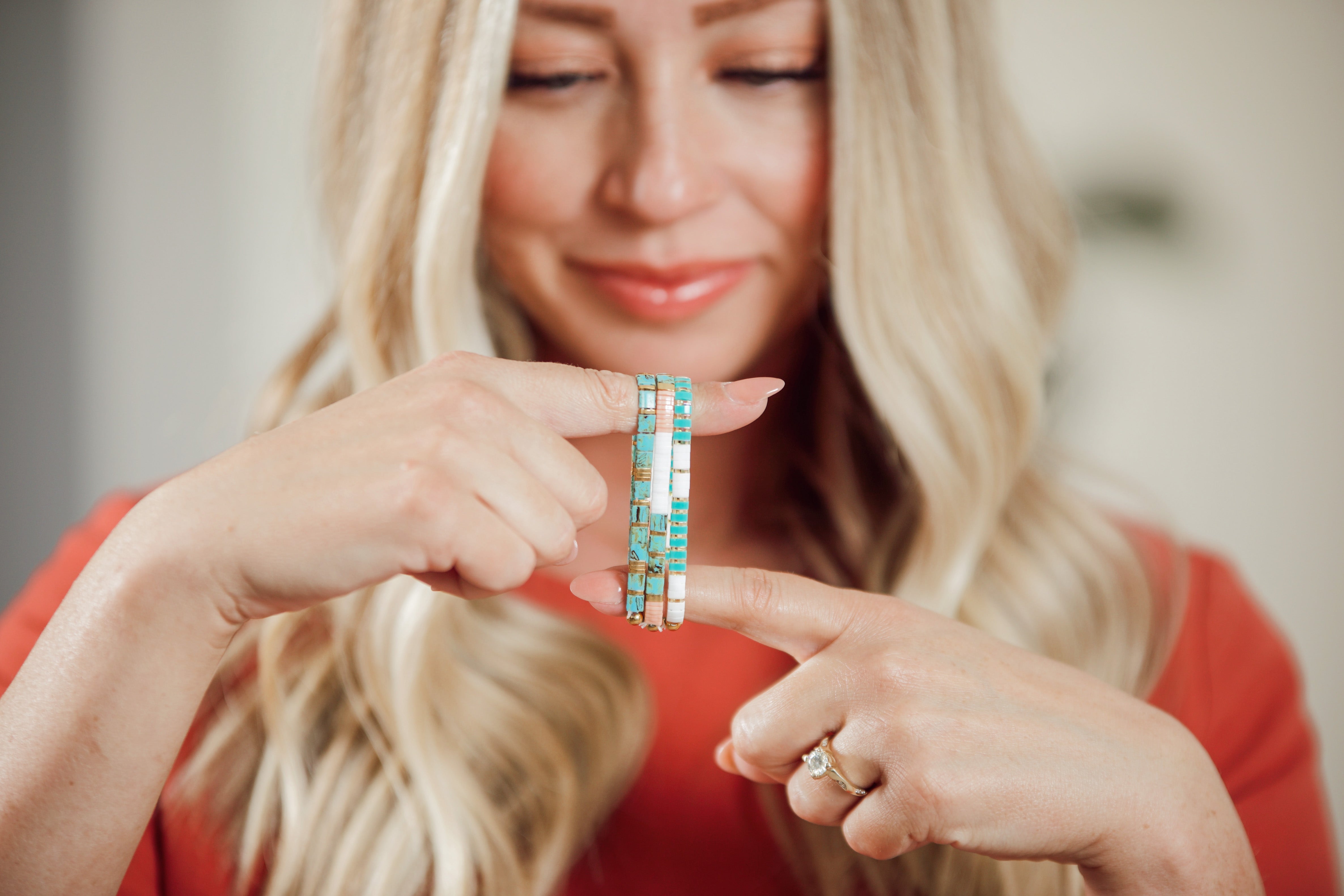
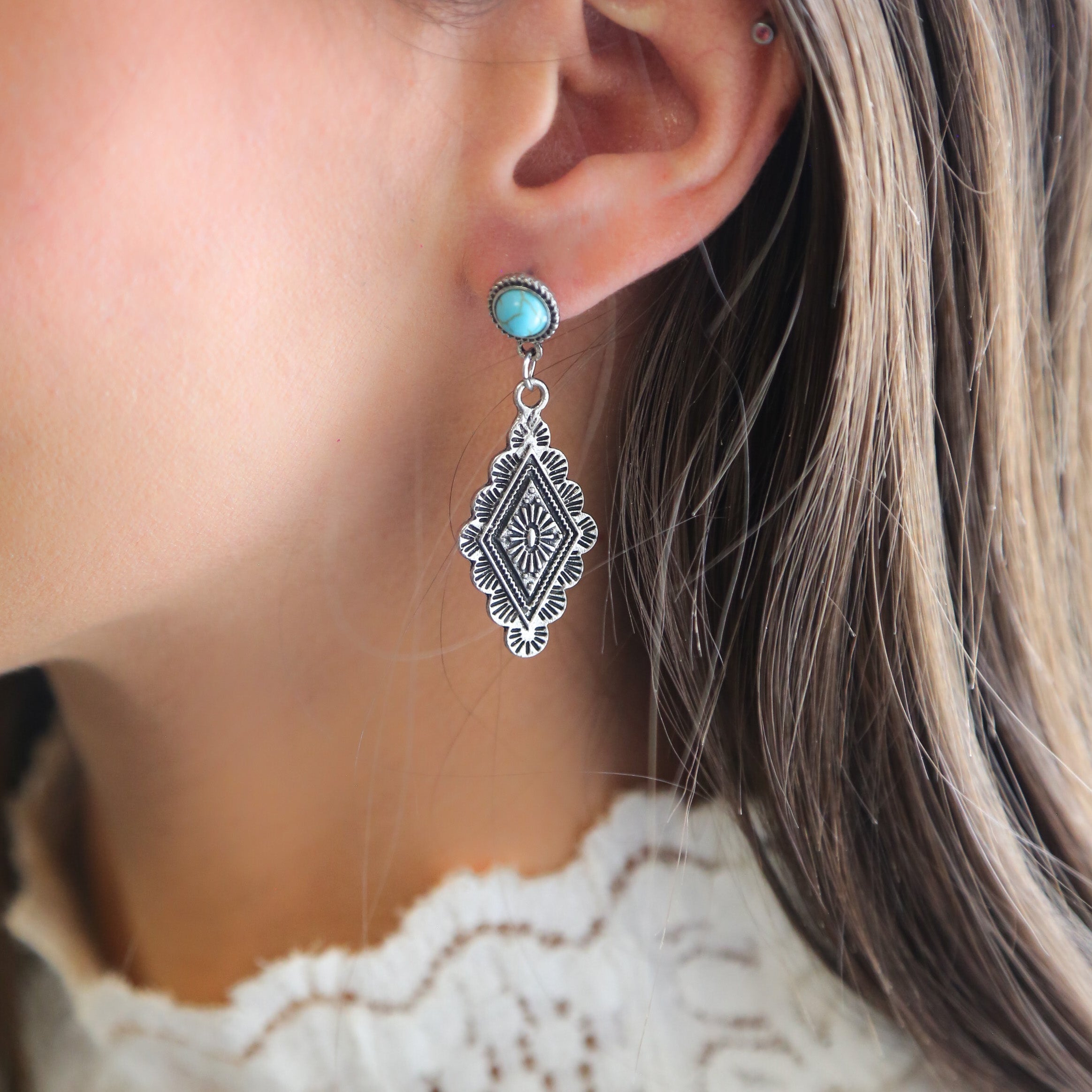
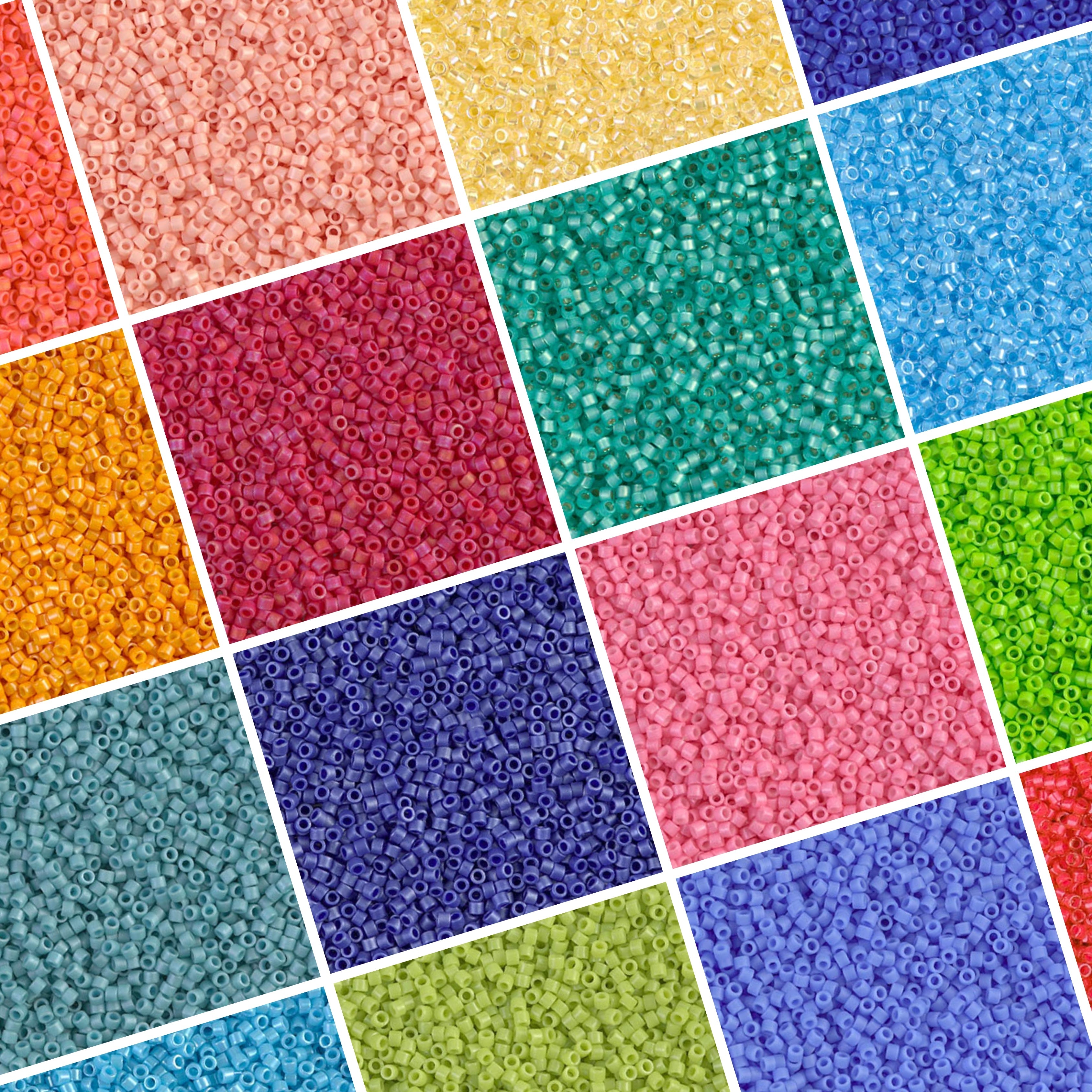
Polymer clay heishi looks uniform and saturated. Every disc in a strand is the same color, the same width, the same finish, because it's molded and cured rather than cut by hand. Mack & Rex's clay heishi runs about 6mm wide with a 2mm hole, and a 16-inch strand carries 320 to 450 beads depending on color, enough consistency that a whole bracelet reads as one clean shade. Shell heishi shows natural shimmer and faint color shifts bead to bead, since it's cut from actual shell rather than dyed. Stone heishi (think turquoise, jasper, howlite) has the most visual texture of the three, with natural veining and mottling no two discs share exactly.
Which Heishi Material Is Heaviest on the Wrist?
Stone, by a clear margin. Natural stone is dense, and a full stack of stone heishi has real heft, the kind some people love for a statement piece and others find tiring after a full day. Shell sits in the middle, noticeably lighter than stone but not weightless. Clay is the lightest option across the board, which is exactly why it dominates everyday stacking bracelets. A wrist carrying four or five stretch bracelets barely notices the weight when they're clay.
How Durable Is Each Heishi Bead Material?
Stone wins on hardness. Turquoise, for example, sits around 5 to 6 on the Mohs scale, hard enough to resist everyday scuffing, though it's also somewhat porous and can absorb oils over time.2 Shell holds up well too and resists scratching better than clay, but its surface can dull with years of sun and sweat exposure. Cured polymer clay is solidly durable for daily wear. It won't shatter or crack under normal use, but it's softer than stone or shell and will show fine scratches eventually, and it's sensitive to acetone-based products like nail polish remover.
None of the three materials fails fast. The real weak point on any heishi bracelet is the stretch cord, not the beads, and that holds true no matter which material you choose.
Are Heishi Beads Waterproof? It Depends on the Material.
Short answer: no material is fully waterproof, but some handle moisture better than others. Polymer clay shrugs off handwashing and light splashes without issue. Shell can take brief water exposure, though natural shell loses some of its shine with repeated soaking, the same reason mother-of-pearl jewelry gets a "keep it dry" care note from most sources on the material.3 Stone tolerates splashes fine, but porous stones can discolor with heavy water or sweat exposure over time.
Here's the detail that actually matters more than the bead: the elastic cord. Soak any heishi bracelet repeatedly, clay, shell, or stone, and the cord stretches out and weakens well before the beads show real wear.
Which Heishi Bead Costs the Most?
Clay is the budget pick by a wide margin. A strand of Mack & Rex's 6mm polymer clay heishi runs around $6 to $10 depending on strand count, cheap enough to buy several colors and build a real stack without a second thought. Shell heishi costs more because it's cut from a natural material that has to be sourced and shaped rather than molded in bulk. Stone heishi sits at the top of the price range for the same reason: the raw material itself, turquoise or lapis or jasper, costs more before a single bead gets cut.
That price gap isn't a quality knock on clay. It's the simple math of manufactured material versus hand-sourced natural material.
So Which Heishi Type Should You Choose for Your Stack?
Think about how the bracelet gets worn. If it's going on your wrist every day, through workouts, dishwashing, and everything in between, clay heishi is the practical call: light, colorfast, and cheap enough that losing a strand isn't a tragedy. If you want one piece that feels special, a gift, an anniversary stack, something with a bit of weight and story, shell or stone earns its higher price.
A lot of customers do both. Build the bulk of a stack with a few clay heishi strands in colors that match your rotation, then add one shell or stone piece for texture and contrast. That combination gets you the everyday comfort of clay with a little of the natural character that only shell or stone brings.
Where Can You Buy Heishi Beads for Your Next Stack?
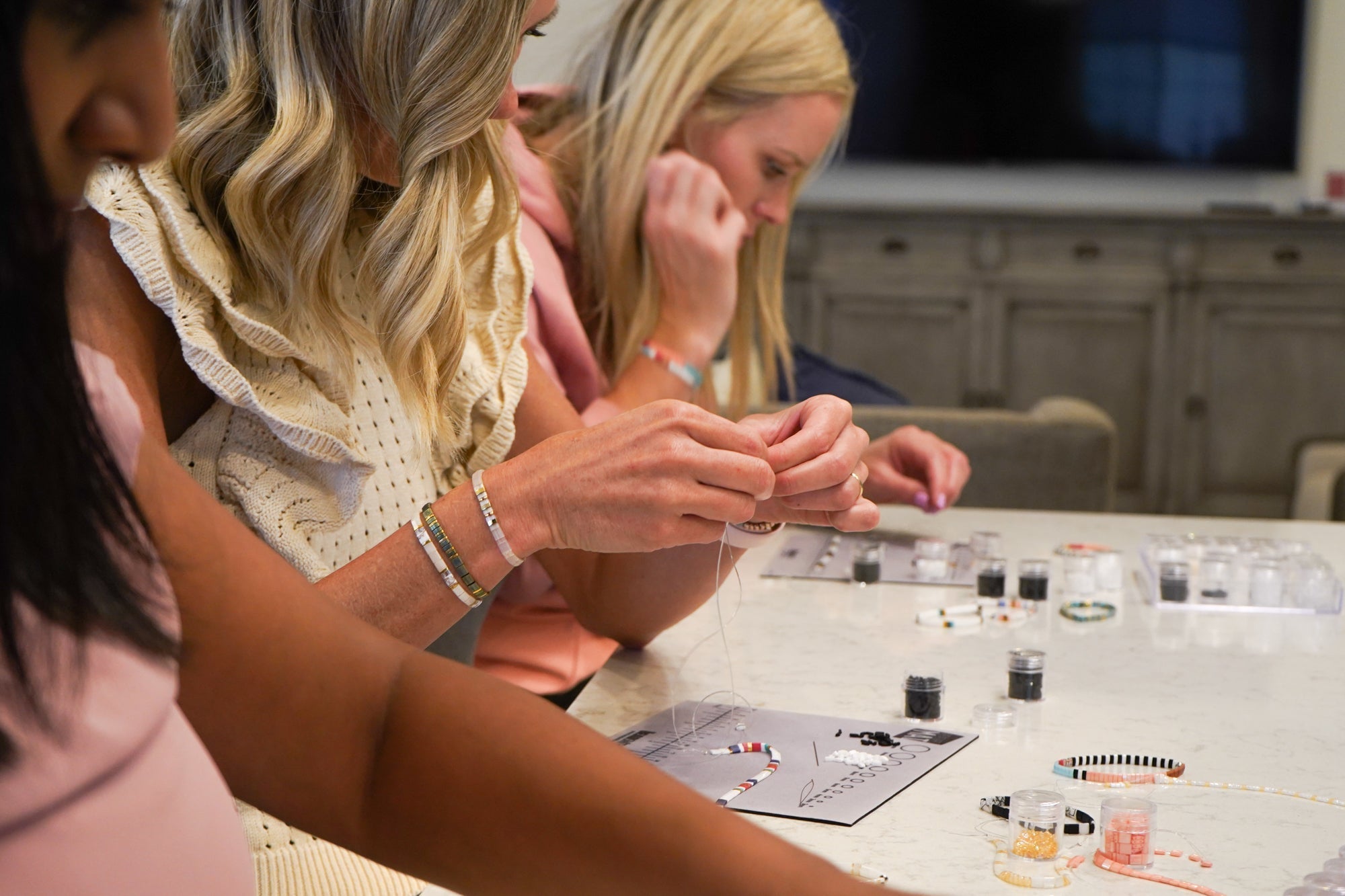
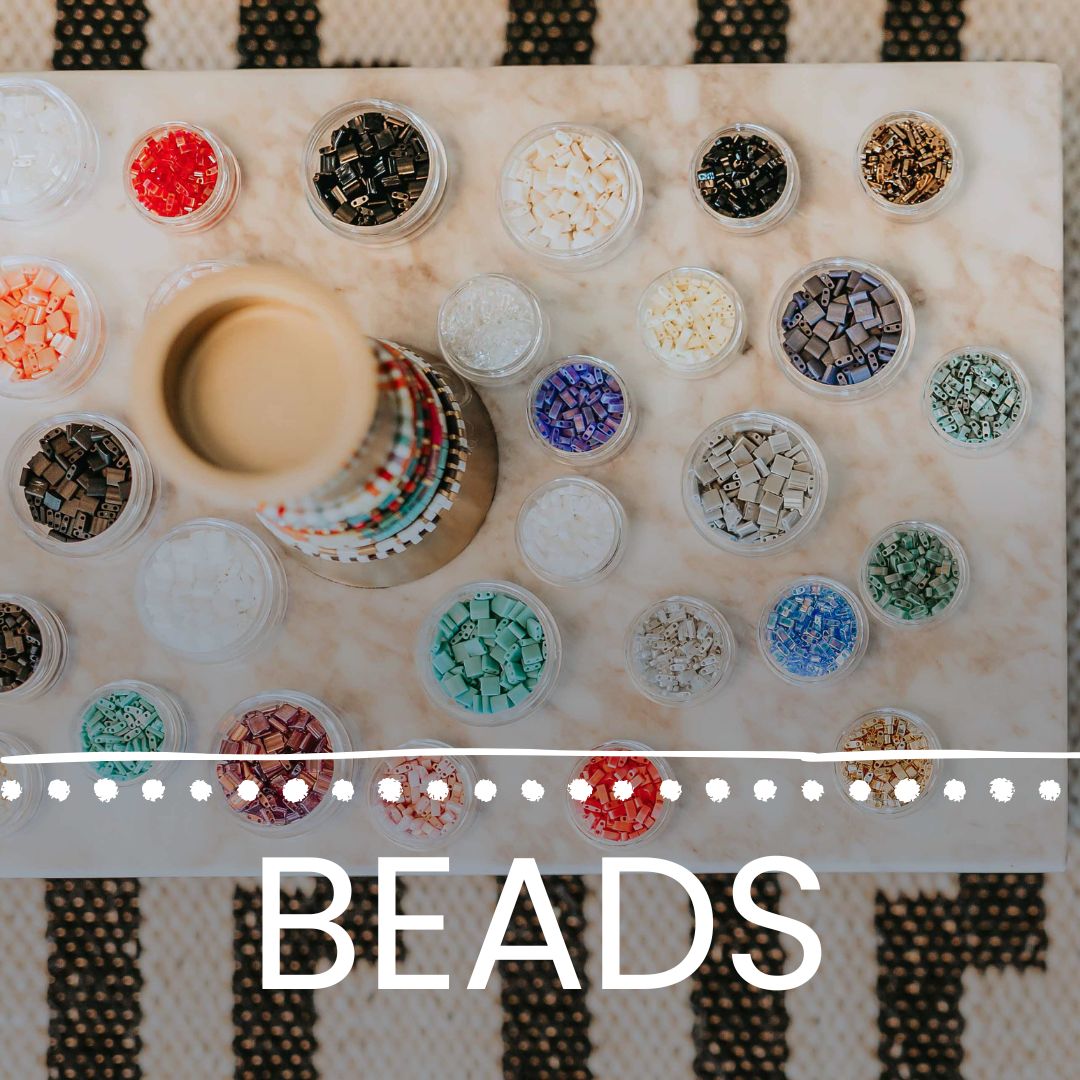
Mack & Rex sells polymer clay heishi beads by the strand, sorted by color, ready to string on elastic cord or beading wire with no extra sorting. Browse the full color range at the Mack & Rex heishi bead collection and build a stack around whatever palette you're working with.
Orders ship internationally, with shipping and any customs or duties calculated at checkout, and free shipping on US orders over $100. One note if kids are involved in the project: loose beads are small parts and a choking hazard, so keep them away from young children and have an adult at the table the whole time any beading session runs.
Frequently Asked Questions About Heishi Bead Materials
What is the real difference between clay, shell, and stone heishi beads?
They're the same shape, a flat disc with a center hole, cut from different materials. Polymer clay heishi is molded and cured for consistent color and size. Shell heishi is cut from natural shell, so it carries color variation and a slight shimmer. Stone heishi is cut from materials like turquoise or jasper and is the heaviest and hardest of the three.
Is clay heishi lower quality than shell or stone?
No, it's a different quality, not a lesser one. Cured polymer clay is hard enough for years of daily wear and holds color better than most people expect. Shell and stone cost more because the raw material and the cutting process cost more, not because clay is poorly made.
Can you mix clay, shell, and stone heishi in one bracelet stack?
Yes, and a lot of makers do. A common approach is a base of lightweight clay heishi strands with one or two shell or stone accent pieces mixed in, so the stack gets texture and a bit of visual weight without getting heavy to wear all day.
Are heishi beads waterproof?
Not fully, in any material. Polymer clay tolerates splashes and handwashing fine but shouldn't be soaked for long stretches. Shell and stone can handle brief water exposure too, but the stretch cord holding any heishi bracelet together wears out faster with repeated soaking, regardless of the bead material.
Where can I buy heishi beads for a bracelet stack?
Mack & Rex sells polymer clay heishi beads by the strand, sorted by color, sized for bracelet and necklace projects. Browse the collection at mackandrex.com/collections/heishi-beads. Orders ship internationally, with shipping and any customs or duties calculated at checkout, and free shipping on US orders over $100.
Ready to build your stack? Shop the Mack & Rex heishi bead collection for polymer clay discs sorted by color, sized for bracelets and necklaces. Mack & Rex ships worldwide, with shipping and any customs or duties calculated at checkout, and free shipping on US orders over $100.