

Heishi Beads vs Tila Beads: Which Bracelet Style Is Right for You?
What's the Real Difference Between Heishi Beads and Tila Beads?
Heishi beads and Tila beads sit at opposite ends of the bracelet design spectrum. Heishi disks are thin, round, and stack into a smooth, flexible tube that drapes naturally on the wrist. Tila beads are flat, square, two-hole Japanese glass tiles made by Miyuki that line up edge-to-edge and create a structured, graphic surface. If you're trying to decide between the two, the answer usually comes down to one question: do you want flow, or do you want geometry?
Both styles are popular right now, and both can anchor a great stack. They look different, feel different, and work differently depending on your bracelet goals. The details that actually matter are worth walking through one by one.
How Do Heishi Beads and Tila Beads Compare in Shape and Feel?
Shape is where these two beads part ways completely. Heishi beads are disk-shaped with a single center hole, typically 4 to 6 mm in diameter and 1 to 2 mm thick. Strung together, they form a tube that curves with the wrist and feels almost seamless against the skin. The surface is smooth and continuous, which gives heishi bracelets a soft, rounded silhouette.
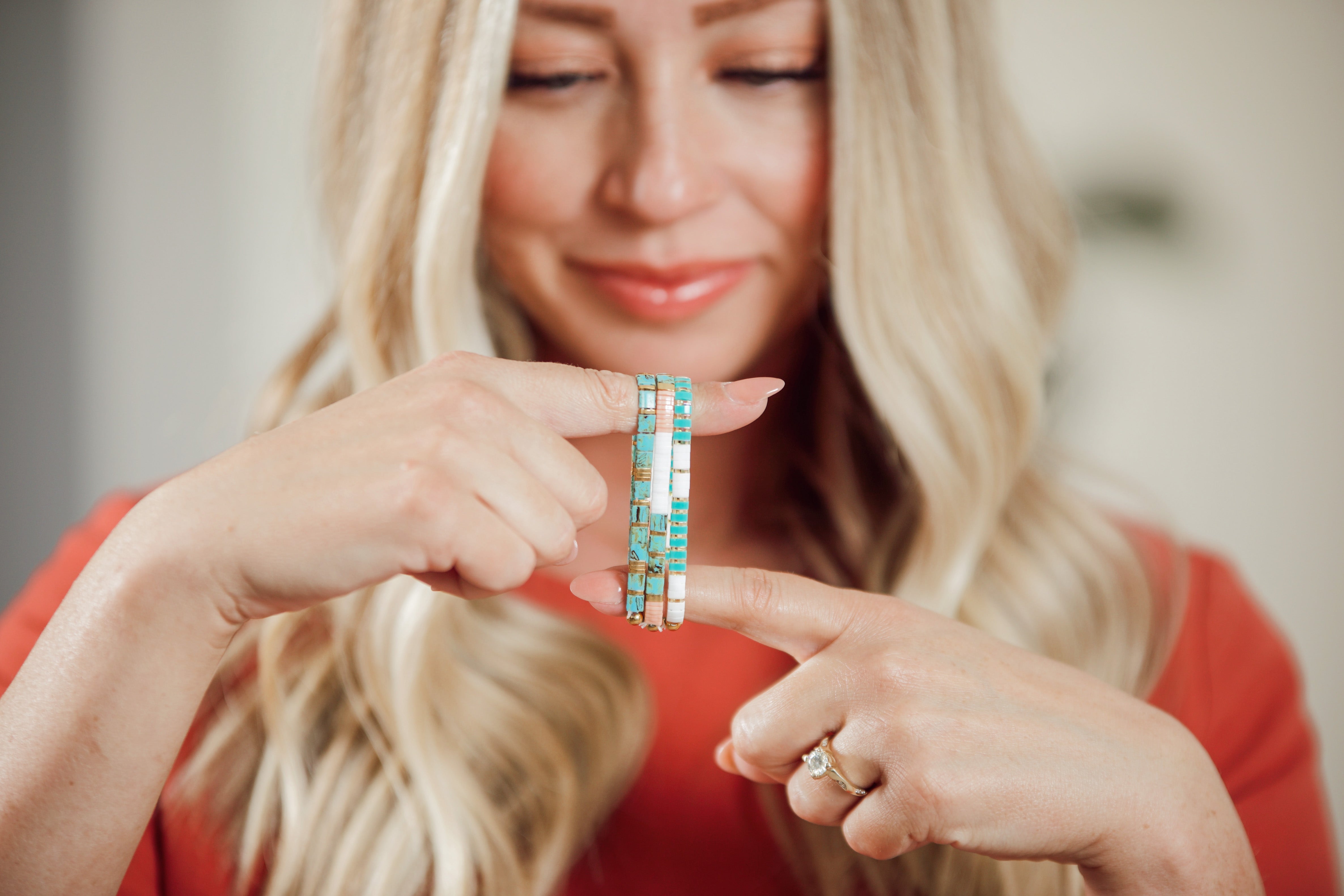
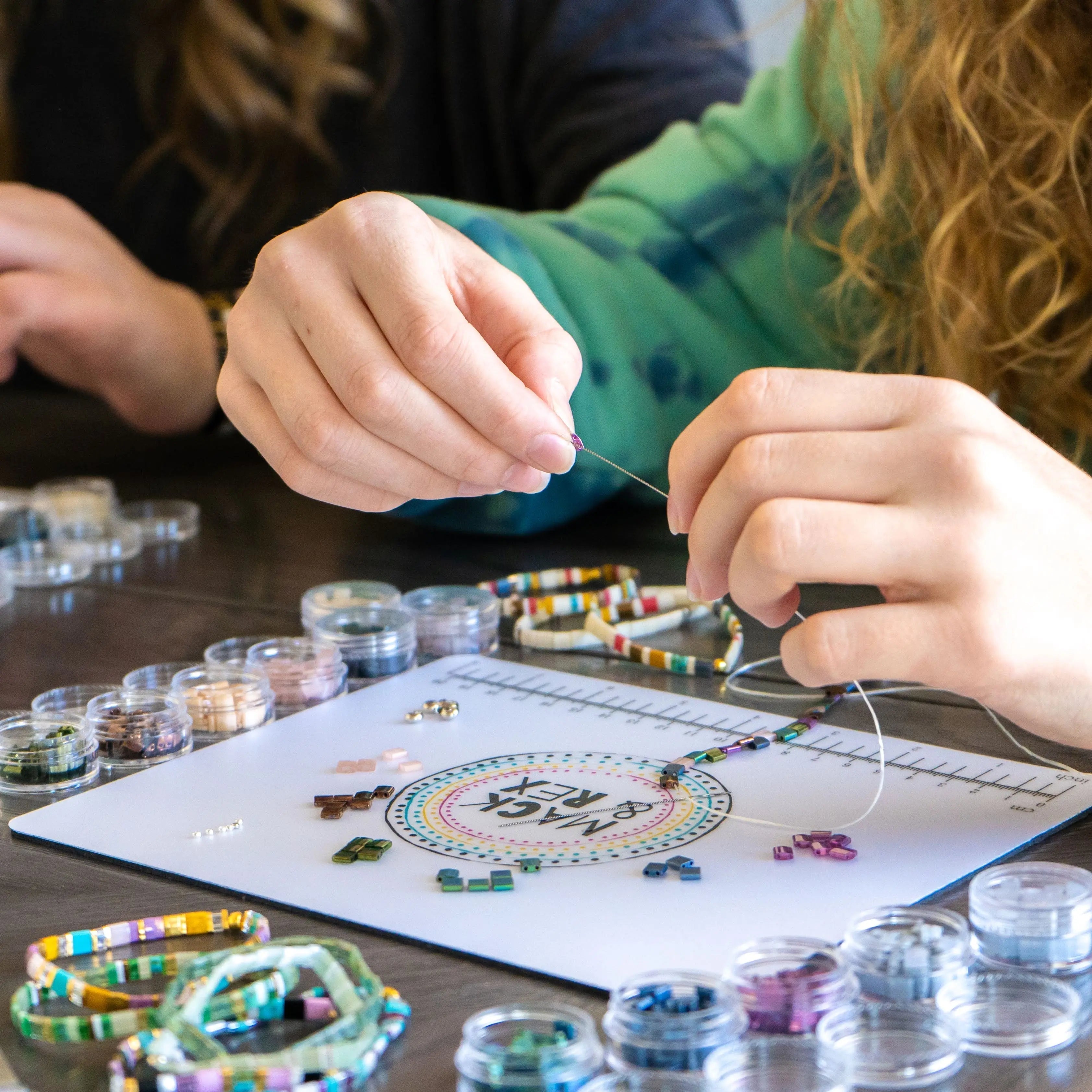
Tila beads are a different animal. Each bead measures approximately 5 mm x 5 mm x 1.9 mm with two parallel holes running through the width. They're manufactured by Miyuki, the same Japanese brand behind Delica seed beads, and the precision is notable. When you string Tila beads side by side, the flat faces tile together and the bracelet sits flat on the wrist with crisp, defined edges. There's no curve to the surface. It's a bold, modern look.
On the wrist, heishi feels lighter and moves more freely. Tila bracelets have a slight weight to them and stay in position well, which a lot of people actually prefer for active days. If your bracelet keeps rotating during a workout or slipping off-center, the flat profile of a Tila bracelet tends to stay put better than a rounder heishi tube.
Which Bead Makes a Better Statement in a Stack?
Short answer: Tila wins on visual punch, heishi wins on texture variety.
A Tila bracelet commands attention. The tile surface catches light across a wide, flat plane, and Miyuki's finish range (matte, metallic, Picasso, AB, luster) means each color reads very differently depending on the finish. Stack two Tila bracelets side by side in contrasting finishes and you've got a look that reads as intentional and graphic.
Heishi works differently in a stack. A single heishi bracelet can look delicate, almost filler-like, next to chunkier pieces. Run three or four heishi bracelets in graduated colors or materials, though, and they create a layered, bohemian texture that's hard to get any other way. Natural heishi in shell, stone, or clay brings an earthy warmth that glass beads don't replicate. Polymer clay heishi opens up color options that are more muted and artisan-feeling than the bright, saturated tones of Miyuki glass.
Tila bracelets are easier to style when a stacked look needs to hold its own from across the room. For a layered, collected look that builds over time, heishi offers more range.
How Do Heishi Beads and Tila Beads Compare for Durability?
Material matters a lot here. Heishi beads come in a wide range of materials: shell, stone, polymer clay, acrylic, and vinyl. Natural shell heishi can be beautiful but is sensitive to prolonged water exposure and can fade or chip at the edges over time. Polymer clay heishi is more forgiving but can scuff. Stone heishi sits somewhere between the two.
Miyuki Tila beads are Japanese glass, precision-cut to consistent tolerances. According to Miyuki's product specifications, Tila beads are manufactured to a standard that produces very uniform bead sizes, which matters both for appearance and for how evenly tension distributes across the strand when you're stringing. Miyuki's own product page confirms the 5 mm x 5 mm x 1.9 mm spec and the two-hole configuration that defines the bead's structure.
Glass is harder than polymer clay but more brittle than stone. In practice, a Tila bracelet worn every day holds up well as long as it's on quality elastic cord. A bracelet on cheap cord that snaps and scatters glass beads across a tile floor is a different story. The cord matters as much as the bead.
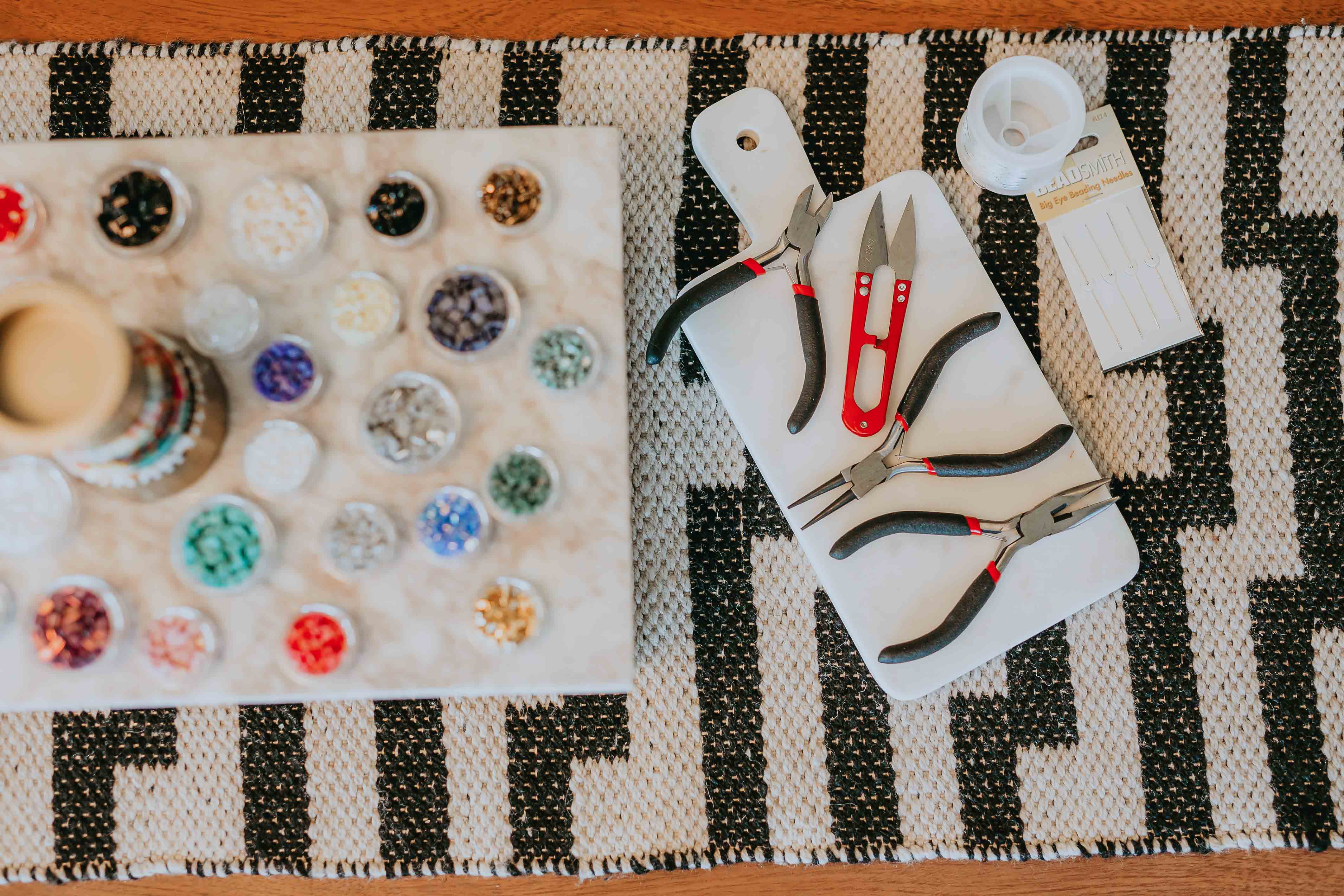
The Spruce Crafts notes that elastic cord selection is one of the most critical factors in bracelet durability, since the wrong stretch-to-weight ratio leads to premature snapping regardless of bead quality. For heavier Tila bracelets, a thicker crystal-cord elastic handles the weight better than thin jewelry elastic.
Which Bead Style Suits Your Project?
A practical breakdown based on what you're actually trying to make:
Choose heishi beads if you want:
- A soft, flowing bracelet that drapes and moves
- An earthy, natural, or boho aesthetic
- A layering bead that pairs well with mixed-material stacks
- A simpler stringing project with a single cord
- Color gradients across a wide range of non-glass materials
Choose Tila beads if you want:
- A flat, structured bracelet with a graphic, modern look
- Precise, consistent color across every bead in the strand
- The option to try two-hole weaving patterns as your skills grow
- A bracelet that sits flat and stays in place during active wear
- Miyuki's full range of glass finishes (matte, metallic, Picasso, AB)
There's also a practical consideration for DIY crafters. Beadaholique's stringing guides point out that two-hole beads like Tila beads open up a wider range of bracelet weaving techniques than single-hole beads, which means a Tila bead kit grows with you as a crafter in a way that a basic heishi bracelet project doesn't.
What About Ready-to-Wear vs. Making Your Own?
If you're buying a finished bracelet, the Tila bead option has a clear advantage: you can see exactly what the tile surface looks like, the color is consistent across the whole bracelet, and the proportions are predictable. Heishi bracelets can vary a lot depending on the bead material and source, so buying finished gives you less to guess about.
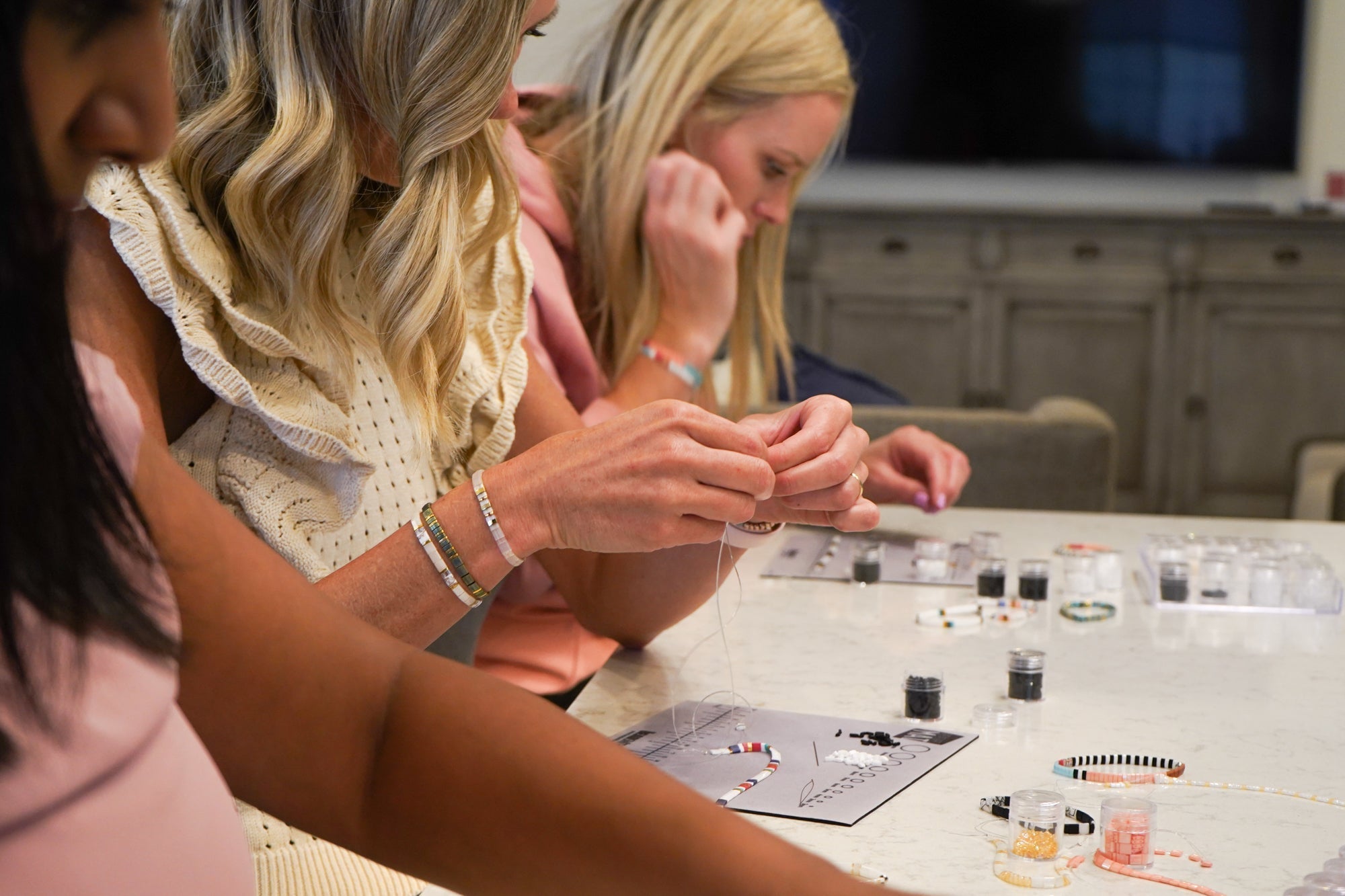
For DIY, both are accessible. A heishi bracelet can be done in 20 minutes with basic supplies. A simple strung Tila bracelet takes about the same time. Where Tila opens up more options is in weaving patterns, which can range from beginner-friendly to genuinely complex depending on the stitch.
At Mack & Rex, the finished bracelet lines use Miyuki Tila beads on crystal-cord elastic in sizes from XXS to 5XL. That inclusive sizing is harder to find in ready-to-wear heishi bracelets, which typically come in one or two fixed lengths. If fit matters to you (and for a workout bracelet it should), the Tila-on-elastic format with real size options is worth considering.
Where Can You Find Heishi and Tila Bead Supplies?
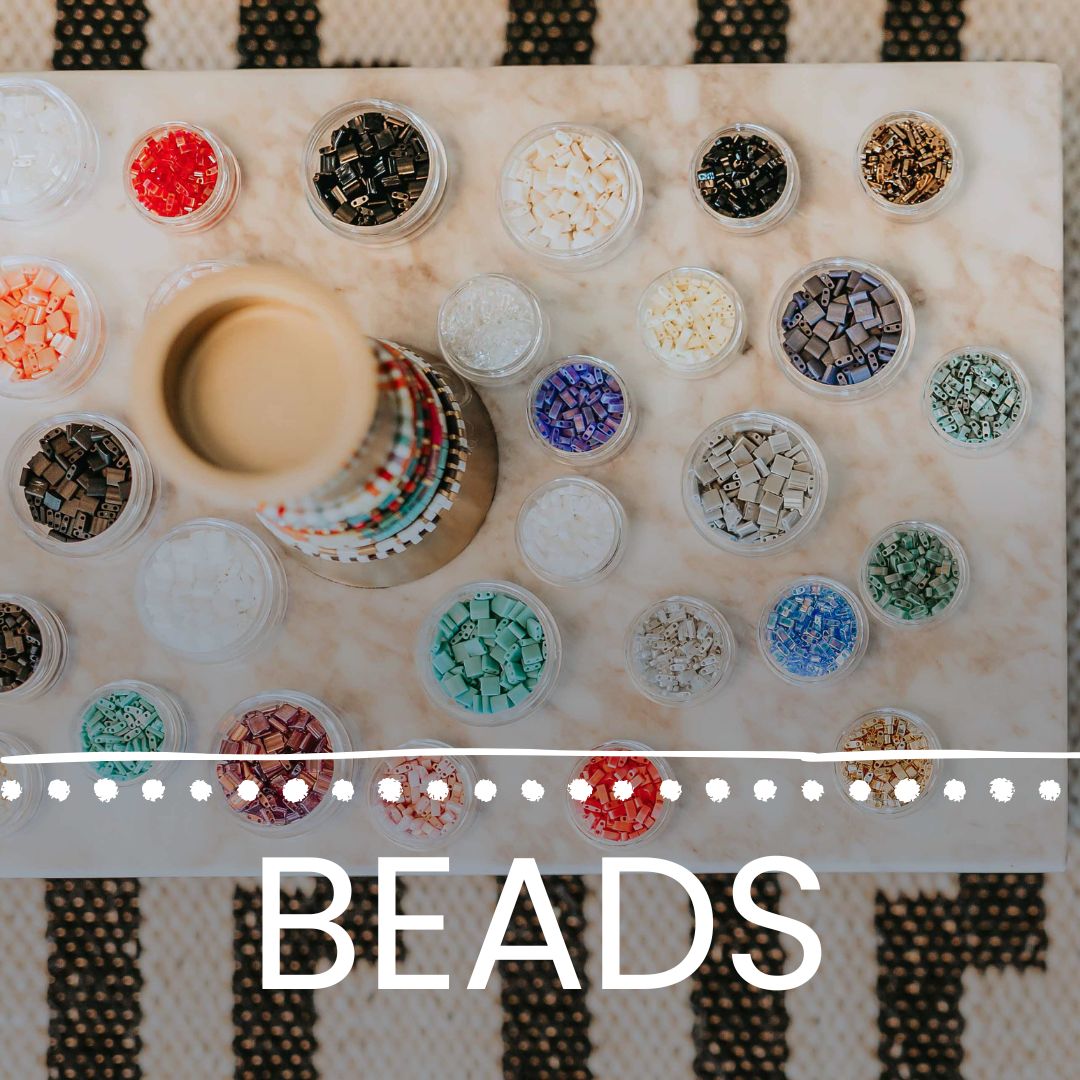
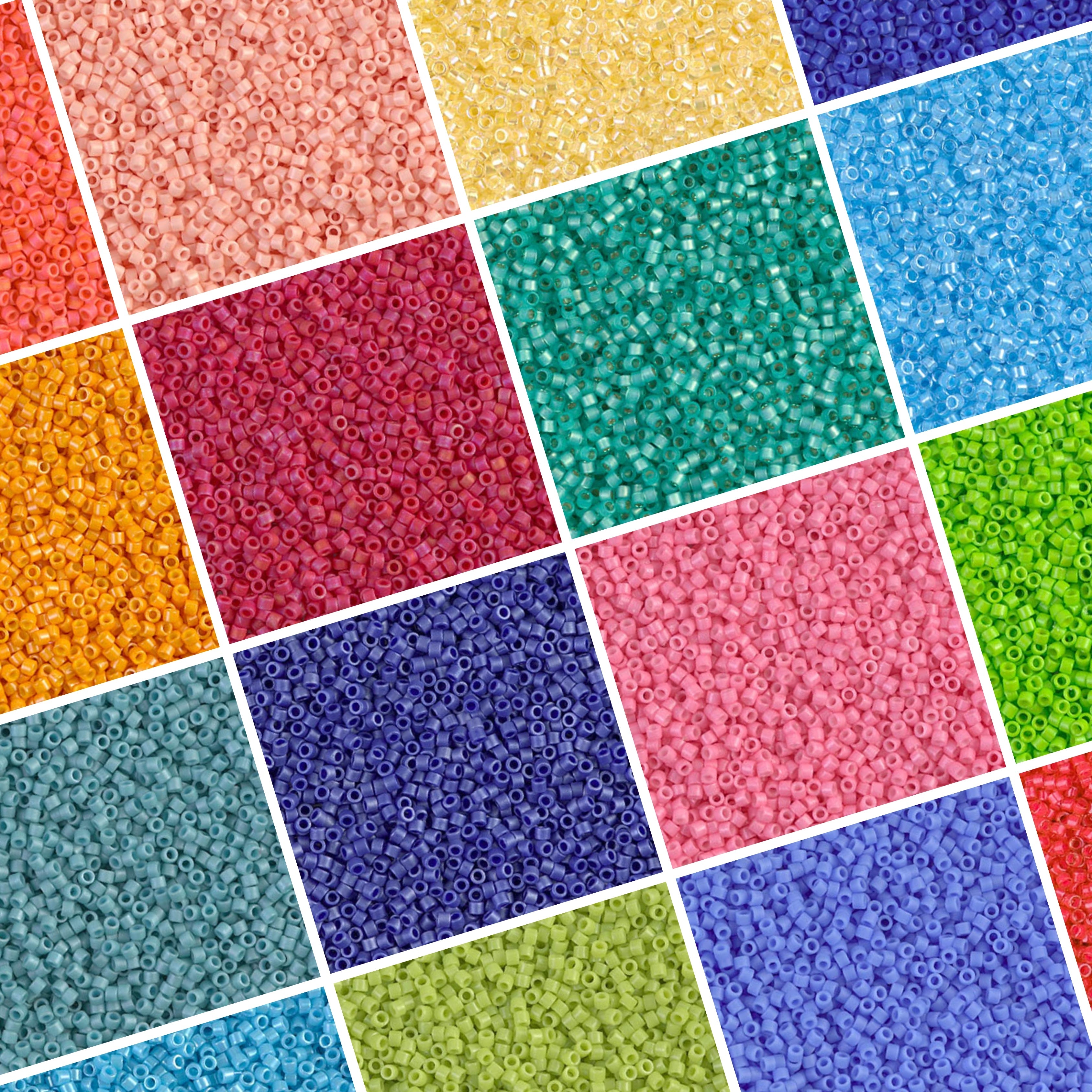
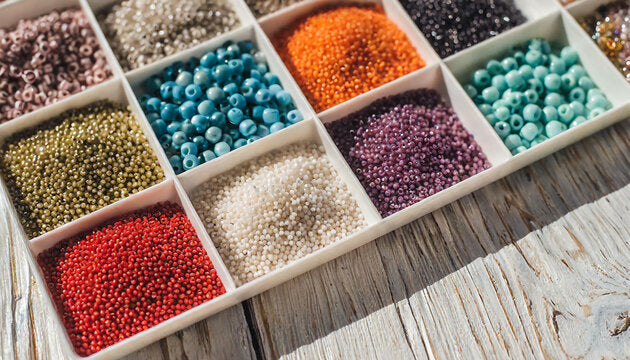
If you want to try both styles, the place to start is a bead collection that lets you compare color and finish side by side before committing to a full strand. Mack & Rex's seed bead and Tila bead collection carries Miyuki Tila bead mixes and loose bead packs in a range of colorways, including themed mixes and seasonal drops. Orders over $100 ship free within the US.
If you're buying enough beads to make multiple bracelets, the buy 3 bracelets, get 1 free offer (no code needed) on finished Tila bracelets is worth stacking alongside a bead order to hit the free shipping threshold.
FAQ: Heishi Beads vs Tila Beads
- What is the main difference between heishi beads and Tila beads?
- Heishi beads are thin, disk-shaped beads with a single center hole that stack into a smooth, fluid tube. Tila beads are flat, square two-hole beads made by Miyuki that create a bold, tile-like surface with a structured, graphic look. The choice comes down to whether you want flow and softness or geometry and visual impact.
- Are heishi beads or Tila beads better for everyday wear?
- Both hold up well day-to-day when strung on quality elastic cord. Tila beads (made by Miyuki from Japanese glass) are precision-cut and uniform, which helps them resist chipping along edges. Heishi disks in natural materials like shell or polymer clay can be slightly more sensitive to moisture over time. For gym and water exposure, Tila bracelets on crystal-cord elastic tend to be the more forgiving choice.
- Can you mix heishi beads and Tila beads in the same bracelet?
- Yes, but it takes planning. Heishi disks are single-hole and Tila beads have two holes, so they work on different stringing setups. The most common approach is to stack one heishi bracelet and one Tila bracelet side by side on the wrist rather than threading them together on a single strand.
- Which bead style is easier for beginners?
- Heishi beads on a single elastic strand are among the simplest bracelet projects you can try. You thread, tie, and done. Tila beads can also be strung simply, but their two-hole design opens up weaving patterns that add complexity. If you want a quick win on your first bracelet, heishi is the more forgiving starting point.
- Where can I buy Tila beads and heishi beads together?
- Mack & Rex carries Miyuki Tila bead mixes, loose Tila beads, and heishi-friendly seed bead options in one place. Browse the full collection at mackandrex.com/collections/all-seed-beads to compare colors and styles before you buy.