

Heishi Beads vs Tila Beads: Which Is Right for Your Bracelets?
Are Heishi Beads and Tila Beads the Same Thing?
No. Heishi beads are thin, flat, single-hole discs usually made from polymer clay, shell, or stone, giving a bracelet soft drape and texture, while Tila beads are flat, two-hole glass squares made by Miyuki that create a crisp, tile-like pattern with precise color blocking. Both work beautifully in bracelets, but the shape, the stringing method, and the finished look are different enough that picking the right one changes how your project turns out.
If you've made a few stretch bracelets already, you've probably noticed heishi discs stack into a smooth, almost seamless line, while Tila tiles sit flat and show off a pattern or color block. Neither is "better" across the board. It depends on what you're making.
What's the Real Difference in Shape and Structure?
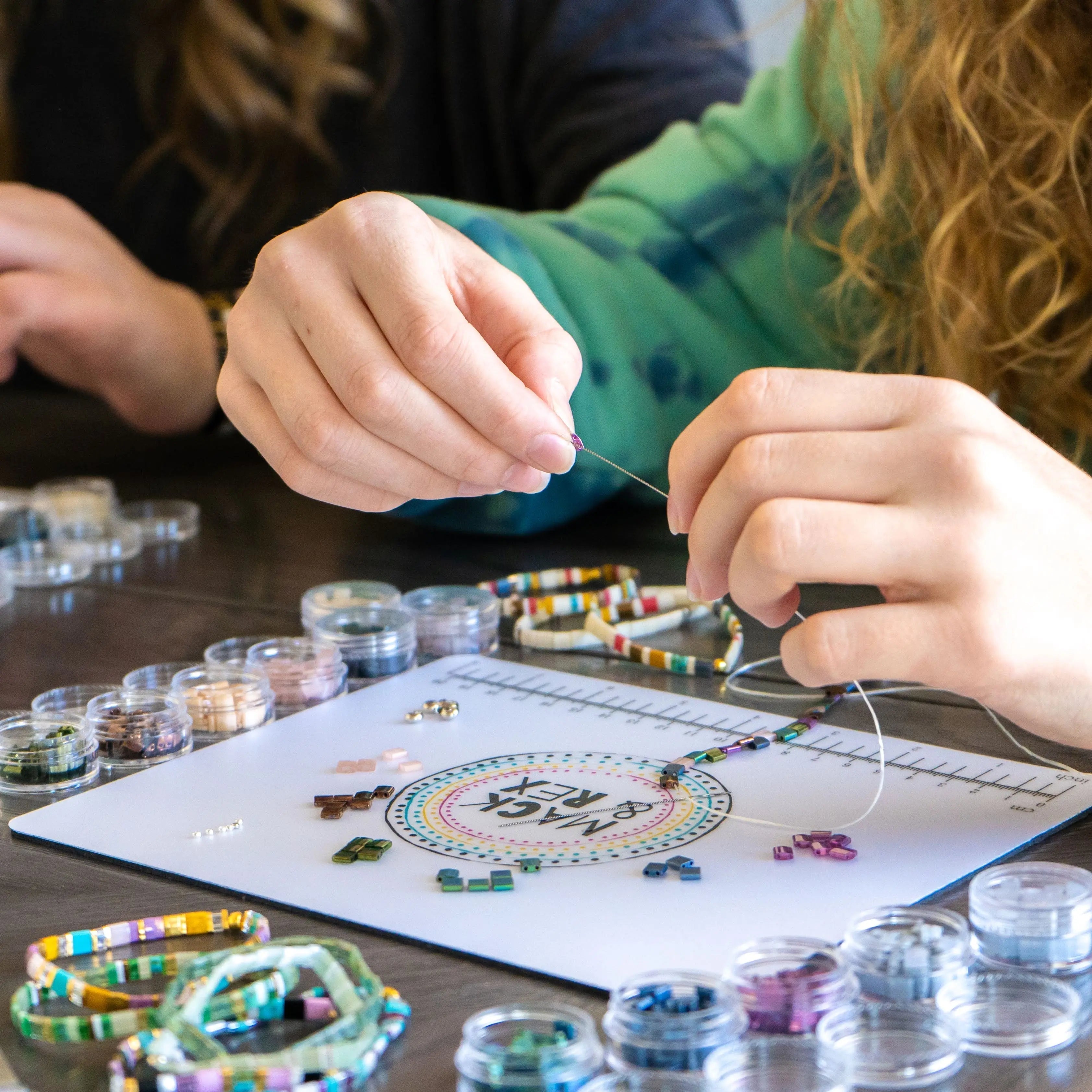
Heishi beads are single-hole discs, roughly 2mm to 8mm across and 1-2mm thick, so a strand of them looks like a continuous ribbon. Tila beads are two-hole squares measuring about 5mm x 5mm x 1.9mm, designed so two parallel strands (or one folded strand) run through them, keeping each tile flat and facing the same direction.
That second hole is the whole reason Tila beads read as "tiles" rather than round beads. It locks each square in place so a pattern of colors stays crisp instead of twisting around the strand the way a single-hole bead can. Heishi, with its one hole, has more natural drape and movement. Neither design is an accident. Miyuki's own product specs describe the Tila as a flat, two-hole square bead built specifically for flat, graphic beadwork, while heishi's disc shape traces back to hand-cut shell jewelry made by Pueblo artisans long before it became a craft-store staple.
Which Beads Are Easier to Work With for Beginners?
Heishi wins on raw simplicity. You string one hole, the discs settle into place, and there's very little to get wrong. It's the bead shape most people reach for on their very first bracelet.
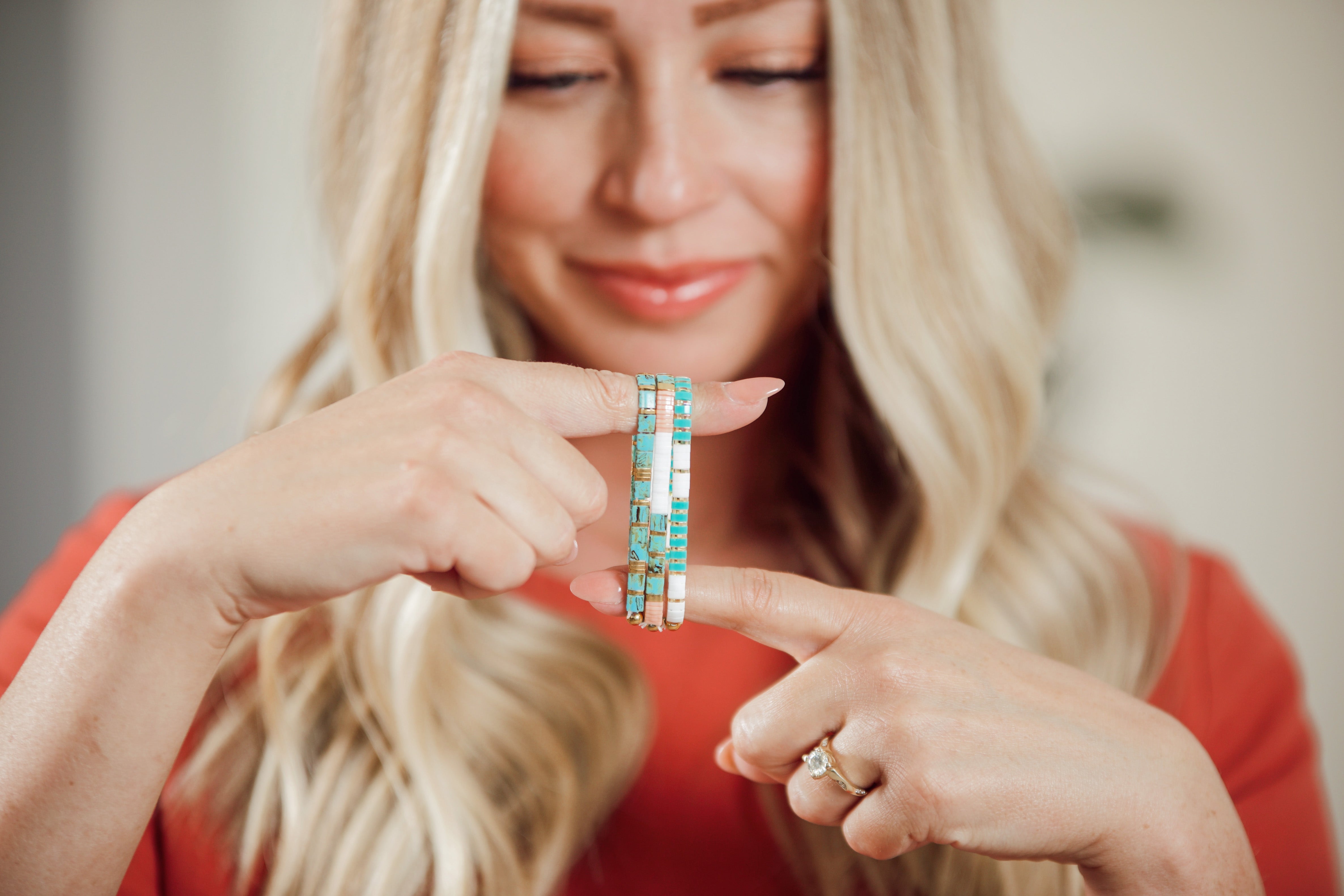
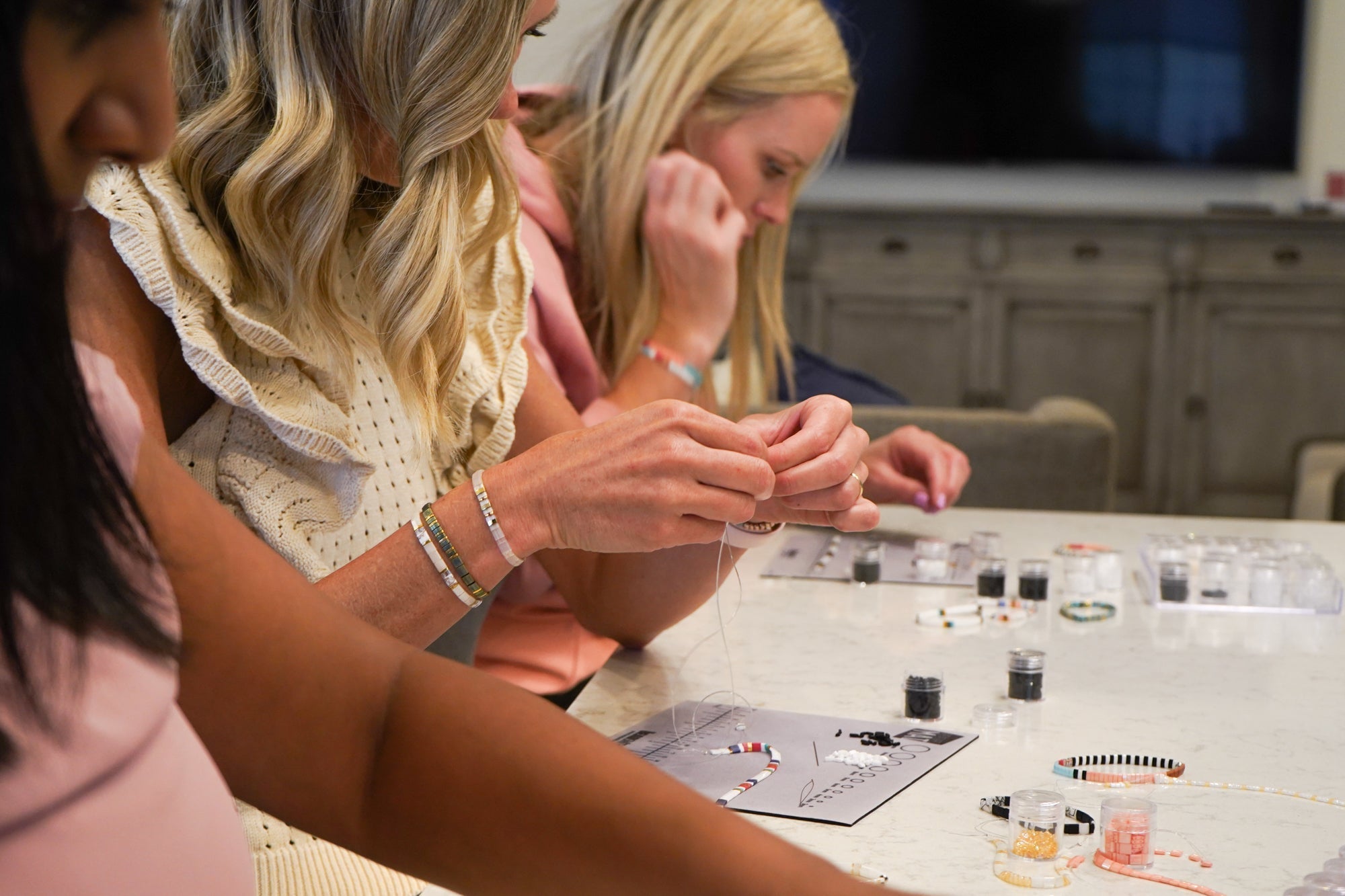
Tila beads take a bit more attention because of the second hole, but they're far from difficult once you understand the logic: keep both strands running the same direction through each tile and the pattern lines up on its own. This is exactly why Mack & Rex builds the two-hole stringing into ready-cut kits rather than leaving beginners to figure it out from a bag of loose tiles. A trio kit, for example, comes with the beads pre-portioned and the cord cut to length, so the two-hole step is guided rather than guessed at. If you're brand new to beading and want zero learning curve, start with heishi or a Tila kit built for first-timers. If you've made even one bracelet before, Tila's two-hole method is a quick habit to pick up.
Which One Holds Up Better Over Time?
Durability comes down to material more than shape. Glass Tila beads resist scratching, fading, and water exposure better than most heishi materials, since glass doesn't absorb moisture or wear down the way shell, wood, or some polymer clay finishes can over months of daily wear. Stone heishi (turquoise, hematite) holds up close to glass; shell and coconut heishi are a bit more delicate and can dull with heavy water exposure.
That said, the bead is only half the durability question. The stretch cord matters just as much, maybe more. General beading guidance on stretch bracelets points to cord quality, not bead choice, as the biggest factor in whether a stretch bracelet holds up. A bracelet strung on thin craft elastic will stretch out and snap regardless of whether the beads are heishi or Tila. Crystal-cord elastic (the stringing material used in Mack & Rex finished bracelets) holds tension and shape far longer than basic hobby-store elastic, so the cord you choose has as much to do with a bracelet's lifespan as the bead shape does.
Which Look Fits Your Bracelet Project?
Style, more than anything, should drive this choice.
Heishi beads read as organic and bohemian. They're the right pick for a surfer-stack look, a tonal wrist stack in warm earth tones, or a neutral base bracelet meant to sit quietly behind a statement charm. If your project calls for texture and movement over pattern, heishi is the shape to reach for.
Tila beads read as graphic and precise. They're built for color-blocked patterns, ombre fades, and the kind of clean, tile-like look you see across Mack & Rex's named collections (STAINED, BEACHY, RETRO SUNSET, EVERGREEN EDIT). If your project is about a specific color story or a repeated pattern across the wrist, Tila's flat square shape shows it off in a way a rounded or disc bead simply can't.
Can You Combine Heishi and Tila Beads in One Bracelet Stack?
Absolutely, and it's one of the easiest ways to build a stack that looks intentional rather than random. A neutral heishi strand in cream, sand, or taupe sits well next to two or three Tila bracelets, adding a softer, textured contrast to the tiles' clean lines. Heishi also works as a spacer bracelet between bolder Tila pieces, so the eye gets a visual break between patterns.
One safety note if kids are part of the project: both bead types are small-parts hazards. Keep loose beads away from toddlers and younger children, and have an adult supervise any stringing project involving small children.
Where to Buy Heishi Beads and Tila Beads for Bracelet Making
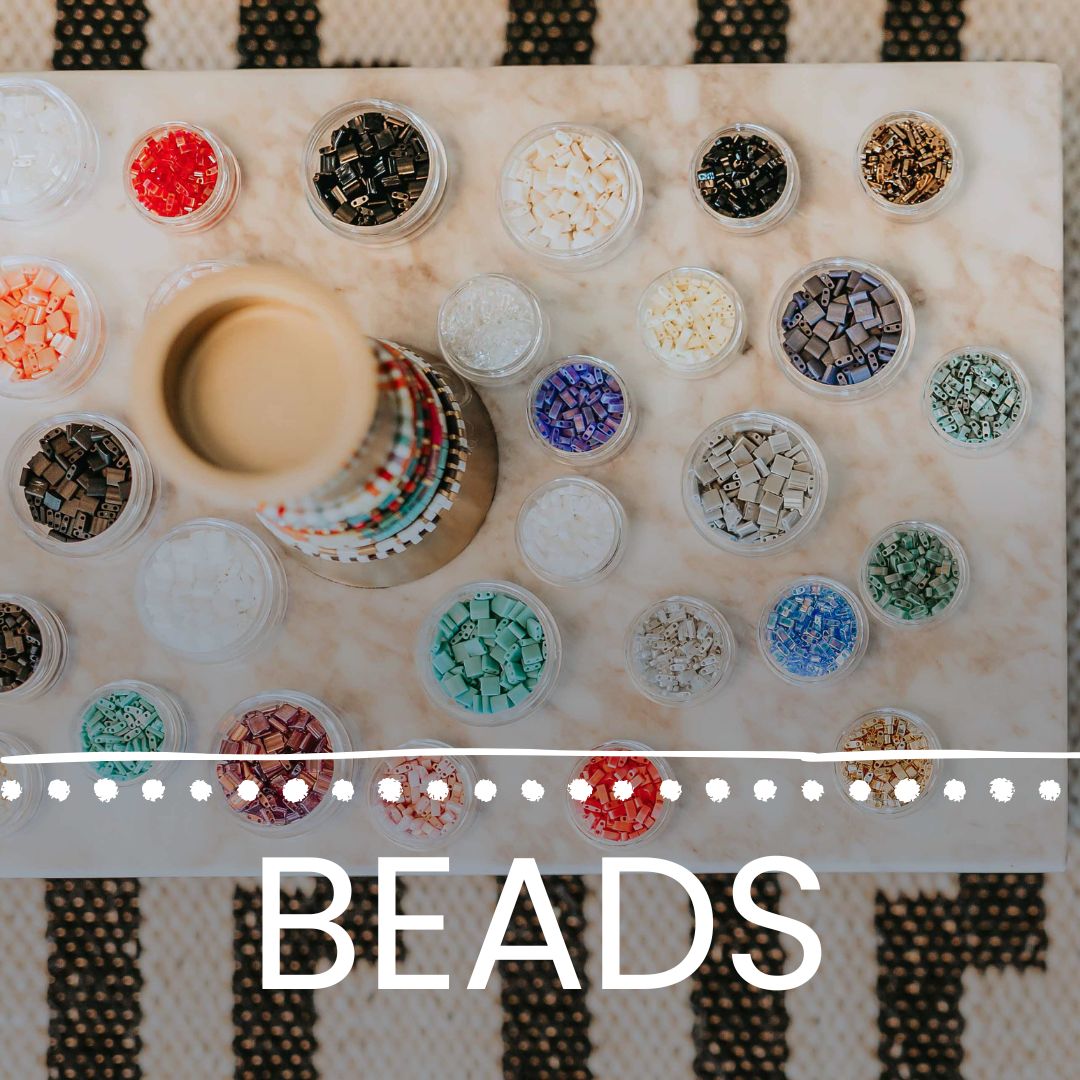
Mack & Rex carries genuine Miyuki Tila beads in loose mixes and themed color packs, alongside heishi and other accent beads, in the seed bead and loose bead collection. Tila bead mixes generally run about $5 to $9 depending on the color set, and Mack & Rex doesn't manufacture the Tila beads themselves. They're a genuine Miyuki product, sourced and resold because the quality and color range are worth carrying.
If you'd rather skip the guesswork on stringing and pattern-matching, the trio kits and bracelet-making kits bundle Tila beads with pre-cut crystal cord and a guided pattern, which is the fastest route from "loose beads" to "wearable bracelet." Orders over $100 ship free within the US.
Frequently Asked Questions About Heishi Beads and Tila Beads
Are heishi beads better than Tila beads for a first bracelet?
For a true first project, heishi beads are simpler because they only have one hole to string. Tila beads take a little more attention for the two-hole technique, but a guided kit removes most of that learning curve, so either bead works for a beginner depending on whether you want to string it yourself or follow a set pattern.
Do heishi beads and Tila beads look good together in a stack?
Yes. A neutral heishi strand next to two or three Tila bead bracelets is a popular combination. The soft, organic texture of heishi contrasts nicely with the flat, graphic look of Tila tiles, and neither shape competes for attention.
Which lasts longer, heishi beads or Tila beads?
Glass Tila beads generally hold up to daily wear better than shell or wood heishi, since glass doesn't absorb moisture the way natural materials can. Stone heishi comes close to glass in durability. In both cases, the stretch cord matters as much as the bead, so a quality crystal-cord elastic extends the life of either style.
Is Tila a type of heishi bead?
No. They're different bead families. Heishi refers to a flat, single-hole disc shape traditionally cut from shell, while Tila is a specific two-hole, square glass bead made by Miyuki. They can look complementary in a finished bracelet, but they're not the same bead category.
How do I make sure I'm buying real Tila beads, not imitations?
Look for beads explicitly labeled Miyuki Tila, since that's the trademarked name for the authentic product. Mack & Rex's seed bead collection carries genuine Miyuki Tila mixes alongside heishi and other accent beads, so you can compare both shapes before deciding what a project needs.