

Heishi vs. Tila Bead Bracelet Kits: Which One to Buy First
What's the Difference Between a Heishi and a Tila Bead Bracelet Kit?
A heishi bead bracelet kit uses flat, disc-shaped beads punched from polymer clay and strung edge to edge, giving you a stacked, matte, earthy look. A tila bead bracelet kit uses Miyuki tila beads, a flat two-hole glass tile bead made in Japan, which sit flatter and catch light for a glossier, more structured pattern.
Both start the same way: pick a kit, string beads onto elastic cord, tie it off. The beads themselves are what set the two apart, in material, in how they look on a wrist, and in how the finished piece holds up after a few months of actual wear. That last part matters more than most first-time buyers expect.
How Do Heishi and Tila Kits Look and Feel Different on the Wrist?
Heishi beads read as casual and warm. Tila beads read as polished and a little more dressed up. Neither is objectively better, it comes down to what you already wear and who the bracelet is for.
Heishi: Flat, Matte, Stacked
Polymer clay heishi discs are lightweight, come in solid or marbled colors, and lay in a smooth, stacked row. They pair well with beachy, layered stacks and skew younger and more casual. Because they're clay, colors tend to be flat and matte rather than glossy.
Tila: Glassy, Faceted, Structured
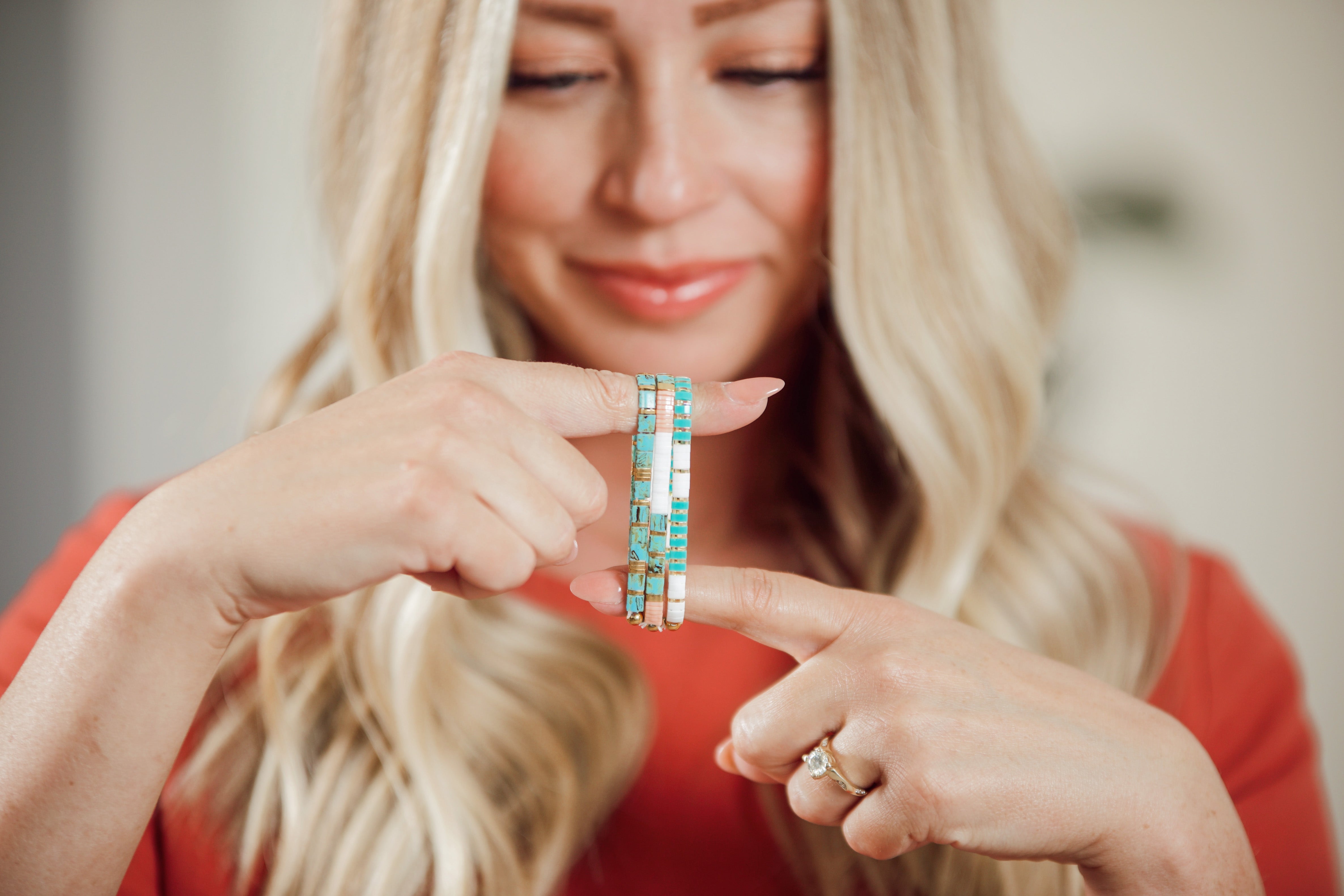
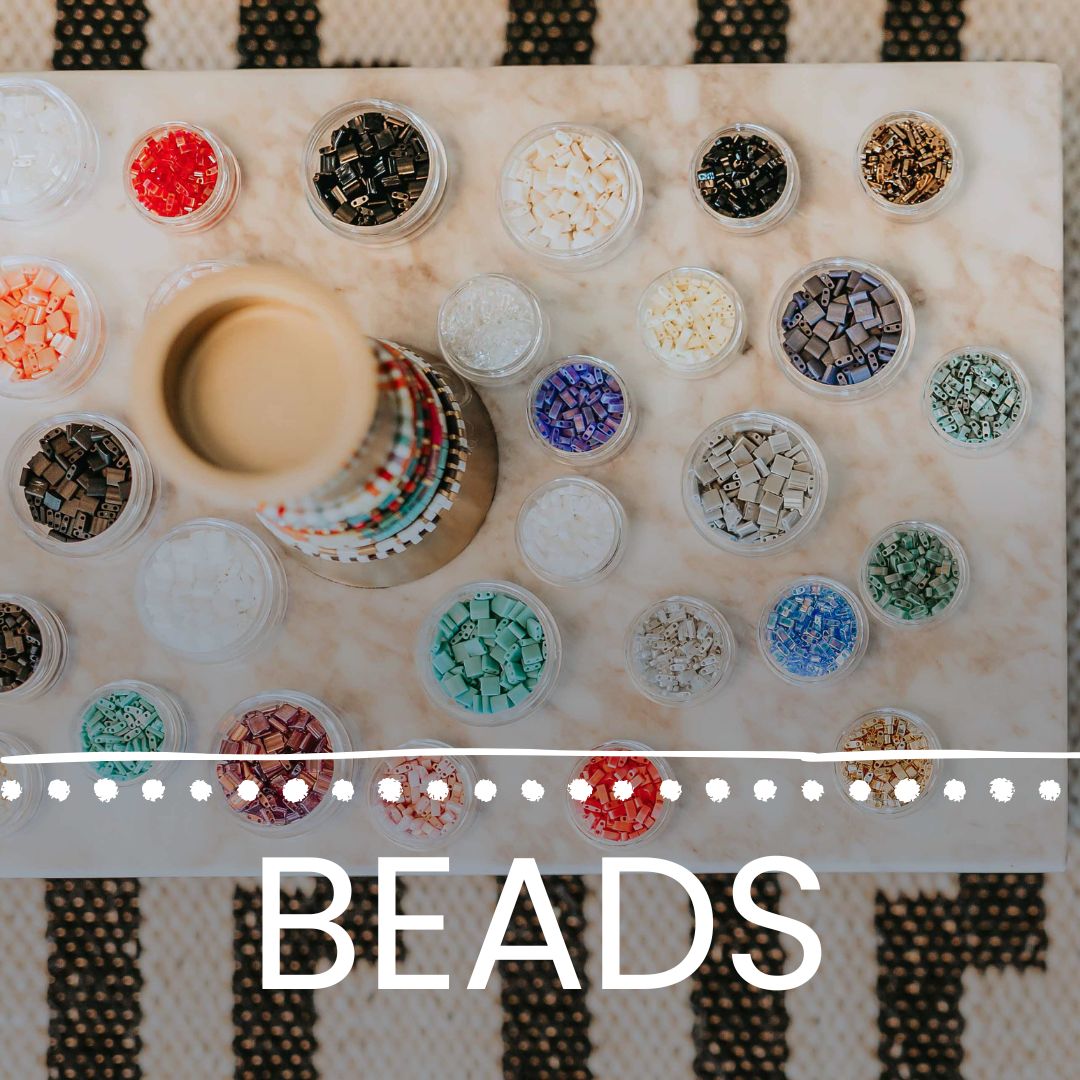
Tila beads are cut glass, so they catch light the way a small mosaic tile does. A tila bracelet has more visual texture, especially with metallic or AB (aurora borealis) finishes mixed in, and it tends to photograph better under normal light. It reads a step dressier without looking formal.
Which Kit Is Easier for a Beginner Adult to Actually Finish?
Heishi wins on raw simplicity. The discs have big, forgiving holes, they don't need to line up in any particular direction, and a first-timer can string a full bracelet in under 15 minutes without thinking hard about it.
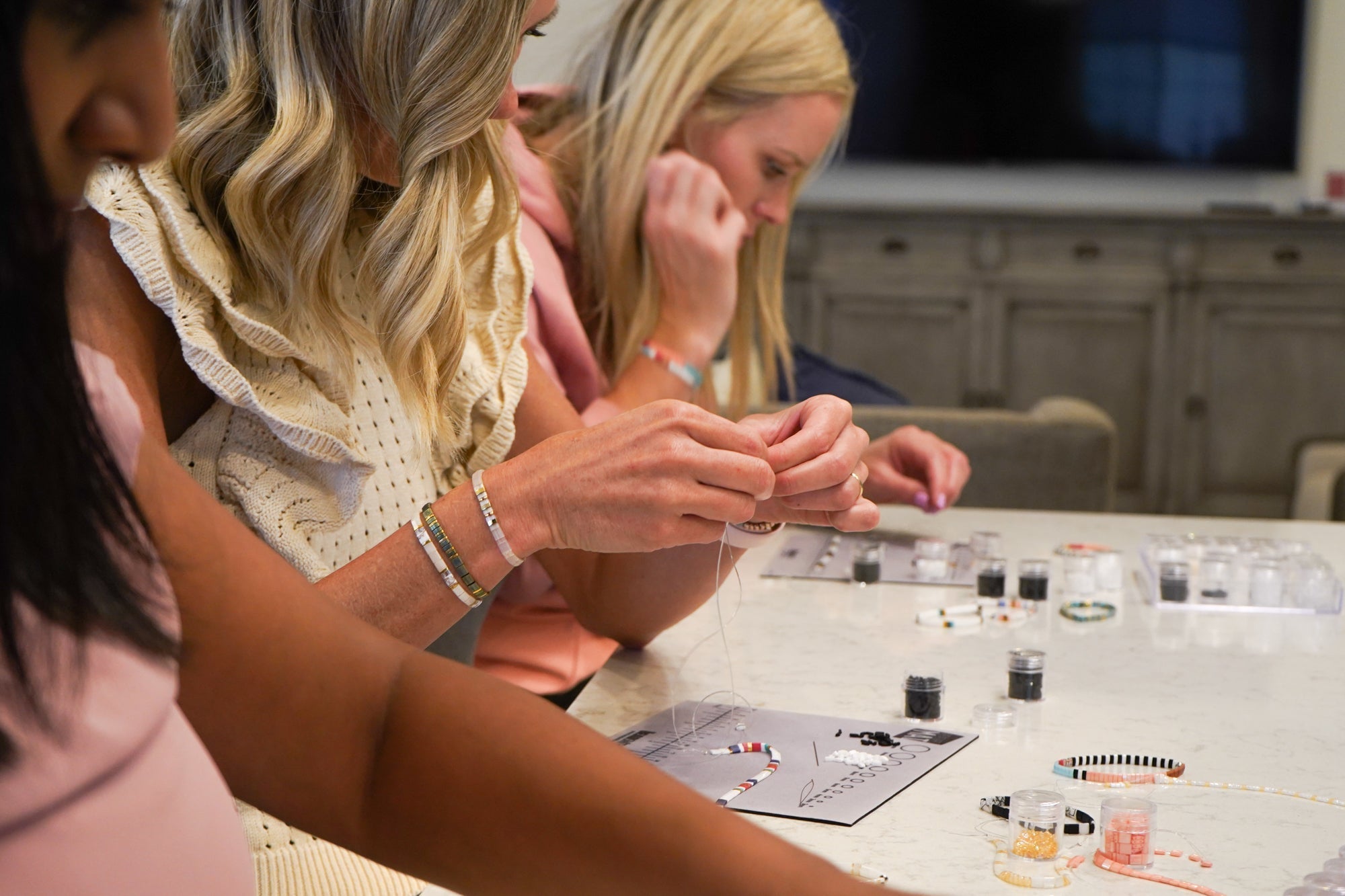
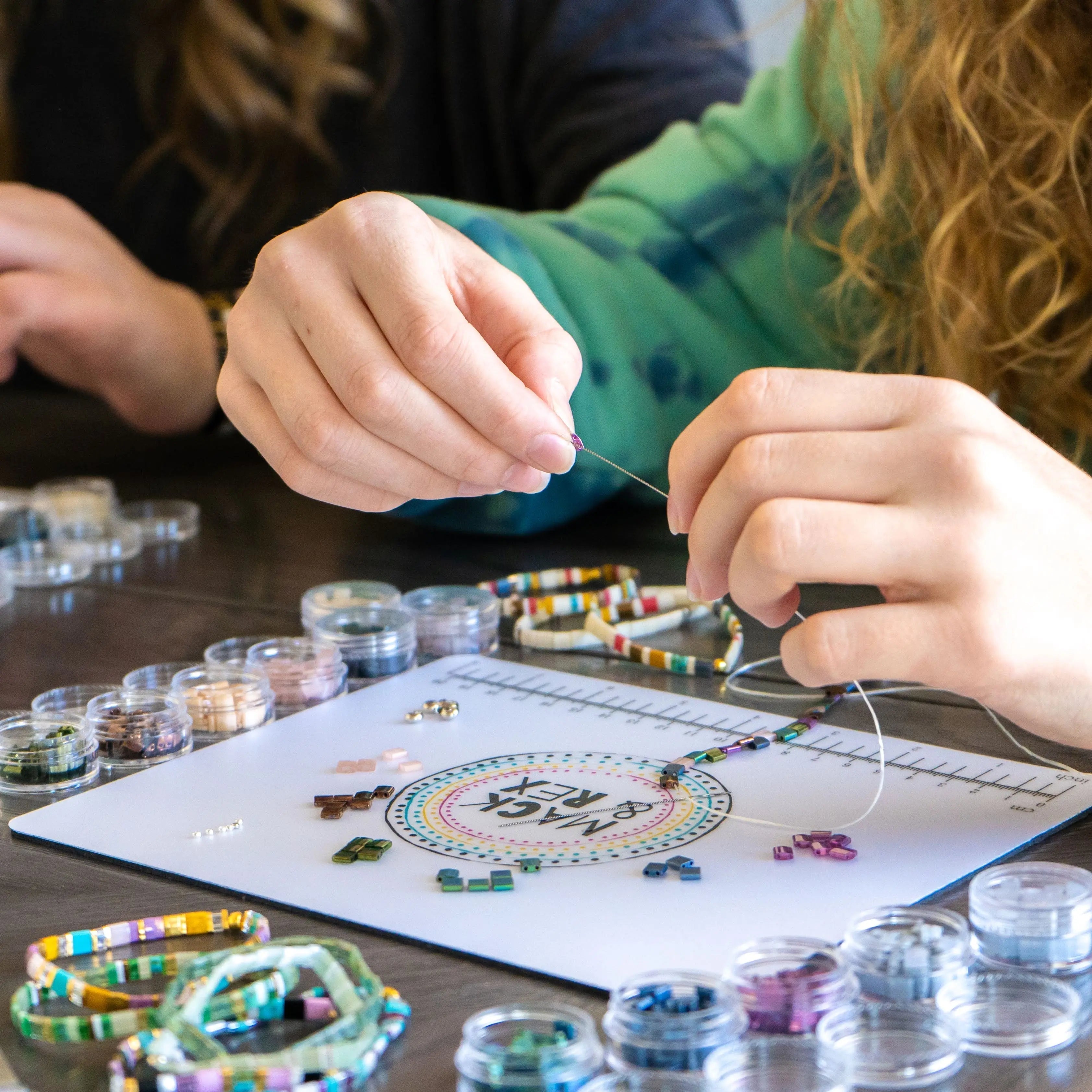
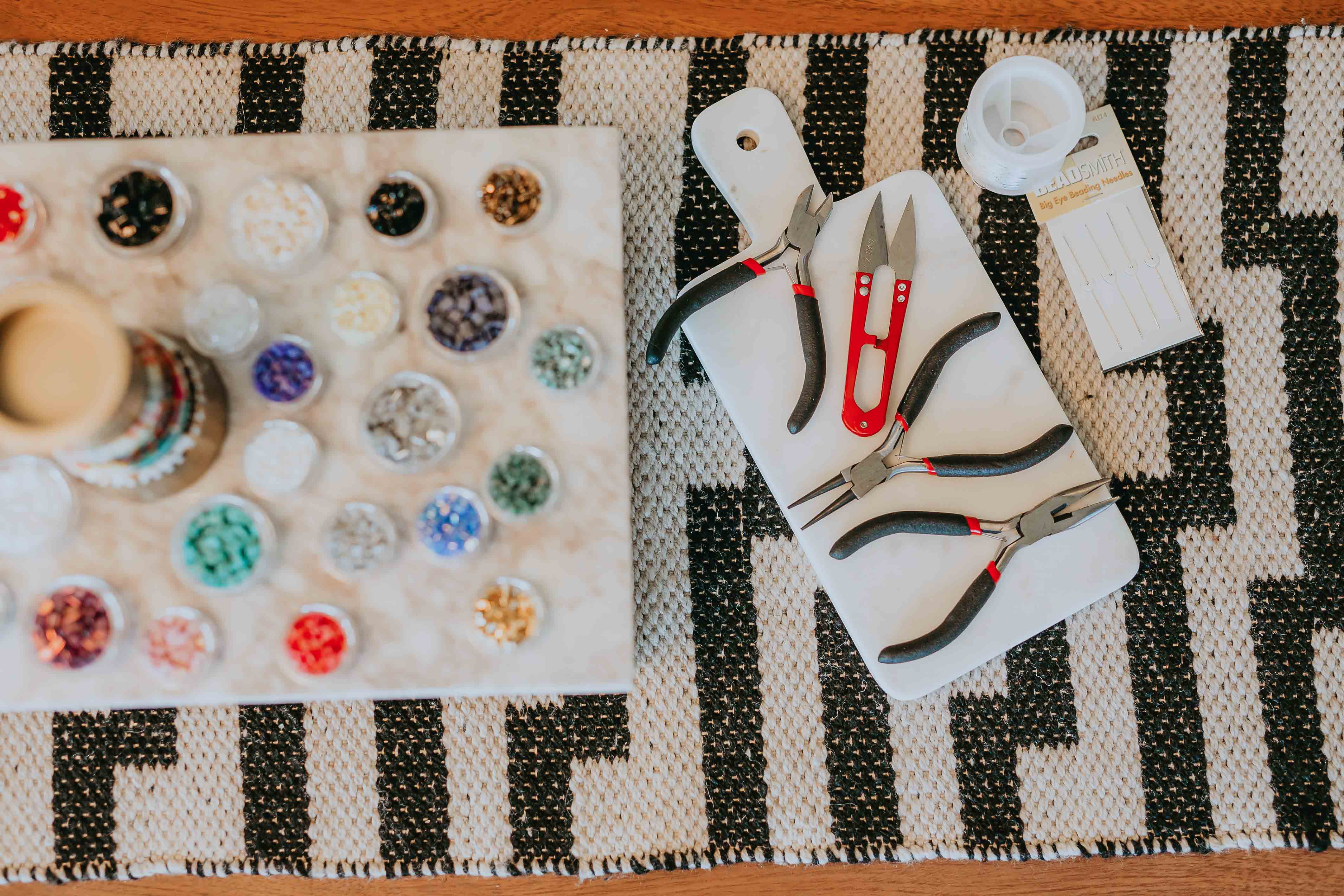
Tila beads take a bit more attention because each bead has two holes that need to stay lined up as you string, especially if the pattern threads through both holes for a woven look. That said, a beginner-focused kit closes most of that gap before you even open the box. Mack & Rex's tila trio kits come with pliers, side cutters, .5mm crystal elastic, locking beading needles, crimp beads, knot covers, and a bead mat with a built-in ruler, plus a free online tutorial, so the fussy setup work is already done. Most first-time customers finish a bracelet in one sitting.
If you've never strung a bead in your life, heishi is the gentler on-ramp. If you're willing to follow a short tutorial the first time through, a tila kit isn't a big leap up in difficulty, it just asks for a little more patience on bead one through ten.
Which One Holds Up Better Over Time?
Glass beats clay here, plainly. Tila beads are cut from glass, so they don't fade in the sun, absorb lotion or hand sanitizer, or soften with heat the way a polymer clay bead can. Heishi discs are durable for what they are, but repeated sun exposure and body oils will dull the color and can wear small chips into the edges over a year or two of steady wear.
Polymer clay is a moldable, oven-cured plastic material, and like most plastics, its surface is more prone to scuffing and UV fading than fired glass or ceramic. Glass beadwork, by contrast, has centuries of history precisely because glass resists the wear that softer materials don't. That durability gap is the main reason a tila bracelet often looks close to new well after a heishi bracelet from the same year has faded.
Neither is fragile for normal life. Showering, working out, and everyday wear are fine for both as long as the elastic itself is decent quality. The difference shows up over the long haul, not the first month.
So Which Should You Buy First?
Buy heishi first if you want a fast, low-cost, no-pressure project and you're drawn to a casual, stacked look. Buy tila first if you want a bracelet with more shine, more structure, and a better shot at still looking good a year from now.
Mack & Rex doesn't sell heishi kits. Its kits are built entirely around genuine Miyuki tila beads, sourced and resold, not manufactured in-house, strung on the same crystal-cord elastic used in the finished bracelets. That's a fair thing to know going in if you're weighing both, and it's also why this comparison leans tila for anyone planning to make more than one or two bracelets.
The trio kits (browse the full kit lineup here) run $44.99 and make 3 bracelets, a reasonable way to test whether kit-making is for you before going bigger. If you already know you're hooked, the Tila Bead Starter Kit makes 20 bracelets for $189.99, and the Ultimate Tila Bracelet Kit makes 80 for $399.99, both of which clear the $100 threshold for free US shipping. A single $44.99 trio kit doesn't hit that threshold on its own. Worth noting too: the buy-3-get-1-free offer applies to finished, ready-to-wear bracelets only, not to kits.
A Quick Note on Small Parts
Beads, crimp beads, and knot covers are all small parts and a choking hazard. If grandkids are at the table while you're working through a kit, keep the loose pieces out of reach of little ones and stay close by.
Frequently asked questions
What's the difference between a heishi and a tila bead bracelet kit?
A heishi kit uses flat, disc-shaped beads punched from polymer clay, strung side by side into a stacked, earthy look. A tila kit uses Miyuki tila beads, a flat two-hole glass tile made in Japan, strung or woven into a more structured, glassy pattern.
Which bead bracelet kit is easier for a beginner?
Heishi kits are usually easier for a first project since the discs have large, forgiving holes and stack in any order. Tila kits take a little more attention to keep the two holes aligned, but a kit built for beginners, with pre-measured elastic and a bead mat, closes that gap fast.
Do tila bead bracelets last longer than heishi ones?
Glass tila beads generally hold their color and shape better over time than polymer clay heishi discs, which can fade with sun exposure and chip at the edges with heavy wear. Both hold up fine for normal daily wear when strung on quality elastic.
Should I buy a heishi kit or a tila kit first?
If you want a quick, low-pressure first project with a matte, boho look, start with heishi. If you want a bracelet with more shine and structure that holds up long term, a tila trio kit like the ones Mack & Rex sells is the better first buy.
Sources: Wikipedia: Heishe, Wikipedia: Polymer clay, Beadaholique: Tila and seed bead mixes.