



How Long Does It Take to Make a Bracelet From a Kit?
How Long Does It Actually Take to Make a Bracelet From a Kit?
A single beaded bracelet from a Mack & Rex kit takes about 20 to 45 minutes for a first-timer, from sorting beads to tying the final knot. Stick to a simple color pattern and it lands on the low end. Once you've made two or three, most people cut that time to 15 minutes flat.
That range covers real variation, not a marketing number. Someone who plans a careful color sequence before touching the elastic will take longer than someone who just grabs beads and strings them. Neither approach is wrong. A beginner-friendly kit with Tila beads (the flat, two-hole style Miyuki makes and Mack & Rex resells) is built so either approach still ends in a bracelet you'd actually wear.
What Makes Your First Bracelet Take Longer Than Your Fifth?
Decision-making, mostly. Your first time through, you're not just stringing beads. You're deciding which colors go where, figuring out how tight the elastic should sit, and learning what a surgeon's knot actually looks like when it's tied correctly. All of that eats time that has nothing to do with the physical act of threading a bead onto a cord.
By the third or fourth bracelet, those decisions are automatic. You already know your wrist size, you've settled into a pattern style you like, and your hands know the knot. That's why "practice" shows up so often in beading advice: the stringing itself barely changes speed, but the thinking around it does.
Does Bead Size Really Change the Time?
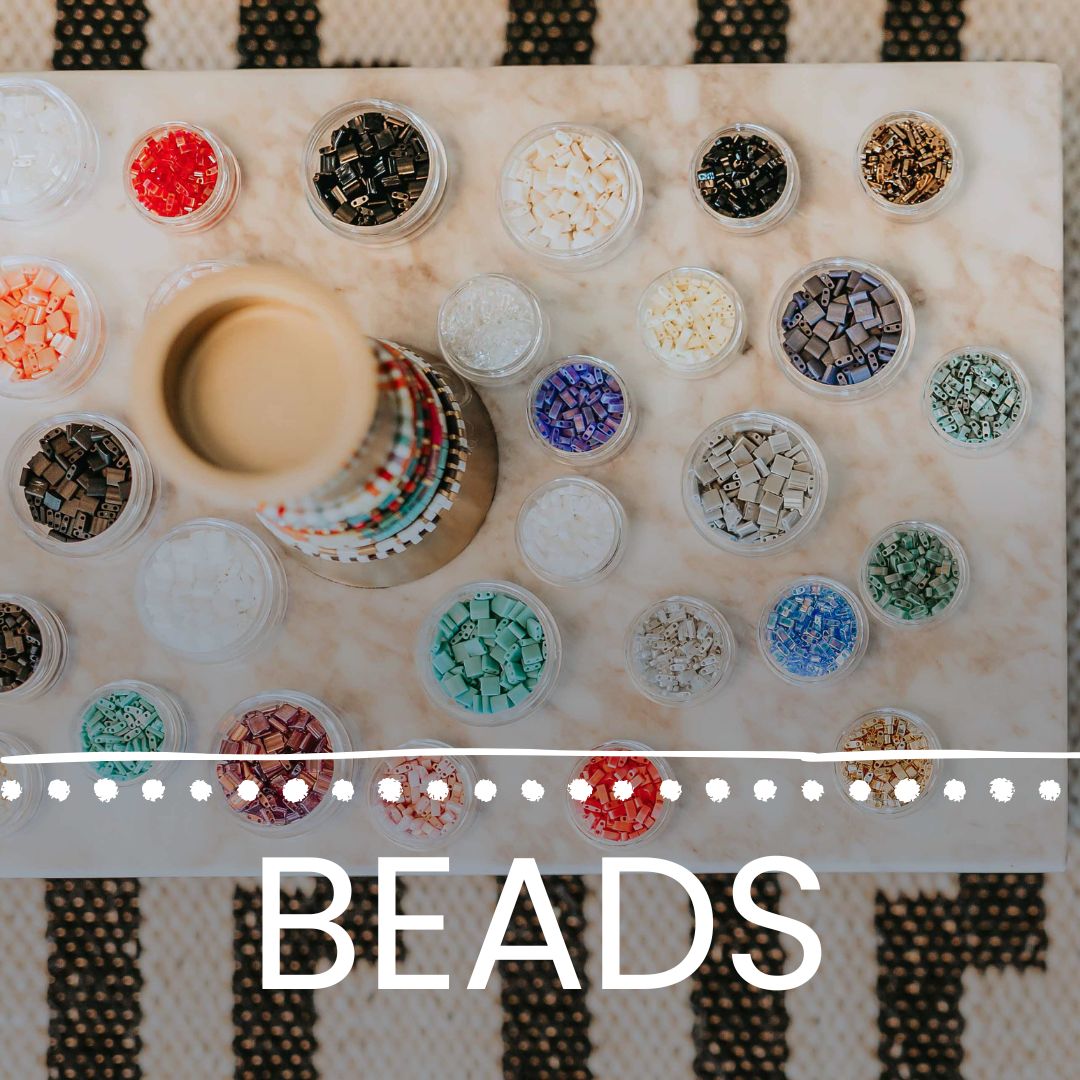
It changes it more than most beginners expect. Tila beads are flat, roughly 5mm square tiles, so a 7-inch bracelet might need somewhere around two dozen of them to close the loop. Standard round seed beads run much smaller, and getting the same length can take a hundred or more beads strung one at a time. Wikipedia's overview of seed bead sizing gives a sense of how much that size range varies across bead types, and why fewer, larger beads generally means a faster build.
Fewer beads also means fewer chances to fumble one off the elastic and watch it roll under the couch. That's not a small thing when you're timing yourself.
How Much Does Pattern Complexity Add to the Clock?
A repeating two-color pattern is close to the fastest option. You string the same short sequence over and over with almost no stopping to think. A multi-color design with an asymmetric layout, or one where you're matching beads to a photo reference, adds real minutes: you're checking your work more often and occasionally backing up a few beads to fix an out-of-order color.
Neither is hard. It's a tradeoff. A beginner who wants to move fast should pick a simple alternating pattern for the first bracelet and save the more detailed layouts for once the basic stringing motion feels automatic.
Elastic Cord or Stringing Wire, Which Is Faster?
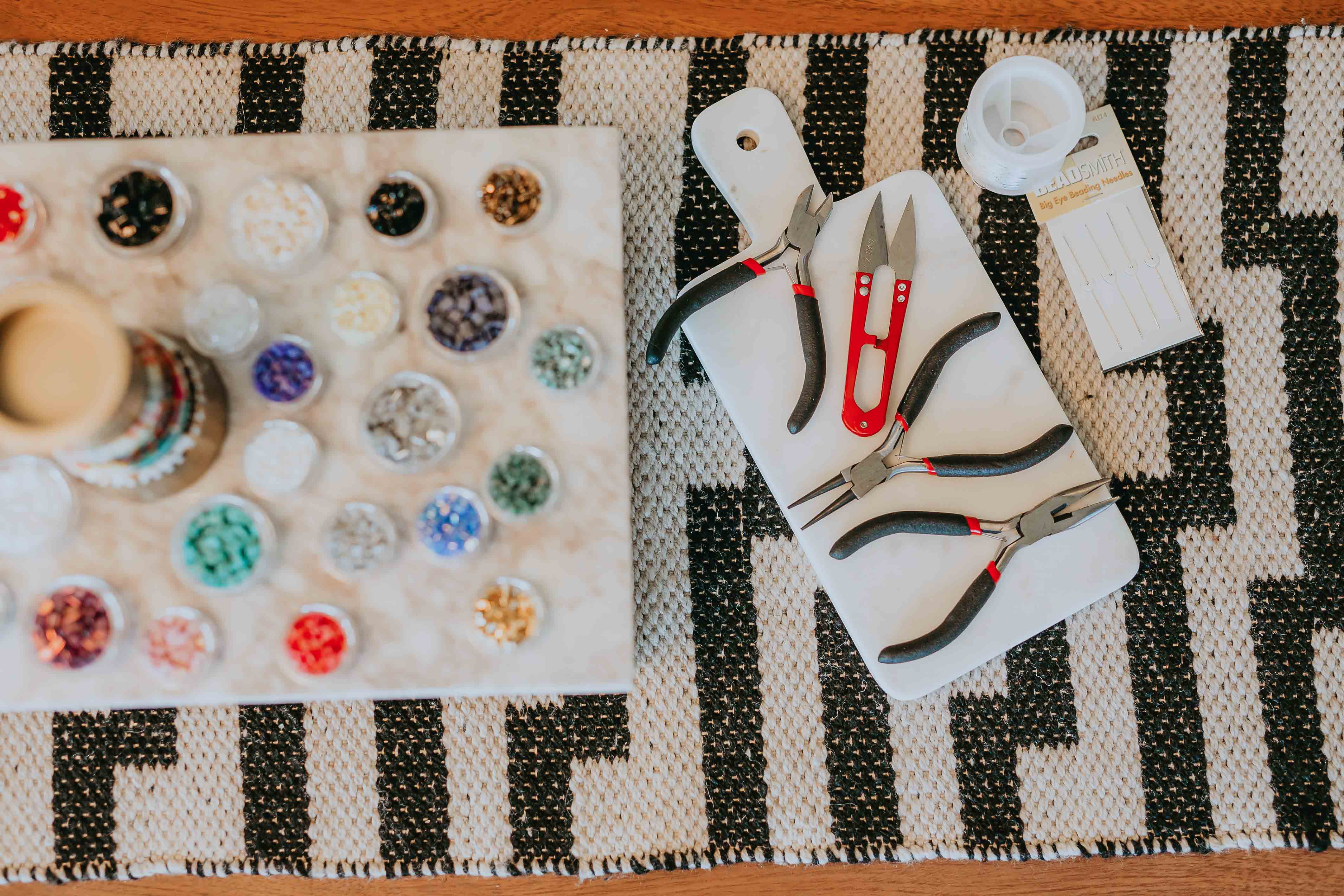
Elastic wins on speed, no question. Crystal-cord elastic threads through Tila bead holes cleanly, and finishing a bracelet is just a knot, no clasp or crimp beads required. Stringing wire is more rigid and needs crimp beads plus a clasp to close the loop, which means extra tools and an extra step most beginners haven't practiced yet. WikiHow's guide to stretch bracelets walks through why elastic is the standard recommendation for anyone starting out.
That's part of why beginner kits, including the ones Mack & Rex builds, use elastic by default. It removes an entire category of things that can go wrong on a first attempt.
Step-by-Step: Where the Minutes Actually Go
Here's the realistic breakdown for one bracelet.
- Plan your pattern (5 to 10 minutes). Lay your beads out by color before you string anything. Skip this and you'll likely be un-stringing and restarting partway through.
- Measure and cut your cord (2 minutes). Measure your wrist and cut elastic about 2 inches longer. Mack & Rex bracelets are sized XXS through 5XL, so if you're gifting the kit, ask the wrist measurement upfront rather than guessing.
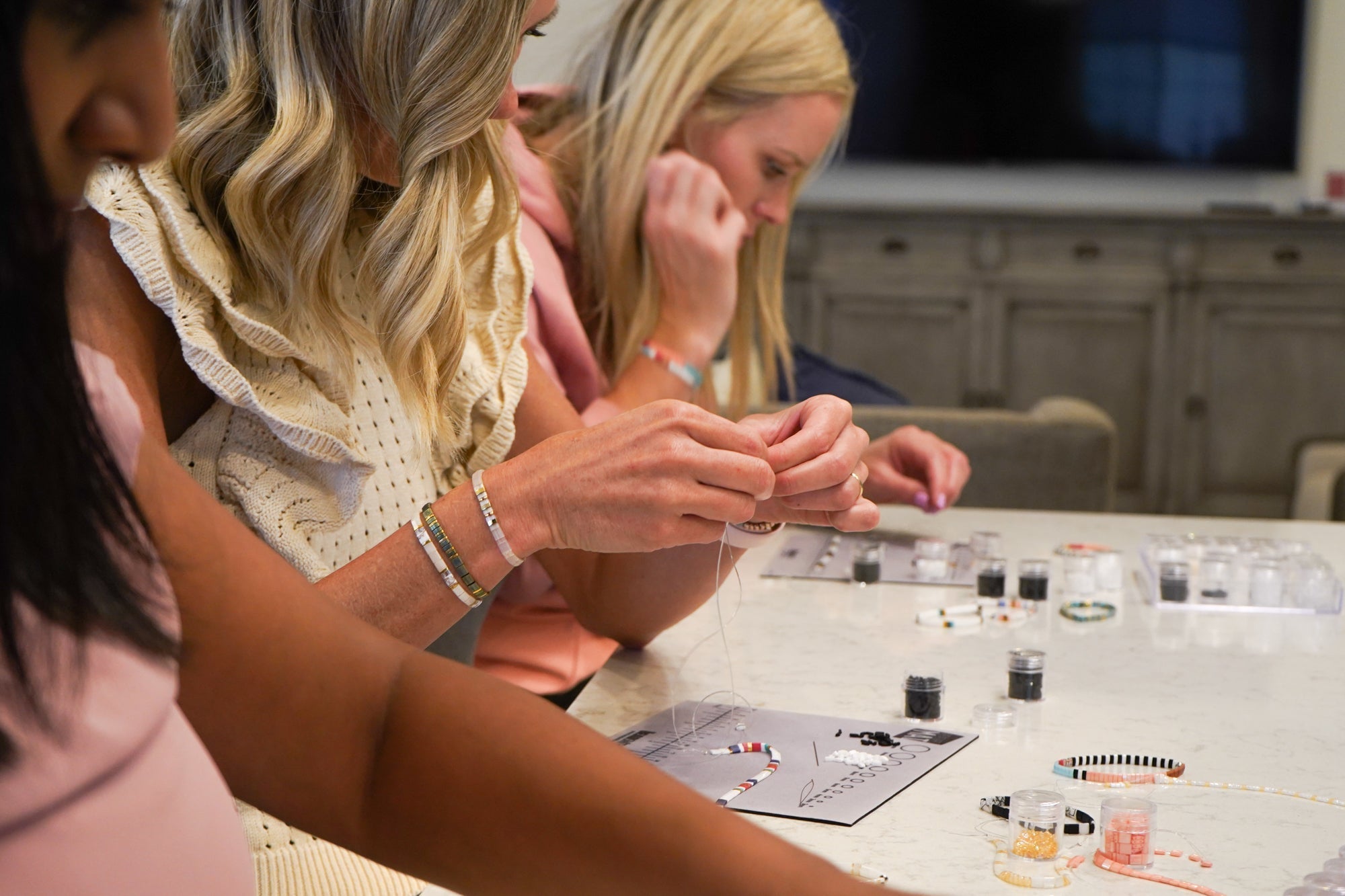
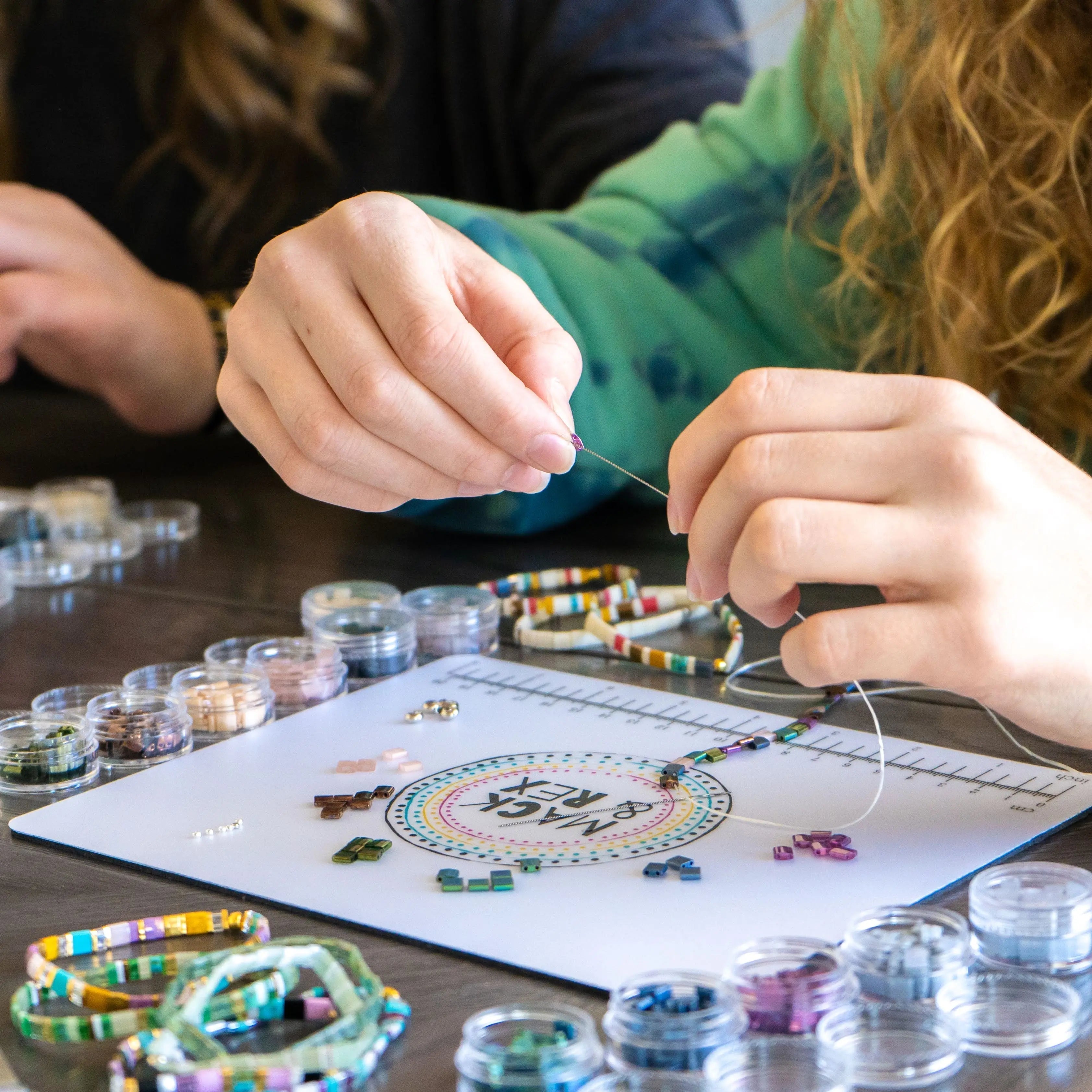
- String the beads (15 to 30 minutes). This is most of the clock. A simple pattern with Tila beads moves fast; a detailed multi-color layout takes longer.
- Tie off and finish (3 to 5 minutes). Tie a surgeon's knot, trim the tail, and tuck the knot into the nearest bead hole so it's hidden.
Add it up and you land right in that 20 to 45 minute range, with most of the swing coming from step one and step three. A quick reference on beading supplies and technique, like the overview at Beadaholique, is worth a look if you want to see the full range of cord and stringing options before you settle on a method.
One safety note if kids are part of the project: loose beads are a choking hazard, so any bracelet-making with young children needs an adult at the table the whole time. That doesn't slow down the timing above, it's just a rule worth keeping in mind before the beads come out.
How Long Does a Full Trio Kit or Bracelet Stack Take?
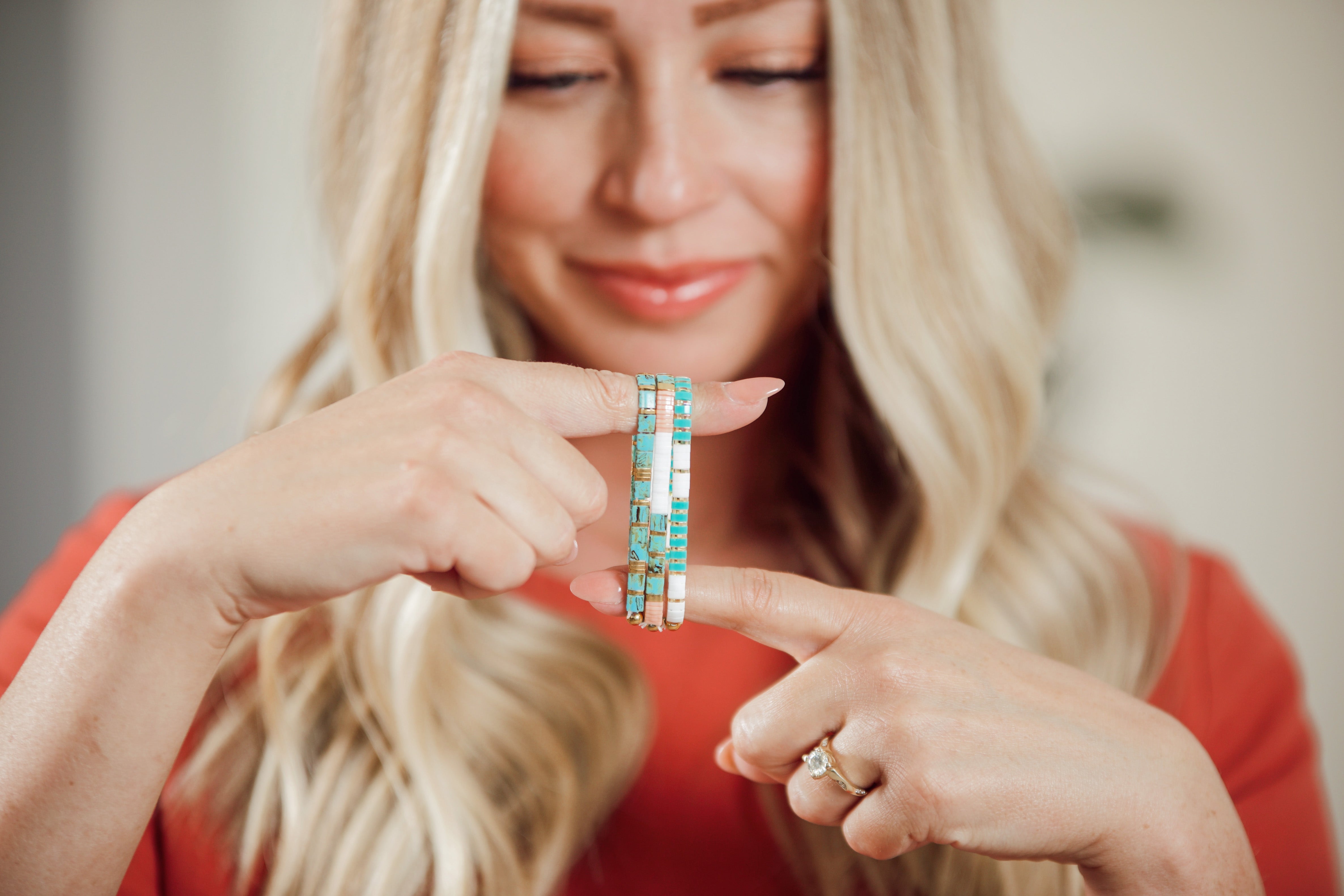
A trio kit, the kind that makes three coordinating bracelets in one box, generally runs 60 to 90 minutes for a first-timer. You're not tripling your time exactly, because the color planning happens once for the whole set. But each bracelet still needs its own stringing and its own knot, so the time doesn't collapse down to a single bracelet's worth either. One Mack & Rex customer described their monthly trio kit as "a complete three bracelet project" where "the pieces and colors work so well together," which lines up with how most people experience the format: one sitting, one finished stack.
Experienced crafters knock a trio kit out in under an hour once the color decisions stop being the bottleneck. If you're building a full stack of 5 or 6 bracelets across multiple sittings rather than one, expect somewhere between 90 minutes and 2.5 hours total, spread out however you like. There's no rule that says it has to happen in one sitting.
The Bottom Line on Timing Your Bracelet Project
Budget 20 to 45 minutes for your first single bracelet, less once you've done a few. A trio or small stack runs closer to an hour to 90 minutes. Bead size, pattern complexity, and cord type are the three biggest levers, and elastic with larger flat beads like Tila tiles is the fastest, most beginner-friendly combination of the bunch.
If you want a kit built around exactly that combination, browse the Mack & Rex bracelet making kits. They use Miyuki Tila beads with crystal-cord elastic and clear instructions, so the beginner-friendly part is already handled before the box arrives.
Frequently Asked Questions About Making a Bracelet From a Kit
- How long does it take to make one bracelet from a kit?
- A single beaded bracelet from a kit takes about 20 to 45 minutes for a first-timer, including planning the pattern, stringing, and tying off. Once you've made a few, that usually drops to 15 minutes or less.
- Why did my first bracelet take so much longer than expected?
- First bracelets take longer because you're deciding on colors, learning the tension of the elastic, and figuring out the knot for the first time. None of that is wasted time. It's what makes bracelet number two faster.
- Does bead size affect how long a bracelet takes to make?
- Yes. Larger flat beads like Tila tiles cover more wrist per bead, so you need fewer of them for the same length, which speeds up stringing. Tiny seed beads require several times as many beads to reach the same size, adding time.
- How long does a full trio kit or bracelet stack take?
- A trio kit that makes three coordinating bracelets generally takes 60 to 90 minutes for a first-timer, since the color planning is shared across the set but each bracelet still needs its own stringing and knot. Experienced crafters often finish a trio in under an hour.
- Is elastic cord faster than stringing wire for beginners?
- Elastic cord is faster because it skips crimp beads and a clasp entirely. You measure, string, and tie. Stringing wire needs crimping tools and a clasp, which adds setup time and a small learning curve for beginners.