



How to Add Charms to a Stretch Bracelet Without Breaking the Cord
Can you add charms to a stretch bracelet without breaking it?
Yes, you can. Use a small, light charm and attach it with a closed jump ring that sits between beads, not tied onto the elastic. That keeps the weight off the knot and lets the cord stretch the way it was designed to.
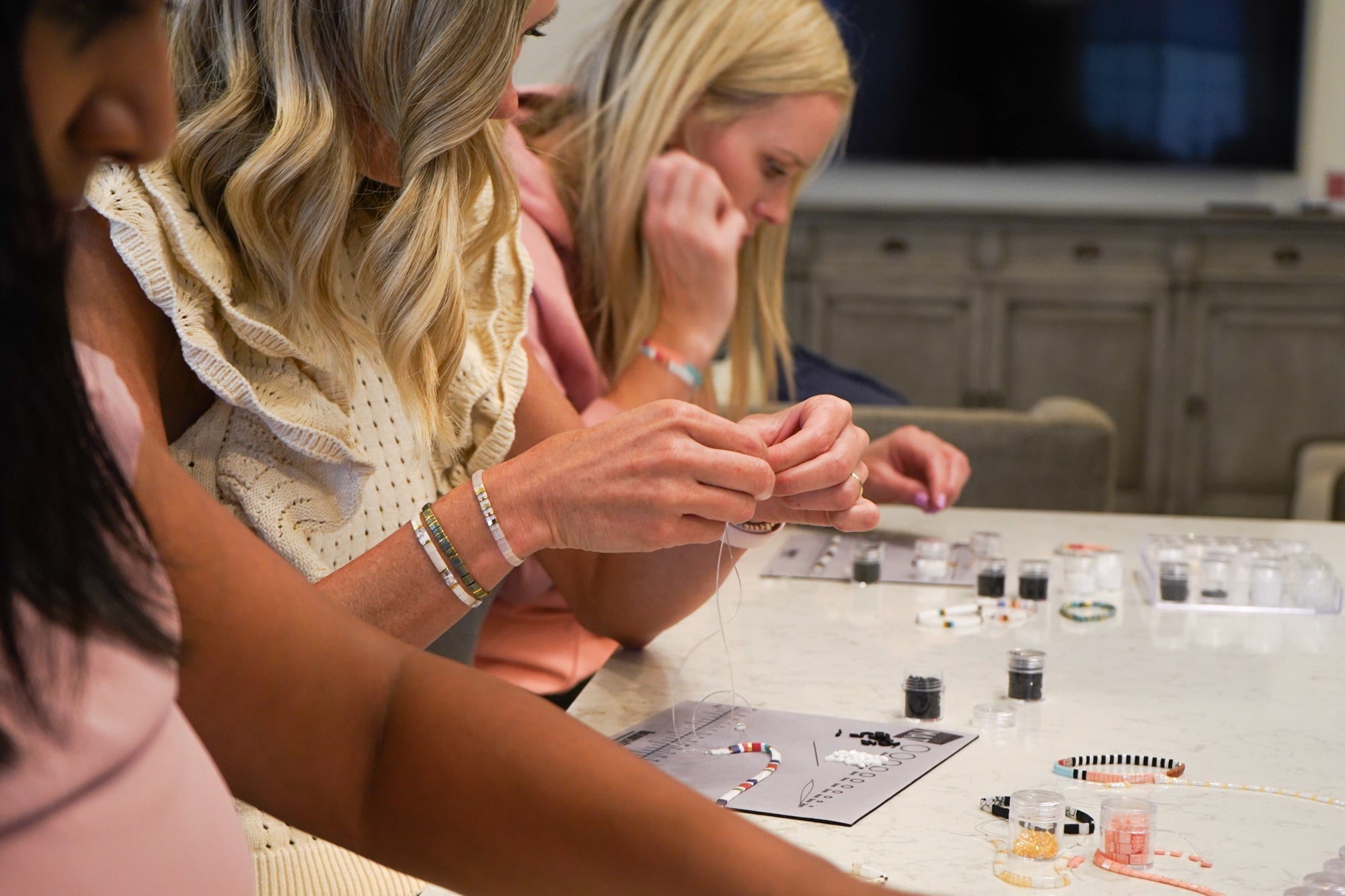
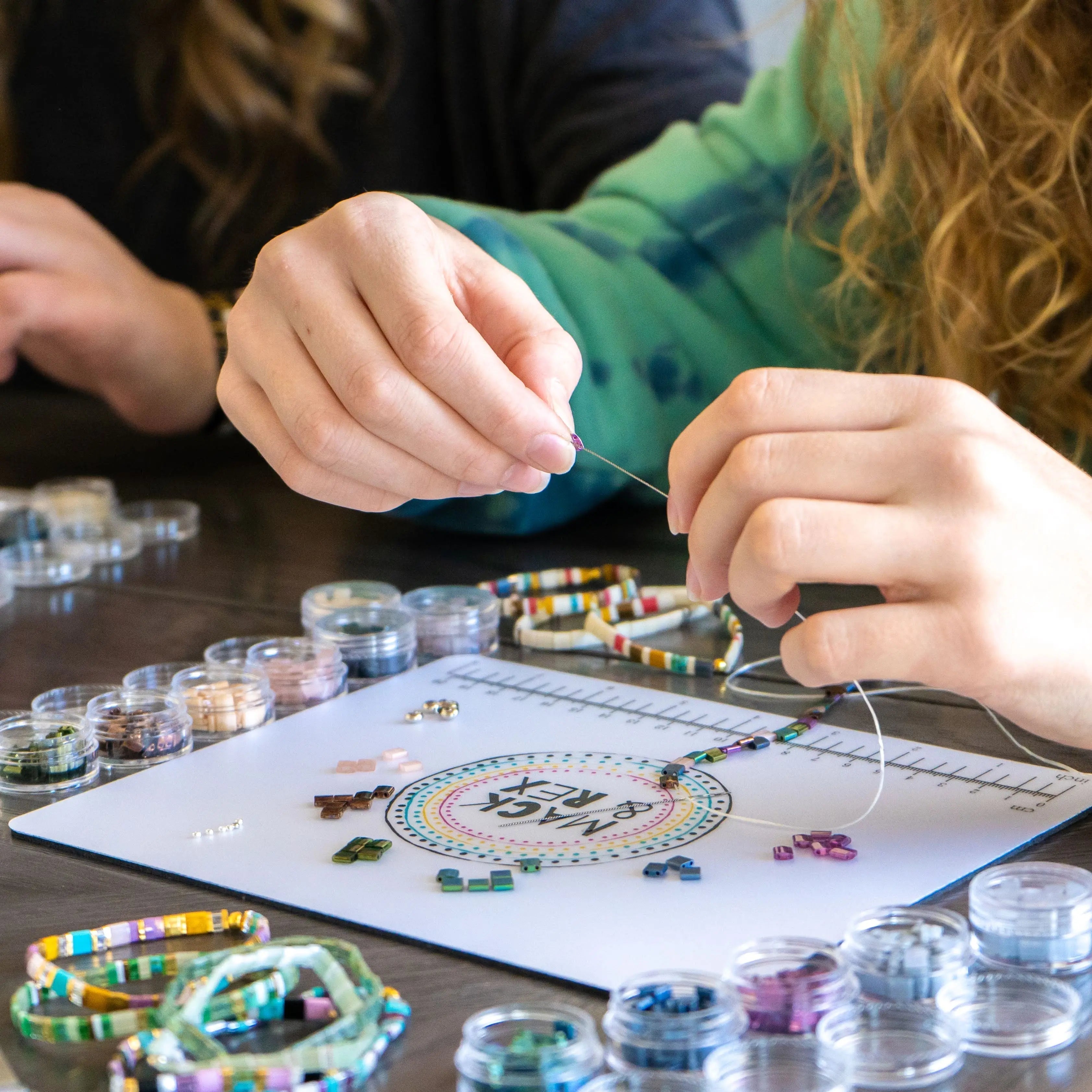
We've been making stretch bracelets at Mack & Rex since a mom and her two daughters, Mack and Rex, started stringing Tila beads at the kitchen table. Charms come up in our inbox all the time. The worry is always the same: will it snap the cord? Most of the time, no. The trouble starts when the charm is too heavy or tied on the wrong way.
What makes a charm break a stretch cord?
Weight and friction break stretch cord. A heavy charm tugs on the elastic with every wrist movement, and a sharp or rough attachment point can saw through the strands over weeks of wear.
Think of it like a rubber band with a washer hanging from it. It holds for a while, then loses its snap. Stretch bracelets are meant to hug the wrist, and Miyuki Tila beads are small, flat glass beads that sit close together, so there's not much slack to hide a bulky charm. If you want to learn more about the beads themselves, Miyuki's own site shows the Tila line and its bead shapes.
Three things to watch:
- Weight. If the charm feels heavy in your palm, it's too heavy for elastic.
- Sharp edges. Rough metal can fray the cord from the inside.
- Direct tying. Knotting a charm on pinches the strands right where they're already under tension.
What do you need before you start?
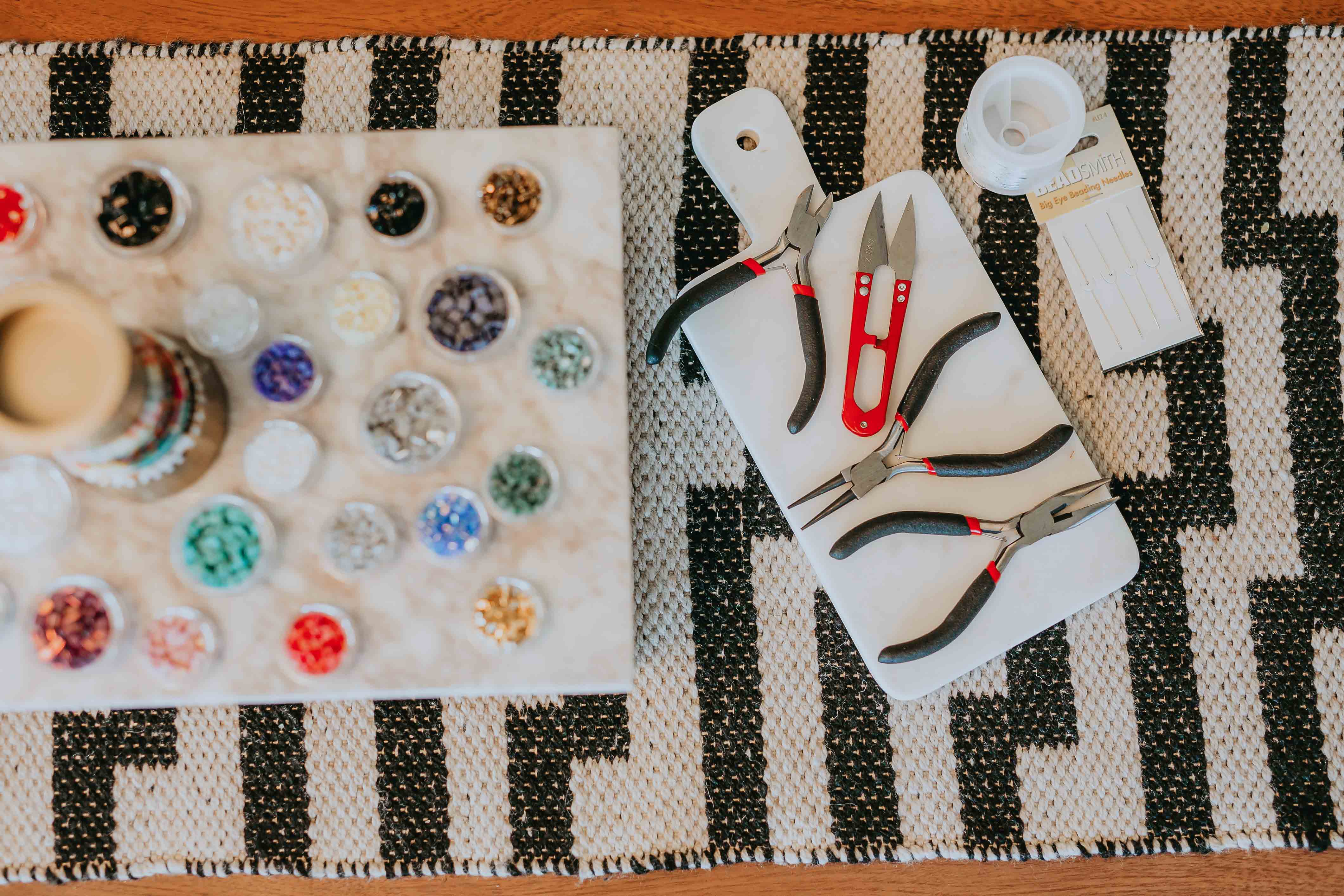
You need a finished stretch bracelet, a lightweight charm, one or two jump rings, and two pairs of pliers. That's the whole list. The job takes about fifteen minutes, and you can do it at the table with a cup of coffee.
Here's the short kit:
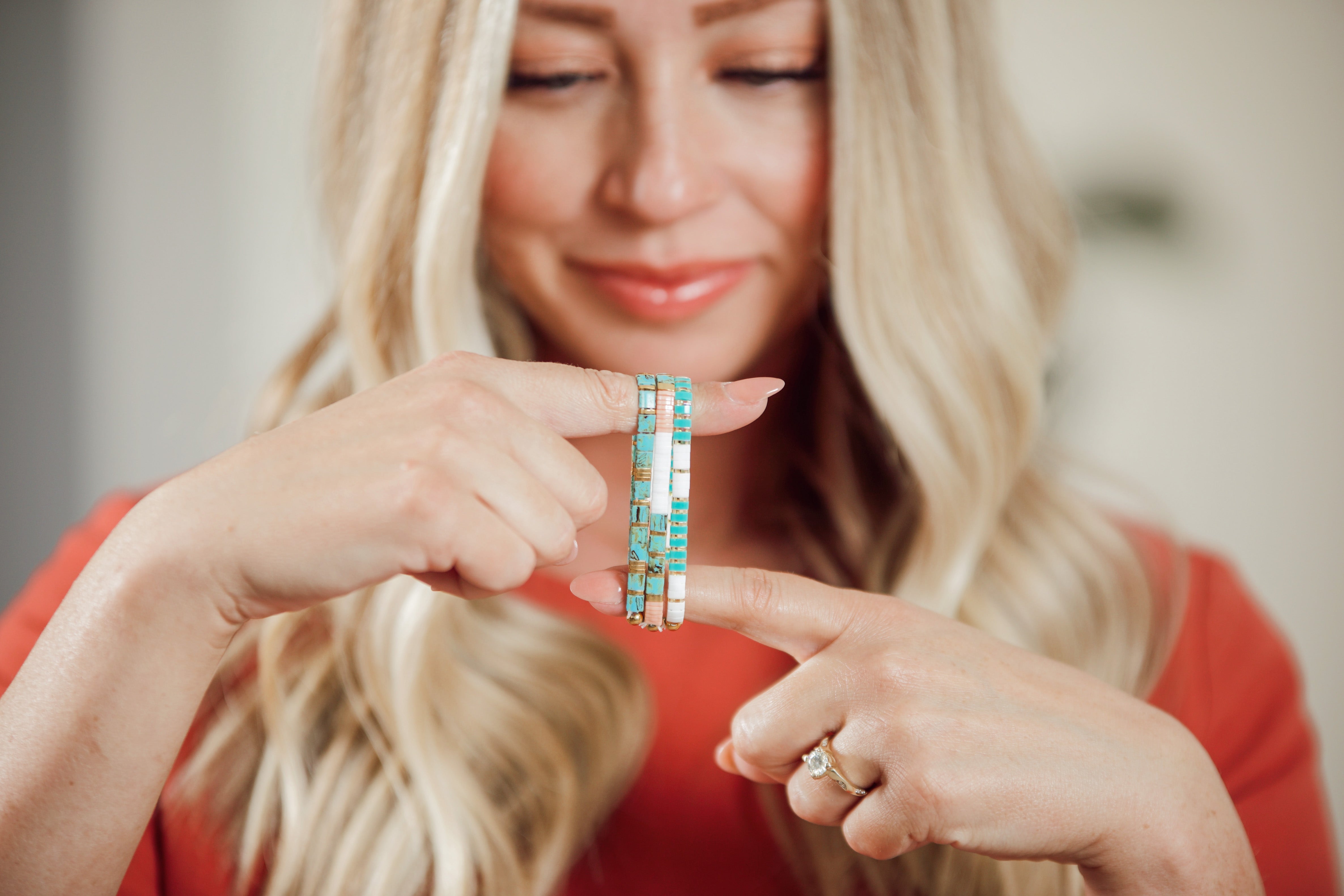
- A finished bracelet. A ready-to-wear one works great, and you can browse ours in the accent bracelets collection.
- A charm with a built-in loop at the top.
- Jump rings in a size that fits through the charm's loop. Slightly thick wire holds up better than thin wire.
- Two pairs of flat-nose or chain-nose pliers.
A tip from our own bench: buy a few extra jump rings. They're tiny, they roll, and one always goes missing under the couch.
How do you attach a charm step by step?
Open a jump ring sideways with two pliers, slide on the charm, loop the ring around the cord between two beads, then twist it fully closed. Test the stretch before wearing it. Each step takes under a minute.
- Pick the charm. Go small and light. Hold it up against the bracelet and see how the two look together.
- Open the ring the right way. Grip the ring with a pair of pliers in each hand. Twist one end toward you and the other away, like opening a door. Pulling the ends apart makes a ring that never closes flat again. This is the step most people get wrong.
- Thread the charm. Slide the loop of the charm onto the open ring.
- Find your spot. Look for a gap between two beads where the cord is visible, away from the knot. Loop the ring around the cord there, so the ring rests between beads and not on the knot itself.
- Close it tight. Twist the ends back until they meet with no gap. Run a fingernail across the join. If it catches, close it a little more.
- Test the stretch. Roll the bracelet open on your fingers a few times. The charm should swing freely and the cord shouldn't bunch up.
Beadaholique has a clear walkthrough on opening and closing jump rings in their free how-to library if you'd like to watch it done.
Where do you put the charm on the bracelet?
Place the charm between beads, opposite the knot, so it hangs at the bottom of your wrist. Keeping weight away from the knot protects the weakest point of any stretch bracelet.
The knot is where the elastic is tied and sealed, and it already carries the most strain. Keep the charm on the far side of the bracelet from it. On a Tila bracelet, the flat beads lie smooth against the skin, so a charm at the center looks tidy and balanced. Our first test bracelet had the charm right next to the knot. It lasted about two weeks. Lesson learned.
How many charms are too many?
One to three small charms is a safe range for most stretch bracelets. Past that, the combined weight pulls on the cord, and the bracelet can sag, twist or wear out early.
If you love a stack of charms, think about spreading the weight out. Two small charms on opposite sides hang better than three bunched together. And if you want a charm bracelet with lots of dangles, a stretch cord might not be the right base. A chain or a stronger beading wire is built for that kind of load.
Where can you buy charms for beaded bracelets?
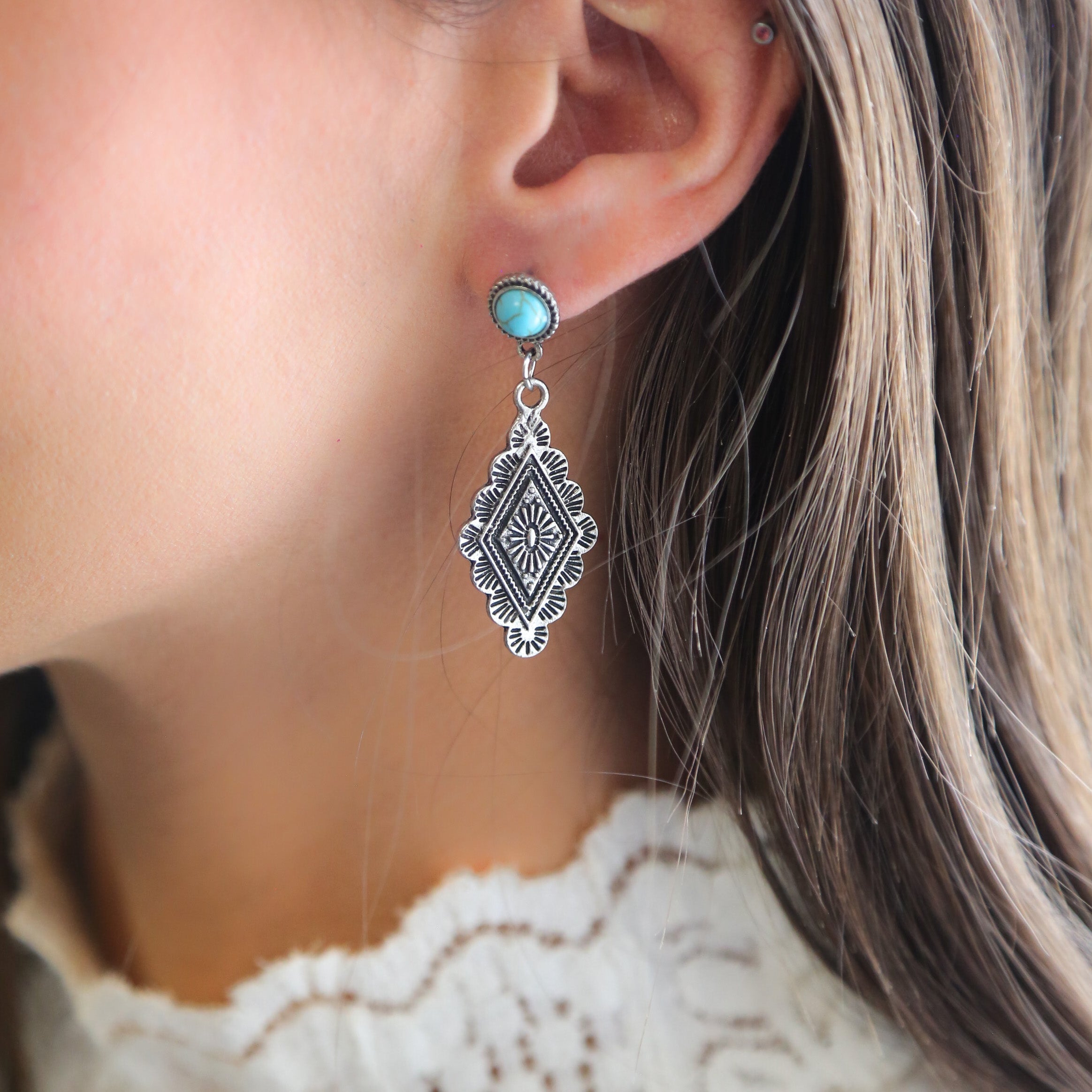
You can buy charms for beaded bracelets at bead supply shops like Beadaholique and Lima Beads, at craft stores, and from independent jewelry-supply sellers. Look for a listed weight or size, and a closed or soldered loop.
When you're shopping, check these details:
- Loop style. A soldered or closed loop is stronger than an open one.
- Size and weight. Smaller is better for elastic. Under about 15 mm is a good starting point.
- Finish. Smooth, well-finished edges are kinder to the cord.
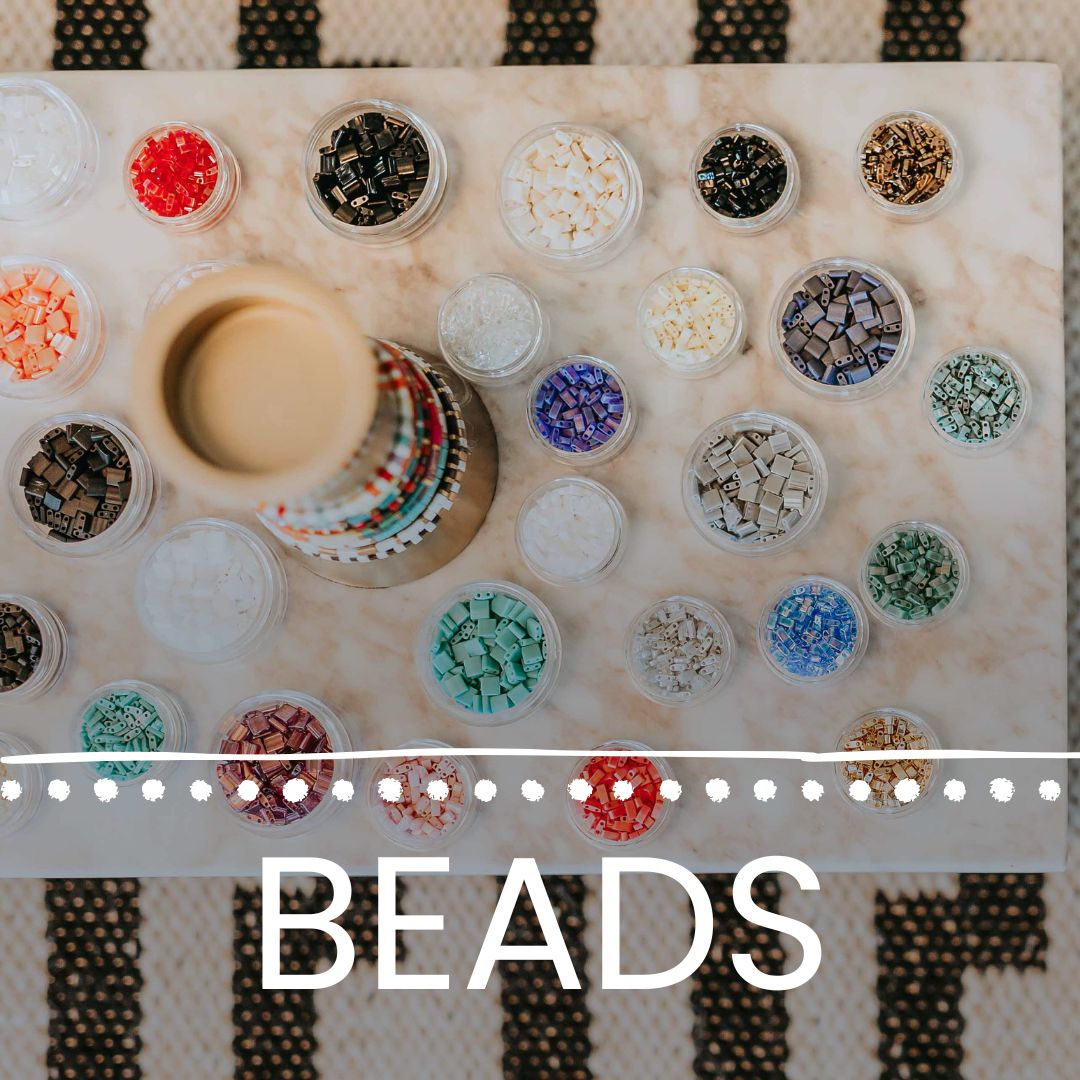
Shops like Lima Beads carry a wide mix of charms and findings, which makes it easy to match style and size in one order. If you'd rather not source the pieces yourself, Mack & Rex sells ready-to-wear Tila bead bracelets (finished bracelets run about $20-25), loose Miyuki Tila beads, and DIY bracelet kits. Miyuki and Tila are third-party brands we resell, and we pick the pieces we love working with. We ship internationally, with shipping and any customs or duties calculated at checkout, and US orders over $100 ship free.
How do you care for a bracelet with a charm?
Take the bracelet off for showers, workouts and sleep, and roll it on and off instead of stretching it wide. Gentle handling is the best thing you can do for any elastic cord.
A few habits that help:
- Don't pull the bracelet over your knuckles. Roll it on.
- Check the jump ring every few weeks. If the ends have drifted apart, close them again.
- Keep it away from lotion, perfume and chlorine, which can break down elastic.
- Store it flat or loosely coiled, not hanging from the charm.
Crafting with kids? Charms and jump rings are small parts and can be a choking hazard for young children, so keep them away from little ones and have an adult handle the pliers.
Frequently asked questions
Where can I buy charms for beaded bracelets?
You can buy charms for beaded bracelets from bead supply shops such as Beadaholique and Lima Beads, or from craft stores. If you'd rather skip the shopping, Mack & Rex sells ready-to-wear Tila bead bracelets that are easy to personalize with a charm of your own.
How many charms can a stretch bracelet hold?
One to three small, light charms is a safe range for most stretch bracelets. Every added gram pulls on the elastic, so heavier or more numerous charms wear the cord out faster.
Will a charm stretch out my bracelet?
A heavy charm can, because the weight tugs on the cord every time you move. A small, light charm attached with a closed jump ring puts very little extra strain on the elastic.
Should I tie the charm directly onto the elastic?
No. Tying a charm straight onto the elastic can fray or pinch the cord. A closed jump ring that sits between beads keeps the charm attached without cutting into the cord.
Ready to give it a try?
Start small. One tiny charm, one jump ring, one bracelet. Once you see how easy it is, you'll want to make a few for the family. Buy 3 finished bracelets and get 1 free, no code needed (finished bracelets only). Browse the Mack & Rex accent bracelets, pick your favorite, and spread a little happy.

