




How to Add Charms to a Tila Bead Bracelet
How Do You Add a Charm to a Tila Bead Bracelet?
Open a small jump ring, slip it over the stretch cord between two tila tiles, thread the charm's loop onto the same ring, then close the ring with a twist rather than a pull. If your charm is drilled straight through its body rather than having a loop, skip the jump ring and string it directly onto the cord like any other bead.
That covers the basic move. The rest of this gets into where a charm actually looks right on a flat-tile bracelet, how to pick one that won't drag your wrist down, and how to finish the cord so the charm stays exactly where you put it.
Where Should a Charm Sit on a Tila Bracelet?
Center, not off to one side.
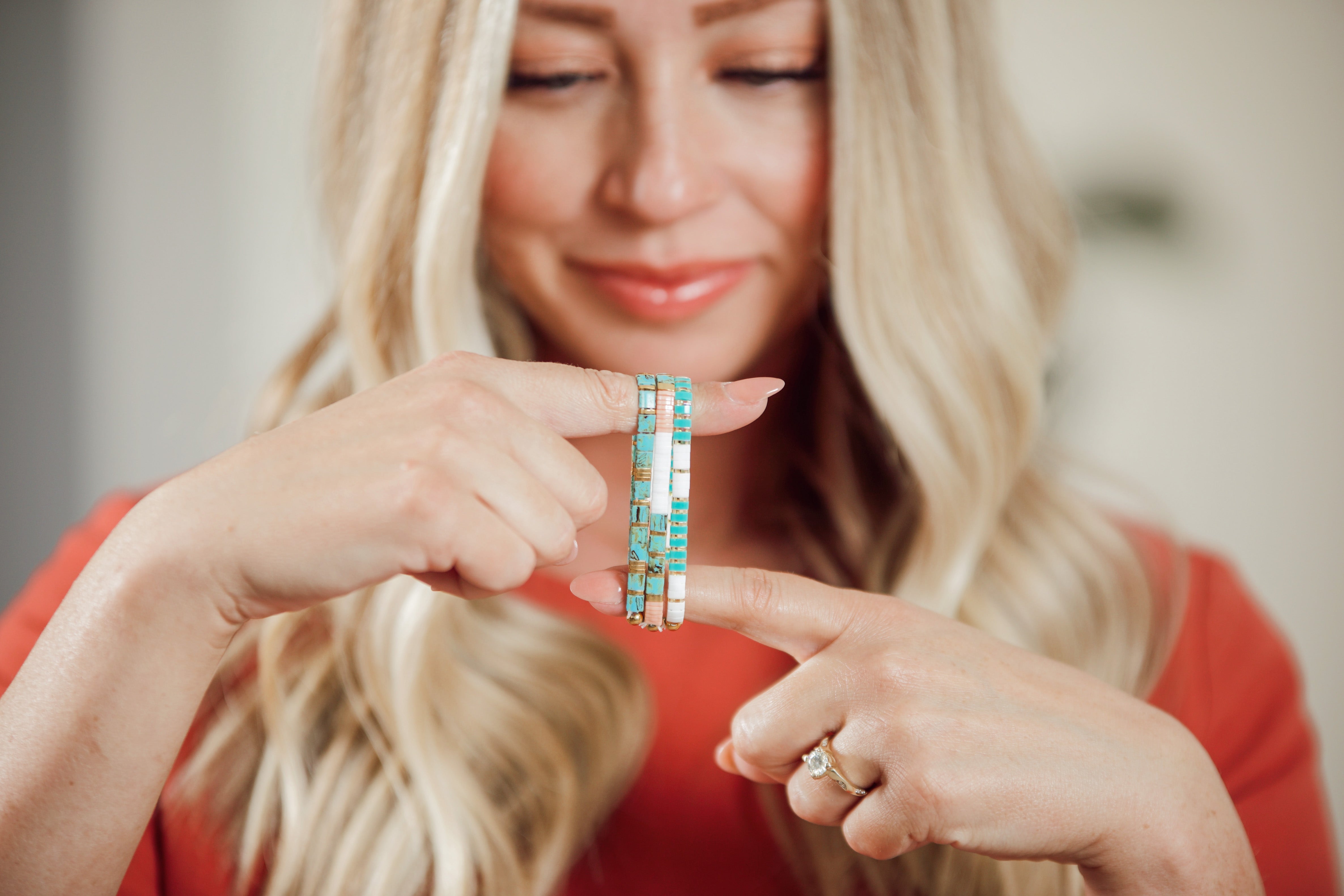
A stretch bracelet has no clasp, so there's no fixed "front" the way a toggle bracelet has. The spot that reads as the front is the section that lands on top of your wrist when the bracelet is on, which is roughly the middle of the strand. Count your total bead number, find the midpoint, and that's where the charm goes. Flank it with one or two tila tiles on either side before the pattern continues, so the flat squares act like a frame instead of getting crowded out. A charm dropped in at random, three beads off-center, reads like an accident rather than a design choice.
Thread the Charm on the Cord, or Hang It From a Jump Ring?
Check the charm's hole before you decide anything else.
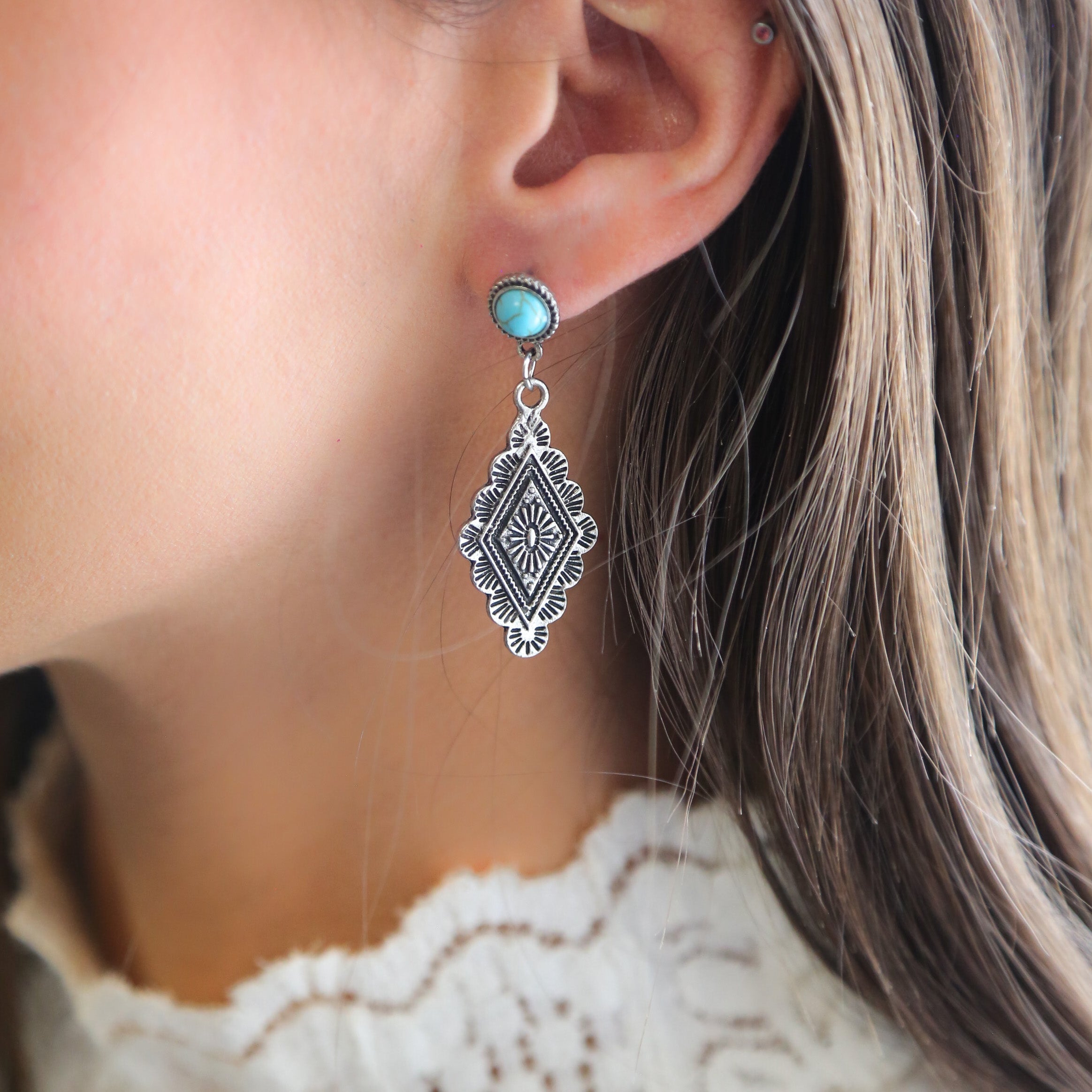
Charms come in two basic builds, and they attach two different ways. A loop-style charm has a small closed or split ring molded into the top, built to hang and swing, the way a traditional charm-bracelet charm does.1 That loop needs a jump ring to connect to your stretch cord: open the jump ring sideways with two pairs of pliers (never pull it apart front to back, which distorts the shape), slide it onto the cord between beads, hook the charm's loop onto it, and twist it closed again.2 A bead-style charm, drilled straight through the body the way a tila tile is, skips the jump ring entirely and threads directly onto the cord in line with the rest of your beads. If you're not sure which type you're holding, look for the loop. No loop, no jump ring needed.
What Charm Size and Weight Works With Flat Tila Beads?
Small and flat wins.
Tila tiles are tiny, usually around 5mm square, so a charm that's an inch wide or thicker than the tile itself throws off the whole look and the balance on your wrist. Aim for a charm under about three-quarters of an inch, light enough that it doesn't tug the stretch cord lower than the rest of the strand when the bracelet sits still. Metal charms in a thin stamped or die-cut style stay light; chunky resin, large shell shapes, or anything with dangling sub-charms attached to the main charm adds up fast and tends to flip face-down on the wrist, since the heavier side always settles lowest. If a charm feels heavy in your palm before it's even on the cord, it's probably too heavy for a stretch bracelet.
What Do You Need to Add a Charm to a Bracelet?
Less than you'd think.
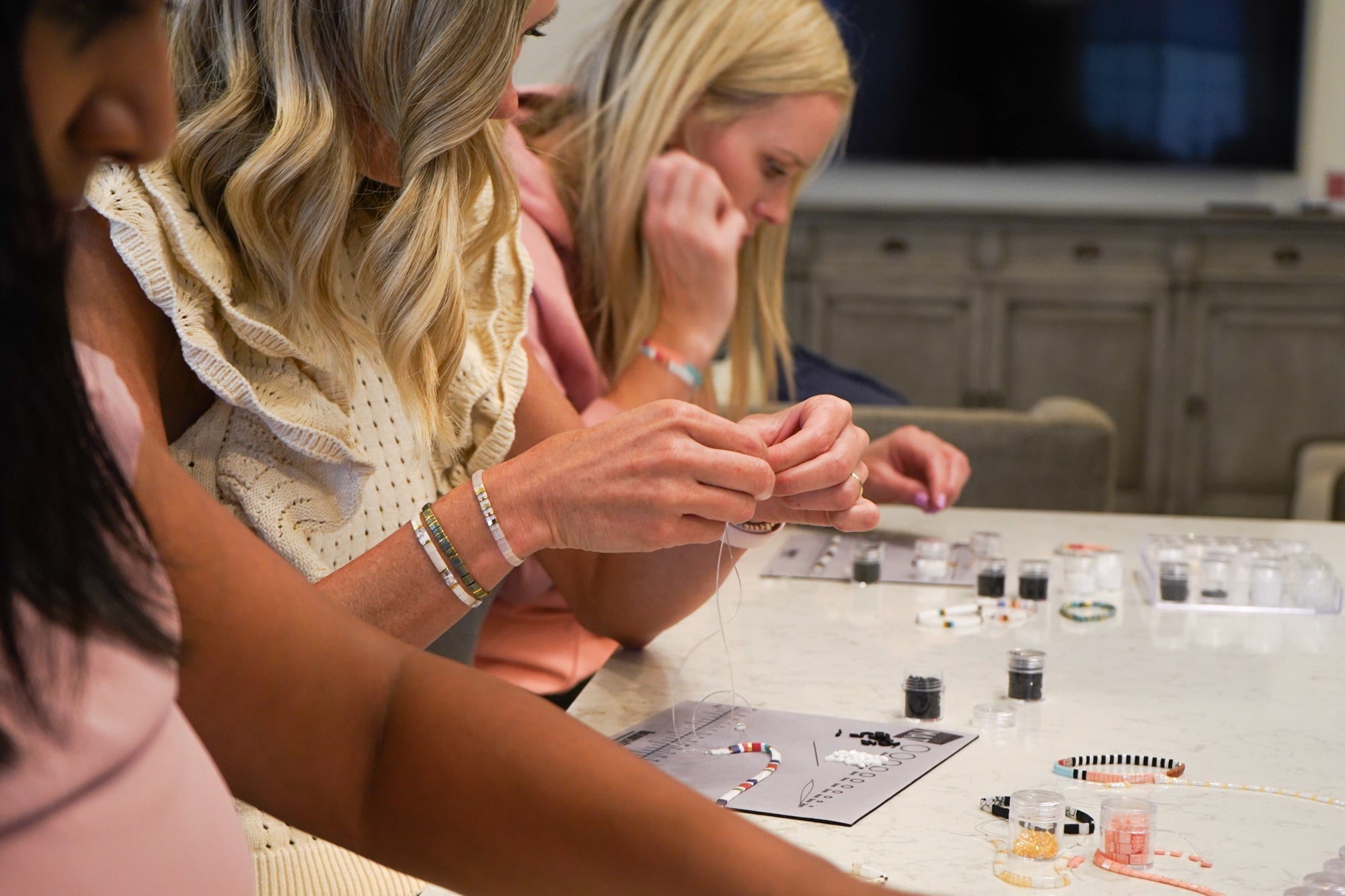
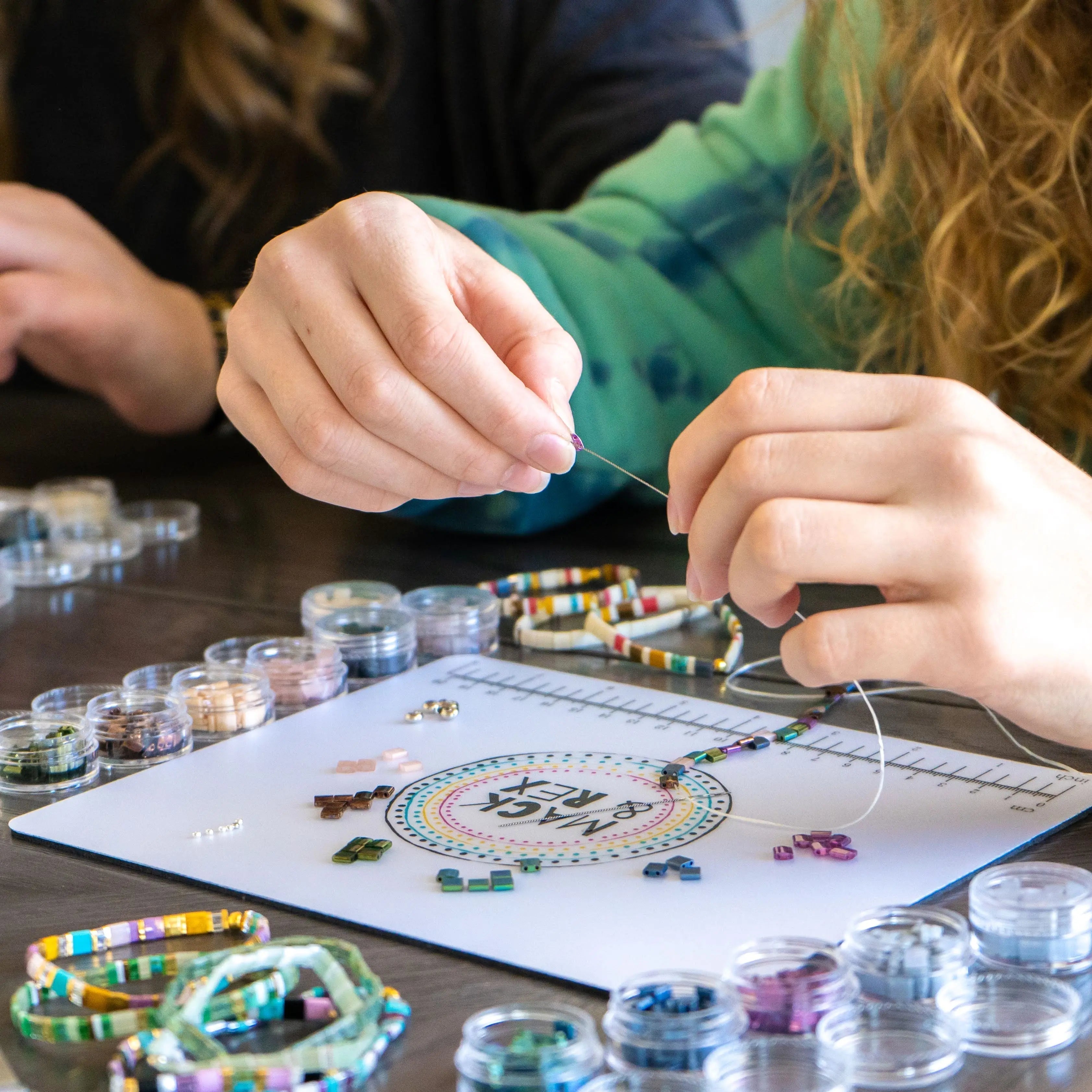
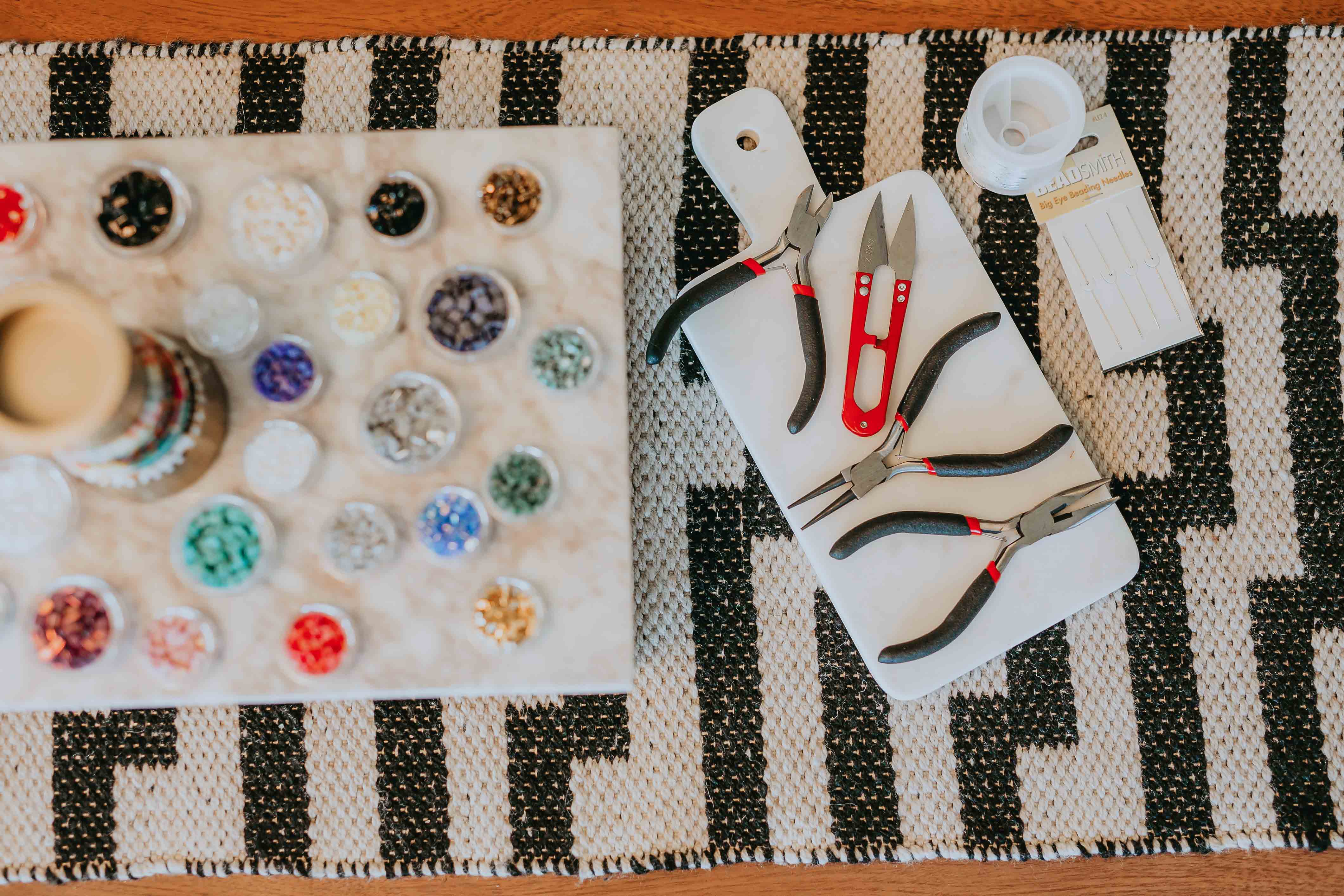
Gather the charm itself, a jump ring sized to fit both the charm's loop and the cord thickness (a 4mm to 6mm ring covers most charms), two pairs of chain-nose or flat-nose pliers, your strung tila bracelet (or the beads and stretch cord to build one from scratch), small scissors, and a dab of clear-drying glue for the final knot. Lima Beads and other bead suppliers carry jump rings sorted by size and metal finish if you want to match a charm's existing hardware rather than guessing.3 Mack & Rex's bracelet-making kits already include stretch cord, a bead mat, and pliers; the bracelet-making kits collection is the base supply run, and a charm is simply an optional add after the kit's tila beads are strung.
How Do You Finish a Charm Bracelet So It Stays Put?
Close the ring fully before you knot the cord.
A jump ring that's even slightly open will work itself loose with normal wrist movement, and the charm either slides down the cord or falls off entirely. Twist the two cut ends back until you feel them meet flush, then run a fingernail across the seam; if you can catch an edge, it's not closed. Once the charm is secure, finish the bracelet the usual way: pull the stretch cord snug but not stretched, tie a double or surgeon's knot, slide the knot into the nearest tila bead so it's hidden, trim the tails, and seal the knot with one drop of glue. Let the glue cure fully before the bracelet goes on a wrist, since a knot that hasn't set is the most common reason a finished bracelet comes apart within the first week.
Is It Safe for Kids to Add Charms to Their Own Bracelet?
With supervision, yes.
Jump rings, charms, and tila beads are all small parts, and small parts are a choking hazard. Loose pieces are not appropriate for young children who still put things in their mouths, and opening and closing a jump ring with pliers takes a level of hand control younger kids don't have yet. Older kids and teens can usually manage the pliers themselves with practice, but an adult should still be in the room for the whole project rather than checking in occasionally, and any stray rings or beads should get swept up before the craft table is called done for the day.
Where Can You Get the Beads and Tools to Build a Charm Bracelet?
Start with the kit, add the charm after.
Mack & Rex's bracelet-making kits collection covers the base layer: genuine Miyuki tila beads, crystal-cord elastic, a bead mat, and the pliers you'll need, in kits that make anywhere from three bracelets to eighty depending on the size you pick. Mack & Rex sells Miyuki's tila beads as a retailer, not the company that manufactures them; Tila and Miyuki are Miyuki's own trademarks. Charms and jump rings aren't part of every kit, so if you want to add one, source a charm you like (Mack & Rex also sells its own small charm packs separately from the kit line) and a jump ring sized to match, then follow the steps above once your tila beads are strung.
Frequently Asked Questions
Can you add a charm to a stretch tila bead bracelet?
Yes. A small jump ring lets you hang almost any loop-style charm from the stretch cord between two tila tiles, and a drilled bead-style charm can thread directly onto the cord like any other bead, no clasp or extra hardware required.
Do you need a jump ring to add a charm, or can you string it directly?
It depends on the charm. A charm with a single small loop needs a jump ring to attach to the cord, while a charm drilled straight through its body threads directly onto the cord like a bead and needs no jump ring at all.
Where should you place a charm on a tila bracelet?
Center it at the top of the wrist, the spot that naturally faces out, and flank it with two tila tiles on each side so the flat beads frame the charm rather than competing with it for attention.
Is it safe for kids to add charms to a bracelet they're making?
Only with an adult supervising the whole project. Charms, jump rings, and tila beads are all small parts and a choking hazard, so loose pieces are not appropriate for young children, and older kids still need an adult in the room.
Ready to build the base bracelet before you add a charm? Shop genuine Miyuki tila beads, crystal-cord elastic, and the full tool set in the Mack & Rex bracelet-making kits collection. Mack & Rex ships worldwide, with shipping and any customs or duties calculated at checkout, and free shipping on US orders over $100. Buy three finished bracelets and the fourth is free, no code needed (that offer covers finished bracelets, not kits, loose beads, or charms).