

How to Build a Stackable Tila Bead Bracelet Look From Scratch
What Does It Take to Build a Good Stackable Tila Bead Bracelet Look?
Building a set of stackable tila bead bracelets that actually works comes down to three things: how many you layer, how you balance color and finish, and whether each piece fits your wrist the right way. Get those three right and the stack looks intentional. Miss one and even beautiful bracelets can end up looking thrown on.
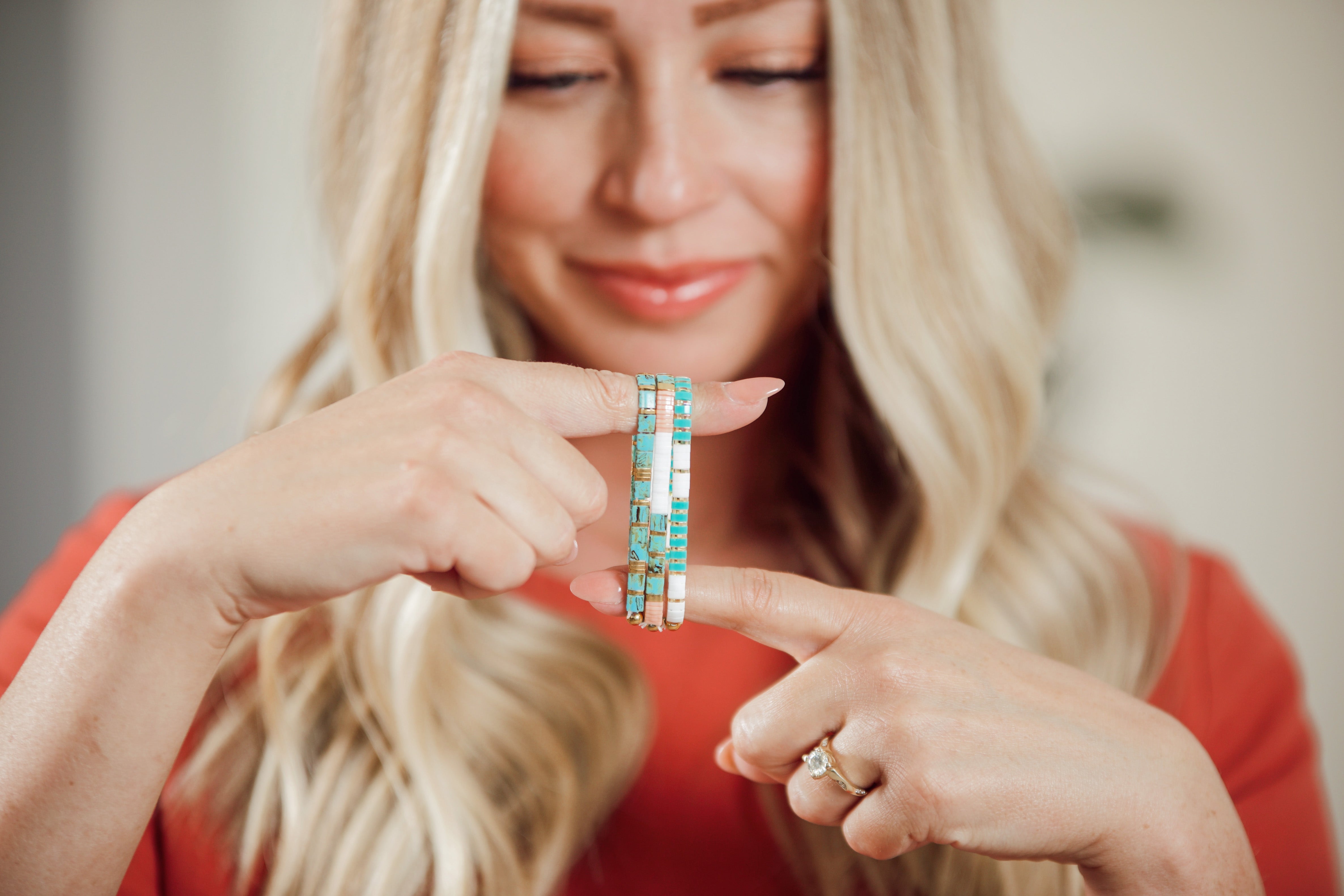
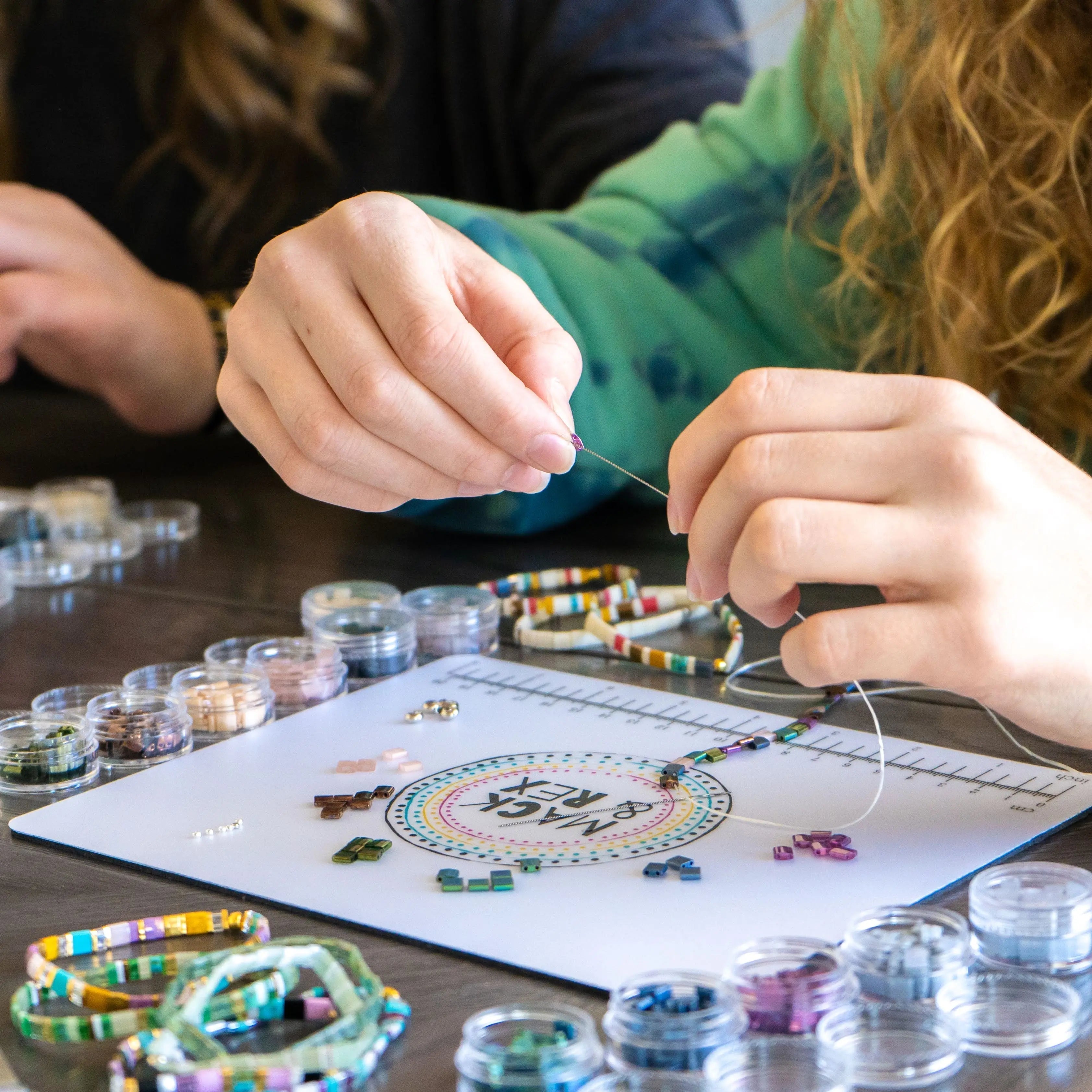
Tila beads are Miyuki's flat, two-hole square glass beads, a Japanese-made material Mack & Rex uses in every finished bracelet. The shape is what makes stacking so satisfying. Unlike round beads, tiles sit flush against each other and lie flat on your wrist, so a stack of four or five reads as clean rather than chunky.
How Many Bracelets Should You Stack?
Three is the minimum for a stack to read as intentional. Five is the sweet spot for everyday wear. Seven or more starts to crowd most wrists and can cause the bracelets to ride up and bunch, especially on smaller wrists.
Start with three if you're new to stacking. An anchor piece in your main color, a second bracelet in a complementary tone, and one that introduces a contrasting finish (more on that below). That's a complete look you can add to over time.
Five-piece stacks tend to work well because the odd number gives the eye somewhere to land. Even numbers (four, six) can feel symmetrical in a way that reads flat. Worth testing both on your own wrist before committing.
How Do You Mix Colors Without the Stack Looking Messy?
One rule that transfers cleanly from interior design: the 60/30/10 ratio. One color dominates (about 60% of the stack), a second supports (about 30%), and one accent appears in a single piece (10%). This keeps things cohesive without making everything match.
In practice, if you're building a neutral stack, that might look like three white or cream bracelets, one warm taupe, and one piece with a metallic or black detail. The proportions do the work; you don't need an exact palette in mind before you start.
Analogous color families (colors that sit near each other on the color wheel) are the easiest place to start. Blues and greens. Corals and warm pinks. Earth tones. They blend without competing. Once you're comfortable with that, try a single pop of contrast in your fifth piece.
According to color theory guidance from The Spruce Crafts, keeping one color as a clear dominant prevents the eye from being pulled in too many directions. The same principle holds when you're building a bracelet stack.
Why Does Mixing Finishes Matter More Than You'd Think?
Same color, different finish. That's an underused trick.
A stack built entirely in matte navy beads looks flat in certain lighting. Add one metallic navy piece and suddenly the whole stack has dimension. The color reads as cohesive but the contrast in texture keeps it interesting.
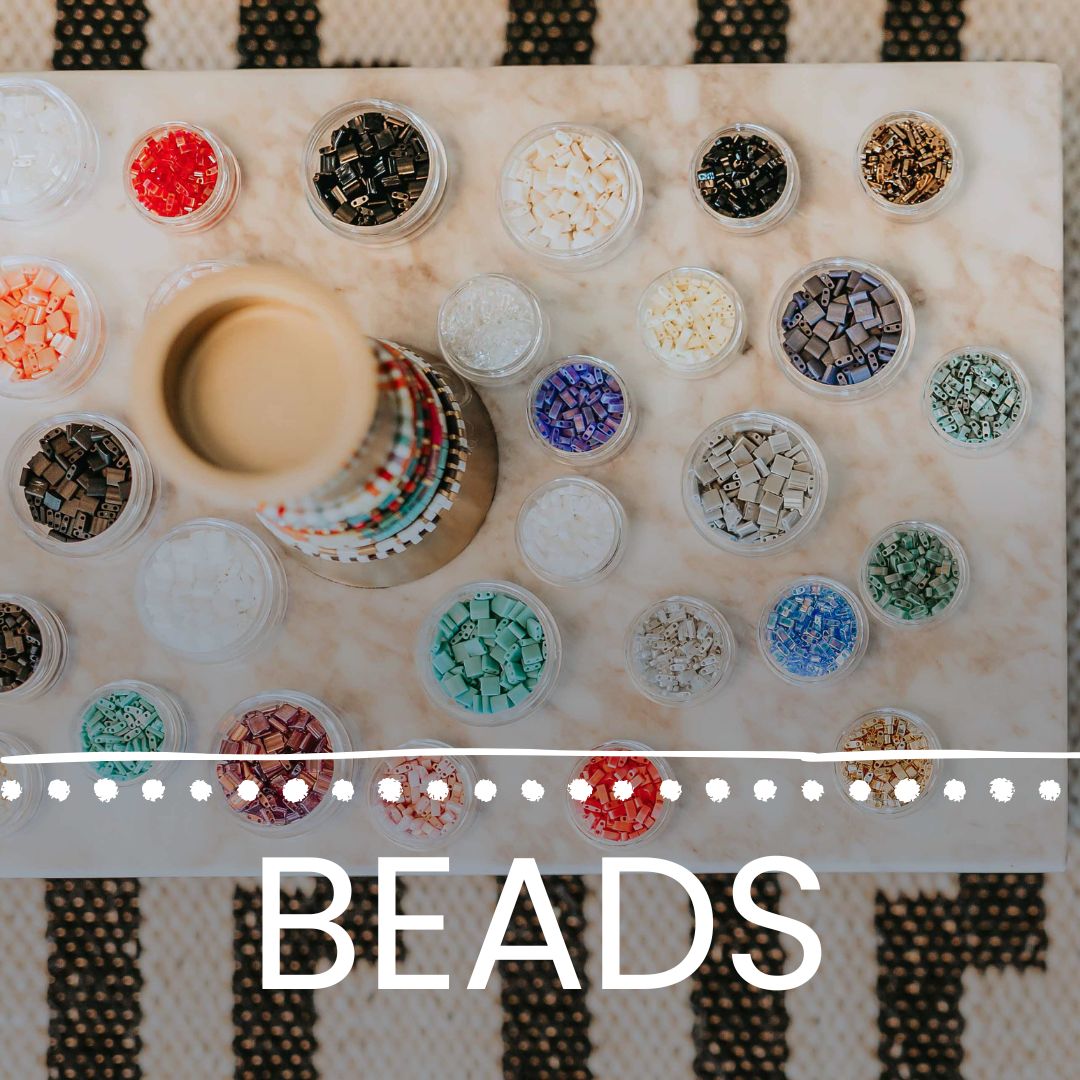
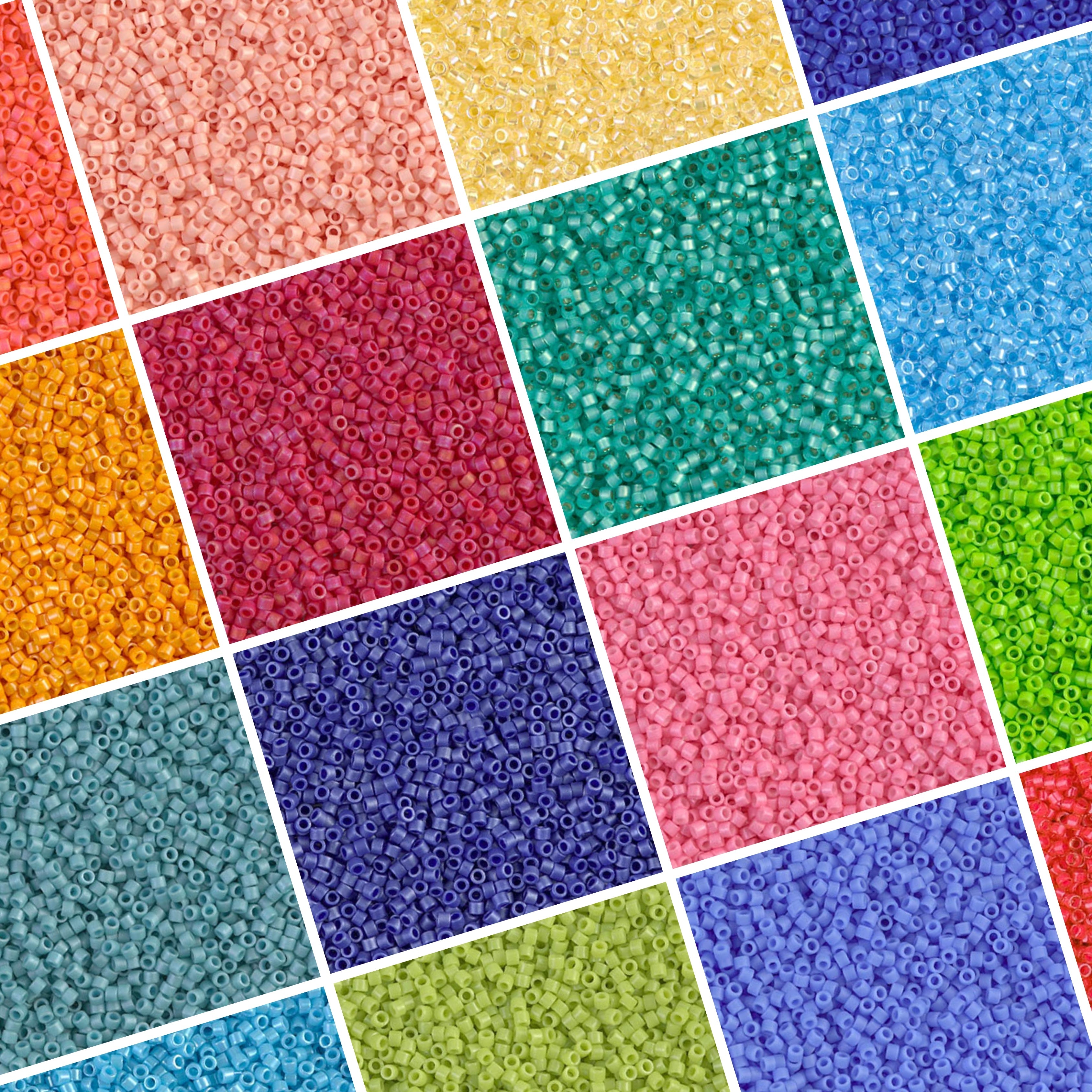
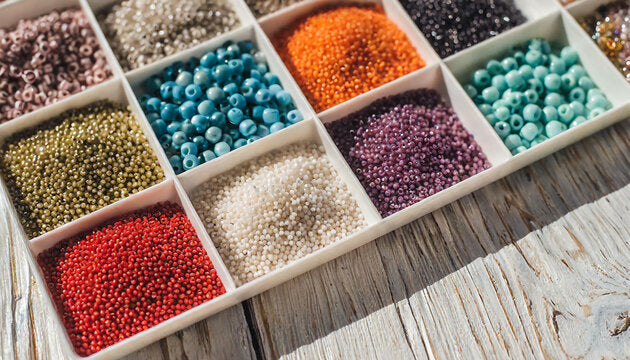
Miyuki produces Tila beads in dozens of finish types: matte, metallic, opaque, luster, AB (aurora borealis). Mixing two or three finishes within a color family is one of the simplest ways to build a professional-looking stack. You don't need a lot of colors. You need contrast in how the light hits.
Beading educators at Beadaholique point out that finish variation creates visual rhythm in bead work. In a stack, that means each bracelet gets its own moment without breaking the overall palette.
Three combinations that work reliably:
- Matte + metallic in the same base color
- Opaque + AB (aurora borealis) in complementary tones
- Two matte colors with one glossy piece as the accent
How Do You Get Sizing Right Across a Stack?
This is where a lot of stacks fall apart. A bracelet sized for the "average" wrist might fit fine on its own. Add four more, and pieces that aren't fitted to your actual wrist will slide and bunch instead of staying put.
The standard recommendation for stretch bracelets is about a half-inch of ease beyond your wrist circumference. Enough to slide on easily, snug enough to stay put. Mack & Rex sizes run XXS through 5XL, so you can pick the right size for your wrist rather than hoping a medium lands right.
When building a stack, size every piece the same. Mixing a small with a medium on the same wrist means they'll move at different rates and won't sit flat together. Consistent sizing is the single biggest quality-of-life improvement you can make to a bracelet stack.
Miyuki's own material documentation confirms that the flat, two-hole Tila bead format is designed for consistent spacing in flat, even rows. That's part of why Tila bracelets lie so neatly when stacked, compared to round-bead styles.
What's the Fastest Way to Build a Stack That Already Works?
Start with a set that's been curated to go together. Trying to build a five-piece stack from scratch, sourcing individual bracelets and hoping the colors balance, takes longer and costs more than starting with a collection that's already designed as a cohesive group.
Mack & Rex's accent bracelet collections are put together with stacking in mind. The color families, finishes, and sizing are balanced across each collection, so you're not guessing whether a piece will look right next to another. That saves a lot of trial and error, especially when you're building your first real stack.
Buy 3 bracelets and get 1 free (no code needed), so a four-piece starter stack is one of the better deals on the site. Free shipping on orders over $100, US only.
Frequently Asked Questions About Stackable Tila Bead Bracelets
How many bracelets should be in a stackable tila bead bracelet look?
Three to five is the most wearable range. Three feels curated, five feels like a real stack. More than seven bracelets on a single wrist tends to bunch unless every piece is sized precisely to that wrist.
How do you mix tila bead bracelet colors without the stack looking chaotic?
Use a dominant color for roughly half the stack, a supporting color for about a third, and one accent piece for contrast. Varying finishes (matte, metallic, glossy) within a palette adds depth without adding more colors.
Can you mix metallic and matte tila beads in the same stack?
Yes. It's one of the easiest ways to make a stack look intentional. One metallic bracelet among matte ones creates contrast that holds the whole look together.
Do tila bead bracelets come in different sizes for stacking?
Mack & Rex bracelets are available in sizes from XXS to 5XL, so you can size each piece in your stack to your actual wrist measurement. A proper fit means the bracelets move together rather than sliding over each other.
What is the easiest way to start a tila bead bracelet stack?
Buy a ready-to-wear set designed to work together. Mack & Rex's accent bracelet collections are curated for stacking: the colors and finishes are already balanced, so you don't have to build the palette from scratch.