

How to Build a Stackable Tila Bead Bracelet Set
What does a stackable tila bead bracelet set actually look like?
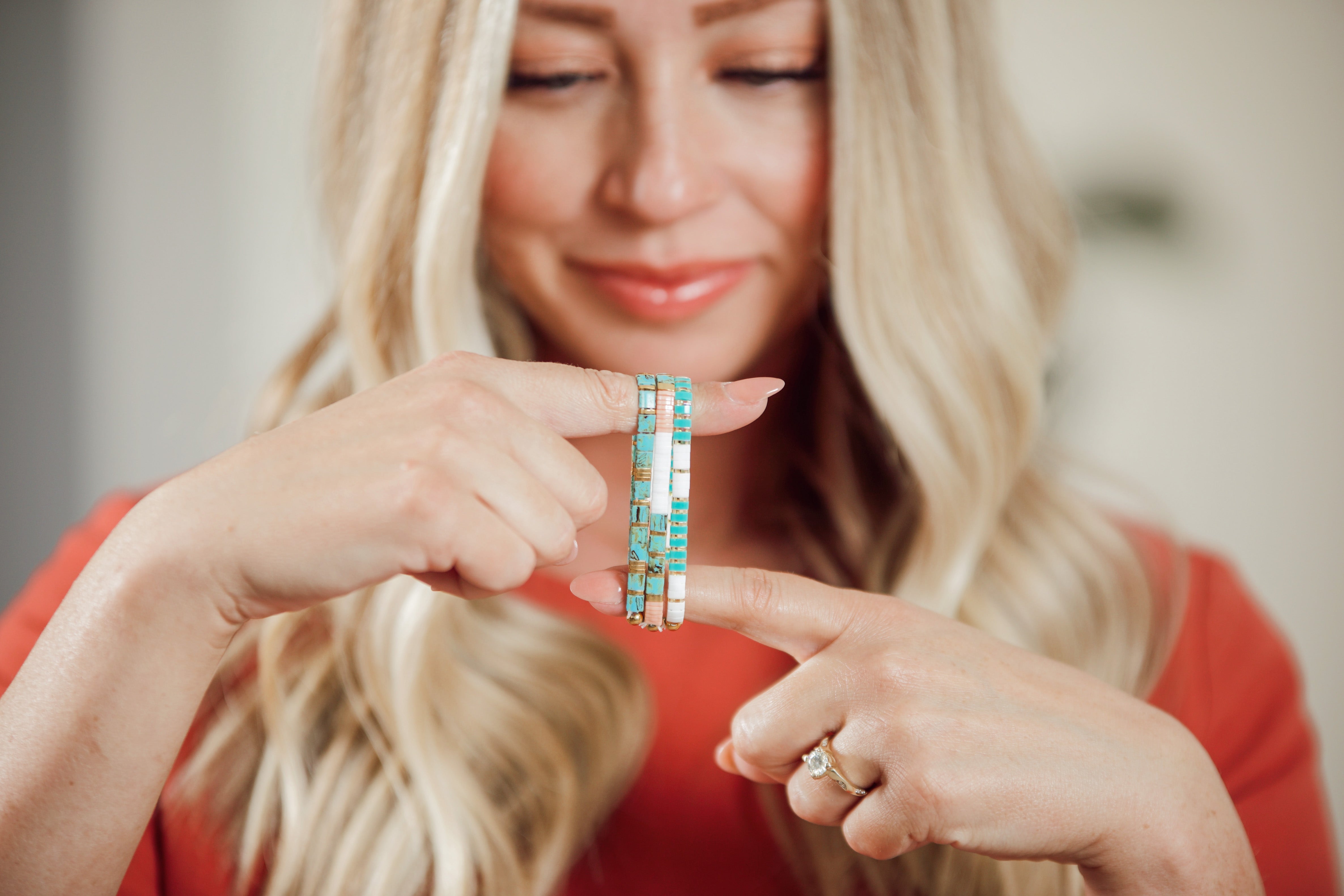
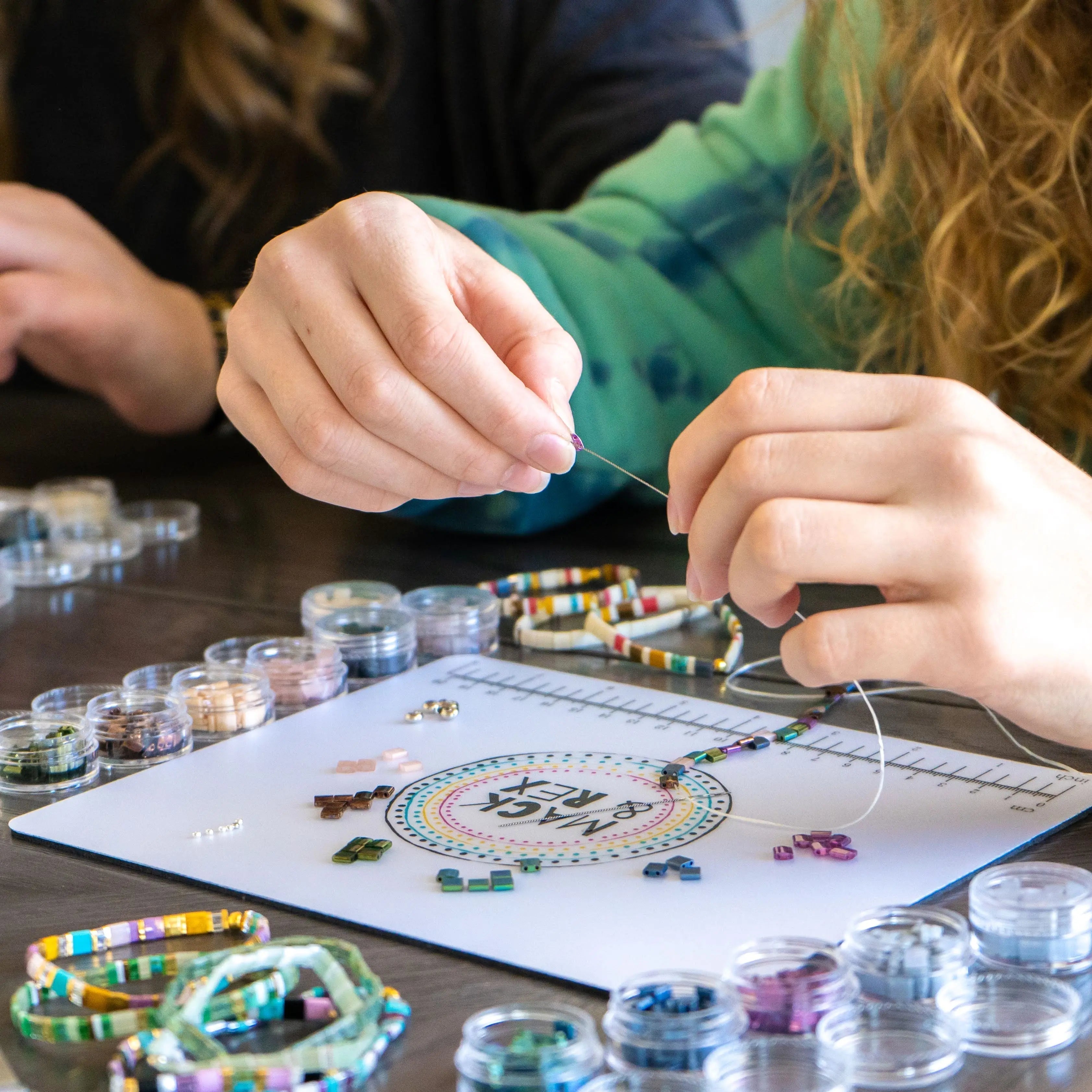
A stackable tila bead bracelet set is just a handful of bracelets designed to sit on your wrist together instead of one at a time. The flat, square shape of Miyuki tila beads makes them naturally good at this: they catch light from different angles, so when you layer two or three tila bead bracelet stack pieces side by side, you get a kind of movement a single bracelet can't give you on its own. I've watched customers come in for one bracelet and leave with four because once you see a stack on your own wrist, going back to one piece feels like stopping halfway through a sentence.
The short version: pick one patterned tila bracelet, add one or two solid-color tila bracelets, then finish with a textured accent piece. That's it. Everything below is just variations on that formula.
What's the basic formula for a 3-bracelet stack?
If you're building your first stackable tila bead bracelets set, start small. Three pieces is the easiest place to begin:
- One patterned or multi-color tila bracelet (this is your focal point)
- One solid-color tila bracelet that matches a shade pulled from the pattern
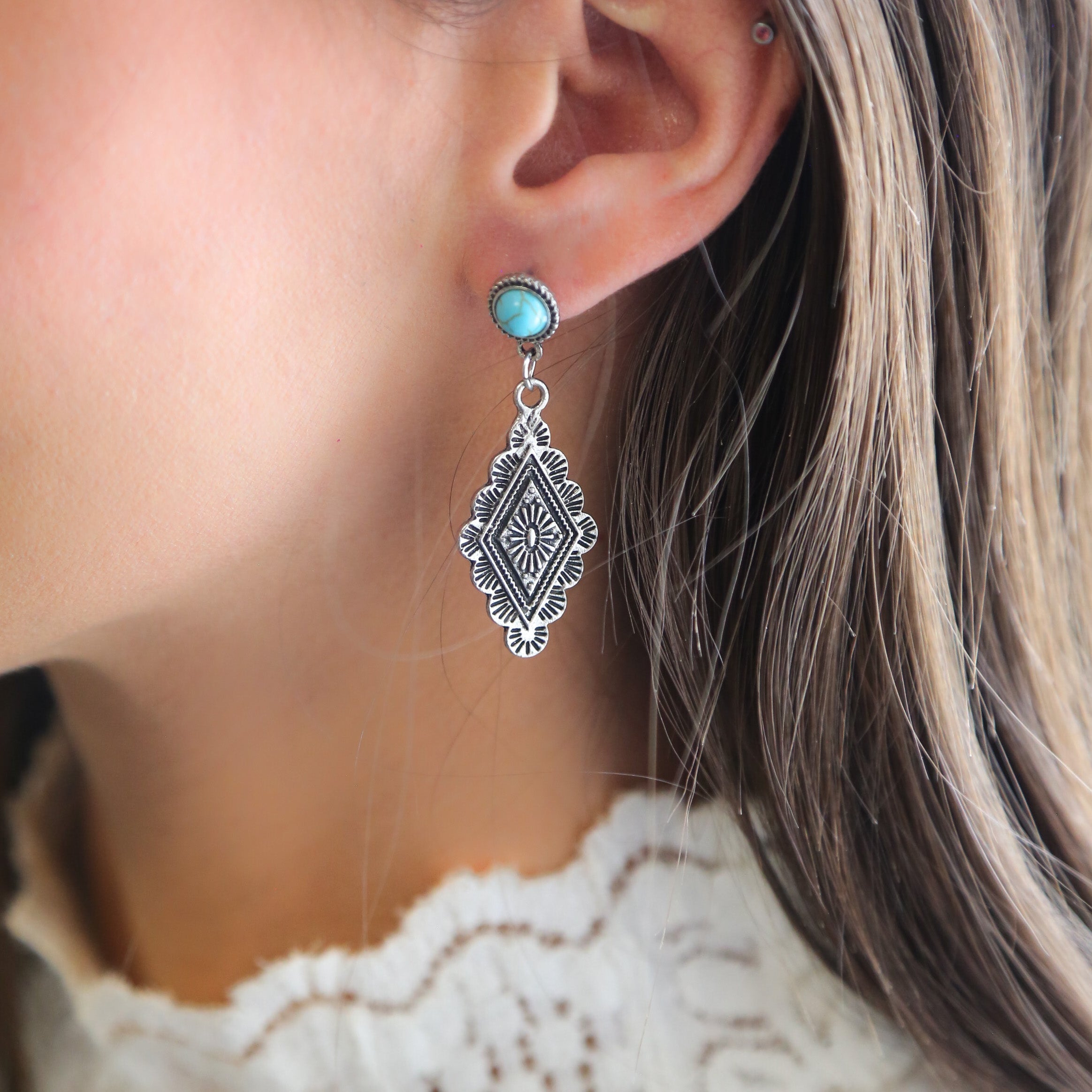
- One accent bracelet in a round or heishi bead for texture contrast
This works because your eye has somewhere to land (the pattern), something to rest on (the solid), and something to add depth (the texture). It's the same logic jewelry stylists use for layering necklaces, just scaled down to wrist size.
Stretching to a 5-bracelet stack
Once three feels too easy, build out to five. Add a second solid in a complementary tone and a second accent bracelet with a different texture than your first one, maybe small faceted beads if your first accent was heishi. The rule of thumb: never put two patterned tila bracelets next to each other in a stack. One pattern per stack keeps it readable instead of busy.
How do you mix colors without it looking random?
Color is where most stacks fall apart. The fix is to treat your patterned bracelet as a color chart. Look at it, pick two or three colors out of it, and make sure every other bracelet in the stack uses one of those colors somewhere. A STAINED-collection patterned piece with amber and olive tones pairs naturally with a solid olive tila bracelet and an amber-toned accent piece, for instance. You're not matching everything exactly, you're repeating a short list of colors across the whole stack so it reads as intentional.
Seasonal collections make this easier because the colorways are already coordinated. A RETRO SUNSET set and an EVERGREEN EDIT set are both internally color-matched, so shopping within one collection does a lot of the color work for you before you even start combining pieces.
Do stacks work for different wrist sizes?
Yes, and this matters more than people expect. A stack that looks great on a small wrist can look cramped on a larger one if every bracelet is sized the same way. Because the finished bracelets use stretchy crystal-cord elastic and come in sizing from XXS to 5XL, you can build the identical stack concept, patterned plus solids plus accent, and just size each individual bracelet to the wrist wearing it. A mother and daughter can wear "matching" stacks that are actually built from different sizes of the same pattern pairings.
Building a gift stack for someone else
If you're building a stack as a gift, go slightly looser on fit rather than tighter. A little extra give on crystal-cord elastic is more comfortable over a full day than a snug fit, and tila bead bracelets especially benefit from not pulling tight against the flat glass edges.
How do you actually shop for a coordinated stack?
The fastest route is to shop one named collection for your pattern and solid bracelets, then round it out with a piece from the accent bracelets collection for texture. Finished bracelets run about $20 to $25 each, and because stacks mean buying multiples, the current offer, buy three finished bracelets and get a fourth free, no code needed, is genuinely built for this use case. A four-bracelet stack this way often prices out close to what you'd pay for three.
One customer put it simply in a review: "Simple but beautiful. Good price too." That's really the goal with a stack, not that every piece is a showstopper on its own, but that the combination reads as put-together.
Worth noting on shipping: Mack & Rex ships internationally, with shipping costs and any customs or duties calculated at checkout. US orders over $100 ship free, and a stack of three or four finished bracelets can realistically land you in that range if you're ordering from the US, though that depends on what's in your cart, not a guarantee on any single item.
A few technique notes worth knowing
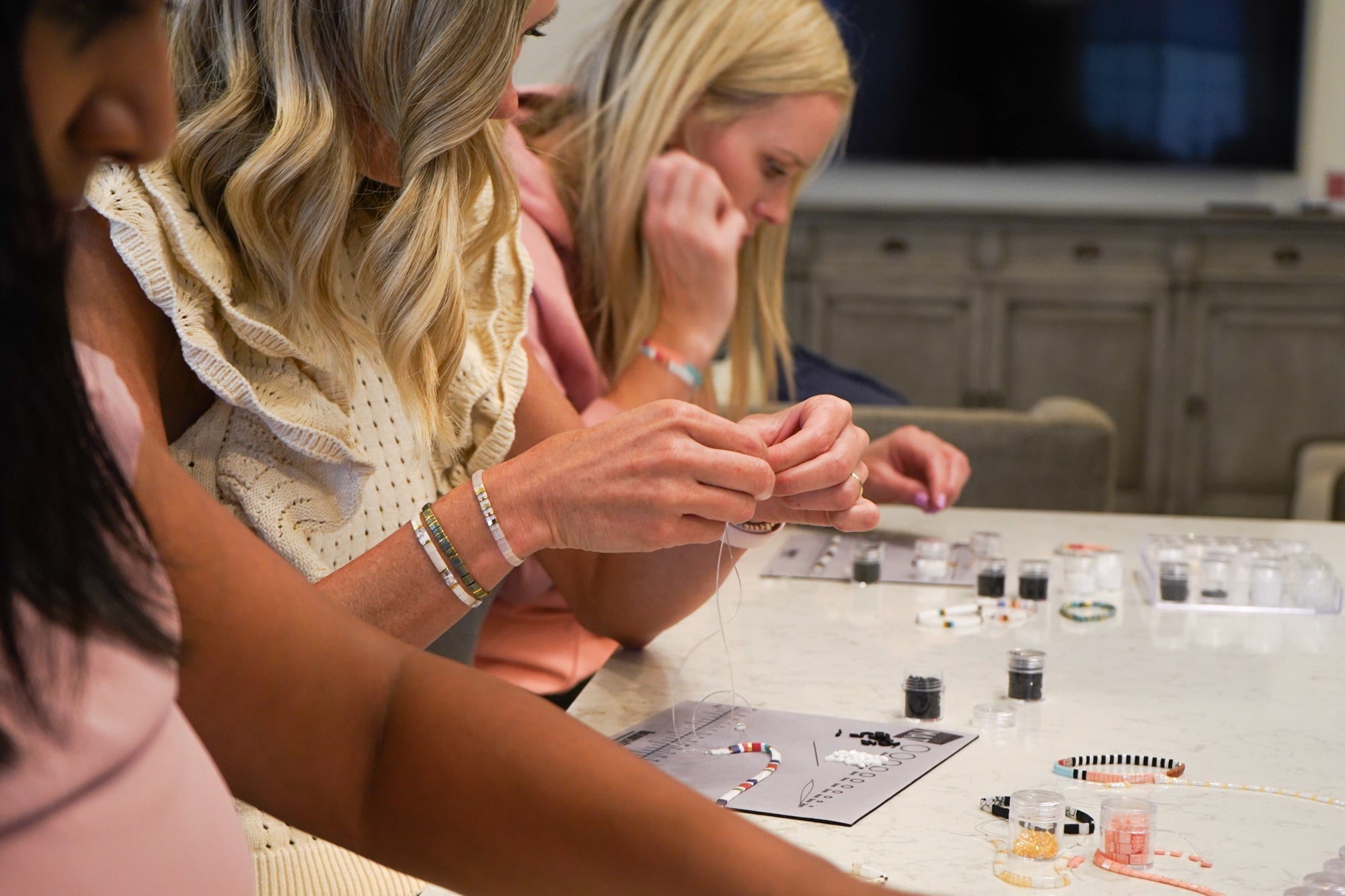
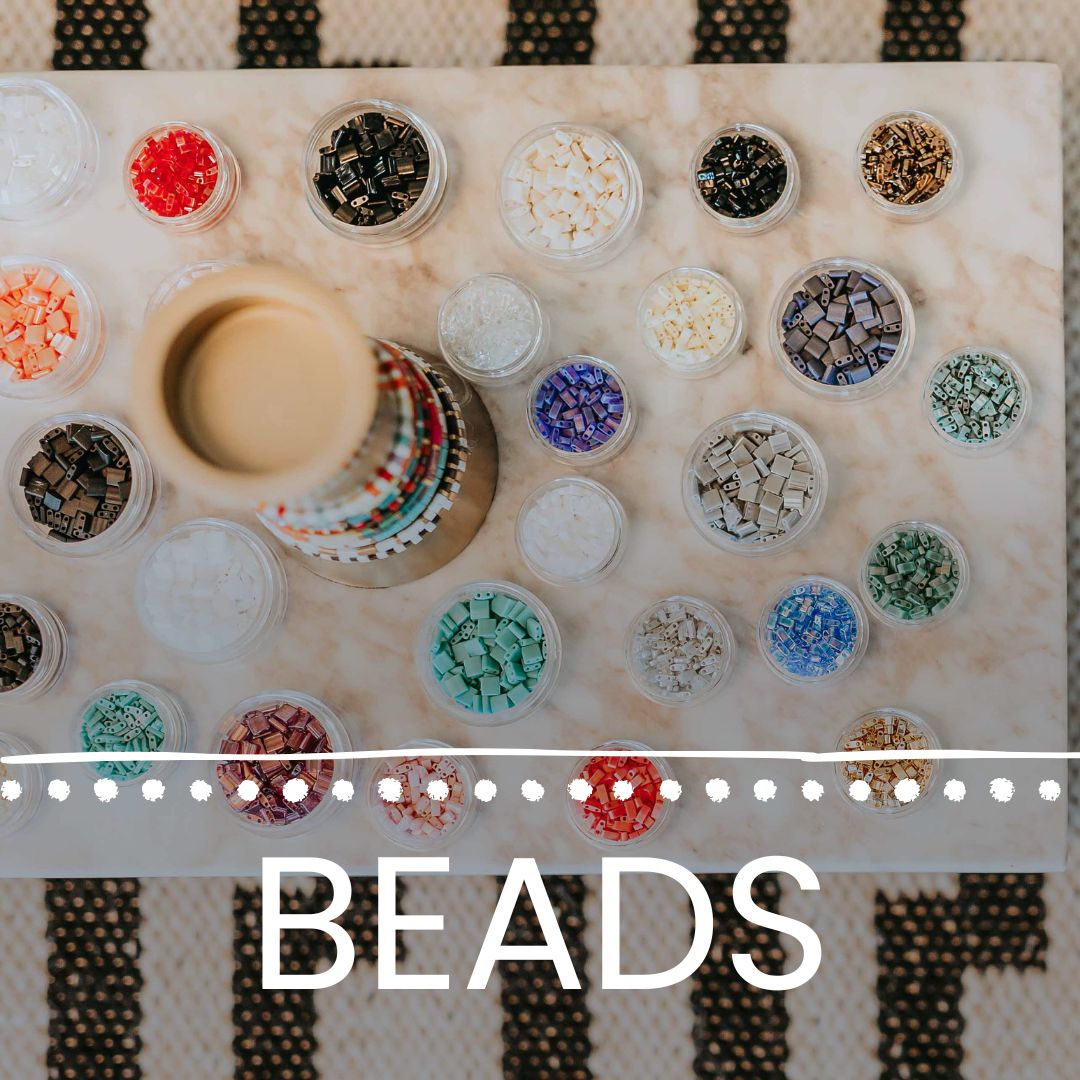
Miyuki, the Japanese company behind the tila bead itself, makes the two-hole flat square beads that give these bracelets their signature stacked-glint look; Mack & Rex sources and resells these beads and finished pieces rather than manufacturing the beads. If you want to go deeper on bead specs and finishes, Miyuki's own site is a reliable reference, and bead retailer Beadaholique has long-running general guides on tila bead techniques if you're curious about how the beads are strung.
A quick safety note since beading comes up around kids sometimes: tila beads are small glass components and a choking hazard, so stacks should be worn and handled with adult supervision and aren't intended for very young children.
- One pattern, never two, per stack
- Pull two or three repeat colors from your pattern bracelet
- Add texture with an accent piece, not just more tila
- Size each bracelet to the actual wrist wearing it
Start with three bracelets, live with them for a week, and you'll know exactly what the stack is missing before you add a fourth or fifth.

