

How Do You Care for Tila Bead Bracelets So They Last?
How Do You Care for Tila Bead Bracelets So They Last?
Care comes down to one thing: protect the cord. The Japanese glass beads on a tila bracelet are tough and can outlast the elastic by years. So the routine is simple. Take it off before water, lotion, and perfume. Wipe it down after wear. Store it flat in a dry spot away from heat and sun. Check the elastic every few months. Do that, and a well-made stack holds up beautifully for the long haul.
Can You Get Tila Bead Bracelets Wet?
Short answer: try not to. One accidental splash won't wreck anything, but repeated water is the fastest way to age a stretch bracelet. The glass beads don't care about moisture. Glass is non-porous, so water rolls right off without leaving damage. The elastic cord is the weak point. Every time it gets wet and dries, it loses a little stretch. Hot shower water speeds that up. Chlorinated pool water and salty ocean water are harder still.
So make a habit of taking your bracelet off before showering, swimming, or doing dishes. If it does get soaked, rinse it with cool fresh water, pat it dry, and let it air out fully before you put it away. The glass itself stays fine through all of this. According to the Gemological Institute of America, warm water with mild soap and a soft cloth is the safe baseline for cleaning most jewelry, while harsh chemicals and rough handling are what cause trouble. GIA's gem care and cleaning guide is a solid reference for the general rules.
How Do You Clean a Tila Bead Bracelet Without Wrecking It?
Gentle and quick. For everyday upkeep, a dry soft cloth is all you need. Wipe the beads down after a sweaty day to lift off oils and grime before they settle into the cord. That five-second habit does more for the life of a bracelet than any deep clean.
When it needs more, here's the safe method:
- Dampen, don't dunk. Dip a soft cloth in lukewarm water with a tiny bit of mild soap. Wring it out so it's damp, not dripping.
- Wipe the beads. Run the cloth over the glass tiles. The Miyuki glass handles a light wipe well.
- Rinse the cloth, wipe again. Use a clean damp cloth to clear any soap residue.
- Dry it flat. Lay the bracelet out and let it air dry all the way through before wearing or storing.
Skip the soaking. Skip harsh cleaners, bleach, and jewelry dips. And keep tila bracelets out of ultrasonic cleaners. Those machines are built for solid metal and hard stones, not beads strung on elastic. The vibration and heat are rough on the cord and on certain bead finishes.
What Should You Avoid With Tila Bead Bracelets?
The damage list is short and easy to remember. Most of it is about chemicals, heat, and rough handling working on the elastic over time. Avoid these:
- Lotion, perfume, and sunscreen. Put your bracelet on last, after products have soaked in. These sit on the cord and break it down.
- Long hot showers and steam. The combo of heat, soap, and moisture is genuinely tough on elastic.
- Direct sun and heat. Don't leave bracelets on a sunny windowsill or in a hot car. UV and heat degrade elastic faster than water.
- Pulling it wide over your knuckles. Roll it on and off with a gentle motion instead. Yanking it over your hand stresses one section of cord and is the number one cause of snaps.
- Tossing it in a bag loose. Friction against keys and zippers can scuff bead finishes.
None of this means a tila bracelet is fragile. It's built to be worn. These are just the small habits that keep it looking like day one.
Why Does the Elastic Cord Matter So Much?
Because the cord is what fails first. Almost every broken stretch bracelet is a cord problem, not a bead problem. Elastic is a stretchy polymer, and like all elastomers it slowly loses its springiness with exposure to heat, light, oils, and repeated stretching. The material science behind elastomers explains why: the long flexible molecule chains that let elastic stretch and snap back degrade over time, especially under heat and UV. Knowing that, the whole care routine makes sense. You're slowing down a process that's going to happen eventually.
Cord quality changes the timeline a lot. Crystal-cord elastic, a braided crystalline fiber, is stronger and more water-resistant than basic round elastic. It holds a knot better and frays slower. At Mack & Rex, the finished tila bead bracelets are strung on crystal-cord elastic, which is part of what backs the quality guarantee. If you've had a cheap stretch bracelet die in a few weeks, the cord was almost certainly the culprit.
How Do You Store Tila Bead Bracelets?
Flat, dry, and out of the sun. Lay bracelets flat in a small pouch, a drawer, or a jewelry tray. Hanging them keeps constant tension on the cord, and a hot or sunny spot speeds up elastic breakdown. A dry drawer away from a window is ideal.
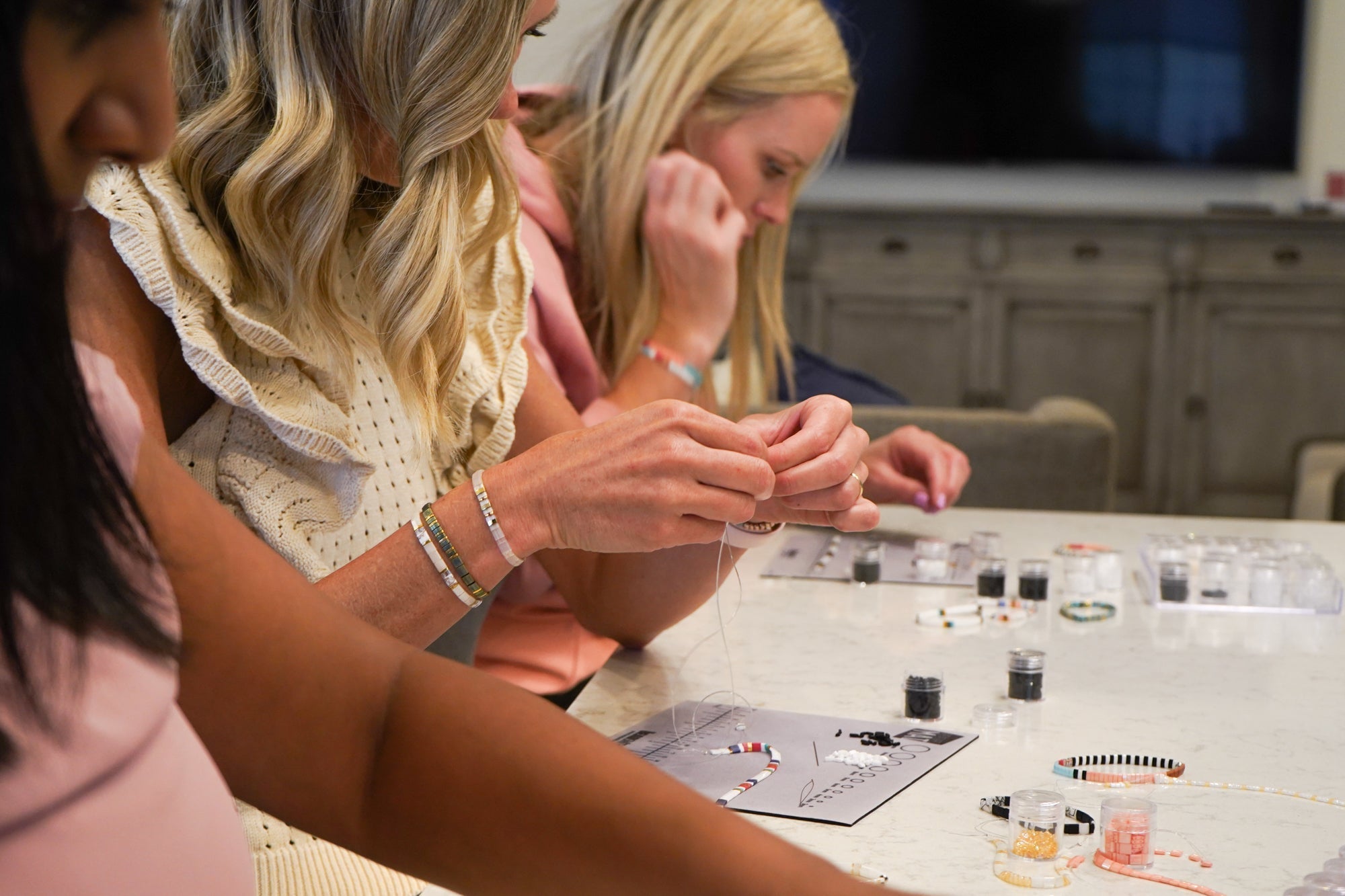
If you stack several bracelets, store them so they're not crushed or tangled against hard objects. A soft pouch per stack works great. The Fusion Beads team, a longtime beading supplier, shares plenty of stringing and finishing know-how on their beading blog if you want to dig deeper into how bead jewelry is built and maintained. The more you understand the construction, the easier the care decisions get.
When Should You Restring a Tila Bead Bracelet?
Check the cord every few months. Gently pull the beads apart and look at the elastic between them. If you see thin spots, fuzzy fibers, or any fraying, it's time to restring before it snaps in public and scatters beads everywhere. Catching it early is the whole game.
A bracelet that suddenly feels loose or floppy is also telling you something. The cord has lost its stretch and won't bounce back the way it used to. That's a restring, not a problem with the beads. The good news: the glass tiles are almost always fine, so a restring brings the bracelet right back to life.
The Quick Care Routine, Start to Finish
Here's the whole thing in order, the routine that keeps a tila bead bracelet going for years:
- Put it on last when getting ready, after lotion, perfume, and sunscreen.
- Take it off before water and before chemicals of any kind.
- Wipe it down with a dry cloth after a sweaty day.
- Deep clean gently when needed, with a damp cloth and mild soap. No soaking.
- Dry it flat and completely before putting it away.
- Store it flat in a dry spot out of the sun.
- Inspect the cord every few months and restring at the first sign of wear.
That's it. A few minutes of attention a week, and your stack stays wearable far longer than one that gets ignored.
Where to Find Bracelets Built to Last
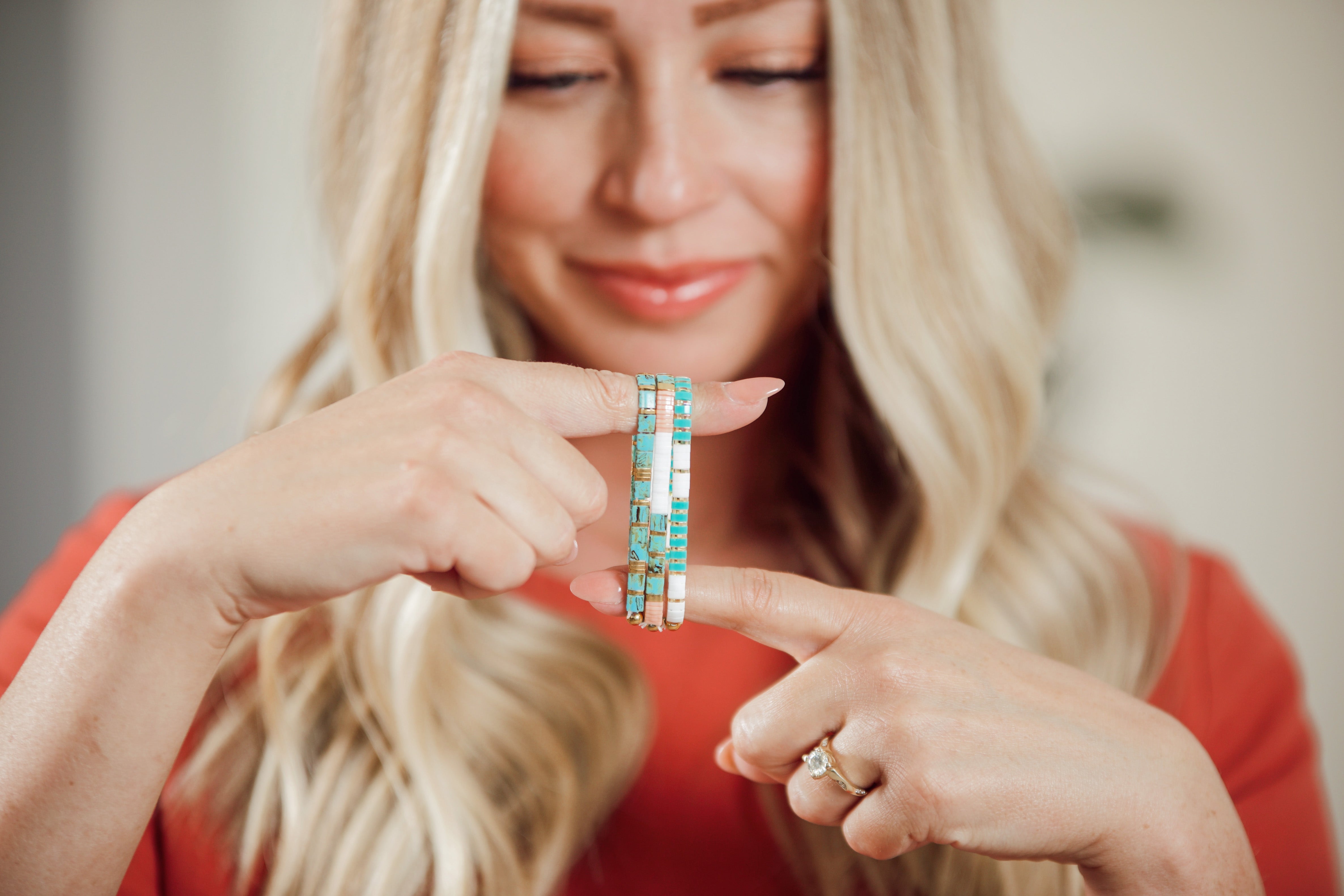
Good care helps, but it starts with a well-made bracelet. The Mack & Rex finished tila bead bracelets are strung on crystal-cord elastic, made with Japanese Miyuki glass tile beads, sized inclusively from XXS to 5XL, and backed by a quality guarantee. The right fit matters here too. A bracelet that's too tight stretches the cord on every single wear, so getting the size right is part of making it last.
Ready to add a stack you'll actually wear? Browse the full Mack & Rex collection, finished bracelets, kits, and bead mixes, all in inclusive sizing. Orders over $100 ship free to US addresses, and you can buy 3 bracelets and get 1 free, no code needed.
FAQ: Caring for Tila Bead Bracelets
How do you care for tila bead bracelets?
Take the bracelet off before water, lotion, and perfume, and put it on last when getting ready. Wipe it with a dry cloth after wear, store it flat in a dry spot away from heat and sun, and check the elastic cord every few months. The glass beads are tough, so most care is about protecting the cord.
Can you get tila bead bracelets wet?
A splash is fine, but repeated water exposure shortens their life. The glass beads handle moisture, the elastic cord does not. Remove your bracelet before showering, swimming, or doing dishes. If it gets soaked, rinse with cool fresh water, pat dry, and let it air out fully before storing.
How do you clean tila bead bracelets?
Wipe the glass beads with a soft cloth dampened in lukewarm water with a little mild soap, then go over them with a clean damp cloth. Lay the bracelet flat to dry fully before wearing or storing. Skip soaking, harsh cleaners, and ultrasonic machines, which all stress the elastic.
Why do beaded stretch bracelets break?
They almost always fail at the cord, not the beads. Water, sweat, lotion, heat, and UV gradually weaken elastic, and pulling a bracelet wide over your knuckles stresses one spot. Roll it on and off gently and inspect the cord regularly to catch wear before it snaps.
How long do tila bead bracelets last?
With basic care, a well-made tila bead bracelet on quality crystal-cord elastic can last two years or more. A bracelet showered in daily might last only a few months. The difference comes down to how you treat the elastic cord.