

How to Care for Tila Bead Bracelets So Your Stack Lasts
How do you clean a tila bead bracelet?
Wipe the beads and cord with a soft, dry cloth after each wear to remove skin oils, lotion residue, and sweat. Avoid soaking the whole bracelet, since standing moisture is what breaks down the elastic cord over time, not a quick wipe.
That's really it. No special solution needed.
A microfiber cloth or a soft cotton square works fine for this. Run it gently over the front and back of each Tila bead, then along the visible cord between beads. If a bracelet has picked up something sticky (sunscreen, a stray dab of lotion), dampen the cloth slightly with plain water, wipe, then dry it right away with a second cloth. Don't submerge the bracelet in a bowl of water or run it under the faucet. The two-hole structure of a Tila bead means water can settle inside the bead cavity and sit against the cord where it can't fully dry, which is exactly the kind of prolonged contact that ages elastic faster.
If beads look dull after months of wear, a barely damp cloth followed immediately by a dry one usually brings the shine back. Skip jewelry cleaning solutions built for metal, since some contain solvents that aren't meant for glass beads or stretch cord. General jewelry-care guidance from sources like Good Housekeeping backs the same approach: gentle, dry cleaning is the safer default for costume and beaded pieces.
Can tila bead bracelets get wet?
A splash from handwashing dishes or a quick rinse won't ruin a tila bead bracelet, but showering, swimming, or soaking it isn't a good idea. Chlorine, saltwater, and extended moisture break down crystal-cord elastic faster than daily wear, so take the bracelet off before you get in the water.
This trips people up because the bracelet feels sturdy. It is, for normal life. Wearing it while you cook, drive, or garden is fine. The problem shows up with repeated soaking: pool chemicals and salt attack the elastic's structure at a chemical level, and the cord loses stretch and strength with every exposure. One swim probably won't do much damage. A summer of daily pool days will.
The same logic applies to hot tubs and long baths. Heat speeds up the same degradation that water causes on its own, so a hot soak is worse than a lukewarm rinse. If you forget and jump in the shower with a bracelet on, just take it off as soon as you notice, pat it dry, and let it air out before wearing it again.
How should you store tila bead bracelets so they don't stretch out?
Store tila bracelets flat in a shallow dish, tray, or soft pouch instead of hanging them on a hook or jewelry stand. Hanging lets gravity pull on the elastic around the clock, and that constant tension stretches the cord and loosens the fit faster than normal wear ever would.
Think about what a hook does to a stretch bracelet. It hangs there, fully extended, for hours or days at a time. That's the opposite of what elastic wants. Elastic holds its shape best when it's relaxed, not stretched, so a bracelet resting flat or coiled loosely in a drawer keeps its original tension much longer than one dangling from a jewelry tree.
A few storage habits that make a real difference:
- Coil the bracelet loosely rather than leaving it stretched flat across a hard surface
- Keep bracelets out of direct sunlight, which dries out elastic over months of exposure
- Store beaded pieces separately from bracelets with clasps or chains so they don't tangle and pull
- Use a lined tray or small pouch instead of tossing loose bracelets into a drawer where they knock against harder jewelry
Beadaholique's jewelry care and storage resources cover this same principle for beaded and stretch pieces: keep them relaxed, separated, and out of direct light, and they hold their shape considerably longer.
Do lotion and perfume damage bead bracelets?
Yes. Repeated contact with lotion, perfume, and hairspray speeds up wear on elastic cord, because the oils and chemicals in those products soak into the material over time and break down its structure. Put jewelry on after lotion and perfume have fully dried, not before or during application.
It's an easy habit to build. Get dressed, do makeup and hair, apply your lotion and fragrance, then put your bracelets on last. That order keeps the elastic away from wet product entirely. Good Housekeeping's jewelry care guidance follows the same rule for beaded and stretch pieces: apply products first, add jewelry last.
Hairspray is an easy one to overlook. A quick spritz near your wrists while a bracelet is already on adds up over weeks of daily use. It's a small thing. It matters anyway.
How do you keep the crystal-cord elastic and two-hole beads from working loose?
Crystal-cord elastic holds its shape best when it isn't stretched to its limit repeatedly, so pull bracelets on gently over your hand rather than yanking them wide to clear a watch or ring. The two-hole Tila structure already spreads tension across the cord more evenly than a single-hole bead, but rough handling still wears down any stringing material faster.
A little care around how you put a bracelet on and take it off goes further than most people expect. Sliding it on slowly, working it past your knuckle without stretching it to the max, keeps the elastic from taking a hit every single time. Removing it the same way, gently, rather than snapping it off, protects the knot too.
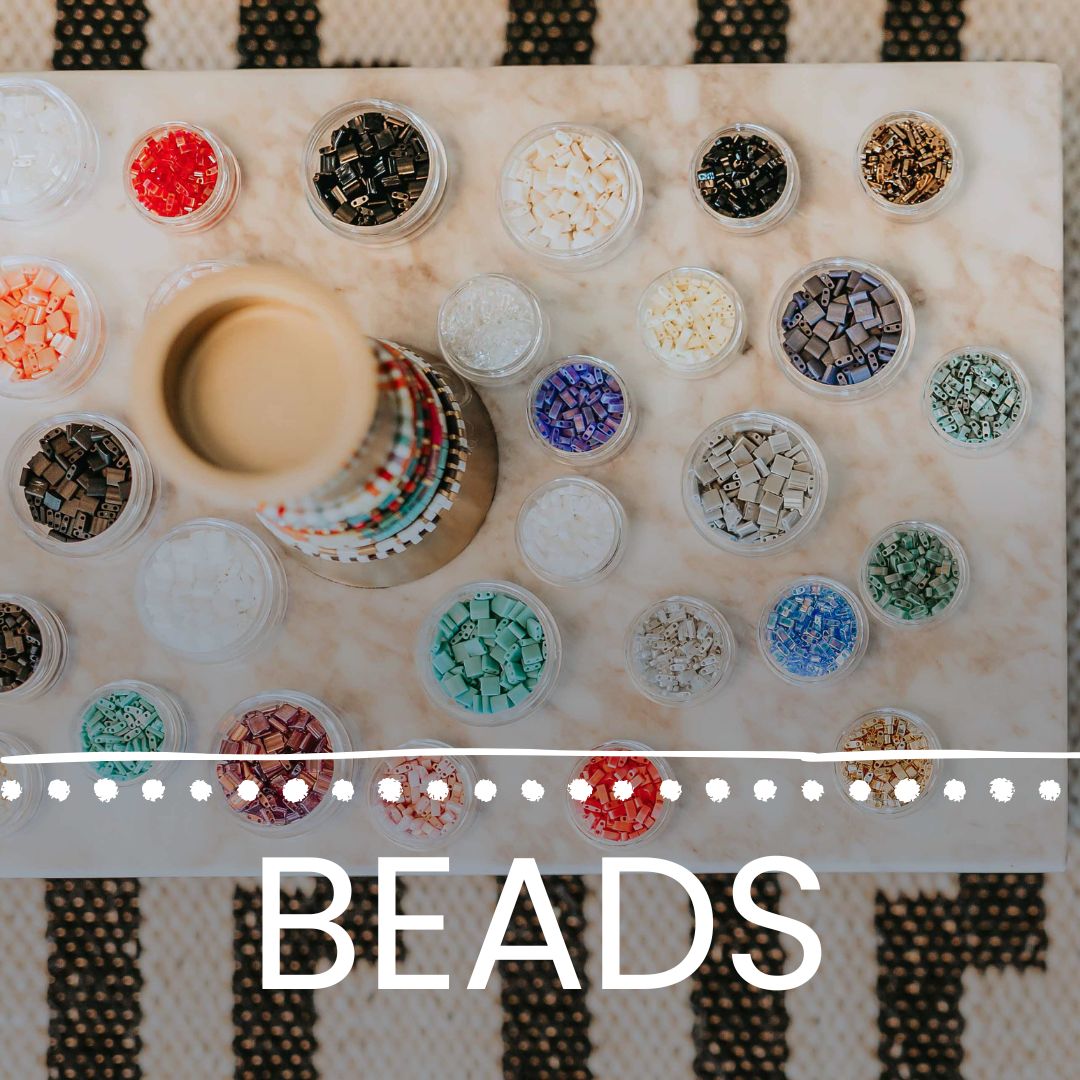
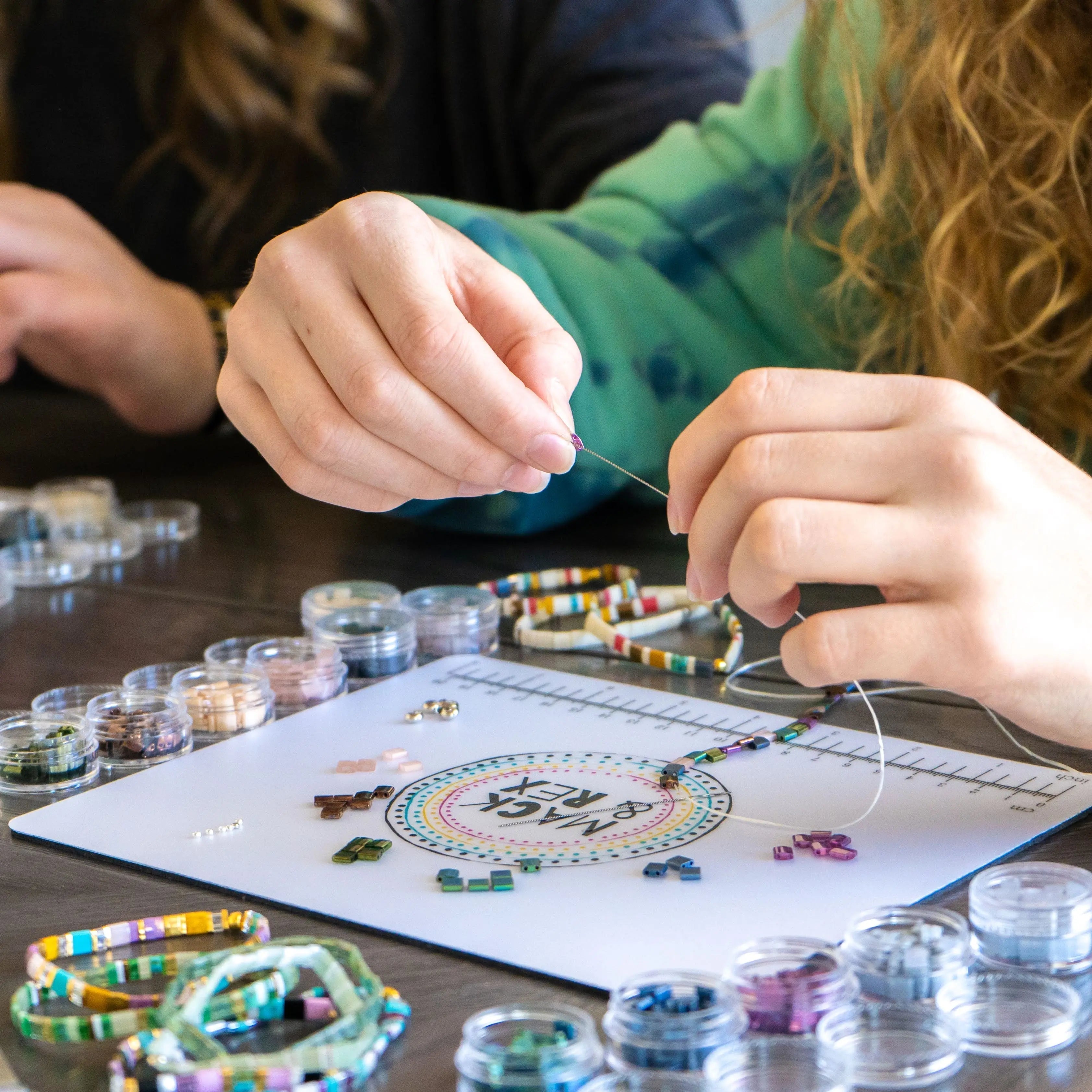
The two-hole design of a Tila bead matters here in a way single-hole beads can't match. Because the cord runs through two points on each bead instead of one, the tension load spreads out. That's part of why Miyuki Tila beads, the Japanese glass beads Mack & Rex sources for its bracelets, hold up so well in stretch designs specifically. Rubber and synthetic elastomer compounds naturally lose elasticity through a process called stress relaxation, where repeated stretching gradually reduces the material's ability to snap back. Spreading the load across two contact points per bead, rather than concentrating it at a single hole, slows that process down.
When is it time to restring a tila bead bracelet?
Restring a tila bead bracelet once you see gaps between beads at rest, notice the cord looking cloudy, yellowed, or tacky, or feel the knot has shifted from where it started. Don't wait for the bracelet to snap. By the time you see those signs, the cord is already near the end of its useful life.
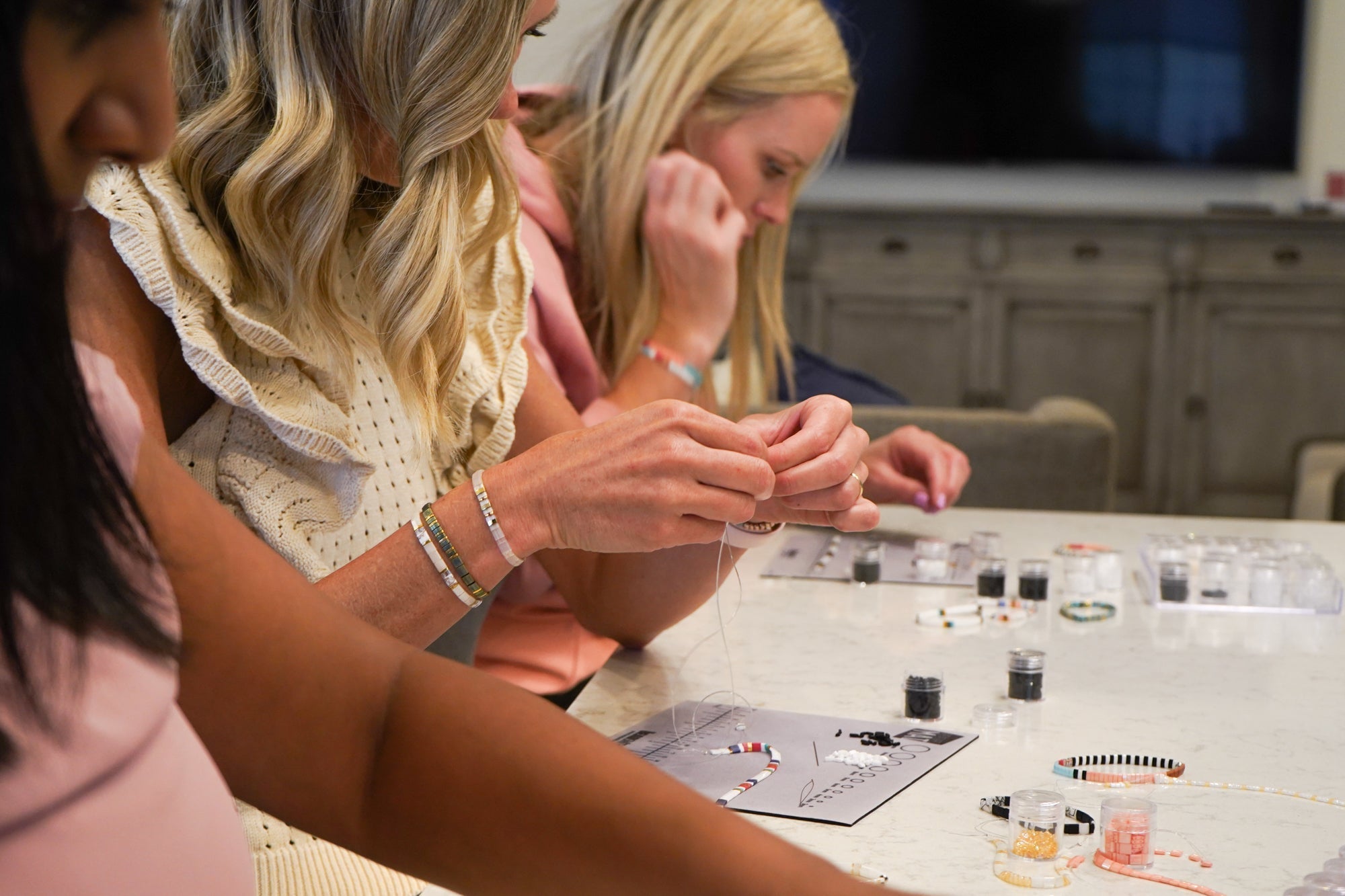
I've had customers mail in bracelets from three, even four years of near-daily wear, asking if they can be restrung on the same beads. Usually yes. The Tila beads themselves rarely wear out. It's almost always the elastic that gives first, and swapping in fresh crystal-cord elastic on beads you already love is a simple fix.
Here's the quick check: hold the bracelet flat and look at the spacing. If beads sit snug against each other with no daylight showing between them, the cord still has good tension. Gaps mean the elastic has stretched past its working range. Pair that visual check with a look at the cord's color and texture, and you'll catch a tired bracelet well before it fails on you mid-afternoon.
How does Mack & Rex build tila bracelets to last?
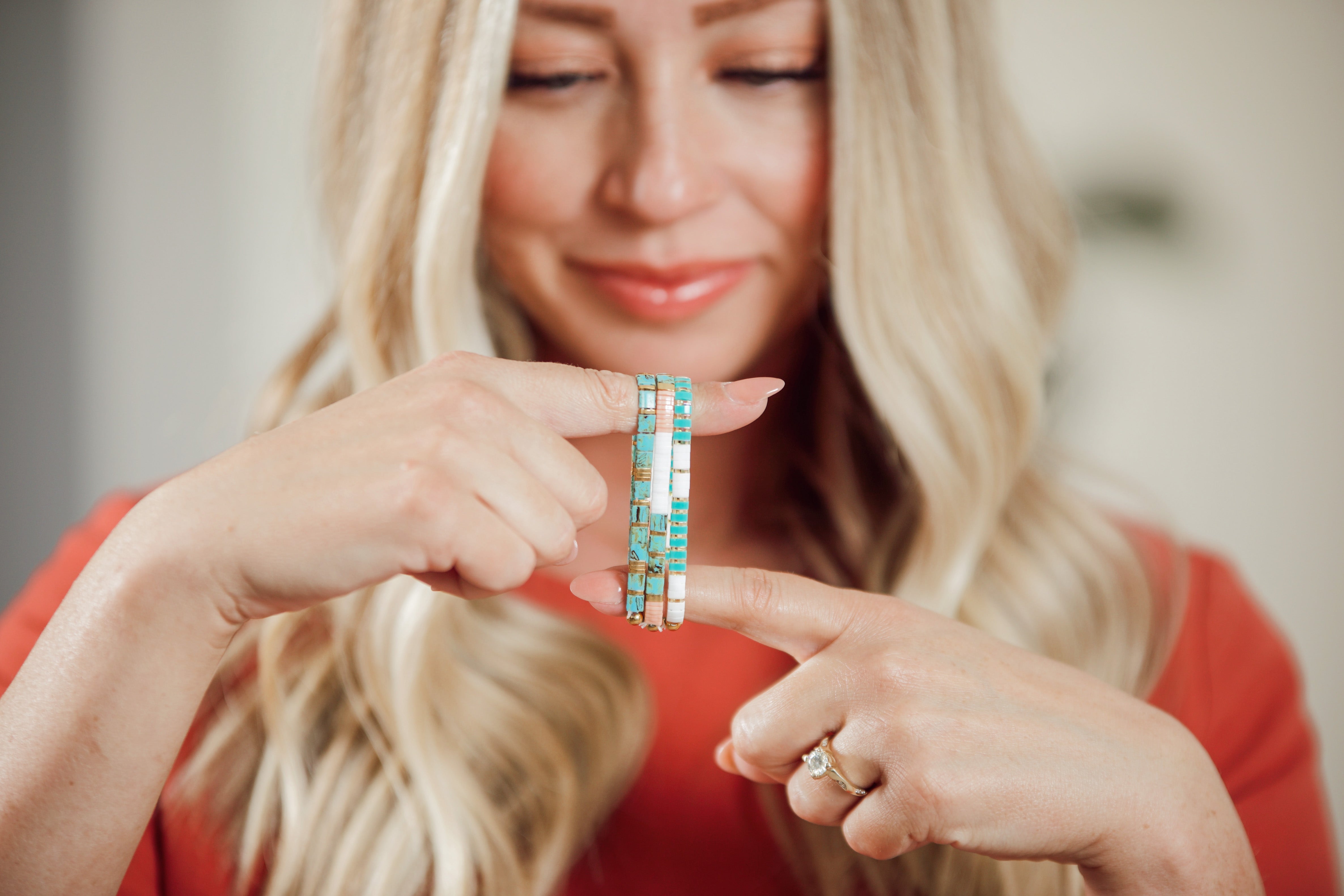
Mack & Rex builds every ready-to-wear bracelet with crystal-cord elastic and Miyuki Tila beads, the two materials that matter most for stretch-bracelet longevity, and backs each one with a quality guarantee. Sizing runs from XXS to 5XL, so care tips like these apply to a bracelet actually sized to fit your wrist in the first place.
Miyuki is a Japanese bead manufacturer. Mack & Rex sources and resells Miyuki Tila beads in its finished bracelets and DIY kits; Miyuki makes the beads, Mack & Rex builds and sells the bracelets. That two-hole bead structure paired with crystal-cord elastic is exactly the combination this guide keeps coming back to, because it's the one that holds up best under the daily grind of wear, wash, and storage.
You can browse the full lineup, from ready-to-wear stacks to DIY kits, in the Mack & Rex full collection. A buy-3-bracelets-get-1-free offer is live right now on finished bracelets (no code needed), and US orders over $100 ship free.
Frequently Asked Questions
How do you clean a tila bead bracelet?
Wipe the beads and cord with a soft, dry or barely damp cloth after wear to remove oils and lotion residue. Avoid soaking the whole bracelet in water or cleaning solution, since prolonged moisture is what weakens the elastic cord over time, not a quick wipe.
Can tila bead bracelets get wet?
A splash of water from handwashing won't ruin a tila bead bracelet, but showering, swimming, or soaking it isn't a good idea. Chlorine, saltwater, and standing moisture break down crystal-cord elastic faster than daily wear does, so take it off before you get in the water.
How should I store my tila bracelets so they don't stretch out?
Store tila bracelets flat in a shallow dish, tray, or pouch instead of hanging them from a hook or over a jewelry stand. Hanging lets gravity pull on the elastic around the clock, which stretches the cord and loosens the fit faster than normal wear.
When should I restring a tila bead bracelet?
Restring it once you notice gaps between beads at rest, a cord that looks cloudy, yellowed, or tacky, or a knot that has shifted from its original spot. Don't wait for the bracelet to snap. Those signs mean the cord is already near the end of its life.
Do lotion and perfume damage bead bracelets?
Yes, repeated contact with lotion, perfume, and hairspray speeds up wear on elastic cord because the chemicals and oils soak into the material over time. Put jewelry on after your lotion and perfume have dried, not before or during application.
Ready to build a stack that actually holds up? Shop the Mack & Rex full collection of tila bead bracelets and kits, sized XXS to 5XL and backed by a quality guarantee. Buy 3 finished bracelets and get 1 free (no code needed), and US orders over $100 ship free.