

How to Combine Heishi and Tila Beads in One Stacked Bracelet
How Do You Combine Heishi and Tila Beads in One Stacked Bracelet?
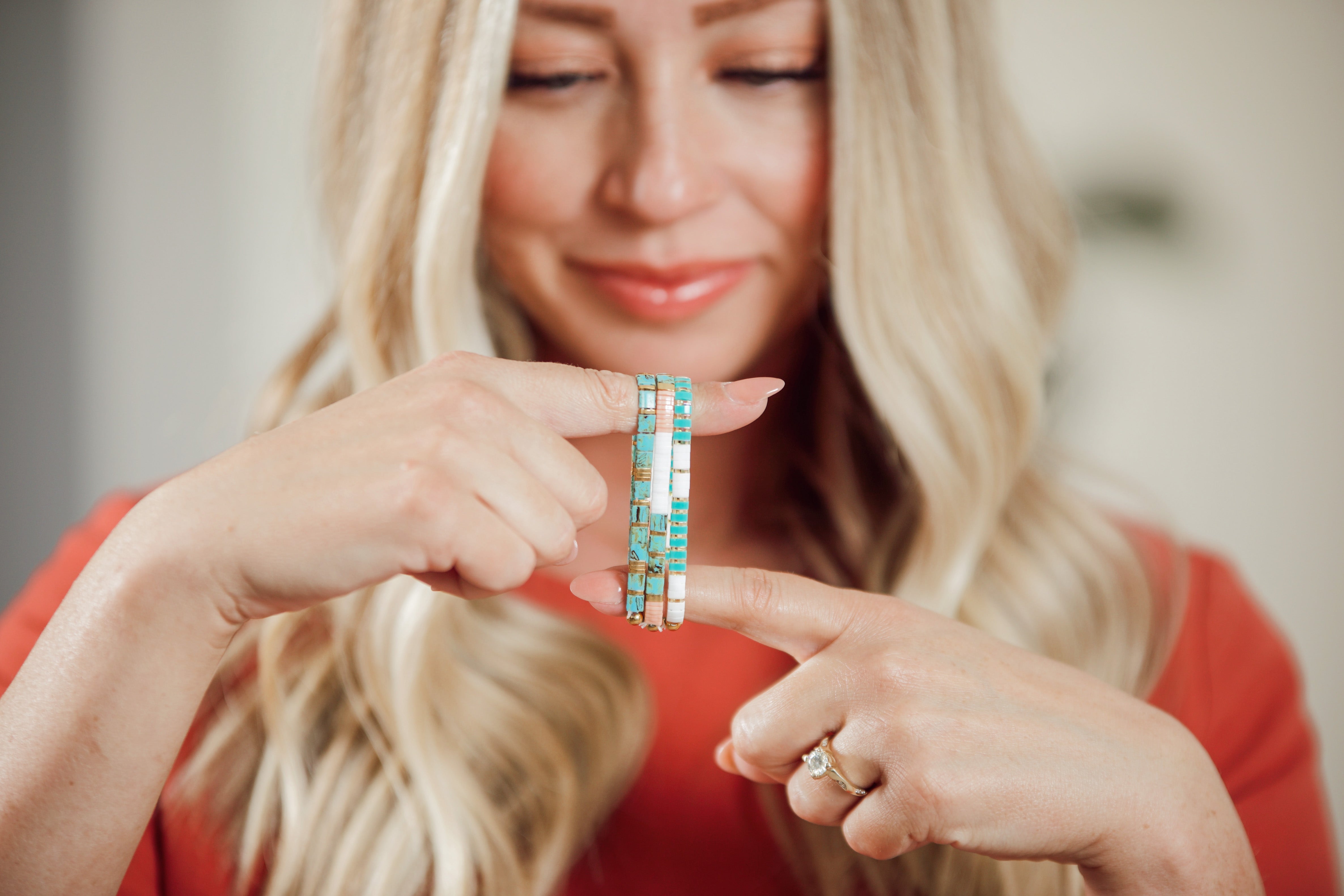
Mix heishi and Tila beads by using heishi discs as the flexible base of the bracelet and Tila beads as short accent clusters, at a rough ratio of 70 to 75 percent heishi to 25 to 30 percent Tila. String each Tila bead through the same hole for a consistent flat face, group them in twos or threes rather than scattering single beads, and recheck your wrist fit after adding them since the flat shape sits a little stiffer than rounded heishi.
That's the short version. Heishi beads are flat discs with a rounded edge and a single center hole, so they curve naturally with the wrist. Tila beads are a Miyuki design: 5mm glass squares with two parallel holes and a flat face that catches light differently than a rounded bead. Together they give the stack real texture contrast instead of one uniform surface.
What's the Right Ratio of Heishi to Tila Beads?
Start heavy on heishi. A bracelet that's 70 to 75 percent heishi with Tila worked in as small clusters keeps the overall feel soft and wearable while the Tila sections do the visual work. Get closer to 50/50 and the bracelet starts reading as a true mixed-texture piece, which looks great but takes a steadier hand with color to avoid looking busy.
For a first attempt on a 7-inch bracelet, try: 8-10 heishi beads, a cluster of 3 Tila beads, then another 8-10 heishi, repeating around the wrist. That gives you two or three Tila "windows" evenly spaced. Fewer, larger clusters look more intentional than scattered single Tila beads.
How Do You Balance Color Between the Two Bead Types?
Pick one color both bead types share, then let one carry a second, bolder accent. If your heishi is a natural stone like howlite or a matte cream polymer clay, choose a Tila finish in the same family (opaque white or cream luster) so the base reads as one palette. A second Tila color, a metallic or an AB finish, then does the accent work in those clusters.
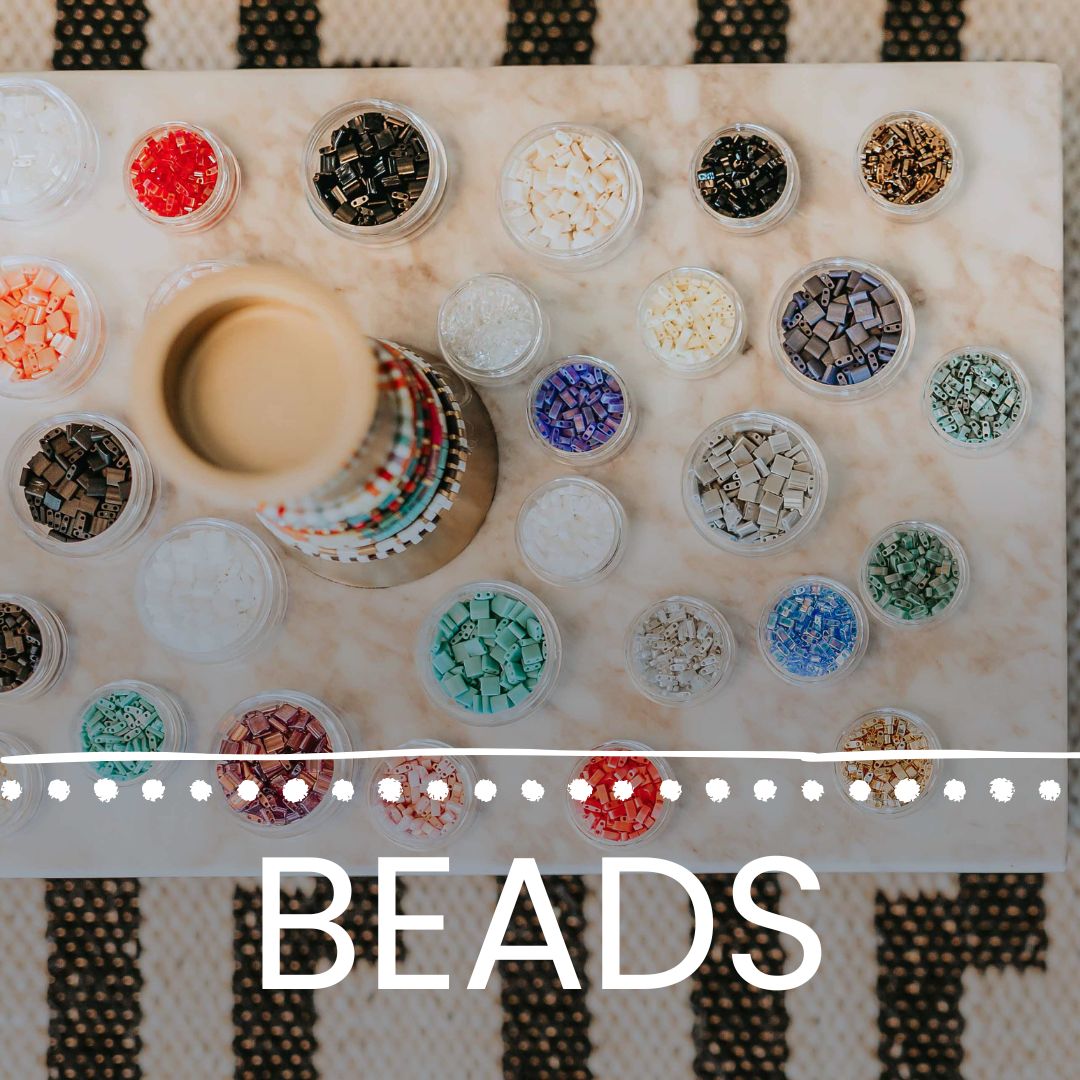
Skip trying to match the two types exactly. Forcing an exact color match usually looks flatter than letting them coordinate loosely: a terracotta heishi base with gunmetal Tila clusters, or sage heishi with gold-finish Tila accents, reads as deliberate. Fire Mountain Gems notes Tila beads come in dozens of finishes, from matte to metallic and AB coatings, made for exactly this kind of accent work. See their full Tila bead finish range here.
How Do You Handle Sizing and Hole Compatibility When Mixing Shapes?
Tila beads have two 0.8mm holes side by side, while most heishi beads have one center hole around 0.7mm to 1mm depending on material. For a single-strand stretch bracelet, use just one of the Tila bead's two holes and stay consistent through the whole piece so the flat faces all sit the same direction. The unused hole doesn't affect strength; it's part of the bead's original two-hole design for bead weaving.
Cord gauge matters more here than in an all-heishi bracelet. A 0.5mm to 0.6mm elastic cord threads snugly through both bead types, which keeps the Tila beads from wobbling out of alignment as you wear it. Beadaholique's cuff bracelet tutorial notes that Tila beads hold their orientation best on cord with little extra play. Read their full Tila bead-weaving guide.
Measure your wrist and add 0.5 to 1 inch as usual, but check the fit again once your Tila clusters are strung. Flat beads sit a bit stiffer than rounded ones, so the fit can shift slightly once those sections are in.
Step-by-Step: How Do You Build the Stack?
Step 1: Pick Your Ratio and Cut Cord
Decide your heishi-to-Tila split (70/30 heishi-heavy is easiest). Measure your wrist, add 0.5 to 1 inch, then cut elastic cord 8-10 inches longer than that for knot slack.
Step 2: Lay Out the Pattern
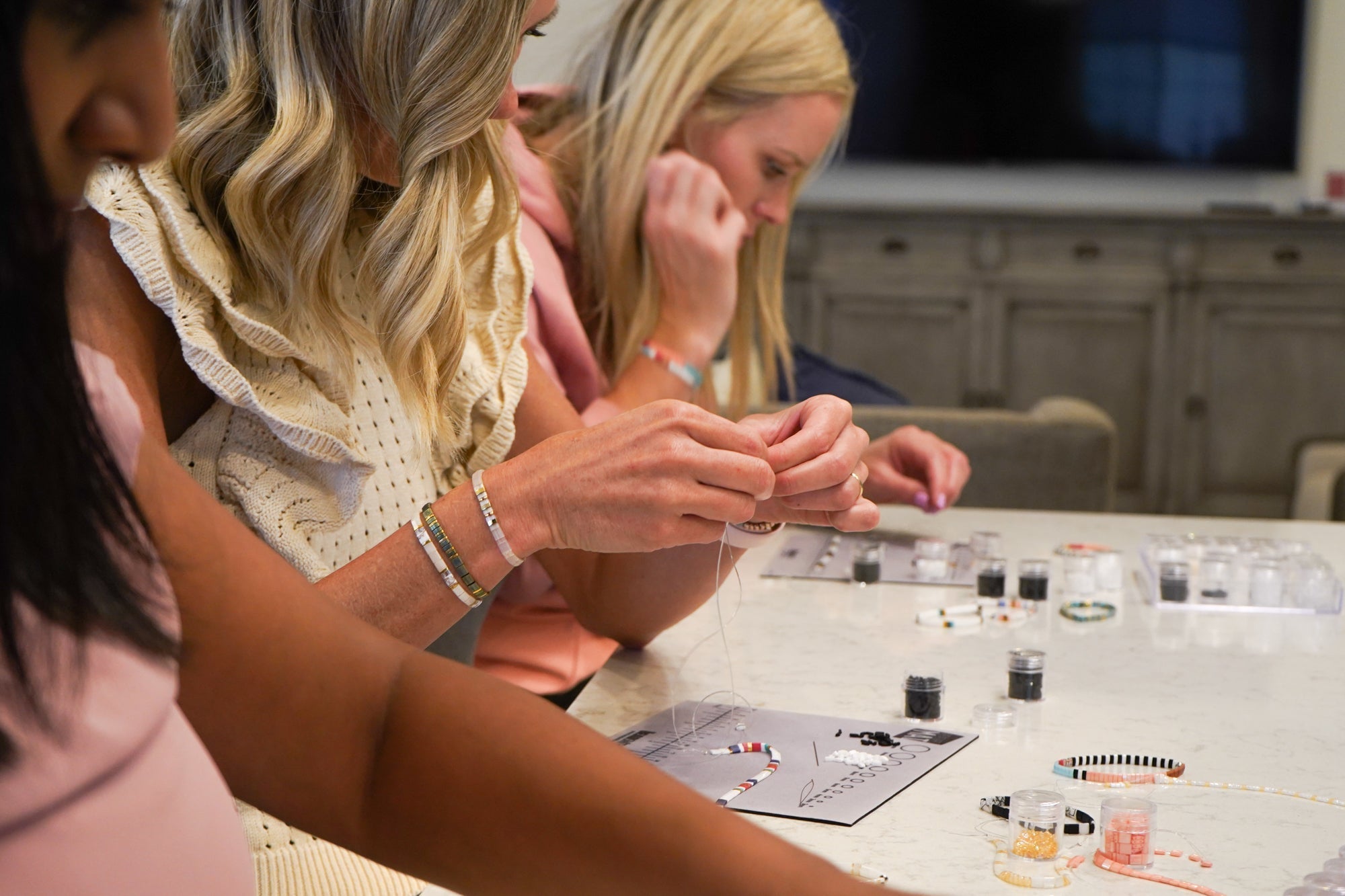
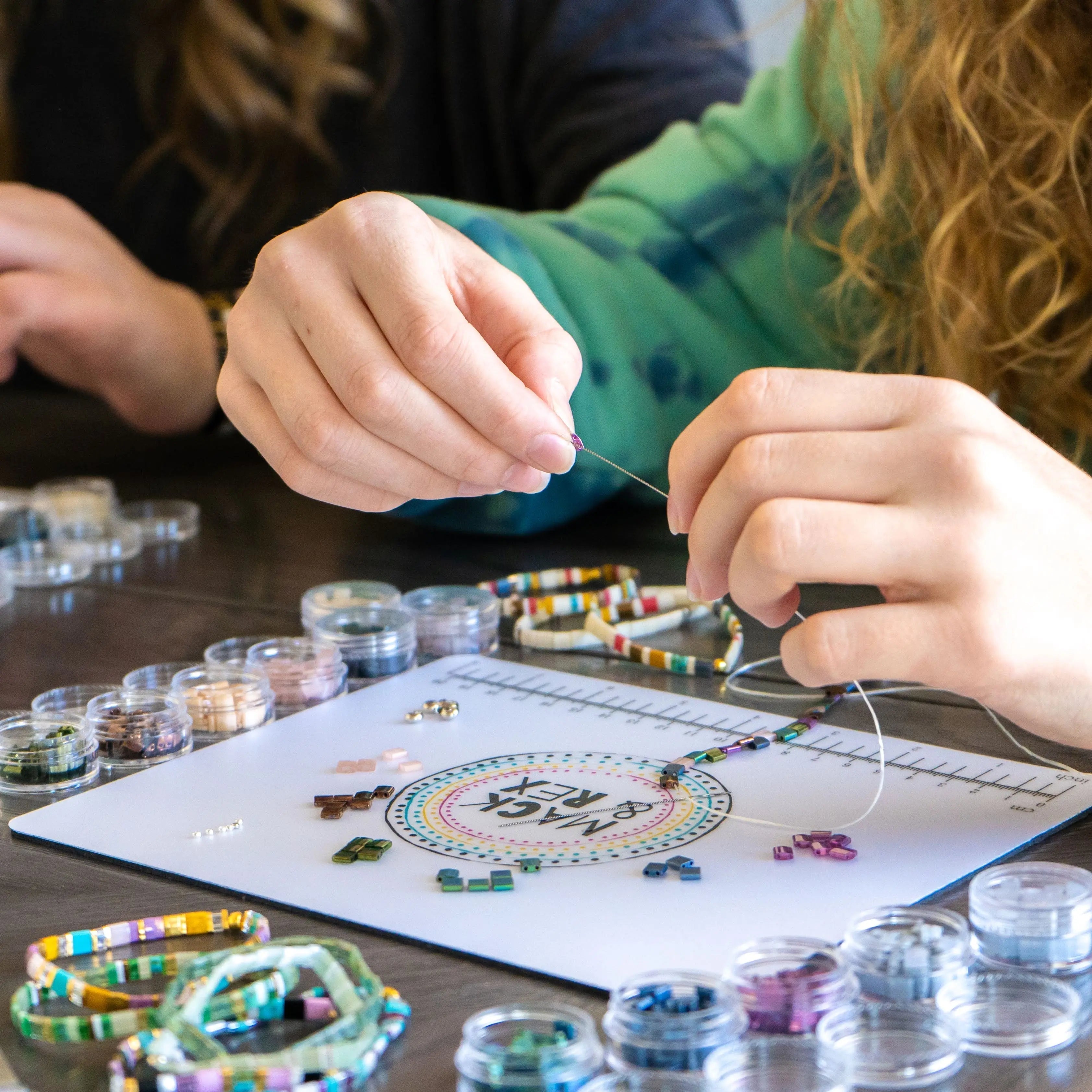
Arrange the whole sequence on a bead tray first. Group Tila beads in clusters of 2-4 rather than spacing single beads one at a time.
Step 3: String Heishi, Then Each Tila Cluster
Thread the longer heishi stretches first; they stack face to face on their own. Pick up each Tila bead through the same hole, same orientation, every time, so the flat faces line up evenly.
Step 4: Recheck the Fit
Wrap the strand loosely around your wrist before knotting. Add or remove a bead if the Tila sections changed the feel of the fit.
Step 5: Knot and Finish
Tie a surgeon's knot, double it, and tuck it into a nearby heishi hole to hide it. Trim the tails and add a small drop of glue for daily wear.
What Layout Patterns Work Best for Texture Contrast?
Three layouts work well for a first mixed stack. A banded pattern (heishi, Tila cluster, heishi, Tila cluster, repeating evenly) is the most balanced. A single focal cluster (one longer run of 5-6 Tila beads on one side, heishi filling the rest) reads more like a statement piece. A two-strand stack, one strand of heishi next to a second strand made mostly of Tila, sidesteps the sizing question entirely and lets you adjust the mix by adding or removing a strand. Whichever you choose, keep the color story to two or three shades total.
Frequently Asked Questions About Combining Heishi and Tila Beads
Can you string heishi and Tila beads on the same cord?
Yes, on standard 0.5mm-0.6mm elastic cord. Heishi beads usually have one center hole, while Tila beads have two parallel holes, but a single-strand stretch bracelet only needs one of the Tila bead's two holes. The second hole stays empty, which is normal.
What's a good ratio of heishi to Tila beads in one bracelet?
A 70/30 or 75/25 split, mostly heishi with Tila worked in as accent clusters, is the most forgiving starting point. It keeps the flexible feel of heishi while letting the flat Tila beads catch light as a highlight.
Do heishi and Tila beads need to match in color?
No. Share one color between both bead types, then let one carry a bolder secondary accent, like a metallic or AB-finish Tila cluster against neutral stone heishi.
Will mixing bead shapes affect how the bracelet fits?
Slightly. Tila beads sit stiffer against the wrist than rounded heishi discs, so a bracelet with several Tila clusters can feel a touch less flexible. Recheck fit after adding those sections.
Can kids help make a mixed heishi and Tila bracelet?
Older kids, generally 8 and up, can help lay out the pattern and string beads with an adult nearby. Both bead types are small parts and a choking hazard for children under 3, so keep loose beads away from toddlers and have an adult handle knotting and glue.
Texture contrast sells this stack. Once you've got the ratio and hole orientation down, mixing heishi and Tila becomes just another color combination to play with.
Want a head start on the Tila side? Browse Mack & Rex Tila beads for finishes that pair well with a heishi base. Free shipping on US orders over $100; buy 3 finished bracelets, get a 4th free, no code needed.