

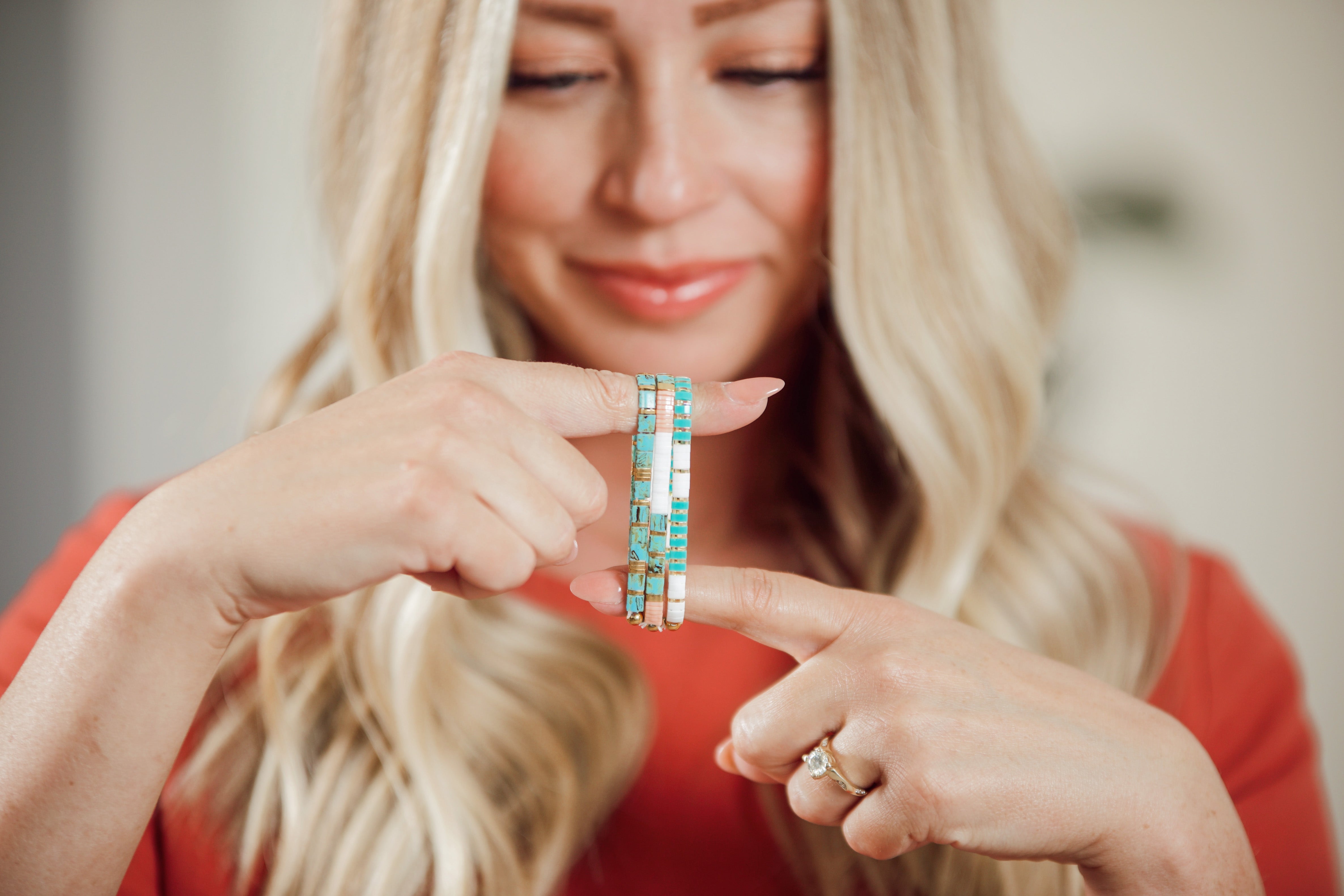
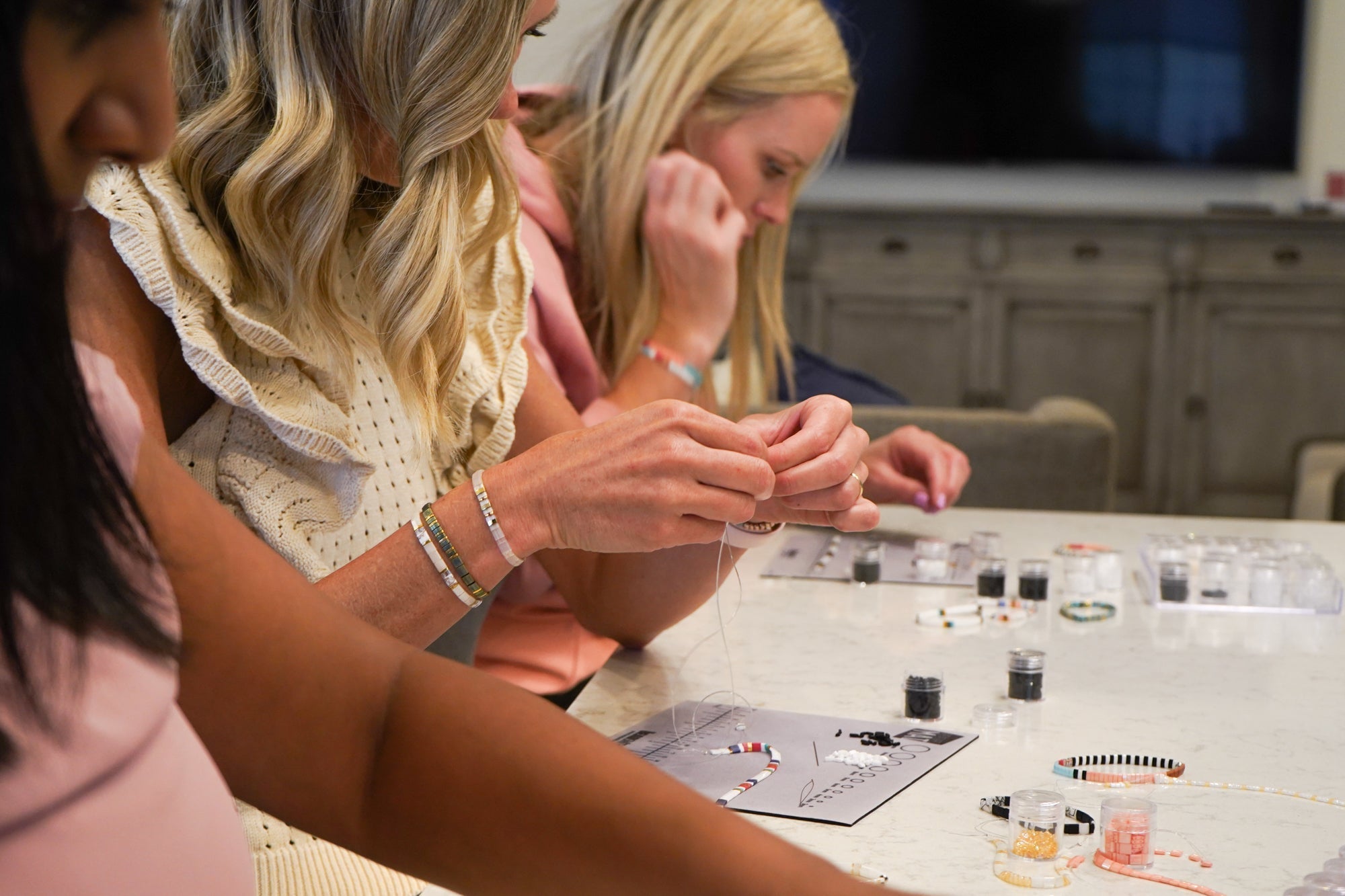


How to Fix a Broken or Stretched-Out Beaded Bracelet at Home
How do you fix a broken or stretched-out beaded bracelet?
Cut off the old elastic, save the beads, and restring them on fresh elastic beading cord tied with a surgeon's knot. Most stretch bracelets fail because the cord wears out, not because the beads do, so a $6 roll of cord and 15 minutes usually gets a favorite bracelet back on your wrist.
This works whether the bracelet snapped clean in half or just stopped snapping back after months of wear. Either way, the beads are typically fine. It's the elastic that gave out.
What do you need before you start?
Not much. This is a kitchen-table repair, not a jewelry-bench project.
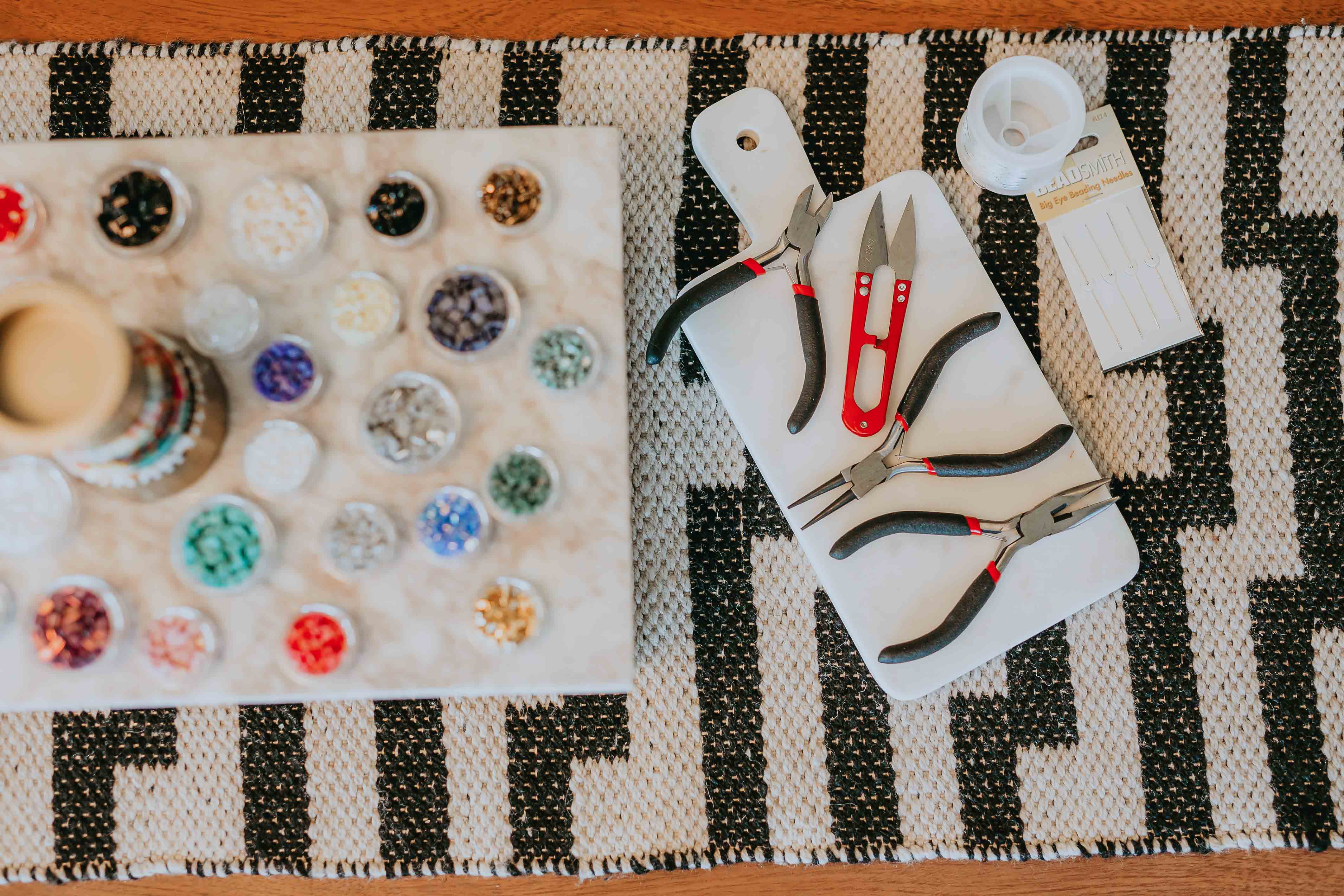
- Elastic beading cord in a weight that matches your bead holes (more on picking the right one below)
- Small scissors to cut the old cord and trim the new one
- A shallow tray or bowl so the beads don't roll off the table and disappear into the carpet
- Jewelry glue or clear nail polish (optional, but it makes the knot more secure)
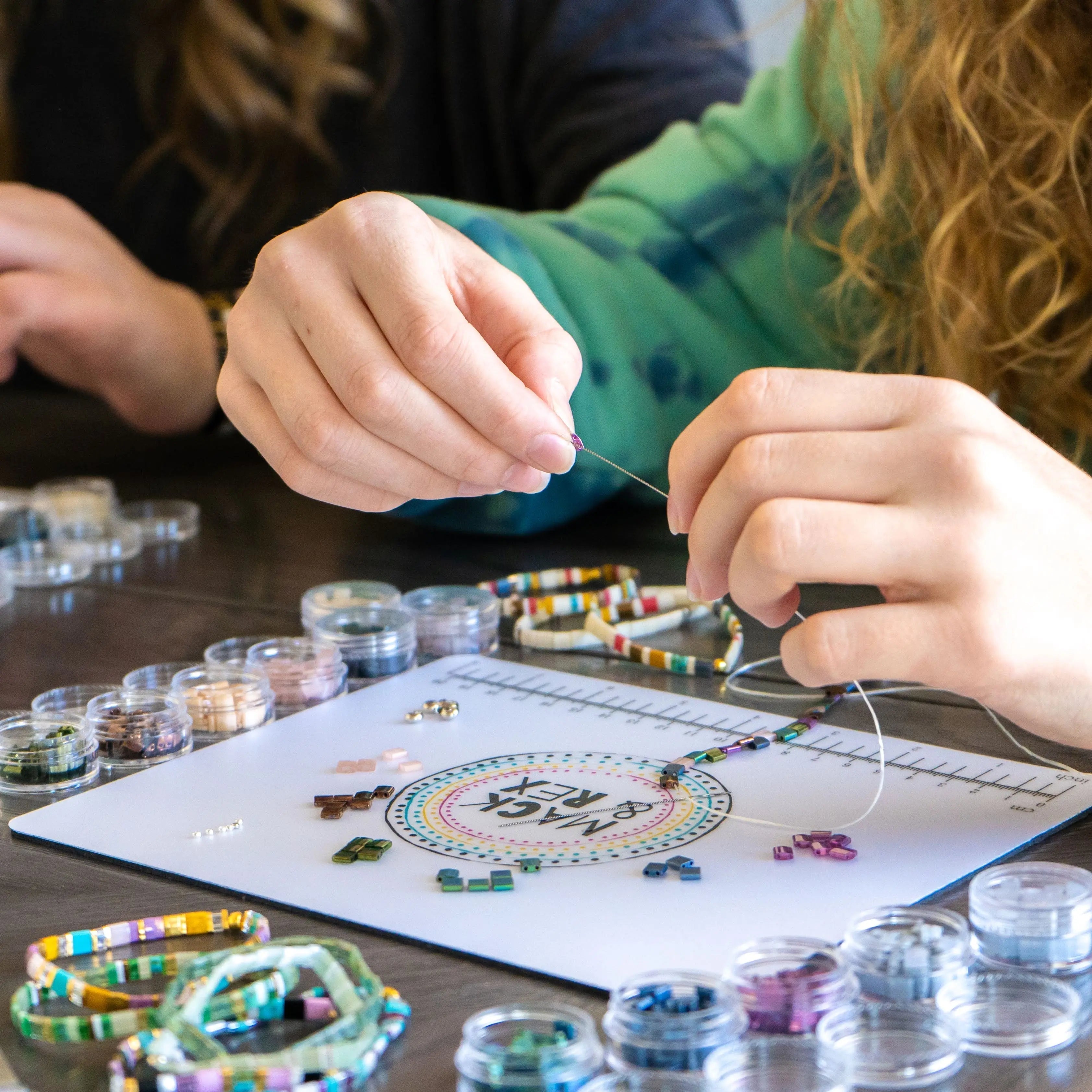
Mack & Rex stocks Miyuki's elastic beading cord in two weights at the seed bead and supplies collection, made in Japan and sold by the roll. It's the same style of cord used in Mack & Rex's own bracelet kits, so it's a safe match if you're not sure what your original bracelet was strung on.
One safety note if kids are helping: loose beads are a choking hazard for young children. Keep an eye on little hands during any step that involves beads scattered on a tray, and don't let this turn into unsupervised playtime with small parts.
How do you restring a snapped stretch bracelet, step by step?
Five steps, start to finish, in about 15 minutes.
- Collect the beads and check the cord. Slide the beads off the broken or stretched cord into your tray, then cut off and toss what's left of the old elastic. Give each bead a quick look for cracks or sharp edges before you reuse it.
- Cut a new length of elastic beading cord. Add 3 to 4 inches to your finished bracelet size. That extra length gives you enough slack to tie a real knot instead of fumbling with a cord that's too short to work with.
- Restring the beads in their original order. Thread them back on in the same sequence they came off, so a focal bead or color pattern lands back where it belongs.
- Tie a surgeon's knot. Cross the right end over the left and pull through twice, then cross left over right and pull through once. Snug it down against the beads before letting go, since elastic wants to spring back the second you release tension.
- Test the stretch and trim the tails. Slip the bracelet over your hand to check both fit and knot strength under a real stretch. If it holds, add a dot of jewelry glue for extra insurance, let it dry, then trim the tails and tuck the knot into the nearest bead so it disappears.
Skip the glue if you want, but it's the step that separates a knot that holds for a week from one that holds for a year. Tejas Beads has a solid visual walkthrough of the surgeon's knot itself if you want to see the wraps up close: How to Tie a Stretchy Bracelet Using a Surgeon's Knot.
How do you know which elastic cord weight to use for the repair?
Let the bead hole decide. Thread your new cord through one bead before you commit to the whole bracelet.
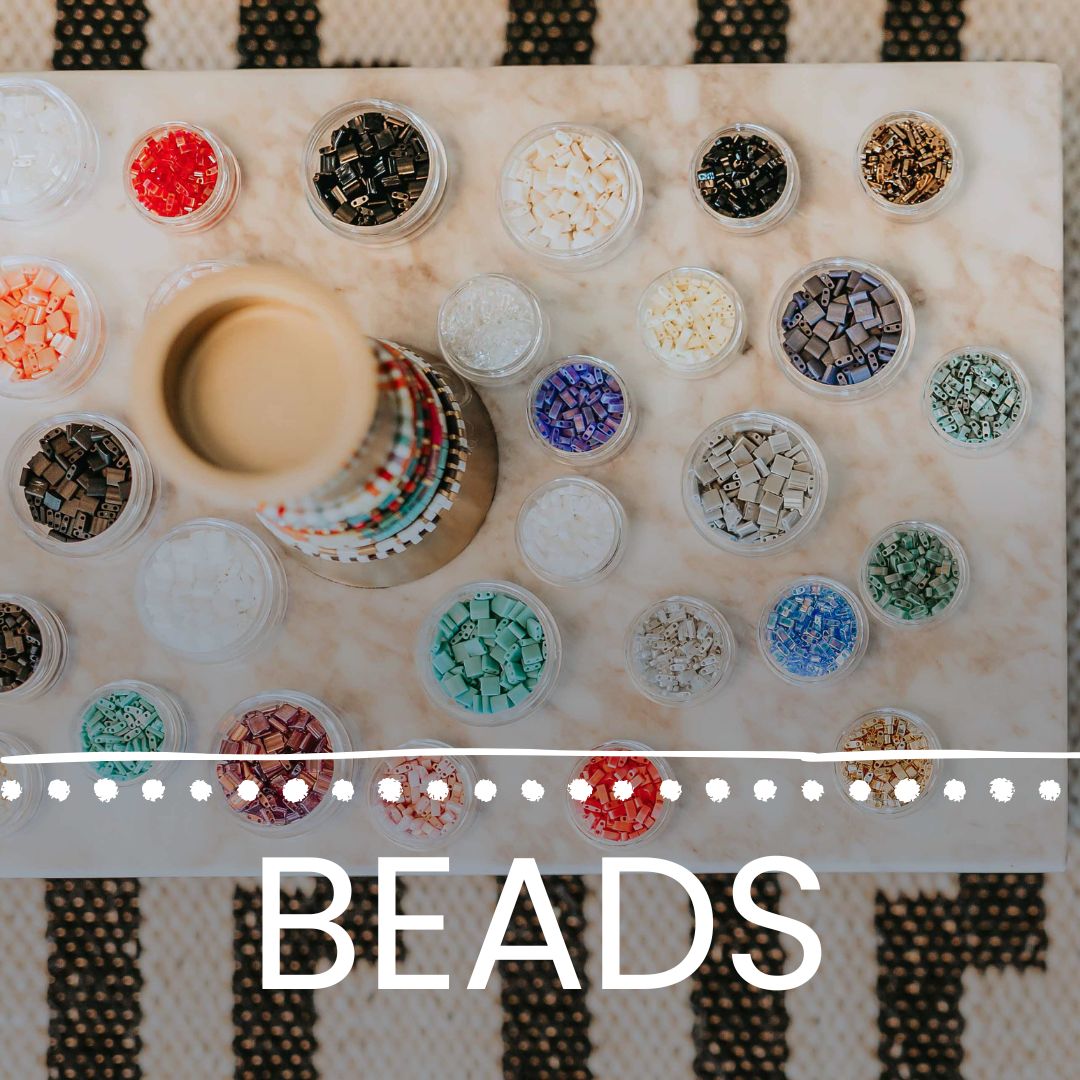
A 0.3-0.5mm cord suits small seed beads and anything with a narrow hole, since you need room to pass the cord through twice for the knot. A 0.6-0.8mm cord is the better call for Tila beads and most standard glass beads, it's thick enough to resist fraying but still slides through cleanly. If the cord barely fits through the hole once, size down. If it moves around loosely with visible gaps, size up.
Cutout+Keep's guide to the surgeon's knot on stretch bracelets covers a few variations on tying tension that are worth a look if your first knot feels loose: How to Tie a Surgeon's Knot on a Stretch Bracelet.
When is it worth restringing vs. starting over with a new kit?
Restring when the beads are intact. Replace when they're not.
If the beads are chipped, the finish is worn off, or the holes have gotten so worn from years of flexing that the cord won't sit snug anymore, restringing just delays the next break. That's when a fresh kit makes more sense than fighting damaged materials. Mack & Rex's Tila Bead Starter Kit ($189.99, makes 20 bracelets) or the Ultimate Tila Bracelet Kit ($399.99, makes 80) are worth a look if you're rebuilding more than one or two bracelets, since buying loose components one at a time adds up fast.
For a single bracelet with good beads, though, restringing is the cheaper and faster fix almost every time. A roll of elastic cord runs a few dollars and restrings several bracelets before you run out.
How do you keep a repaired bracelet from stretching out again?
Elastic cord loses elasticity gradually. Body oils, lotion, sun exposure, and the simple friction of sliding a bracelet on and off wear it down over months, even with a perfect knot. Elastomer materials in general degrade with repeated stretching and environmental exposure, which is why even a well-made stretch bracelet has a natural lifespan rather than lasting forever (background on how elastomers age: Wikipedia's overview of elastomers).
A few habits stretch that lifespan:
- Take bracelets off before swimming, showering, or applying lotion, since moisture and oils break down elastic faster
- Store bracelets flat or hanging, not balled up in a jewelry box where they get compressed at the knot
- Don't force a bracelet on if it feels tight. Stretching it hard and often speeds up wear
Even with good care, plan on restringing a favorite bracelet every so often. A repair brings a loved bracelet back into rotation, and it'll hold up to normal wear again, but it's not a permanent fix. Treat it the same way you would a well-worn pair of shoes: good for another solid stretch, not guaranteed forever.
Frequently Asked Questions
Can I fix a stretched-out bracelet without replacing all the beads?
Yes, in most cases. Stretching almost always comes from the elastic cord losing its snap, not the beads wearing out. Cut off the old cord, save the beads, and restring them on fresh elastic beading cord. Replace the beads only if they're chipped, cracked, or the holes have worn ragged.
What size elastic cord should I use to restring a bracelet?
Match the cord to the bead hole. A 0.3-0.5mm cord works for small seed beads with narrow holes, while 0.6-0.8mm suits Tila beads and most standard glass beads. Thread the cord through a bead twice before committing. Size down if it barely fits, size up if it's loose.
How long does elastic beading cord last before it needs replacing?
Most stretch bracelets hold up for months of regular wear, but the cord loses elasticity over time from stretching, body oils, and sun exposure. If a bracelet feels loose, hangs low on the wrist, or the cord looks dull and thin near the knot, restring it rather than waiting for it to snap.
Is it cheaper to repair a bracelet or buy a new one?
Repairing is almost always cheaper when the beads are still good. A roll of elastic beading cord costs a few dollars and restrings several bracelets, compared to roughly $20 to $25 for a new finished bracelet. If the beads are damaged, a new bracelet or fresh kit is the simpler route.
What's the best knot for elastic cord repairs?
A surgeon's knot. It wraps the cord through twice on the first pass, which grips elastic far better than a basic overhand or square knot. A plain knot on stretchy cord tends to slip loose after repeated wear, which is a common reason a freshly repaired bracelet fails again within days.
Ready to restring? Mack & Rex carries Miyuki elastic beading cord in both weights, plus the full range of Miyuki seed and Tila beads, at the seed bead and supplies collection. Orders over $100 ship free within the US. And if the beads didn't survive the break, browse Mack & Rex's bracelet-making kits for a fresh start.