




How to Fix a Broken Tila Bead Bracelet
Why Did My Tila Bead Bracelet Break?
Nine times out of ten, it's the elastic, not the beads. Crystal cord stretches every time you pull a bracelet over your hand, and that stretching wears down the material until it finally gives out, usually at the knot where the tension is highest. The beads themselves are Japanese glass and hold up fine; they just need a fresh cord to sit on.
I've had customers write in convinced their bracelet was defective after it snapped from daily wear. It wasn't. Stretch elastic is a wear item, like the elastic in a waistband. Lotion, sanitizer, chlorine, and the mechanical stress of sliding it on and off all shorten its life. A bracelet worn every day, gym included, will need a restring eventually, and that's normal, not a flaw.
Should You Repair It or Remake It?
Look at the broken ends first. A clean snap with elastic that still looks clear and stretchy on both sides means a simple restring will do the job. If the cord looks cloudy, feels stiff, or has frayed in more than one spot, don't bother salvaging it. Cut a new length and start fresh.
Check the beads while you're at it. Tila beads are sturdy, but a hard drop or a tight tug can crack one, especially near the holes. A cracked bead has sharp edges that will chew through your new cord in weeks, so pull any damaged ones and set them aside rather than re-using them.
Quick assessment checklist
- Cord snapped in one place, otherwise clear and springy: repair it.
- Cord cloudy, stiff, or broken in multiple spots: replace the whole length.
- Any bead chipped or cracked near a hole: pull it, don't restring it.
- Losing beads or the pattern feels loose all over: the elastic has lost its stretch; retire it and cut new cord.
What Do You Need to Fix a Broken Tila Bracelet?
Not much. This is a kitchen-table fix, not a project.
- The tila beads from your broken bracelet (or a fresh set if any cracked)
- Crystal or stretch elastic cord, 0.7mm to 1mm
- Scissors
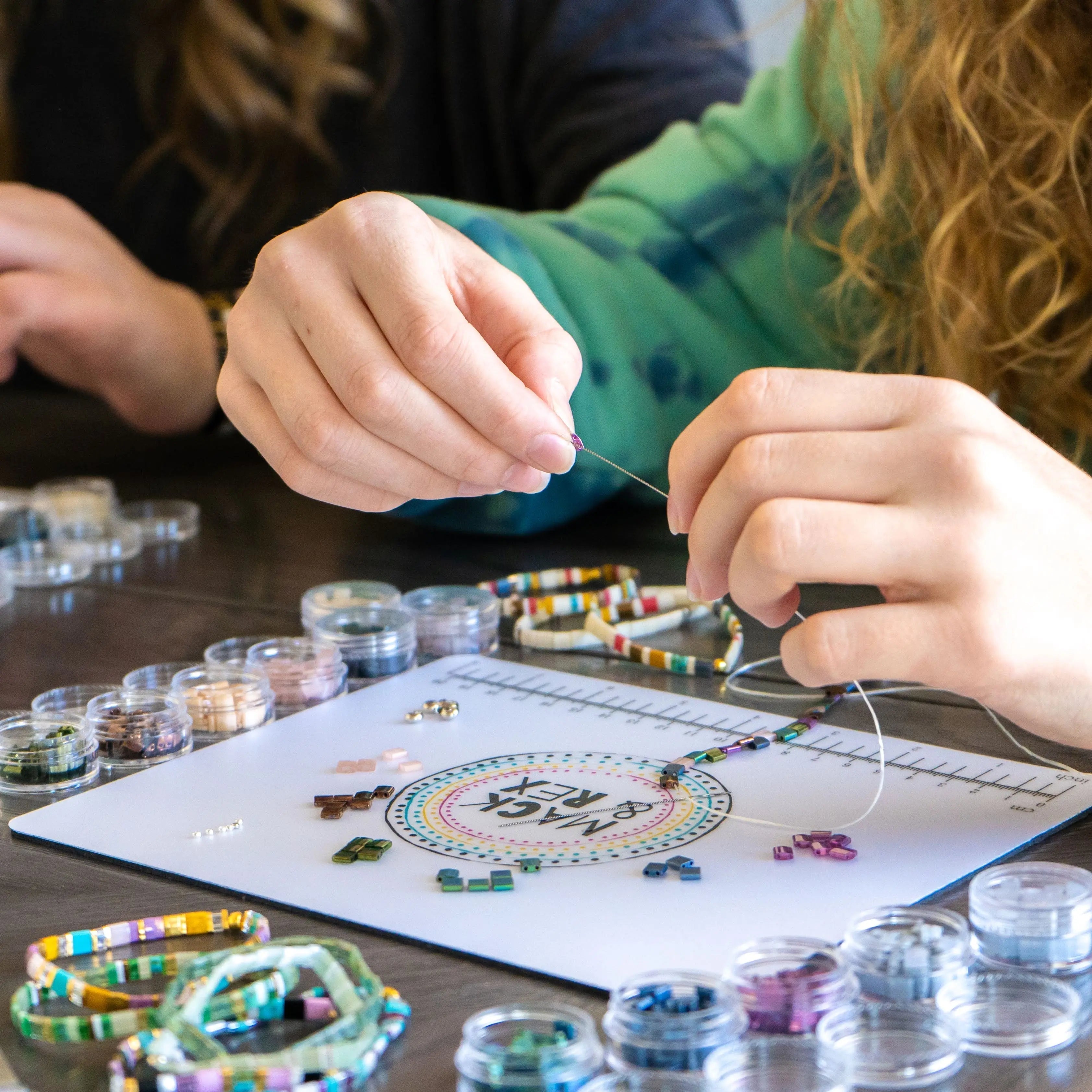
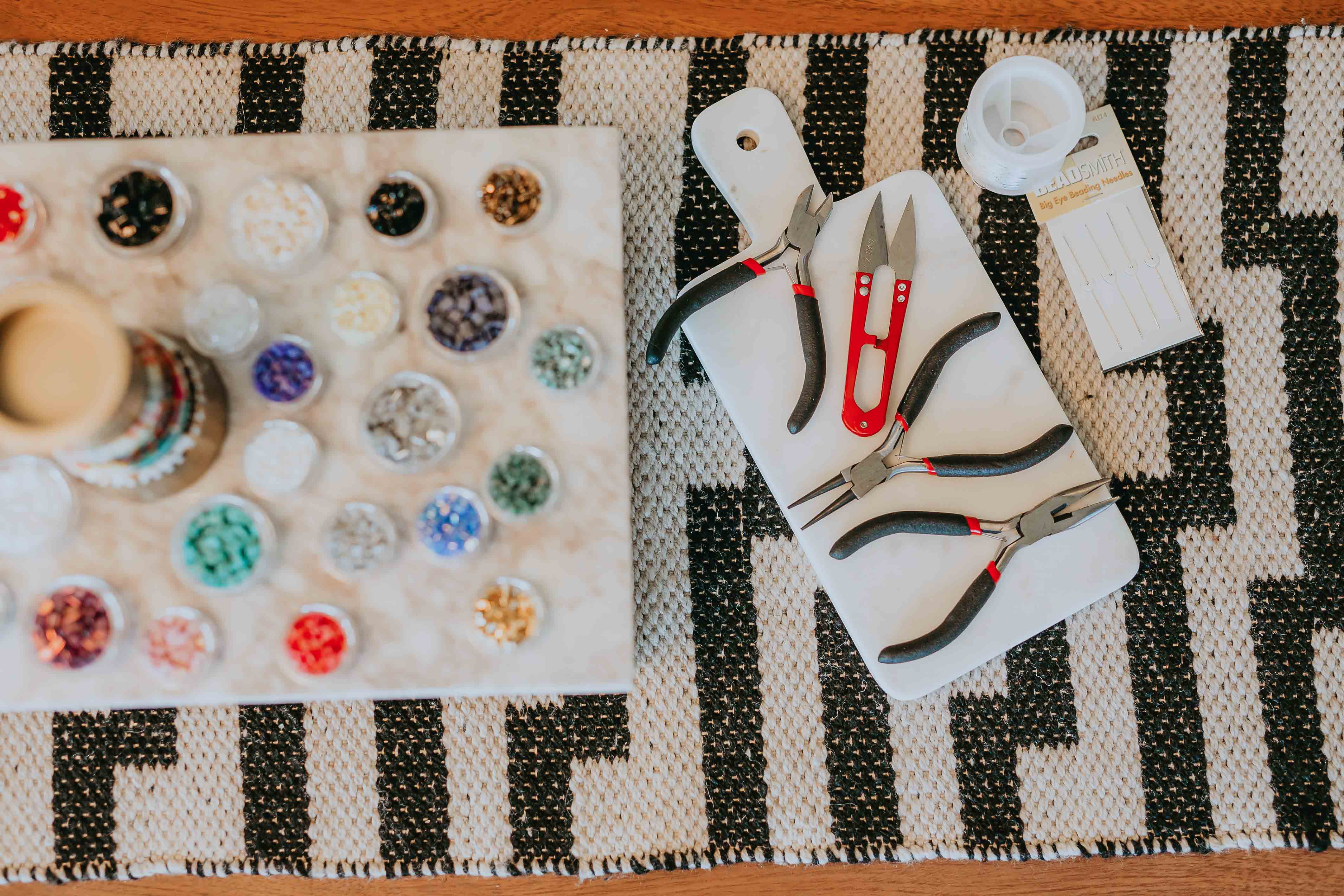
- A bead mat or shallow tray so nothing rolls off the table
- Clear nail polish or jewelry glue for the knot
- Tweezers, if your fingers are bigger than the bead holes
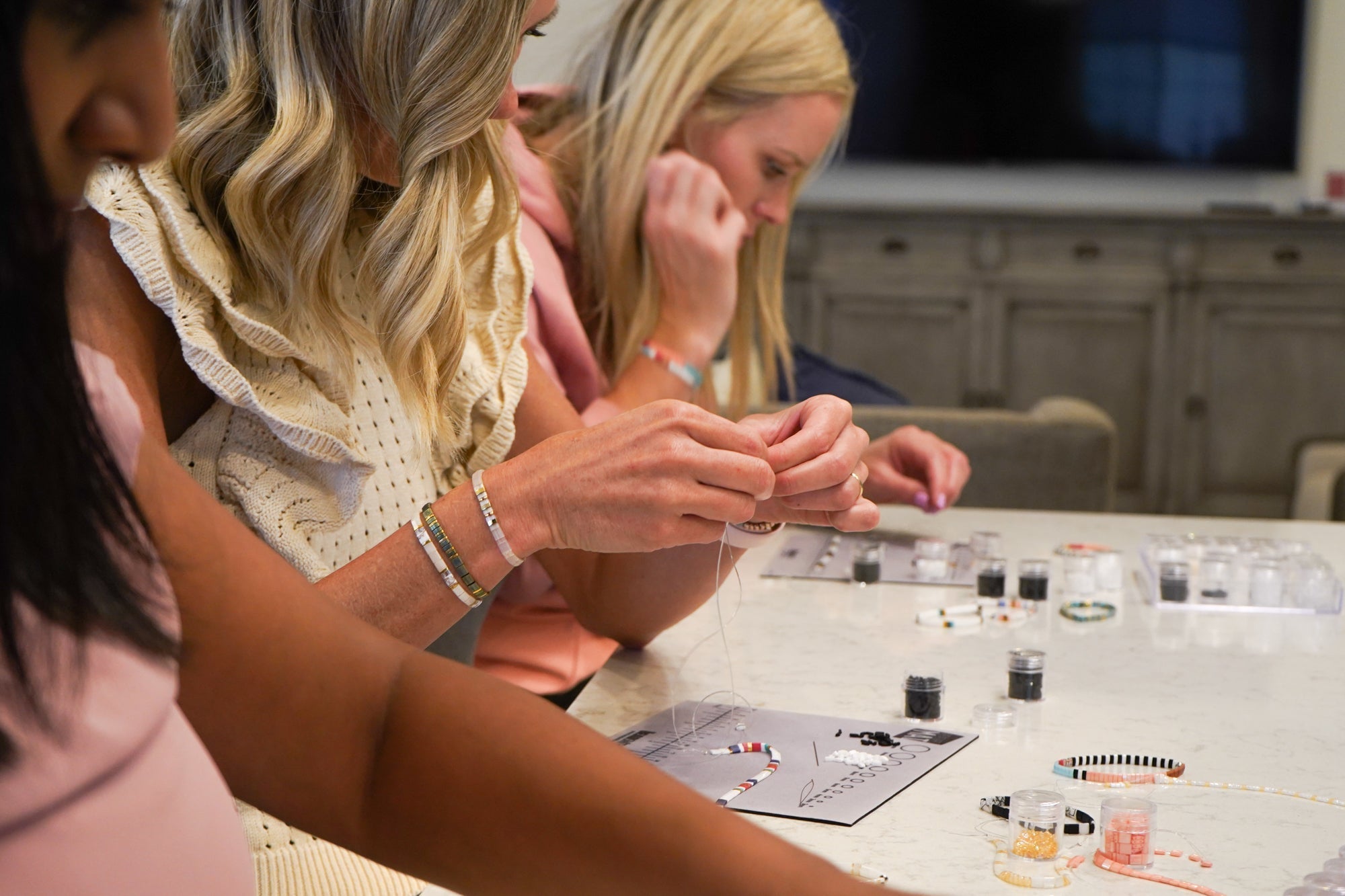
Mack & Rex bracelets are strung on crystal-cord elastic, and if you don't have a spare length at home, a bracelet-making kit comes with enough cord and beads to restring several pieces, which is handy if this isn't the first bracelet in the house that's about to need it.
How Do You Re-Thread the Two-Hole Tila Pattern?
Tila beads have two parallel holes, and the pattern usually alternates which hole the cord passes through from bead to bead. Before you pull the old cord out completely, take thirty seconds to look at how the beads sit, front-facing side up, and note the direction if you can. It saves guesswork later.
- Slide the beads off the broken cord in order, letting them fall onto your tray so the sequence stays roughly intact.
- Cut new elastic about 3 to 4 inches longer than your wrist size, more if this is your first restring and you want room for error.
- Start the pattern by threading the cord through the first hole of your first bead, leaving a short tail to tie off later.
- Continue the over-under sequence: pass through the second hole of the next bead, then the first hole of the one after that, keeping the same alternating pattern the original bracelet used.
- Check tension as you go. The beads should sit snug against each other without the cord bunching or the beads gapping.
- Finish the row and hold the two ends up to your wrist to confirm the fit before tying anything off.
Two-hole beads look fussy at first glance, but the pattern repeats, so once you've done four or five beads your hands find the rhythm on their own.
How Do You Tie a Knot That Won't Slip?
This is where most home repairs fail, honestly, not the threading. A basic overhand knot can work itself loose after a few wears, especially on crystal cord, which is smoother than the old-style elastic string.
Tie a double knot, or better, a surgeon's knot: cross the ends and pull through twice instead of once before finishing the second half of the knot. A surgeon's knot adds friction that keeps it from loosening under tension, which is exactly the kind of repeated pull a stretch bracelet gets every time it goes on or off a wrist. Pull it tight, then tug the whole bracelet in a few directions to test it before you trim anything.
Once you're happy with the hold, add a small dot of clear nail polish or jewelry glue right on the knot. Let it dry fully, then trim the tails close to the nearest bead. Skip trimming too close, or you risk the knot working itself back through the bead hole over time.
How Do You Keep a Beaded Bracelet from Rolling Off the Table Mid-Repair?
Small beads have a way of vanishing the second they leave the tray. Work over a bead mat, a folded towel, or a shallow bowl, something with enough texture or edge to keep beads from skating across the table. According to a Wikipedia overview of bead stringing techniques, controlling your work surface is one of the oldest tricks in the craft, going back to hand-stringers who worked with trays for exactly this reason. It's not a new problem, and it's not a hard one to solve.
If you've got kids or pets nearby, keep the repair session supervised. Loose beads are a choking hazard for small children, so this isn't a project to leave spread out on a low coffee table between steps.
When Is It Easier to Just Remake the Bracelet?
Sometimes a repair isn't worth the fuss. If more than a few beads cracked, if the cord snapped in several places, or if you're just not in the mood to hunt down a matching hole pattern bead by bead, starting over is faster and the result looks cleaner.
A Trio Kit runs $44.99 and covers three bracelets, which handles this repair with spare beads and cord left over for the next one that snaps. It's less fiddly than hunting down a single matching tila bead in one exact color from a half-used stash. Some people love the puzzle of it; others would rather just cut fresh cord and go.
Seed and tila beads are Japanese glass, made to hold their shape and color through repeated wear, so the beads themselves rarely need replacing even when a bracelet has been restrung a few times over its life. It's almost always the cord doing the work of wearing out first.
How Long Does a Bracelet Repair Take?
Fifteen to twenty minutes for a bracelet with 20 to 30 beads, once your supplies are laid out. First-timers might take closer to thirty while they get used to the two-hole pattern.
Restringing more than one bracelet at a time, say you and a kid both snapped one on the same camping trip, lay each set of beads out in its own tray first so the patterns don't get mixed up. That single step saves more frustration than any tool on this list.
Fixed and Ready to Wear Again
A snapped tila bracelet is almost never a lost cause. Check the cord, save the beads, thread the pattern back the way it was, and tie a knot that actually holds. Most repairs take less time than it took to read this post.
If your beads didn't survive the break, or you'd rather skip the troubleshooting altogether, browse Mack & Rex's bracelet-making kits for fresh tila beads and crystal cord in one box. Trio Kits run $44.99, and Mack & Rex ships internationally with shipping and any customs or duties calculated at checkout; US orders over $100 ship free. There's also a standing buy 3, get 1 free offer on finished, ready-to-wear bracelets, no code needed, handy if you'd rather retire the broken one and pick something new off the shelf.
Frequently Asked Questions
Can you fix a broken tila bead bracelet without buying new beads?
Usually, yes. Most breaks are the elastic cord failing, not the beads, so you can slide the original tila beads off the snapped cord and re-thread them onto new elastic. Check each bead for cracks first; a chipped bead should be swapped out even if the rest are fine.
What kind of elastic cord should I use to restring a tila bracelet?
A crystal or stretch elastic cord between 0.7mm and 1mm works well for tila beads, since the holes are small and a thicker cord can be tough to pass through twice. Mack & Rex bracelets are strung on crystal-cord elastic, which is a good match to replicate at home.
How do I know if my bracelet needs a full repair versus a quick knot retie?
If the elastic snapped cleanly in one spot and the rest of the cord still looks stretchy and clear, you can often just re-thread and retie it. If the cord looks cloudy, stiff, or frayed in multiple places, or beads are cracked, it's faster and more reliable to remake the bracelet with fresh cord and a kit.
Why did my tila bead bracelet break in the first place?
Elastic cord loses stretch over time from repeated wear, sun exposure, lotion and hand sanitizer, and simply being pulled on and off the wrist. Most stretch bracelets have a lifespan measured in months of regular wear rather than years, so a snap eventually is normal, not a sign anything was made wrong.
Is it cheaper to fix a tila bracelet or buy a new one?
If you already have spare elastic cord on hand, fixing is essentially free beyond a few minutes of your time. If you're starting from scratch, a Trio Kit from Mack & Rex costs $44.99 and includes enough supplies for three bracelets, which covers a repair and then some.