


How Do You Keep Heishi Bead Bracelets From Breaking?
How Do You Keep Heishi Bead Bracelets From Breaking?
Match the cord to the bead hole, size the bracelet so it stretches without being forced, tie a surgeon's knot rather than a basic overhand knot, and keep the finished piece away from heat and chlorine. Most heishi bracelets that snap fail at one of those four points, usually the knot or an elastic that got stretched too far just to slide it on. Fix those four and a heishi bracelet will outlast the trend that made you buy it.
What's the Best Cord for Stringing Heishi Beads?
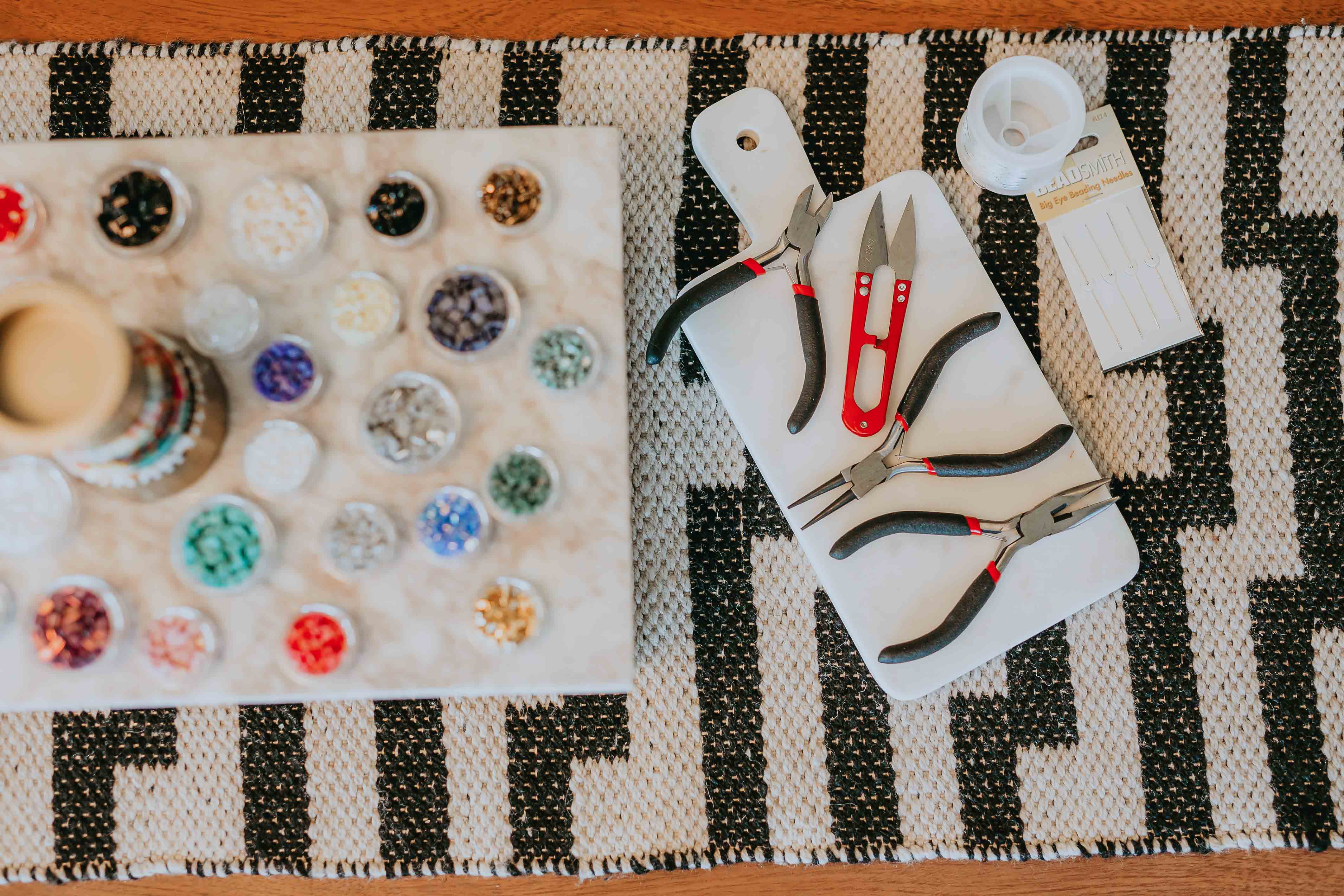
Thin, and matched to the hole. Heishi beads typically run a 2mm hole, and a stretch cord in the 0.5mm to 0.8mm range passes through cleanly on both the stringing side and the knot side without binding or fraying against the inside of the bead. Go too thick and you'll fight the holes on every single bead. Go too thin and the cord wears through faster where it rubs against the sharp inner edge of a disc-shaped bead.
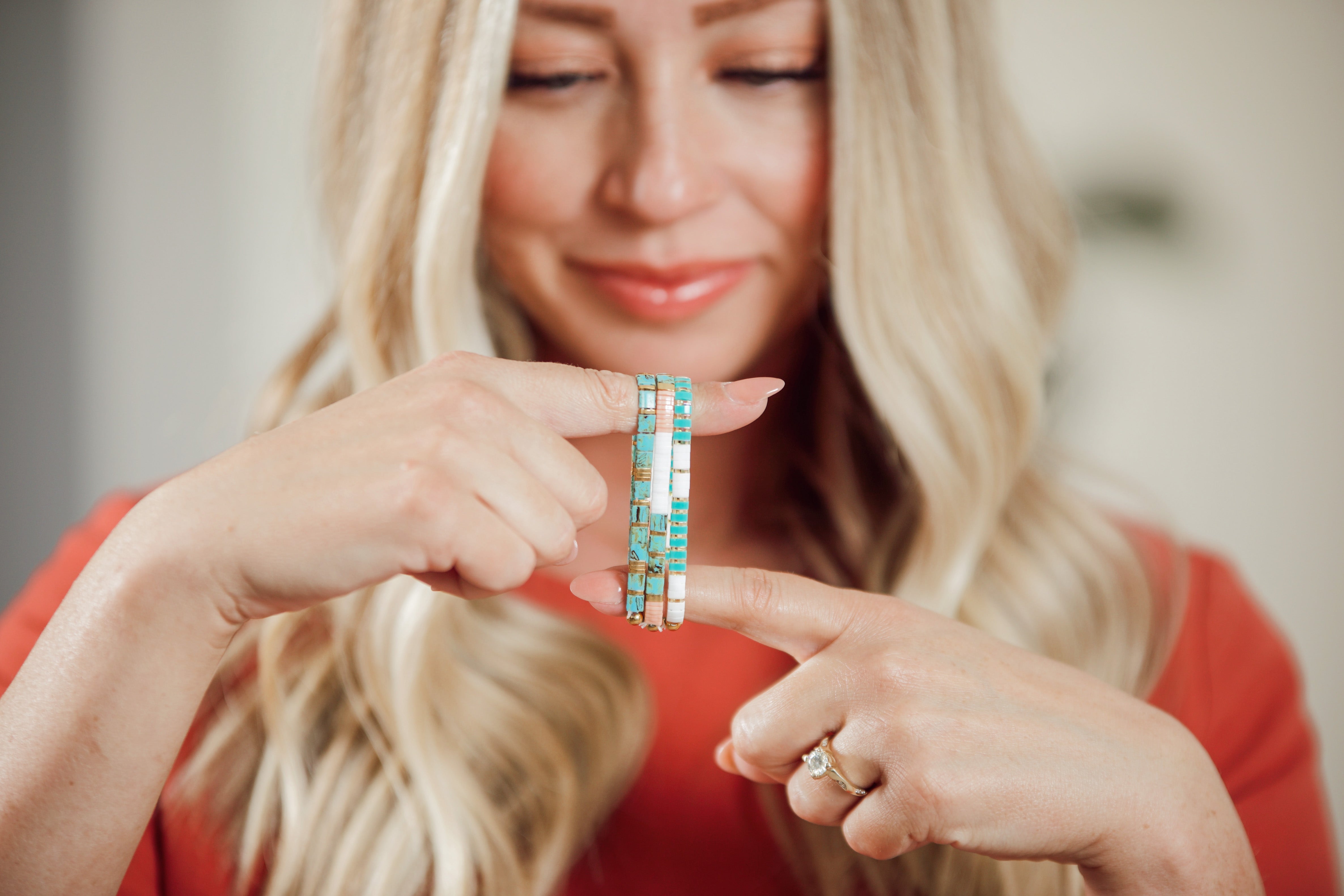
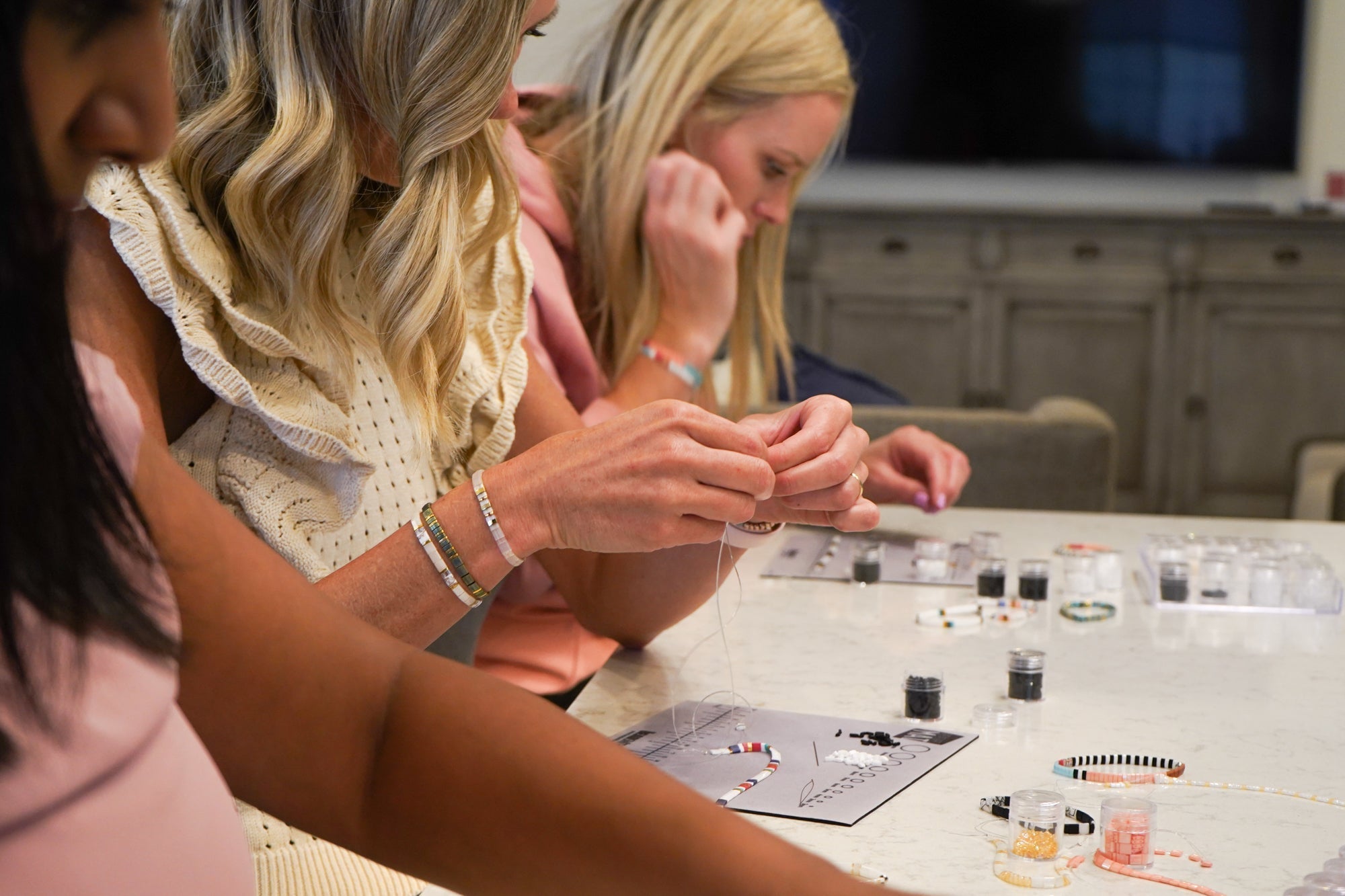
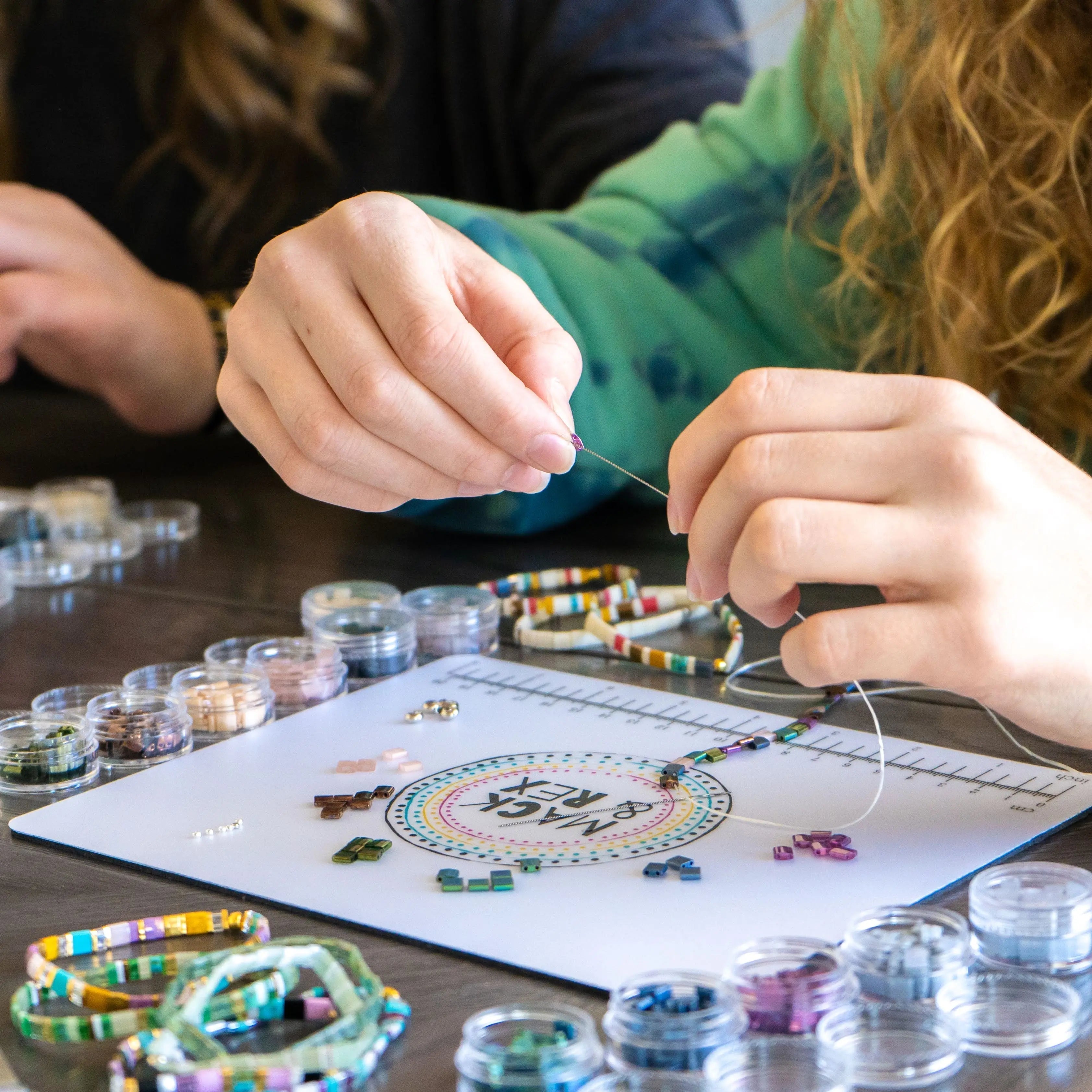
Mack & Rex strings its own stretch bracelets on crystal-cord elastic for exactly this reason: it holds its shape under daily wear without going limp after a season. One customer who's bought four of our bracelets put it plainly in a review: "I wear it daily. The elastic has not stretched out and the tiles are as beautiful as the day I got it." That's the standard worth stringing a heishi bracelet to, whether you buy it finished or make it yourself with loose beads from our heishi beads collection.
How Tight Should a Heishi Bracelet Fit So the Elastic Doesn't Snap?
Snug at rest, with about an inch of give. A heishi bracelet should sit close to the wrist when it's just hanging there, then stretch roughly an inch to slide over your hand. If you have to wrestle it on, the cord is too short for your wrist and you're pushing it past its safe stretch range every single time you put it on. That's the single biggest reason stretch bracelets snap, not bad cord.
Measure your wrist with a soft tape or a strip of paper, then add the ease you actually want (loose and swingy versus snug and still) before you cut your cord length. General stretch-bracelet tutorials walk through this same wrist-plus-ease math step by step, including wikiHow's guide to making a stretchy beaded bracelet. Mack & Rex sizes its finished bracelets XXS through 5XL for this same reason: a bracelet built for the wrong wrist stretches too far on every wear and wears out fast, no matter how good the cord is.
What's the Strongest Knot for a Heishi Bead Bracelet?
Tie a surgeon's knot. It's a double overhand knot: wrap the cord around itself twice before pulling tight, not once. The extra wrap bites into the elastic so it can't slip loose the way a single overhand knot can under repeated stretching. Pull both ends firm to seat the knot right against the end beads so it doesn't sit loose in a gap.
A short, true thing about knots: most "the bracelet just fell apart" complaints trace back to a single overhand knot that slowly worked itself loose, not to the beads or the cord. If you've never tied one, wikiHow's step-by-step on tying a surgeon's knot covers the wrap-and-pull motion in a minute. Add a small dot of jewelry glue or clear nail polish on the knot once it's seated if you want extra insurance, then trim the tails close once the glue sets.
How Should You Store Heishi Bracelets So They Don't Crack or Snap?
Lay them flat, out of direct sun. Heat and UV break down stretch cord faster than everyday wear does, so a bracelet left on a sunny windowsill or in a hot car ages months in a single afternoon. Polymer clay and shell heishi beads hold up fine in normal conditions, but the elastic underneath them is the part that actually degrades.
Chlorine and salt water are the other culprits. Pull heishi bracelets off before the pool or the ocean, since both break down stretch cord over repeated exposure, and store a few bracelets loose in a small dish or tin rather than balled up in a drawer where the cord gets twisted and stressed at the same point every time.
When Should You Restring a Heishi Bead Bracelet?
Watch for three signs: gaps opening up between beads, a cord that looks cloudy or starts fraying, and elastic that doesn't snap back the way it used to after a stretch. For a bracelet worn most days, that's typically somewhere between six months and two years, depending on how often it gets wet, how tight it's sized, and how much sun it sees.
Don't wait for the actual snap. Once you spot gaps or a cord that feels less springy, restring with fresh elastic using the same beads rather than waiting for it to fail on your wrist, usually mid-handshake. Heishi beads themselves rarely wear out; they're the part of the bracelet built to last, going back to beads first chipped and drilled by hand long before anyone strung them on elastic, as Wikipedia's entry on heishe beads notes. The cord is almost always the weak link, which is good news: it's the cheap, fast part to fix.
Ready to String a Heishi Bracelet That Actually Lasts?
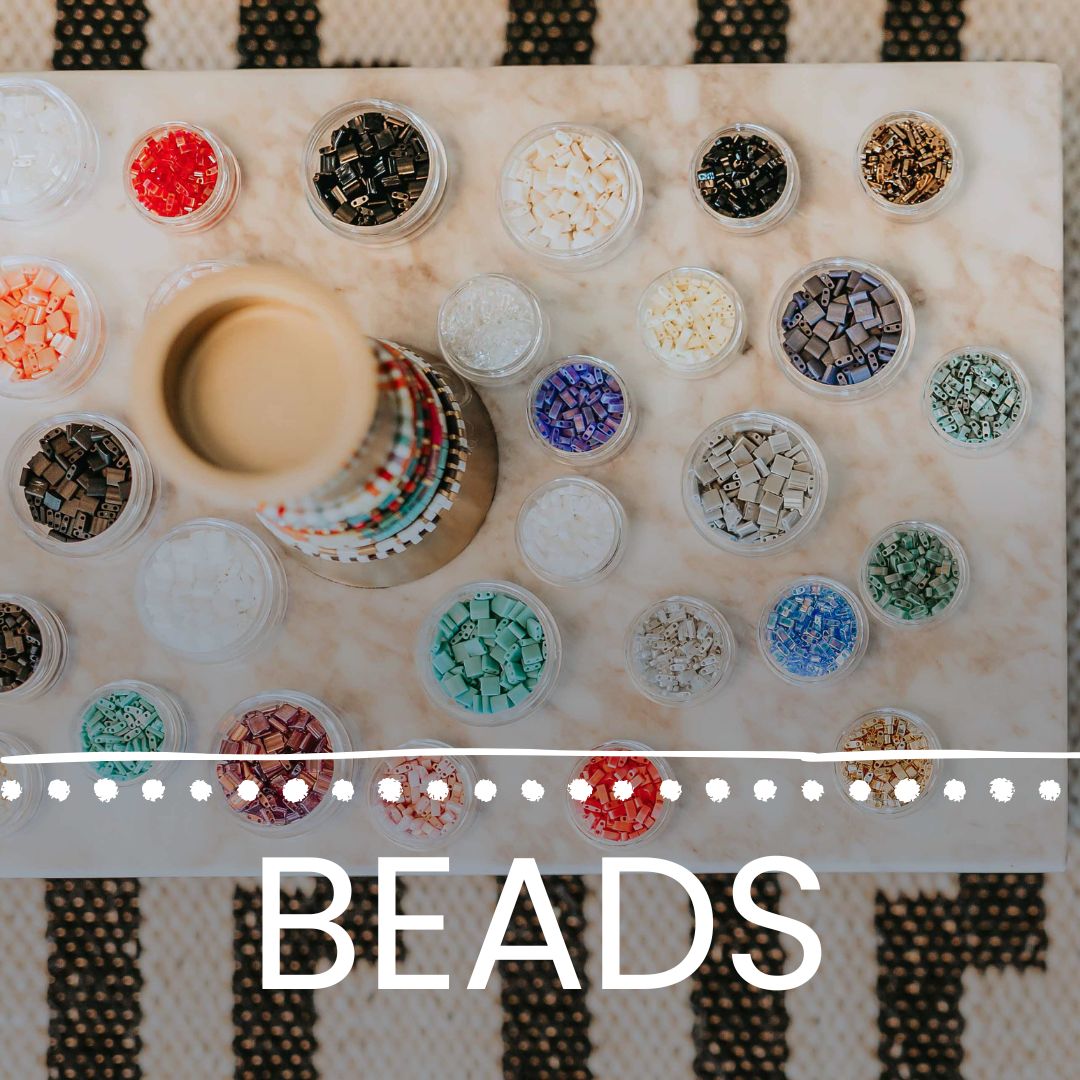
Start with beads that have a clean, consistent 2mm hole so your cord doesn't fight every piece on the strand, then size it to your wrist and tie a surgeon's knot before you call it done. Browse Mack & Rex's heishi beads collection for strands in colors that actually match, and pair them with a stretch cord sized to the hole rather than whatever happens to be in the craft drawer. Get the cord, the sizing, and the knot right once, and you won't be restringing again for a long while.
Frequently Asked Questions
How do you keep heishi bead bracelets from breaking?
Match the cord to the bead hole, size the bracelet so it stretches without being forced, tie a surgeon's knot rather than a basic overhand knot, and keep the finished piece away from heat and chlorine. Most heishi bracelets that snap fail at one of those four points, usually the knot or an elastic that was stretched too far to get on.
What's the best cord for stringing heishi beads?
A stretch cord in the 0.5mm to 0.8mm range works well for heishi beads with a standard 2mm hole, since it needs to pass through twice (once on the way in, once back through on the knot side) without binding. Mack & Rex uses crystal-cord elastic in its own stretch bracelets for this reason: it holds its stretch over daily wear without going slack after a few months.
How tight should a heishi bracelet fit so the elastic doesn't snap?
A heishi bracelet should sit snug against the wrist at rest and stretch about an inch to slide over the hand, not more. If you have to yank it hard to get it on, the cord is sized too small and is being pushed past its safe stretch range every time you wear it, which is the single biggest cause of snapped elastic.
What's the strongest knot for a heishi bead bracelet?
A surgeon's knot, which is a double overhand knot, holds stretch cord far better than a single knot because the extra wrap keeps the elastic from sliding loose under tension. Tie it, pull both ends firmly to seat it against the end beads, and add a small dot of jewelry glue if you want extra insurance.
How often should you restring a heishi bead bracelet?
Restring as soon as you see gaps between beads, a cloudy or fraying cord, or elastic that no longer snaps back after a stretch, which for a daily-worn piece is usually somewhere between six months and two years. Don't wait for it to actually snap on your wrist.