


How to Layer Tila Bead Bracelets with Your Everyday Jewelry
How do you layer tila bracelets without the stack looking overdone?
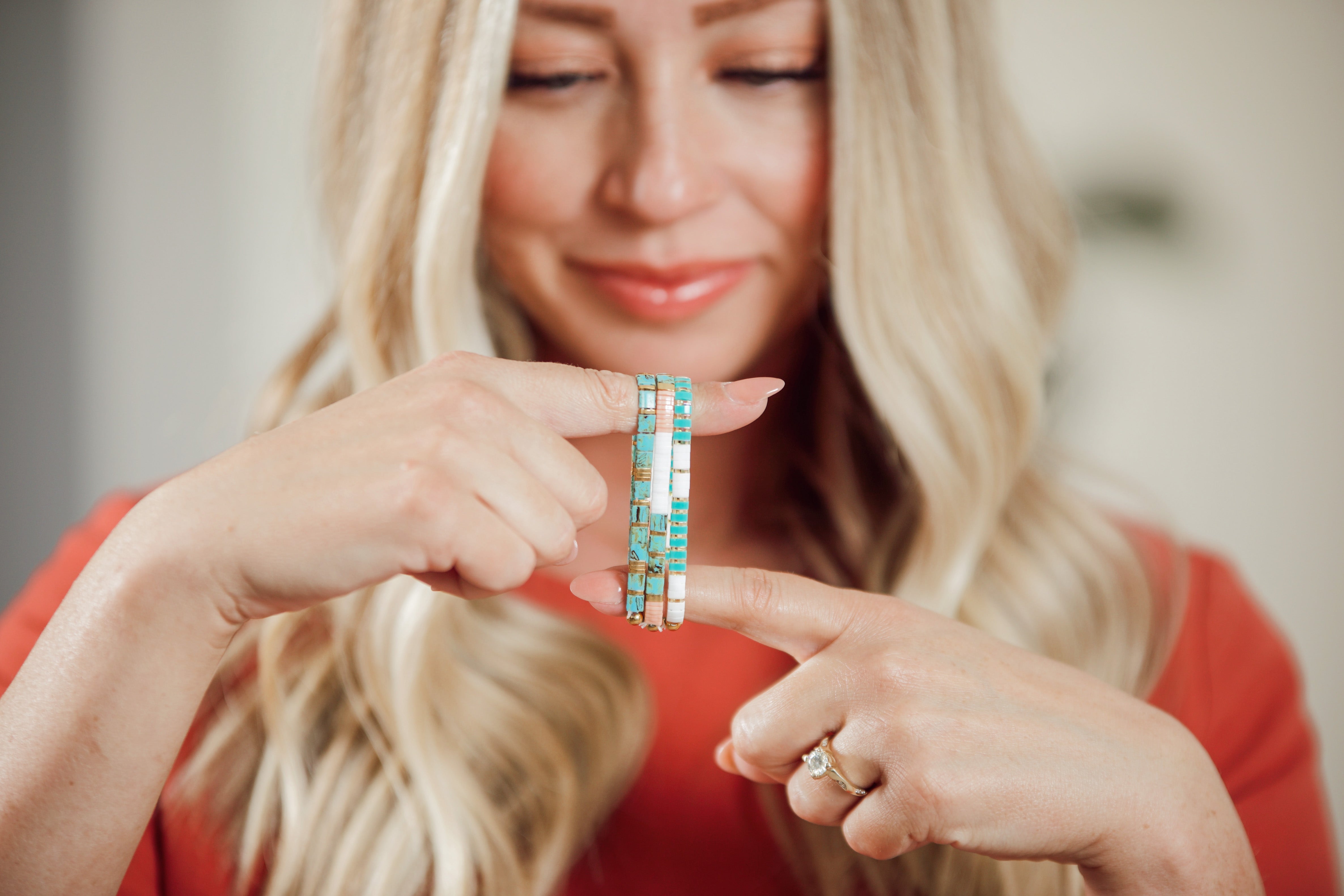
The trick is proportion and a clear anchor piece. Start with your most structured piece, a watch, a wide bangle, or a tennis bracelet, and build outward with tila bracelets that complement rather than mirror it. Tila bracelets, made with flat rectangular Miyuki glass beads, sit naturally flush against round and chain styles, so they fill gaps without adding visual clutter. Keep the total count to three or four pieces for everyday wear, and you'll have a stack that looks intentional every time.
What is the best anchor piece to build a tila bracelet stack around?
Pick the widest or heaviest piece you're already wearing and call it the anchor. A leather-strap or metal watch is the most common starting point. It sets the scale for everything else on the wrist.
Once you've got an anchor, add one or two tila bracelets right next to it. The flat bead profile means they sit close without stacking out awkwardly. If your anchor is a chunky gold bangle, a tila bracelet in a warm neutral, think matte cream or amber-toned Miyuki glass, sits right alongside it without fighting for space. If the anchor is a slim silver watch, a cool-toned or metallic tila bracelet picks up the hardware finish and ties the look together.
For everything past the anchor, scale down. A thin chain bracelet or a dainty tennis bracelet on the far side of the stack keeps the eye moving without overwhelming the wrist. Bracelets have been used as stacked adornment across cultures for centuries. The visual principle is the same today: contrast in width and texture makes each piece readable.
How do you mix metals when layering tila bracelets?
Mixed metals work. The only rule worth following: pick one dominant tone and let the other appear as an accent.
Say your watch is gold-toned. Wear two tila bracelets with warm finishes, a metallic gold colorway or even a picasso-finish bead with earthy browns, then let a single silver chain bracelet slip in as a contrast accent. The silver doesn't clash; it lifts the whole stack because it catches the light differently. Going the other direction works equally well. A silver watch pairs cleanly with cool-toned tila bracelets in grey, navy, or icy white glass, and a single gold bangle at the edge of the stack adds warmth without looking mismatched.
Tila beads come in metallic-lined and luster finishes that naturally bridge both tones, which makes mixing metals easier with this bead style than with most.
How do you balance proportion and scale when stacking bracelets?
Vary the width at every slot in the stack. Wide anchor, medium tila bracelet, thin chain. That three-beat rhythm reads as styled rather than random.
A single-strand tila bracelet is typically 6-8 mm wide, which puts it squarely in the middle tier of most stacks. That size plays well above a 20 mm watch face and below a 2 mm tennis bracelet. When you want more visual weight in the tila layer, wear two tila bracelets side by side rather than swapping them out for a chunky bangle. The flat bead construction keeps the silhouette clean even with multiples.
Wrist balance matters too. Most people wear heavier pieces near the wrist bone and go lighter toward the hand. Anchor your watch or bangle there, then let the tila bracelets and thinner chains cascade outward. The stack should taper rather than pile up randomly.
Jewelry-making resources like Beadaholique's techniques guides note that flat tile-style beads layer particularly well because they don't add height to a stack the way round beads do. That's an important consideration if you want a stack that feels comfortable under a shirt cuff.
How do you match tila bracelet colors to jewelry you already own?
Lay your jewelry flat on a table and look at what tones repeat. Most people default to one metal family without realizing it, and that's your guide.
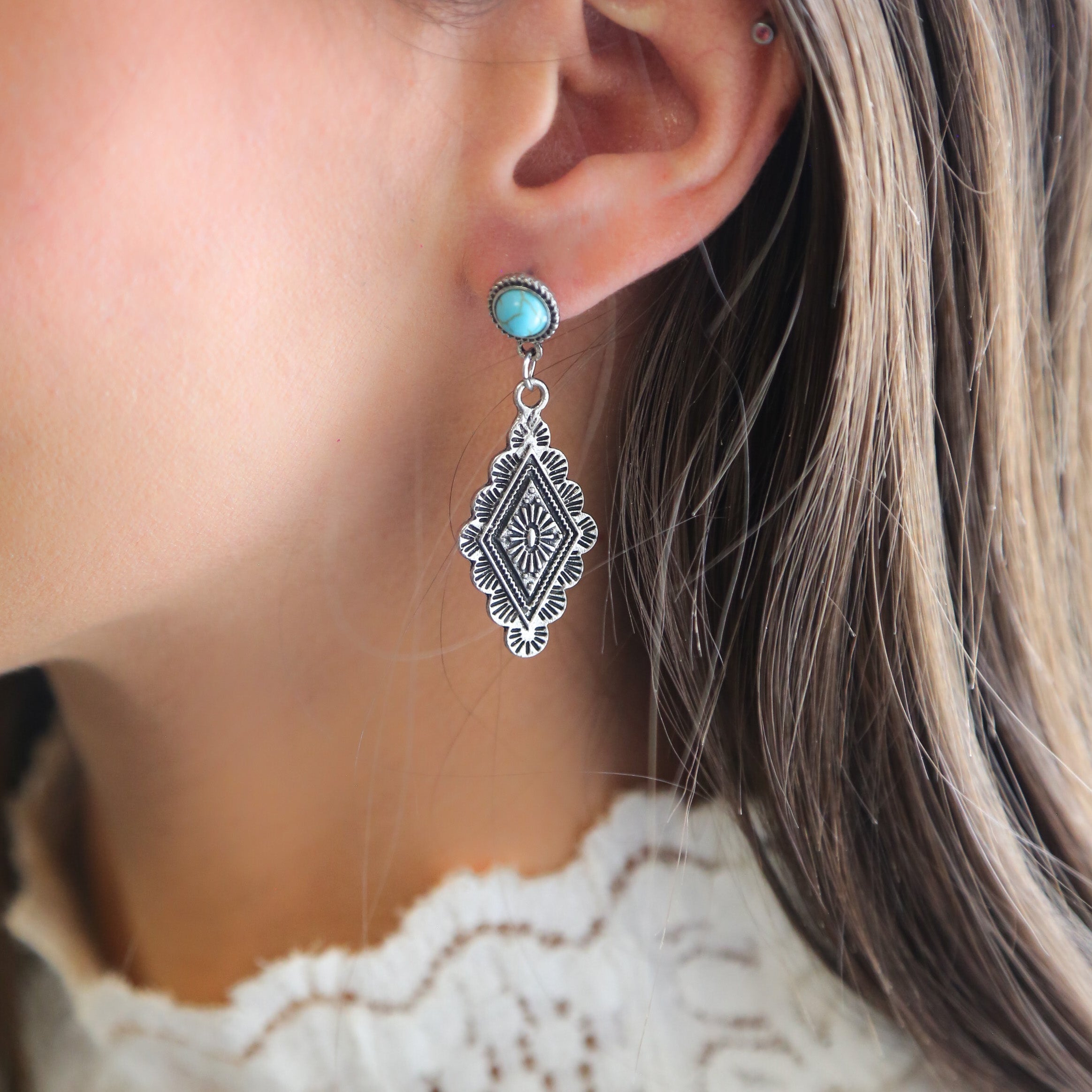
Beyond metal, look at stones or enamel in your existing pieces. A turquoise pendant, a red enamel ring, a pearl drop earring. Any of those colors can be pulled into a tila bracelet to create a quiet echo across the whole look. Tila bead colorways are broad enough that you can usually match or complement any jewelry wardrobe.
For everyday wear, start with two or three neutral tila bracelets (white, black, gunmetal, bone) that move from outfit to outfit without thought. Then build one or two "statement" tila bracelets around a color you return to often. That's a working stack, one that actually gets worn rather than a purely photogenic one.
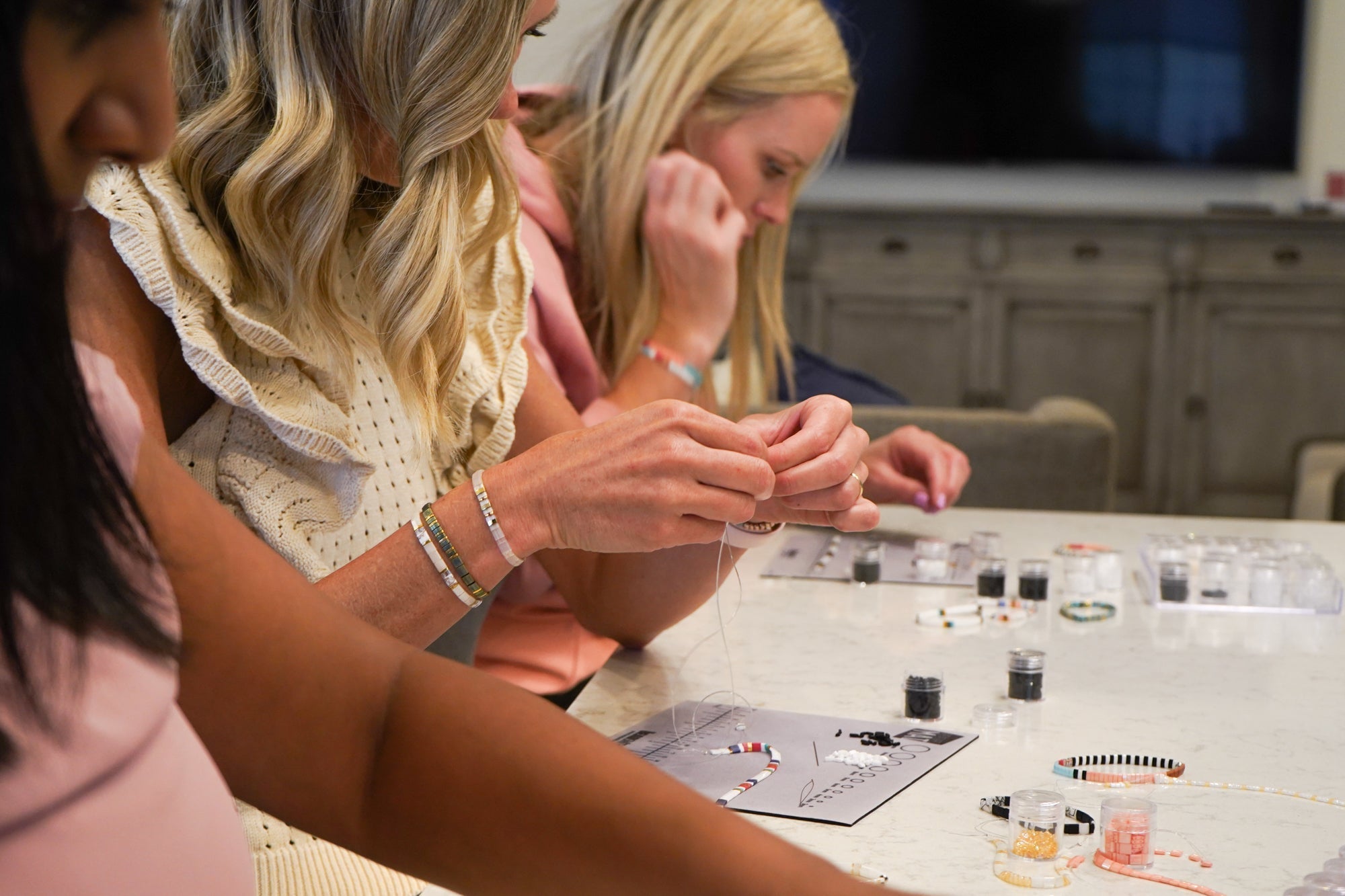
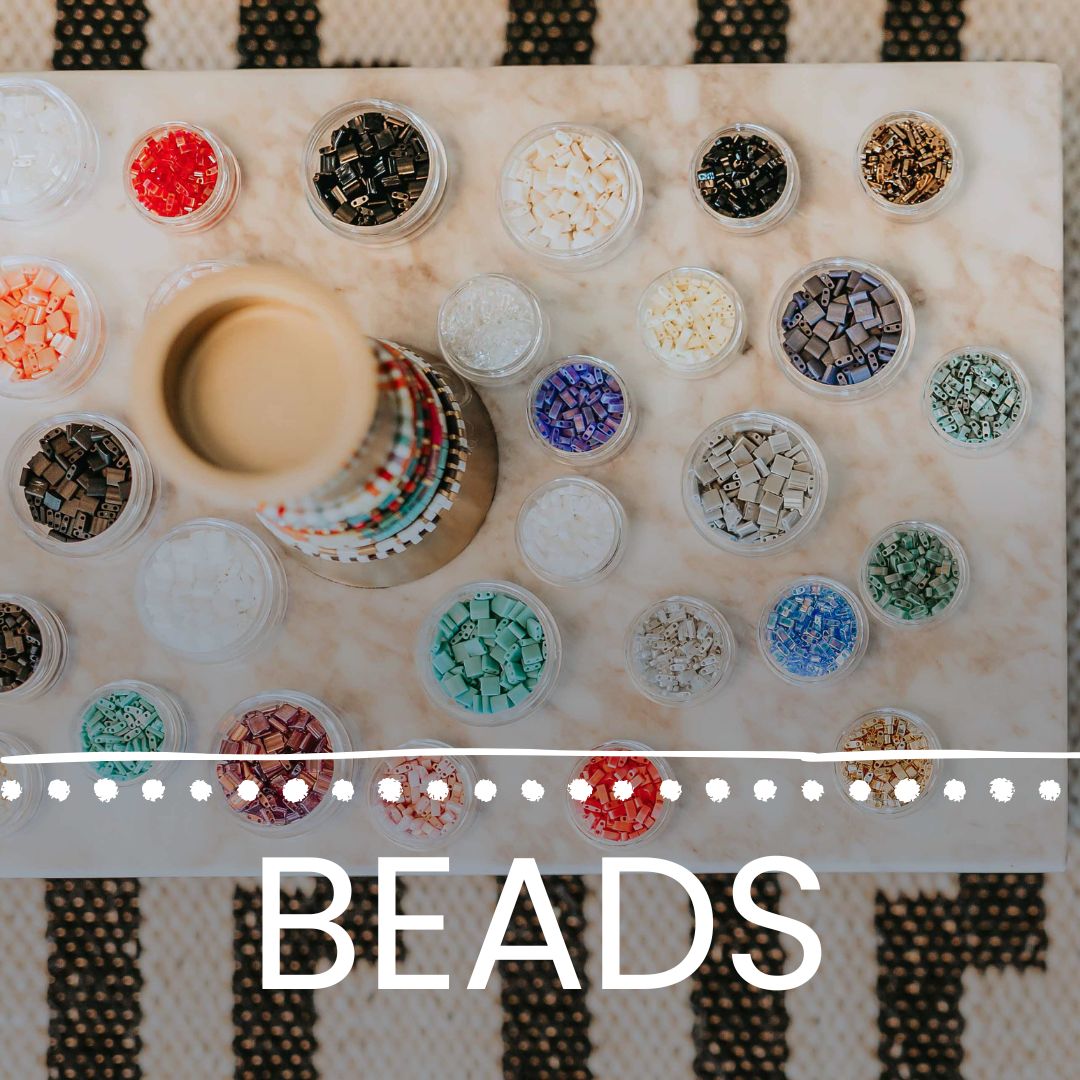
Miyuki, the Japanese manufacturer whose Tila beads Mack & Rex uses, produces these beads in over 300 colorways. Details on their bead range are on miyuki-beads.co.jp. The finished bracelets carry the same quality and color accuracy as the raw beads, with no guesswork on shade matching.
How do you dress a tila bracelet stack up or down for different occasions?
Three or four pieces is the everyday sweet spot. Fewer looks minimal; more starts to feel dressed up.
For a casual day, jeans, a T-shirt, running errands, a watch plus two tila bracelets in your everyday neutral palette does the job without feeling like effort. That's the stack you reach for without thinking.
For a night out or a dinner where your outfit has more going on, swap one neutral tila bracelet for something with more color or finish: a jewel-toned bead, a metallic picasso, or a bracelet from a collection like STAINED that leans into saturated color. Add one more delicate layer, a thin chain or a diamond-cut bangle, and the stack goes from daytime casual to appropriate for anywhere.
The flexibility is what makes tila bracelets genuinely useful in a real jewelry rotation. They aren't a statement piece that fights with everything else. They're connective, pulling together pieces that wouldn't otherwise relate.
Browse the Mack & Rex accent bracelet collection to find tila bracelets in the colorways and finishes that work for your existing stack. Sizing runs XXS through 5XL so every bracelet fits the way it should, and all finished bracelets come with a quality guarantee on the stretch construction. Orders over $100 ship free within the US, easy when you're picking up two or three to layer.
Frequently asked questions about layering tila bracelets
How many tila bracelets should I wear in a stack?
One to three tila bracelets works for most everyday stacks. One adds a color or texture pop without overwhelming other pieces. Two or three builds more visible layering depth. Past three, the flat bead profile can dominate the wrist, so mix in at least one or two thinner styles alongside them.
Do tila bracelets mix well with a watch?
Yes, and it's actually one of the easiest pairings to pull off. Tila bracelets have a flat, low-profile bead that slides naturally against a watch strap without catching or bulking up around the buckle. Match the metal finish of the watch hardware to the metallic colorway in the bead and the combination looks deliberate.
Can I mix tila bracelets with bangles?
You can. The trick is to wear the bangle as the anchor and keep it on the inner wrist, then stack tila bracelets outward toward the hand. If the bangle has significant width, use a single tila bracelet as the transition piece before going to thinner styles. Too many stiff bangles alongside stretch tila bracelets can cause bunching, so use one bangle as a statement and fill the rest of the stack with flexible pieces.
Do tila bracelets work with tennis bracelets?
They're a natural pairing. The sparkle of a tennis bracelet and the matte or luster finish of Miyuki glass beads contrast in a way that makes each piece stand out more. Wear the tennis bracelet closer to the hand and the tila bracelet(s) closer to the watch or wrist bone for the cleanest look.
Are Mack & Rex tila bracelets comfortable to wear all day layered?
Yes. They're made on crystal-cord elastic with Miyuki Tila glass beads, so they flex with wrist movement and don't pinch or cut into the skin the way rigid bracelets can. With inclusive sizing from XXS to 5XL, you can order a bracelet that fits right. That matters a lot when you're wearing three or four pieces at once and don't want the stack sliding around.